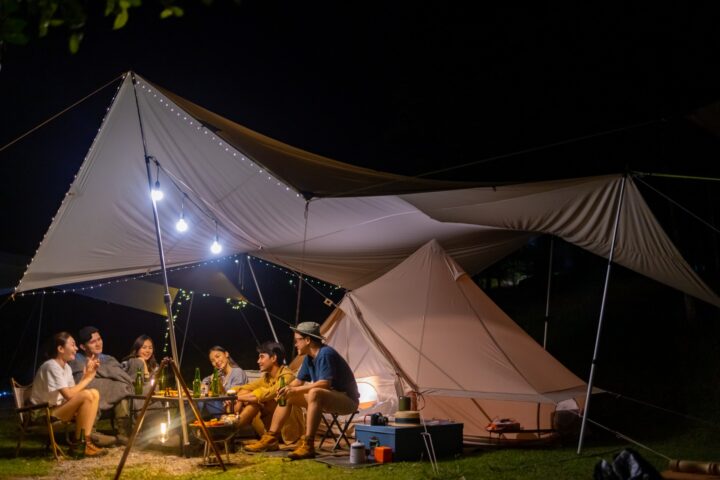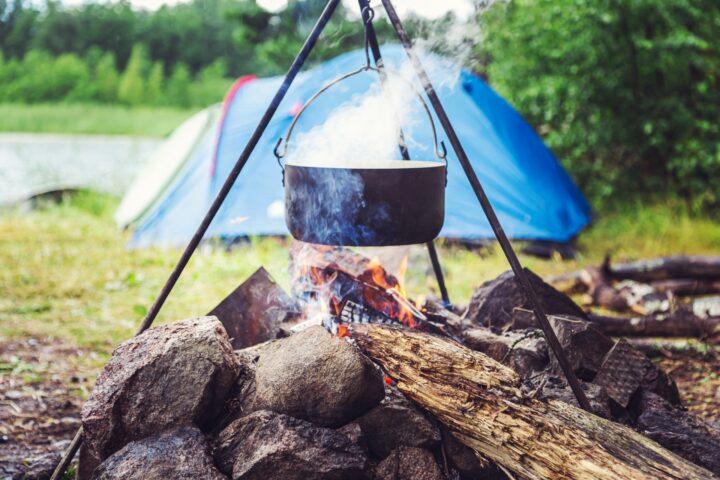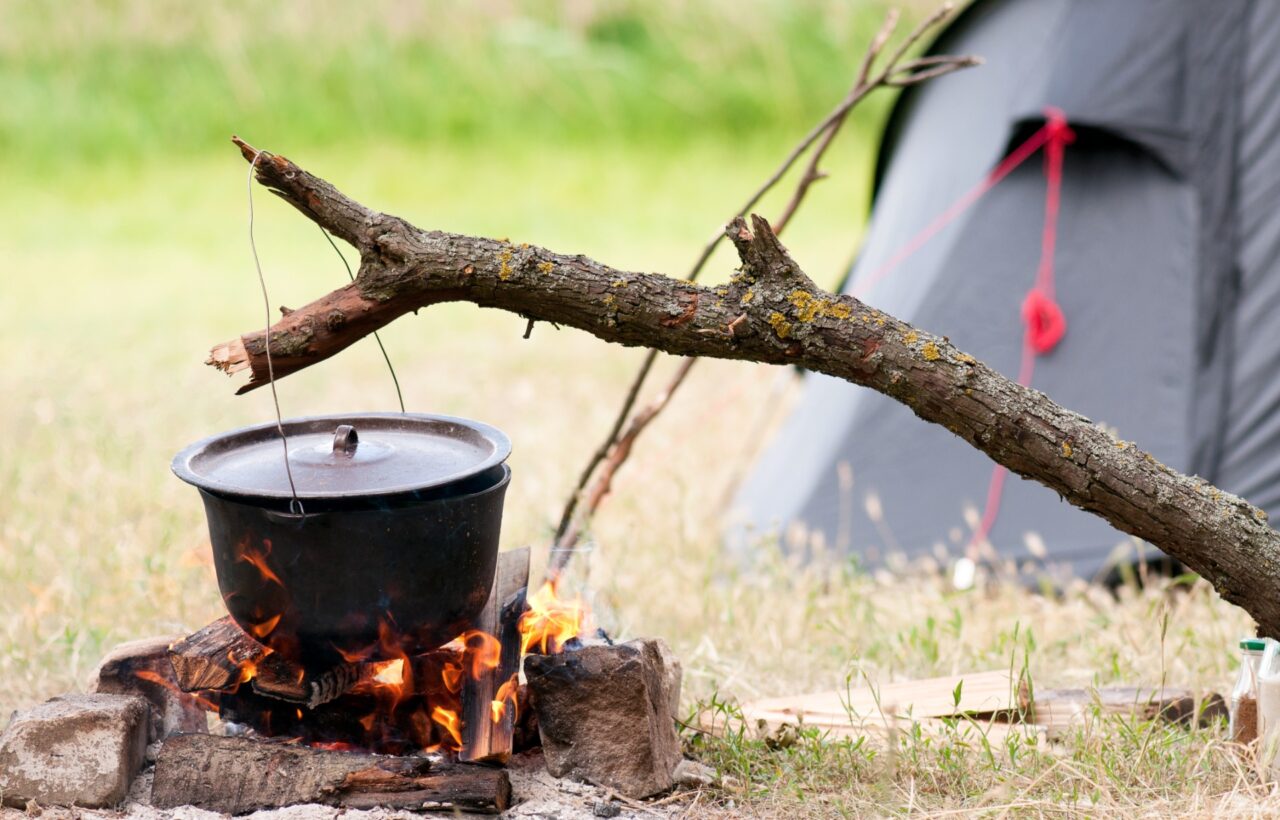
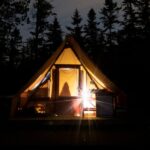
A good tent camping meal is one you can assemble or cook with limited gear, eat without a pile of dishes, and keep safe without a kitchen fridge. These 21 tent camping meals cover breakfast, lunch, and dinner across three real campsite conditions: no heat, a camp stove, and a campfire or foil packet. Most use grocery staples, pouches, cans, tortillas, and one-pot cooking so you can feed two to four people without turning the trip into a cooking project.
Pick meals by constraint first, not by recipe name. Fire bans, a small cooler, rain, and a late arrival change the menu more than taste does.
What Makes a Meal Work in a Tent Camp
Tent camping is usually car camping with a two-burner stove, a cooler, and maybe a fire ring. It is not backpacking. You can bring cans, a skillet, and fresh food for the first day. You still cannot treat the campsite like home.
A meal works if it meets most of these tests:
- It uses one heat source or none.
- It needs little chopping at camp.
- It stays edible if dinner is an hour late.
- Leftovers are either eaten immediately or discarded when the cooler warms up.
- Ingredients share a short shopping list: tortillas, oats, beans, pouches of tuna or chicken, cheese, rice or couscous, eggs, sausage, potatoes, and condiment packets.
Eat perishable food first. Frozen burritos, raw meat, and eggs belong on night one or breakfast two. Shelf-stable pouches, cans, oats, and tortillas cover the last morning when ice is slush.
How to Choose Among These 21 Meals
Match the meal to the campsite, not the other way around.
| Situation | Best meal type | Why it works |
|---|---|---|
| Late Friday arrival | No-cook wrap or walking tacos | Tent goes up first; food should take under 10 minutes |
| Fire ban or rain | Stove one-pot or no-cook | You still eat hot food without a fire ring |
| Small or failing cooler | Pouches, cans, nut butter, tortillas | Safety does not depend on ice |
| Feeding kids or picky eaters | Nachos, quesadillas, loaded potatoes | Familiar flavors, custom toppings |
| Minimal dishes | Foil packets, wraps, eat-from-the-can bowls | Cleanup is foil and a spoon |
| Hot weather above 90°F | Shelf-stable lunches | Perishable food left out is unsafe after 1 hour |
USDA guidance is the rule that matters: keep cold food at 40°F or below. Do not leave perishable food in the “danger zone” (40°F–140°F) for more than 2 hours, or more than 1 hour if the air is above 90°F. Leftovers in a cooler are safe only while ice remains. When the ice is gone, discard perishable leftovers.
No-Cook Tent Camping Meals
These seven meals need no stove and no fire. Use them for lunch on the trail, arrival night, or any morning you want to pack up fast.
1. Peanut Butter, Banana, and Honey Wrap
Spread peanut or seed butter on a tortilla, add a banana and honey, roll, and eat. No cooler required if the banana is whole until serving. This is the backup breakfast that still works when the stove is wet.
Upgrade: Add a handful of granola or crushed pretzels for crunch.
2. Granola With Shelf-Stable Milk
Pour granola into a mug or bowl and add UHT (shelf-stable) milk or a plant carton. Opened cartons need cold storage; unopened ones do not. Pack single-serve cartons if you want to avoid leftovers.
3. Overnight Oats in a Jar
Combine rolled oats, shelf-stable milk or yogurt, dried fruit, and nuts in a jar the night before. This usually needs a cooler. If you have no cooler, switch to hot stove oats instead of leaving dairy out.
4. Bagel With Seed Butter and Dried Fruit
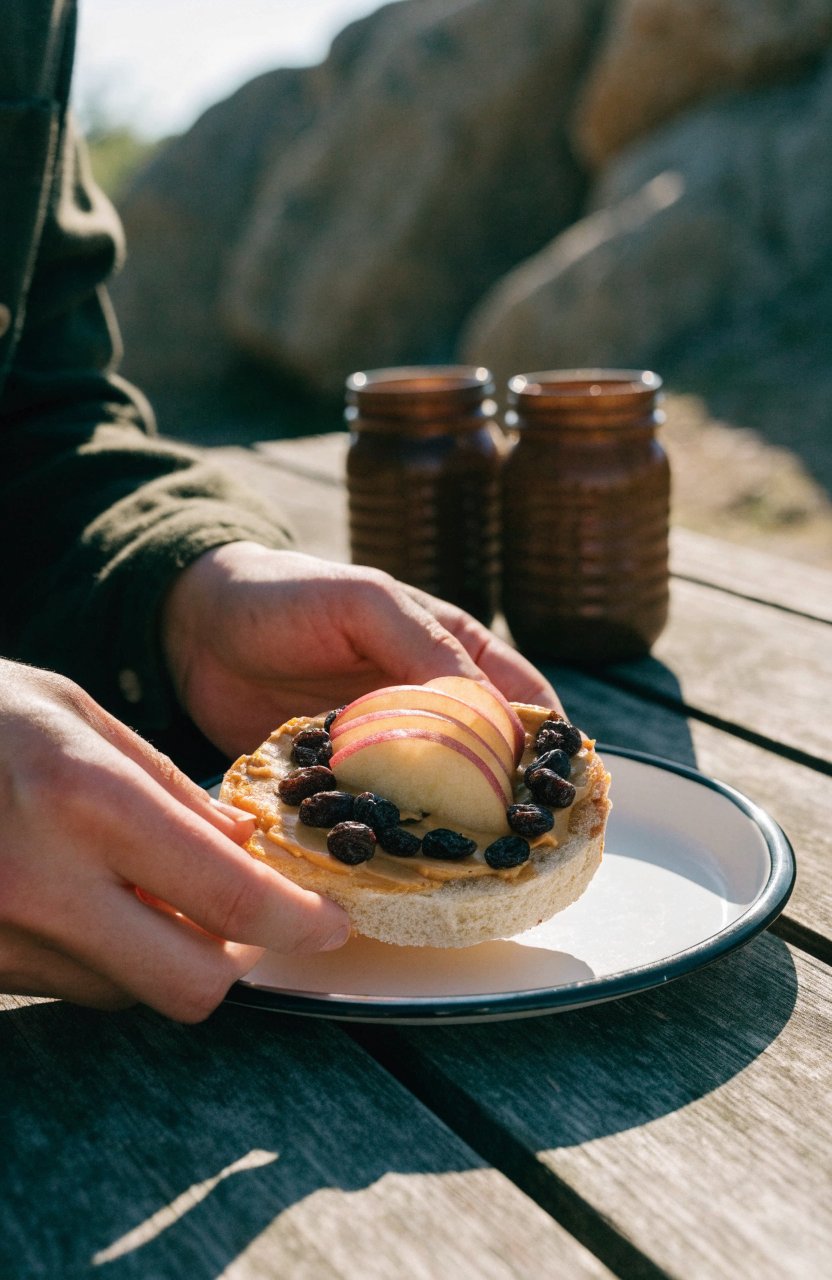
Bagels travel better than sliced sandwich bread. Spread almond, peanut, or sunflower butter and top with raisins, dried cranberries, or apple slices. No heat, no mess, solid calories before a hike.
5. Tuna or Salmon Pouch Wrap
Mash a foil pouch of tuna or salmon with pickle relish, mustard, or a mayo packet right in the pouch, then wrap it in a tortilla. Unopened pouches are shelf-stable. Once opened, eat the meal; do not save half a mixed wrap for later in warm weather.
6. Chickpea Salad Pita
Drain a can of chickpeas, mash with olive oil, lemon packet or vinegar, salt, pepper, and a pinch of garlic powder. Stuff into pita with cucumber or carrot sticks if you packed them. Canned beans need no cooler until opened.
7. Hard Cheese, Crackers, Apple, and Salami Plate
This is a real lunch, not a snack pile, if the portions are large enough. Hard cheeses and many dry salamis keep longer than deli turkey. Keep cheese cooler-cold when you can; if the cooler is gone, switch to shelf-stable nut butter and crackers.
Camp-Stove Tent Camping Meals
A single-burner or two-burner propane stove is the most reliable heat source at a tent site. These seven meals assume you can boil water or run a skillet.
8. Upgraded Instant Oatmeal
Cook instant or rolled oats with water, then stir in peanut butter, cinnamon, and dried fruit. Instant packets are fine. The add-ins are what make them filling enough to count as breakfast instead of a snack.
9. Breakfast Hash With Eggs
Warm canned or leftover cooked potatoes in a skillet with sausage or canned corned beef hash, then crack eggs on top and cover until set. Eggs need a cold cooler. Cook this on the first full morning, not on day four.
If you have no eggs: Skip them and add a pouch of chicken or extra beans.
10. Make-Ahead Breakfast Burritos
At home, scramble eggs with cooked sausage or beans and cheese, roll in tortillas, wrap in foil, and freeze. At camp, warm the foil packet on the stove or next to coals until hot all the way through. Reheat leftovers only if they stayed ice-cold. Target 165°F if you have a thermometer; otherwise heat until steaming throughout.
11. One-Pot Pasta or Tortellini
Boil pasta in a single pot with enough water or boxed broth to cook it, then stir in jarred sauce and a pouch of chicken or a can of white beans. Fresh tortellini needs a cooler and should be used early. Dried pasta is the longer-trip version.
12. Can Chili With Rice or Chips
Heat canned chili. Serve over instant rice, leftover baked potatoes, or tortilla chips. Lime packet, hot sauce, and crushed chips make it taste less like a can. This is the standard rainy-night dinner because it is fast and filling.
13. Couscous With Chickpeas and Olive Oil
Pour boiling water over couscous, cover 5 minutes, then fold in drained chickpeas, olive oil, salt, and dried herbs. Add a sardine or tuna pouch if you want more protein. Couscous is faster than rice and uses less fuel.
14. Skillet Quesadillas
Fill tortillas with cheese plus black beans, leftover chili, or a chicken pouch. Cook in a lightly oiled skillet until the cheese melts. Cut into wedges. This works as lunch or a short dinner and dirtyies one pan.
Campfire and Foil-Packet Meals
Use these when you have a legal fire, a grate, and time to wait for coals. Cook over glowing coals, not leaping flames. Flames scorch foil and leave the center raw.
15. Sausage and Vegetable Foil Packets
On heavy-duty foil, pile sliced sausage, potato chunks, onion, and peppers with oil and seasoning. Double-wrap, set on coals, and turn every 8–10 minutes. Most packets take 20–30 minutes depending on potato size. Precook or thinly slice potatoes if you do not want to wait.
Common failure: Packets burn on the bottom because they sat in flame instead of coals. Use a grate when you have one.
16. Loaded Jacket Potatoes
Wrap oiled, salted potatoes in two layers of foil and nestle them in coals, turning occasionally, until a knife slides through. Split and top with canned beans, chili, cheese, or butter. Potatoes can start at home (par-bake) if you want a shorter cook at camp.
17. Campfire Nachos in a Skillet or Foil Tray
Layer chips, canned beans or leftover chili, and cheese in a foil pan or cast-iron skillet. Cover loosely and heat until the cheese melts. Add salsa and jalapeños at the table. Eat soon after cooking; soggy chips do not keep.
18. Walking Tacos
Warm precooked taco meat or canned chili. Open individual chip bags, crush slightly, and spoon in meat, cheese, and salsa. Eat from the bag. Precooked meat belongs in the cooler and should be used while ice is solid.
19. Foil Fish or Chicken With Vegetables
Layer a salmon fillet or chicken pieces with tomato, onion, oil, and herbs on oiled foil. Seal tightly and cook on a grate over coals until the protein is cooked through. This is a first-night meal because raw fish and chicken need reliable cold storage and a separate bag at the bottom of the cooler, below ready-to-eat food.
20. Campfire Bean Burritos
Heat refried beans or drained black beans with chili powder in a pot or on the edge of the fire. Spoon into tortillas with cheese and hot sauce. If you packed shelf-stable tortillas and canned beans, this dinner survives a dead cooler.
21. One-Pan Sausage, Peppers, and Onions
Brown sliced sausage in a skillet, add peppers and onions, and cook until soft. Serve in hoagie rolls or tortillas. It is faster than foil packets if you already have a hot stove or a grate, and it uses the same ingredients as meal 15 if you want a backup method.
A Weekend Menu Using These Meals
A typical Friday-to-Sunday tent trip needs about five or six meals plus snacks, not 21 separate dishes. Use the list as a menu pool.
Friday dinner: Walking tacos or tuna wraps, depending on whether you want heat after setup.
Saturday breakfast: Breakfast burritos or skillet hash.
Saturday lunch: Chickpea pita or cheese-cracker plate on a day hike.
Saturday dinner: Foil sausage packets if there is a fire; chili and rice if there is not.
Sunday breakfast: Granola with shelf-stable milk or peanut butter wraps so you can break camp.
Sunday lunch: Quesadillas from leftover beans and cheese, or bagels with seed butter for the drive home.
That pattern uses perishable food while the cooler is coldest and finishes on pantry food.
What to Prep at Home
Prep that actually saves time at a tent site:
- Freeze breakfast burritos and any stew or chili you plan to reheat on night one.
- Mix dry pancake or oatmeal add-in bags if you prefer hot breakfasts.
- Pre-cut peppers and onions only if they will be used within a day and kept cold.
- Portion spices into small bags or a single camp spice kit: salt, pepper, chili powder, garlic powder, cinnamon.
- Pack condiments as packets so you are not hauling open jars.
Skip assembling wet sandwiches at home. They turn soggy. Pack components and build them at camp.
Gear You Need for These Meals
You do not need a full kitchen.
- Camp stove and fuel, or a legal fire ring with a grate
- One pot and one skillet
- Heavy-duty foil
- Can opener, knife, cutting board, tongs
- Cooler with block ice if you bring eggs, meat, cheese, or leftovers
- Biodegradable soap, a small basin, and a way to pack out trash
A separate drinks cooler keeps the food cooler closed. USDA also recommends packing raw meat below ready-to-eat food, or in its own cooler, so juices cannot drip onto food you will eat cold.
Quick Fixes for Tent Camping Meals
Camp meals fail through overplanning, cooking over flames and cooler errors, and every one has a simple fix.
| Problem | Likely cause | Fix |
|---|---|---|
| Menu too big for the trip | Planning 21 elaborate recipes for a two-night trip | Pack a short menu with a few backups instead of a cookbook. |
| Food burnt outside, raw inside | Cooking foil packets and skillets over open flames | Wait for coals before cooking foil packets or skillets. |
| Contaminated fruit in the cooler | Raw meat stored on top of the ice next to fruit | Double-bag raw protein and keep it on the bottom of the cooler. |
| Unsafe leftovers at lunch | Saving dinner leftovers after the cooler ice has melted | Without ice, skip perishable leftovers and switch to pouches and tortillas. |
| Lunches spoiling first | Packing only bread, mayo-heavy salads and bagged greens for lunch | Always pack a no-cook, shelf-stable lunch as a backup. |
| Canned food you cannot open | Forgetting a can opener for canned chili and beans | Pack a can opener, plus a backup one. |
Frequently Asked Questions
How many of these meals do I actually need?
Count meals from arrival to departure. A two-night trip is usually one dinner, two breakfasts, two lunches, and a second dinner. Add one emergency no-cook meal. That is six or seven slots, filled from this list of 21.
Can I make all 21 meals without a cooler?
No. Overnight oats with dairy, eggs, raw meat, deli-style lunches, and most leftovers need cold storage. The no-cook wraps, granola with unopened shelf-stable milk, chickpea salad from a fresh can, couscous with pantry toppings, chili, and bean burritos do not.
What should I cook if the campground bans fires?
Use the stove meals and the no-cook list. Chili, one-pot pasta, couscous, quesadillas, and pouch wraps cover a full weekend without a fire ring.
Are foil packets safe for chicken and fish?
They are safe if the cooler kept the protein cold and the food cooks through. Packets hide undercooked centers. Cut into the thickest piece before you call it done. Use foil packets for sausage and vegetables if you want less risk.
What snacks fill gaps between these meals?
Trail mix, jerky, whole fruit, nuts, tortillas with peanut butter, and hard cheese if the cooler is still cold. Plan snacks on purpose. Hungry campers raid the dinner ingredients.
These 21 tent camping meals are enough to cover several weekends without repeating the same plate. Choose by heat source and cooler life, cook the perishable meals first, and keep one no-cook wrap in the bin for the night the stove stays in the bag.