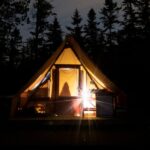
Most families do not fail at tent camping with kids because the kids “aren’t outdoor people.” They fail because the first night is too cold, the tent is too small, the bathroom is too far, or everyone arrives after dark and sets up hungry. Fix those four problems and tent camping becomes one of the cheapest, most flexible family trips you can take.
This guide is for car camping — driving to a reserved site and sleeping in a tent — not backpacking. The goal is a trip kids remember as an adventure, not as the weekend they were cold, bored, and ready to go home.
Start With a Trip Kids Can Handle, Not the Trip You Wish You Were Taking
A first family tent trip should be short, close, and supported. That sounds unambitious. It is the difference between one trip and a habit.
Best first setup
- One night, two at most
- A developed campground with flush toilets, potable water, and a camp host
- Within about two hours of home
- A drive-up site, not a hike-in site
- Mild weather with overnight lows well above freezing
- Arrival at least two hours before sunset
State parks and well-run county campgrounds beat “more wilderness” for trip one. Other families nearby, a bathhouse, and a road out if someone gets sick are features, not cheating.
Skip dispersed camping, alpine sites, and long holiday weekends until the family has already slept in a tent without a crisis. Peak summer Friday arrivals are the hardest version of a simple activity: crowded sites, late check-in, and kids who are already overstimulated.
Weather rule that actually matters: look at the overnight low, not the daytime high. Kids lose heat faster than adults, and ground cold is what wrecks sleep. Many families do well keeping first trips in the range where lows stay around 50°F (10°C) or warmer. Cooler nights are doable with the right sleep system. They are a poor first test.
Buy (or Borrow) a Tent Built for Family Life, Not Brochure Capacity
Tent “person” ratings assume adults sleeping shoulder to shoulder with almost no gear. Families do not sleep that way. Kids migrate. Someone needs to change clothes. A wet jacket has to live somewhere. A pack-and-play, if you bring one, eats a surprising amount of floor.
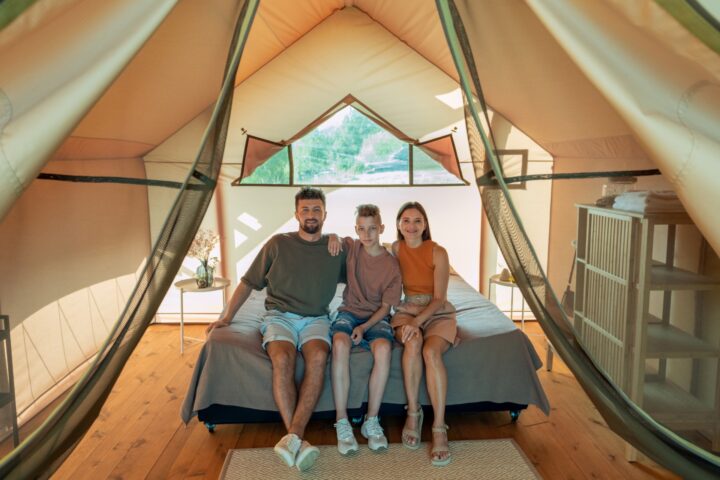
A reliable rule: size up by at least two people. A family of four usually wants a 6-person tent. A family of four plus a dog, a toddler crib, or cots often wants 8. Independent testers consistently find that families of three to five are most comfortable in roughly 80–100 square feet with about six feet of peak height.
What to look for
| Feature | Why it matters with kids |
|---|---|
| Two doors | One child can go out to pee without climbing over everyone |
| Standing height (about 6 ft / 183 cm) | Dressing kids, finding a lost sock, and mid-night comfort |
| Full rainfly | Rain and dew hit the fly, not the inner tent |
| Vestibule | Boots, wet clothes, and a cooler stay out of the sleeping area |
| Dark or “blackout” fabric | Dawn light is the #1 reason small kids wake at 5 a.m. |
| Fast setup | Kids do not wait politely while you decode color-coded poles |
Cabin-style tents feel roomier because of vertical walls. Dome tents usually handle wind better. Instant or hub tents save sanity at a crowded site, but practice once at home anyway. A cheap tent that you can pitch in ten minutes beats a “better” tent that takes 45 minutes while a toddler melts down.
Use a footprint or ground tarp slightly smaller than the tent floor. If the tarp sticks out, rain pools and runs under you.
You do not have to buy everything new. Many outdoor stores rent family tents, pads, and bags. A rental weekend is cheaper than a closet full of gear you use twice.
Treat Sleep as the Whole Trip
If kids sleep badly, the next day is short-tempered, accident-prone, and finished by 2 p.m. Sleep is not a comfort upgrade. It is the trip.
A sleeping bag only insulates the air around the body. The insulation under a sleeper compresses, so the pad does most of the work against cold ground. That is why people who skip pads wake up freezing even in a “warm” bag.
R-value is the pad’s resistance to heat loss into the ground. Higher is warmer. A simple range: under 2 for warm nights, about 2–4 for cool three-season nights, 4+ when lows approach freezing.
Sleep system that works for most school-age kids
- Kid-sized sleeping bag rated about 10°F (about 6°C) colder than the forecast low
- Insulated pad or camping mattress (not a thin pool float)
- Pillow from home
- Warm hat and dry sleep socks
- One extra blanket in the car, not “just in case” in theory
Adult bags are too long and too wide for small kids. Empty space in a bag is cold space. Toddlers also wriggle out of adult bags and wake up on the floor.
Cheap household air mattresses feel plush for an hour and then leak, slide, or turn into a cold balloon. If you use one, put a foam pad on top for insulation and accept that it may be flat by morning.
A darker tent plus a familiar bedtime sequence beats most gadgets. Keep the same order you use at home: pajamas, teeth, story, lights down. A small lantern on the lowest setting helps kids who are uneasy in total dark. Headlamps belong to each person; shared flashlights cause arguments and lost batteries.
Infants and young toddlers need a different sleep plan
Safe sleep rules do not change because you are camping. Infants should sleep on their back, on a firm, flat, non-inclined surface, with no loose blankets, pillows, or soft toys. A CPSC-compliant portable crib or play yard with a fitted sheet is the setup that matches those rules. An adult mattress, a pile of sleeping bags, or the tent floor is not.
Dress a baby in about one more layer than an adult would wear in the same tent, or use a wearable sleep sack. Loose bedding to “keep them warm” increases suffocation risk. Overheating is also a risk; sweating or a hot chest means too many layers.
If the overnight forecast is cold, wet, or highly variable, a cabin, yurt, or platform tent is the better first overnight with a baby. Traditional tent camping can wait.
A $400 tent does not fix a child on cold ground in an adult bag. The sleep system deserves the budget first, and a cheap fleece does more than cotton layers, which stay wet.
Match the Plan to the Child’s Age
Camping with a 2-year-old and camping with a 9-year-old are different trips that happen to use the same tent.
Babies (roughly 0–12 months) The work is temperature, feeding, and a safe sleep space. Entertainment gear is almost useless. A carrier is more valuable than a stroller on uneven ground. Shade matters more than a packed activity list.
Toddlers (1–3) This is the highest-supervision stage. Toddlers will eat dirt, approach the fire, and vanish behind a neighboring RV. They also entertain themselves with sticks and a bucket for a long time if you let them. Pack extra clothes — more than feels reasonable. Accidents, puddles, and spilled cocoa are the weekend. A play yard outside the tent gives you ten minutes to cook. Do not skip the nap.
Ages 4–8 This is often the sweet spot. Kids can carry a small pack, help stake a corner, and stay proud of “real jobs.” They still need clear boundaries: which trees are the edge of camp, whether they may visit the bathroom alone, and what to do if they cannot see a parent.
Ages 9 and up Give them ownership. Let them pack their own clothing bag from a list, cook one simple meal, and navigate a short loop hike with you. Teens often like camping more when they are not treated like luggage.
Across ages, one pattern holds: kids who help set up camp treat the site as theirs. Kids who are told to “stay out of the way” treat camp as a waiting room.
Pack Less Gear and More of the Items That Prevent a Meltdown
Overpacking is the default family mistake. The car fills with toys kids ignore while you forget a second pair of socks.
Pack by job, not by Pinterest.
Shelter Tent, footprint, stakes, extra guy lines, mallet.
Sleep Bags, pads, pillows, extra blanket, sleep clothes that stay dry and never get worn around the fire.
Kitchen Two-burner stove, extra fuel, lighter plus backup, one pot, one pan, cutting board, knife, utensils, cooler, water jugs, dish bin, biodegradable soap, trash bags. Pre-portion meals at home in labeled bags.
Clothing per person Two daytime outfits, one sleep outfit, rain jacket, warm layer, hat, extra socks. Closed-toe shoes plus strap-on sandals. No bare feet near the fire ring.
Safety and comfort First aid kit with children’s pain reliever, any prescription meds, thermometer, tick tweezers, blister care, sunscreen, EPA-registered insect repellent, whistle per child, headlamp per person, lantern.
Kid-specific extras that earn their space Home pillow, comfort stuffed animal, wet wipes, a small potty for night use with little kids, and one low-mess activity for rain: cards, a nature scavenger list, a sketchbook.
Leave the elaborate toy bin at home. A cheap bubble bottle, a ball, and a bucket outperform most “camping activity kits.”
Food rule: bring more snacks than meals look like they need, and bring at least one familiar food per child. New places plus new food is how dinner becomes a fight. Keep meals simple — foil packets, pasta, sandwiches, oatmeal, fruit, and one camp treat. S’mores are optional. A hot breakfast is not.
Never store food, toothpaste, wipes, or snack wrappers in the tent. That is how mice, raccoons, and, in some regions, bears learn that family tents are vending machines. Follow the campground’s storage rules: locker, closed hard-sided vehicle, or canister as posted.
Set Up Camp in an Order That Keeps Kids Occupied
Arrive with a job list, not a hope that everyone will stand still.
- Park and do a two-minute site scan: slope, dead branches overhead, distance to the bathroom, distance to water, and where the fire ring sits relative to the tent.
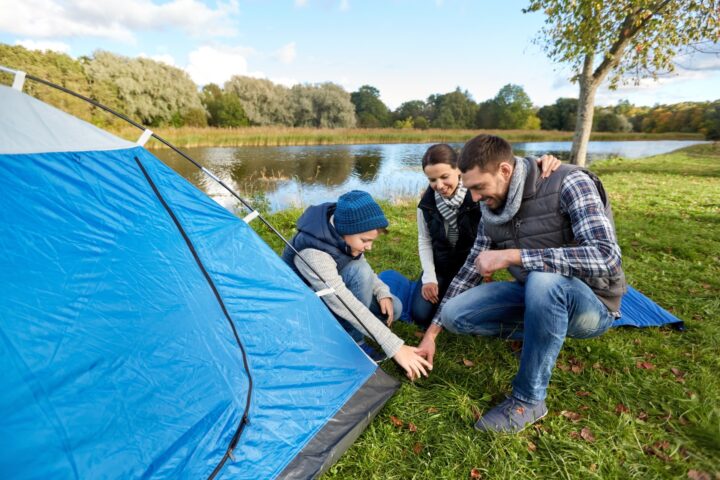
- Give kids a defined play zone and a first job (unroll sleeping bags, hold a pole, put rocks on the footprint corners).
- Pitch the tent and rainfly before unpacking the kitchen. If weather turns, you already have a dry box.
- Inflate pads and make beds immediately. A made bed is the difference between a 8:30 bedtime and a 10:15 scavenger hunt for missing socks.
- Set the kitchen and a water station. Put a full jug near the fire ring before you light anything.
- Walk the bathroom route with kids while it is still light.
Pitch on the flattest ground you can find, with heads slightly uphill if there is any slope. Avoid the low spot where yesterday’s rain collected. Keep the tent well away from the fire ring; the National Park Service recommends keeping tents, gear, and flammable objects at least 15 feet from the fire and upwind of it.
A pop-up canopy is the unglamorous item that saves rainy and hot trips. The tent is for sleeping. The canopy is for lunch, coloring, and not being trapped inside with restless kids.
Teach a Short List of Safety Rules Before Anyone Unzips the Door
Long lectures fade. A few rules, repeated, work.
Boundaries Show the visual edge of camp. Kids do not get a “wander and we’ll find you” policy on night one.
If you get separated Stay put, hug a tree or sit on a rock, blow the whistle in bursts, do not hide. Parents should agree in advance who searches and who stays at camp.
Water Drowning is a leading cause of unintentional death in young children, including in shallow water. If there is a lake, creek, or even a full trough-style spigot area, one adult is the water watcher — not on a phone. Life jackets belong in the car if water is part of the plan.
Fire Fires stay in the ring. No running. No throwing anything in. Kids stay outside a clear buffer unless an adult is hand-on-shoulder close. Keep water next to the ring. Drown, stir, and feel for heat before bed. Never leave a fire unattended. Check fire restrictions the day you leave; they change during dry season.
Wildlife and food No feeding animals. No food in the tent. Zip the tent when you walk away so chipmunks do not tour the sleeping bags.
Sun and bugs Use broad-spectrum sunscreen and reapply. Put sunscreen on first, then insect repellent. Do not use combination sunscreen-repellent products; sunscreen needs more frequent application than repellent. The American Academy of Pediatrics advises DEET at no more than 30% for children, and not for infants under 2 months. Do not use oil of lemon eucalyptus on children under 3. Do not put repellent on hands, and wash it off when the day is done.
Weather exits Lightning means leave the tent for a hard-topped vehicle if one is available. A soaked, wind-hammered first night is how kids decide camping is terrible. Leaving is a valid plan.
Make food in the tent one of the rules, with no exceptions for a single night. Mice do not honor exceptions, and neither do raccoons, so snacks go back into storage before bedtime.
Do Less After Camp Is Up
The instinct is to schedule hikes, ranger programs, swimming, and crafts so kids “get something out of it.” That is how you recreate a theme park with worse bathrooms.
Leave the first afternoon mostly empty. Let kids investigate bark, ants, and the exact stick that is now a sword. Short walks from camp beat ambitious trailheads. A nature checklist (something red, something smooth, a bird sound) gives structure without a timetable.
Rain plans should be boring and ready: cards in the tent, snacks, a walk in rain jackets, early dinner. Do not invent a six-stop driving itinerary because the sky looks gray.
Bedtime will be earlier than at home for some kids and later for others. Darkness, new noises, and a sibling three feet away change the script. Plan for a restless first night. The second night is usually better.
What “Good Enough” Looks Like
A successful first tent trip is not a magazine photo. It is: the tent stayed dry, nobody got badly cold, kids ate enough, the fire stayed in the ring, and at least one child asks when you can go again.
Borrow gear if you are unsure. Book a site with a bathroom. Protect sleep. Keep the plan short. Let kids get dirty. That is the whole method.
Once that works, you can add a second night, a longer hike, a more remote park, or a bigger tent with a divider. Those are upgrades. They are not the entry ticket.
Frequently Asked Questions
What age is best for a first tent camping trip? There is no official minimum. Many families find ages 3–6 the easiest introduction because kids can walk, follow a simple rule, and still think sleeping outside is magic. Babies can camp if safe sleep, temperature, and feeding are solved, but that is a more technical trip. Personality matters as much as age: a cautious 8-year-old may need a backyard night first.
Should we test camping in the backyard first? Yes if you have the space. Pitch the real tent, inflate the real pads, and spend one night out there. You will find the missing stake, the pad that leaks, and whether a child can fall asleep with unfamiliar night sounds — without a two-hour drive home.
How cold is too cold for kids in a tent? It depends on gear, not a single number. Children lose heat faster than adults, especially if clothes are damp. For a first trip, stay with mild nights. If you do camp in the 40s°F (around 5–9°C), use an insulated pad (higher R-value), a bag rated colder than the forecast, dry sleep clothes, and a hat. Wet and windy cold is more dangerous than dry cold.
Do we need a special kids’ sleeping bag? For small children, yes. A kid bag fits better, traps heat better, and is harder to wriggle out of. Choose a rating below the expected low. A wearable sleep sack is often the better tool for toddlers who escape regular bags.
Is it okay to put a Pack ’n Play in the tent? For infants and young toddlers who still sleep in a crib, a compliant portable crib or play yard is the setup that matches safe-sleep guidance. Measure first. Some 6-person tents can take one; others feel instantly crowded. Once a child reliably stays on a pad, most families drop the crib to recover floor space.
What if it rains the whole time? You need a taut rainfly, a footprint that does not stick out, gear not touching inner walls, and a dry place that is not the sleeping tent — a canopy or the car. Waterproof jackets matter more than extra toys. If the forecast is a multi-day soak and you have very young children, postponing is reasonable.
Can we camp in bear country with kids? Yes, at developed campgrounds that enforce food storage. Use the lockers or canisters required on site, keep a clean camp, and keep all scented items out of the tent. Teach kids not to run toward wildlife. Read the park’s current rules before you go; they vary by location.
How do we handle the bathroom at night? Walk the route in daylight. Keep a headlamp by each door. For young children, a portable camp toilet in a privacy shelter or just outside the vestibule prevents a long dark walk. For older kids, a buddy system is better than sending someone alone.
Do we need expensive gear for the first trip? No. A sound tent, insulated pads, weather-rated bags, rain layers, a stove, and a first aid kit are the core. Rent or borrow the expensive pieces until you know the family wants a second trip. Spend first on sleep, not on camp kitchens and themed chairs.