
Dirty water decides the design, so plan where it will go before buying a single fitting. A DIY camping sink has three jobs: deliver clean water on demand, catch what drains, and keep soap off the ground around camp. The grey-water bucket, carried to a legal dump spot, is the piece most plans forget.
With that settled, the build stays simple. A jug with an on-off spout, a basin deep enough for hands or a plate, and gravity will cover a weekend. A foot pump or small rechargeable faucet earns its place for larger groups or greasy cooking. Every build here uses ordinary hardware-store parts and needs no plumbed camper.
What a camping sink has to do that a kitchen sink does not
At home, supply and drain are someone else’s problem. At camp, you haul every gallon and you are responsible for every drop that leaves the basin.
Fresh water weighs about 8.34 pounds per gallon, so a 5-gallon jug is more than 40 pounds before the stand, basin, or pump. That is why most camp sinks use 2.5- to 5-gallon containers instead of a fixed tank, and why the first design choice is how far you are willing to carry water.
A working station needs four things:
- A clean container you can shut off. An open bottle tipped over a bowl wastes water and invites dirt.
- A basin with a lip. Flat trays splash. A dish tub, collapsible camp basin, or small bar sink holds water long enough to scrub.
- A screened drain into a second container. Food scraps should never go on the ground with the wash water.
- A plan for that second container before you fill the first one. If the site has a utility sink or RV dump, that is the plan. If it does not, you need a bucket you can carry.
Soap labeled biodegradable is not a permit to pour into a creek. Soil microbes can break down small amounts of scattered, strained wash water. A stream cannot.
Pick the build that matches how you camp
| Build | Best for | Water control | Pack size | Main limit |
|---|---|---|---|---|
| Spigot jug on a cooler or table, basin below | One or two people, car camping, first trip | Gravity, easy to shut off | One jug, one tub, one bucket | Weak flow for greasy pans; jug must sit higher than the basin |
| PVC or shelf frame with two or three tubs | Families, group cooking, multi-day sites | Gravity or a hose from a jug | Frame knocks down; tubs nest | Bulkier than a single basin; tippy if the frame is narrow |
| Bucket station with foot pump or USB faucet | Car camping, truck campers, van kitchens | On-demand, less waste than a wide-open spigot | Two buckets or a small box | More fittings; pumps can freeze or fail |
Start with the first row unless you already know you wash a lot of dishes. A pump does not fix a bad drain.
Build a no-tools gravity sink
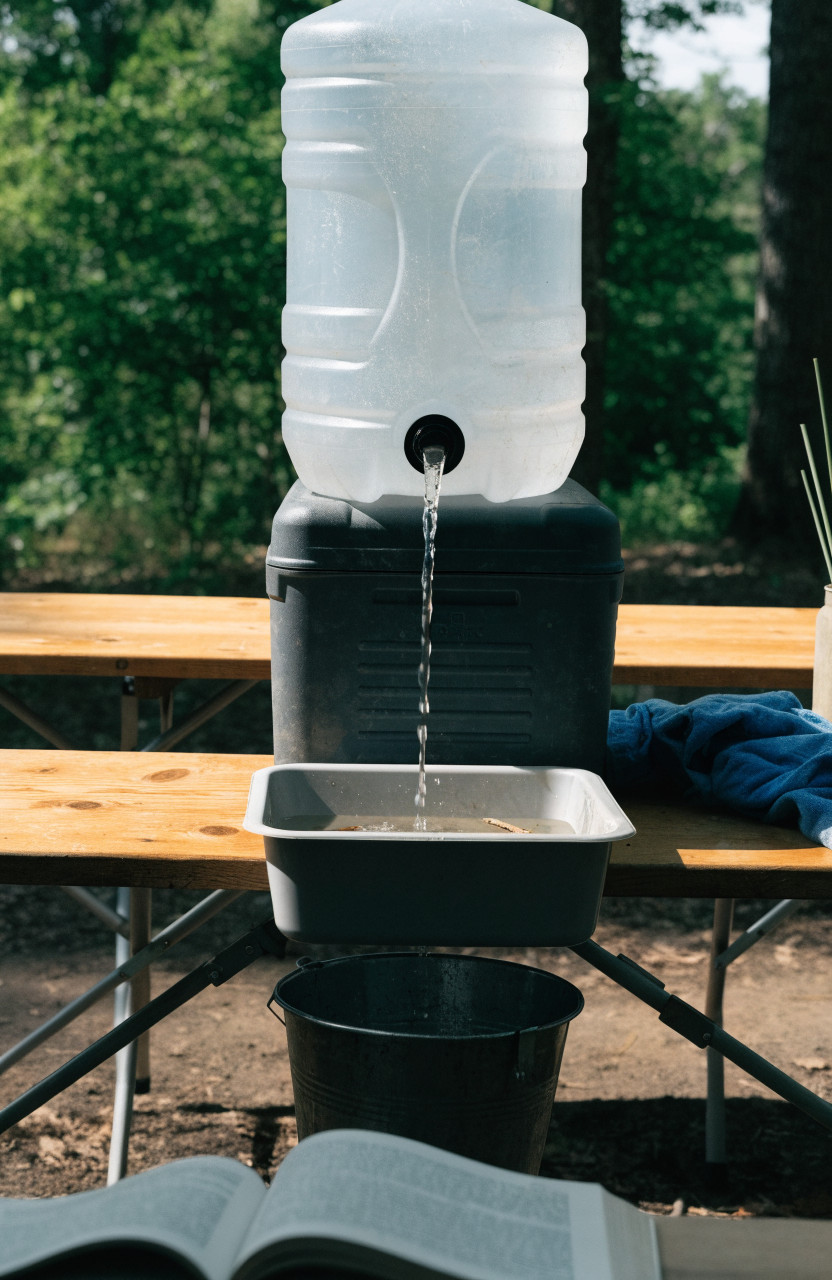
This is the version that earns its space in the car. No cutting, no glue.
You need a water jug with a spigot (a 2.5- or 5-gallon camp jug is the usual size), something stable to raise it, a basin, and a grey-water bucket. A cooler, a folding table, or the tailgate works as the stand. The spout should clear the rim of the basin so you are not chasing a dribble under the jug.
Set it up in this order:
- Put the grey-water bucket where you can reach it without stepping over the fresh jug.
- Set the basin over that bucket, or on a crate beside it if the basin has no drain hole. A solid tub you tip out is fine for handwashing. A hole is better once you are doing plates.
- Raise the fresh jug so the spigot sits a few inches above the basin. Strap or wedge it. A full jug on a narrow stool is the usual tip-over.
- Open the spigot only while your hands or a sponge are under it. Close it to lather. That on-off habit is the whole point of a spigot versus a poured bottle.
- When the basin fills, pour it through a mesh strainer or a bandana into the grey bucket. Scraps go in the trash bag, not the woods.
If the basin is a plain dish tub and you want a drain, a hardware-store bulkhead fitting sized to the tub wall will do it. Drill the hole near a back corner, not the middle, so the tub still sits flat. Run a short hose from the fitting into the grey bucket and keep the hose end above the dirty-water line so the bucket cannot siphon back.
Common failure: the jug is only an inch above the basin, so flow dies as the jug empties. Give the spout real height, or accept that the last gallon will be a trickle and switch to a pump if that bothers you.
Build a wash station for actual dishes
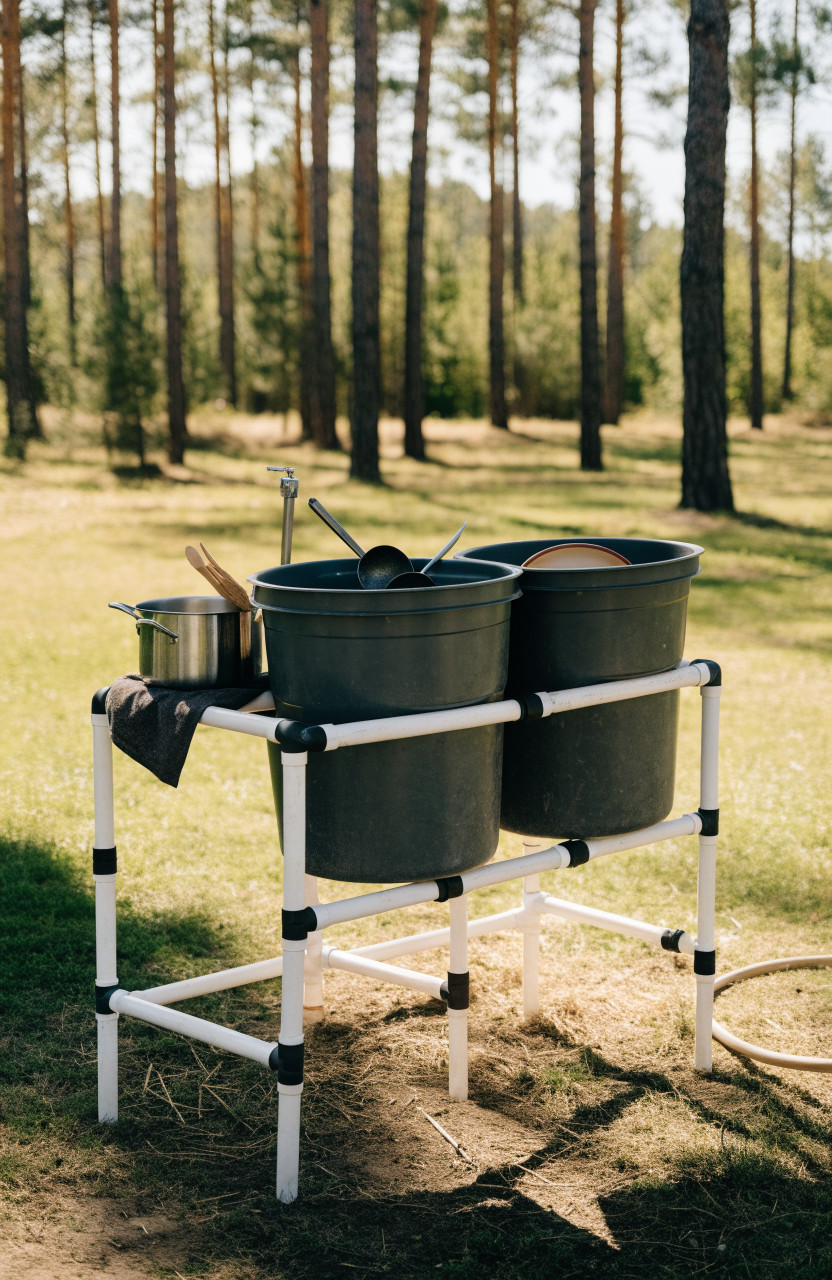
Handwashing and dishwashing are different jobs. Hands need a small stream. Plates need room to scrape, soak, and rinse without pouring dinner into the fresh jug.
A knock-down frame of 1/2-inch or 3/4-inch PVC, or a plastic shelf unit used only for the top two or three shelves, holds two or three dish tubs at a height you can stand at. Comfortable counter height is about 34 to 36 inches for most adults. Lower is better if children will use it. Dry-fit the pipes first and cut the top rails to the tubs you own, not to a plan drawn for someone else’s bins. A typical 12-quart wash basin is about 15 inches long; three of them in a row need a frame wide enough that the tubs sit in the rails instead of balancing on them.
Skip PVC cement if you want the station to pack flat. Friction-fit fittings hold a light wash station. Glue only the joints you never want to take apart. A wide footprint matters more than thick pipe: a tall, narrow frame walks when someone leans on it.
Use the tubs as a line, not as one shared puddle:
- First tub: wash water with a few drops of camp soap. Hot water from a kettle does more work than extra soap.
- Second tub: clear rinse.
- Third tub, if you have room: a sanitize dip, then air dry on a rack, towel, or the shelf slats.
The CDC food-contact method for household bleach (regular unscented bleach, about 5–9% sodium hypochlorite) is 1 tablespoon per gallon of clean water after washing and rinsing, then air dry. Do not mix bleach with soap. If you are only rinsing camp mugs in clean water and not worried about shared dishes, many people skip the bleach tub. If someone is sick, or you are on untreated water you are not filtering, the third tub is the one to keep.
Scrape every plate into a trash bag before it touches water. Food in the wash tub is what makes grey water smell and what attracts animals later.
Add a pump only if gravity is the bottleneck
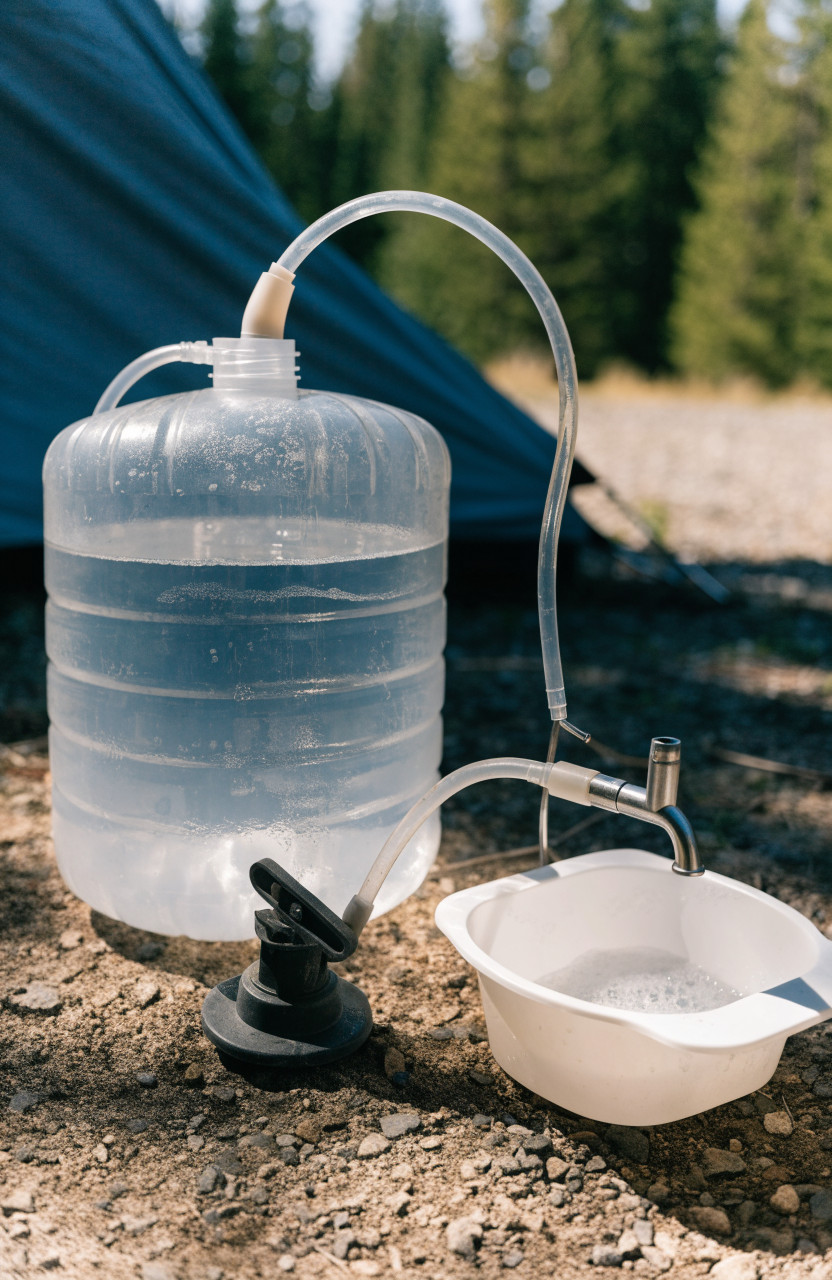
A pump helps when the jug cannot sit high, when you want a directed stream for greasy pans, or when the sink lives in a box or van cabinet.
Two versions are realistic.
A foot pump keeps electronics out of the system. Food-grade tubing runs from the fresh container to the pump inlet, then from the pump outlet to a short rigid spout over the basin. A marine foot pump or a one-way squeeze bulb both work; a cheap siphon hose with no check valve will dribble back and is frustrating. Mount the spout so it cannot swing out of the basin. The fresh container needs a vent, or the pump will stall as a vacuum forms.
A rechargeable faucet pump sits on a jug neck or a short pipe stand and runs off a USB battery. It is the least fiddly upgrade for a car-camp box: basin on top, jugs inside, hose down to the clean water, drain hose into a waste jug. The tradeoff is battery life and cold. Pumps and tubing left full overnight below freezing can crack. Drain them.
In either case, keep the drinking-water side on tubing sold for potable water. A garden hose can leach and hold biofilm. On the drain side, ordinary flexible hose is fine if it only carries grey water and you can pull it off to empty the bucket.
A contained box — plywood cabinet, plastic tote, or two nested buckets — is worth building when the station has to ride in a vehicle and come out clean. Size the box around the jugs, not around the sink. Three 2.5-gallon jugs side by side are a common fit and keep a full load from being one 60-pound container. Cut the faucet hole after the jugs are in place so the spout lands over the basin, not over the counter.
Grey water is the part most plans skip
Strained wash water still has soap, grease, and bacteria. Where it goes depends on the site, and the site rules win.
At a developed campground, use the utility sink, dish sink, or grey-water drain the host points to. Do not empty a bucket in the bushes behind the site because the walk to the dump station is annoying.
On dispersed public land, the Leave No Trace method is to strain out food scraps, pack those scraps out with your trash, and scatter the liquid at least 200 feet from lakes, streams, trails, and camp — about 70 adult paces. Broadcast it in a wide arc so it does not pool. In bear country, a small sump (roughly 6 to 8 inches deep), strained, then covered, is the safer habit because a scent smear on the surface is an invitation.
Never put grey water into a vault toilet unless the campground says that is allowed. Never put it in a creek because the soap bottle says biodegradable. Biodegradable means it breaks down in soil over time, not that it is harmless to aquatic life.
Empty the grey bucket before it is too heavy to carry without spilling. A full 5-gallon waste bucket is an awkward, sloshing load on a slope.
Strainers, spigots and standing water
- No strainer. Rice, grease, and pasta in the scatter spot are why animals start visiting the kitchen.
- Basin smaller than the biggest pan. A round dog bowl looks tidy and cannot soak a plate. Use it for hands only.
- Fresh and grey containers that look the same. Mark the waste bucket with tape. A mix-up is how people refill from the wrong jug.
- Spigot you have to touch with dirty hands, then use again for drinking water. A foot pump, or a spigot you work with the back of your wrist, matters more when you are cleaning fish or raw meat.
- Standing water left overnight. Dump, strain, and leave buckets open to dry. Mosquitoes and smells show up faster than people expect.
- A frame with no lower shelf or stake-down in wind. PVC is light. A full basin is not.
Questions people ask after the first weekend
Can a plastic tub replace a metal sink? Yes for camping. A stainless bar sink looks better and shrugs off heat from a hot pan set beside it, not in it. A food-grade plastic tub is lighter, cheaper, and enough for dishes. Do not set a pot straight off the stove into thin plastic.
How much water should the station hold? For two people washing hands and a simple dinner, 2.5 gallons of fresh water is often enough if you scrape first and turn the spigot off while scrubbing. A group cooking two hot meals will go through more. Carry the extra in a second jug rather than building a bigger sink.
Do I need hot water at the sink? Not in the plumbing. Heat a kettle and pour it into the wash tub. Running hot water means a heater, fuel, and hoses that can burn someone — a different project from a camp sink.
Will this work in freezing weather? Gravity still works if the jug is liquid. Pumps, USB faucets, and water left in hose will not. Drain the system at night and keep the fresh jug in the vehicle or a sleeping area if temperatures will drop below freezing.
Is a store-bought camp sink better? Buy one if you want a folding stand and a matched drain and you camp often enough to justify the bulk. Build one if you already own a jug, a tub, and a bucket. The expensive failures are the same either way: no shutoff, no strainer, and nowhere legal to put the grey water.