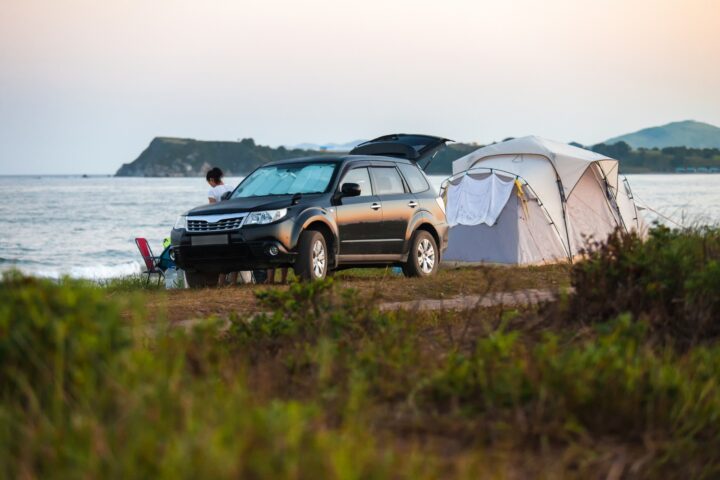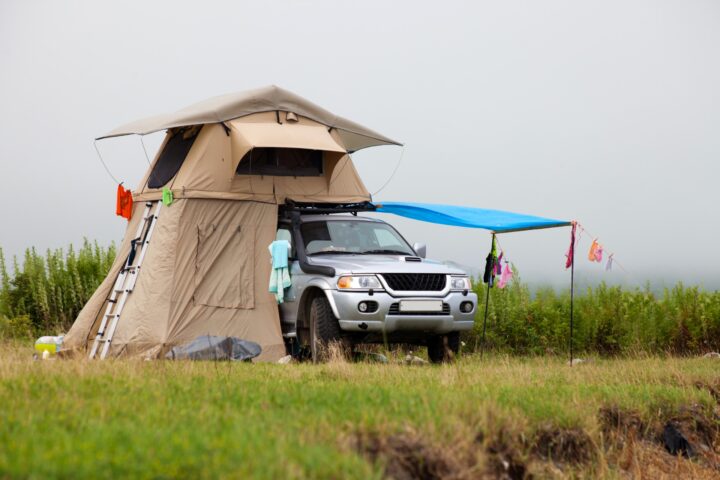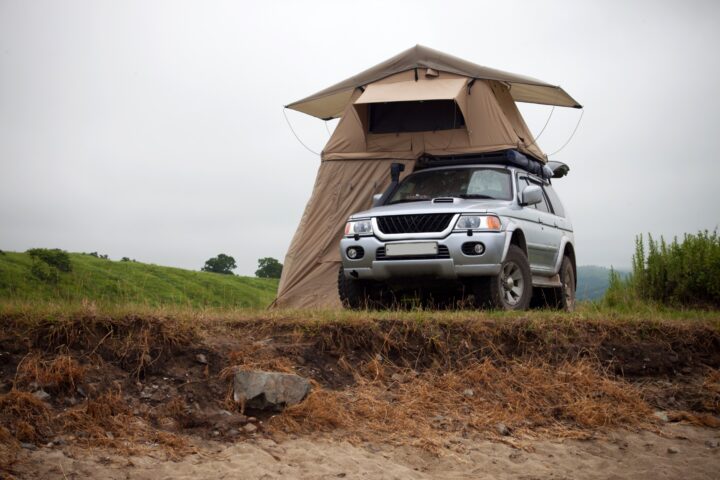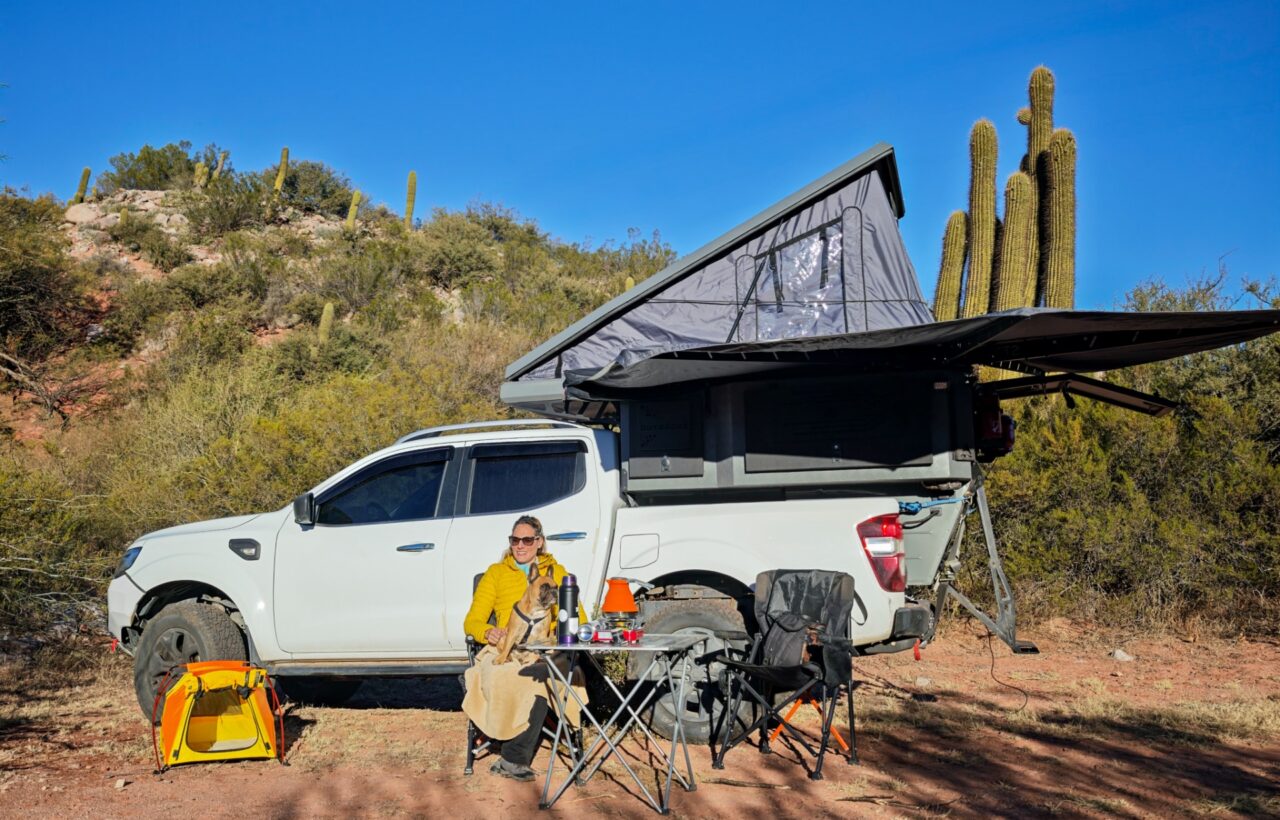

Truck tent camping is sleeping in a tent that straps to a pickup bed instead of pitching on the ground. The truck becomes the floor, the tailgate becomes the porch, and you stay off wet dirt, rocks, and most crawling insects.
That sounds simpler than a rooftop tent or a camper shell, and for many weekend trips it is. The catch is that the tent only works if it fits your bed, if you accept that the truck is parked once the tent is up, and if you solve the sleeping surface before you worry about brand names. Most disappointing first nights come from those three issues, not from a “bad” tent.
This guide explains how the setup actually works, how it compares with other truck camping options, and what to get right before you buy.
What Truck Tent Camping Actually Is
A truck bed tent is a shelter shaped around a pickup box. It attaches to the bed rails with straps or clamps, uses poles (or the bed itself) to stand up, and usually has a fabric sleeve that covers the open tailgate. Mesh windows, a rainfly, and a zipper door at the tailgate are standard.
It is not:
- A rooftop tent (those sit on a rack above the cab)
- A camper shell or topper (a rigid cover that stays on the truck)
- A slide-in truck camper (a heavy living unit that uses payload capacity)
- A ground tent that happens to be near a truck
The useful idea is elevation without a permanent build. You already own a flat, lockable platform on wheels. The tent is the cheapest way to turn that platform into a bedroom.
Typical numbers to expect:
- Cost: about $60–$100 for a basic polyester tent, $180–$300 for the most common mid-range models, $450–$550 for heavy canvas. Hybrid hard-shell and tonneau-style systems cost far more.
- Setup: 10–20 minutes the first time, often under 10 minutes after a few practice runs.
- Sleepers: two adults in most beds. A third person only works in a long bed, and usually only if one sleeper is a child.
- Truck needed: a standard pickup with a 5- to 8-foot bed and usable bed rails. No drilling is required for most strap-on tents.
Napier has been making truck tents since the mid-1990s; the category is mature, not experimental.
Who Truck Tent Camping Works For
It is a good fit if most of these are true:
- You already own a pickup and camp a few times a year.
- You want off-the-ground sleep without installing a roof rack.
- You usually park at a campground, trailhead, or a legal dispersed site you can drive to.
- Two people is the maximum you need to sleep.
- You are willing to empty (or at least reorganize) the bed at camp.
It is a poor fit if you need to leave camp during the day without tearing everything down, if you camp with a family of four, if you want four-season storms as a regular plan, or if your “campsite” is often a rest area or city lot. A deployed truck tent is treated as camping gear in many places that allow sleeping inside a vehicle.
Hunters, trailhead hikers, and weekend road-trippers tend to like the format because the truck is already going where they want to sleep. Festival campers often dislike it for the opposite reason: once the tent is up, the truck is stuck, and the bed cooks in full sun.
How a Truck Bed Tent Attaches
Most designs follow the same logic.
The tailgate drops. The tent body sits in or over the bed. Poles create a peaked roof so rain sheds and you can sit up. Straps wrap the bed rails or hook under the box. A tailgate sleeve closes the rear opening so bugs and weather do not walk in under the door.
Two design families matter more than brand names.
Floor tents
Models such as the Napier Backroadz and Sportz use a sewn-in floor. The sleeping space is a closed bag sitting in the bed. Bugs and puddles have a harder time reaching you. The tradeoff is that the floor has to go down first, which usually means the bed must be empty.
Floorless tents
Rightline Gear’s design is the common example. The tent walls clamp to the rails and use the truck bed as the floor. You can often pitch it with bins still in the box, then sleep on a pad on top of a cleared area. Setup is faster. Water and dust can still find the gaps around wheel wells and the tailgate.
If you camp in wet climates or hate insects, a floor is worth the extra unloading. If you live out of the bed and hate moving every tote twice a day, floorless is the more honest choice.
Other hardware you will notice
- Cab-access window: a rear panel that lines up with a sliding rear window so you can pass gear or crawl through without going outside. Useful in rain. Useless if your truck has no sliding rear glass.
- Awning: extra shade over the tailgate. Nice in sun and light rain. Extra poles and extra wind load.
- Rainfly: not optional in real weather. A 1,500–2,000 mm PU coating is typical on polyester tents. That rating is fabric resistance, not a promise that zippers, stake points, and the tailgate gap will stay dry.
Do not drive with the tent erected except at parking-lot speed. Highway airflow will wreck poles, rip fabric, and can throw debris into traffic. Pack it before you move.
Truck Tent vs Ground Tent vs Rooftop Tent vs Topper
| Factor | Truck bed tent | Ground tent | Rooftop tent | Camper shell / topper |
|---|---|---|---|---|
| Starting cost | $60–$550 | $30–$400+ | $1,100–$4,500 with rack | $1,500–$5,000+ |
| Setup | 10–20 min | 10–30 min | 2–5 min once mounted | Already there |
| Sleeps off ground | Yes | No | Yes | Yes |
| Site needed | Level-enough parking | Any flat patch | Level-enough parking | Level-enough parking |
| Vehicle change | None | None | Rack + weight + drag | Permanent-ish install |
| Fuel penalty | None when packed | None | Often noticeable | Some, depending on shape |
| Leave camp without teardown | No | Yes | Usually no (or limited) | Yes |
| Bed still usable for cargo | Only when tent is packed | Yes | Yes | Reduced |
A truck tent buys rooftop-style elevation at ground-tent money. What it does not buy is mobility after setup or extra living space. A topper wins if you camp often enough that tearing fabric down every morning feels like a chore. A rooftop tent wins if the bed must stay full of gear. A ground tent still wins if you hike away from the truck or camp with more than two people.
New hybrid products — tonneau covers that pop into a hard-walled shelter in about 90 seconds — try to split the difference. They are a different purchase: more money, more structure, and you keep cargo under the cover. Treat them as a small camper, not as a $200 tent.
Fit Comes Before Brand
“Universal fit” in this category means “fits a range of advertised bed lengths,” not “fits every pickup.” Measure the inside of your box.
Tape from the inside of the front bulkhead to the inside of the closed tailgate. Ignore the brochure number. A “5.5-foot” full-size bed is not the same as a “5-foot” Tacoma bed.
Typical inside lengths:
| Class | Common label | Rough inside length | Examples |
|---|---|---|---|
| Midsize short | 5 ft | ~59–62 in | Tacoma, Ranger, Gladiator, Colorado |
| Midsize long | 6 ft | ~73–76 in | Tacoma 6-ft |
| Full-size short | 5.5–5.8 ft | ~65–70 in | F-150 5.5, Silverado 5.8, Ram 5'7" |
| Full-size standard | 6.4–6.6 ft | ~76–80 in | F-150 6.5, Silverado 6.6 |
| Full-size long | 8 ft | ~96–98 in | Super Duty, many HD boxes |
Also measure width between wheel wells. Full-size trucks are often around 48–51 inches. Midsize trucks can drop to about 44–46 inches. That number decides whether a mattress lies flat or bridges the wells like a hammock.
Tonneau covers complicate fit. Soft roll-up covers can sometimes stay on if they sit low. Hard tri-folds and hinged covers usually have to come off. Check the tent maker’s vehicle lookup, then confirm with your actual cover height.
If you change trucks later, the tent may not transfer. Midsize and full-size models are not interchangeable.
Choose by bed length, not star ratings. A 5.5-foot full-size tent on a 5-foot midsize bed will not tension correctly, and a too-wide mattress fails at the wheel wells before the rainfly ever matters.
How to Set Up a Truck Tent Without Fighting It
Practice in the driveway in daylight. First-time setup at a dark trailhead is how poles get bent and rainflies get put on backward.
- Park almost level. A slight slope toward the tailgate is better than a slope toward the cab, because rain that sneaks in will run out instead of pooling at your pillow.
- Drop the tailgate and clear the bed. Even floorless tents need a clean sleeping area. Sweep grit so it does not grind into the floor fabric.
- Lay the sleeping pad or mattress first if the tent has a floor that goes over it, or after the walls are up if you are using a floorless design. Follow the model’s order. Putting a thick mattress in after a tight floor is a wrestling match.
- Identify poles before you start. Color-coded sleeves exist because people mix sections. Seat every shock-cord joint fully. A half-clicked pole is the usual reason a roof sags.
- Raise the body, then tension the rail straps evenly. Tight on one side and loose on the other pulls the door out of square.
- Fit the tailgate sleeve. This is the leak and mosquito zone. Close the bottom and sides with no obvious gaps.
- Add the rainfly and guy lines. Stake the fly even if the forecast is clear. Wind finds an unstaked fly first.
- Do a walk-around. Poles seated, straps even, fly not touching the inner roof in a big sag, door zipper running freely.
First setups commonly take 15–30 minutes. After two or three repetitions, most people land in the 8–12 minute range.
Take it down before the fabric sits wet in a bag. Polyester mildews. Canvas is worse if stored damp.
The Sleeping Surface Matters More Than the Tent
A truck bed is a steel tub with two wheel-well lumps and a metal floor that dumps body heat on cold nights. The tent only keeps weather off. Comfort comes from what you put under you.
Wheel wells
A standard household air mattress is often too wide. It bridges the wells and leaves your hips on a ridge. Measure the flat floor between wells, then buy a pad or mattress that fits that width, or use a mattress made for truck beds that drops a lower section over the tailgate.
Insulation
The bed floor is a heat sink. A sleeping pad with a real R-value (or a closed-cell foam layer under an air mattress) matters more in a truck than in a ground tent on dirt, because dirt is often warmer than bare metal. Skip this layer and the first cold night feels like sleeping on a refrigerator.
Platforms
A thin plywood sheet over the wells flattens the bed. A raised platform adds under-bed storage but steals headroom inside the tent. If you use a platform with a tent, keep it low — roughly wheel-well height or lower — or you will sit hunched. Platforms make more sense under a topper than under a fabric tent.
Changing clothes and sitting up
Headroom is usually in the 5'4"–5'10" range at center, depending on the model and bed height. You can sit. You will not stand. Plan to change sitting down, and keep tomorrow’s clothes in a small cube at the cab end so you are not kneeling on wet shoes.
Weather: Rain, Wind, Heat, and Condensation
Rain
Quality polyester tents with a rainfly stay dry in ordinary rain if the fly is tensioned and the tailgate sleeve is closed. Failures cluster at three places: untaped seams after UV aging, zipper lines without storm flaps, and the gap where floor fabric meets the bed and tailgate.
If water appears at bed level near the wells, that is intrusion from the box, not a roof leak. A bed mat that fills those gaps, plus a pad raised off the floor, helps more than extra seam sealer on the fly.
Park so the tailgate is the downhill end when you can.
Wind
The tent sits higher than a ground tent and presents a broad side. Stake guy lines. Face the smallest wall into the prevailing wind if the site allows it. Cheap fiberglass poles can buckle in strong gusts; that is a known limit of budget models, not a surprise defect. Canvas on a steel frame handles weather better and weighs a lot more.
Heat
A dark fabric box on a steel bed in July becomes an oven by 8 a.m. Mesh windows and a fly with a vent help at night. They do not beat midday sun. Shade the truck with a separate tarp or park under trees. Reflective emergency blankets on the fly are an ugly trick that works. Idling the truck to pipe cabin A/C into the tent creates exhaust and carbon monoxide problems; do not treat that as a sleeping plan.
Condensation vs leaks
Your body puts a pint or more of moisture into the air overnight. On cool nights that moisture hits cold fabric and turns into droplets. It feels like a leak. It is not. Condensation shows up as a general damp film on walls and bags. A leak drips from one seam, pole sleeve, or corner.
Fix condensation with airflow: crack vents, keep the fly off the inner tent, use a small battery fan. Sealing every seam will not fix it. Canvas breathes better than coated polyester and usually condenses less, which is the main reason people pay for Kodiak-style tents.
Never run a fuel-burning heater inside the tent or a closed bed. Carbon monoxide in a small enclosed volume is not a comfort issue. It is a fatal one.
Keep cooking and heating with combustion out of the bed; the stove belongs outside. Any heater should be rated for indoor-safe use and run with ventilation, or stay home. Sealing the tent up tight also backfires, since breath alone leaves the walls wet by morning.
The Problem Most Product Lists Skip: The Truck Cannot Leave
Once the tent is standing, the pickup is the bedroom. A snack run, a trailhead shuttle, or moving to a quieter loop means a full teardown.
That is fine for a two-night stay where the truck sits. It is miserable at a week-long event or a basecamp where you wanted to drive to a second trail.
Workarounds people actually use:
- Pack the bed in two or three handled totes that lift into the cab or onto a picnic table in one trip.
- Keep daily clothes and food in the cab so the bed only holds sleep gear.
- Use a floorless tent if you insist on leaving some cargo in the box.
- Accept that this style of camping is “park and stay,” then pick sites accordingly.
If you need the truck during the day, a ground tent next to the truck, a rooftop tent, or a topper is the more honest tool.
What to Pack Beyond the Tent
You do not need a build-out. You do need the layer the truck does not provide.
- Sleeping pad or truck-width mattress plus a foam or reflective layer against the metal
- Sleeping bag rated colder than the forecast low
- Headlamp that is not only in the bottom of a tote
- Leveling blocks or scraps of wood for a lopsided lot
- Small stool or step if the tailgate is high
- Battery lantern and a USB fan
- Tarp for extra shade or a muddy tailgate
- Dry bag for tomorrow’s clothes
- Basic seam sealer if the tent is new polyester (apply at home)
- Way to store food for the local wildlife rules
The cab is your gear locker and storm bunker. Keep keys, phone, and a warm layer in reach if you have a cab-access panel.
How to Decide If You Should Buy One
Buy a truck tent if you want a simple, reversible way to sleep off the ground a handful of weekends a year and you can live with parking the truck for the night.
Look at canvas if you camp in shoulder seasons, hate condensation, and will store the tent dry. Look at a mid-range polyester floor tent (Napier’s Backroadz and Sportz lines are the ones most reviewers keep landing on) if you want a closed sleeping space and color-coded poles. Look at a floorless Rightline-style tent if speed and leaving cargo in the bed matter more than a sealed floor.
Skip the category if your real problem is “I camp with kids and a dog for a week” or “I need to drive out for coffee.” Those are different tools.
A $200 tent will not make a bad site comfortable. It will make a legal, almost-level parking spot into a dry bunk. That is the whole product.
Frequently Asked Questions
Can two adults sleep in a truck tent?
Yes in most full-size and many midsize beds, with a mattress that fits between the wheel wells. Shoulder-to-shoulder space is closer to a small backpacking tent than a bedroom. Changing clothes is the tight part, not lying down.
Do I need to remove a bed liner?
Drop-in plastic liners usually stay. Thick spray-in liners are fine. Raised rail caps and some aftermarket rails can interfere with straps. The issue is strap path and sleeve fit, not the liner material.
Can I use a regular camping tent in the bed?
People improvise. A ground tent’s floor and stake-out geometry are wrong for a box with wells and a tailgate gap. It can work in a pinch. It is a worse seal and a worse use of the bed than a tent cut for the job.
Are cheap $60 tents a waste?
For one or two dry-season trips they can be enough. Seams, poles, and coatings are the parts that fail first. If the tent will live in a hot garage and see real rain, spend enough for taped seams, a full fly, and poles that do not splinter on the second trip.
Is truck tent camping allowed on BLM or national forest land?
Often yes where dispersed vehicle camping is allowed, subject to stay limits, fire rules, and road restrictions. It is not allowed everywhere a truck can physically park. Confirm the unit’s current rules. Rest areas and many city lots are the places that look convenient and are the most likely to treat a pitched tent as prohibited camping.
What about winter?
A canvas tent plus a high-R pad and a cold-rated bag can handle shoulder-season nights. Deep winter, snow load, and heating are outside what most truck tents are built to do. A topper or slide-in is the winter tool.
Truck tent camping is a narrow, useful idea: cheap elevation for people who already drive a pickup and plan to stay put overnight. Measure the bed, fix the mattress, practice the pitch, and treat the truck as parked. Do those four things and the category makes sense. Skip them and no “best tent” list will save the weekend.