Romantic tent camping is a trip for two planned around a night that stays private, warm and easy, with nobody stuck managing a crisis. The most important step is to treat comfort as the plan itself.
A secluded site, a tent with room to move, a sleep setup that stays quiet and together, and a meal finished before dark do more for the mood than string lights. Get those in place and the atmosphere follows.
What actually makes tent camping feel romantic
Most lists treat romance as decoration: fairy lights, s’mores, a playlist. Those help. They do not rescue a trip that is cold, loud, or spent arguing over poles at dusk.
The conditions that hold up are simpler. You can hear each other. You are not performing for the next site over. You sleep well enough to stay. The evening has one or two shared things to do, not a packed itinerary. Food tastes like a meal, not a ration. Someone has already practiced putting the tent up.
The reverse is also predictable. A first overnight with a partner who has never camped, a walk-in site after a hard hike, a family loop full of generators, and a two-person tent with a queen air mattress stuffed inside it all fail for the same reason: the logistics eat the night. Keep the first shared trip short, close to the car, and easy to leave if the weather turns.
Camping with someone you do not know well is a different decision. An overnight in a remote place removes easy exits. Save the tent for a partner you already trust.
Choose the site before you choose the gear
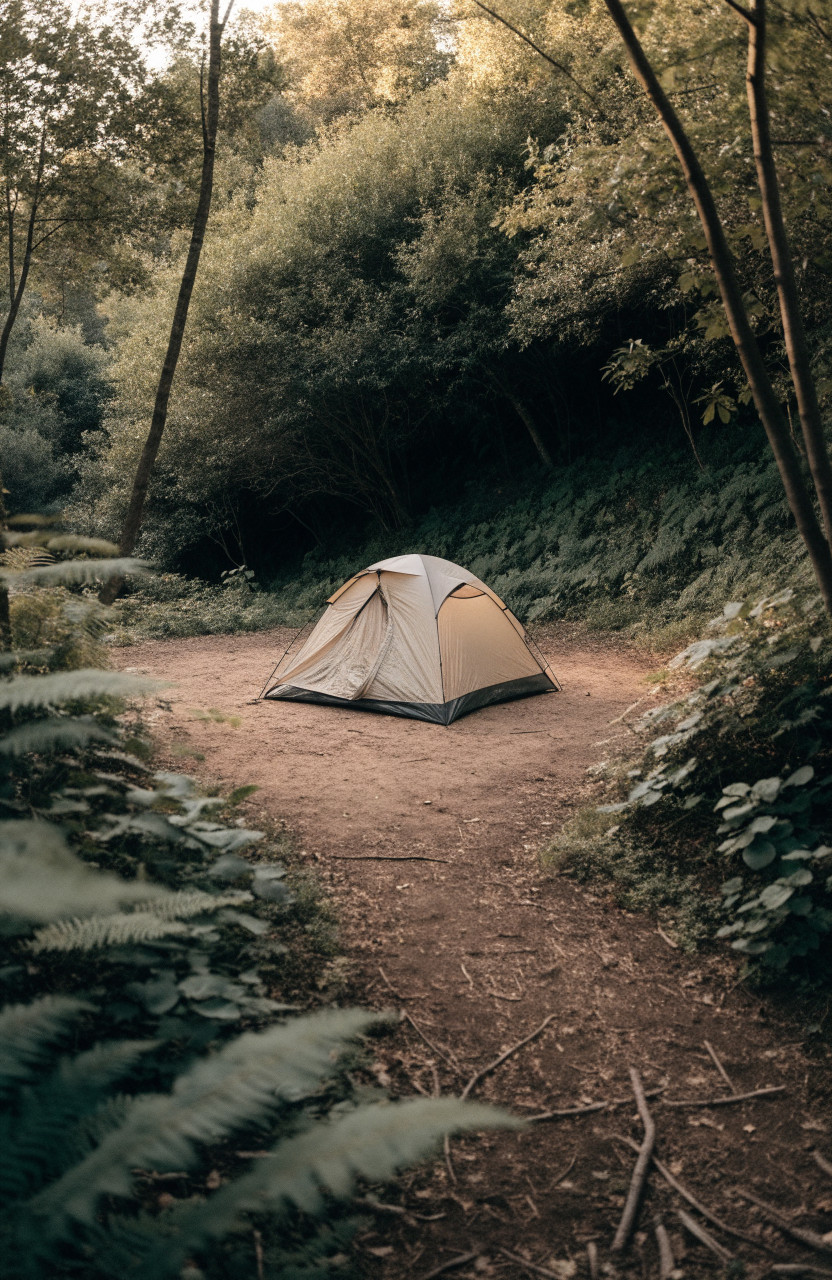
Privacy decides the trip more than the tent brand. A well-equipped campsite next to a playground still feels like a shared backyard. A plain site with trees between you and the next pad can feel secluded even in a public campground.
Look for these site traits, in order:
- An end site, a walk-in pad, or a loop with few neighbors, rather than the middle of a family circle.
- Natural screening from trees, brush, or a rise, so the tent door does not face the road or the next picnic table.
- A western opening if you care about sunset, and a reasonably dark horizon if you care about stars.
- Toilets close enough to use at night, but not so close that doors and lights run all evening.
- Level ground. A slope under a double pad is a slow argument.
Reserve a specific site when the park allows it. “Any site in Loop B” is how couples end up beside a reunion. Hipcamp-style private land, small campgrounds that limit generators, and dispersed sites on public land are often quieter than large resort parks. Dispersed camping trades amenities for space: no table, sometimes no toilet, and you must follow local fire and stay limits.
For stars, darkness matters more than a telescope. The Bortle scale ranks sky brightness from 1 (very dark) to 9 (inner city). Rural campgrounds often sit around 4 or 5, where the Milky Way is visible as a band. Suburban-edge parks are often 6 or 7, where only bright stars remain. A light-pollution map and DarkSky International’s list of certified places are enough to pick a region. Within any campground, your neighbor’s lantern can still wipe out the view, so site choice still matters after the map does.
Check the forecast several days out and again the morning you leave. A cold, wet night is recoverable for experienced campers. It is a poor introduction. Postpone if the overnight low is well below what your sleep system can handle, or if heavy rain is the main event.
Pick a tent for two bodies, not the number on the bag
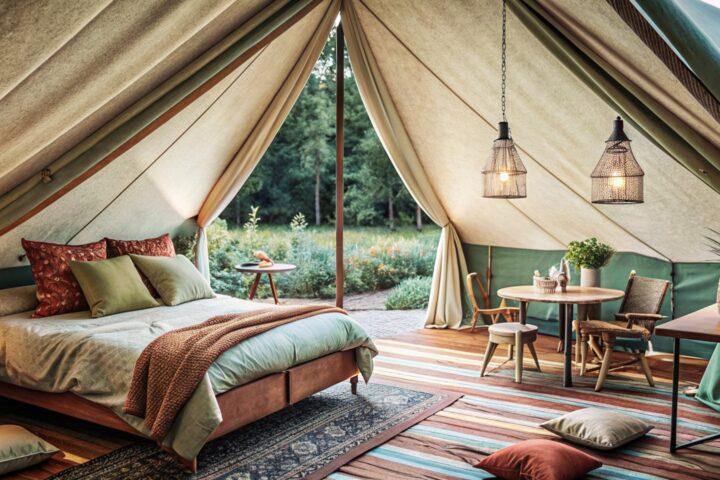
Manufacturers rate tents by how many narrow sleeping bags can touch the walls. That number is not a comfort rating. Independent testing of car-camping tents has treated roughly 40 to 60 square feet as a workable range for two people who also want gear out of the way. A labeled three-person tent near 43 square feet can fit a couple. It will not fit a couple, a queen mattress, and two duffels.
Use the floor area and peak height, then match them to how you are traveling.
| Setup | Practical size | Why it works | Tradeoff |
|---|---|---|---|
| Car camping, one or two nights | 3-person, about 40–50 sq ft, or a small 4-person | Room for two pads and a little floor space | Still stoop to dress |
| Car camping you want to linger in | 4-person, often 55–70 sq ft, peak near or above 5 feet | Easier to change, sit up, and keep a bag inside | Heavier, longer to pitch, less “cozy” if the site is exposed |
| Backpacking | True 2-person, or a 3-person if weight allows | Carries | Intimate becomes cramped fast; store gear in the vestibule |
Two doors matter more than people expect. One door means the person on the inside climbs over the other person every time someone gets up. A vestibule keeps wet shoes and the stove out of the sleeping room. Mesh high on the walls, covered by the fly, gives airflow without turning the tent into a lantern show.
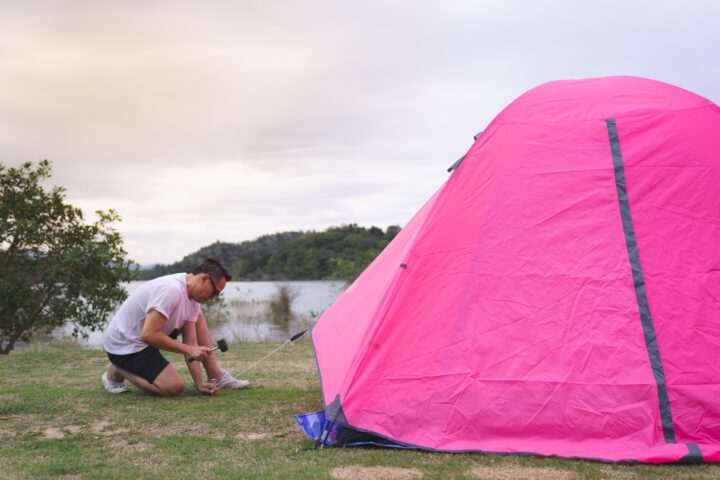
Pitch once at home. Romance does not survive a first assembly in failing light. Face the door toward brush or away from the path so you can vent it without an audience. Stake it even if the evening looks calm. A gust at 2 a.m. is a worse interruption than taking five extra minutes at setup.
Build a sleep system you will not fight
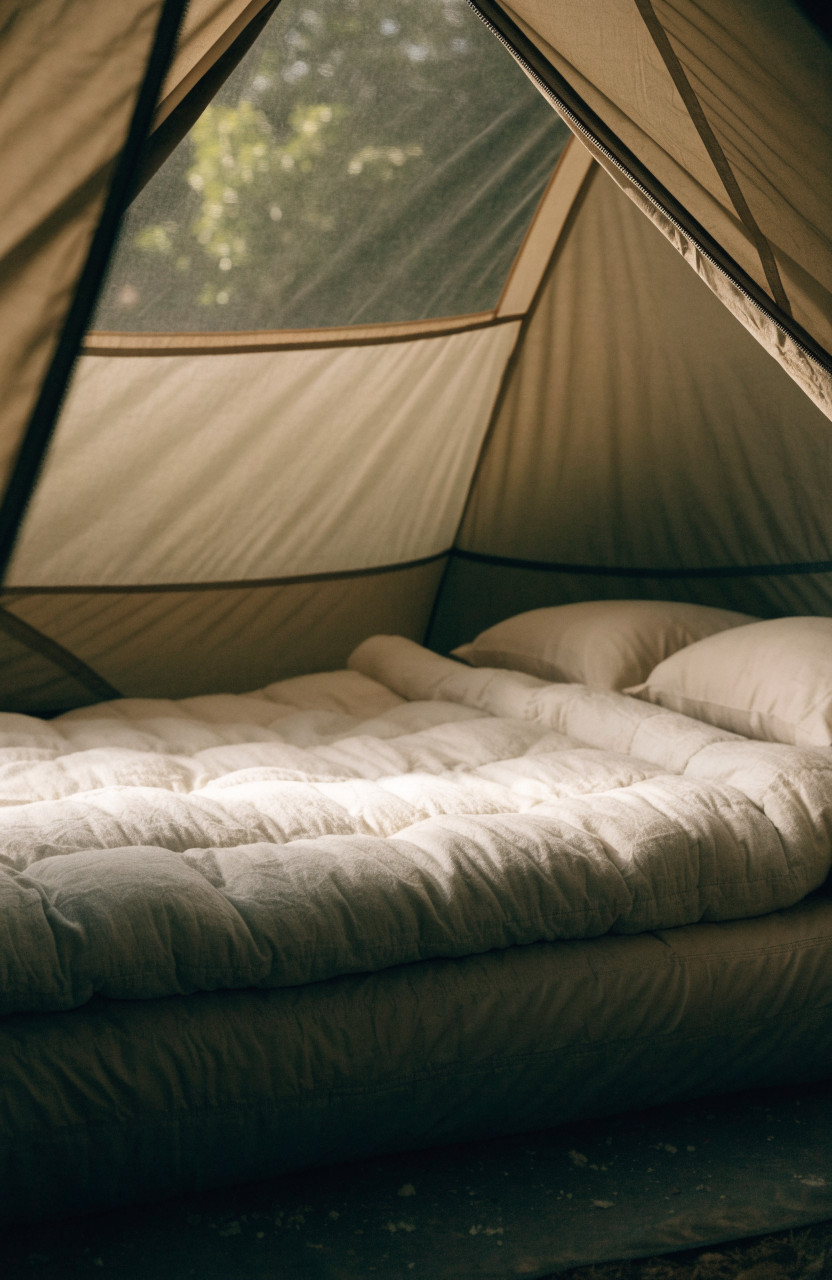
Cold and a bad pad end more romantic nights than a lack of ambiance. Plan the bed before the lights.
A double sleeping pad, or two matching pads held together with a sheet or pad straps, beats a cheap full-size air mattress for most couples. Tall air beds bounce, squeak, and slide apart. They also chill you from below unless they are insulated. A thick self-inflating or foam pad in the 3- to 4-inch range is quieter and warmer. If you already own a familiar air bed and the site is mild, it can work. Put a blanket or fitted sheet over the surface so skin is not on vinyl.
Sleeping bags are a preference, not a rule.
- A double bag is simple and close. It is also harder to vent if one of you sleeps hot, and a poor fit if your temperature needs differ.
- Two bags that zip together let you split them when one person is sweating.
- Quilts or a shared blanket over separate pads work in mild weather and feel more like a bed.
Bring real pillows if the car can carry them. Camp pillows are fine for backpacking. They are a downgrade on a date. Pack a dry base layer used only for sleeping, so hike clothes and smoke stay out of the bag. A hot-water bottle in a sock at the foot of the bag fixes a cold night faster than another blanket you do not have.
Condensation is normal. Breath and body heat meet cold tent fabric and drip. Vent a high window even when it is chilly, and do not press bags against the wall. In the morning, wipe the fly before you pack it wet against your clothes.
Set the camp so the evening does the work
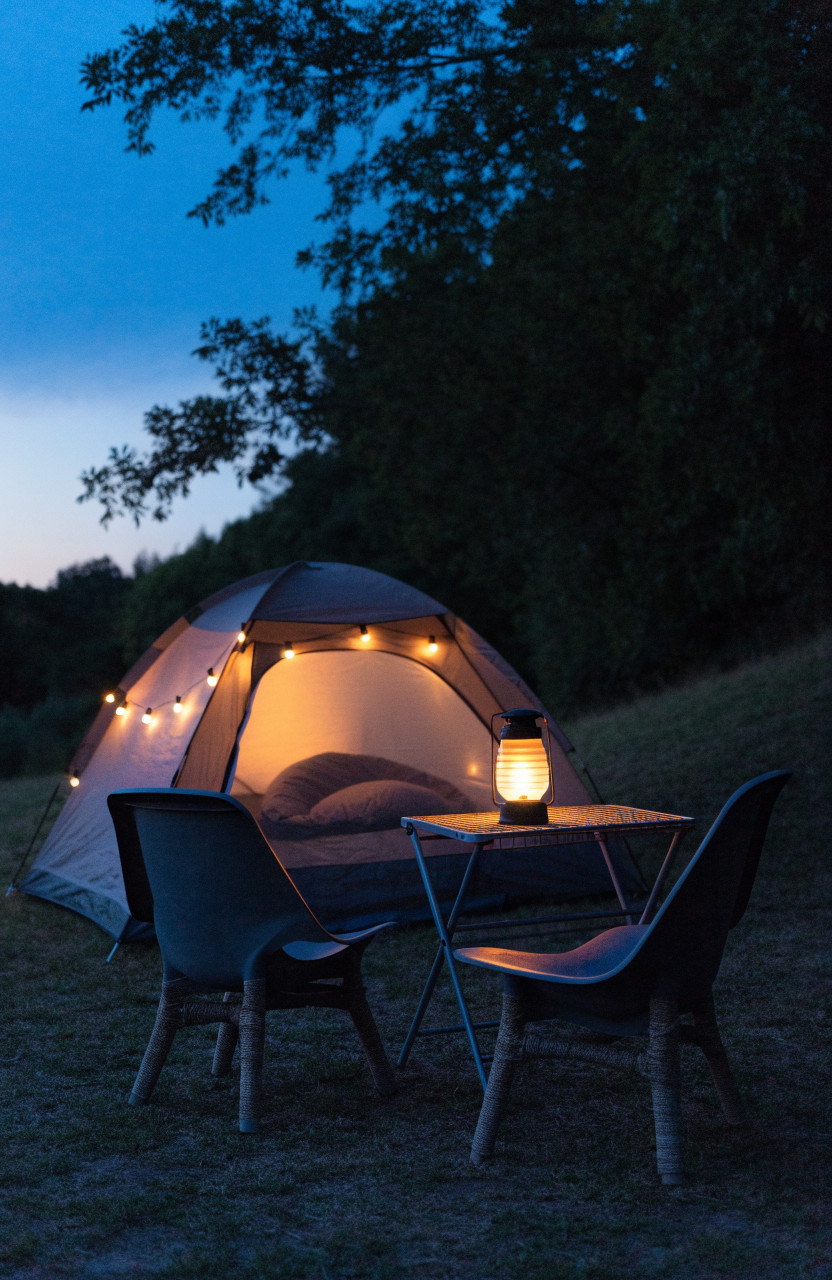
Do the chores first. Tent up, pads inflated, water filled, fire legal and ready or explicitly skipped. The mood part should start while there is still light, not after a headlamp argument.
Lighting is the highest-return detail, and it has a hard rule: no open flame inside the tent. Nylon melts and burns. Use warm-white battery or solar string lights outside, and a dim lantern or tea-light style LED inside. One bright white headlamp on high will flatten the scene and wreck night vision. Red light, or the lowest warm setting, is enough to move around.
Hang lights low and warm, not as a flood over the whole site. If other campers are nearby, kill interior lights before anything private. Tent walls cast silhouettes. Neighbors can hear more than you think, including a speaker and a squeaking pad.
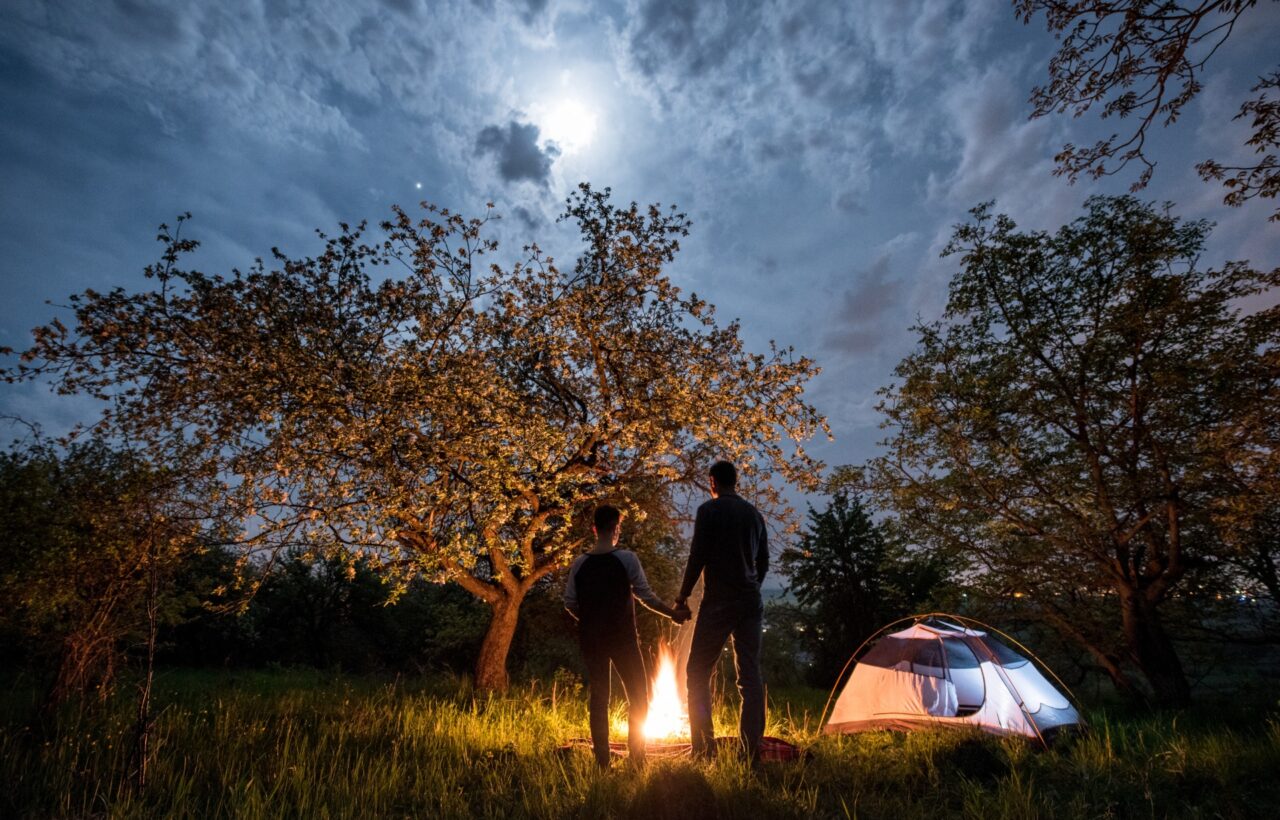
A campfire is the classic center of the evening when it is allowed. It is also the easiest way to ruin the trip. Check burn bans before you leave. Use an existing ring. Keep the fire small, attended, and well clear of the tent, brush, and overhanging branches. Public-land guidance commonly calls for substantial clearance. Fifteen feet is a widely cited minimum, and wind carries embers farther. Extinguish it until the ashes are cold, not just dark. If fires are banned, a propane table fire where permitted, or no fire at all, is the correct choice. Stars are better without smoke in your bag anyway.
Outside the tent, two chairs close together or a double hammock beat a full lounge set. A blanket on the ground works if the site is dry and you have checked for ants. Keep the speaker quiet. A campground at night carries sound across loops.
Cook one good meal, not a campcraft demo
Food is the part couples under-plan and then resent. A romantic camp dinner is a short menu with one hot element, not a recipe that needs a clean counter.
Good patterns:
- Something prepped at home and reheated: a stew, pasta, or marinated protein that only needs a pan.
- A cold centerpiece plus one warm side: bread, cheese, fruit, olives, and a pot of soup.
- Breakfast that does not require talent: good coffee, eggs if you have a cooler, or oats with extras you actually like.
Skip the dish that needs constant attention while you are also tending a fire. Bring real plates if weight is irrelevant. Metal camp cups are fine. Plastic wine glasses are fine. The point is that the meal feels chosen.
Cooler strategy matters on an overnight. Freeze bottles for ice so you are not buying a bag that melts into the food. Pack dinner on top. Keep raw meat sealed and separate. Store the cooler in the car if the site has wildlife that opens coolers, and follow local food-storage rules. In bear country that can mean a locker or a hang, not a romantic picnic left on the table.
Wash up before you sit down for the night. A basin, biodegradable soap used away from the water source, and a trash bag you will pack out keep the morning from starting in last night’s pan.
Activities that stay easy
The best shared plans are short and optional.
A slow walk to a viewpoint beats a summit you have to “make.” A paddle at dusk works if you already know the boat and the wind. Cards, a book read aloud, or nothing but the fire are enough. Stargazing needs darkness and a clear sky more than an app, though a sky app helps you name what you are seeing. Lie on the pads outside only if bugs and dew allow it. Otherwise open the rain fly’s window and stay in the bag.
Do not use the trip to teach. Correcting stove technique, pace, or knot-tying turns a partner into a student. If one of you camps and the other does not, the experienced person handles the fiddly tasks and explains only what is asked.
Leave phones in the tent after photos. Checking them is an easy way to import the week you came to leave.
Privacy, intimacy, and the limits of a tent
A tent is a thin room. Plan for that instead of pretending canvas is a hotel door.
Choose the farthest practical pad from the bathhouse path. Face the door into cover. Keep the fly zipped against insects once you are inside. Warm weather needs vents. Cold weather still needs a crack of airflow or the walls will rain on you. Turn lights off. A thick pad is quieter than an air mattress. Have what you need within reach so nobody is digging through a stuff sack.
Practical extras that matter more than lingerie: wet wipes, a small towel, contraception if you use it, and a way to deal with mess without trekking to a vault toilet in socks. Elaborate clothing is harder to manage in a low tent than simple layers.
If the campground is crowded, lower your expectations. Closeness can still be the evening. Privacy for anything more may not be available, and pushing it makes the site worse for everyone else. A private parcel or a truly dispersed site changes that calculation. It does not remove the need to follow leave-no-trace rules and local law.
Weather, bugs, and the other mood killers
Name the failure modes before you pack, because each has a cheap fix.
- Cold. A pad with insulation, a bag rated below the forecast low, dry clothes, and a hat. The rating on a bag assumes you are on a pad, not on the tent floor.
- Rain. A full-coverage fly, seams that have been checked, a footprint or groundsheet that does not stick out and channel water under you, and a vestibule for wet layers. Pitch on a slight rise, not in a drainage.
- Bugs. A tent with no holes, a head net if the site is notorious, and repellent used outside the tent so the sleeping room does not smell like it. Citronella candles are not a plan.
- Heat. Pitch in afternoon shade if the morning will be hot, open vents, and accept that a summer tent can be too warm for anything energetic.
- Bathroom dread. Know where the toilet is, bring a trowel and waste bags if the site is dispersed, and do not pick the pad directly beside the vault toilet.
- Unequal labor. Split the load on the way in, and do not save every chore for the person who suggested the trip.
A bailout plan is part of the romance. If the night is miserable, leaving is allowed. One bad trip teaches a partner that camping means suffering. One shortened trip teaches them that you will not trap them in it.
What to pack when the goal is the evening
Essentials, then the few extras that change the feel:
- Tent you have already pitched, stakes, guylines, footprint
- Pads, bags or quilts, pillows, sheet or pad coupler
- Dry sleep clothes, extra socks, a warm layer beyond what the forecast suggests
- Headlamps plus one warm camp light
- Stove and fuel or a no-cook dinner, water, a way to wash up
- Fire tools only if fires are legal: lighter, bucket, existing-ring plan
- Wipes, toiletries, basic first aid, any medication
- Permits, site confirmation, offline map
Worth the space in a car: string lights, a blanket, a simple nicer meal, coffee you like, a hammock if the trees allow it, earplugs for the partner who wakes at every twig.
Leave the axe-and-survival display at home unless you actually need processed firewood. Pre-split wood from an approved local source is both easier and, in many regions, required to limit pests.
Questions couples ask before the first night
Is a two-person tent romantic? Only on a mild backpacking night when both of you like small spaces. For car camping, the labeled two-person tent is usually a squeeze. A three- or four-person tent with real floor area is the more reliable choice.
Do we need a double sleeping bag? No. It is cozy when you run at the same temperature. Separate bags that zip together, or quilts on a shared pad, are easier to adjust and just as close.
Can we use candles in the tent? No. Use battery lights only. Keep any real flame outside, attended, and legal.
What if one of us has never camped? One night, car nearby, good food, a familiar pillow, and no agenda beyond the site. Practice the tent at home. Agree in advance that you can pack up if it is not working.
How do we get privacy in a normal campground? Book an end or screened site, face the door away from traffic, keep lights off and voices down, and do not expect a busy loop to behave like a private cabin. For more quiet, look at small campgrounds, private sites, or dispersed camping where it is allowed.
A romantic tent night is mostly a series of removals: less audience, less gear in the bed, less cooking, less performance. Get the site, the pad, and the weather right, and the lights are optional.