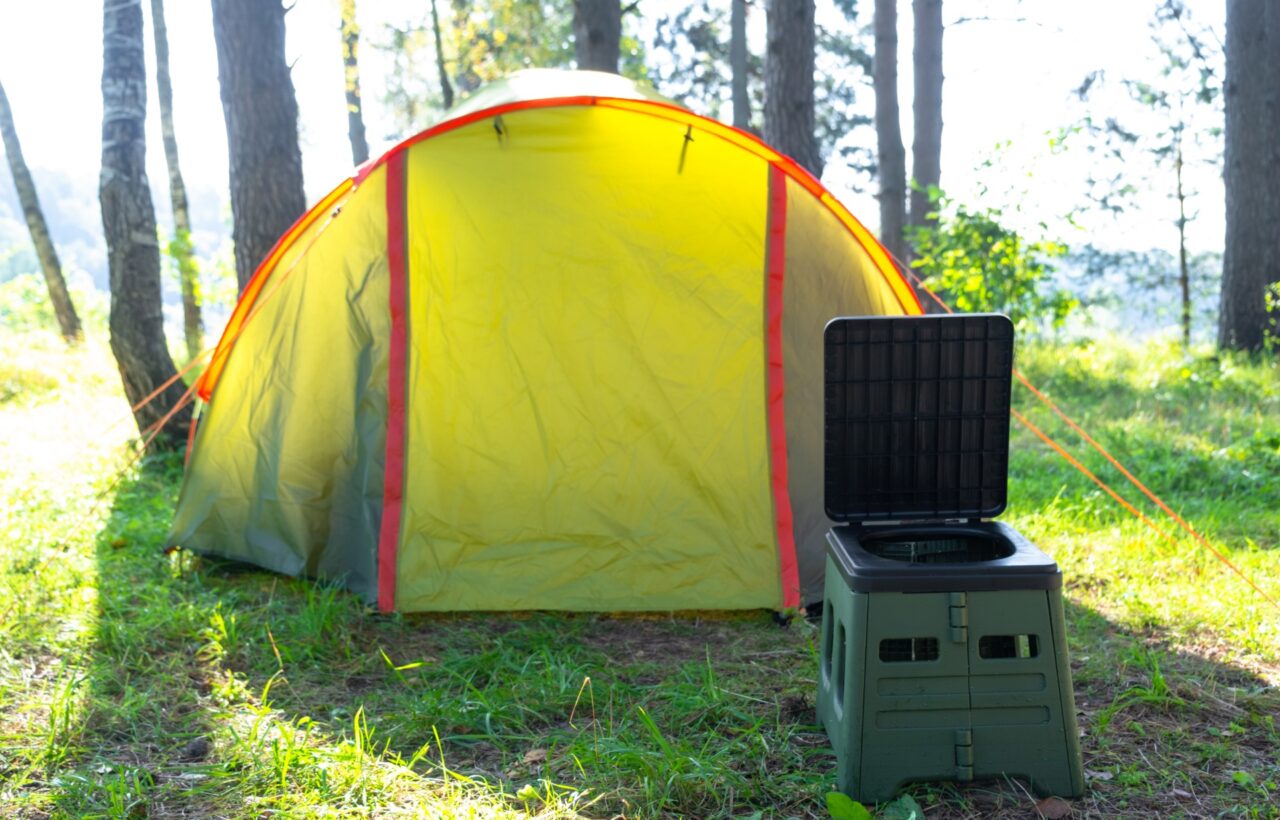
A camping toilet tent is a small privacy shelter built to stand over a portable toilet, bucket seat, or a dug site. It does not replace the toilet. It gives you a door, a roof, and walls so you can use one without an audience, rain, or a headlamp silhouette.
That distinction matters on a crowded campground pitch, a festival field, or a dispersed site with no trees between you and the road. A portable toilet left in the open still works. It just fails the part most people actually care about: not being watched. The tent is the room; the toilet is the fixture. Match both to how you camp, or you end up with a kite that flaps all night and a seat you still do not want to use.
What a camping toilet tent is for
Most models are single-room boxes about 1 to 1.2 metres square (roughly 3 to 4 feet) and 1.8 to 2.1 metres tall (about 6 to 7 feet). Larger utility tents run closer to 1.5 by 1.5 metres or split into two rooms so a toilet and a shower do not share the same wet floor.
The useful jobs are specific:
- Visual privacy from neighbouring pitches, trails, and your own camp
- A dry place to sit when it is raining or windy
- A defined spot so waste, wipes, and paper stay out of the sleeping tent
- A changing space if the footprint is big enough to stand and turn
Odour control is limited. Fabric does not seal smells. Ventilation and a closed waste tank or tied bag do that work. A toilet tent also does not make an illegal site legal. Some campgrounds ban portable toilets, require them only in a designated area, or expect chemical tanks to be emptied at an RV dump point. Check the site rules before you pack one.
When the tent is worth carrying
You need one when privacy is the constraint, not when a toilet already exists nearby.
A dedicated tent earns its space on family car-camping trips, overlanding stops with no facilities, and sites where the only cover is your vehicle. It is less useful if the campground toilets are a short walk, the site is fully screened by brush, or you are backpacking and every extra kilogram has to be justified. Hikers who still want a wall often use a lighter pop-up or a small tarp screen rather than a full utility tent.
Inside the sleeping tent is a poor substitute. Floors are not made for spills, condensation builds fast in a closed space, and a night-time smell stays in the fabric. A vestibule can work for a sealed cassette toilet in bad weather if you crack a vent, but it is a compromise, not a bathroom.
Pop-up, pole-frame, or two-room
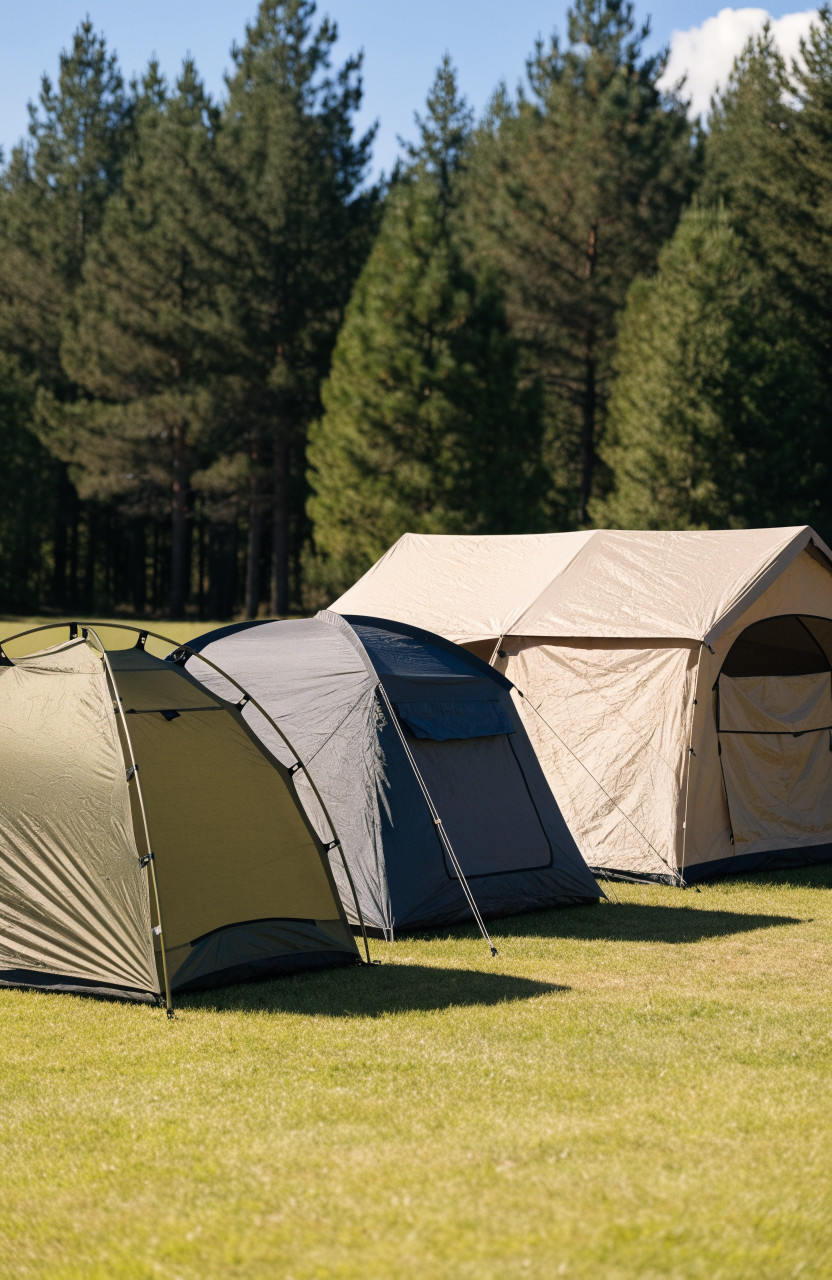
The frame type decides whether the shelter survives the trip or spends it on its side.
Pop-up (spring hoop) tents open in seconds and pack into a flat disc. They suit weekend car camping and anyone who sets up and takes down often. The tradeoff is stability. Thin fabric and a flexible frame catch wind; without stakes they can lift off the ground. Many are tight at about 1.2 metres square, so elbows and a cassette toilet compete for the same floor. Folding them back into the bag has a learning curve. Practice at home.
Pole-frame utility tents use fibreglass or steel poles and guy lines. They take a few minutes to pitch and hold shape better in gusts. A typical usable size is around 1.2 metres square and about 2 metres tall, which is enough for a standing adult and a cassette toilet such as a Thetford Porta Potti. This is the better default if the camp will stay up for several nights or the forecast is unsettled.
Two-room or ensuite shelters separate a toilet bay from a changing or shower bay. They cost more, weigh more, and need a larger flat patch. They make sense for families or longer base camps where one person showering should not block the toilet. A single room used for both means moving the toilet out before you shower, or accepting a wet floor under the seat.
| Camp style | Shelter that fits | Why |
|---|---|---|
| Weekend car camping, frequent moves | Staked pop-up | Fast up and down; acceptable if wind stays moderate |
| Multi-night pitch, coastal or exposed sites | Pole-frame utility tent | Guy lines and a rigid shape hold the door closed |
| Family base camp with a shower | Two-room ensuite | Toilet and wet gear stay apart |
| Backpacking or bike touring | Light pop-up or tarp screen | Weight and packed size matter more than headroom |
Features that change whether you will use it
Floor space matters more than the photo on the bag. A minimum of about 1 by 1 metre lets an adult sit on a bucket or cassette without the door pressing on their knees. Wider is better if you also need to change clothes. Height of at least 1.9 metres lets most adults stand; under that, the tent becomes a crouch box and people stop using it after the first night.
Privacy fails in two predictable ways. Thin or light-coloured fabric shows a silhouette when the low sun is behind the tent, and it shows one again at night if a headlamp or lantern is on inside. Darker fabric and a silver or blackout coating reduce that. The real test is at dusk: zip the door, turn on the light you will actually use, and walk ten paces away. If the beam reads through the wall, hang a small dim light low, or face the bright sky with your vehicle or a solid tent behind the shelter so the fabric is not backlit.
Ventilation is not optional. High mesh, or a high and low pair of vents, moves odour and cuts condensation. Covered vents matter in rain; an open roof vent with no storm flap turns the tent into a bucket. A full-length zip with an inside toggle or tie stops the door blowing open. A hook for a light and a pocket for paper and sanitiser stop you balancing gear on your lap.
Floors are a split decision. A sewn-in or zip-out groundsheet keeps mud and spills off the seat area and can be removed for cleaning. A floorless tent drains better if you also shower in it, but it does nothing to contain a tip-over. For toilet-only use, a removable floor plus a separate groundsheet underneath is the more forgiving setup. Waterproofing around 2000 mm hydrostatic head with taped seams is enough for rain showers. These tents are not storm shelters.
Match the tent to the toilet, not the other way around
The shelter only works if the fixture fits and the waste plan is legal where you are camping.
A cassette or flush-style portable toilet has a fresh-water tank and a sealed waste tank. It suits car camping because the tank is emptied at an RV dump station or other approved point, not in a pit or a regular bin. Measure the base before you buy the tent. A tall cassette plus a seated adult needs the full height, and the door has to clear the tank when you carry it out.
A bucket seat with a liner bag is lighter and cheaper. Double-bagging, a gelling powder or absorbent, and a tight tie keep liquid from sloshing in the vehicle. Bags are trash, not something to bury. Pack them out and dispose of them where solid waste is accepted. Wipes and sanitary products always come out with you. They do not break down in a cathole.
Where land managers allow catholes, Leave No Trace puts solid waste 6 to 8 inches deep and at least 200 feet (about 70 adult steps) from water, trails, and campsites. Urine follows the same distance from water. Alpine, desert, river corridor, and many high-use areas require full pack-out instead. The tent does not change that rule. It only hides the spot.
Keep the toilet tent a short walk from the sleeping tent and cooking area, on flat ground, and downhill of any water you are using. On a busy pitch, a few metres of separation and a door aimed away from neighbours is enough. On public land, distance and pack-out rules outrank convenience.
Setup that stays private in wind and rain
Pitch order is simple, and skipping the stakes is the usual failure.
- Pick flat ground clear of roots and the main path through camp. Face the narrow side or the door away from the prevailing wind so a gust does not peel the door open.
- Stake every corner the tent provides, even on a calm afternoon. Wind shifts. On hard ground, use stakes suited to the soil or weigh guy points with rock-filled stuff sacks. Never rely on the included thin pegs alone.
- Add guy lines. One line into the wind does more for a pop-up than a second person holding the frame.
- Put the toilet in after the tent is anchored. Leave enough floor in front of the seat to stand and turn.
- Hang paper, sanitiser, and a small light within reach. Keep a spare bag and gloves in a pocket, not in the sleeping tent.
- After use, close the cassette valve or tie the bag before you open the door. Crack a vent rather than leaving the door flapping.
At night, a low warm light beats a headlamp pointed at the wall. In rain, a small mat outside the door keeps mud from tracking onto the floor you have to kneel on. If you also shower in the tent, open it afterward so the fabric dries. A closed wet tent smells like mildew by the next morning, which people then blame on the toilet.
Problems that show up after the first night
Most complaints are setup and fabric, not bad luck.
The tent collapses or migrates because it was never guyed. Pop-ups are light. Unstaked, they move in a breeze that would not bother a dome tent. The door blows open because it faces the wind and has no inside tie. The walls glow because the fabric is thin and the light is bright. Condensation drips because the only ventilation is the door, which stays shut for privacy. The floor floods because a shower and a toilet share a non-draining groundsheet.
Repacking is the other trap. Pop-ups that will not return to a disc get forced, and the hoop creases. Watch the maker’s fold once, then repeat it in daylight before you need to do it in the dark.
A camping toilet tent is worth buying when the missing piece is a private, staked room rather than another toilet. Choose the frame for the wind you actually camp in, the floor plan for the toilet you already own, and the fabric for whether a light will be on inside. The rest is placement, a closed waste system, and the local rule for where that waste is allowed to go.
Questions people ask after they buy one
Can one tent be both toilet and shower? Yes, if it is tall enough for a hanging shower bag, has a drain or a removable floor, and you move the toilet out before water hits the ground. A two-room model avoids that shuffle. Greywater still needs to be scattered well away from camp and water, not dumped in a pile at the door.
Will neighbours smell it? A closed cassette valve or a tied, gelled bag keeps most odour in the container. An open bucket will not. Vent the tent, and do not store a full tank inside the shelter next to where people sleep. In bear country, treat human waste like food attractant and follow local storage rules.
Is a cheap changing tent good enough? Often, for a dry weekend, if the fabric is actually opaque and you stake it. Closet-style pop-ups sold for indoor use frequently have no inside zipper pull, thin fabric that silhouettes, and no guy points. Those fail the job even though they look similar in a photo.
Where do you empty it? Cassette tanks go to an RV dump station or another approved sanitary inlet. Bag waste goes in the trash only where that is allowed. Neither goes into a vault toilet not meant for chemicals, a cathole, or a storm drain. If the land requires pack-out, the tent does not create an exception.