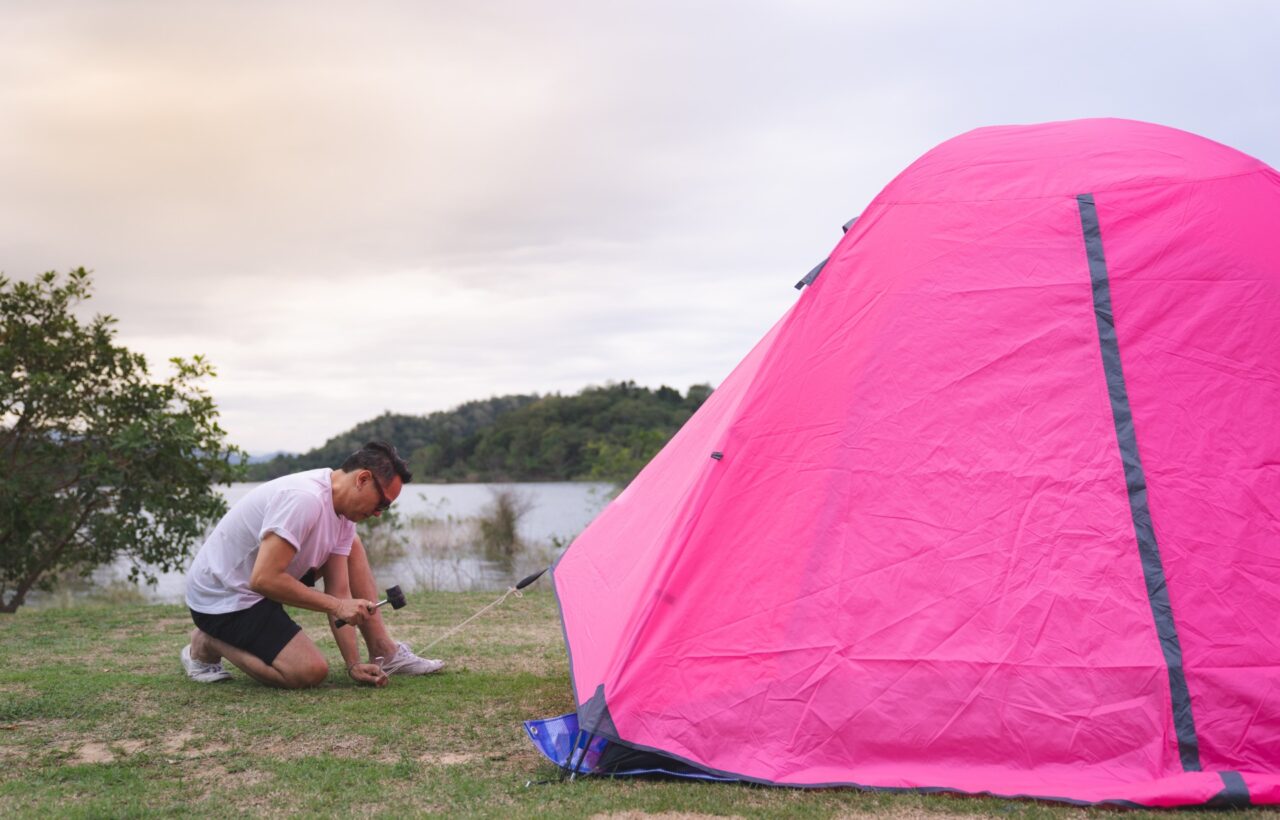
A pink camping tent is worth buying only when the color is attached to a real shelter: a rainfly that covers the living area, sealed seams, a floor that resists ground moisture, and poles that stay up in wind. The shade itself does not keep rain out. Most listings that lead with pink mix three different products — kids’ play tents, fair-weather pop-ups, and actual overnight camping tents — and the wrong one fails on the first wet night.
Color is easy to shop for. Weather protection, usable space, and honest capacity are what decide whether the tent is useful.
Play tents, pop-ups, and real camping tents are not the same product
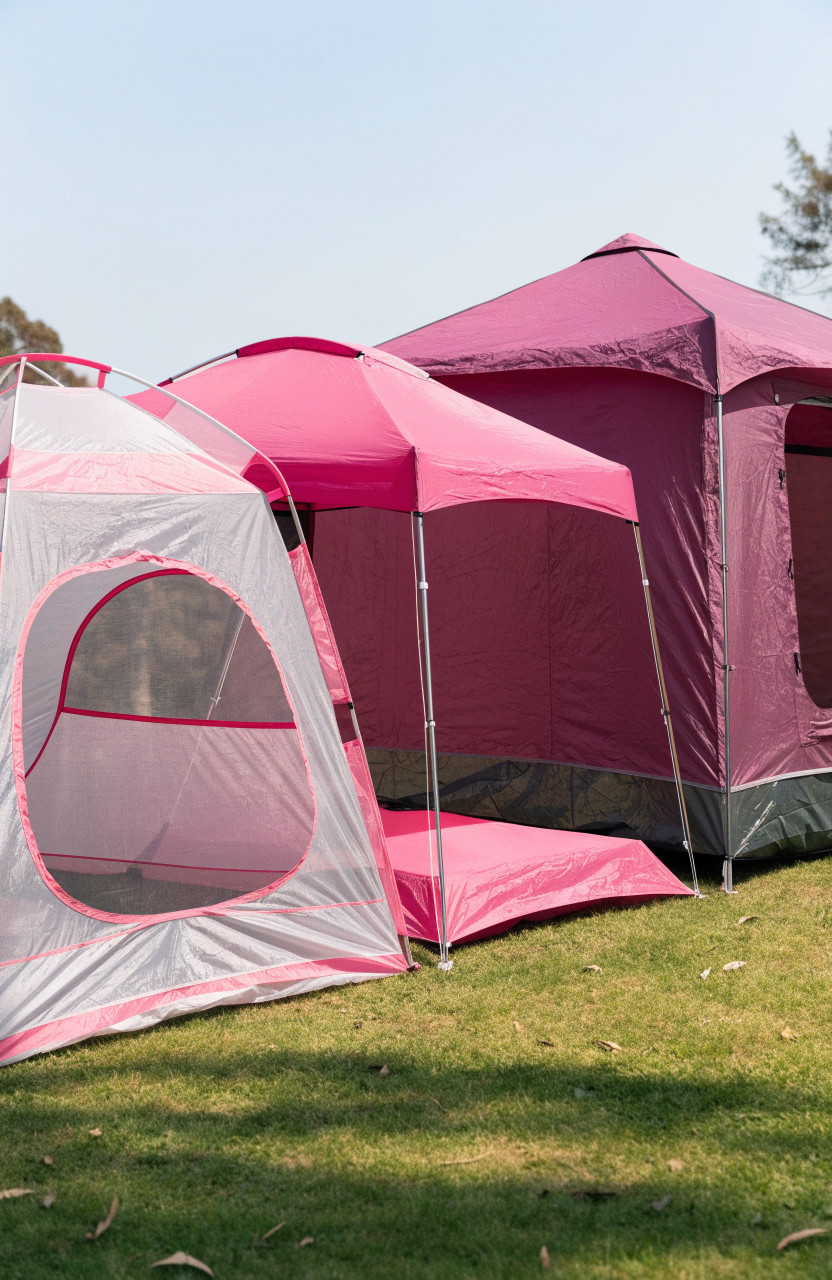
Search results for a pink camping tent usually return all three. They look similar in photos and solve different problems.
A kids’ play tent is a pretend-camping toy. These are typically pop-up fabric houses for ages about 3 to 6, meant for a bedroom, playroom, or a supervised backyard hour. They fold flat, weigh very little, and are not built with a full rainfly, taped seams, or a tub floor. A light sprinkle can bead on the fabric. A real storm will not stay outside. Treat these as indoor or fair-weather play gear, not as an overnight shelter.
A festival or instant pop-up is closer to camping, but many budget versions are still fair-weather shelters. Pre-attached poles can stand in about a minute, which is useful at a music weekend or a driveway campout. The tradeoff is often a partial fly, lighter fabric, and a taller profile that catches wind. Owners of very cheap colored tents — including pink ones sold under unfamiliar brand names — commonly report water coming through seams or thin fly fabric after the first hard rain. A low price and a bright color are not evidence of waterproofing.
An overnight camping tent is the product to buy if someone will sleep in it. That means a separate rainfly (or a full-coverage fly on a cabin), factory-taped or welded seams, a coated floor, stakes, and guylines. Within that group there are still two jobs: backpacking tents you carry, and car-camping tents you park next to.
Match the tent to how you will actually camp
The right pink camping tent depends on the trip, not the photo.
| Trip | What to buy | What usually goes wrong |
|---|---|---|
| Bedroom or backyard pretend play | Pop-up play tent | Using it as an overnight shelter in rain |
| One fair-weather festival night | Instant or pop-up with a full fly, only if the forecast is dry | Wind collapse, partial fly, thin floor |
| Car camping with kids | 4- to 6-person cabin or dome with a full rainfly | Trusting the “person” rating and filling the floor |
| Backpacking or walk-in sites | Freestanding 1- to 3-person tent in a pink or rose colorway | Buying a cabin tent you cannot carry |
| Exposed wind or multi-day rain | 3-season tent with a full fly, taped seams, and solid stakes | Choosing color first and skipping the fly specs |
Car-camping cabins often weigh 15 to 30 pounds or more and pack long because the poles stay attached. That is fine next to a vehicle and a poor choice on a trail. A two-person backpacking tent is commonly in the 2.5- to 5-pound range, with sit-up height rather than standing room.
Some budget backpacking tents are sold in pink or icy-pink colorways. Naturehike’s Cloud-Up series is one example that appears in pink and is built as a real 3-season shelter: freestanding aluminum poles, a silicone-coated fly, and a published waterproof coating often listed around 3000 to 4000 mm, depending on the size and year. Independent reviews of the Cloud-Up line, not of every colorway, generally treat it as a capable budget backpacking tent if it is pitched taut and guyed out. Premium brands more often stick to green, orange, gray, or a limited seasonal color. Do not assume a famous model exists in blush or rose quartz unless the brand’s own page lists that color.
What matters more than the shade
Pink dye does not change how a tent handles water. The coating, seams, fly, and floor do.
Rainfly coverage. The fly should cover the inner tent and extend over the doors. A small “cap” fly leaves mesh and seams exposed. Vestibules — the covered porch outside the door — keep wet packs and shoes out of the sleeping area. A vestibule larger than about 10 square feet is more useful than a decorative awning that does not actually cover the door.
Waterproof rating. Listings quote hydrostatic head in millimeters. Rough guide for 3-season use: under about 1500 mm is fair-weather fabric; 1500 to 3000 mm is a common family-tent range; 3000 mm and above is a better margin for sustained rain. The floor often needs a higher number than the fly because you kneel and sleep on it. The number is not a guarantee. Water usually enters at seams, zippers, and stake-out points before it forces through intact coated fabric.
Seams. Factory-taped or welded seams matter as much as the rating. Stitched holes wick water. A new tent that leaks at the seams on the first night is a construction problem, not a user error, though pitching mistakes can create leaks even in a good tent.
Floor. A bathtub-style floor, with the waterproof material turned up the walls, resists splash and runoff better than a flat sheet sewn at ground level. A separate footprint (groundsheet) sized to the tent, not larger, protects the floor from abrasion. A sheet that sticks out past the tent collects rain and funnels it underneath.
Capacity. The person rating assumes people sleeping shoulder to shoulder with almost no gear. A practical rule is to drop one or two people from the label if you want pads, bags, and a little floor space. Two adults are more comfortable in a 3-person tent. Two adults and two children usually want a 6-person car-camping tent, not a 4-person dome filled to the rating. Peak height matters if adults need to kneel or stand to change clothes. Many domes peak around 40 to 50 inches. Cabin tents often reach 60 to 78 inches.
Wind. Instant cabins with tall, flat walls are convenient and catch more wind. They need every stake and guyline. A dome or a well-guyed tunnel sheds wind better. Cheap fiberglass poles bend and eventually crack; aluminum poles are the more durable default on tents you expect to reuse.
Pink does have one practical upside: it is easy to spot in a crowded campground, at dusk, or if a child walks off toward the tree line. Visibility is a real reason to choose it. Fade resistance is secondary. Solution-dyed fabrics hold color longer than a surface dye, but a tent that leaks is a worse problem than a tent that softens from hot pink to dusty rose after a few seasons of sun.
How to check a listing before you buy
Photos are staged in dry light. Use the spec sheet.
- Confirm a rainfly is included and read whether it is full coverage or partial.
- Find the hydrostatic head for both the fly and the floor, and ignore listings that only say “waterproof” with no number and no seam detail.
- Look for taped or sealed seams, not only coated fabric.
- Check packed weight and packed length against how you will travel.
- Read the floor dimensions, not just the person count. A 4-person tent is often about 8 by 7 feet; a 6-person family tent is often closer to 10 by 9 feet. Those are typical ranges, not promises for every model.
- See whether a footprint, stakes, and guylines are in the box. Many tents ship with thin stakes that bend in hard ground.
- Note the season rating. Almost every pink tent in this category is a 3-season tent. That means rain, wind, and bugs in spring through fall. It does not mean snow loading.
Price bands are a useful filter. A play tent under about $40 is a toy. An overnight tent under about $80 is usually a compromise on fabric, seams, or pole strength. Usable budget backpacking tents often start near $100 to $170. Family car-camping tents with a full fly commonly sit around $120 to $300 for basic models and more for taller cabins with better poles and vestibules. Spending more does not automatically buy a pink colorway. It buys a better chance that the fly, floor, and seams were designed together.
Fixing leaks, drips and damp after pitching
Most wet tents come down to pitching, venting and storage habits, and each one has a simple fix at camp.
| Problem | Likely cause | Fix |
|---|---|---|
| Water coming through the inner wall | The fly sags and rests on the inner tent, transferring water through | Tension the fly so it stands clear of the inner tent on every side. |
| Loose fly and a crooked floor | Poles raised before the corners are staked and guylines left in the sack | Stake the corners first so the floor is square, then run guylines out and tight. |
| Wet spots where gear touches walls | Pads, bags or heads pressing against wet walls let water pass through | Keep sleeping pads, bags and heads away from the tent walls when they are wet. |
| Floor puddles after a downpour | Tent pitched in a depression or downhill where runoff channels through | Pitch on a slight rise, since flat-looking campsites often channel runoff in heavy rain. |
| Stressed seams around the doors | Adjusting a soaked zipper in the dark after the rain has started | Close the fly over the doors before the rain arrives. |
| Damp inside the mesh at dawn | Condensation from breathing trapped by waterproof fabric, not a failed floor | Open the mesh panels and crack the fly vent in light rain to cut condensation. |
| Mildew stains on light fabric | Polyester or nylon stored damp, and the stains show badly on pink | Dry the tent completely before putting it into long-term storage. |
When a pink tent is the wrong purchase
Skip a pink camping tent as your only shelter if the trip includes alpine wind, heavy multi-day rain, or winter. Color availability is widest in play tents and budget 3-season models, which is the opposite of what exposed camps need. In that case, buy the tent with the better fly and poles, and add color with a bandana, a stuff sack, or a sleeping bag.
Also skip it if the only pink option in your size has no published waterproof rating, no rainfly photo that shows full coverage, and reviews that mention leaks on the first night. A neutral tent from a known camping brand will outperform a bright tent from a marketplace listing that exists mainly as a color variant.
For a child who wants pink and will actually sleep outside, the workable compromise is a real family or backpacking tent in pink if you can find one with a full fly — or a standard tent plus a pink sleeping bag and pad. The shelter should be chosen for rain. The color can live in the layers around it.
Frequently asked questions
Are pink camping tents waterproof? Only if the model is built as a camping tent: coated fly and floor, sealed seams, and a fly that covers the body. A pink play tent is not waterproof for overnight use. “Water-resistant” on a budget instant tent usually means light rain, not a storm.
What size pink tent do I need for two adults and a child? Start with a 4-person for a short, gear-light trip and a 6-person if you want standing or kneeling room and space for bags. The labeled capacity is a maximum, not a comfort rating.
Do pink tents fade? Yes, especially piece-dyed fabrics left in full sun. Solution-dyed nylon or polyester holds color longer. Fading does not by itself ruin waterproofing; worn coatings and failed seam tape do.
Can I use a kids’ pink play tent for a backyard sleepover? Only in dry, calm weather, with an adult nearby and a backup plan indoors. These tents are not designed for wind, dew under the floor, or overnight rain.
Is a lighter pink tent cooler than a dark one? Lighter fabrics generally absorb less sun than black or dark green, so a pale tent can feel less hot in direct afternoon sun. Ventilation, mesh area, and whether the fly is on matter more than the exact pink. Blackout or dark-room fabrics are a separate feature aimed at blocking morning light so children sleep later, and they can trap more heat if the vents stay closed.