Campers who sleep cold, wake to damp walls or spend long evenings inside will get the most from a cozy tent setup. Anyone hoping extra pillows and string lights will fix a chilly night should look lower, at the ground beneath the pad.
Cold ground draws heat from the body faster than cold air, so insulation underneath matters most. A dry floor, a rainfly kept off the walls, and warm light in place of a harsh white beam come next. The steps below help decide which of those to fix first and which extras can wait.
Choose the site before you bring anything inside
Comfort starts before the first pole goes up. A slightly uneven pad feels fine while you are standing and miserable after three hours on your side.
Look for ground that is already flat, or close enough that a small correction will do. Clear sticks, pine cones, and rocks. On a campground, use the established tent pad. In dispersed camping, pick durable ground — packed dirt, gravel, or dry grass — and stay well back from water and trails.
If the site has any slope, put your head uphill. Even a mild tilt sends blood toward your head and makes you slide downhill all night. Test it by lying down before you stake the corners.
Door direction depends on the night you expect:
- Cold or windy: face the door away from the wind so gusts do not push into the vestibule.
- Hot and still: face a door or large vent toward any breeze, and keep high and low vents open so warm air can rise out.
- No strong weather: face the door away from the morning sun if you want to sleep later, or toward the campsite path if you want easy access.
Shade in the afternoon matters more than shade at noon. A tent that sits in direct sun from 2 p.m. onward holds heat long after the air cools.
Pitch the tent so the inside can stay dry
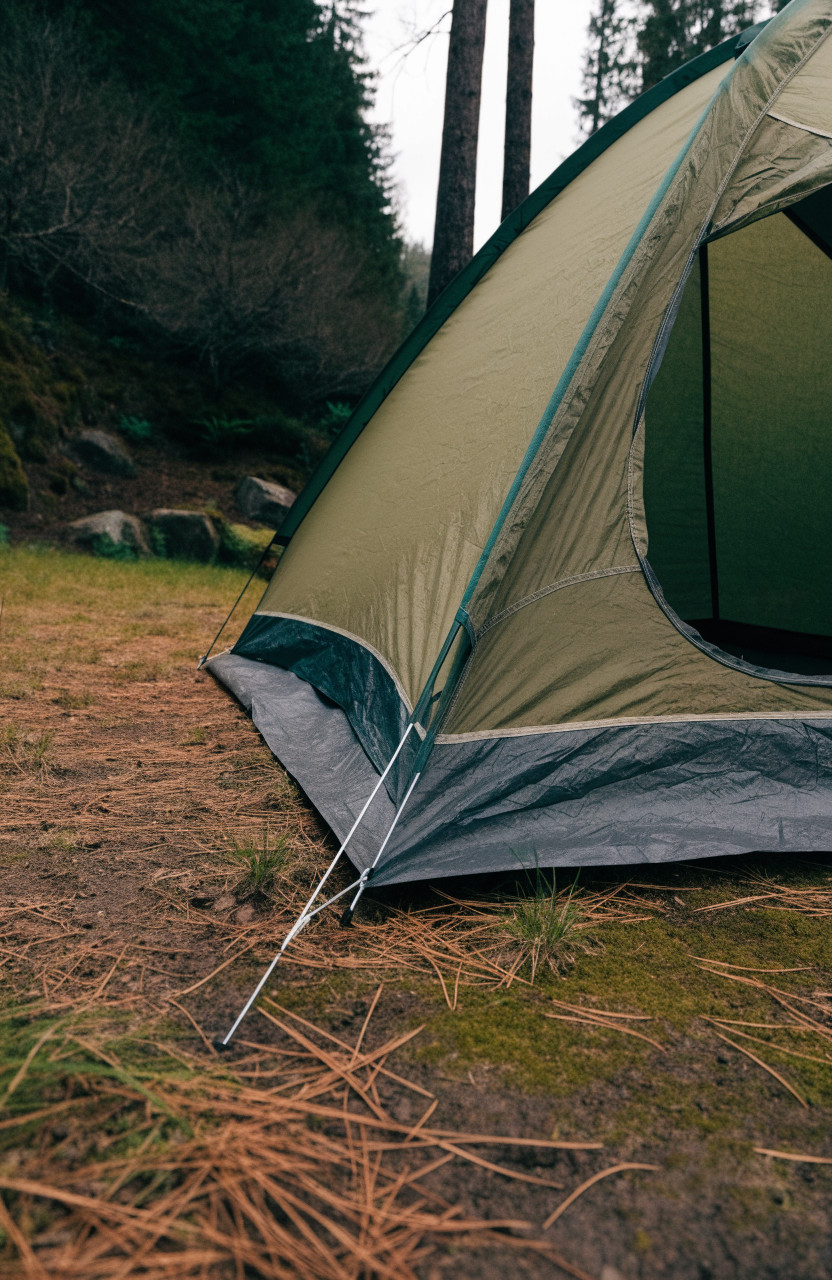
A damp floor undoes every soft layer you add later. Moisture under the tent also makes the ground colder.
Lay a footprint or groundsheet first, and keep it smaller than the tent floor. Tuck any extra tarp under the edges. A sheet that sticks out past the tent collects rain and channels it underneath. If the sheet has a coated side, that side faces the ground.
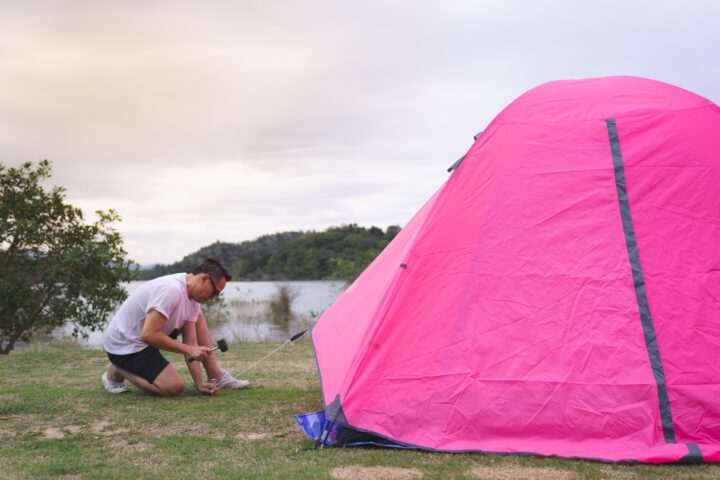
Stake the corners so the floor is taut, not sagging. Loose fabric pools condensation and shrinks the usable space. Then put the rainfly on and pull it tight enough that it does not touch the inner walls. That air gap is the point of the fly: water on the outside stays outside, and moisture on the underside has somewhere to go instead of dripping onto your bag.
Guy lines are not decoration. In wind they keep the fly from flapping onto the tent body. On a calm night they still hold the shape so the walls do not collapse inward when someone brushes past.
Pitch the tent at home once before the trip. A broken pole sleeve or a missing stake is a five-minute fix in a yard and a ruined evening at the site.
Build the floor in layers
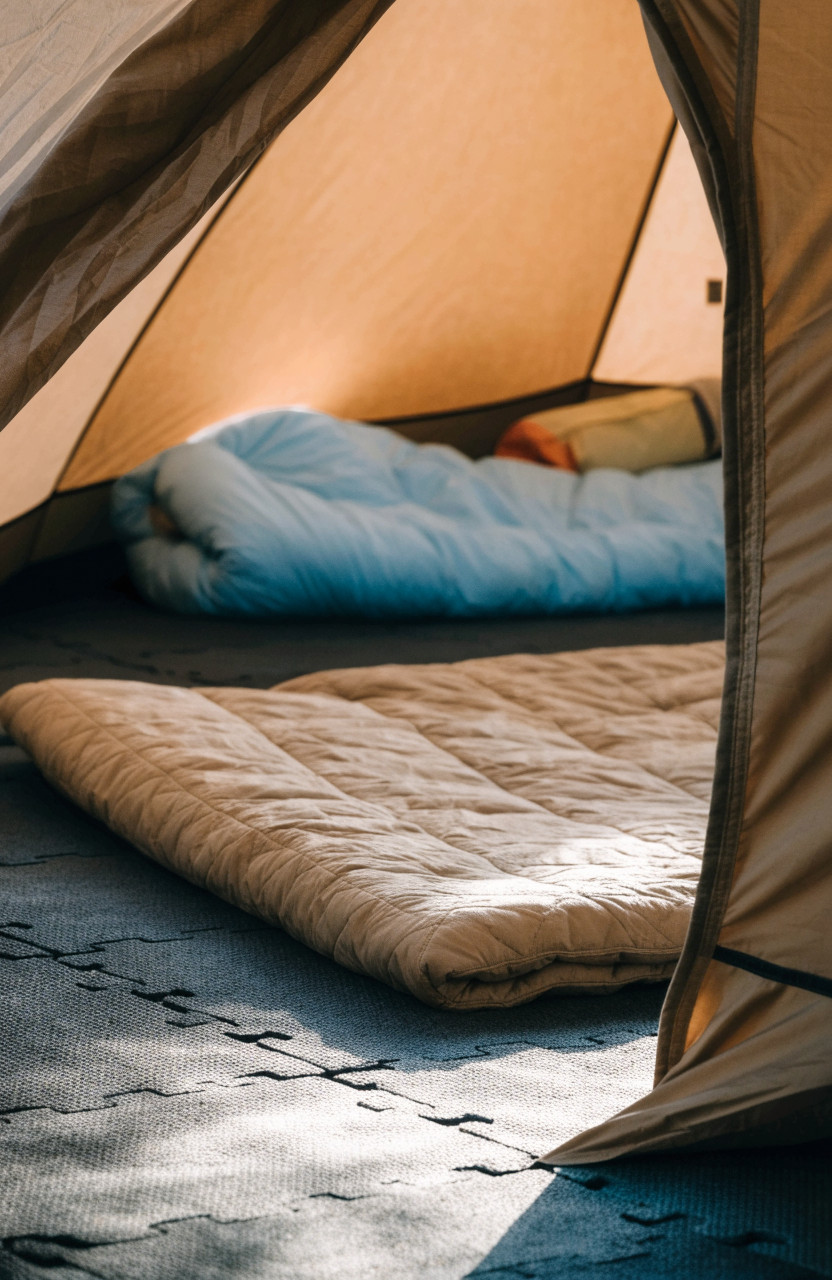
The tent floor is a thin barrier, not a mattress. Treat it as the base of a stack.
- Footprint under the tent, edges tucked in.
- A soft or insulating layer inside, only where you will stand and sleep. Interlocking foam tiles, a moving blanket, an old rug, or a closed-cell foam pad all work. Campers who live in tents for weeks often use a cheap moving blanket because it warms the floor, feels like carpet, and lifts out with most of the dirt still on it.
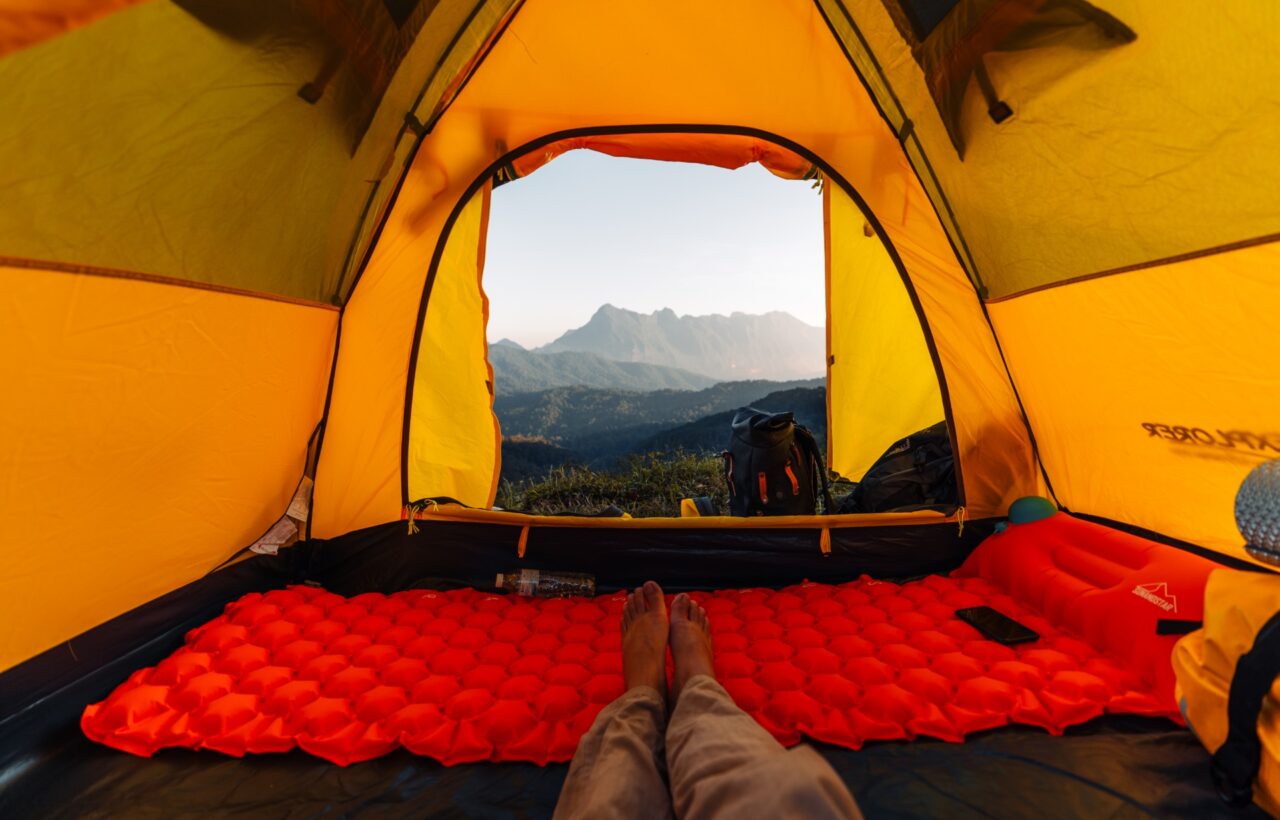
- The sleeping pad or mattress on top of that layer, under your body only.
Do not cover the entire floor with thick bedding if you are in a small tent. A clear path to the door keeps dirt off the bed and stops you from stepping on the pad valve at 2 a.m.
For car camping, foam tiles or a rug are worth the bulk. For backpacking, skip the rug and put the insulation in the pad itself. The job is the same: stop heat from leaking into the dirt.
Match the sleep system to the coldest night, not the average one
A sleeping pad’s R-value measures how well it resists heat flowing into the ground. Since 2020, major brands have used the same ASTM lab test, so an R-4 from one maker is comparable to an R-4 from another. The scale is roughly linear: R-4 insulates about twice as well as R-2.
Useful ranges for most trips:
| Expected low | Pad to look for |
|---|---|
| Above 50°F | About R-1 to R-2 |
| 30–50°F (typical three-season) | About R-3 to R-5 |
| Below 30°F, or snow | R-5 and up, or stacked pads |
Side sleepers and people who run cold should aim at the higher end of each band. On wet or frozen ground, step up one band even if the air temperature looks mild. Stacking works: a closed-cell foam pad under an inflatable adds the two R-values together. Foam goes on the bottom.
Open a self-inflating pad as soon as the tent is up, not after you climb in. Many need 20 to 30 minutes to reach full thickness. A half-inflated pad gives you a fraction of its rated warmth and a hard night.
The bag or quilt handles air temperature. A common buffer is to choose a rating about 10°F lower than the coldest night you expect, then adjust for how you sleep. A roomy rectangular bag or an unzipped bag used as a quilt feels more like a bed than a tight mummy, which is the right trade if you are car camping and not counting ounces.
Real pillows matter more than people expect. Clothes stuffed in a sack compress and shift. One pillow from home changes the tent faster than most decorations.
Do not pile on every layer of clothing inside the bag. Extra clothes compress the insulation and can make you colder. Dry base layers are enough for most three-season nights. A hat helps if your head is outside the bag. A bottle of hot water at your feet works on a cold night if the bottle can handle the heat; thin disposable bottles often cannot.
Light the tent and get gear off the floor
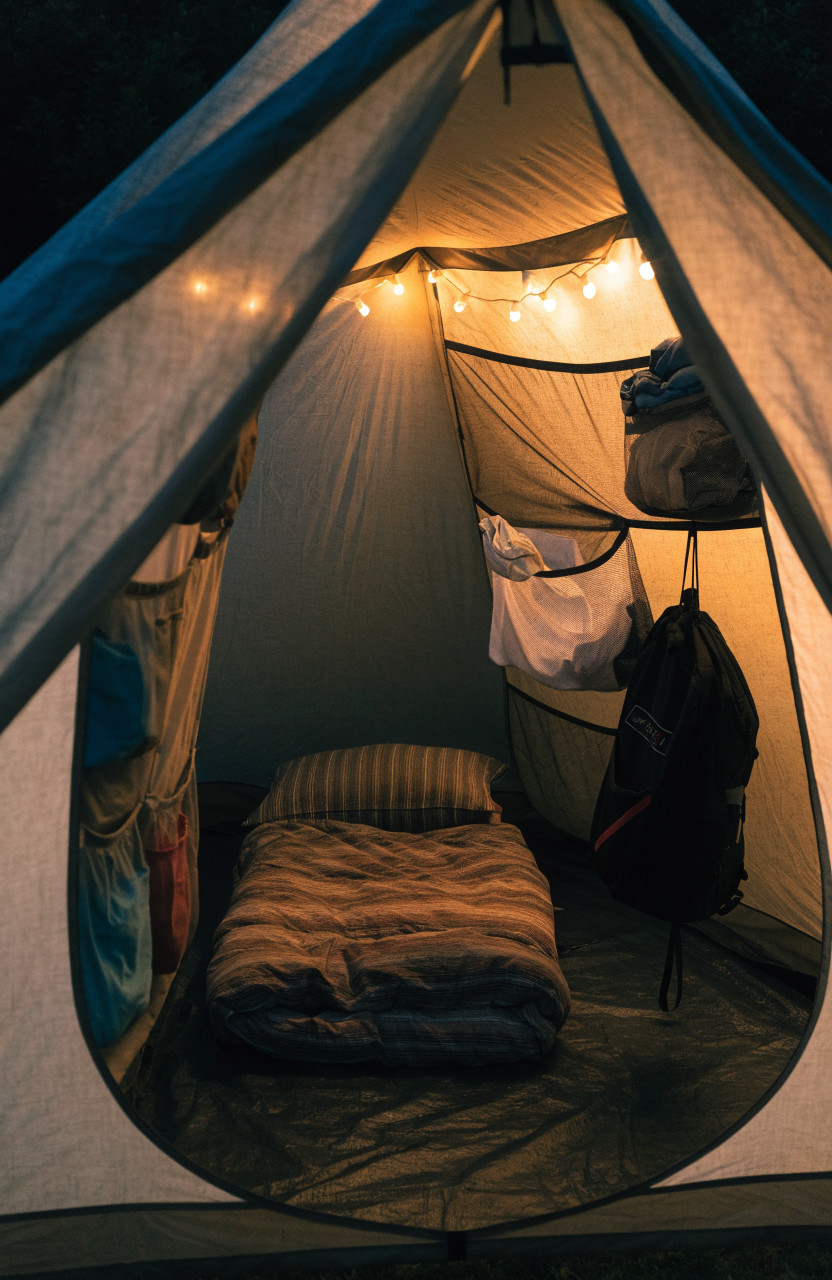
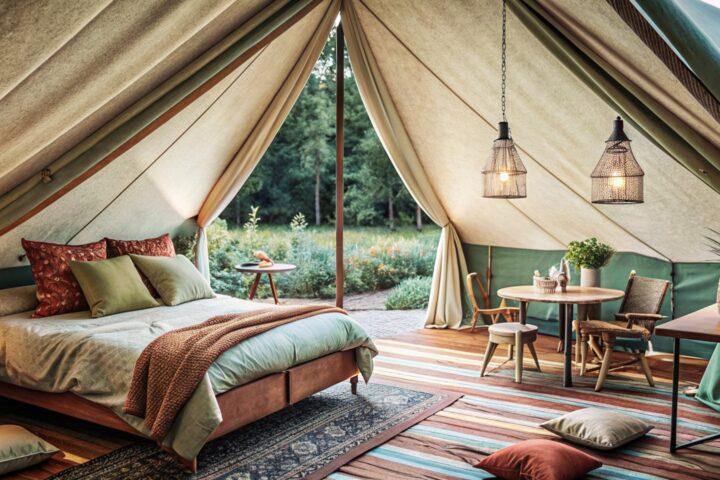
A dark, cluttered tent feels smaller before you lie down. Warm, dim light does more for the mood than any throw blanket.
Use a lantern with a warm color and a low setting, or battery string lights hung along the ceiling ridge so they are not in your eyes. Cold white headlamp beams are useful for tasks and poor for settling in. Keep a small light by the door so you are not hunting for it in the dark.
Give loose gear a home. Two bins or stuff sacks — one for clothes, one for everything else — keep the floor clear and stop damp shoes from living next to the pillow. In a small tent, stack storage at the foot or in the vestibule. Shoes stay in the vestibule.
If the tent is tall enough to stand in, use that height. Changing clothes and sorting a bag without crouching is a larger comfort gain than most soft furnishings. For car camping, plan on about half the stated capacity if you want room to sit up and store gear. A four-person tent is a comfortable two-person bedroom, not a four-person lounge.
Change the setup when the weather changes
The same tent is a different room in July and in October.
On a warm night, remove the rainfly if rain is not in the forecast. The fly is the main heat trap on most three-season tents. Open high and low vents together so cooler air enters low and warm air leaves high. A battery fan helps on still nights. A reflective tarp rigged above the tent cuts afternoon sun better than a dark tarp, which absorbs heat.
On a cold night, keep the fly on and taut, close unused doors, and add insulation under you before you add blankets on top. A second light layer inside — a sheet hung to make a smaller sleeping pocket — can hold warmth, but only if you still have some airflow. Sealing the tent completely fogs the walls.
Condensation is mostly your breath, not a leak. Nothing inside the tent removes it completely. Crack a vent, avoid pressing gear against the walls, and wipe the fabric with a small cloth in the morning before you pack. Dry the tent fully at home. A tent stored damp grows mildew, and a mildewed tent never feels cozy again.
Little errors that leave the tent cold and damp
- Inflating the pad after you are already in the bag, so you sleep on a thin, cold version of it.
- Letting the footprint stick out past the floor, then wondering why the corner is wet.
- Sleeping with your head downhill.
- Stuffing the bag with too many clothes and flattening the insulation.
- Using only a bright white light, which makes the tent feel like a worksite.
- Covering every inch of floor so there is nowhere to step without dragging dirt onto the bed.
- Closing every vent on a cool night and waking up with wet walls and a clammy bag.
Questions campers ask about a cozy tent setup
What single change makes the biggest difference? A sleeping pad with enough R-value for the coldest night, fully inflated, on a flat site with your head uphill. Lighting and rugs help the room feel finished. They do not replace the pad.
Can I use bedding from home? Yes, for car camping. Sheets, a quilt, and a house pillow are often better than a too-small camp set. They are a poor idea on a backpacking trip because of weight and bulk, and they need to stay dry.
Do string lights keep the tent warm? No. They change how the space feels after dark. Warmth comes from the pad, the bag, dry clothes, and a fly that is doing its job.
How do I keep the tent cozy without soaking the walls? Insulate the ground and your body, then leave a vent path open. A warm, sealed tent and a dry tent are in tension. A small opening high and low usually wins.
Is a bigger tent always cozier? Only if you can fill the extra space with a real sleep system and still keep gear off the floor. An empty cavern with a thin pad is colder and less pleasant than a smaller tent set up correctly.