One vehicle has to haul the gear, drive the trails and often hold the bed as well, and that is the hard part of Jeep tent camping. Few setups do all three comfortably past the third night.
The choice comes down to whether the bed travels with the Jeep. Rooftop tents, hatch-attached tents and Gladiator bed tents keep sleeping on the vehicle. A ground tent leaves camp standing while the Jeep serves as gear locker and trail vehicle. Matching one of those to how the trip actually runs settles most of the decision.
What “Jeep Tent Camping” Actually Includes
People use the phrase for four different shelters, and they solve different problems.
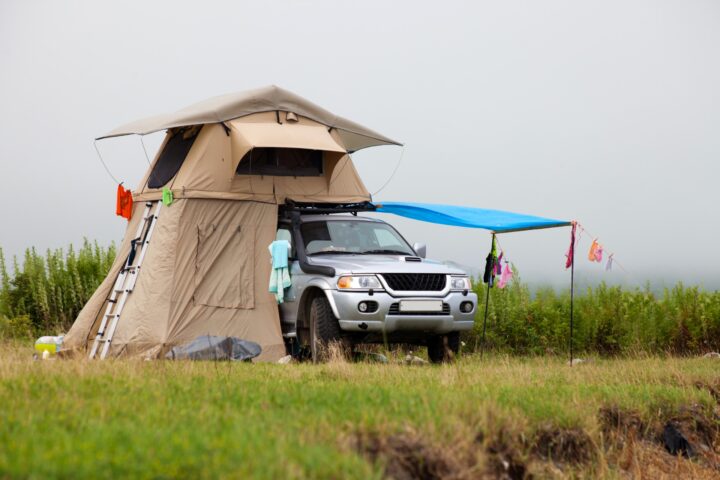
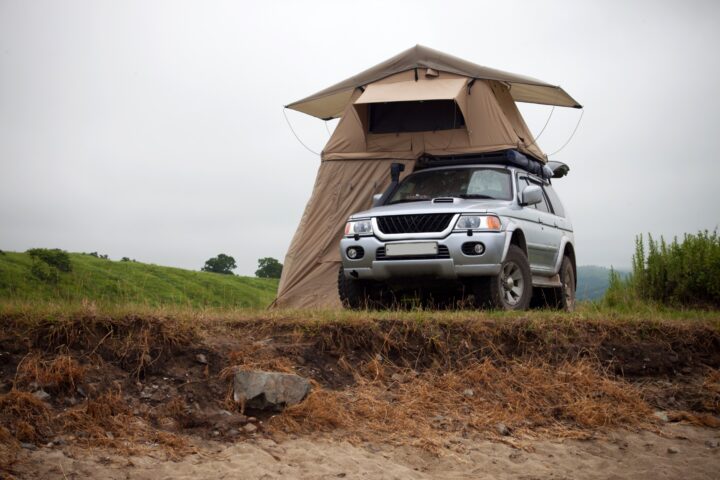
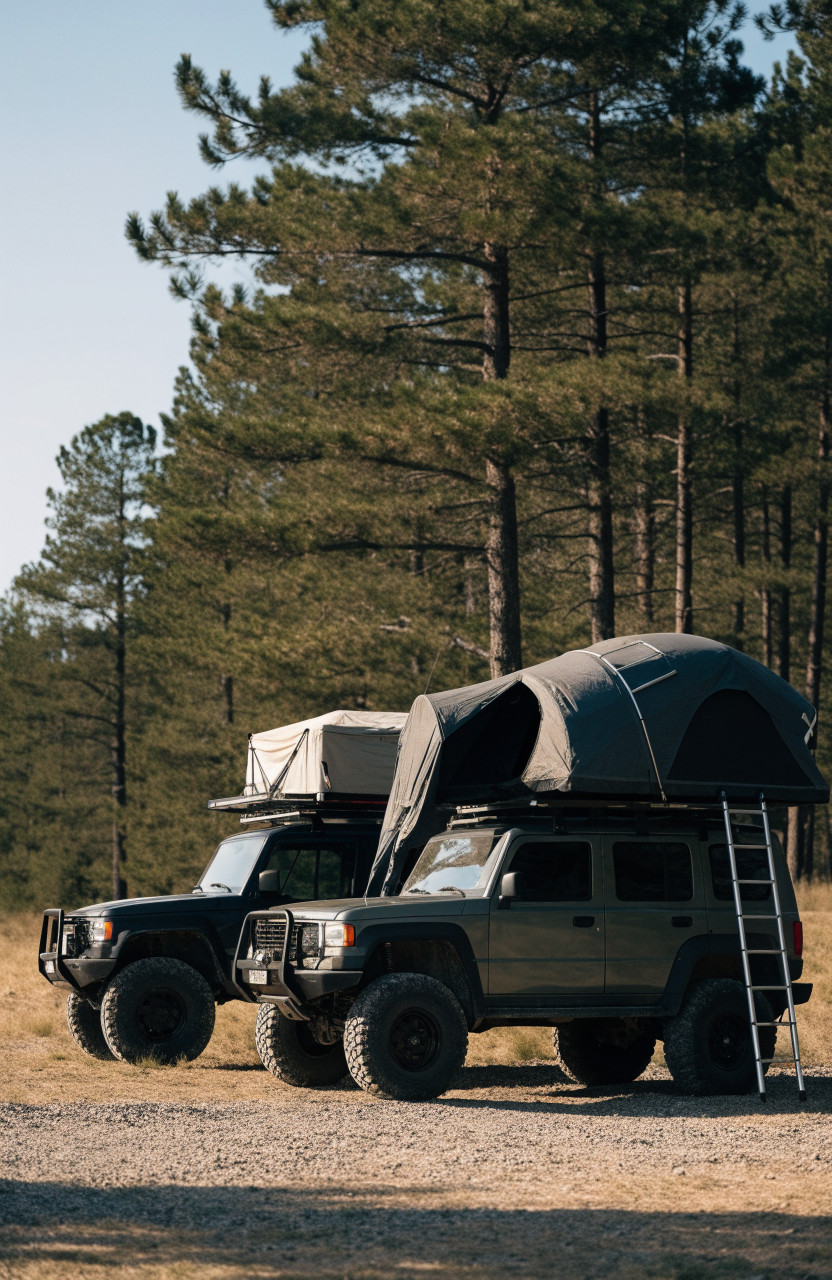
A rooftop tent mounts to a rack on a Wrangler or to a bed rack or roof rack on a Gladiator. The floor is a platform with a mattress. Soft-shell models fold into a canvas bundle. Hard-shell models open from a rigid clamshell or wedge and usually pack down faster. An annex can hang under the ladder as a changing room or gear porch, but it is a second piece of fabric to stake and dry.
A tailgate or SUV tent sleeves or straps around the open rear hatch and turns the cargo opening into a weather-protected room. Brands in this category, including Rightline Gear and Napier, sell both Jeep-specific and universal versions. Some can also stand alone if you disconnect the vehicle. Fit depends on the rear shape, so a Wrangler with a soft top or a tonneau that does not reach the tailgate often will not seal the way a hardtop four-door does.
A Gladiator bed tent pitches inside or over the pickup bed. It is simpler and lower than a rooftop tent, and it keeps weight out of the roof. The trade is storage: the bed becomes the bedroom, so recovery gear, coolers, and kitchen boxes have to come out before you sleep.
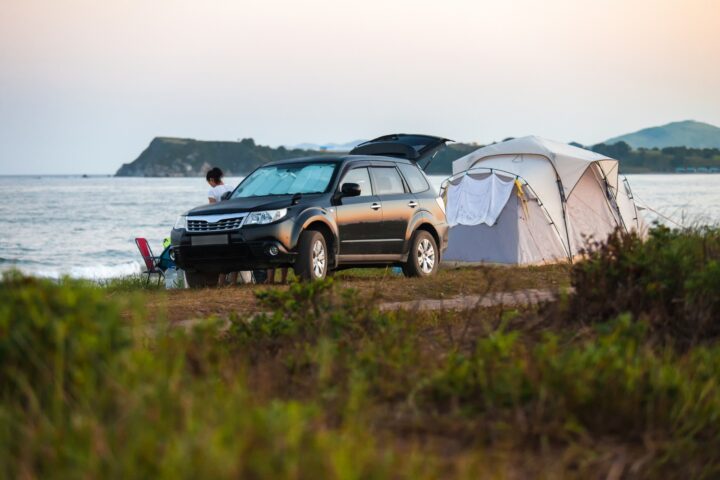
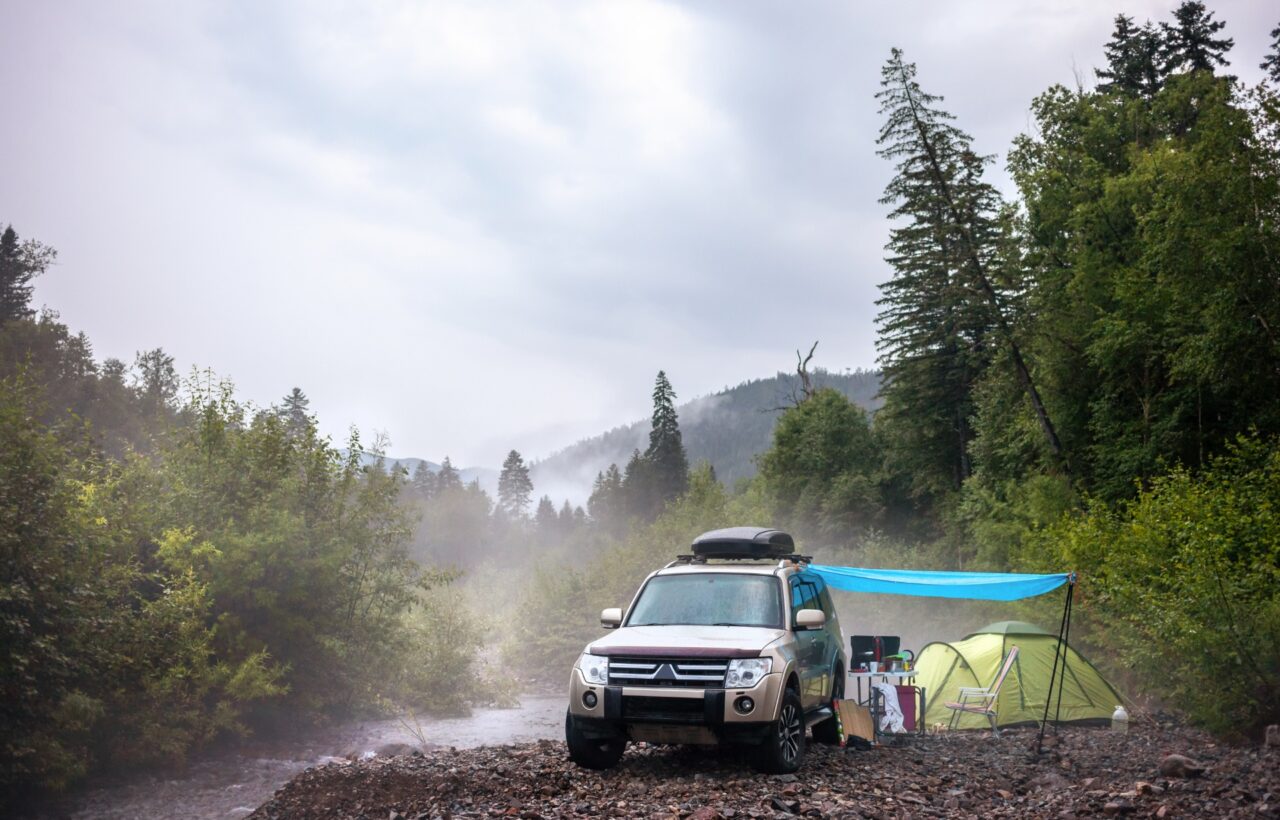
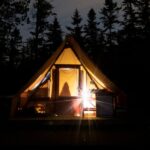
A ground tent is still the most common Jeep camping setup. The Jeep carries it. The tent does not care what rack you own. Once camp is built, the vehicle can leave for a trail, a trailhead shuttle, or a supply run without packing the bedroom.
Sleeping inside the cabin is a fifth option, not a tent. A four-door Wrangler with the rear seat folded gives a usable flat run for one adult on a pad or a cut-to-fit platform. A Gladiator bed with a mattress does the same without a tent at all on mild nights.
Start With How the Trip Actually Works
Most buying mistakes come from optimizing for setup speed and ignoring the rest of the day.
If the pattern is one site for two or three nights, with day loops on dirt roads, a ground tent or a tailgate tent fits better. Camp stays built. Chairs, kitchen, and awning do not get struck every time someone wants coffee in town. A rooftop tent turns every departure into a pack-down, because the mattress is bolted to the vehicle.
If the pattern is a new pull-off every night, dispersed sites, and little interest in a full camp, a rooftop tent earns its cost. The floor is level even when the ground is not. You are off mud, standing water, and most ground-level animals. Hard-shell models are the ones people mean when they say the tent opens in about a minute. Soft-shell models take longer and still need the ladder set at a stable angle and the cover secured before you drive.
If the pattern is a festival, a family base, or a rainy weekend where you want the cargo area inside the shelter, a hatch tent is the specific tool. You can reach bags without stepping into the weather. You also pin the vehicle in place for the night, and you inherit every limit of a fabric room tied to a tailpipe and an open hatch.
| Setup | Best trip style | What you give up |
|---|---|---|
| Rooftop tent | Move every night; want a flat bed off the ground | Camp cannot stay built; roof load, height, and cost |
| Tailgate / SUV tent | Rainy basecamps; gear access from the hatch | Vehicle is stuck in camp; seal and exhaust issues |
| Gladiator bed tent | Simple truck-bed sleeping without a roof load | Bed storage is gone until you strike camp |
| Ground tent | Multi-night base with day drives | Floor follows the ground; slower first pitch |
| Inside the Jeep | One person, mild weather, no extra shelter | Tight space, condensation, no standing room |
Match the Tent to the Jeep, Not the Other Way Around
A Wrangler Unlimited is the usual rooftop-tent platform, but the hardtop is not a structural bed. Jeep does not rate the bare hardtop as a place to carry a living load. Gutter-mount and light crossbar systems are accessory racks. A tent, rack, and bedding can sit in a range that those bars were not designed to haul over washboard, especially once you add a recovery board or an awning on the same bars.
The load that matters while driving is the dynamic rating: tent, rack, and anything else on the roof, in motion. The load that matters at camp is the static rating: tent plus people plus bedding, parked. Those are different numbers. A tent floor rated for two adults does not mean the roof can carry that tent down a rocky two-track. Systems that tie a rack through the hardtop into the sport bar and tub move weight onto steel instead of fiberglass. That is the usual path for a heavier hard-shell. Confirm the rack maker’s dynamic and static figures for your exact year and top, then compare them with the tent’s closed weight. Factory roof rails and unsupported hardtop points are a common reason installs fail later, not on the driveway.
A Gladiator changes the math. The five-foot bed can take a bed rack, which puts the tent lower than a Wrangler roof and leaves a place for boxes underneath. Payload still counts. A bed tent is the cheaper sleeping option and the one that blocks the bed. A bed-rack rooftop tent costs more once rack and tent are both in the cart, and it keeps the bed usable.
Cherokee, Grand Cherokee, and Renegade owners are usually better served by a ground tent or a hatch-sleeve tent than by a rooftop tent. Their roofs are not the same structural problem as a Wrangler sport cage, and many of these trips are car-camping rather than rack-based overlanding. A hatch tent still has to match the rear glass and spoiler. Soft tops, external spare-tire carriers, and aftermarket bumpers are the usual fit failures.
Buy the rack before the tent. The closed weight and the mount pattern decide whether a rooftop tent is even possible, and a cheap soft-shell on a light gutter rack is the pairing most often blamed for cracked fiberglass or a rack that will not stay tight.
What Changes Once the Tent Is on the Vehicle
Height is the first daily constraint. A closed rooftop tent can erase garage, parking-structure, and drive-through clearance. Measure the closed height before you buy, including crossbars, not the tent maker’s packed thickness alone.
Weight up high changes the Jeep. Braking, crosswinds, and off-camber trails all feel different. Fuel use rises on every mile, not only on camp nights. A bed-rack mount on a Gladiator keeps that mass lower than a Wrangler roof. Neither mount removes the need to recheck fasteners after the first rough drive. Vibration loosens hardware.
A hatch tent has a different failure mode. The sleeve has to clear the exhaust. Fabric against a hot tailpipe is a melt and fire risk, which is why better kits include a heat shield or a defined exhaust opening. The room also needs stakes and guylines. An attached tent catches more wind than a freestanding dome of the same size, because the vehicle is an anchor on only one side.
Annexes and awnings are worth adding only after the sleep system is settled. An awning is the fastest shade on a lunch stop and the usual partner to a ground tent. An annex under a rooftop tent is useful for boots and a dry place to dress. It is also another wet bundle to pack, and it rarely replaces a real kitchen.
A Workable Night, in Order
Level the vehicle before you open anything. Rooftop and bed tents do not fix a side slope. A few degrees feels minor until you spend the night sliding into the wall. Stack boards or recovery tracks under tires if the site allows it. Do not rely on the mattress to correct a lean.
For a rooftop tent, set the ladder at the angle the maker specifies, with the feet on solid ground, not on a loose rock or the edge of a drop. Open the tent fully so poles and hinges seat. Stake any supplied lines if wind is forecast. Put a closed-cell pad under the stock mattress in cold weather. The metal or composite floor pulls heat out of a sleeping bag faster than people expect.
For a hatch tent, park so the rear opens onto the flattest ground and the exhaust points away from the room and any awning. Attach the sleeve, then stake the floor and corners before you load gear in. Keep a clear path from the sleeping area to the outside in case you need to exit quickly.
For a ground tent beside the Jeep, put the door on the side away from the kitchen if you cook, and avoid the drip line under a tree. The Jeep can sit upwind as a windbreak, but do not block the only exit with the vehicle.
Cooking stays outside the sleeping space. Fuel stoves, charcoal, and lanterns do not belong in a rooftop tent, a hatch room, or the cabin. A coated rainfly is not a kitchen.
Never idle the Jeep to heat a tent, awning, or annex wrapped around an open hatch. Odorless carbon monoxide can drift into both the cabin and the fabric room, and the same rule covers generators and fuel heaters at the open rear. A battery CO alarm is a backup, not permission.
Weather, Ground, and When to Skip the Fancy Tent
A rooftop tent does not make a bad site safe. Low ground still floods. A high, open ridge still takes wind, and a tall vehicle with a tent on it catches more of that wind than a low ground tent. In thunderstorms, the usual camping rules still apply: avoid isolated high points, open ridgelines, and lone tall trees.
Hard-shell tents shed weather and close faster in rain. They also cost more, weigh more, and sit taller. Soft-shell tents are the more spacious option for the money and need more attention in wind. A three-season ground tent with a full-coverage footprint is enough for most Jeep weekends. A four-season label on a car-camping tent does not mean it is a winter mountaineering shelter.
Inside-the-Jeep nights fail first from condensation, not from cold. Crack a window or vent. A sleeping pad matters more than a thick bag if you are on metal or plastic. This setup is a reasonable one-person fallback. It is a poor family plan.
What to Buy First If You Are Still Deciding
Spend the first season on a ground tent, a decent pad, and a way to cook outside the vehicle. You learn whether you actually move camp every night. You also learn whether the limiting factor is wet ground, setup time, or the fact that the Jeep is full of gear and has no flat floor.
Add an awning if shade and rain cover are the real gaps. Add a hatch tent if the open cargo area is what you keep wishing was indoors. Add a rooftop tent only after the rack question is answered and you know you will strike camp most mornings. On a Gladiator, compare a bed tent against a bed-rack tent using storage, not brochure sleep capacity. Two adults fit in many of these. Four adults in one rooftop tent usually means a tight floor and an annex, not a cabin.
Price ranges move, but the shape of the spend is stable. A solid ground tent is the small purchase. A hatch tent sits in the middle. A rooftop tent plus a rack rated for it is the large one, often several times a ground-tent setup before bedding. That gap is fine if you camp often in places with poor ground. It is an expensive way to discover you prefer a basecamp.
Frequently Asked Questions
Do you need a rooftop tent to camp with a Jeep? No. Most Jeep camping is a ground tent or a night in the cargo area. A rooftop tent is a convenience and comfort upgrade for people who move sites often and already have a suitable rack.
Can a stock Wrangler hardtop carry a rooftop tent? Not as a bare hardtop. You need a rack system rated for the closed tent and for off-road use. Gutter clamps and light crossbars are a frequent weak point. Check dynamic rating for driving and static rating for sleeping, and prefer mounts that transfer load into the cage and body on heavier tents.
Is a Gladiator better for tent camping than a Wrangler? For a tent on the vehicle, often yes. The bed accepts a bed tent or a lower bed-rack mount and still has payload for gear. A four-door Wrangler is simpler if you want to sleep inside with the doors locked and skip a rack entirely.
Can you run the engine for heat with a Jeep tent attached? No. Do not idle the vehicle when a tent or awning encloses the open hatch. Exhaust can enter the sleeping space. Use insulation, a proper sleeping bag, and ventilation instead.
Will a hatch tent work with a soft top? Sometimes, and often poorly. The sleeve needs a rear opening it can seal against. Soft tops that stop behind the rear seat, and tonneaus that cover the tub, are the common mismatches. Check the tent’s vehicle list against your exact top, bumper, and spare-tire carrier.
What is the main reason people regret a rooftop tent? They bought a mobile bed and then camped like a basecamp. The tent is excellent when the vehicle and the bed should be the same object. It is awkward when the Jeep needs to leave and the kitchen needs to stay.