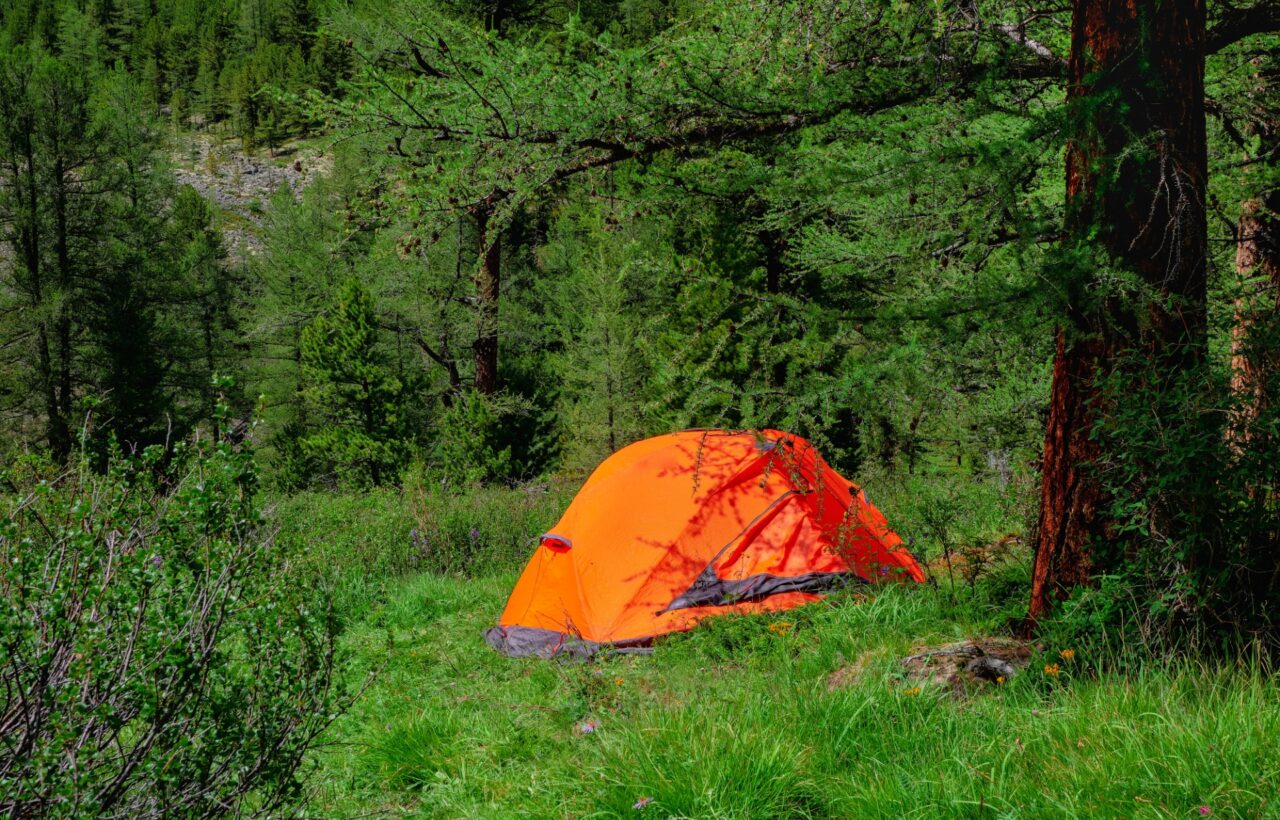
Tree tent camping suspends a fully enclosed shelter between trees so the floor hangs above the ground instead of sitting on it. The setup uses three strong anchor points and wide ratchet straps to pull the floor taut, which gives a flatter sleeping surface than a hammock and keeps you off wet soil, rocks, and most crawling insects. It only works where the trees, the rules, and the weather allow it.
The appeal is real on rocky, rooty, or damp forest ground. The limits are just as real: you need healthy trees in the right layout, permission to attach to them, and a low, carefully tensioned pitch. Hang it too high, or from the wrong trunks, and the same design that keeps you dry becomes the main risk.
What a tree tent is, and how it differs from a hammock
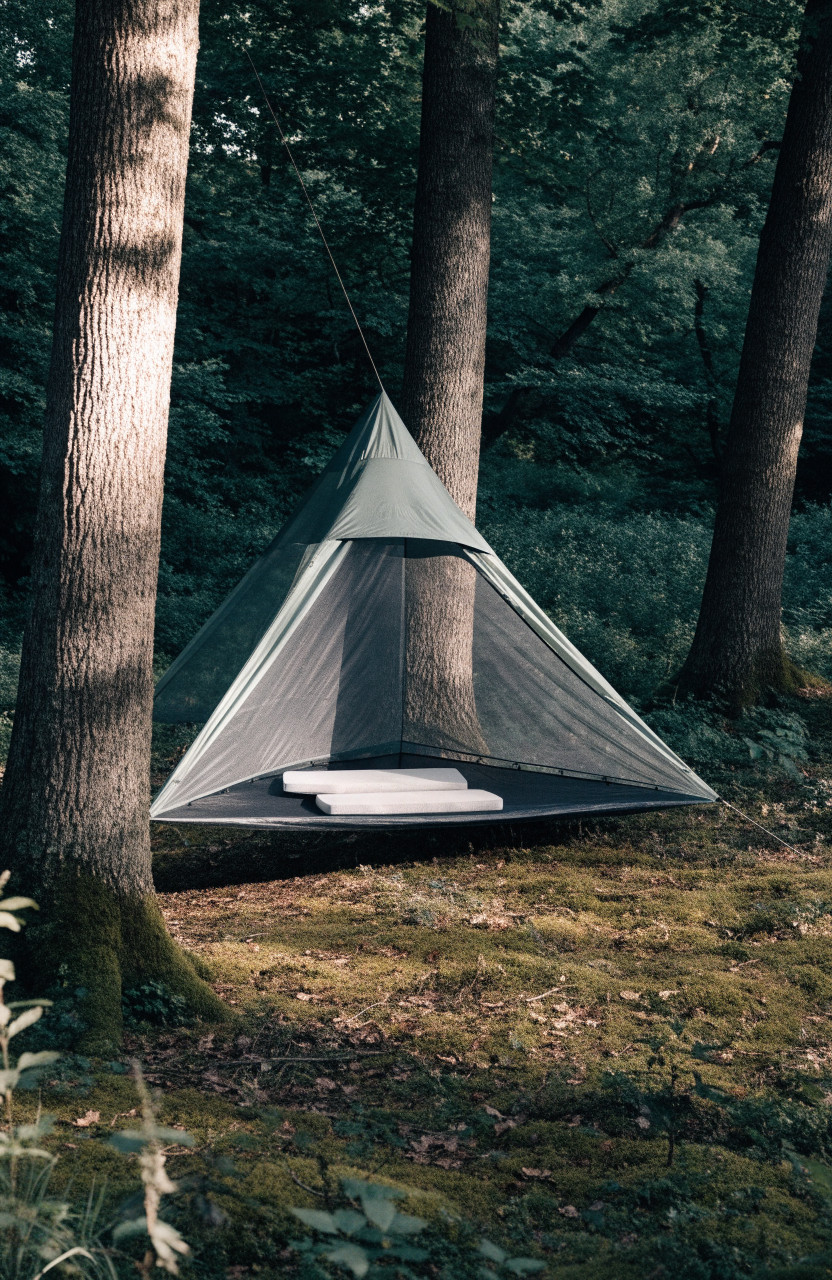
A tree tent is a multi-point suspended shelter. Most designs anchor to three trees in a rough triangle. Ratchet straps pull the corners outward until the floor is tight enough to lie on. Mesh walls, a rainfly, and sometimes a small vestibule or under-tent porch make it a closed camp, not just a bed.
A hammock uses two anchors and a curved lay. A tree tent uses three or more anchors so the floor can stay closer to flat. That is why side sleepers often prefer it to a gathered hammock. Motion still transfers: when one person rolls, the platform shifts. Separate pads and a very tight pitch reduce that, but they do not remove it.
The category is dominated by three-point systems such as Tentsile’s Connect (two people) and Stingray (three people), plus lighter options such as the Flite and solo UNA. Flat-lay hammock tents and hybrids, including Haven-style beds and the Lawson Blue Ridge, solve a similar problem with two anchors and can pitch on the ground when trees are wrong. Specs vary by model. Published Tentsile limits commonly include a maximum load around 400 kg (880 lb) on larger tents and about 220 kg (485 lb) on the Flite, with a recommended floor height of about 1.2 m (4 ft).
When tree tent camping is the better choice
It earns its weight when the ground is the problem.
- Rocky slopes, roots, and uneven forest floor, where a ground tent would need heavy site clearing.
- Damp or poorly drained soil, as long as you are not camping in a flood path or under dead wood.
- Insect pressure from the forest floor. You still need mesh; mosquitoes fly.
- Short stays where you want less soil compaction and less trampled vegetation under the tent body.
It is a poor default when:
- The forest is open, young, or full of shallow-rooted trees on sand.
- You are backpacking and every pound matters. A three-person Stingray-class tent is often around 10–15 kg (22–33 lb) packed. Lighter two-person and solo tree tents exist, but they are still heavier than a basic trekking tent.
- You need a fast pitch in the dark. First setups commonly take 20–30 minutes. Practice cuts that.
- The campground bans attachments to trees. A tree tent with no legal anchors is just a heavy bag.
Ground-conversion kits and freestanding stands exist for yards and open sites. They remove the tree requirement and add bulk.
Site rules come before tree selection
Permission is not optional. Park and forest rules treat tree tents like hammocks: some allow them with wide straps inside a designated site, some allow them only on a stand, and some ban attachment to vegetation entirely.
Zion National Park prohibits hammocks and tree tents. Joshua Tree National Park prohibits attaching lines to vegetation. Other parks allow hammocks only with padding, minimum tree size, and a limit on how many hangs share one trunk. Rules change by park and sometimes by campground, so the superintendent’s compendium or the specific campground page is the source that matters, not a general “hammocks are fine” assumption.
On private land, get the owner’s consent. Wild camping legality is separate from tree attachment and varies by country and land designation. Never use nails, screws, or wire.
How to choose trees that can actually hold the load
Manufacturers and hammock-camping practice converge on the same checks.
Use live, healthy trunks. Bare crowns in season, fungal shelves, soft wood, cracks, or a lean over the pitch are reasons to walk away. A living crown does not guarantee a sound trunk, but a dead one is an automatic no.
Look up before you look at spacing. Dead limbs, often called widowmakers, fail in wind and sometimes with no wind at all. The anchors are not the only hazard. Anything that can fall onto the tent or the walk-in path matters.
Prefer trunks at least 30 cm (12 in) in diameter, fully rooted in firm ground. Some heavier safari-style models specify 40 cm (16 in). Sandy or saturated soil can let a healthy-looking tree shift under a sideways load.
Layout is a triangle with angles under 90 degrees between anchors. The trees do not need to be equidistant. Strap length takes up the difference, the way a web equalizes between uneven points. Typical useful spacing is roughly 3–6 m (10–20 ft), depending on strap length and model. If one corner has to sit almost against a trunk, use the tail corner and the basket-loop ratchet method described in that tent’s manual.
Keep the floor low. The common manufacturer ceiling is 1.2 m (4 ft). That is high enough to clear wet ground and low enough that a slip on entry is a bruise, not a fall from a treehouse. Clear the ground underneath of stumps and rocks anyway.
A setup sequence that avoids a sagging floor
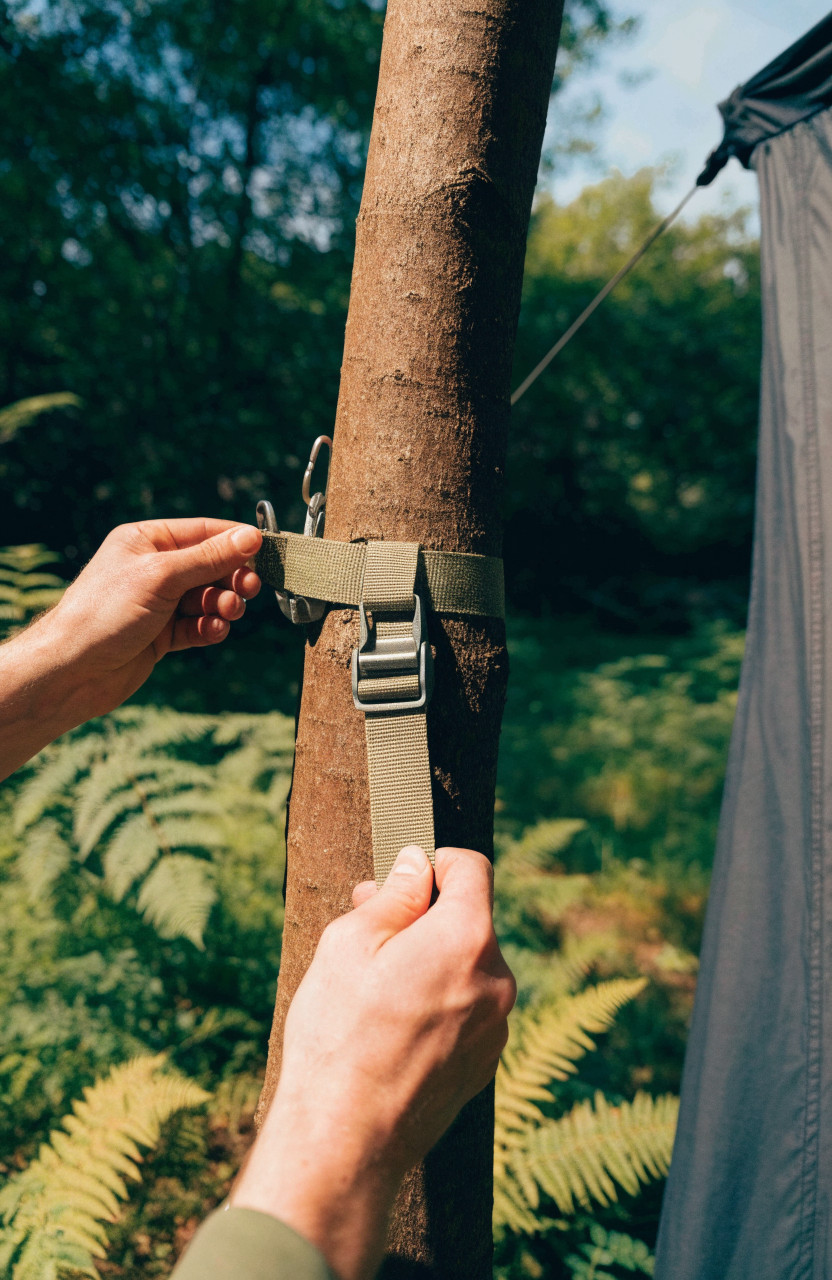
Practice once at home or in a yard before a trip.
- Lay the tent out with each corner aimed at its tree. Do not start ratcheting until the triangle looks plausible.
- Wrap wide straps at roughly the planned floor height. Use the tree-protector sleeves if the tent includes them. Straps should lie flat, not bunched into a cord.
- Attach ratchets and take up slack evenly, a little on each corner, rather than cranking one side tight first.
- Raise and level. The floor should sit flat, not tilt toward one sleeper. Alignment marks on some models are there for this.
- Load it. New webbing and fabric stretch. Sit or lie in the tent, climb out, and re-tension. Repeat once or twice on the first night.
- Add the rainfly. Leave at least one vent or a downwind fly wing open. A sealed fly over mesh is a condensation trap.
- Recheck straps before sleep and in the morning. Ratchets can creep.
Do not exceed the posted load, including people and gear. Do not leave a tree tent up for months on the same strap line. Periodic moves of 15–20 cm up or down the trunk spread stress on the bark.
Sleeping warm, dry, and still
Air under the floor is a feature against ground moisture and a problem for warmth. Body heat sinks through the fabric. Use a sleeping pad with a real R-value for the season, the same way you would in a hammock. A summer foam pad is not a cold-weather system.
Condensation forms on the fly and can drip. Ventilation matters more than a footprint. Pitching over a damp hollow still adds moisture to the air around the tent.
Rainflies on these tents are commonly rated in the 3,000–8,000 mm hydrostatic head range, which handles ordinary rain when tensioned and seam-checked. Wind is the weaker point. A properly tensioned three-point tent moves less than a loose one, but it still sways. High wind and lightning are stop conditions: these shelters are attached to the tallest objects in the forest, and manufacturers explicitly warn against storms.
Entry is awkward until you learn it. Sit on the edge, swing legs in, and avoid standing up hard under the mesh. Headroom is often around 0.9–1.2 m (3–4 ft), so this is a lying and sitting shelter, not a cabin.
Tree protection and leave-no-trace habits
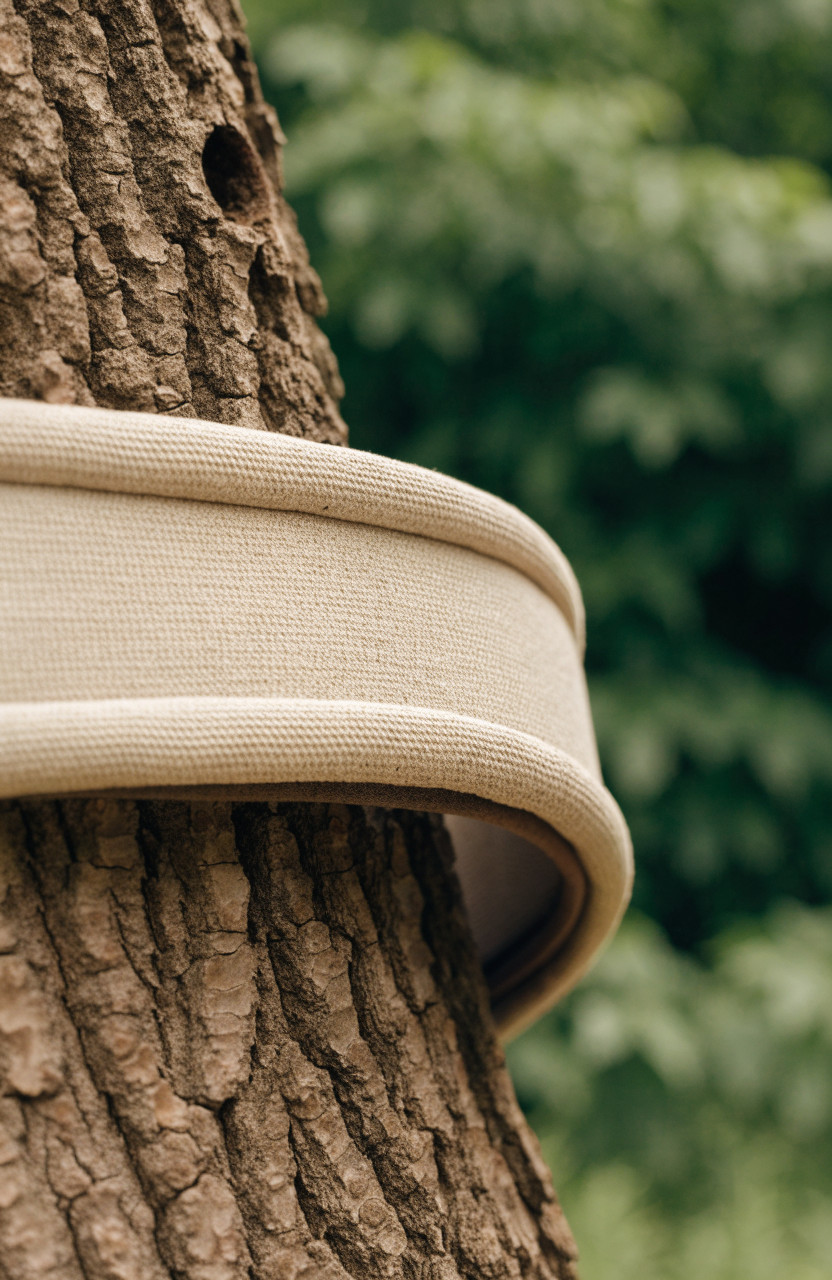
Wide webbing, often 25–35 mm, spreads load better than rope or thin cord. Leave No Trace hammock guidance generally calls for webbing at least 2.5 cm (1 in) wide, and some land managers require more. Protector wraps add another layer between strap and bark.
The tent does not compact a full footprint the way a ground tent does, which is the environmental upside. It does not erase every impact. Strap rub, repeated hangs on the same trunks, cleared undergrowth, and food smells still count. Store food as the local rules require. Elevation is not bear-proofing. These tents are not wildlife barriers against anything that can climb or reach.
Problems that show up after the first night
The floor sags in the middle. Tension was uneven, straps stretched, or the triangle is too wide for the strap set. Re-level and re-ratchet. If trees are far apart, a longer strap system beats over-cranking a short one.
Both sleepers roll together. The platform is acting like a shared hammock. Tighten further, use full-length pads, and sleep parallel to a tensioned edge rather than both piled at the low point.
One side sits higher. Anchor heights differ, or one ratchet took more travel. Drop the high strap or raise the low one until the floor reads level with someone inside.
Cold from below. Missing or thin pad. The air gap is not insulation.
Damp ceiling at dawn. Fly too sealed, or the site is a moisture pocket. Open a vent on the sheltered side.
No legal trees. This is the failure mode gear reviews skip. Carry a backup shelter or a stand plan if the destination is a regulated campground.
What to bring beyond the tent
A tree tent replaces poles and stakes, not the rest of camp. Pack a sleeping bag and an insulated pad, a small light you can clip rather than hang from a dead limb, a strap repair plan, and the rainfly even on a clear forecast. Practice-pitch hardware at home so a missing ratchet pin is not discovered at dusk.
Match the model to the group. A solo or two-person tent pitched low is a simpler first system than a three-person platform. Hybrids that also pitch on the ground are the practical choice if half your trips are beach, desert, or developed sites with young trees.
Price sits above basic camping tents. Usable tree tents often start a few hundred dollars and climb well past that for larger or heavier-fabric versions. Renting or borrowing for one weekend is a reasonable test if the only question is whether you sleep well off the ground.
Frequently asked questions
Do tree tents damage trees? Not if you use wide straps, avoid dead or thin trunks, skip hardware that pierces bark, and move the strap line on long stays. Thin cord and nails do damage trees. Local rules may still forbid attachment even with good straps.
How high should it hang? About 1.2 m (4 ft) is the common manufacturer maximum and the sensible beginner height. Higher pitches add fall risk without improving weather protection.
Can you use one in winter? The fabric may be sold as a three- or four-season shell, but the floor has no ground insulation and snow load plus wind is a different problem. Treat cold-weather use as a pad, bag, and weather decision, and do not hang in icing conditions or under snow-loaded limbs.
Is it safer than a ground tent? It avoids flooded floors and some ground animals. It adds fall risk, anchor failure, and exposure to falling branches and lightning. Low hangs over clear ground, healthy trees, and a storm exit plan are what make it reasonable.
What if the campsite has only two good trees? Use a hybrid or hammock tent rated for two anchors, or pitch a ground tent. Forcing a three-point tent onto a bad triangle is how floors twist and straps overload.