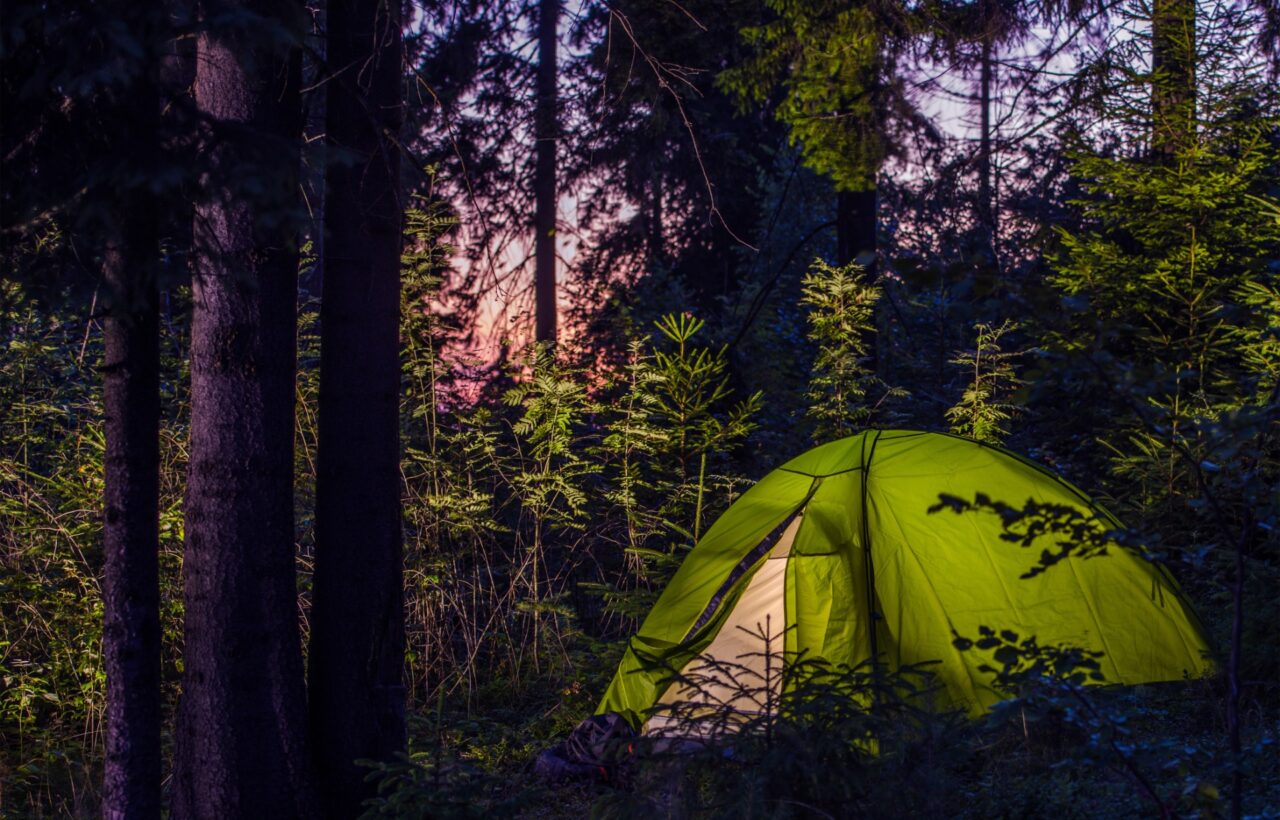
DIY tent camping is you choosing the ground, pitching the shelter, and managing sleep, food, and weather yourself. The night usually goes well or badly before sunset, based on three things: a site that sheds water, a pad that stops ground chill, and a tent that is staked and covered before you start cooking.
A developed campground with a reserved pad is the right first version of this. Dispersed sites, where you pick an unmarked spot and follow backcountry rules, are a later skill. The pitch sequence is the same. The margin for a bad choice is not.
Start on a reserved site, not a blank hillside
“DIY” here means you do the work: site check, pitch, kitchen, and pack-out. It does not mean you need to invent a campsite.
On a first trip, book a drive-in site within a couple of hours of home, in mild weather, with a toilet and a water spigot nearby. That removes navigation, water treatment, and “where do we sleep if this fails” from the same evening as your first pitch. Oregon-style beginner guidance that pushes reserved sites and a short drive is aimed at the same failure mode: arriving late, tired, and still learning the tent.
Leave unmarked dispersed camping until you can pitch in daylight, read drainage, and store food to the local rule without guessing. In those settings, Leave No Trace asks you to camp on durable surfaces — established sites, rock, gravel, dry grass, or snow — and at least 200 feet (about 70 to 80 adult steps) from lakes and streams, so wildlife still has a path to water. Good campsites are found, not made. Digging trenches around a tent is the opposite of that rule.
Read the ground before the bag comes out
Walk the pad for two minutes. The flattest patch is not automatically the right one. Water follows the low line, and a shallow bowl that looks fine at 4 p.m. can hold a puddle by midnight.
Use this order:
- Drainage first. Prefer ground that is level and slightly higher than the surrounding pad. Avoid dry washes, the downhill side of a fire ring, and any dip where last rain left darker soil.
- Overhead hazards second. Look up for dead limbs — the forestry nickname is widowmakers — and for anything that could drop in wind. Living trees can break wind. Dead wood overhead is not shelter.
- Sleep angle third. If the only decent ground slopes, put heads uphill. The National Park Service tent guidance points the same way: low or sunken ground gets wet, and on a slope the head end belongs on the high side.
- Wind fourth. Face the door away from the breeze you can feel, and away from the usual direction if a forecast says wind will build overnight. A door into the wind dumps rain and cold air onto sleeping bags every time someone exits.
Clear rocks, cones, and sticks from the floor area with your foot or a glove. A pebble under a pad is a bruise by 2 a.m. Do not scrape vegetation or cut a new flat. On a designated pad, stay on the already-bare dirt so the site does not creep outward.
Pack for heat loss and rain, then everything else
Manufacturer “person” counts are body counts. A 2-person tent fits two people shoulder to shoulder and almost no gear. For car camping, size up: a 3-person for two adults, a 4-person if you also want bags inside. Freestanding dome tents with clips, rather than long pole sleeves, are the most forgiving first shelter because you can lift and slide them after they are up.
The sleep system decides comfort more than the tent fabric. A sleeping bag traps heat your body produces. The pad stops that heat from draining into the ground. REI’s pad guidance treats R-value — resistance to heat flow — as the spec that matters, with pads under 2 suited to warm nights, about 2 to 3.9 for cool weather, 4 to 5.4 for cold, and 5.5 and above for very cold. Bag temperature ratings assume a reasonably insulated pad. A summer bag on a bare floor still feels cold.
| Job | Bring on trip one | Leave for later |
|---|---|---|
| Shelter | Tent, rainfly, stakes, guylines, footprint cut smaller than the floor, rubber mallet or a rock | Second tarp “just in case,” screen house |
| Sleep | Bag rated below the forecast low, pad with an R-value matched to that low, pillow or stuff sack | Cot, electric blanket, air mattress with no insulation |
| Light | Headlamp per person, spare batteries | Lantern-only kit |
| Kitchen | Stove, fuel, lighter, one pot, mug, spoon, biodegradable soap | Full Dutch-oven setup |
| Water | Filled jugs if the site has no spigot; about a gallon per person per day is a practical car-camping buffer | Filter, until you camp where water is untreated |
| Fix-it | Tenacious or repair tape, a few extra stakes | Full sewing kit |
Practice the full pitch once at home, including the rainfly and guylines. That is where missing poles and mystery buckles show up, not after dark in a parking lot.
Pitch in an order that still works if the wind rises
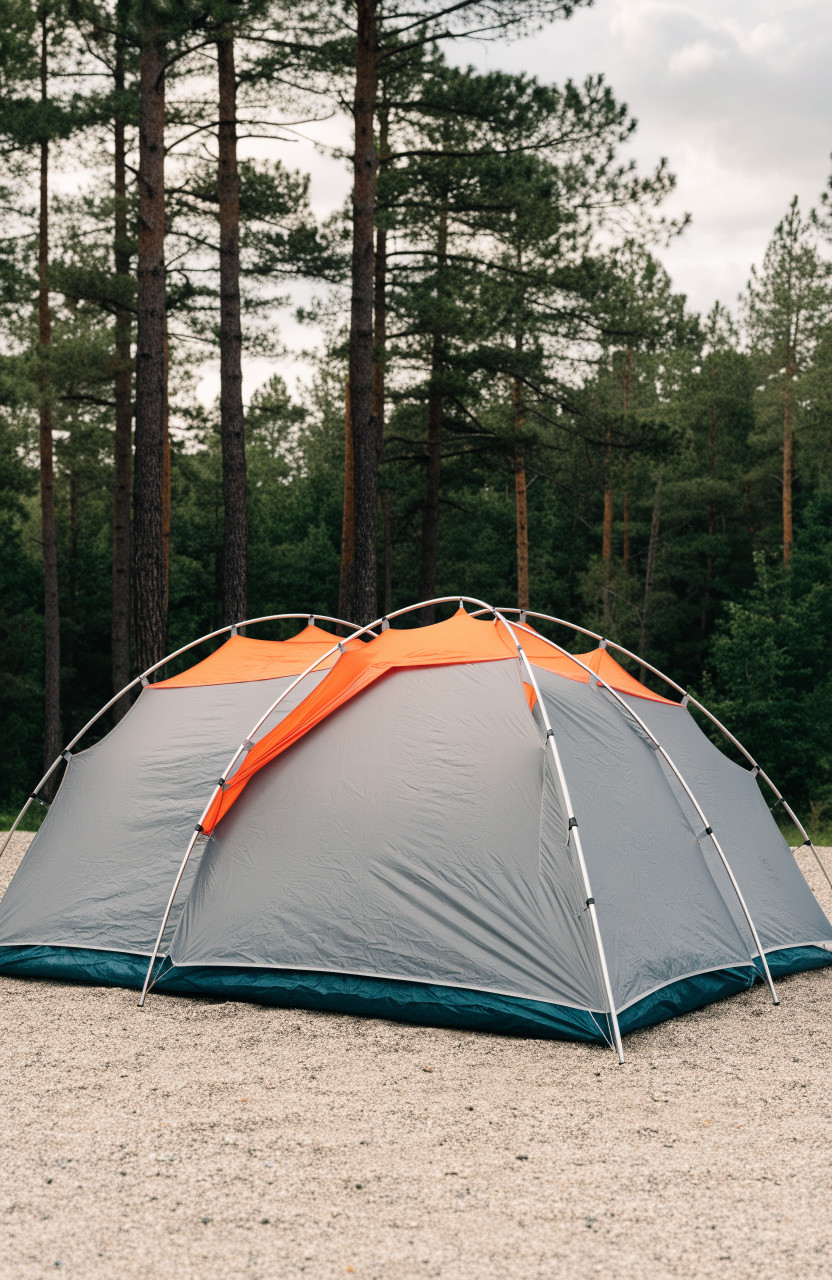
Lay parts out and count them: body, fly, poles, stakes, guylines. Seat every pole segment until the metal or plastic ends click. A pole that only looks connected bends under tension.
- Footprint down, smaller than the tent floor. If a groundsheet sticks out past the tent, rain runs onto it and under you. Tuck any extra edge underneath. A coated footprint goes coated side toward the soil.
- Tent body on the footprint, door aimed off the wind. Stake two opposite corners first so a gust cannot turn the fabric into a sail. On soft ground, angle stakes about 45 degrees, hook or head out, away from the tent — straight vertical stakes pull out more easily.
- Poles in, then clips or sleeves. Work from the bottom up on clip tents so the fabric does not twist. Raise, then stake the remaining corners. Snug, not drum-tight. Overtension pulls stakes in loose soil and stresses seams.
- Rainfly on immediately, even if the sky is clear. Match doors and vents to the body. The fly should cover the walls and stop an inch or two off the ground, taut enough that it does not touch the inner tent. Where fly touches body, water transfers inside.
- Guylines out to stakes, again angled away from the tent. They stop the fly from flapping and dumping condensation, and they hold shape in wind. Skip them only if the forecast is dead calm and you accept a louder night.
In a campground, pitch the tent before the kitchen. Dinner can wait. A headlamp pitch after a long drive is how stakes go into the wrong loops and the fly goes on backward.
If rain has already started, reverse the exposure: get overhead cover from a picnic shelter or a tarp first if you have one, keep the inner tent stuffed until the fly can go on fast, and stake as you raise so nothing sails away. A wet pitch is slower. Rushing it soaks the floor.
Dry fabric is not the same as a dry night
Two different problems get called “leaks.”
A true leak is rain coming through a failed seam, an open vent, a fly that does not cover the wall, or a footprint channeling water under the floor. Fix those with coverage, tension, and seam sealer if the factory tape has peeled.
Condensation is moisture from breath and damp clothes hitting a cold wall. It beads on the inside of the fly and can drip if the fly sags onto the body. Vent the tent: crack a high vent and a door panel on the lee side so air moves without pouring rain in. Keep wet jackets in the vestibule, not piled on sleeping bags. A vestibule is the covered porch under the fly outside the inner door — cook and boots stay there, sleep stays inside.
Do not store the tent wet for days after the trip. Pitch or hang it at home until the fabric is dry, or mildew takes the coating. That is maintenance, not optional.
Food and fire stay out of the sleeping area
Never put food, trash, or scented items in the tent. That includes toothpaste, sunscreen, soap, deodorant, and lip balm. Park Service campground rules treat these as attractants, same as snacks. Raccoons and rodents are the common problem. Bears are the serious one, and they do not need the tent door open to investigate.
Storage depends on the place, and the local rule wins:
- Many national park campgrounds require food lockers, or food low in a locked hard-sided vehicle with windows up. Soft-sided coolers are not bear-resistant. Rocky Mountain National Park, for example, tells visitors that even “bear-proof” coolers must be secured when the site is unattended.
- Some parks state outright that coolers do not count and that food in a tent is prohibited.
- In backcountry, several NPS units require storage about 100 feet to 100 yards from the tent, in a canister or a hang — often on the order of 12 feet off the ground and several feet from the trunk. Hanging is a poor default if you have not practiced it. A canister is simpler where it is allowed.
Cook at the picnic table or a designated spot, not in the vestibule with the stove against nylon. Canister and propane stoves belong outside, on a stable surface, with fuel off when you are done. Check fire restrictions before you build anything in a ring. Grease and food scraps do not go in the fire pit. They smell, and they stay.
Wash dishes away from the spigot and away from any lake or creek. Strain scraps into the trash. Scatter small amounts of strained gray water on durable ground well away from camp and water, unless the campground says otherwise.
Strike camp so the next person inherits the same pad
Pull stakes straight up, not sideways, so you do not bend them. Shake out the body and fly, fold poles from the center so the shock cord is not overstretched, and bag stakes separately so they do not puncture fabric.
Walk the site. Pack out trash, including micro-trash and twist ties. Leave the fire ring cold and as you found it. On a popular pad, do not “improve” it with rocks, trenches, or new furniture. Leave No Trace’s line is still the useful one: concentrate use on the already-impacted surface, and do not enlarge it.
Failures that show up after you are already tired
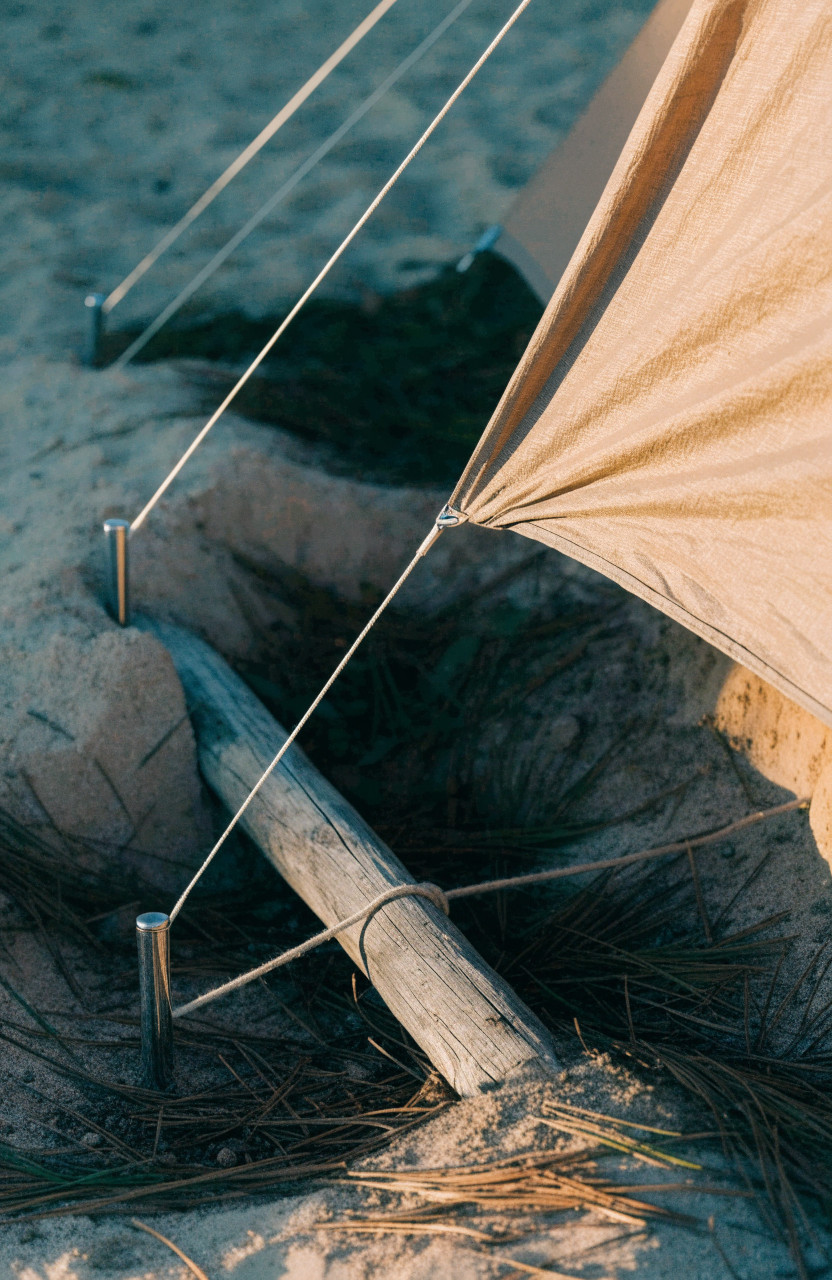
The tent creeps in wind. Add guylines and re-angle stakes. If the soil is sand or duff, bury stakes sideways as deadmen — horizontal anchors with the line tied to the middle — or use larger stakes. A bigger mallet does not fix a vertical peg in loose ground.
The floor is wet only at the edges. The footprint is probably proud of the tent. Pull it in and tuck it. If the whole floor is damp from below, you are in a low spot. Move while it is still light.
You are cold with a “warm” bag. The pad is the gap. Add insulation under you — a closed-cell foam pad under an air pad stacks R-value — and a dry hat and socks. Damp cotton next to skin keeps pulling heat.
Poles will not seat. Something is in a sleeve backward, or a segment is not fully joined. Drop the tent, trace one pole at a time, and do not force a bend.
Animals at the table. Food is out, or a cooler is being used as storage. Lock it up. Do not sleep with the cooler in the tent as a fix.
Questions that come up on the first trip
Do I need a footprint? You need something that protects the floor from abrasion and does not extend past it. A properly sized footprint or a cut groundsheet does that. A cheap tarp larger than the tent often makes the floor wetter.
Can I camp with only the rainfly off for airflow? On a dry, mild night, yes, if insects allow it. Put the fly back on before you sleep if dew or a weather change is likely. Dew wets a mesh ceiling the same way light rain does.
How long should setup take? A practiced dome pitch is often 10 to 20 minutes. A first pitch, including site choice and guylines, is commonly 20 to 40. Budget the longer number and start while you can still see the ground.
Is a pop-up tent easier? It is faster to open and often harder to fold, and many are less stable in wind. Fine for a calm, short trip. A conventional freestanding tent is the better teacher.
What if the campground is full and we have to improvise? Do not create a new site beside the road or on vegetation. Turn around or use a designated overflow. A bad pad is a worse outcome than a shorter trip.