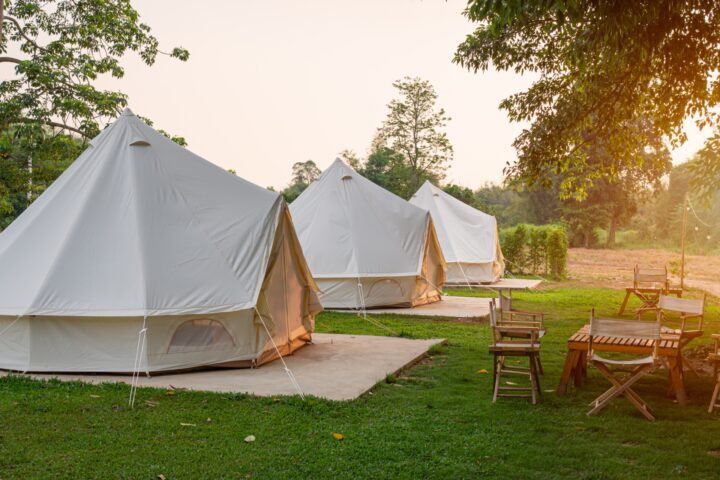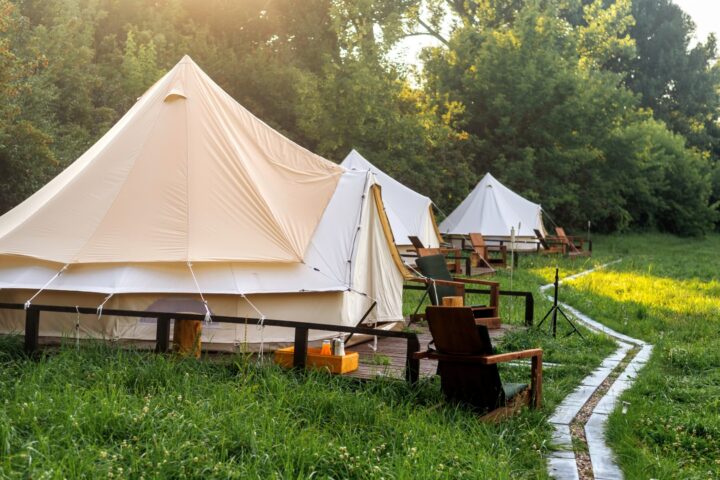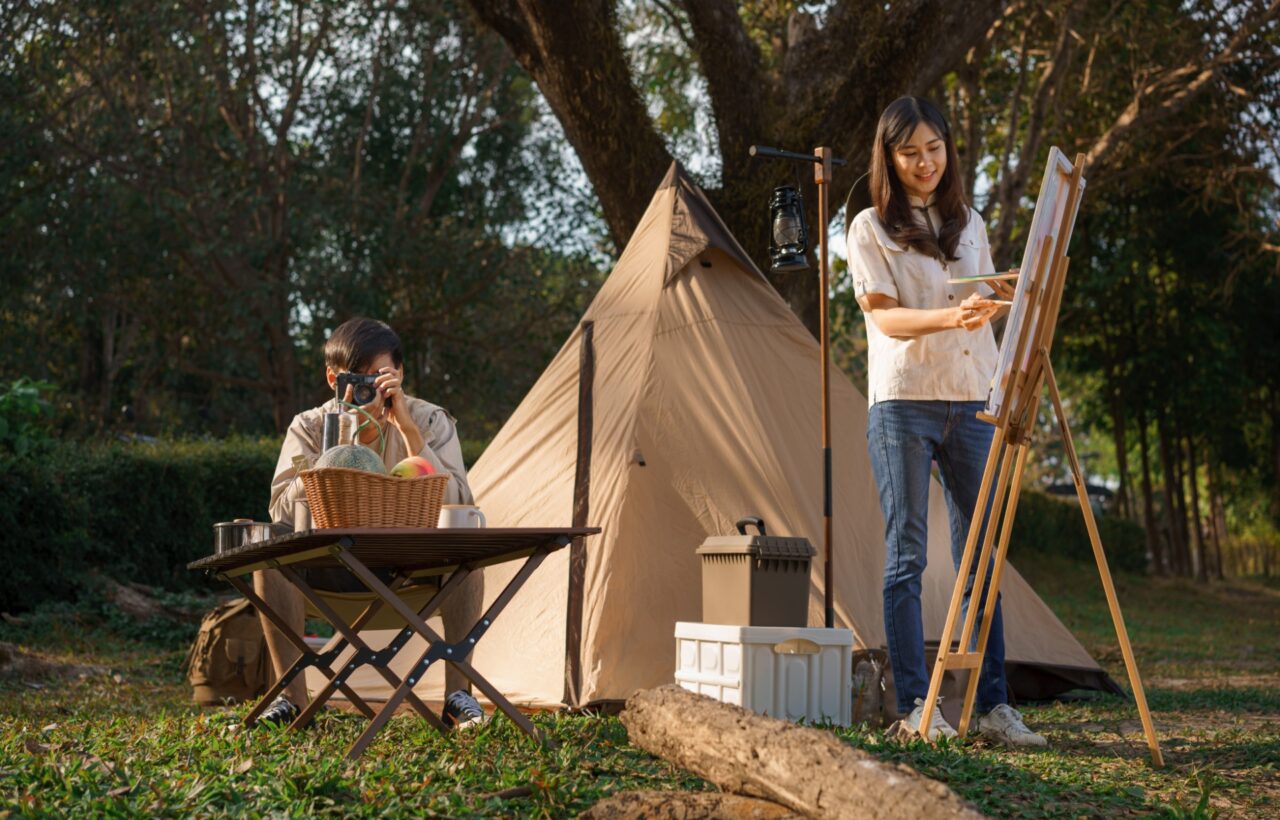

Canvas tent camping is a base-camp style of camping: you drive or haul a heavy cotton or poly-cotton shelter to a site, pitch it for a night or a season, and live in a tent that breathes, stands up to weather, and can take a stove. It is a poor choice for backpacking and a strong one for car camping, hunting camps, and multi-day family trips where comfort and lifespan matter more than packed weight.
A canvas tent earns that comfort from the fabric, not from a coating. Cotton fibers let water vapor pass, swell and tighten when rain hits, and dull wind noise that makes a nylon fly crackle all night. The same traits create the real work of canvas tent camping: slower setup, serious weight, and a hard rule that the tent must be dry before it goes into storage. Get that tradeoff right and the tent can outlast several synthetic cabins. Get it wrong and mildew ends the experiment.
Who canvas tent camping is for
Canvas tent camping fits people who camp from a vehicle, a trailer, or a short carry from the parking pad. Family cabin tents in this category commonly land in the 40 to 80 pound range; traditional wall tents sit in the same band or higher once poles, a stove, and a floor are added. A comparable polyester dome is often under 15 pounds and pitches in minutes. That gap is the whole decision.
It is the better shelter when you want any of these:
- Less condensation on sleeping bags and gear
- A tent quiet enough to sleep through wind
- Room to stand, change clothes, and keep cots off the floor
- A wood stove in cold weather, which coated nylon cannot safely host
- A shelter you expect to use for many seasons rather than replace when the coating peels
It is the wrong shelter when the tent has to go on your back, when you need to pitch in the dark in five minutes, or when you cannot dry the fabric after a wet weekend. Hard-pack desert, rocky sites, and festival grounds with stake bans also fight traditional canvas, because most of these tents are not freestanding. They need stakes, and often a lot of them.
Why the fabric behaves differently from nylon
Camping canvas is woven cotton, usually sold as cotton duck and measured in ounces per square yard. Family tents often use something around 10 to 12 ounces; winter wall tents and hot tents often use heavier cloth. Poly-cotton, sometimes called technical canvas, blends polyester with cotton so the tent weighs less and dries faster, at some cost to the pure-cotton feel and self-sealing behavior.
Three properties explain almost every review of canvas tent camping.
Breathability comes first. Body heat, breath, and wet gear put moisture into the air. A coated nylon wall blocks that vapor, so it condenses on the cold fabric and drips. Cotton lets a useful share of that vapor pass through the weave, which is why campers notice drier gear even when the outside air is humid. Vents still matter. Breathable is not the same as ventilated.
Rain resistance is the second. Untreated or waxed cotton swells as it gets wet, closing gaps in the weave. That is the classic “seasoning” effect: the first shower can mist through a new traditional tent, then the cloth tightens. Many modern camping canvases arrive treated (Hydra-Shield, Sunforger, and similar finishes) and shed water from the first night. Treated cloth can still weep at seams until it has been rained on or deliberately wetted and dried. A slow first soak in the yard is cheaper than discovering a seam leak at 2 a.m.
Temperature is the third, and the claims around it need care. Dense cotton blocks wind and holds a layer of air, so a closed canvas tent feels less like a greenhouse at noon and less like a frost box at dawn than a thin synthetic cabin. Manufacturer guides sometimes cite an interior that runs noticeably warmer than outside air before any stove is lit. Treat that as a directional advantage, not a guaranteed number of degrees. Ventilation, color, sun exposure, and how tightly you seal the skirt change the result. Dark canvas in full sun still gets hot. Open the doors.
Canvas is also more repairable. A hole from a stake, a branch, or a road rash in the truck can be sewn or patched. Coated nylon fails more often at the coating and the seams, which are harder to restore once they start peeling.
The three styles that cover most canvas camps
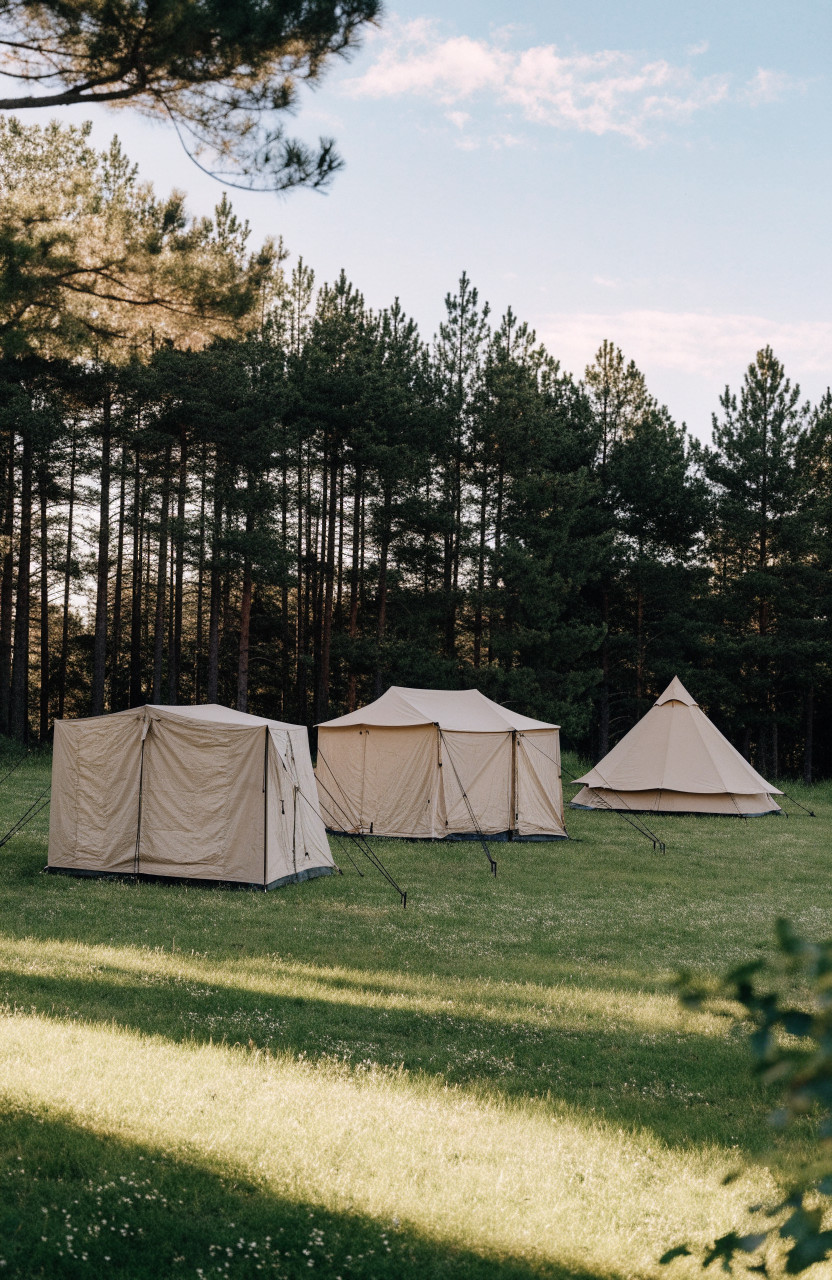
The word “canvas tent” covers shelters with very different jobs. Buying the wrong shape is the most common disappointment.
Cabin tents use a flex-bow or steel frame, near-vertical walls, and a sewn-in floor. Brands in this lane include Kodiak and Springbar-style designs. They suit car camping and families: you can stand up, the floor keeps mud out, and setup is more repeatable than a classic wall tent. They are still heavy, still stake-dependent, and still slow next to an instant polyester cabin. A 10-by-10-foot model is a realistic couple or small-family shelter; larger footprints fill a cargo area on their own.
Wall tents are the outfitter and hunting shape: a rectangular roof, upright walls, and usually a stove jack. Floors are often optional. That is an advantage on snow, where you want the skirt buried for a seal, and a disadvantage in mud. They take longer to pitch, want a proper frame, and reward a site you will occupy for several days. Ridge height matters more than the footprint number. A low ridge forces you to crouch; a high ridge gives headroom and a path for stove heat to rise instead of pooling at sleeping level.
Bell tents are conical, with a center pole or an air or steel structure, and a wide open floor. They are the usual glamping choice: one room, good headroom in the middle, and simple geometry. The center pole steals floor space. Snow loads and strong wind need a well-tensioned pitch and solid stakes. Poly-cotton bell tents are common because pure cotton in this size is a haul.
A short comparison:
| Style | Best use | Floor | Stove | Main drawback |
|---|---|---|---|---|
| Cabin | Weekend car camping, families | Sewn-in | Rare | Weight and stake count |
| Wall tent | Hunting camps, cold multi-day trips | Often optional | Common | Slow setup, bulk |
| Bell tent | Glamping, fair-weather base camps | Usually sewn-in | Sometimes | Center pole, wind if poorly guyed |
How to choose size, floor, and poles
Rated capacity on canvas tents is optimistic in the same way it is on nylon tents. A “six-person” cabin fits six sleeping pads and almost no gear. For real canvas tent camping, plan about 2.5 feet of width per sleeper if people are on cots, and more if you want a table, a stove, and a dry corner for packs. Winter use with a stove should be sized for the stove’s clearance, not for the number of bodies.
Floors are a decision, not a default. A heavy vinyl or canvas floor keeps groundwater, insects, and mud out, and it makes a cabin tent livable on ordinary campground sites. It also traps moisture if you lay it on a deck or a non-breathable tarp with no air gap. Floorless wall tents need a groundsheet sized to stop short of the walls, so rain running down the outside does not flow under the sheet and into the living area. On snow, many hunters skip the floor and bank the skirt.
Poles should match the fabric. Canvas is heavy enough to bend cheap poles and to stress hubs in wind. Steel frames are durable and unpleasant to carry; aluminum saves weight and costs more. Flex-bow cabins tension the canvas as the poles spring into place, which is why a loose pitch on those tents sags and holds water. Traditional wall tents want the canvas drum-tight. Wrinkles pool rain and dew.
Stake count is part of the purchase. Some cabin canvases call for dozens of stakes. Short aluminum stakes that work in a backyard will pull out of sand or forest duff the first time the wind loads the wall. Bring longer stakes for soft ground and a few screws or rock weights only where the site rules allow and the tent maker says the design can take them.
Setting up so the tent works with the weather
Site choice does more for a canvas tent than any accessory.
Pick ground that drains. A slight rise is better than a flat hollow that becomes a pond. Tall grass and brush touching the walls hold moisture against the cloth and are where mildew starts on multi-day pitches. In hot weather, morning sun and afternoon shade is the comfortable pattern. In cold weather, a windbreak matters more than sun, because the stove is doing the heating.
Pitch for airflow at the bottom edge when you can. Outfitter practice is to keep the wall slightly off the soil so the cloth does not wick groundwater, then drop or bury the skirt only when you need a seal against wind or snow. On a wooden platform, do not seal the floor to solid boards. A small air gap under the floor stops the hidden damp spot that shows up as black specks along the edges weeks later.
Sequence matters more than speed. Stake the floor or sod cloth before you raise the frame, get the roof centered, then tension evenly. Guy lines should run to stakes angled away from the tent, not straight down. A canvas tent that is tight and symmetrical sheds rain and wind. A canvas tent with a slack side collects a pool and then fails at that seam.
Do the first pitch at home. You learn which pole is which, you find missing stakes, and you can wet the tent on purpose to close the weave before a trip. That afternoon is the difference between a calm camp and a pole diagram read by headlamp.
Rain, condensation, and the mildew rule
Canvas tent camping fails in one repeatable way: the tent gets put away damp.
Cotton holds water. A tent that feels almost dry can still be wet in the seams, the floor, and the bag of the roof. Pack that and mildew can show up as smell first, then grey or black speckling, and it weakens the fibers it feeds on. Synthetic tents mostly escape this because the fungus has less organic material to eat. Community reports and maker care guides agree on the fix, which is prevention.
If you have to break camp in rain, get the tent out of the bag as soon as you are home and hang or pitch it until it is fully dry, including the floor underside. A wood stove can speed drying on a wall tent that is designed for one. A warm car does not dry a packed tent; it steams it. Sun and moving air do the job.
While you are camped, treat condensation and rain as separate problems. Rain is an outside wetting. Condensation is interior moisture meeting a cool wall. Canvas reduces the second problem and does not erase it. Crack a window on the lee side, keep wet clothes out of the sleeping area, and avoid running a stove with every vent sealed. Cooking inside adds steam. In humid regions, face a door toward the breeze and open vents even when the air feels sticky.
Mildew that has already appeared needs a gentle clean, not a bleach bath. Chlorine bleach is widely reported to strip waterproofing treatments and weaken cotton. Diluted white vinegar is the method campers and some makers repeat: wet the spot, scrub, rinse, and dry in the sun. Bad staining may remain after the smell is gone. Heavy growth that has eaten the cloth is a repair or a retirement, not a rinse.
Reproofing depends on the finish. Waxed canvas wants a wax worked into worn seams. Treated duck often wants the maker’s own waterproofer on a schedule of every few seasons, sooner if water stops beading. Spray-on silicone products made for nylon can interfere with breathability. Read the tag before you coat the tent.
Heating and cold-weather canvas tent camping
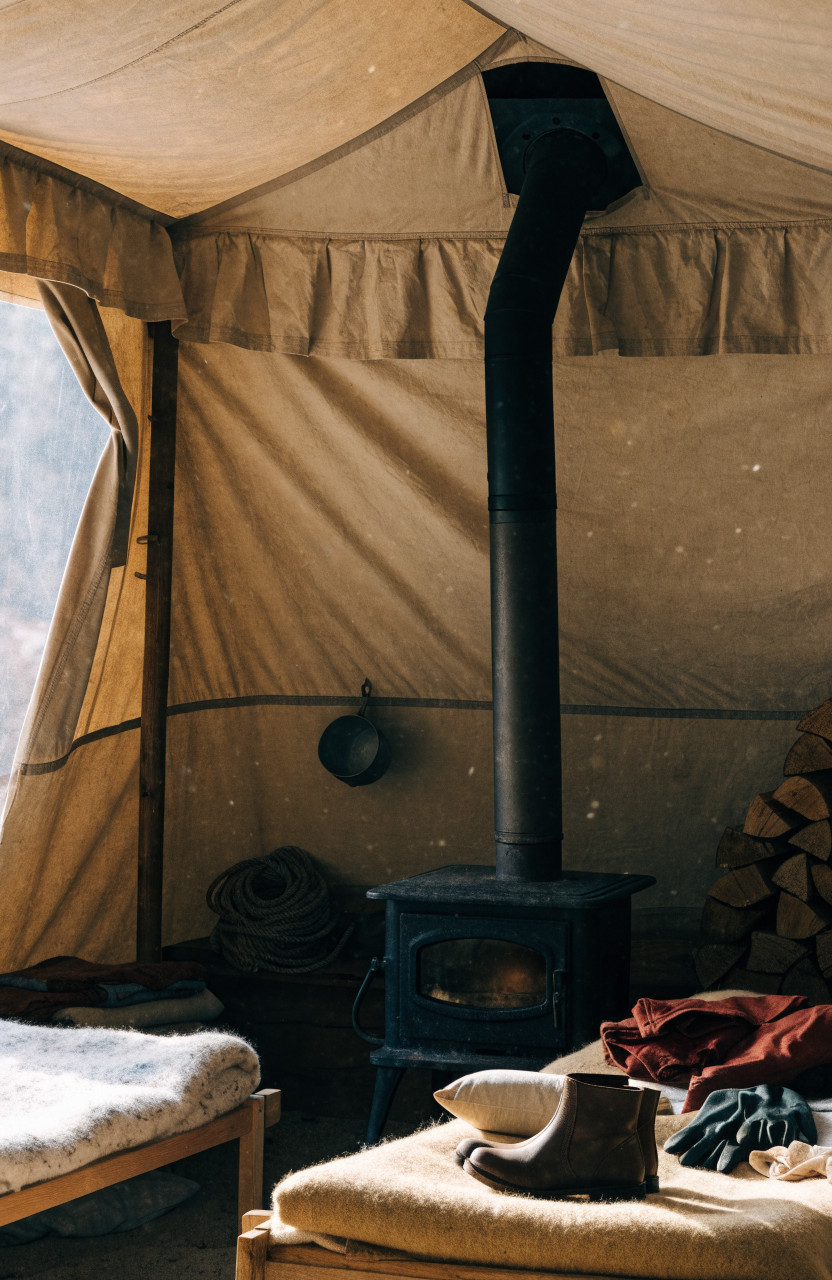
This is the use case where canvas has no real synthetic substitute. Cotton is more heat-resistant than nylon, which melts, so a wall tent or bell tent with a proper stove jack can hold a small wood stove. Resistant is not fireproof. Sparks, an overturned stove, and a flue that is too close to canvas all burn holes or worse.
Follow the tent maker’s clearance, not a forum average. Published guidance from hot-tent makers is often on the order of 18 to 24 inches from the stove body to the nearest canvas, with a thimble or jack where the pipe exits and a spark screen in the pipe. A floorless tent on duff or a tent with a synthetic floor needs a fireproof mat under the stove. Carbon monoxide is the other hazard: a glowing stove in a sealed tent is not safer because the walls are cotton. Keep a vent open on the lee side, and use a battery CO alarm if anyone is sleeping with the stove running.
Snow is a structural question. Canvas weight plus a rigid frame handles load better than a lightweight dome, but only if you knock snow off the roof during a heavy fall and the poles were sized for winter. A three-season cabin with a light flex bow is not a winter hot tent because the fabric is cotton.
Care that decides the lifespan
Makers and long-term owners commonly describe a cared-for cotton tent lasting well beyond a decade, sometimes into a second, against a few seasons to under ten years for a coated family tent whose waterproofing fails first. Those ranges assume the canvas was dried, cleaned of leaves and bird droppings, and stored loose enough to breathe. They are not a warranty.
A workable routine is short:
- Shake out debris before you fold. Organic dirt feeds mildew.
- Dry completely, then store in a breathable bag in a dry room. Skip the sealed tote in a damp basement.
- Pitch and inspect once in the off-season if the tent sat for months.
- Repair small holes while they are small. Canvas takes a needle.
- Re-treat only when water stops beading, with a product matched to the cloth.
Guylines, zippers, and stake loops fail before the fabric on many tents. Carry spare cord and a few repair pins. The canvas is the durable part. The hardware is what you will actually replace.
When a synthetic tent is the better tool
Canvas tent camping is a poor default. Nylon or polyester still wins for backpacking, motorcycle travel, one-night stops, and anyone who will not deal with drying time. A modern cabin with big mesh panels and a full fly narrows the condensation gap in mild weather, at the cost of flapping fabric and a shorter working life once UV and coatings age.
Poly-cotton sits in the middle: lighter and faster-drying than pure cotton, more breathable than coated nylon, less “alive” in the rain than traditional duck. For humid coastal camping where you cannot always dry a pure-cotton tent, that compromise is often the rational buy.
Price follows the same split. A solid canvas cabin often starts several hundred dollars above a polyester family tent of similar floor area. The canvas only becomes the cheaper shelter if you actually use it for many years and do not destroy it in storage. A tent that mildews in year two was the expensive option.
Frequently asked questions
Do canvas tents leak the first time they get wet? Traditional untreated or lightly waxed cotton can mist until the fibers swell. Most current camping canvas is treated and should shed water immediately, with possible seam weeping until the tent has been wet and dried once. A backyard soak before a trip settles that question.
Can one person set up a canvas tent? Cabin models with a flex-bow frame are often a one-person job in calm weather once you know the sequence, and a miserable job in wind. Wall tents and large bell tents are a two-person pitch. Budget the time: 20 to 40 minutes is normal, longer in the rain.
Are canvas tents waterproof without a rain fly? The cloth is the roof. They do not use a separate fly the way a backpacking tent does. Waterproofing still depends on treatment, tension, and sealed seams. A slack roof will leak at the puddle even if the fabric is sound.
Is canvas safe for a wood stove? Only in a tent built with a stove jack, used with the maker’s clearances, a proper flue, and ventilation. Cotton tolerates radiant heat better than nylon. It still burns.
What is the single care rule that matters? Never store it damp. Everything else in canvas tent camping is optional next to that.