
Too often, car camping storage gets treated as a packing puzzle, where success means fitting the most gear into the cargo area. Capacity matters less than access. A trunk that has to be half emptied to reach a headlamp has failed, however neat it looked in the driveway.
A better approach starts with measuring the space, then sorting gear into categories with a fixed home for each. The sections ahead compare hard-sided bins, collapsible boxes, roof cargo boxes, under-bed platforms and seatback organizers, with practical notes on keeping heavy items low and everything protected from dust and rain.
Measuring Your Space Before You Buy Anything
Guessing dimensions wastes money. Bins that look perfect online can leave inches of dead space on every side of a cargo area.
Grab a tape measure. Note the length from the back of the rear seats (folded or upright) to the hatch. Measure width between the wheel wells. Check height to the roof or cargo cover. Write the numbers down. Then measure any potential under-platform clearance if you plan a bed setup.
Measure every time you switch vehicles or add a new system. A Subaru Outback, for example, offers roughly 42 inches of usable depth with the seats down and about 38 inches of width at the narrowest point. Numbers like these decide which boxes fit without shifting on washboard roads.
Heavy items go low and centered. Light bulky stuff rides higher or outside. This single step prevents most packing headaches later.
Save Outback 42 by 38 numbers in phone notes with photo of tape for store comparison.
Hard-Sided Bins for Reliable Car Camping Storage
Hard cases form the backbone of a solid setup. They stack. They take abuse. They keep dust and light rain out.
The Rubbermaid ActionPacker 35-gallon is a proven workhorse, typically priced around $110. The impact-resistant plastic shrugs off drops and temperature swings. The recessed lid and solid latches handle dirt roads without popping open. Inside dimensions run roughly 31 by 16 by 14 inches. It holds a full kitchen kit: stove, pots, utensils, and a small propane bottle with room left for a cutting board.
Stack two of them in the rear, one for cooking gear and one for tools and recovery straps. They lock together well enough that short trips rarely need extra straps.
For tighter spaces, Front Runner Wolf Pack Pro boxes are a strong option. Each costs around $70. They measure about 20 by 16 by 9 inches externally and nest securely when stacked. The latches seal against dust better than most consumer bins. One can hold electronics and another first-aid and repair kits. The interlocking lids stop shifting even on washboard sections of Forest Service roads.
Pelican-style cases work for sensitive gear if you camp in extreme weather. They cost more, often $200-plus, but the crushproof and waterproof rating is real. They make the most sense for multi-week trips where failure isn’t an option.
These hard options win when you need durability over flexibility. They don’t collapse, so they take the same space empty or full. That’s fine if your vehicle stays dedicated to camping most of the time.
Add adhesive foam strips between stacked ActionPackers to silence rattle on Forest Service washboard roads.
Collapsible Gear Boxes That Adapt to Your Load
Not every trip needs rigid walls. Soft or semi-rigid collapsible boxes shine when you want to reclaim space between outings.
The Rux 70L ranks near the top, at around $298. It expands to hold a full load of clothes, soft goods, or kitchen extras, then collapses nearly flat when empty. The weatherproof fabric and rigid rim keep shape while packing. Built-in straps let you carry it like a tote or even a short backpack from car to site. It can also ride on a roof rack for longer hauls.
Weight stays under 6 pounds empty. Capacity hits 70 liters with a 50-pound load limit. Color options make color-coding easy: one for clothing, one for camp chairs and pads. The weatherproof shell is designed to keep dust and grit out.
Cheaper collapsible bins from brands like Kelty or basic soft organizers work for budget setups. The Kelty Car-Go-Box uses color-coded pods inside a tough outer shell. It folds when not needed and costs far less than premium options, which makes it a sensible starting point before upgrading.
These adapt. Fill them for the trip. Collapse them at home. They fill the gap between hard bins and loose bags.
Never exceed the Rux 70L 50 pound limit on a roof rack, highway wind stresses seams and rigid rim.
Roof Cargo Boxes for Overflow Gear
Interior space fills fast once you add sleeping pads, a cooler, and chairs. Roof boxes solve the overflow problem.
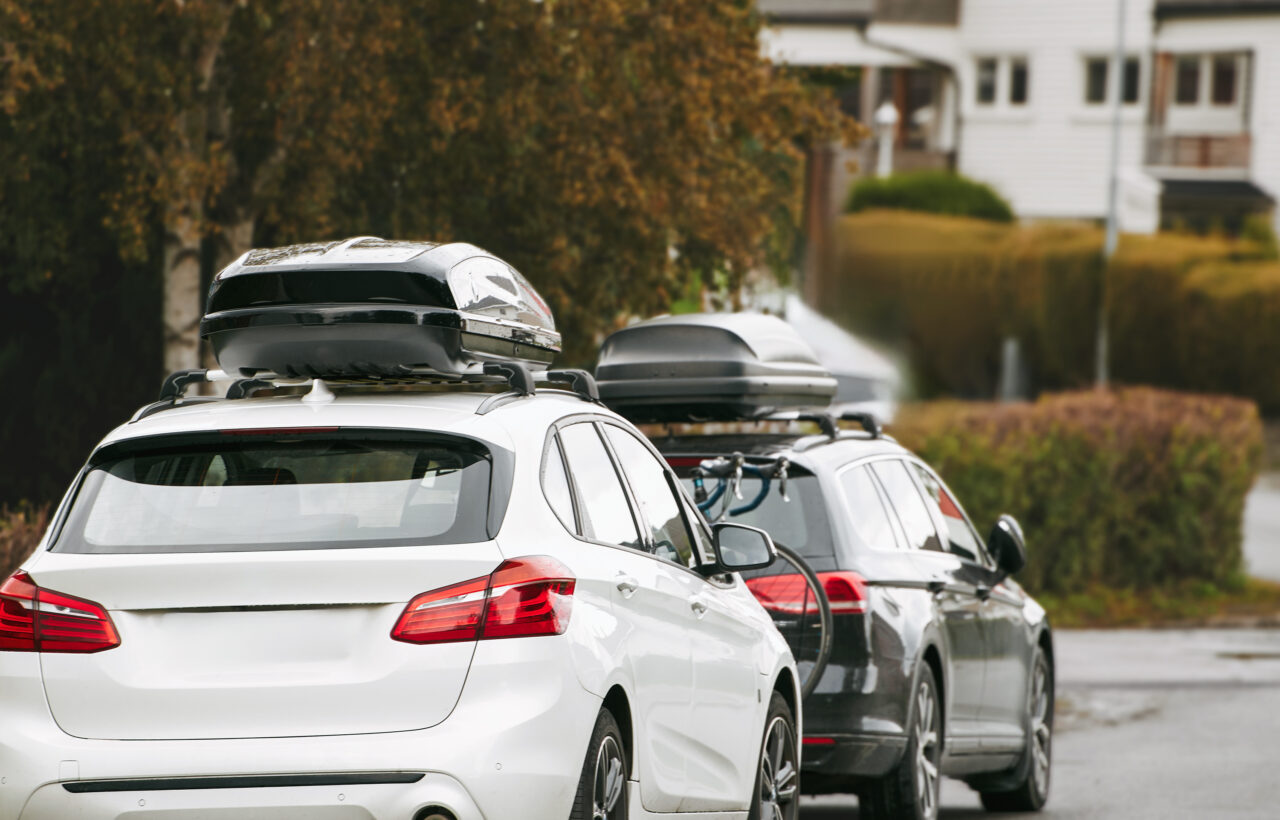
The Yakima SkyBox NX is a popular rack-mounted choice. The 16-cubic-foot version costs around $750 depending on the exact model and sales. Dual-side opening means you can reach gear from either side of the car. The flat floor uses every inch. SKS locks keep contents secure at trailheads.
Dirty clothes, extra shoes, the recovery shovel, and a tarp all suit roof storage. Anything that smells or takes awkward shapes stays out of the cabin. Fuel economy drops a bit, so check the dynamic load rating of your roof rails before loading heavy items. Light bulky gear belongs on the roof. Heavy coolers stay inside low.
Thule options offer similar capacity with different mounting systems. Measure your crossbar spread first. Most need at least 24 inches between bars. Once mounted, the box becomes permanent storage for the season, and many campers leave it on from spring through fall.
This external space frees the interior for sleeping and quick-access items. It also keeps wet gear from soaking everything else.
Most factory roof rails allow only 100 to 165 pounds dynamic load including the Yakima SkyBox weight itself.
Under-Bed Platforms That Double as Storage
Sleeping inside the vehicle changes the storage game completely. A raised platform creates a full layer of usable space underneath.
A simple plywood platform can be built for around $80 in materials. Set on 12-inch legs made from 2x4s, it leaves a clean storage bay below. Drawers or bins slide in and out easily. One side can hold the kitchen bin. The other takes clothing cubes and the power station.
Commercial systems like BamBeds or DECKED-style drawers cost more but arrive ready to fit specific vehicles. Some fold or remove when you need full cargo mode for daily driving. The ROAMLEN-style foldable beds combine a sleeping surface with under-storage compartments and break down in minutes.
Height matters. Too tall and you lose headroom. Too short and bins won’t fit. Aim for 10 to 14 inches of clearance. That fits most ActionPackers on their side or stacked low. Label the bins clearly so you can pull the right one without crawling in the dark.
This setup turns dead space into organized capacity. You sleep on top. Everything else lives below, out of the way yet reachable from the hatch.
Leave a one inch gap between plywood platform edges and hatch walls for ventilation and wood expansion.
Seatback Organizers and Small Item Hacks
Big bins handle the bulk. Small items create the daily friction.
A simple seatback organizer on the back of the passenger seat keeps small items in order. Pockets hold the headlamp, spare batteries, phone cables, sunscreen, and a multi-tool. Everything stays within arm’s reach while driving or sitting at camp. Cost stays under $25 for a decent one. Command hooks on the ceiling or side panels catch jackets and hats without drilling.
Clear plastic bins or mesh duffels work for mid-size items. Toiletries and a small trash container (a sealed food-storage tub) fit well in the front footwell or console area. Consistency matters more than fancy gear here. The same spot every time means you stop hunting.
Shoe organizers hung over the front seats create instant kitchen or toiletry stations. Magnetic spice tins stick to any metal surface for cooking. These low-cost hacks fill the gaps the big systems leave.
Categorizing Gear for Faster Packing
Random packing fails. Categories win.
Four main groups cover most gear:
- Kitchen and food
- Sleep system
- Clothing and personal
- Tools and emergency
Each group gets its own bin or bag. Labels go on the outside in big letters. Clear bins show contents at a glance. Pre-packing the kitchen bin at home means you grab it and go. Same for the sleep kit.
Once everything has an assigned spot, loading for a multi-night trip can take under fifteen minutes. The kitchen ActionPacker goes in first, low and centered. Sleep pads and bags ride on the platform. The clothing Rux goes last so it stays accessible.
This system scales. Solo weekend or group trip, the categories stay the same. Only the volume changes.
Car Camping Organization: Zones, Bins and Access
Good car camping organization means every item has a fixed home, which is what makes storage gear actually work. Treat the car like a small house with rooms.
The four zones
- Kitchen zone: the back of the cargo area, closest to the hatch, for the stove, cookware, dry food and water
- Bedroom zone: the folded rear seats or platform, holding only the pad, bag and pillow at night
- Closet zone: behind the front seats or in one soft duffel, for clothes, shoes and toiletries
- High-use zone: the passenger seat, door pockets and console, for the headlamp, snacks, sunscreen, bug spray and charger
Rules for the small stuff
Small items cause most late-night searches. Keep a backup headlamp and spare batteries in the center console, hang the car keys on the same seatback hook every time, and sort cables, batteries, lighters and spices into separate zip bags inside the bins.
Pack in reverse order of use
Whatever you need first at camp goes in last: the tent or sleeping pad, then chairs and the table, then the kitchen bin, with the cooler, water and rarely used tools deepest. Take a quick phone photo of the final load so you can restack it the same way after a stop.
Give wet gear its own corner
Set one rear corner aside for a lidded tote or mesh duffel that holds wet jackets, towels and muddy shoes. Damp gear never goes in the sleeping area or the kitchen bin, and cracking the tote lid at camp helps stop mildew.
A 10-minute setup at camp
- Park and grab the high-use items first: headlamp, jacket and lantern.
- Pull out the kitchen bin and cooler, and put the cooler in the shade.
- Pitch the tent or set up the sleeping platform while there is still light.
- Move chairs and soft gear into place.
- When you pack up, clean and restock the kitchen bin first so it is ready for the next trip.
Frequently Asked Questions
What is the best car camping storage for a small SUV? Hard-sided stackable bins like the Rubbermaid ActionPacker combined with a seatback organizer cover most needs without permanent modifications. Measure your cargo area first so everything fits tightly.
How do I keep gear from shifting while driving? Stack interlocking boxes, use ratchet straps or bungees across the top, and place heavier items low and centered. Soft collapsible boxes help fill remaining gaps.
Do I need waterproof containers for car camping storage? Weather-resistant is usually enough for typical conditions. Fully waterproof cases make sense only if you expect heavy rain or water crossings. Secondary ziplock bags inside any bin add cheap insurance.
Can I use the same storage system year-round? Yes. Collapsible options pack away between seasons. Hard bins stack in the garage. Roof boxes can stay mounted or come off for winter.
How much storage capacity do most people need? A solo or couple weekend trip works with 50 to 100 liters of organized space plus a cooler. Families or longer trips push past 150 liters once you add chairs, extra clothing, and kitchen gear.
How do I keep food safe and organized in the car? Keep cooking hardware in one bin, dry food in a latched pantry bin and perishables in the cooler. In bear country, the cooler and anything scented stay locked in the car or a bear box overnight.
Expect to tweak the system every season. New bins appear. Old ones retire. The core idea stays the same: measure, categorize, protect, and keep the heavy stuff low. A tidy vehicle turns car camping from a logistics puzzle into something closer to easy. Pack once. Arrive ready. That’s the whole point.