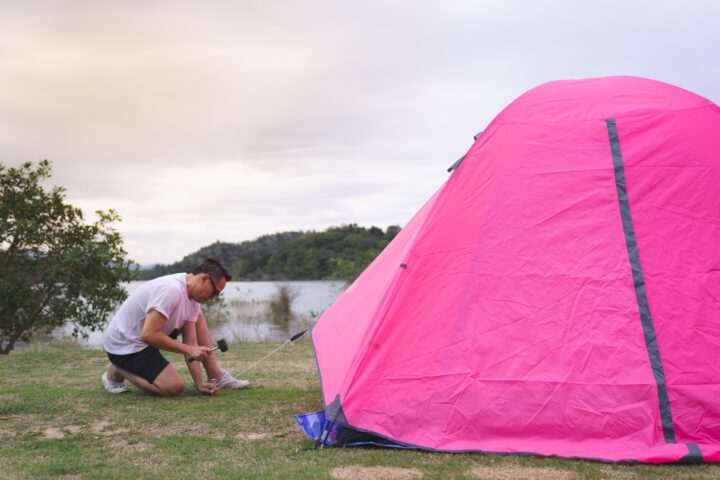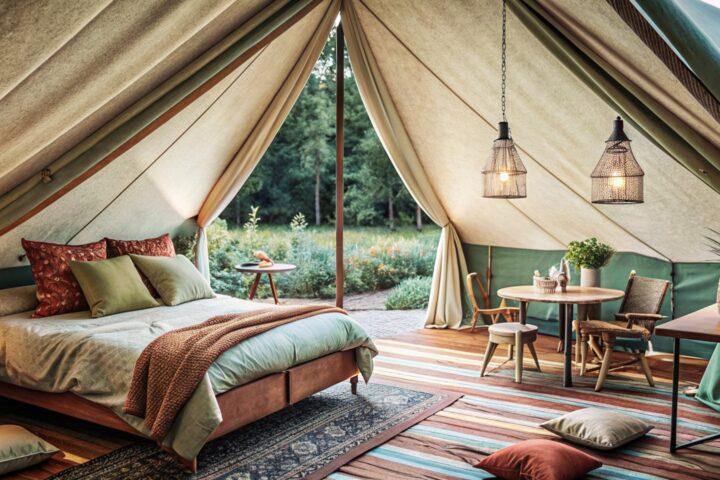

A dark tent is a placement problem more often than a gear problem. One soft overhead light covers getting changed and sorting a sleeping bag, a small task light covers reading or finding a headlamp, and a low marker covers the walk to the bathroom. These 25 tent lighting ideas are built around that split: interior, entry, path, and shared site. Each note says where the idea works, how to power it, and the limit that usually shows up on the second night.
Match the light to the job before you buy another lantern
Most tent lighting fails for one of three reasons: it is too bright and harsh, it is hung where it hits eyes instead of the floor, or its power source does not match the site.
Think in three layers.
- Ambient light spreads across the tent so people can move without a beam in the face.
- Task light is directional and short-lived: reading, first aid, packing a dry bag.
- Path light is dim and low, meant to mark guylines, the vestibule lip, and the route to the toilet.
Color matters as much as brightness. Warm white, around 2700K, is easier to live with after dark than cool white. Cool LEDs feel clinical inside a small shelter and make it harder to wind down. A red mode is worth having for late bathroom runs because it wrecks night vision less than a white beam.
Power should follow the campsite, not the product photo. USB-rechargeable lights are the default for weekend car camping if you charge them at home. Replaceable batteries still make sense as a cold-weather spare. Solar only pays off with several hours of direct sun on the panel. A panel left inside the tent, under a rainfly, or in deep shade will not recover a drained battery. Plan on charging solar gear in the open during the day, then bringing the light in at dusk.
Brightness is a planning range, not a trophy. Camping guides commonly treat about 200 to 400 lumens as enough for a main lantern in a typical three- or four-person tent, with higher output reserved for a kitchen table or a larger family shelter. A 1000-lumen lantern on high inside a two-person tent mostly creates glare and short runtime. Use the low or medium mode inside, and save high for outside.
Interior ideas that do not wreck the tent
1. Hang one lantern from the ceiling loop
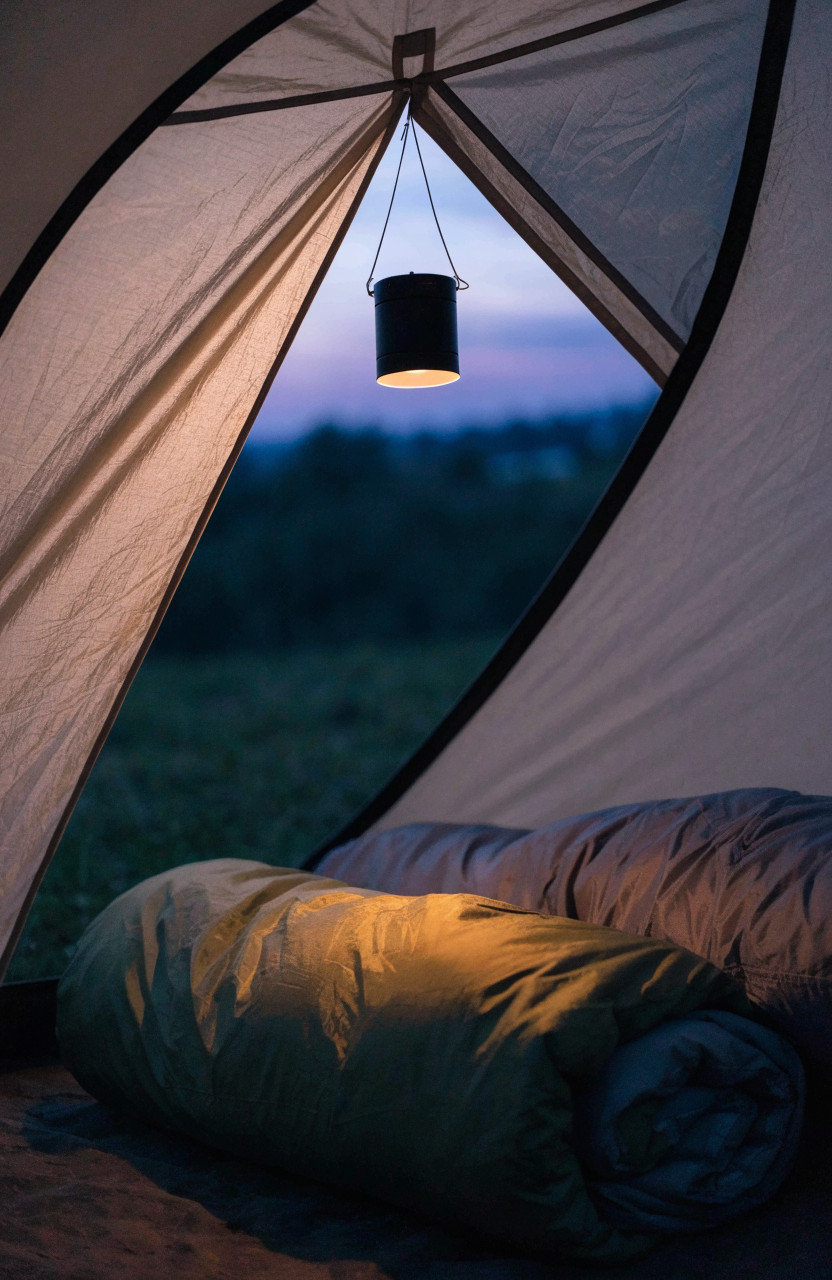
Most tents have a fabric loop at the peak. A lightweight LED lantern there throws light down and out, which is the most even interior layout you can get without extra hardware. Keep the lantern small. A heavy unit stresses the loop and the pole arch, especially if wind loads the fly.
2. Point a headlamp at the ceiling and bounce the beam
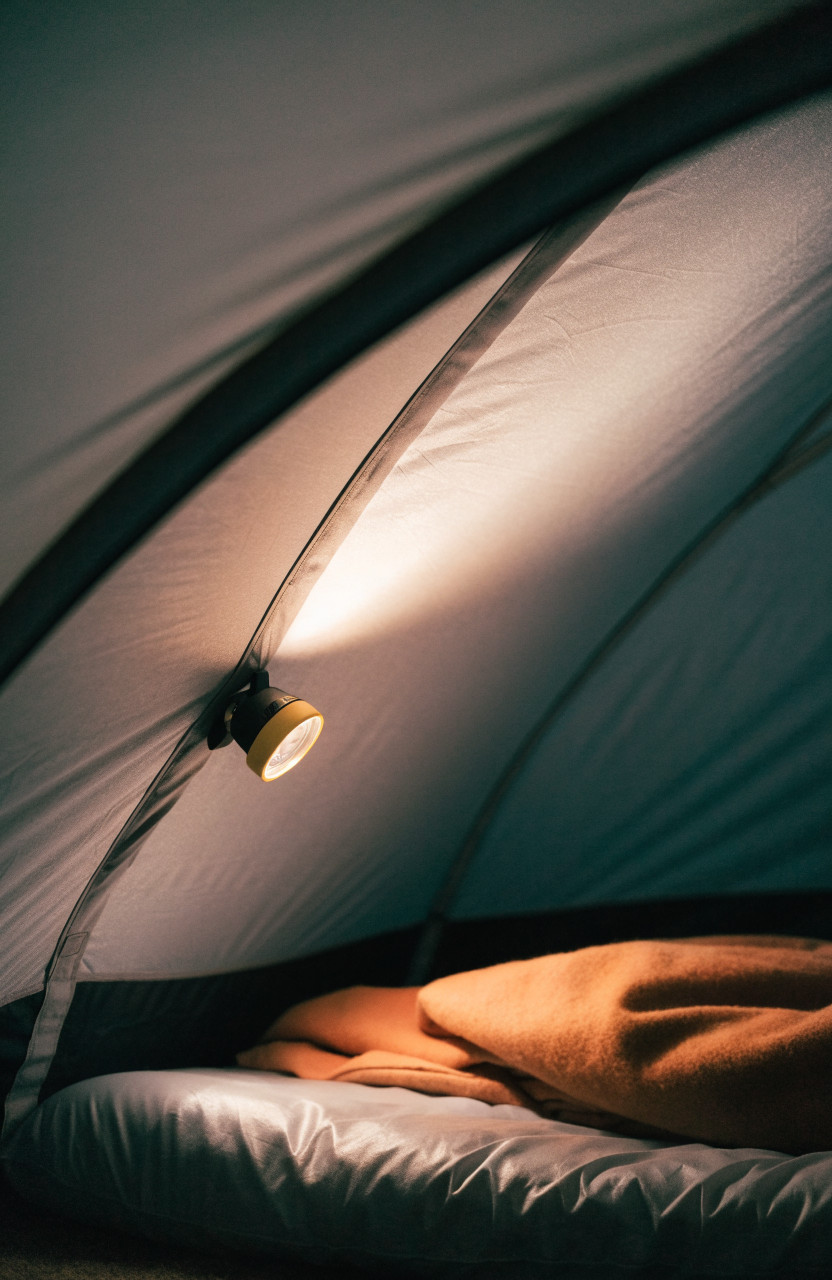
If you already carry a headlamp, clip or hang it so the beam hits the lightest part of the ceiling rather than a face or a sleeping pad. Bounced light fills the tent and cuts the hotspot. This is the fastest fix on a first night when the “real” lantern is still in the car.
3. Clip puck lights to existing gear loops
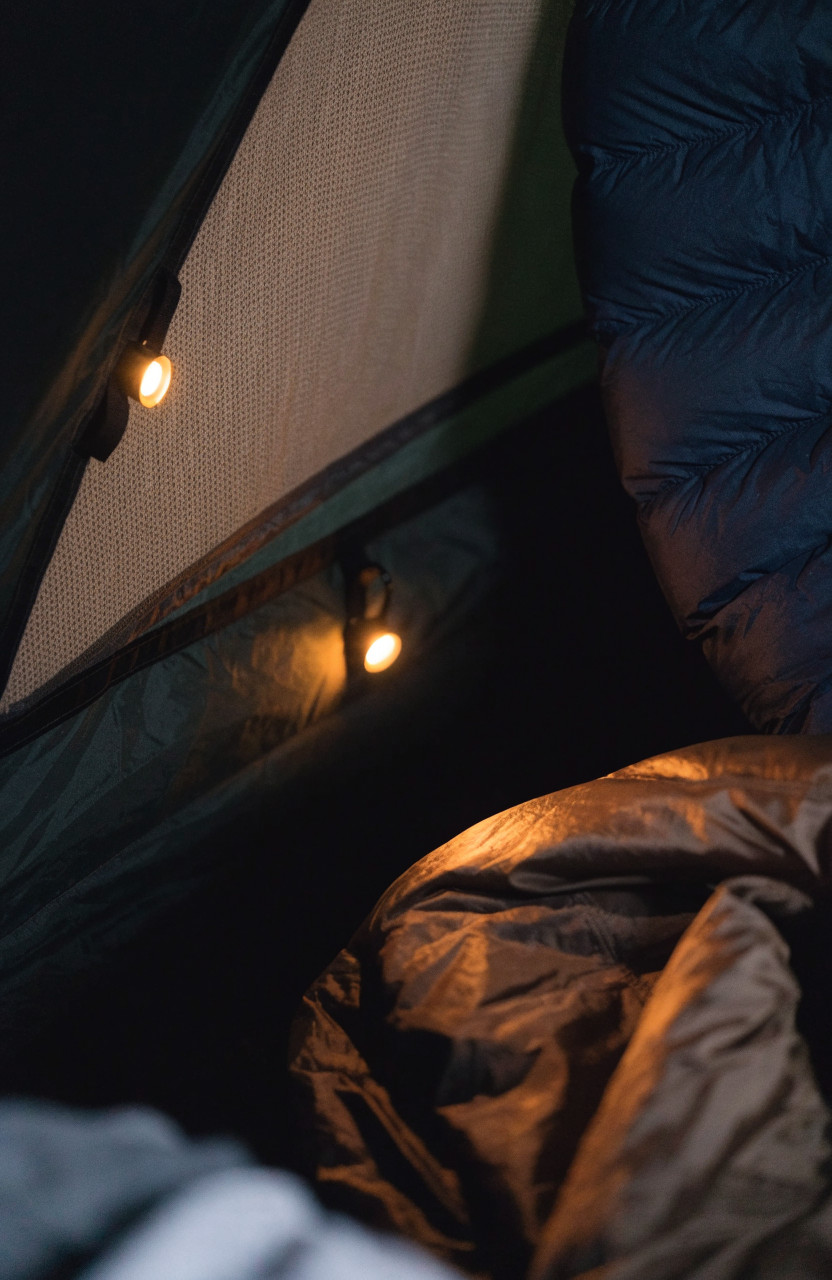
Small clip lights or puck lights on the side loops light a corner for changing clothes without lighting the whole shelter. Use two at low output rather than one at full blast. They also work as a backup if the main lantern dies.
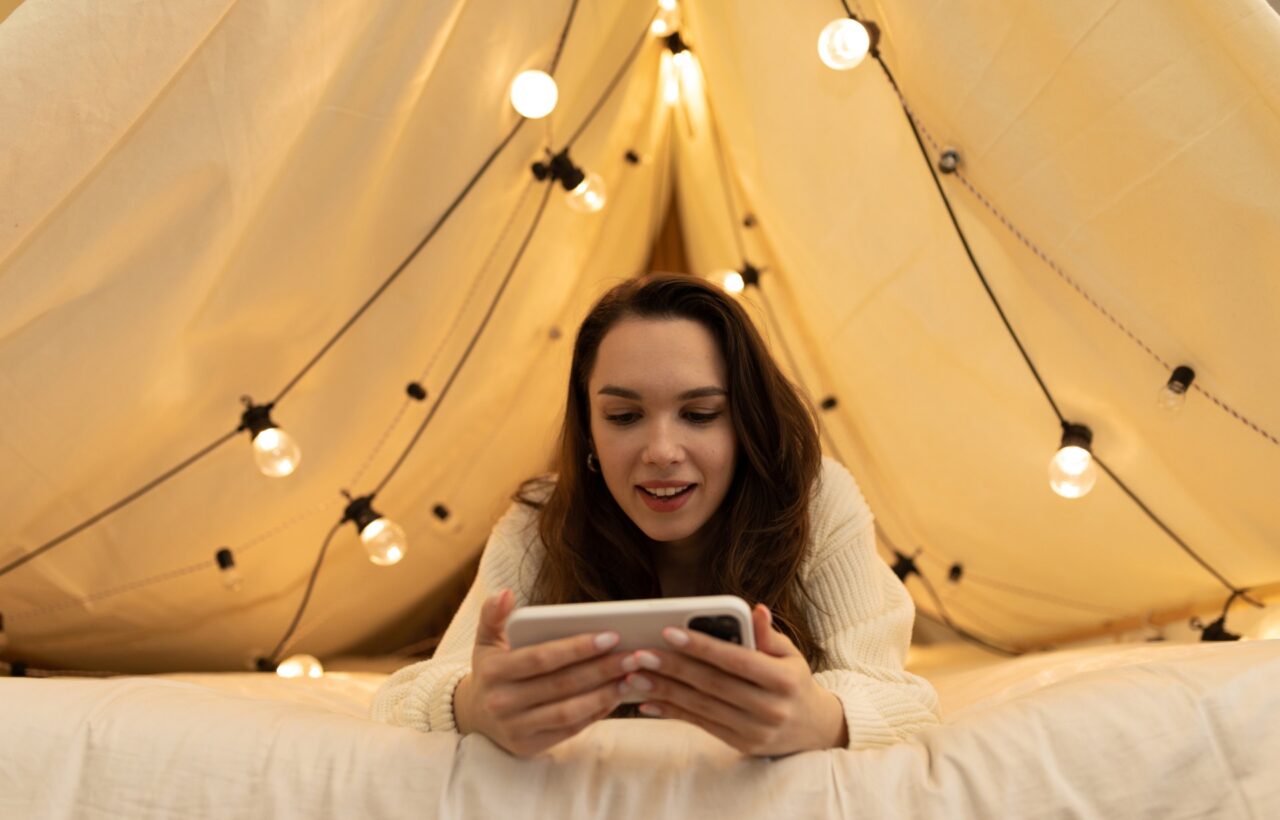
4. Run warm micro string lights along the inside ridgeline
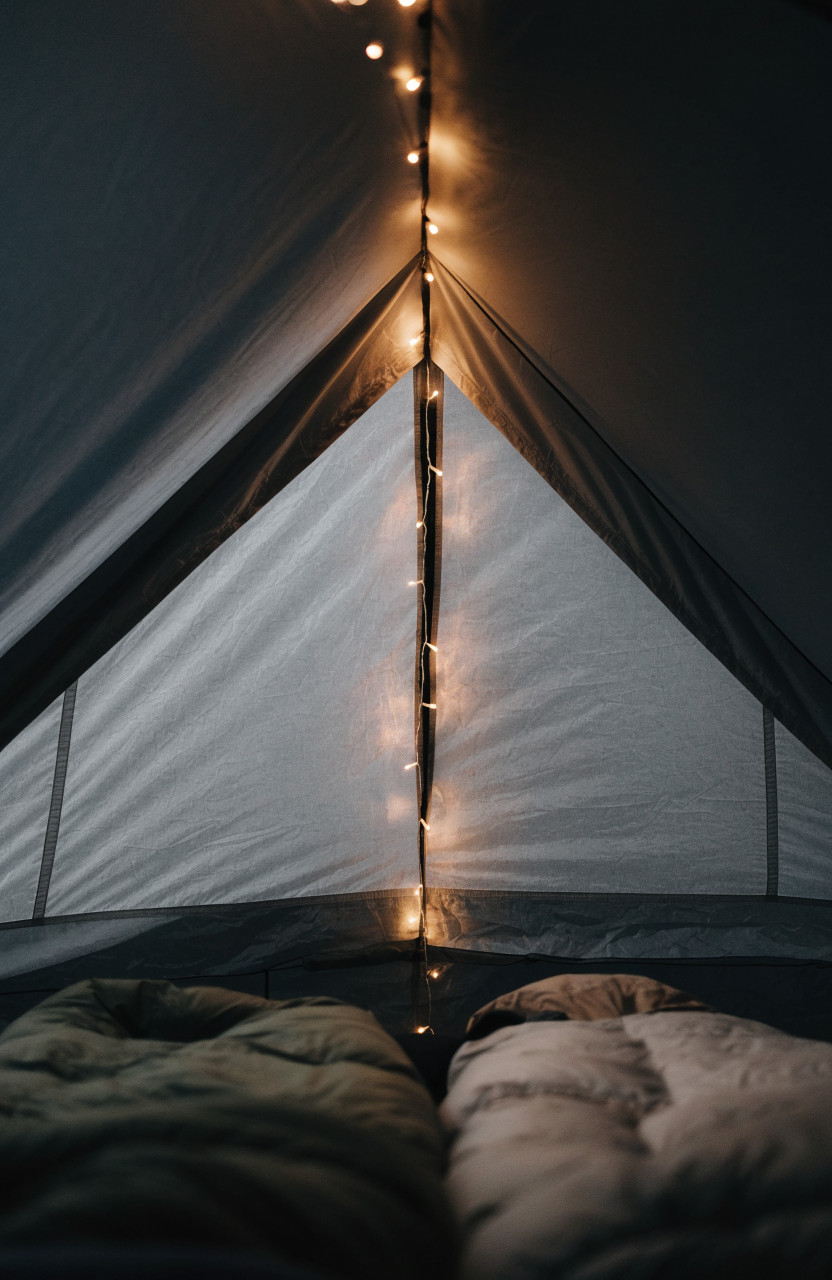
Short battery or USB string lights, warm white only, can follow the seam from peak toward the door. They work as mood light once camp is set, not as the light you pack by. Keep them off the fabric where people brush past, and do not leave them on all night against nylon.
5. Add a book light or clip reading light at the pillow
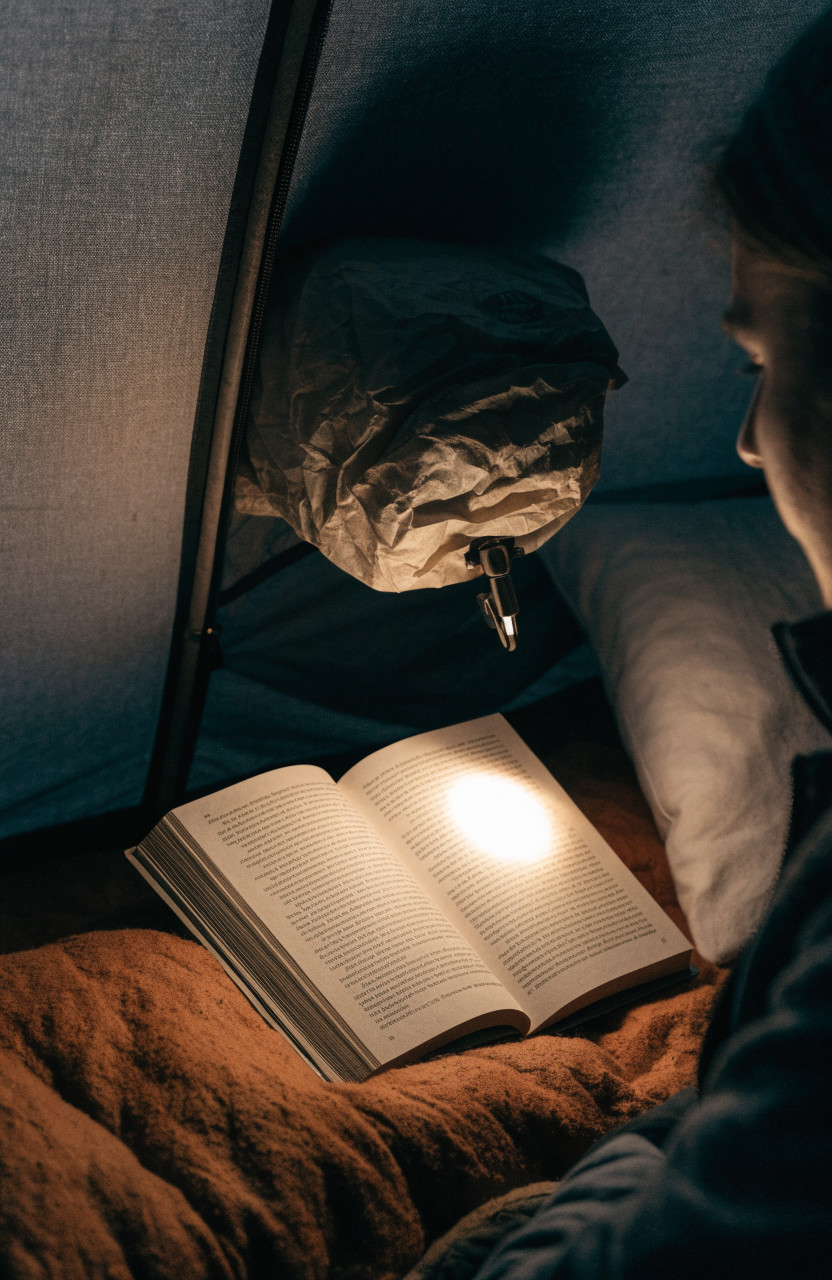
A dedicated reading light keeps the main lantern off so a tent-mate can sleep. Clip it to a stuff sack or the pad strap, aimed at the page, not across the tent. Red or amber modes are the polite version.
6. Use a red night-light mode for sleep and exits
Many lanterns and headlamps have a red or amber setting around the brightness of a dim indicator. Leave that as the only light once people are in bags. It is enough to find a water bottle and the door zipper without fully waking the tent.
7. Diffuse a bright lantern with a bandana
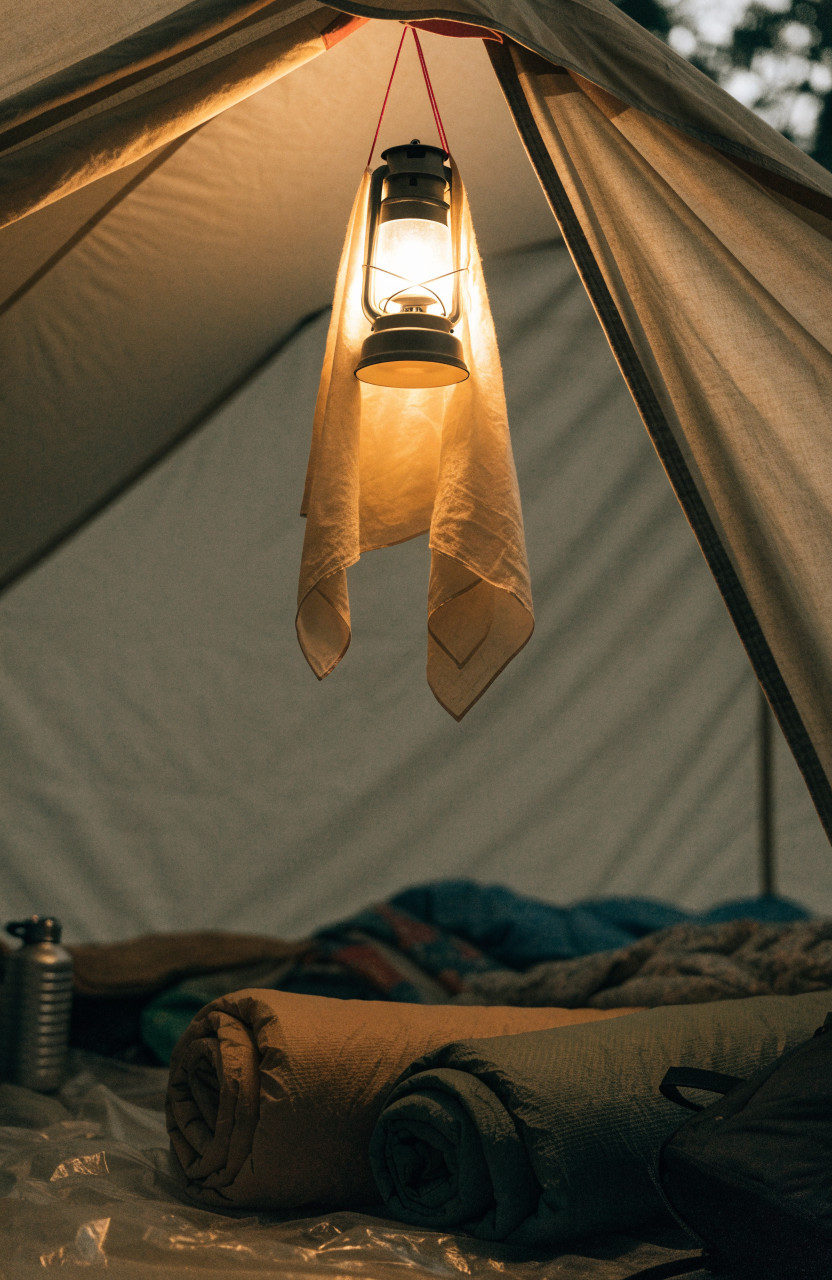
If the only lantern you own is harsh, hang a light-colored bandana or the lantern’s own shade a few inches below it. Diffusion cuts glare more effectively than arguing about lumen numbers. Do not wrap the cloth tight against the housing. LEDs run cooler than old bulbs, but a cheap unit can still get warm, and covered electronics hold heat.
8. Stick a magnetic light to a steel pole only when the pole is actually steel
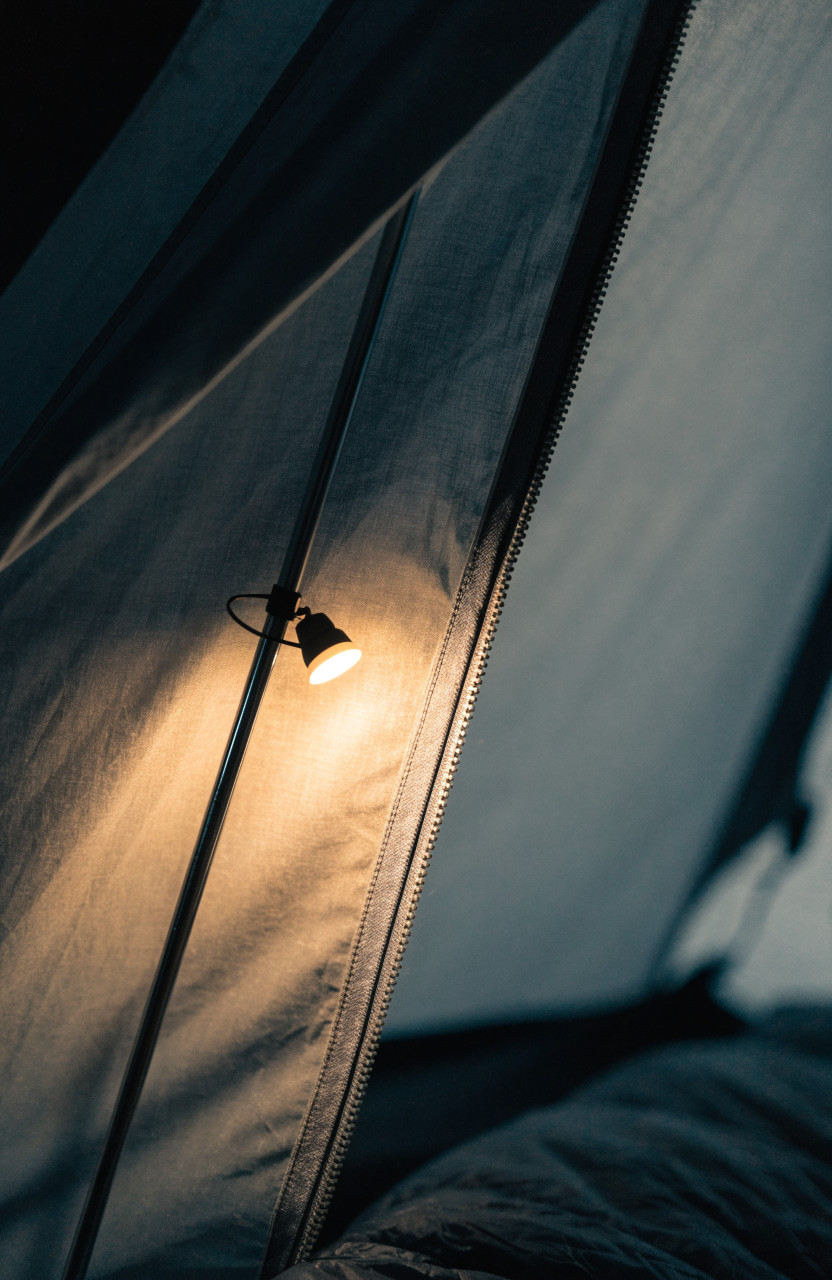
Some clip lights use magnets. They hold on steel poles and fail on aluminum, carbon, and fiberglass, which is what most modern tent poles are. Test the hold before you trust it over a sleeping face. A short gear tie or carabiner is more reliable than a magnet on a typical backpacking tent.
9. Park an inflatable solar lantern in the corner for ultralight trips
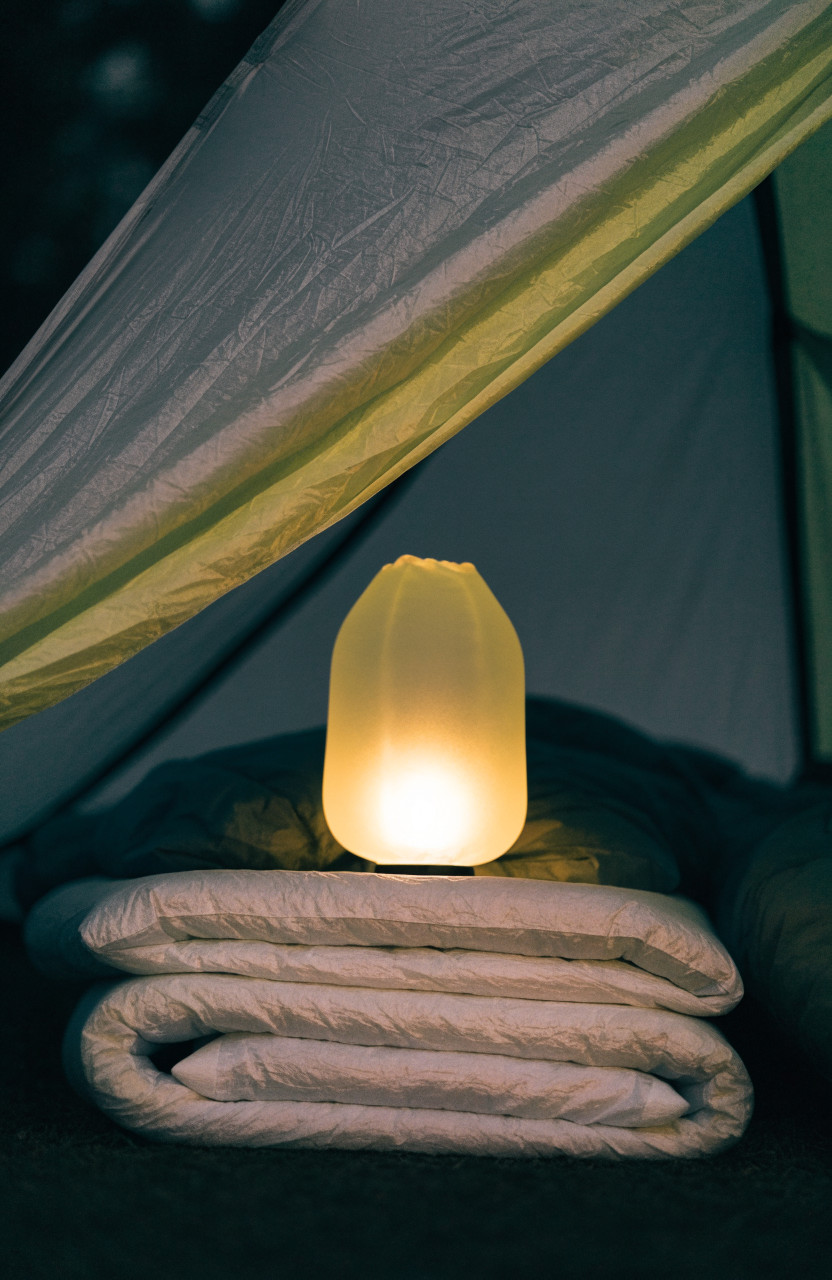
Collapsible lanterns that charge by USB and a small solar panel pack flat and weigh little. Treat the solar panel as a top-up, not a guarantee. Charge it in camp during the day, outside the tent. Inside a shaded shelter it is just a battery with a slow recovery.
10. Keep one spare clip light in the same pocket every trip
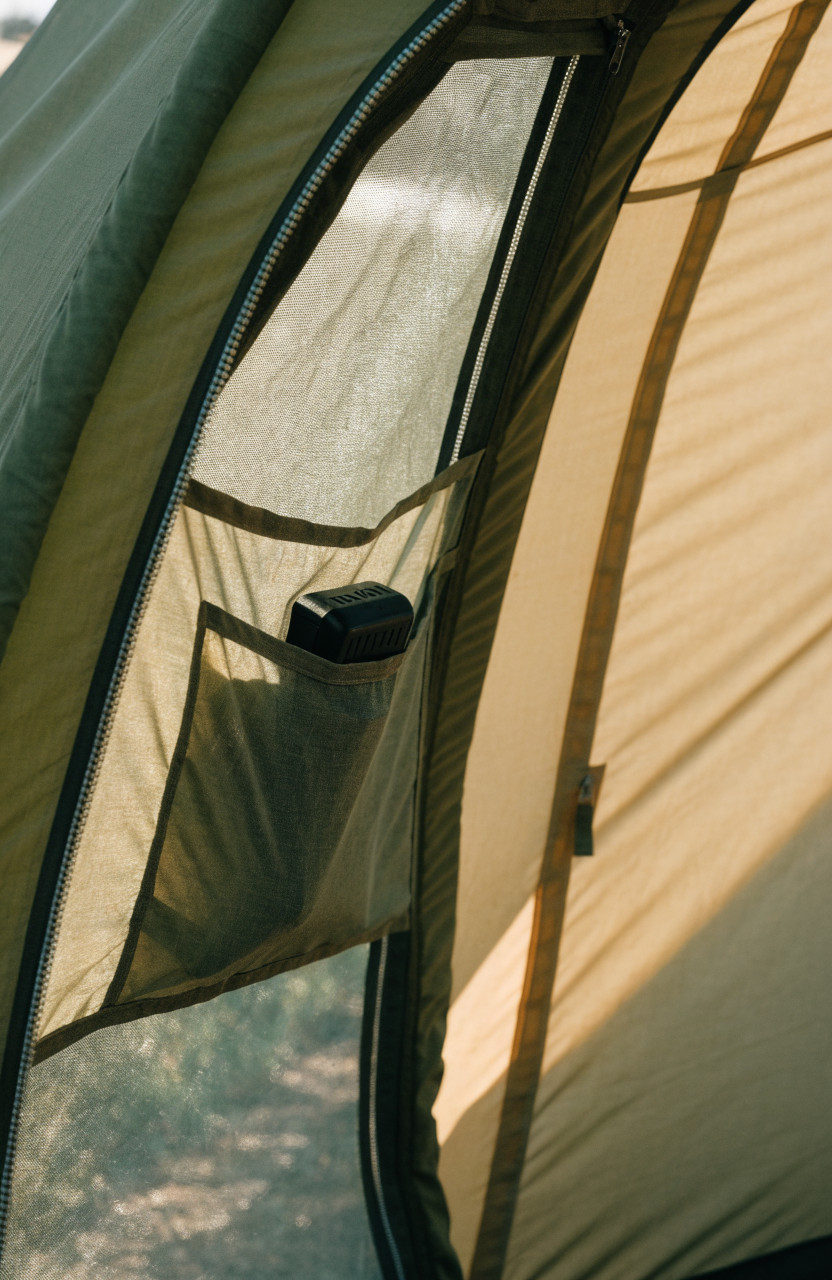
The useful backup is the one you can find without a light. A fixed pocket on the tent door or the top of the pack beats a “spare somewhere in the bin.” This is the light for a dead main lantern at 2 a.m., not a second design statement.
Entry, vestibule, and rainfly ideas
11. Hang a small lantern on the door-side loop
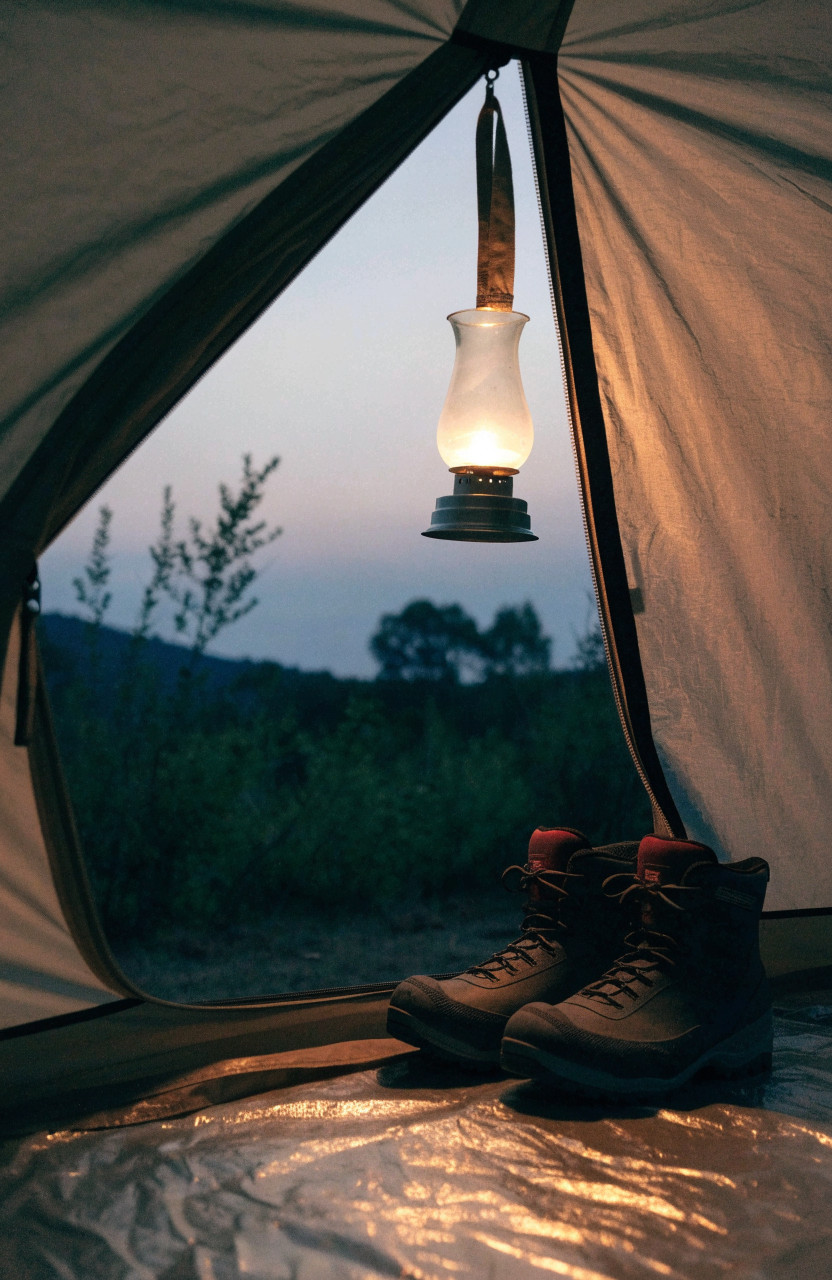
The moment people actually need light is stepping in with muddy boots or a full pot. A door hook or the loop nearest the zipper lights the threshold without blinding anyone already lying down. Take it down before you close the tent for the night so it is not crushed in the door.
12. Outline the vestibule with a short string
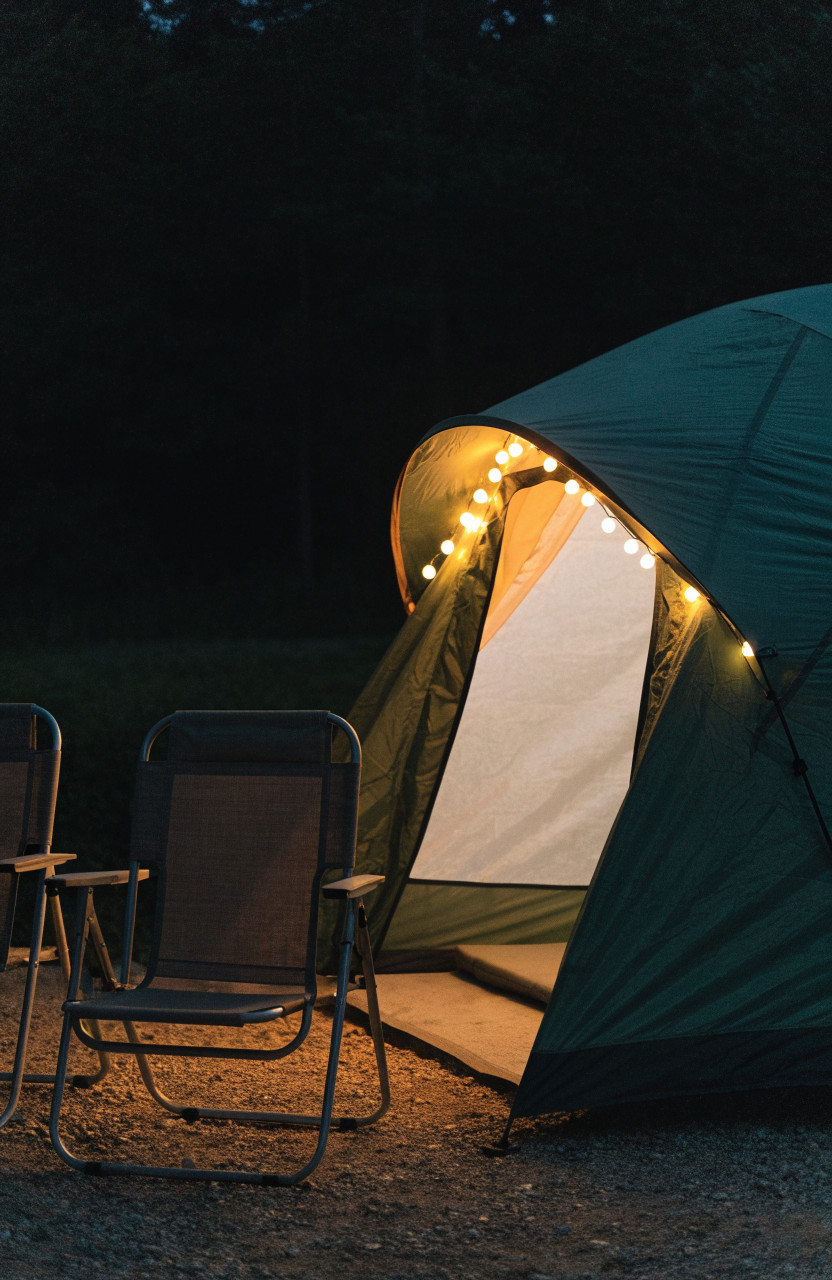
A 10- to 20-foot warm string around the vestibule opening makes the entrance readable from the picnic table. It also keeps people from walking into the guyline on that side. This is a car-camping idea. The wire and battery pack are wasted weight on a backpacking trip.
13. Mark the vestibule lip with one low stake light
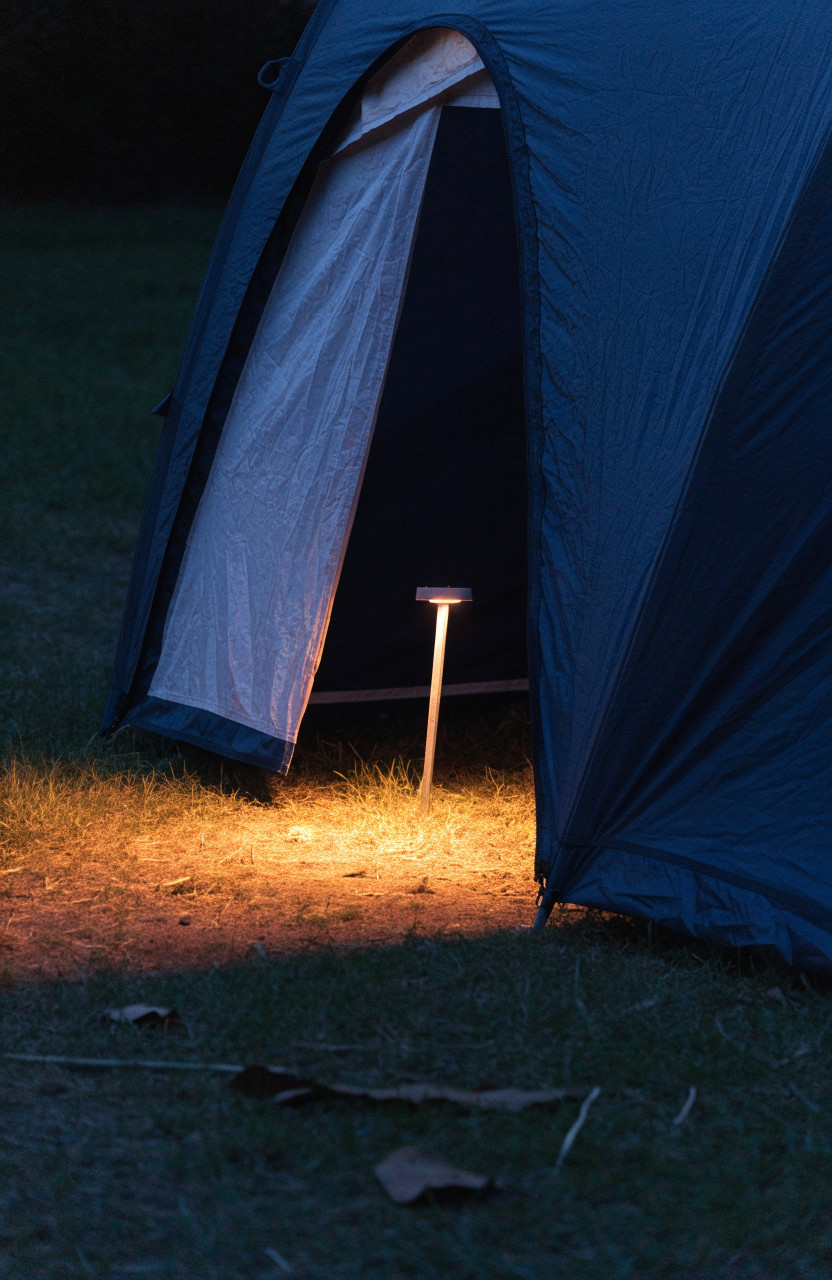
A single short path light or glow marker just outside the door stops the classic trip over the sill. Aim it down. An upward beam becomes a neighbor complaint and a bug magnet at the doorway.
14. Light the gear vestibule separately from the sleeping area
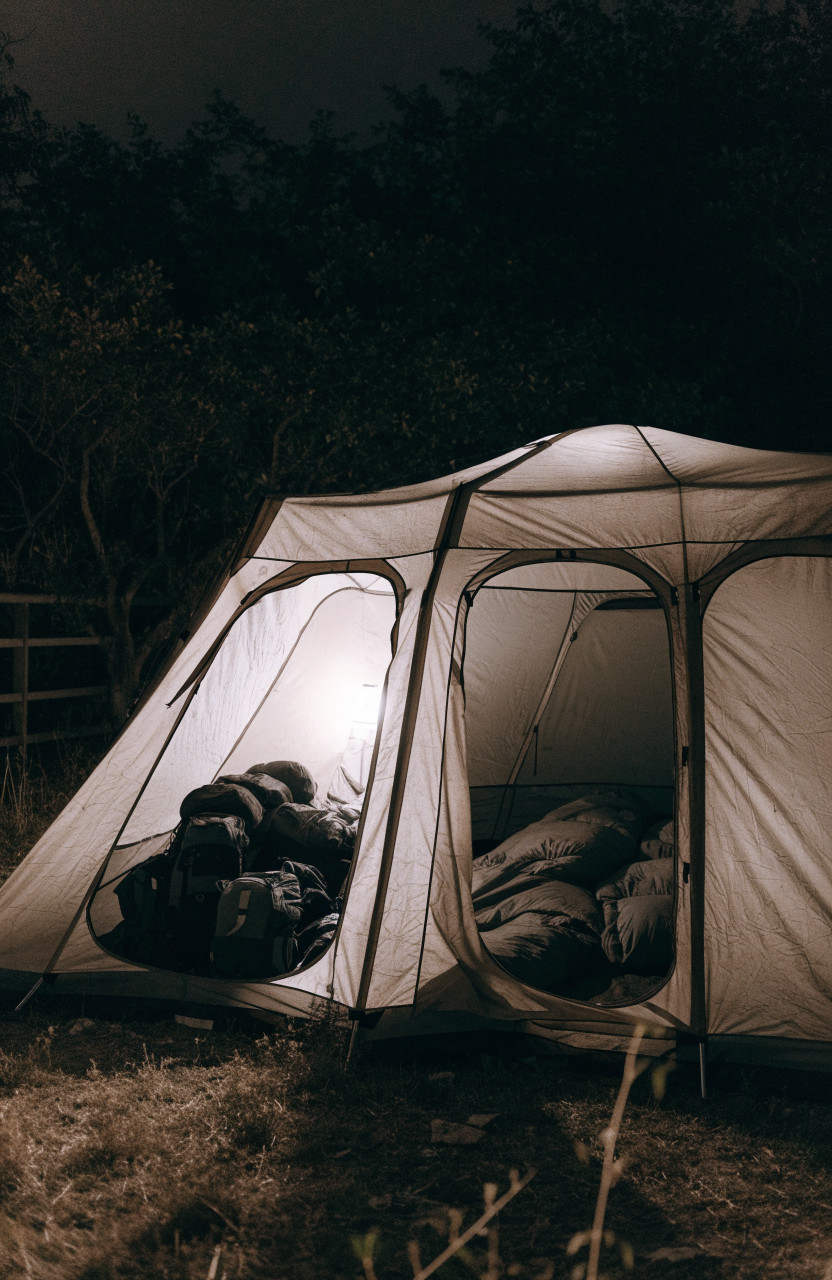
If the tent has two doors, put the brighter light in the vestibule where packs and wet jackets live, and keep the sleeping side dim. That split matters in family tents, where one person is still sorting gear while others are trying to sleep.
15. Clip a light under the awning or rainfly edge, not through the fabric
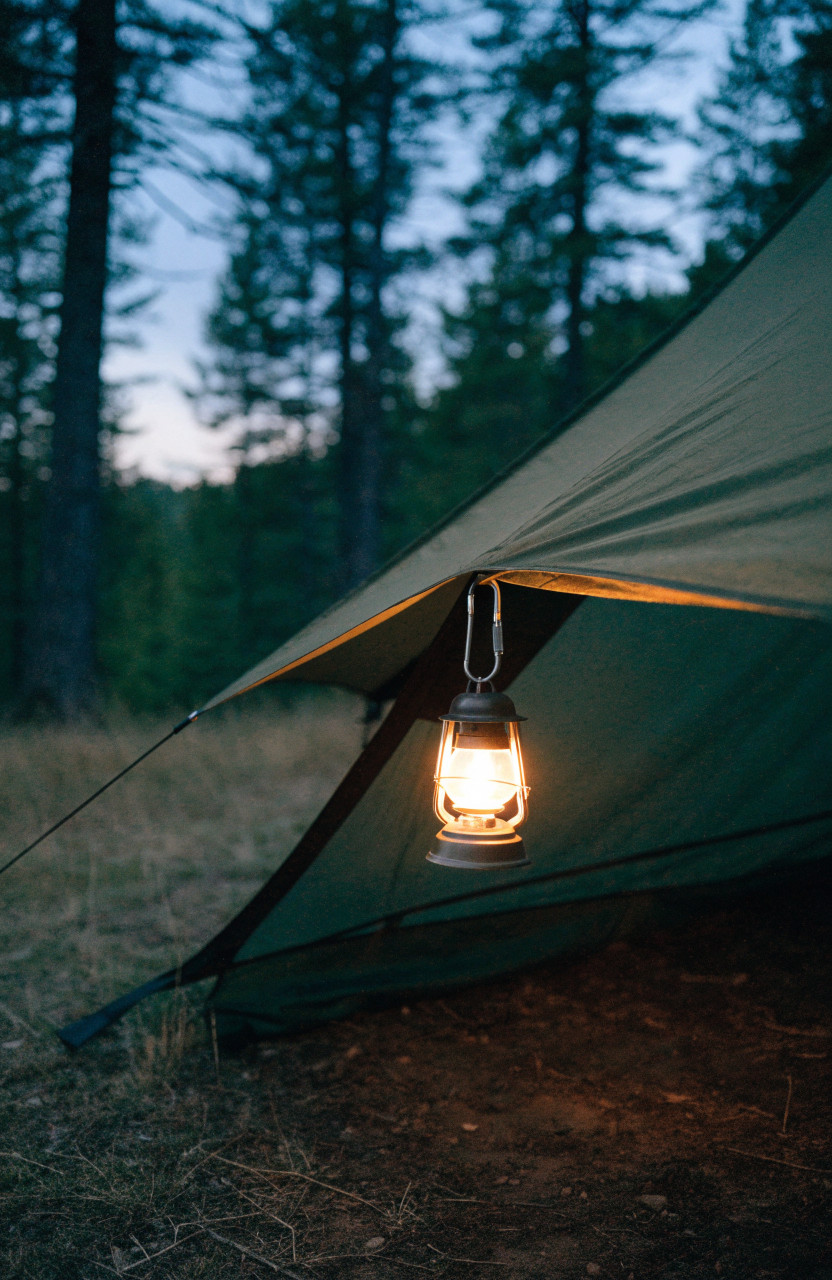
A carabiner on a pole hub or a gear tie around a tape loop beats piercing the fly. Adhesive hooks and heavy tape pull coatings off silnylon and polyurethane when you pack up, especially if the fabric is cold. If a site has metal picnic hardware or a tarp ridgeline, hang from that instead of the tent.
Path and shared-site ideas
16. Stake a short path from tent to toilet
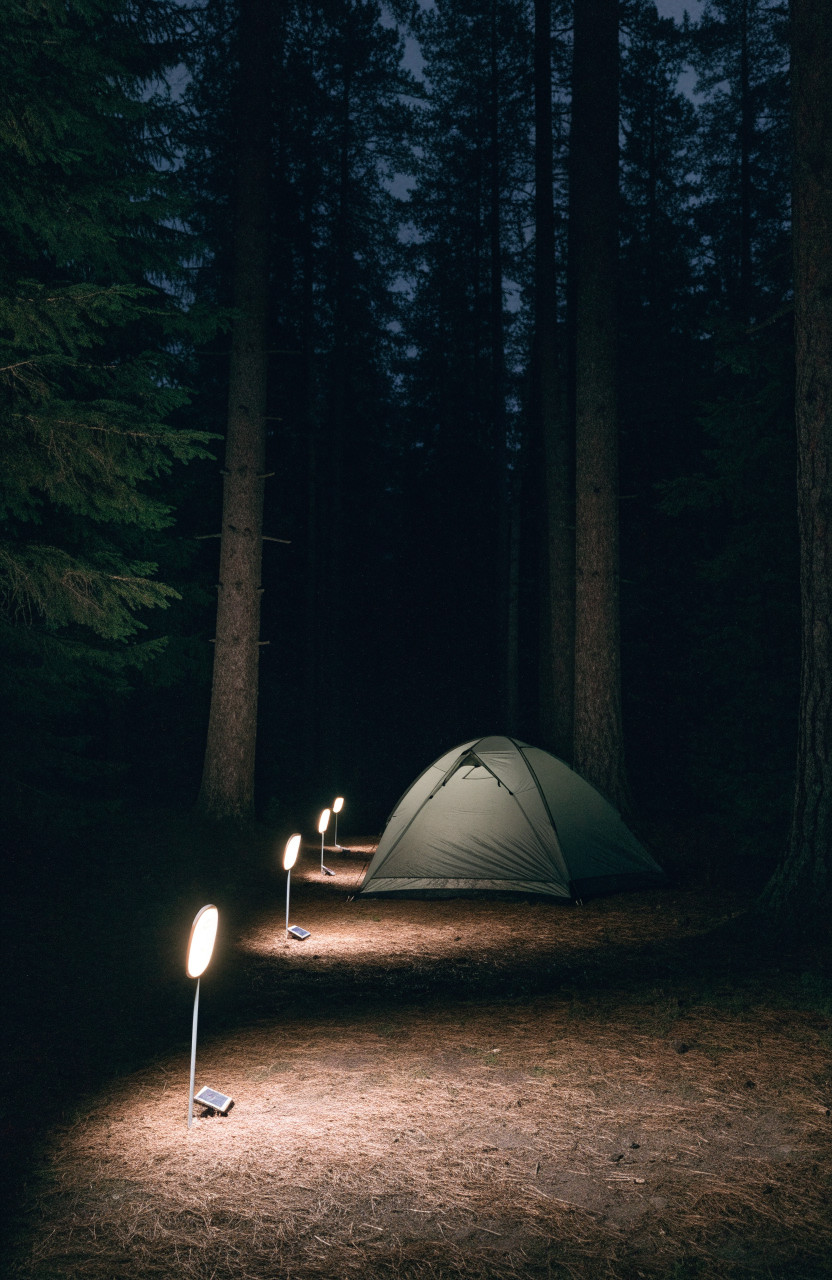
Four to six low solar or battery path lights along the worn route prevent most nighttime falls. Skip decorative brightness. You want to see the root, not stage a runway. In deep woods, battery lights are more dependable than solar stakes that never see full sun.
17. Flag guylines with reflective cord or small clips
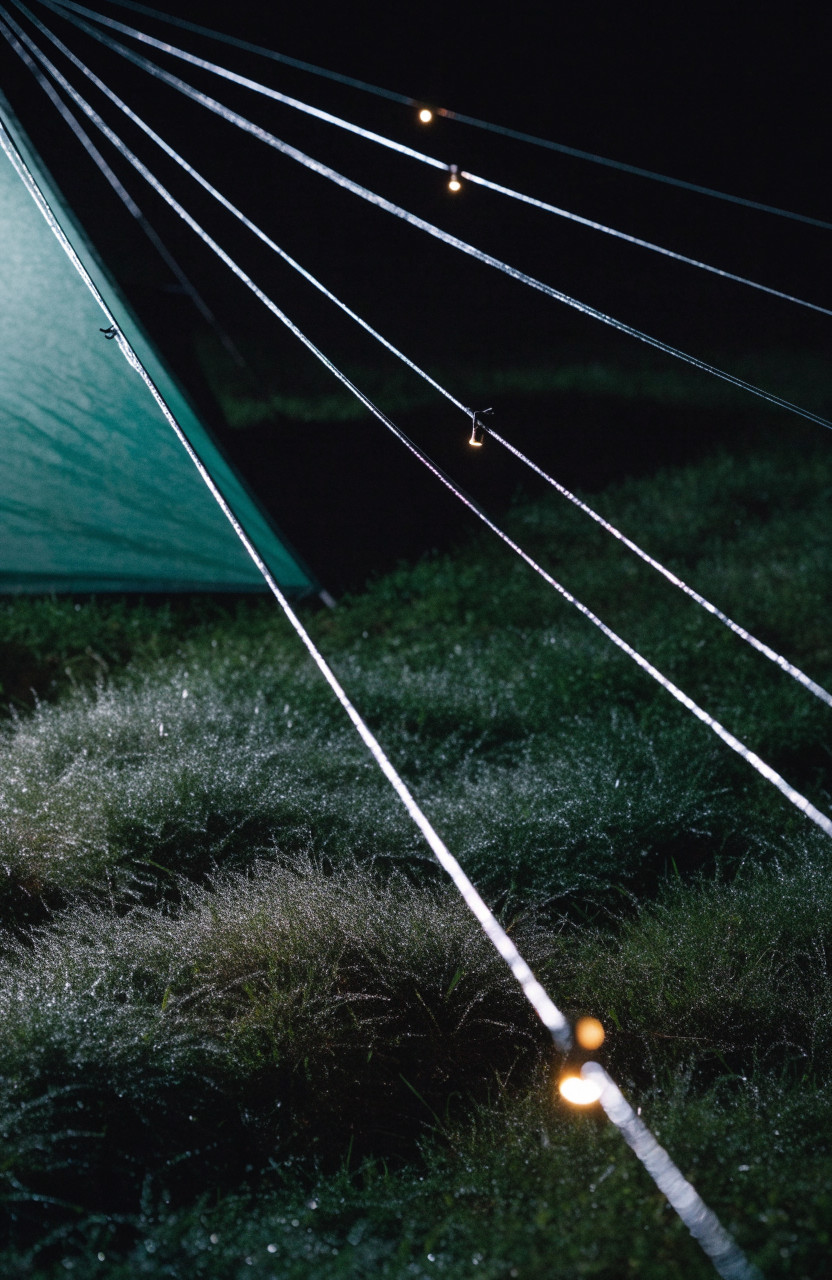
This is lighting-adjacent and often more useful than another lantern. Reflective guyline, or a tiny clip light at ankle height, shows the trip wires your own tent created. Headlamps only help if they are already on.
18. Hang a lantern from a paracord line between two trees
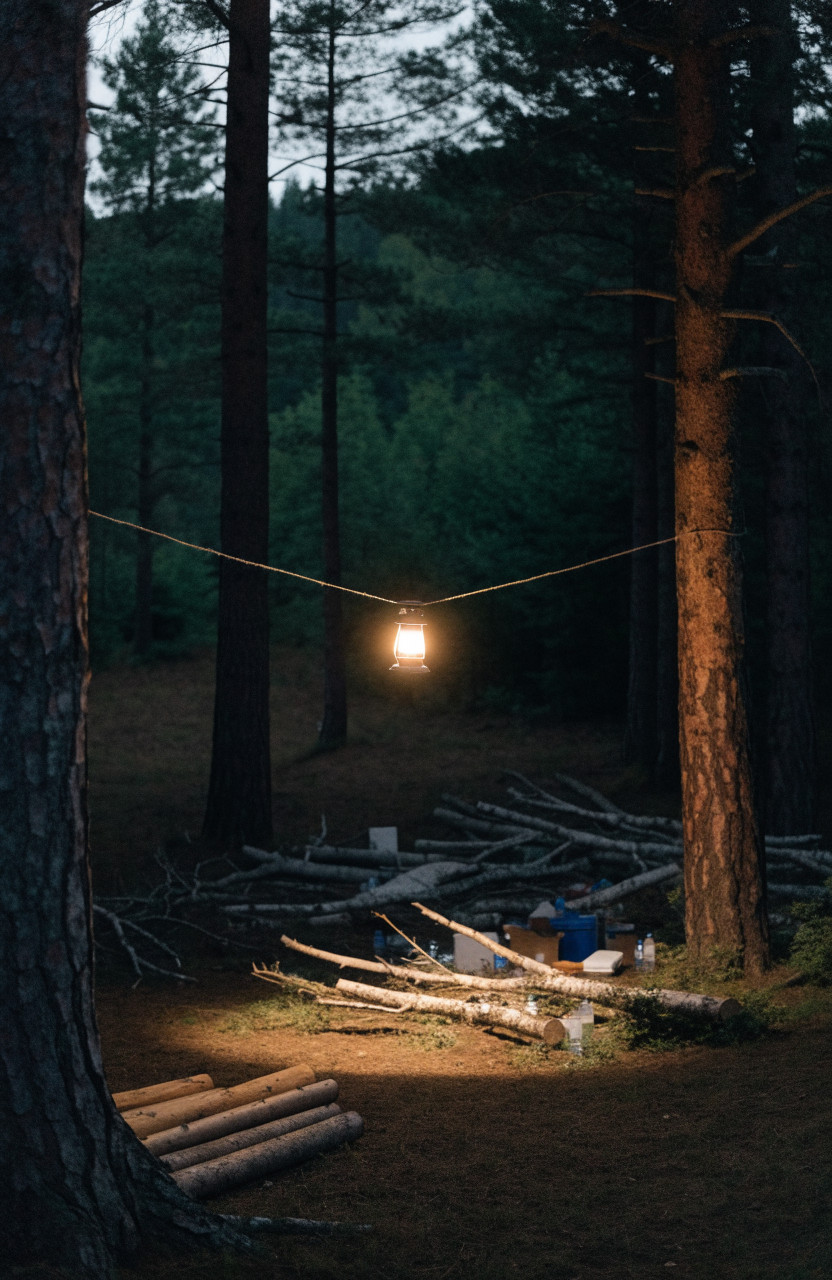
For a group site, a line at about head height with one lantern at the midpoint lights the shared area without sitting on the table. Six to seven feet is the practical band: lower and the pool of light is tiny, much higher and the ground goes dim. Do not lash to dead branches or to trees a campground has marked off.
19. Put the task lantern on the table, not in the tent
Cooking, washing, and card games belong outside the sleeping space. A lantern on the table, or hung just above it from the tarp, keeps food smells and bright light out of the tent. Dim it once dinner is done so the site does not read as a floodlight to the next pitch.
20. Bounce light from under the table
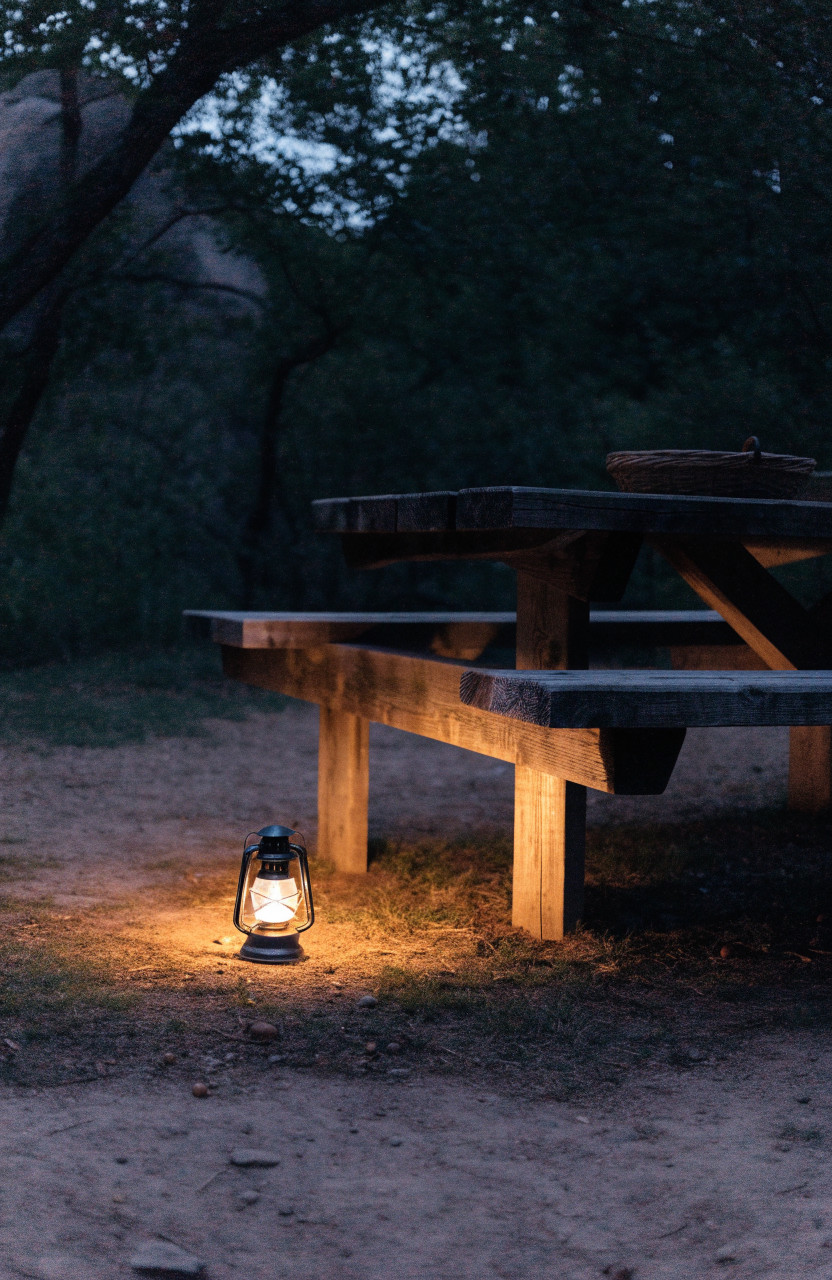
A lantern on the ground under a picnic table, aimed up at the underside, fills the seating area with soft light and keeps the beam out of eyes. It also leaves the tabletop free. Use this only on dry ground, and do not set any light in standing water.
21. Use Edison-style globe strings under a dining tarp
On powered or car-camping sites, warm globe strings along a tarp edge make the kitchen feel like a room. They are a comfort layer, not a substitute for the lantern you cook by. Choose sets rated for outdoor use. Indoor holiday lights crack under UV and are a poor bet in rain.
Family, heat, and power ideas
22. Give kids a dimmable light with a shutoff, not a color show
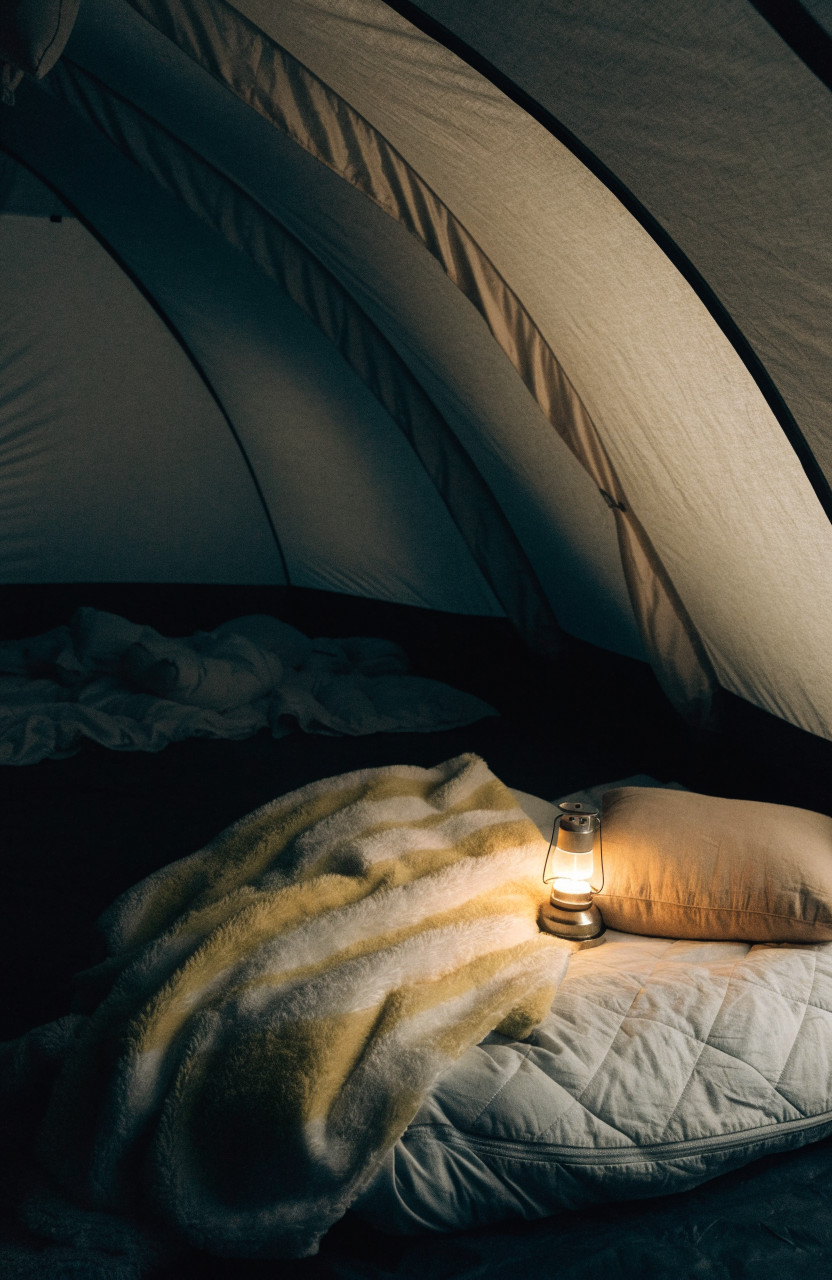
A small lantern that stays on low, or shuts off after a set time, works better than a color-cycle light left running. Bright color modes keep children awake and leak through tent walls into neighboring sites. Put the light where a child can reach it without climbing the pole.
23. Add a fan-lantern only when heat is the real problem
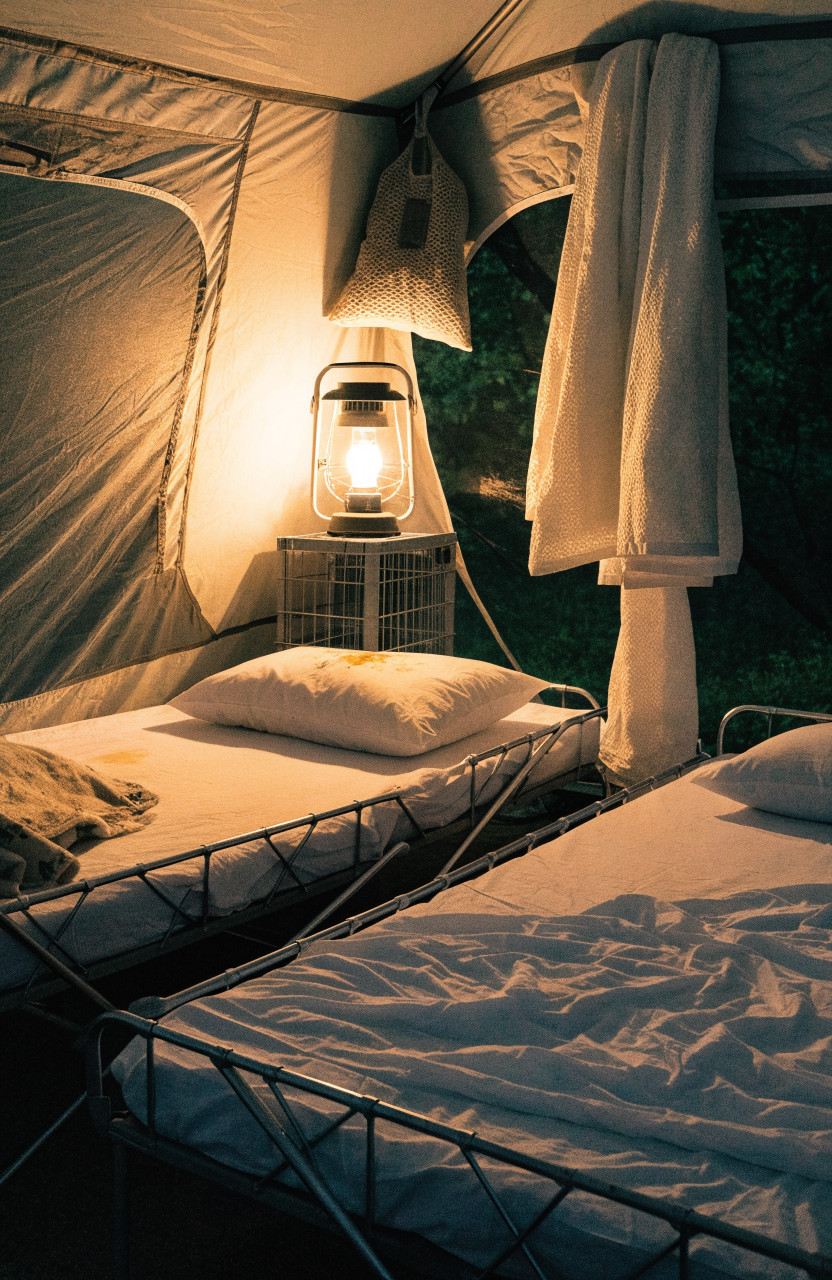
Combination fan lights are a car-camping tool for hot, still nights. They move air and throw a little light, at the cost of weight, noise, and faster battery drain. They do not belong on a backpacking list, and the fan should not run against loose fabric.
24. Run USB strings from a power bank you can see
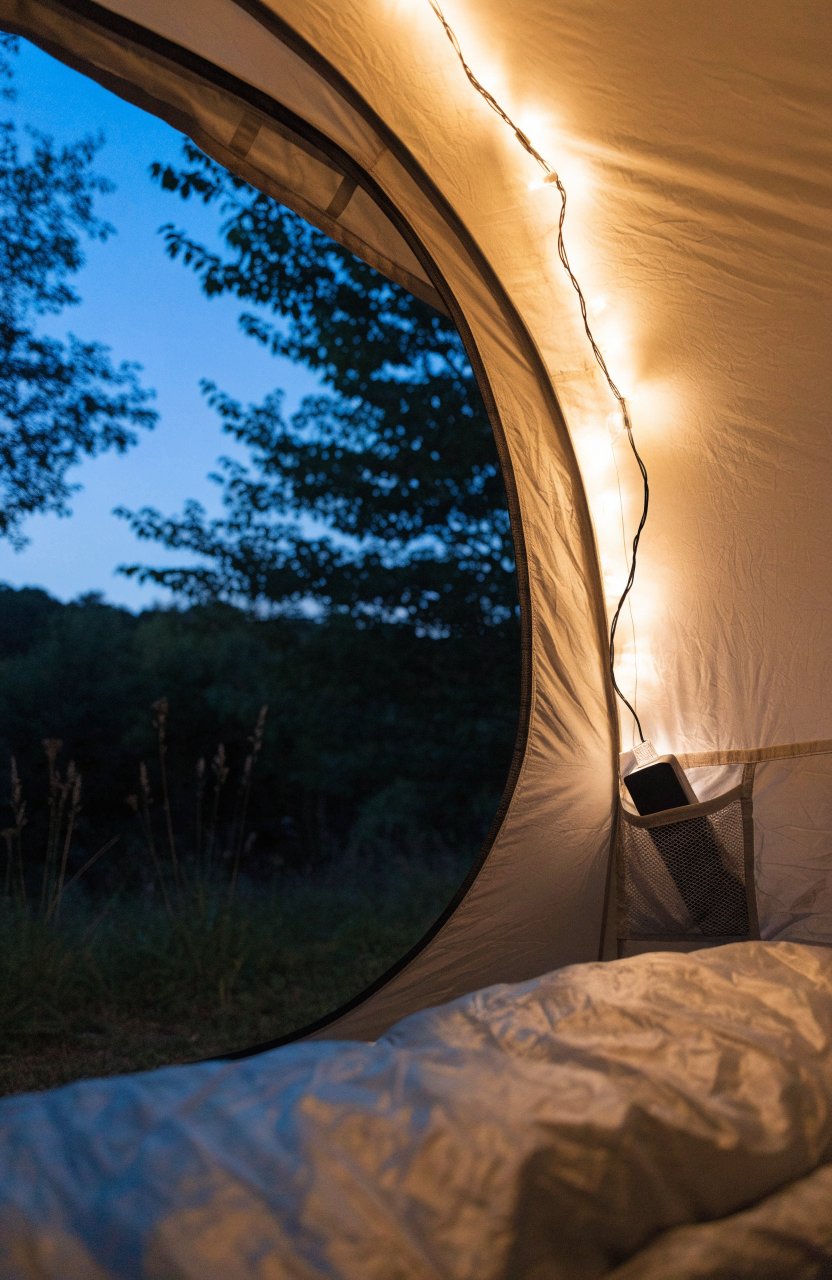
A modest power bank can carry a warm string through a weekend if you start full and use a low setting. Keep the bank in a pocket or dry bag, not on the floor where condensation pools. Check the connector before dark. A dead bank with no spare cable is just decoration.
25. Carry one dual-use lantern that can charge a phone
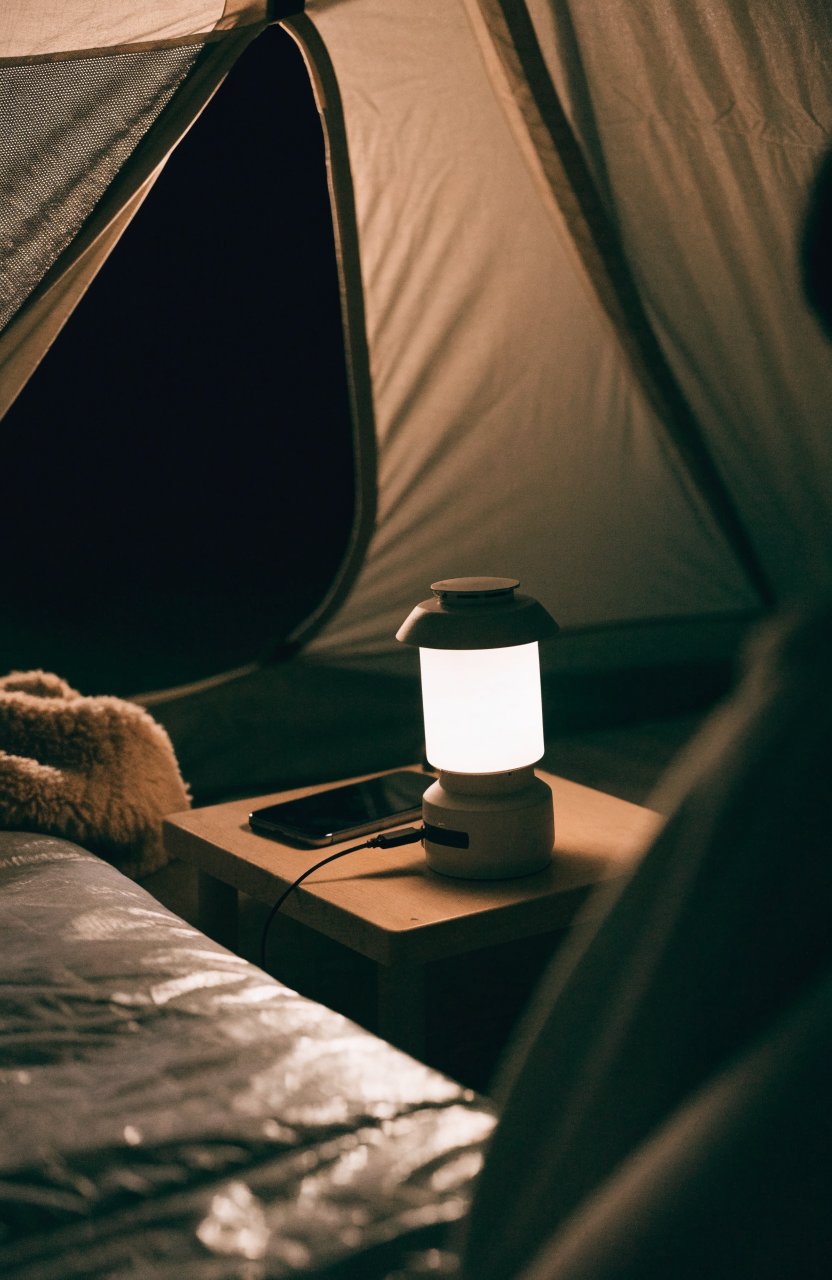
Some lanterns include a USB output. Useful as a last-resort top-up for a phone you are using as a map, not as your main charging plan. Runtime drops fast if you light the tent and charge a device at the same time. Decide which job matters that night.
Setup rules that keep the ideas from backfiring
Leave fuel lanterns, real candles, and any open flame outside the tent and outside the vestibule. That is the non-negotiable line. LED is the interior standard because it removes the flame, not because every LED product is harmless. If a light is hot to the touch on a low setting, retire it.
A few placement habits prevent most failures.
- Charge rechargeable lights before you leave. Solar is a backup plan after a sunny day, not a reason to start at half battery.
- Hang lights before dusk and check that zippers, poles, and heads still clear them.
- Prefer warm, dim modes after dinner. High output is for setup and the kitchen.
- Do not stick adhesive strips straight to coated tent fabric if you want the coating intact. Sewn loops, pole hubs, gear ties, and carabiners are the reversible options.
- Wipe condensation off lights in the morning. Tents sweat, and water sitting on switches and USB ports is how camping lights die mid-trip.
- Aim light down and inward. A bright lantern facing a neighboring tent is the fastest way to learn the campground’s quiet rules.
Match the kit to the trip, not to a photo of a glamping setup. A backpacking pair can stop at a ceiling lantern or bounced headlamp, a clip light, and reflective guylines. A family car-camping site can justify a table lantern, a vestibule string, path stakes, and a spare in the door pocket. Adding all 25 at once mostly adds wire to trip over.
Frequently asked questions
Are string lights enough on their own inside a tent? No. They are a secondary layer. You still want one point source you can turn up for packing, first aid, or a spilled water bottle.
Can solar lights charge inside the tent during the day? Not well enough to rely on. Tent fabric and the rainfly cut the light, and a closed tent can also heat the battery. Charge panels in direct sun, then bring the lamp in.
What brightness should a tent lantern be? Use a lantern that can dim. A few hundred lumens on a medium or low setting is plenty for a normal tent interior. Higher settings belong outside or in a large group shelter.
Is a headlamp a substitute for tent lighting? For one person, often yes, if you bounce it off the ceiling. For a family tent it is a task light only. Everyone else still needs a shared ambient source that is not strapped to someone’s forehead.
Do camping lights attract bugs? Any light draws some insects. Warm, dim, downward light draws fewer complaints than a cool-white lantern at eye level in the doorway. Keep food and the brightest light away from the tent door either way.