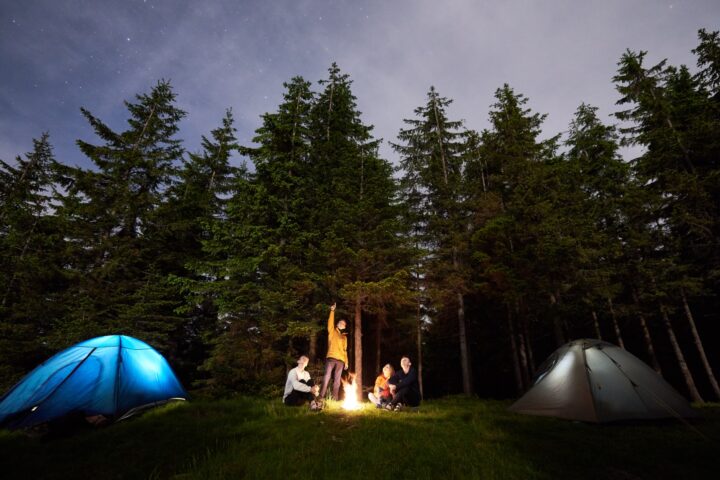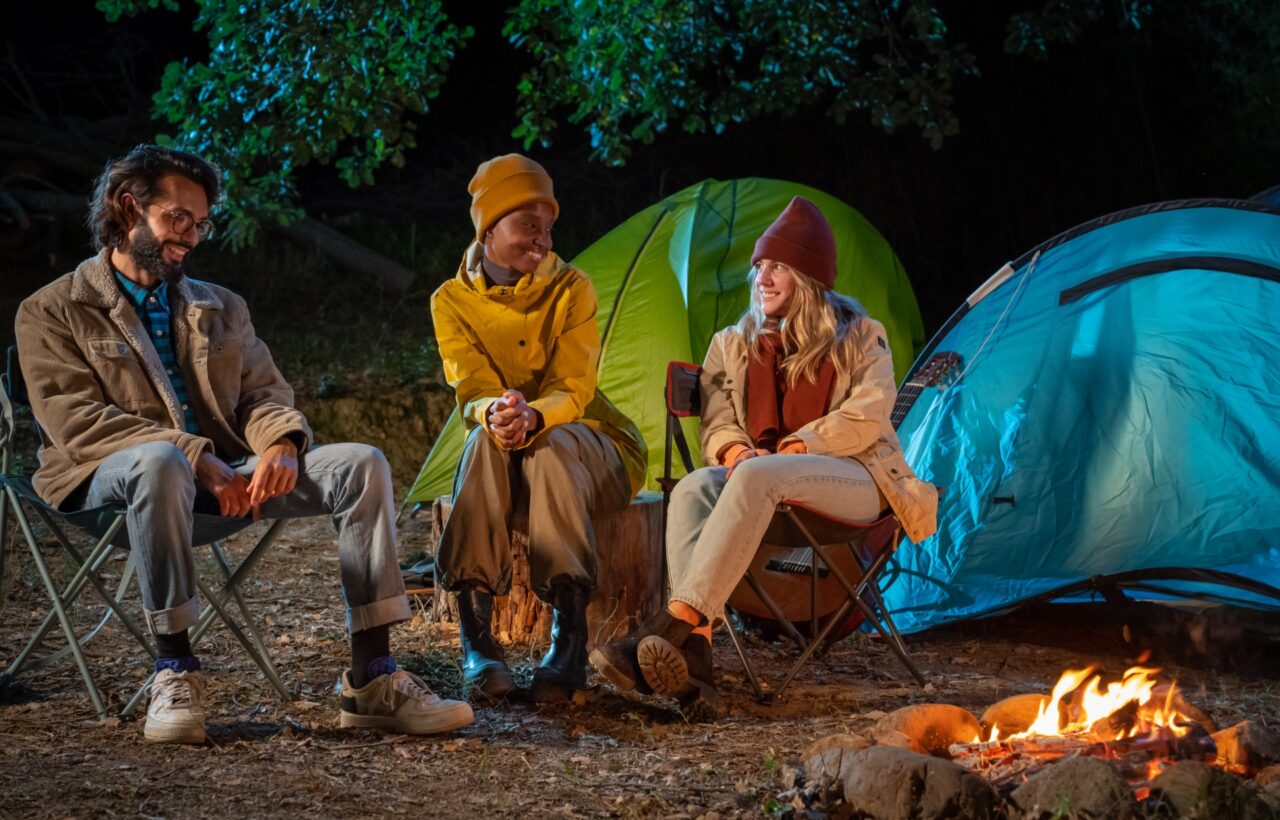
Friends who enjoy a shared fire, a split grocery bill and a bit of compromise tend to get the most out of tent camping with friends. People who need their own schedule, quiet nights or full control of the menu may be happier on a solo trip or with a smaller group.
Most group trips go wrong for ordinary reasons: a three-person tent that really fits two, uneven cooking duty, noise after quiet hours, or a late guest who brought no food. What follows helps the group settle trip style, sleeping arrangements, meals and the cost split before anyone packs.
Settle what “camping” means before anyone books
Friends often use the same word for very different trips. One person means a walk-in site with a pit toilet and no cell service. Another means a drive-up pad, a shower block, and a cooler full of drinks. Those are both tent camping. They are not the same weekend.
Ask the group three questions before dates go on a calendar:
- How far is anyone willing to walk from the car with gear?
- Does the site need toilets, potable water, and a way to charge a phone?
- Is the point a shared base camp with optional day hikes, or one activity the whole group does together?
Car camping is the better default for mixed experience and groups larger than about six. Gear can be heavier, meals can be cooked properly, and a first-timer is not forced into a backpacking pace. Backpacking and dispersed camping only work when everyone has already done them, or when the experienced people have explicitly agreed to carry the planning and the margin for error.
If answers diverge, change the guest list or run two trips. A person who wanted solitude will not enjoy a group site, and a first-timer who expected flush toilets will not enjoy a vault toilet a quarter mile away.
Pick a site that fits the group, not just the scenery
Many state and national parks offer designated group campsites, often sized for roughly 10 to 30 people, sometimes more. Yosemite’s frontcountry group camps, for example, are designated for 13 to 30 people and are tent-only, with a vehicle cap. Wilderness areas are stricter: Olympic National Park’s standard overnight group is 1 to 6, with a large-group maximum of 12 in specific sites. Always read the occupancy, vehicle, and tent limits for that exact site. Exceeding them can mean a fine or being asked to leave.
Book early. Popular group sites on Recreation.gov and state systems often open on a fixed reservation date and go quickly for summer weekends. If a true group site is gone, adjacent individual sites can work, but only if the campground allows the combined party and you accept that you will be closer to strangers.
Match the site to the least experienced person who is actually coming, not the most enthusiastic. Useful filters:
- Distance from parking to the tent pads
- Toilets and drinking water
- A fire ring and picnic tables sized for the group
- Shade, and whether the site is known for standing water after rain
- Quiet-hour rules and how close other campers will be
Shoulder season is easier to book and less crowded, but check opening dates, road conditions, and whether everyone owns a sleeping bag rated for the nights you will actually get.
Sleeping arrangements: rated capacity is not real capacity
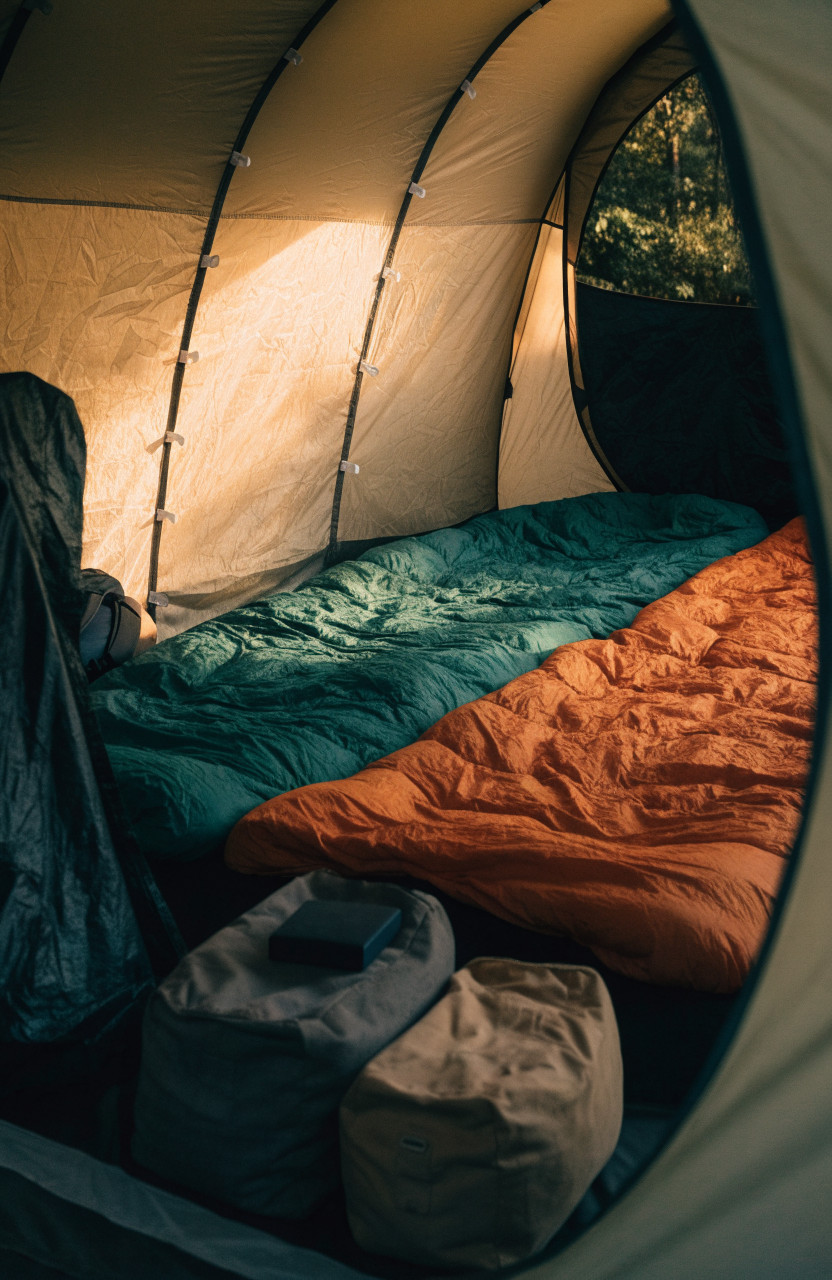
Tent makers rate capacity by how many people can lie down shoulder to shoulder, not by how many can sleep with pads, bags, and a duffel. A “4-person” tent is comfortable for two adults with gear, sometimes three if people pack light and nobody minds contact. A “3-person” tent is a couple’s tent.
Decide sleeping plans in the shared doc, not in the parking lot:
- Who already owns a tent, and what is its real capacity
- Who is willing to share, and with whom
- Who needs their own tent (light sleepers, couples, people who simply do not want to share)
Put light sleepers farther from the fire ring and the picnic table. The kitchen and fire get the traffic; sleeping areas should not. In bear country, cooking and food storage should also stay separated from tents — food smell in a sleeping area is how camps get visited at night.
Practice pitching at home if anyone is new to that tent. Group arrivals after dark are when missing stakes and an unread rainfly turn into an hour of standing around with headlamps.
Split shared gear so the car is not full of duplicates
Personal gear stays personal: tent or a confirmed share, sleep system, headlamp, clothes for the forecast plus one colder night, water bottle, and any medication. Shared gear is anything the group only needs one or two of.
Assign owners in a shared sheet so each item has a name next to it:
- Shelter extras: a tarp or dining fly, stakes, cord
- Kitchen: one stove and fuel per cluster of people, pots, a cutting board, a lighter, biodegradable soap, and two wash tubs
- Coolers: one per four or five people is a workable starting point, with raw meat kept separate from ready-to-eat food
- Water: jugs if the site has no spigot, plus a backup filter
- Light for the table, a first-aid kit, and a trash plan including a way to pack out what the campground does not take
Buy firewood near the campground. Transporting wood spreads insects that kill trees; many parks ban it. Do not count on gathering dead wood inside a developed campground — rules often forbid it.
One person should be the gear captain only in the sense that they check the sheet a few days out. The job is spotting the missing tarp, not owning every object.
Food works when the rules are set before the grocery run
Shared meals fail when the rule is vague. One household cooks a full dinner; another arrives with a bag of chips and expects to eat. That pattern shows up often enough in group camping that it is worth treating as the default risk, not a rare personality clash.
Pick one model and say it out loud:
- Meal captains. Each dinner (and maybe one breakfast) belongs to a pair. They shop, cook, and clean that meal. Everyone eats it.
- One shared list. A coordinator builds the menu, people add dietary needs, one or two people shop, and the receipt is split.
- Independent cooking. Each person or pair feeds themselves, with an optional shared dinner on one night only.
The first two need a headcount freeze. Extra guests announced the day before break both the food math and the site occupancy. Dietary needs belong on the sheet early: allergies, vegetarians, and people who will not eat a shared pot. A separate small pan for one restriction is simpler than asking one person to cook two full menus.
Agree on the money rule before the first receipt. An even split of shared groceries is fine when everyone is there for every meal. A by-night split is fairer if people arrive late or leave early. Some organizers budget on the order of $40 to $50 per person for food and drinks on a long weekend; treat that as a planning range that moves with the menu and local prices, not a target.
Coolers stay closed. Drinks live in a different cooler from raw meat if you have two. Leftovers go into animal-proof storage or the car overnight, never on the picnic table.
How to run the campsite once you arrive
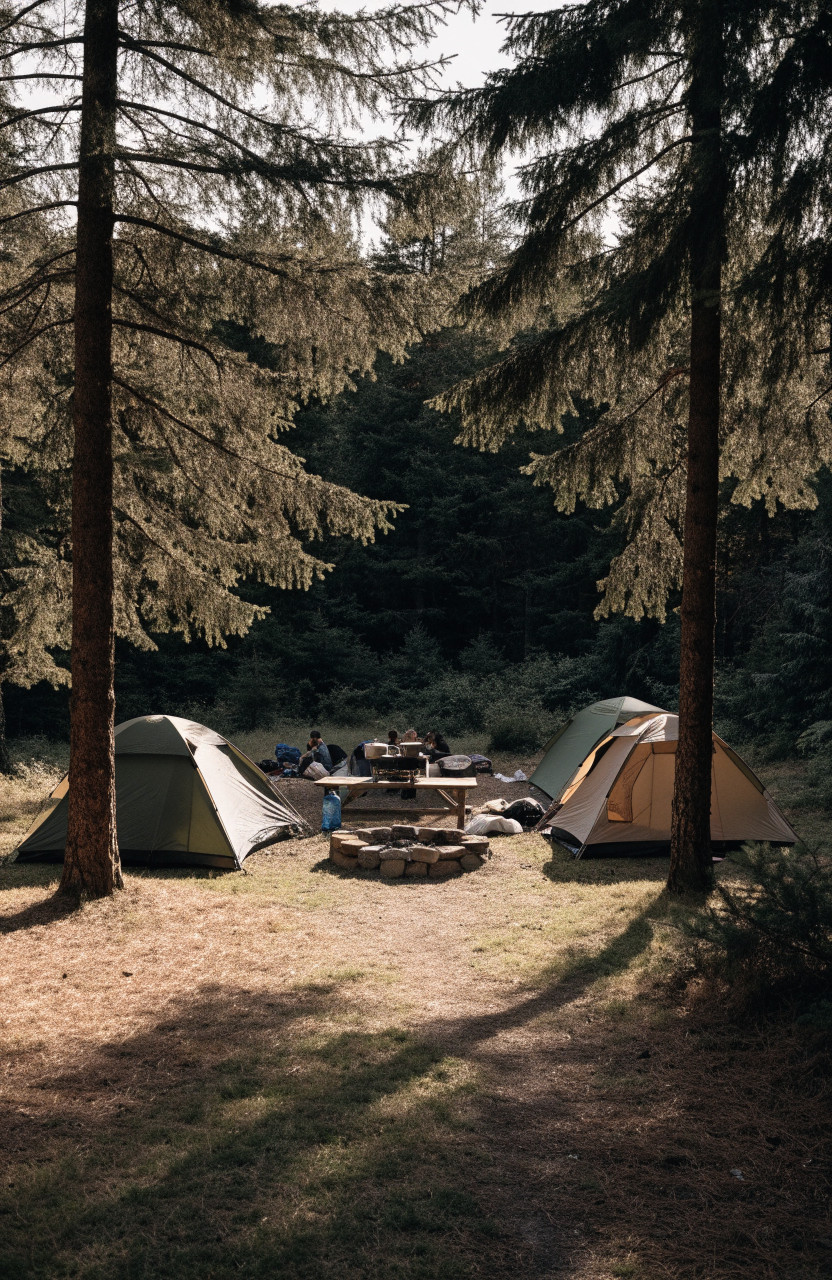
Set up in a fixed order so the group is not improvising at dusk.
- Park only where the site allows, then walk the pad and pick tent spots that leave paths clear. Guy lines across the route to the toilet are how neighbors and your own group get hurt.
- Pitch tents and put a footprint or ground tarp under each one, tucked in so it does not collect rain.
- Build the kitchen at the table or fire ring: stove, wash station, trash, and a lantern.
- Store food before anyone starts a fire or a hike.
Split the standing jobs without turning the weekend into a roster. Setup, fire (if allowed and someone competent is tending it), cooking, dishes, and trash are enough. People who hate cooking can own dishes or water runs. The point is that cleanup has a name, so it does not default to whoever is still sober at 11 p.m.
Activities should be optional layers, not a single itinerary. Offer one easier outing and one harder one, and leave a block with nothing scheduled. Groups fracture when every hour is planned, and they also fracture when nobody brought a plan and half the camp is bored by noon. A short list — a swim, a two-mile walk, cards after dinner — covers both.
Group etiquette that keeps you welcome
A group at normal speaking volume is louder than a couple. Most developed campgrounds enforce quiet hours, commonly around 10 p.m. to 6 or 7 a.m. Generators, speakers, and a late fire circle are the usual complaints rangers hear about groups. Brief people before arrival: quiet hours are a condition of the site, not a suggestion.
Other rules that matter more in a group:
- Leave No Trace still applies on a reserved pad. Stay on already-used ground, keep the kitchen concentrated so you do not trample a wider area, and pack out trash, including micro-trash from snack wrappers.
- Do not leave food or scented items out overnight. Coolers in a locked car, or the campground’s food lockers if provided.
- Fire only in the ring, only when allowed, and drowned until you can touch the ashes. One person tends it.
- Pets, drones, and alcohol follow the campground’s rules, which vary by park.
- Invite no one who was not on the reservation. “A couple of friends have room” is how a legal group site becomes an over-occupied one.
If someone is new, say the practical version of the rules once, at camp, without a lecture. Where the toilet is, when quiet hours start, and that food does not stay on the table.
Problems that ruin the trip, and how to head them off
Most bad group trips are coordination failures, not weather.
Different standards of effort. If three people cook and clean while others treat the site as a hotel, the next invitation does not go out. Assigning meals and a cleanup rotation is the fix. A shared sheet makes the gap visible before the trip, when it is still easy to change the plan.
The tent that does not fit. Confirm real capacity and who is sharing at least a week out. Arriving with six people and three “3-person” tents means someone is sleeping in a car.
Last-minute additions. Freeze the list when you reserve. Extra people are an occupancy problem and a food problem.
No bad-weather plan. Rain changes the weekend more than a missing board game. A dining tarp, dry clothes in a sealed bag, and one indoor-or-under-cover meal keep the group functional. If roads may close, name the cancel rule in advance.
The only planner burns out. One person can hold the reservation and the sheet. They should not also shop, cook every meal, and mediate every preference. Spread the captain roles.
Mixed tolerance for drinking or late nights. Say it before the trip if part of the group wants a quiet camp and part wants a party. Those weekends can both be good. They are rarely good as the same weekend.
Frequently asked questions
How many friends is a workable tent-camping group? For a first shared trip, four to eight people is easier to feed, fit on ordinary sites, and keep quiet. Dedicated group sites often allow more, sometimes well above 15, but coordination cost rises fast past about a dozen.
Should everyone share tents? Only if they have agreed to. Couples, light sleepers, and anyone who wants privacy should have that option. Sharing saves money and packs smaller; it also fails when the tent’s rated size was taken literally.
What if half the group has never camped? Choose a drive-up site with toilets and water, send a short personal packing list, and have someone pitch the new tent once at home. Do not start that group on a backpacking trip.
How do you handle one person who will not help? Name the job before the trip, not after the mess. If they still opt out, that is information for the next guest list. Arguing at the picnic table rarely fixes it.
Is a group site always better than separate sites? A group site is better when you want one fire ring and a legal party size. Separate adjoining sites are better when people want quieter nights or the group site is already booked. Check whether the campground allows you to combine sites for a single party.