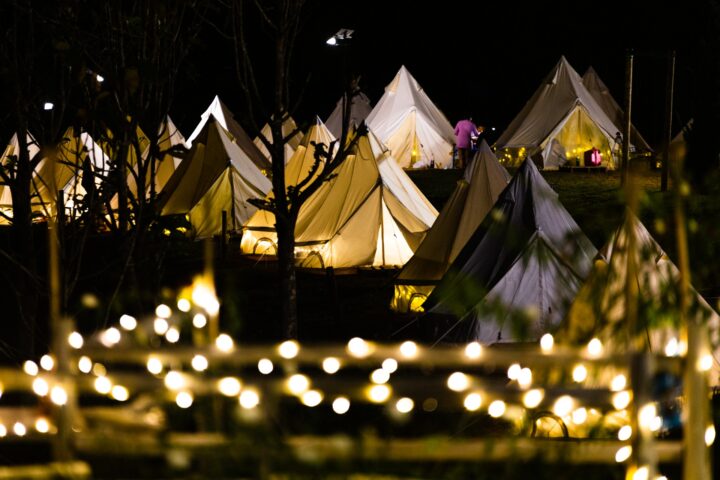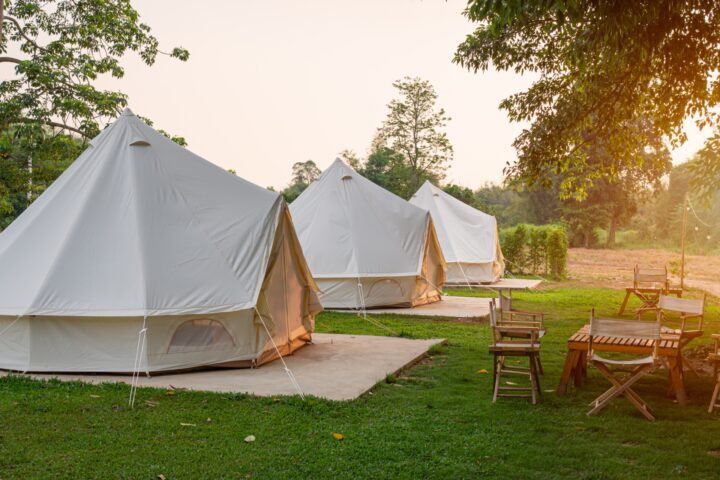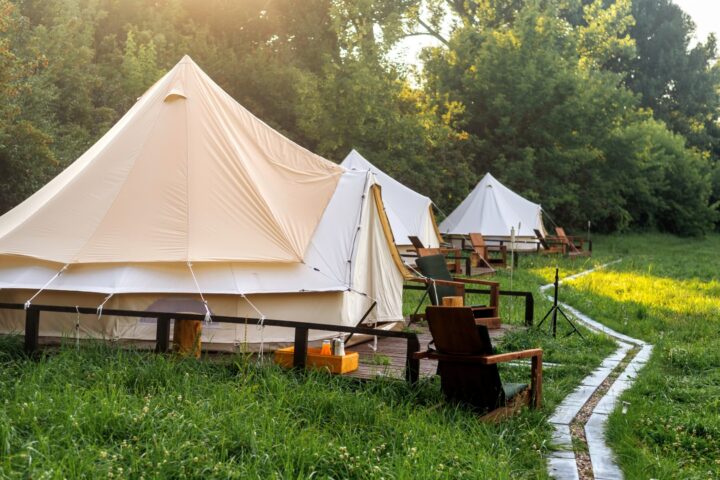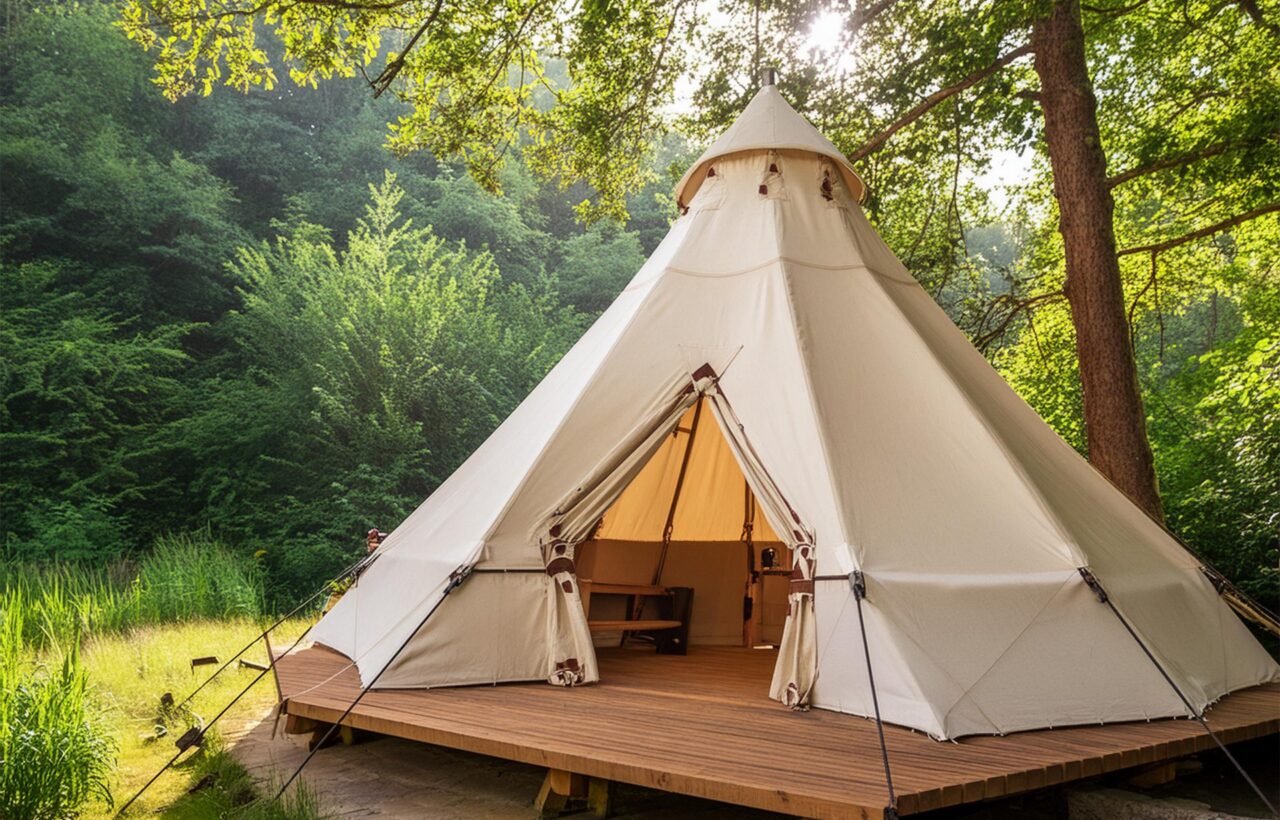

Springbar tent camping is vehicle-based canvas camping built around a tension frame that has been in production since 1961. The tents are heavy, must be staked to stand, and are meant for multi-night car camps, family sites, and base camps rather than backpacking. What they offer in return is standing headroom, breathable cotton walls, and a structure that handles wind better than most family nylon tents of similar floor area.
The design came from Jack Kirkham Sr. in Salt Lake City. After World War II he ran AAA Tent & Awning, then in 1961 patented a frame that uses spring-steel tension rods and a simple ridge to hold a roomy canvas cabin without a forest of guy lines. The company still cuts and sews its American-made models by hand in Salt Lake City. Imported Classic Jack models use the same frame idea at a lower price.
Who Springbar tent camping actually suits
A Springbar earns its place when the camp is reached by car, truck, or trailer and the stay is longer than one night. Packed weight on current models runs roughly from the mid-50s to about 97 pounds once poles and stakes are included. Pole bags are long — often around 56 inches — so the limiting factor is vehicle space, not trail miles.
The format fits four common uses:
- Family car camping where adults need to stand and kids need floor space that is not a nylon crawl space.
- Couple or small-group base camps with a bed, a chair, and gear that stays out of the rain.
- Hunting or shoulder-season camps where a wood stove and a canvas shell matter more than pack weight.
- Repeated use of the same shelter over many years, which is how owners usually justify the price.
It is a poor fit for backpacking, bike touring, or sites that forbid staking. The frame is not freestanding. Without solid stake points the roof cannot tension, and the tent will not stand correctly.
How the frame and canvas behave in camp
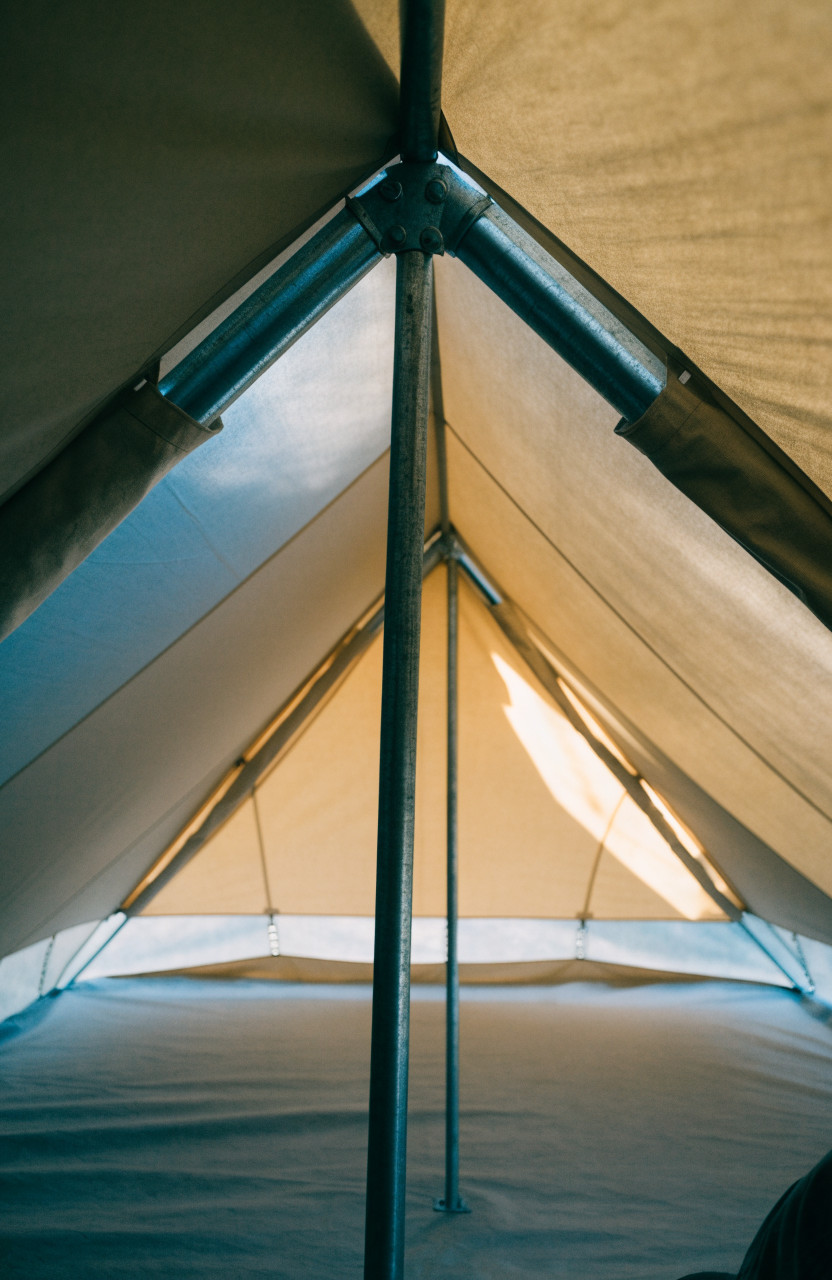
The name is literal. Four spring-steel tension rods run through sleeves at the roof ends and lock into T-fittings on the ridge poles. Pressing the ridge together loads those rods; a steel sleeve then locks the joint. Two uprights lift the ridge. Once the floor is staked square, the frame holds shape by tension rather than by a rigid exoskeleton.
USA-made pole sets use aluminum uprights and ridge poles with steel reinforcement, plus the same spring-steel rods. Imported Classic Jack sets use epoxy-coated steel poles that are slightly heavier and less expensive. Both rely on the same staking geometry: heavy wire loops sewn into the floor perimeter, pulled out with long steel stakes so the walls shed water and the frame stays loaded.
The shell is double-fill cotton duck, treated for water resistance and mold resistance. USA models use Sunforger finish applied in Georgia. Imported models use HardyDuck canvas in similar weights — typically about 10 ounces on the roof and 8.5 ounces on the walls — over a heavy vinyl floor. Cotton is breathable in a way coated nylon is not, so condensation is lower and summer heat is less trapped. It is water-resistant, not waterproof. In ordinary rain it stays dry. In very heavy rain, light misting from hydrostatic pressure can appear inside; the manufacturer treats that as normal, not a seam failure. New tents may weep slightly at needle holes on the first soak until the thread swells and the holes close.
Peak height on the 10-by-10 and 10-by-14 models is about 6.5 feet. Walls slope, so the stand-up zone is the center, not the full floor. A 10-by-10 holds a queen bed with a walkway, or two to three cots. A 10-by-14 is closer to a small cabin: a bed plus seating, or three to four cots, with a tight maximum nearer seven or eight people on pads.
Choosing a model for the way you camp
Springbar sells two build levels that share the frame. USA models are cut and sewn in Salt Lake City with Sunforger canvas, YKK zippers, and aluminum pole sets. Classic Jack models are imported, use HardyDuck canvas and steel poles, and cost less. Hot-tent versions add a removable stove-jack panel so a wood stove can be installed without cutting the tent.
Manufacturer list prices and footprints, from the current selector guide, look like this:
| Model | Footprint | Approx. list price | Made | Stove jack |
|---|---|---|---|---|
| Skyliner | 10 × 14 ft (140 sq ft) | $2,349 | USA | Yes, standard |
| Family Camper | 10 × 14 ft | $1,699 | USA | No |
| Classic Jack 140 | 10 × 14 ft | $1,399 | Imported | Compatible with hot-tent kit |
| Ranger | 10 × 10 ft (100 sq ft) | $1,999 | USA | Yes |
| Traveler | 10 × 10 ft | $1,499 | USA | No |
| Classic Jack 100 | 10 × 10 ft | $999 | Imported | No |
| Vagabond | 8 × 10 ft (80 sq ft) | $1,049 | USA | No |
| Outfitter | 7 × 9 ft (63 sq ft) | $1,149 | USA | No |
| Compact | 6 × 8 ft (48 sq ft) | $749 | USA | No |
Prices move, and colors sometimes wait on a production queue. The useful split is simpler than the full list.
Choose a 10-by-14 if two adults want a bed and a sitting area, or if the group regularly uses three or more cots. The Skyliner is the USA hot tent in that size, with a more generous upper volume, awnings, and a stove-jack insert. The Classic Jack 140 is the lower-cost route into the same floor area, including stove compatibility through Springbar’s hot-tent system.
Choose a 10-by-10 if the site is smaller or the party is two to four. The Traveler is the long-running original pattern. The Ranger is the USA hot-tent version of that size, with front and rear awnings. The Classic Jack 100 is the imported equivalent without a stove jack.
Smaller models — Vagabond, Outfitter, Compact — suit a couple or a solo camper who still wants canvas and standing or near-standing room, and who can accept less floor area. The Compact’s ceiling is about 52 inches, so it is a sleep shelter more than a cabin.
Compared with other canvas cabin tents (Kodiak, White Duck, Teton, and similar), Springbar’s distinction is the tension-rod frame and, on USA models, domestic sewing and Sunforger canvas. Competitors are often cheaper and sometimes lighter. They do not automatically match the stake-and-spring geometry or the parts support behind a design that has stayed in production for decades.
Site choice and setup
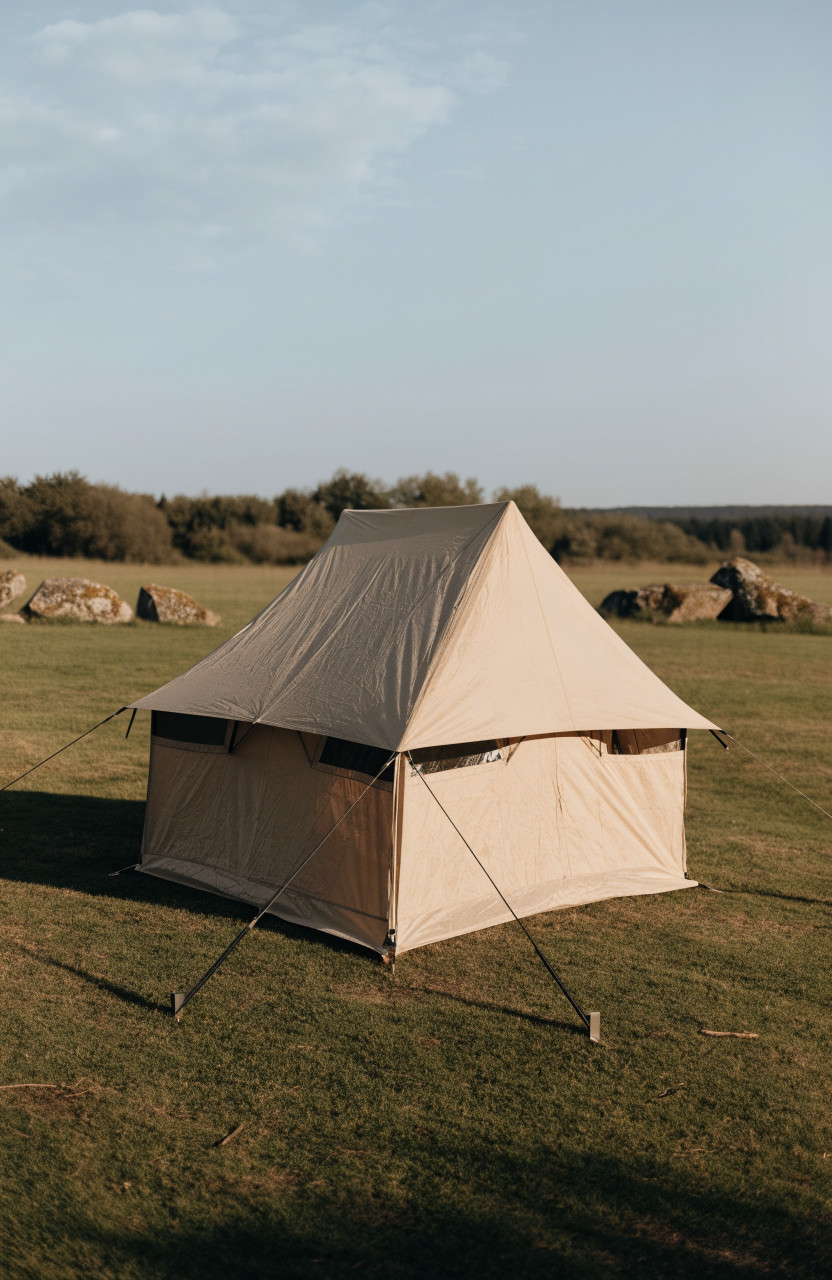
Staking is the whole pitch. Springbar’s own setup guide starts there: level ground, corners first, floor kept as square as possible. Soft sand, deep duff, or a wooden tent pad will not hold 12-inch steel stakes the way firm soil does. On platforms, campers use deck anchors or tie to rails and posts; lightweight freestanding-tent anchors are a weak match for a tent that depends on floor tension to lift.
A workable sequence, once the site is chosen:
- Lay a groundsheet slightly smaller than the floor so runoff does not pool under the vinyl.
- Stake the corners, then the side loops, pulling the floor square and snug. This is most of the work.
- Unzip the door so air can enter.
- On the roof, insert the spring rods into the sleeves and T-fittings, join the ridge poles, and slide the steel sleeve over the joint. Keep your face and hands clear of the pinch point while the ridge loads.
- Set both uprights at the short setting, then lengthen them until the walls are taut but not drum-tight. Three or four clicks is the usual range. Over-tension can damage canvas or fittings.
- Stake awnings and any remaining pull-outs.
With practice, one person can pitch a 10-by-10 or 10-by-14 in roughly 15 to 45 minutes. A partner and a real hammer — not a rock — shorten the staking. First pitches take longer because the ridge joint and upright clicks are unfamiliar. Owners who pinch a finger on the ridge joint are usually loading it before the poles are aligned.
Do a full setup at home before a trip. Canvas rewards familiarity, and a backyard pitch is also the moment to hose the seams, let the tent dry, and repeat once so needle holes close before the first storm.
Weather, ventilation, and hot tenting
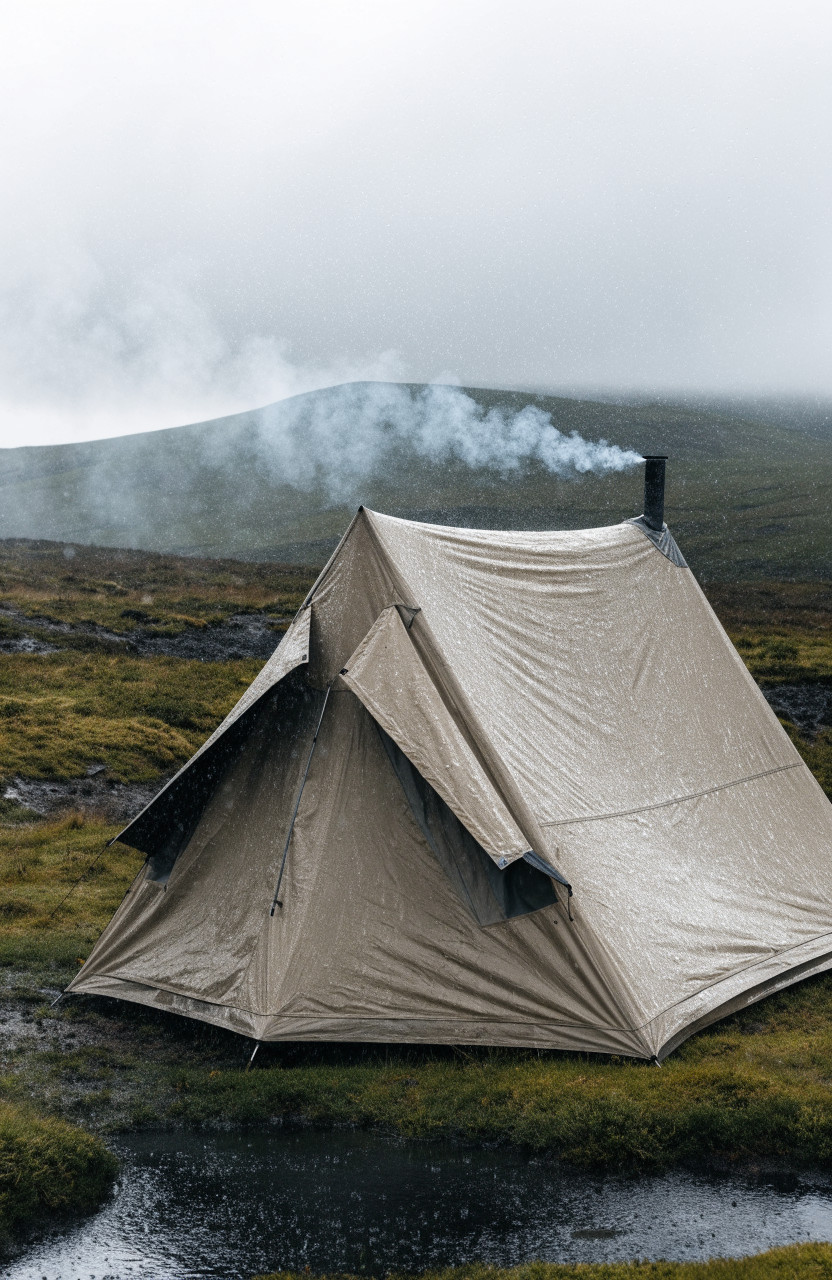
Wind performance is the reputation these tents are bought for. The loaded frame and continuous stake line spread load around the floor rather than into a few guylines. That only holds if every stake is in and the uprights are not cranked past taut. A protected site still matters; the tent is sturdy, not a structure that ignores exposure.
Rain management is about geometry and fabric behavior. Stake loops should pull the walls out so water sheds off the slope instead of pooling on a loose panel. Close windows in driving rain. Expect the first heavy shower on a new tent to show a little seam weep, then improve. If water is streaming in, look for a loose stake line or a panel touching gear before assuming the canvas has failed.
Ventilation is the summer advantage. Full-height screen windows and a breathable wall move air that a coated rainfly traps. In hot weather, awnings and open doors matter more than any coating. In cold weather the same breathability means the tent will not hold heat like a sealed synthetic unless a stove is running.
Hot-tent models (Skyliner, Ranger, and Classic Jack 140 with the hot-tent kit) use a zip-in stove jack so the opening can be a window in summer and a flue passage in winter. A stove belongs on a proper hearth pad, with clearances the stove maker specifies, and with the jack fabric rated for that use. Canvas away from the jack will burn. Springbar’s care notes are direct: keep open flames off the tent. Cook outside. A wood stove does not make the rest of the canvas fireproof.
Care that decides whether it lasts decades
Cotton lasts for decades when it is stored dry and fails early when it is rolled up damp. That single habit matters more than any spray-on treatment.
If camp breaks in rain or heavy dew, pack the tent wet, then pitch it again at home the same day and leave it up until seams, floor hem, and folds are fully dry. A closed car trunk does not dry canvas; it steams it. High-humidity climates need extra caution.
Cleaning is water and a soft brush. Harsh detergents can strip the repellent finish. Minor mildew can be brushed and wiped with a dilute vinegar solution (Springbar suggests about five parts water to one part white vinegar), then rinsed and dried in the sun. Chlorine bleach is a bad idea on treated cotton. Spots may remain after the growth is dead.
The factory water-repellent finish is meant to last years of normal use. If water stops beading, a spray treatment such as 303 Fabric Guard is what the maker points to. Do not coat the canvas with a heavy waterproofing film; sealing the weave raises condensation and works against the reason for choosing cotton, especially with a stove.
Zippers need occasional silicone lubricant and should be cleared of grit. UV will fade and weaken any canvas left pitched for a whole season, so a long-term camp still benefits from shade or a fly if one is available for that model.
Limits worth deciding on before you buy
Weight and bulk are the obvious costs. A 70- to 97-pound shelter with a long pole bag is a car-camping tool. Breakdown also takes longer than a dome tent because the canvas should be cleaned, folded, and dry.
Price is the other filter. A Classic Jack 100 near $1,000 is already more than most nylon cabin tents. A Skyliner at about $2,349 is a multi-year shelter purchase, not a weekend experiment. The economic case is seasons of use and repairable parts, not a cheaper trip this month.
Sites with wooden pads, bedrock, or deep loose sand need a staking plan before arrival. One-night stops are awkward because drying and folding dominate the morning. Color and model availability can lag demand; factory seconds sometimes appear at a discount and are a common way owners enter the lineup.
Customer reports of broken tension rods or missing pole end caps exist, including on first trips. The useful pattern in those accounts is that replacement canvas and rods were sent, and that the ridge joint deserves a careful first assembly. A home pitch is the practical check on parts before they matter in the field.
Questions campers ask before the first trip
Can one person set it up? Yes, after a practice pitch. Staking is the hard part. The frame itself is a short sequence of rods, ridge, sleeve, and two uprights. A hammer and a square floor matter more than a second set of hands.
Will it stay dry in a storm? In typical rain, treated cotton duck and a taut pitch stay dry. Very heavy rain can produce light interior misting. A new tent may weep at seams until it has been soaked and dried once or twice. Streaming leaks usually trace to loose stakes or contact between wet canvas and gear inside.
Is it a four-season tent? The fabric and frame are used year-round, including with a stove on jack-equipped models. It is not a mountaineering tent. Snow load, extreme cold, and exposed alpine sites are outside what these cabins are built for. Shoulder-season and winter car camps with a stove are the realistic cold-weather use.
How many people does a 10-by-10 or 10-by-14 sleep? Manufacturer guidance treats the 10-by-10 as comfortable for a couple or two to three cots, with a tight maximum around five or six on pads. The 10-by-14 fits a queen and seating, or three to four cots, and can sleep more only if everyone accepts a packed floor. Standing room and a dry gear corner disappear once the floor is wall-to-wall pads.
What fails first if care is skipped? Mildew from damp storage. It stains, smells, and can weaken fibers. Drying before the tent goes into the bag is the maintenance step that separates a ten-year shelter from a ruined one.