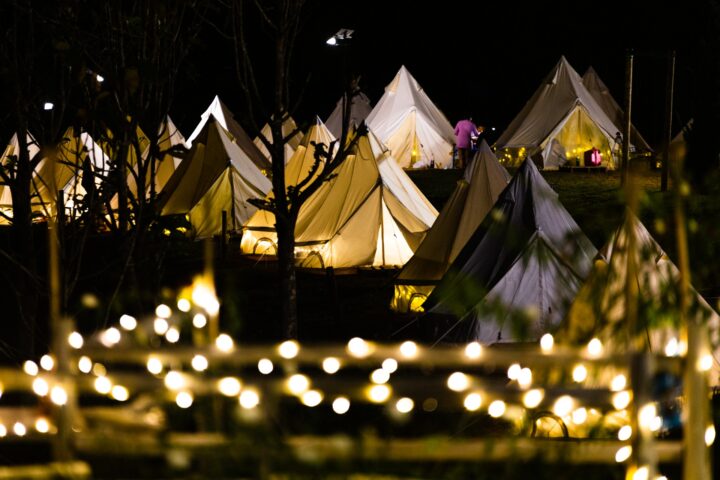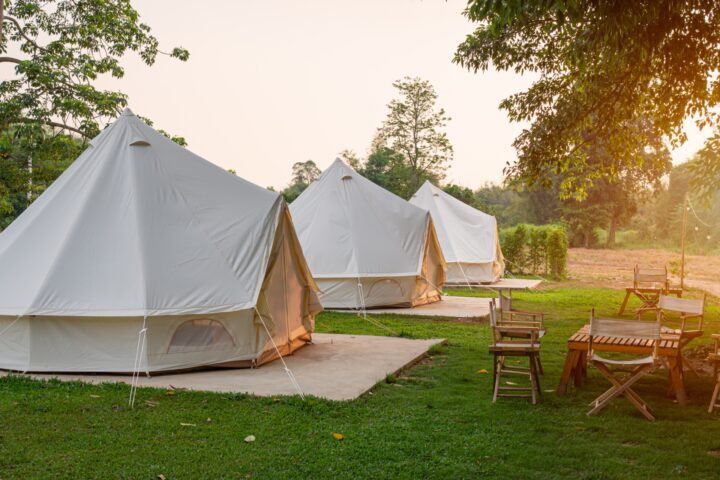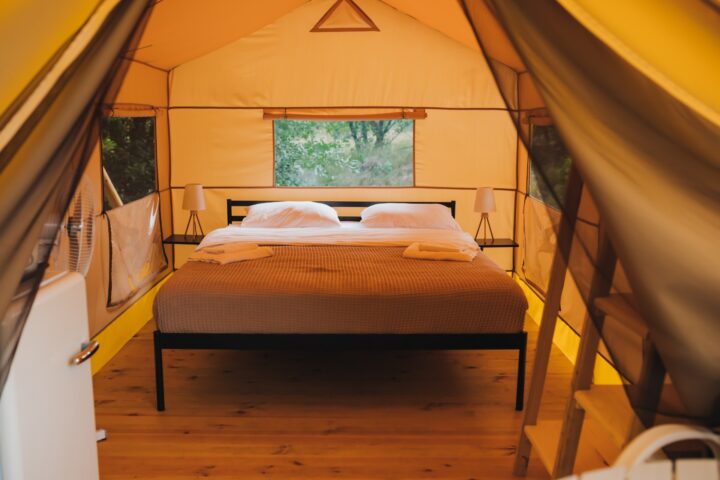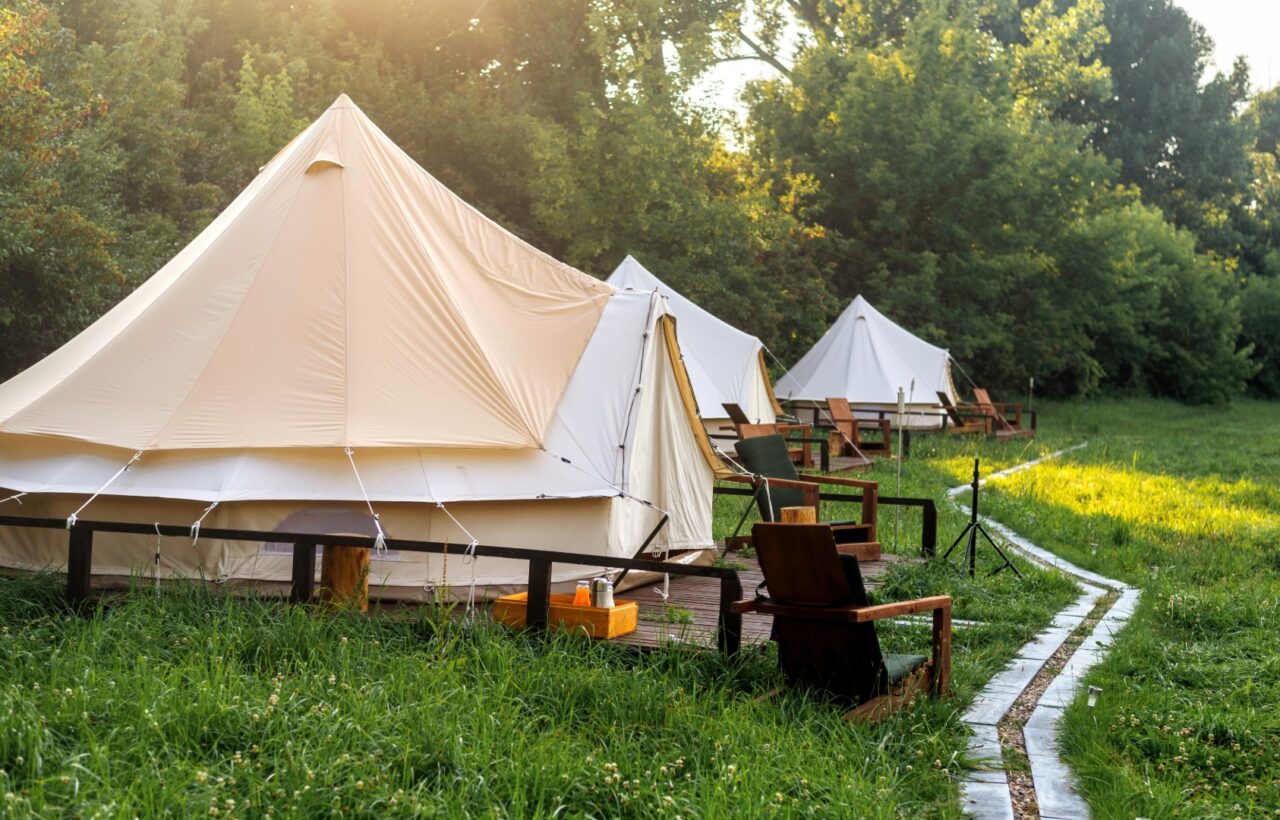
Standing room, a dry night, and a pitch simple enough to repeat are what turn canvas tent camping into glamping. A canvas bell tent or wall tent does that for car camping and fixed camps by breathing, holding heat better than thin nylon, and lasting through repeated seasons if it is dried before storage. It does not replace a staffed glamping lodge, and it is a poor choice if the tent has to be carried on your back.
The decision is less about the word “glamping” and more about whether you camp from a vehicle, stay more than one night, and want a room rather than a sleeping pod. Get those three things right and canvas earns the extra weight. Miss them and a lighter synthetic tent is the better tool.
What canvas tent glamping actually means
Glamping, in the resort sense, means a made bed, a bathroom, and someone else dealing with the rain fly. Canvas tent camping is the self-supported version of that idea: you bring the shelter and the comfort, and you do the work.
The canvas is usually cotton duck or a cotton-poly blend, often in the 8–12 oz range for serious tents. Cotton fibers swell when wet, which tightens the weave and helps the fabric shed rain after it has been seasoned. The same open weave lets water vapor leave the tent, which is why canvas feels less clammy than a coated polyester wall on a cool night.
That combination is why canvas shows up in bell tents, outfitter wall tents, and safari-style frames used for longer stays. The fabric is doing two jobs at once: weather barrier and air exchange. A plastic-coated tent mostly does the first job and fights the second.
Why people switch from nylon once they camp from the car
A comparable family-size synthetic tent can weigh under 15 pounds and pitch in minutes. A canvas wall tent in the same living space commonly lands around 40–80 pounds and needs two people and a clear staking plan. Bell tents in the sizes used for real glamping often sit in a similar weight band, sometimes higher once the groundsheet and poles are included.
The payoff shows up after the tent is standing.
- Breathability cuts the condensation that drips off synthetic walls onto bags and bedding.
- Thicker fabric slows heat gain in sun and blocks wind better than a thin fly.
- Rain on canvas is a dull patter, not the sharp tick of nylon, which matters if anyone in the tent is a light sleeper.
- Quality cotton canvas is built to be reproofed and repaired. Makers commonly rate well-kept tents in the 10–20 year range, against a few seasons to a decade for many coated synthetics, depending on UV and storage.
- Many canvas models accept a wood stove through a factory stove jack. Standard nylon camping tents do not.
None of that helps on a backpacking trip. Canvas glamping is a car-camping and base-camp method.
Bell, wall, and safari: pick the shape for the stay
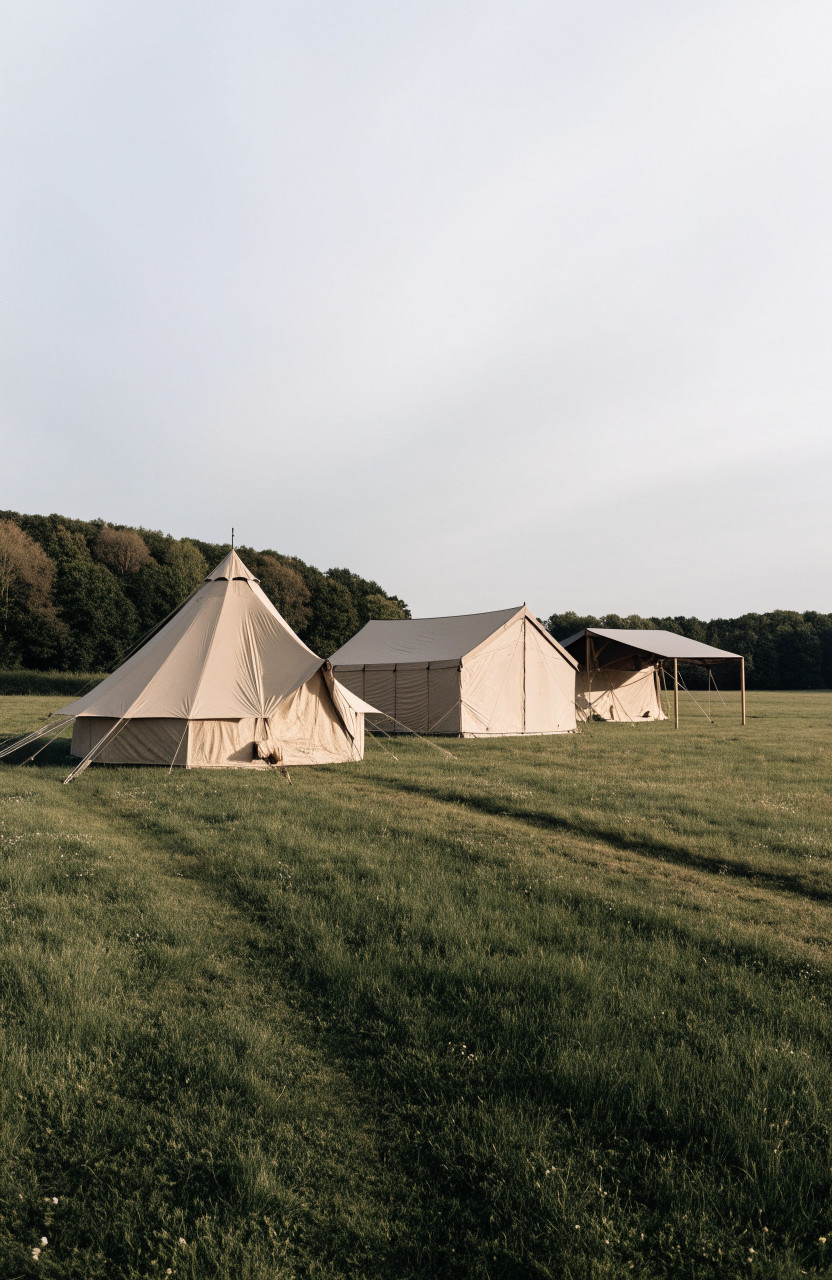
Shape decides how you live inside more than fabric weight does.
Bell tents are circular, with a center pole and guy lines. A 4 m (about 13 ft) model is a couple’s tent: one double bed, bags, and little else. A 5 m (about 16 ft) is the usual glamping size, with room for a queen bed or several cots plus a small table. A 6 m (about 20 ft) sleeps a group, but the guy-line circle needs a large, open site. The center pole splits the floor, and headroom falls off toward the walls, so the edges are for storage and low cots, not pacing.
Wall tents are the outfitter rectangle: upright walls, a ridge, and a floor plan you can furnish like a small cabin. They cost more and pack bulkier, and they are the better choice if you camp often with kids, cots, and a stove. Usable floor area is closer to the footprint, which bell tents waste in the sloping perimeter.
Safari and frame tents use an external metal frame so the canvas hangs rather than relying on a single pole. They are aimed at longer or semi-permanent setups, sometimes with a deck. They are heavier, slower to move, and often overbuilt for a weekend. They make sense for a seasonal pitch or a small rental site, not for a tent you strike every Sunday.
| Shape | Best use | Main limit |
|---|---|---|
| Bell tent, 4–5 m | Couples and small families, weekends | Center pole and sloping walls |
| Wall tent | Repeated family trips, stove use | Weight, price, two-person pitch |
| Safari / frame tent | Multi-week or seasonal pitch | Hard to move, site and permit issues |
Size the tent for furniture, not for the sleeping-bag count
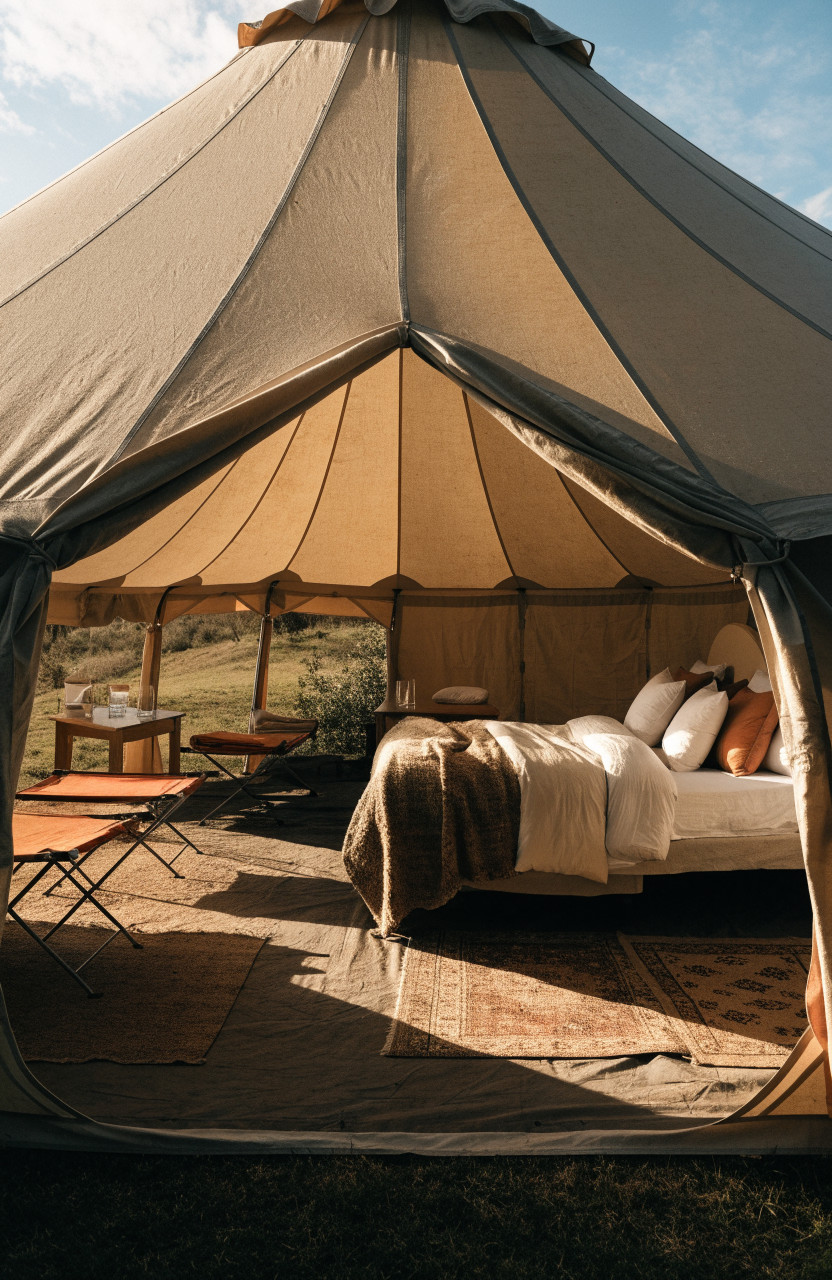
Manufacturers rate tents by how many people can lie on the floor. Glamping fails that test. A 5 m bell tent that “sleeps eight” is comfortable for two adults on a real bed, or a family on cots, not for eight people and their luggage.
Plan the floor before you buy:
- One queen bed needs a 4 m bell at minimum and is far easier in a 5 m.
- Two adults plus two children on cots usually wants a 5 m bell or a wall tent around 10×14 ft.
- Add a stove and the usable sleeping zone shrinks. Clearance around the stove is not optional space.
- Standing height matters more than square footage. If you cannot stand to change clothes, the tent will feel like upgraded camping, not glamping.
Also measure the site, not just the floor. Bell-tent guy lines can extend well past the canvas. A 5 m tent may need a circle closer to 8–9 m once lines are out, unless you use a guy-pole setup that shortens them.
Site choice decides whether the tent stays dry
Canvas forgives mediocre weather better than it forgives a bad pitch.
Choose ground that is flat and slightly raised, not the soft green patch at the bottom of a slope. Water collects under a groundsheet on a low site and wicks into the floor hem. A few degrees of slope is enough to send people rolling off cots all night, and it is unsafe under a stove.
Stake every point the design calls for, at roughly 45 degrees, and tension the guys so the canvas is taut but not drum-tight. Loose canvas pools rain and flaps itself into leaks. On sand or loose forest duff, standard pegs pull out. Bring longer stakes or screw-in anchors for those sites. On a wooden platform, pegs do not work. The groundsheet has to be battened or clamped, and the tent needs another anchoring plan for wind.
Check campground rules before you arrive with a wood stove. Many public sites allow fires only in installed rings, and some fire restrictions ban solid-fuel stoves even when gas stoves are still permitted. A canvas tent with a stove jack is not a permit.
Season the tent before the first trip
New canvas leaks at the seams. Sewing needles leave holes slightly larger than the thread. The first rain closes many of them as cotton swells, but relying on that rain is how people spend a night under a drip.
Season it at home:
- Pitch the tent taut on a dry day.
- Soak the canvas with a hose, especially every seam.
- Let it dry completely in the sun.
- Repeat for two or three wet-dry cycles.
A few beads at needle holes on the second soak are normal. After the cycles, water should sheet off rather than weep through. Do not coat breathable cotton with a heavy waterproofing film to “fix” this. Sealing the weave is how you trade a canvas tent for a condensation tent. If a maker specifies a reproofing wax for their particular canvas, follow that product, not a generic sealant.
What actually makes the inside feel like glamping
The tent is the room. The floor plan is the trip.
Get sleeping off the ground. A cot or a thick pad changes temperature and how the morning feels more than almost any other purchase. A rectangular bag or a quilt you can actually turn over in beats a mummy bag in a tent this size. Bring a real pillow.
A rug over the groundsheet cuts the damp feel underfoot and keeps dirt in one place. A small table and two chairs matter more than string lights. Lights are easy to add later: a lantern or a battery strip on a low setting is enough. Avoid running a generator against the canvas wall.
Cook outside. Even in a large tent, a stove used for meals adds moisture, grease, and carbon monoxide risk. A simple tarp or the tent’s awning is the kitchen. Keep food and trash out of the sleeping area so the tent does not become the raccoon attractant.
For hot weather, open the doors and windows on a cross-breeze and use the fly as shade rather than as a sealed cap. Canvas already slows solar gain compared with thin nylon. Sealing it up at noon removes that advantage.
Heating is a stove decision, not a blanket decision
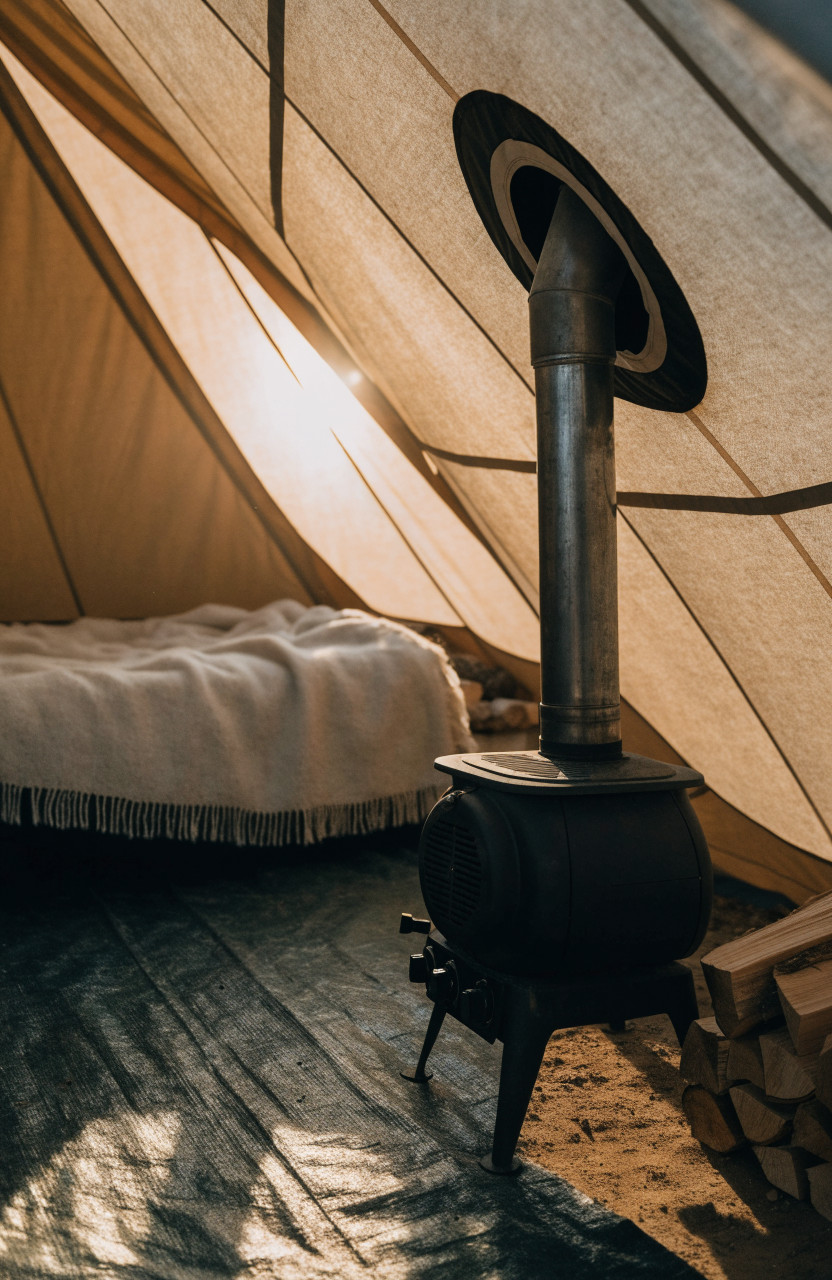
Canvas holds warmth better than a mesh-heavy synthetic tent because the fabric blocks wind and slows radiant loss. That is not the same as a heated cabin. On a cold night you still need insulation under you and a bag rated for the temperature.
A wood stove is the upgrade that turns a shoulder-season tent into a winter shelter, and it is also the main way these setups go wrong.
Use one only if the tent has a manufacturer stove jack or a rated flashing kit. Do not cut a hole in ordinary canvas. Keep the stove on a fireproof mat, with clear space around the body — commonly advised at about 60–100 cm, depending on the stove and tent maker — and keep bedding, clothes, and fuel outside that zone. Use a double-wall pipe section through the jack, a spark arrestor on the flue, and dry wood only. Leave a vent path open. A sealed tent plus a fire is an oxygen and carbon monoxide problem, not a cozy one.
A battery carbon monoxide alarm is part of the kit, not an optional extra. It does not make an unvented fuel heater safe. Petroleum and gas heaters that are not designed as vented tent stoves do not belong inside a canvas tent. Children and pets need a physical barrier around the stove. Do not leave a fire unattended, and follow the stove maker’s rule on sleeping with it lit. Many portable-stove instructions say not to.
If the campground bans solid fuel, the plan is insulation and clothing, not a workaround.
Rain, wind, heat, and the condensation that still happens
Seasoned canvas handles steady rain well. It handles a loose pitch and a soaked floor poorly. In heavy rain, check that guys have not stretched and that water is not pooling on the roof or against the uphill side of the groundsheet. A fly over the canvas adds shade and another layer in driving rain. It also reduces UV on the fabric if the tent stays up for days.
Wind is a staking problem. A bell tent with half its guys out is a sail. Lower the profile if a storm is forecast and you can, and never leave an unstaked frame or awning up while you are away from camp.
Condensation still appears in canvas, especially with several people, wet clothes, and cooking moisture. It is usually light compared with a coated tent, and it dries faster if you vent. Wipe what pools on the floor in the morning so it does not sit in the groundsheet seam.
Heat is the season people underestimate. A dark canvas tent in full afternoon sun will still get warm. Pitch for morning sun and afternoon shade where you can, open every vent, and do not expect the tent to be comfortable at 95°F just because the fabric breathes.
Care is the difference between a decade and a mildew tent
Cotton is food for mold once it stays damp. This is the failure mode owners actually report, more often than a seam blowing out.
Never store the tent wet. If you have to pack it in the rain, get it pitched or hung at home within a day or two and dry every seam, the floor, and the hem before it goes away. A closed car trunk steams a tent. It does not dry it. Store it loosely folded in a breathable bag, not in a sealed plastic bin, in a cool place out of permanent sun. Shift the fold lines each season so the same creases do not wear through.
Brush off dry dirt. Clean spots with mild soap and water, then rinse. Skip chlorine bleach, machine washing, and pressure washing. Those weaken fibers and strip any wax finish. Reproof on the schedule the maker gives you, usually after heavy use or when water stops beading.
Mildew that has already set in can be brushed and treated, but the stain and the weakened fibers tend to stay. Prevention is the repair.
When canvas is the wrong tent
Skip it if any of these are true.
- The trip involves hiking the tent in. Weight and bulk make that a bad trade.
- You need a shelter up in ten minutes at dusk, alone. A two-person pitch and a staking pattern are part of the design.
- The site is platform-only and you have no anchor plan.
- You cannot dry the tent after the trip. A wet canvas left in a bag is how these tents die.
- You want a bathroom and a made bed without the work. That is a glamping rental, and a weekend at one often costs as much as several trips in your own tent. The ownership math only works if you will use the tent repeatedly.
A polycotton blend is the middle path: lighter than heavy army duck, still reasonably breathable, less fussy than untreated cotton, and usually less durable than a heavy canvas wall tent. Coated polyester wins on price, weight, and easy care, and loses on condensation and long-term UV life.
Questions people ask after they pick the tent
Do I have to season a canvas tent if it is sold as waterproof? Yes, if it is cotton or a cotton blend with sewn seams. Factory treatments help the fabric, not the needle holes. Two or three hose-and-dry cycles before a trip are cheaper than a wet first night.
Can I leave it pitched all summer? You can, if it is staked for wind, vented, and checked after rain. UV still ages canvas, so a fly or shade extends life. A tent left up is also a responsibility under campground time limits and local rules. A backyard guest tent and a public-site tent are different permissions.
Is a stove required for cold-weather canvas camping? No. Canvas plus a good pad and bag handles cool nights. A stove is for below-freezing trips and for drying the air. It is optional equipment with mandatory safety rules, not a standard feature you can improvise.
How long does setup take? A practiced pair can pitch a bell tent in well under an hour. A first pitch, with seasoning, furniture, and a stove, is an afternoon. Budget the first trip accordingly, and do a backyard pitch before you depend on it.
Will it mold if it gets rained on once? Rain is fine. Storage while damp is not. Dry it fully after the trip and the single storm is not the problem.