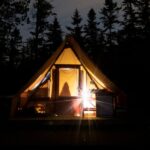
Many first-timers treat a festival car camping setup as an afterthought: park anywhere, pile the gear out and sort it later. That approach usually ends with a sweltering car, a buried cooler and a 2 a.m. hunt for a headlamp.
A better way to think about the car and its allotted spot is as a small base camp planned before the gates open. That means checking the rules, parking for shade, raising the canopy first, packing in the order you unload, and arranging sleep, kitchen and lighting so the site restores you between sets.
Festival Car Camping Rules to Check First
Every festival writes its own playbook. Open the official site when tickets go on sale and read the car-camping section carefully.
Most places hand you a fixed rectangle, often 10 feet by 30 feet. One vehicle per spot. Once you park, the car stays put until the final morning. Leave and you lose the space for good at events like Coachella. Re-entry fees or bans show up at others. Quiet zones sit next to party rows. Glass bottles, open flames, and certain generators get confiscated at the gate.
Print the prohibited list and keep it in the glove box. Glass bottles are a common ban, and a cooler full of them can be confiscated at the gate. That mistake costs real money and real mood.
Note the quiet-hours window and pick a row accordingly. For sleep, aim for the quieter end. To keep the party going, take the louder one. That choice only exists if you read the rules first.
Cell service dies at gates, so save the car camping map offline plus the tow line number. Staff will not look it up for you.
Positioning the Car for Maximum Shade
Shade decides everything. A car left in open sun turns into an oven by mid-morning, even with the windows cracked.
Arrive as early as the gates allow. Drive the rows once, looking for slightly higher ground so rainwater drains away from the tent. Then park on the eastern edge of the allotted space so the vehicle itself blocks the morning sun. Afternoon sun still hits, but the canopy can cover that later.
Point the nose toward the nearest exit lane. Sunday morning exit lines stretch for hours. Backing out of a tight row while half-asleep is pure misery. Facing out means you roll forward and leave.
Once the car is parked, walk the rectangle. Mark a clear three-foot walkway from the driver’s door to the back of the spot and keep it empty the entire weekend. No guy lines, no chairs, no random bags. At 3 a.m. after the last encore, you can still find the way without tripping.
Rows often sit diagonally, so true east differs from visual east. A phone compass prevents parking your hatchback in full morning sun.
The Canopy That Saves Every Festival Car Camping Setup
Shade is non-negotiable. A straight-leg 10-by-10 canopy is worth the money. Cheap slant-leg models collapse in wind, while straight legs lock better and give full headroom.
Keep the setup order the same every time. The canopy goes up first, right after parking. Stake every corner and add two extra sandbags or water jugs on the windward side. Then hang one sidewall on the west face to block late-day sun. The open sides still catch breeze.
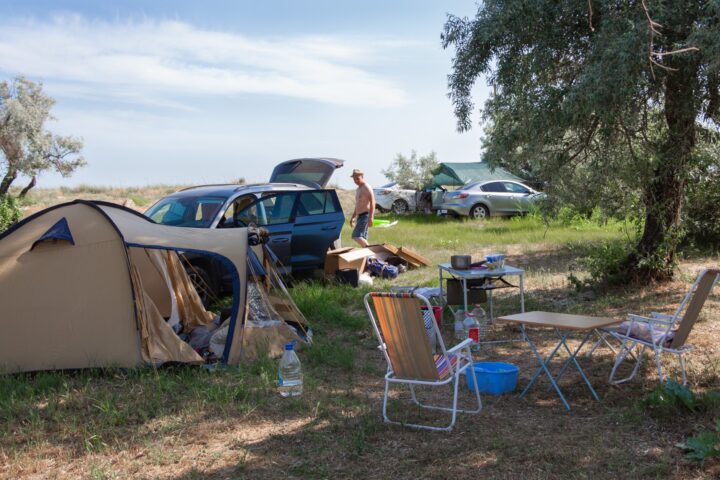
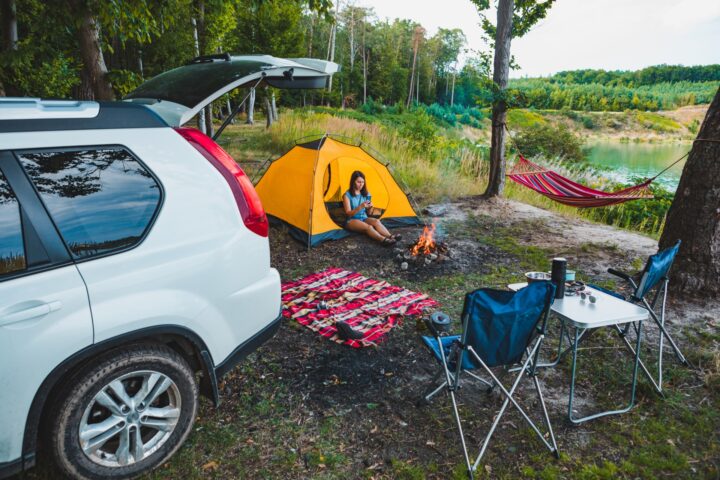
Under the canopy go the cooler, two camp chairs, and a small folding table. That becomes the living room. Set the tent behind or beside the canopy so the door faces into the shaded zone. When the sun moves, there is still a cool place to sit and eat.
Skipping the sidewall is a mistake, especially at desert events, where chairs can get too hot to touch by late afternoon. One wall noticeably lowers the temperature under the canopy.
How to Pack the Car for Fast Setup
Packing decides how fast the site comes together. Treat the trunk like a reverse schedule.
Biggest items load first: the canopy bag, the tent bag, the 50-quart cooler, and the air mattress box. Those form the base layer. Medium bags fill the sides: camp chairs, sleeping bags, power station. Soft duffels and clothes bags go on top. The last things to load are the first things you need: stakes, mallet, and the canopy itself.
Three clear plastic bins keep things sorted. One holds kitchen gear. One holds sleep gear. One holds lights, chargers, and the first-aid kit. Labels face outward so the right bin comes out without unpacking everything.
Put the cooler right behind the back seats for easy access to ice and drinks during the drive and on arrival. Freeze water bottles the night before instead of relying only on bagged ice. They last longer and turn into cold drinking water once they melt.
With a practiced packing order, getting from parking brake to a fully staked canopy can take under 20 minutes, and the rest of the site under an hour. That leaves time to explore while others are still fighting with poles.
Sleeping Setup Against the Noise and Heat
Sleep at a festival is a negotiation. Bass thumps through car doors. Generators hum all night. People talk until sunrise.
Sleeping in the car works well when the weather allows. A vehicle-specific air mattress, such as a Luno, turns the cargo area into a real bed. Slide a closed-cell foam pad underneath for insulation, since the ground pulls heat even through the floorboards. Two real pillows from home and a lightweight comforter finish the setup.
Crack the windows two inches. Mesh screens keep bugs out while letting air move. Reflective sunshades over the windshield and side glass keep sunrise from waking you at 5:30.
Earplugs belong in every single night. Foam ones from the drugstore work fine, and a fresh pair in the cup holder is always handy. An eye mask blocks residual light from neighboring string lights.
If the car feels too stuffy, pitch a small two-person tent behind the canopy and move the mattress inside. Either way, a small USB fan pointed at your face helps. Run it off a portable power station so the car battery stays untouched.
Skipping earplugs at a multi-stage event can mean only a few hours of sleep and a next day that feels like walking through mud. Make them automatic.
Never idle the car overnight for AC in a packed row. Exhaust pools under nearby tents and canopies within minutes.
Kitchen and Cooler Zone Basics
Food keeps energy up. Keep the kitchen simple and shaded.
The cooler stays under the canopy at all times. Pack it with block ice on the bottom, frozen bottles in the middle, and food on top. Open it only when needed. Every extra peek melts ice faster.
A single-burner propane stove sits on the folding table. One pot, one pan, a cutting board, and a roll of paper towels cover most meals. Pre-cook a few things at home so they only need reheating. Cold sandwiches and fruit fill the gaps.
Hang trash bags from a canopy leg. Bag everything the moment it becomes trash and walk it to the dumpster twice a day. Leaving bags overnight invites raccoons or curious neighbors.
Two five-gallon jugs cover water; refill them at the festival stations every morning. A hydration pack stays in the car for the walk to the stages. Aim for at least a gallon per person per day in hot weather. Dehydration sneaks up fast when you are dancing for hours.
A pre chilled cooler keeps block ice up to 40 percent longer, critical when your 50 quart sits under a sunny canopy all weekend.
Marking the Spot and Final Touches
Crowds make every campsite look identical after dark. Hang a bright LED lantern from the canopy peak and tie a small reflective flag to the highest pole. Glow sticks along the walkway on the first night help late arrivals find the site without shouting.
Valuables stay locked in the car or in a small lockbox under the front seat. Never leave phones or wallets in the tent. A quick sweep of the site before bed keeps the area clear and reduces tripping hazards.
Keep a small power station charged and ready. Phones, the fan, and string lights all run from it, leaving the car battery for climate control only. That split is the simplest way to avoid a dead battery on the final morning.
Drop a GPS pin plus a photo of your row marker when you park. After dark, every canopy and lantern row looks exactly the same.
Frequently Asked Questions
Do I really need a canopy for a festival car camping setup? Yes. The tent alone turns into a sauna by midday. A canopy creates the only reliable shade for sitting, eating, and cooling down between sets.
How early should I arrive to claim a good spot? As close to gate opening as possible. Early arrival means cooler temperatures for setup and better positioning relative to bathrooms, exits, and stages.
Can I sleep in my car the whole weekend? Most festivals allow it inside the car-camping zone. Check the specific rules. Bring window screens, a solid mattress, and earplugs so the noise and heat stay manageable.
What size cooler works best? A 50-quart hard-sided cooler handles two people for three days if you pack it tightly and limit openings. Larger groups need a second one or daily ice runs.
How do I keep the car battery from dying? Run lights, fans, and phones off a portable power station. Save the car battery for climate control only and arrive with a full charge or full tank.
Festival camping does not have to mean roughing it and hoping for the best. Build the site the same way every time, keep the layout consistent and the gear list short, and check the rules first. The result is a base camp that restores you instead of draining you.
Next time the lineup drops and the camping passes go on sale, pull this plan out. Adjust the details for your vehicle and the weather forecast. Then show up ready to enjoy the music instead of fighting the campsite. The stages will still be loud. At least your home base will feel like home.