Long evenings and slow mornings at the site are where a cozy camping tent earns its place: room to stand while changing, enough darkness to sleep past sunrise, and space to keep gear off the floor. Ultralight hikers will find much of that too heavy to carry.
For everyone else, the article sorts out which tent features create that feeling and how to arrange the interior so it stays warm, dark, dry and livable after dark. Usable space, a good sleep surface, light control and airflow do far more for comfort than string lights or extra blankets.
What Makes a Tent Feel Cozy
Cozy is livability. It is whether you can sit up without hitting the ceiling, walk to the door without stepping on someone, and stay comfortable when the temperature drops or the sun hits the fly at 5:30 a.m.
Four things do most of the work:
- Usable volume, not just listed square footage. Sloping walls steal space at the edges.
- Sleep surface. The ground steals more heat than thin tent fabric ever will.
- Light and temperature control. Dawn glare and a greenhouse effect wake people faster than birdsong.
- A dry interior. Condensation on the walls makes a tent feel clammy even when the air is not that cold.
A three-season tent usually only raises interior air temperature by a few degrees. One commonly cited range is about 5°F warmer than outside in a typical three-season design, with better-sealed winter tents closer to 10–15°F. The tent is a wind and rain shell. Warmth comes from the pad, bag, clothing, and how well you keep moisture out of the sleep system.
Tent Features That Change How the Space Feels
Size for living, not just sleeping
Manufacturer capacity is how many sleeping pads can physically tile the floor. It is not how many people can spend a rainy afternoon inside without snapping at each other.
A reliable rule for car camping: buy two people larger than your group if you want bags, a cooler corner, and room to change. A family of three is usually happier in a six-person tent than a four. Extra floor space also makes cots and thick pads possible, which is what turns “camping” into “sleeping.”
Oversizing has a cost in cold weather. A huge empty cabin is harder to warm with body heat than a snug two-person tent. Match size to the trip: roomy for summer basecamp, tighter for cold nights.
Cabin walls versus dome walls
Cabin tents have near-vertical walls and more standing room across the floor. Dome tents slope inward, so peak height only exists in the center.
Measured comparisons of six-person models often show cabin tents several inches taller at the peak, with usable standing room much farther toward the corners. One side-by-side set of measurements put six-person cabins around 77–84 inches at the peak and six-person domes around 70–77 inches.
That geometry is why a cabin tent feels more like a room. Cots sit against the wall. You can dress without a crouch. Kids can play inside during rain.
The tradeoff is weather. Vertical walls catch wind. Domes and hybrid “cabin-dome” designs such as The North Face Wawona usually handle storms better. If your sites are exposed or you camp in shoulder season, prioritize a strong pole structure and a full-coverage fly over maximum headroom.
Headroom and doors
Peak height matters less than where that height lives. A 72-inch peak that drops immediately is less cozy than a slightly shorter tent with steep walls.
Two doors change nightly life. One door means someone climbs over everyone else at 2 a.m. Dual doors and a wide vestibule keep muddy shoes, wet dogs, and midnight bathroom trips out of the sleep zone.
Vestibules as a front porch
A large vestibule is one of the biggest comfort upgrades that does not live inside the tent. The North Face Wawona 6 is repeatedly praised because its front vestibule is about 45 square feet—enough for chairs, a cooler, and wet gear without crowding the sleeping area.
That covered porch keeps dirt and moisture out of the bedroom. A cozy interior starts by refusing to store wet boots on the floor next to your pillow.
Blackout fabric
Standard tent fabric turns into a lantern at sunrise. Blackout or “Dark Room” fabrics block most incoming light. Coleman’s Dark Room line is commonly listed at about 90% light blocked; some designs, such as Kelty’s Twilight Tech on the Daydreamer, are marketed as even darker.
The practical payoff is sleep past dawn and a cooler interior on bright mornings. Families with small children and anyone camping near a well-lit campground feel this first. Blackout fabric is less useful if you always camp under heavy tree cover or want a bright mesh canopy for stargazing.
Mesh, vents, and double walls
A cozy tent in July and a cozy tent in October are not the same object.
Lots of mesh is comfortable in heat and brutal in wind. A double-wall tent (inner canopy plus separate rainfly) manages moisture better than a single-wall shelter because condensation can form on the fly instead of dripping on your bag. Look for high and low vents you can crack without opening the whole door to rain.
How to Choose a Cozy Tent for Your Kind of Trip
Use the trip, not the catalog photo.
Car camping weekends with kids or two adults who want to stand up: Prioritize cabin or steep-wall hybrid tents, 6-person class for three to four people, two doors, and a large vestibule. Models reviewers keep returning to for livability include The North Face Wawona, REI Co-op Westward, and NEMO Aurora Highrise. Budget options such as Coleman Skydome trade durability and storm manners for price and easy setup.
Light sleepers and hot, bright sites: Add blackout fabric. Coleman Dark Room Skydome and Kelty Daydreamer exist specifically for this problem.
Windy or rainy shoulder-season sites: Choose a dome or tunnel with a full-coverage fly, extra guy-out points, and fewer giant vertical walls. Comfort here is staying dry and quiet in the wind, not standing in the corners.
Cold nights: Smaller interior, less mesh, full fly to the ground, and a pad with a real R-value. A four-season or “expedition” tent traps more heat, but most three-season campers get farther by upgrading the sleep system than by buying a winter tent they will use twice.
Backpacking: Cozy means a dry, well-ventilated two-person tent used by one or two people, not a cabin. Weight and packed size cap how much “home” you can carry.
Canvas bell tents and wall tents can feel the most house-like, especially with a wood stove designed for that use. They are heavy, need more site work, and are a different category than a weekend dome.
Build the Sleep System Before You Decorate
The fastest way to make any tent cozy is to stop sleeping on a thin pad and a bag rated exactly to the forecast low.
Insulate the ground first
You lose a large share of heat into the earth. A sleeping pad’s R-value measures resistance to that loss. Higher is warmer.
- Summer car camping: R-value around 2–3 is often enough.
- Cool nights near freezing: look for R-4 to R-6.
- Real cold: winter pads in the R-5 to R-8 range.
Stacking a closed-cell foam pad under an inflatable pad adds R-value and puncture insurance. Cots lift you off the floor and feel more like a bed, but they still need insulation underneath in cold weather because air moving under the cot can chill you.
Air mattresses from a big-box store are comfortable until they leak or the night drops. If you use one, add a foam layer and expect more condensation under the mattress.
Treat bedding like a bed
A sleeping bag rated for the coldest night you actually expect—not the average night—matters more than extra throw blankets. If you sleep cold, use the bag’s comfort rating, not the extreme limit.
For car camping, many people sleep better with:
- A pad or cot
- A fitted sheet over the pad
- A quilt or comforter they already like
- Real pillows
That setup feels like home because it is home bedding on an insulated platform. Keep a dry change of sleep clothes. Damp cotton against skin is the opposite of cozy.
Go to bed warm. Eat something, put on dry base layers, and warm the bag with your body or a sealed hot-water bottle before you lie still and shiver it warm.
Dress the interior in layers you can remove
Warmth in a tent is easier to add than heat is to dump at 2 a.m. Wear a moisture-wicking base layer. Add a fleece. Keep the puffy jacket for sitting up, not always for sleeping, so you do not overheat and soak the bag with sweat.
How to Set Up the Interior So It Feels Like a Room
Make zones
Even a modest tent feels larger if you split it:
- Sleep along one wall or the back
- Bags and shoes in the vestibule
- A clear path to the door
- One small “sitting” spot if there is height for it
Push sleep gear to the edges in a cabin tent. In a dome, keep taller items toward the center so sloped walls do not press on your face.
Cover the floor
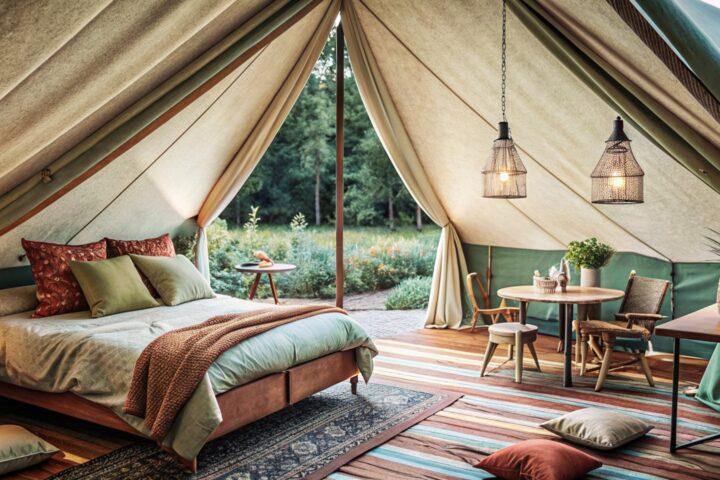
A cheap indoor-outdoor rug, moving blanket, or large towel changes how the tent feels under bare feet and adds a thin insulation layer. Keep it smaller than the floor so it does not wick rain under the walls.
A properly sized footprint under the tent protects the floor and reduces ground dampness. It should not stick out past the tent edge, or it becomes a rain puddle funnel.
Light for mood, not stadium brightness
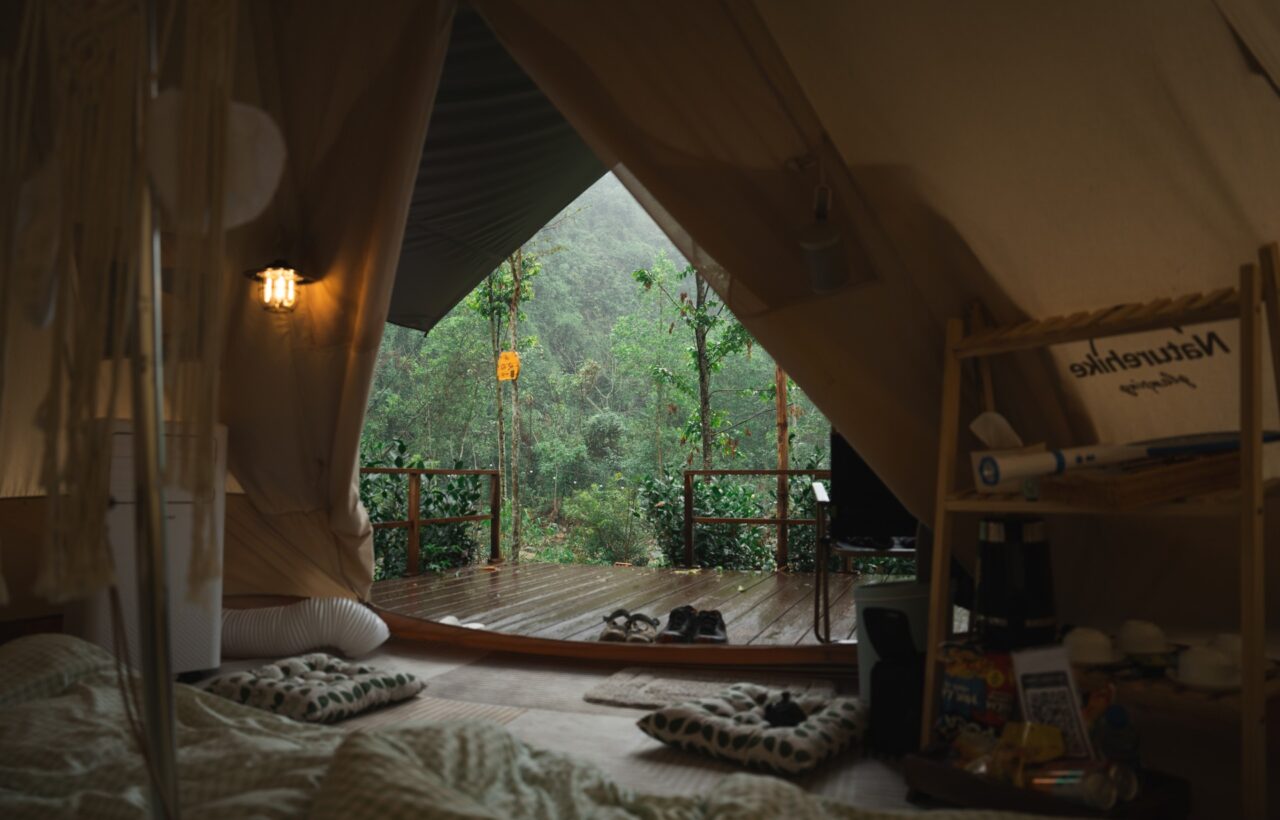
Warm, low light makes a nylon box feel settled. Battery string lights, a lantern on its dim setting, and a headlamp for tasks are enough. Cool-white LEDs on high make the same space feel like a locker room.
Hang lights from loops, not from stressed seams. Keep flames and hot glass away from fabric. If you want darkness for sleep, blackout fabric plus an eye mask beats fighting a glowing lantern at 10 p.m.
Storage off the floor
Gear lofts, wall pockets, a hanging shoe organizer, and one bin by the door keep the floor walkable. A walkable floor is what makes a tent feel bigger than its spec sheet.
Leave wet layers in the vestibule. Every damp sock inside the inner tent adds moisture that will be on the ceiling by morning.
Keep the Tent Warm Without Making It Wet
The usual mistake is zipping every vent shut to “trap heat.” Occupants add a lot of moisture—on the order of a pint of water vapor per person overnight in some estimates. That vapor hits cold fabric and turns into droplets.
A damp bag loses loft. A dripping ceiling feels colder than a slightly drafty dry one.
Do this instead:
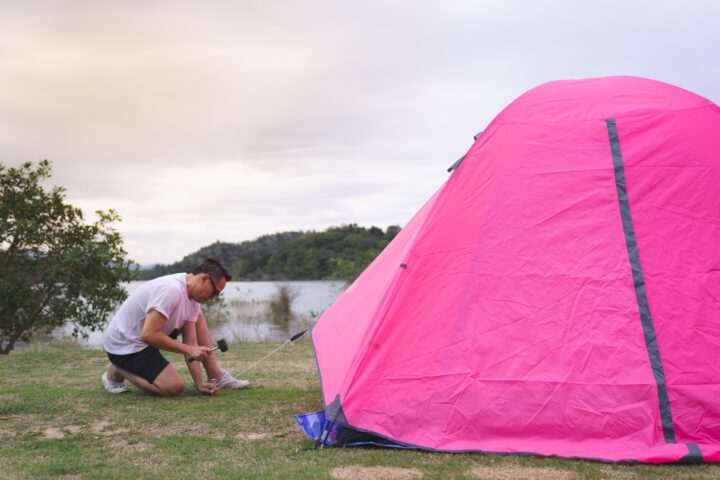
- Pitch taut so the fly does not touch the inner canopy.
- Open high vents so warm, wet air can leave.
- Crack a door or vestibule on the downwind side if rain allows.
- Site the tent where air can move; frost hollows and dense brush collect moisture.
- Keep wet gear outside the inner tent.
- Use a double-wall tent when nights are cool and humid.
If you use a portable heater, treat carbon monoxide as a real risk. Only use devices rated for indoor/tent use, keep a vent open, and never sleep with an unvented flame heater running unattended. For most people, a short warm-up while changing clothes is the useful case; overnight heat belongs in the sleeping bag and pad.
Canvas hot tents with stove jacks are a separate, specialist setup. They can be genuinely cabin-warm. They also require spark protection, clearance, and practice. They are not a weekend upgrade for a polyester dome.
What Keeps a Cozy Tent From Feeling Cozy
Cozy tents usually lose comfort through sizing, pad, fly and decor choices, each paired here with a better approach.
| Issue | Where it comes from | Better approach |
|---|---|---|
| Tent too tight for people and gear | Buying the exact person-count, since four-person often means two plus gear | Size up past the exact person-count when choosing the tent. |
| Cold coming up from below | Extra blankets piled on a thin 1-inch air mattress | Upgrade the pad, because blankets on a thin air mattress still leave you cold. |
| Wet bag in humid weather | Sealing the tent creates a warmer, wetter box | Avoid sealing the tent in humid weather so the bag stays dry. |
| Condensation and a flapping fly | Fly put on late or loosely, so it sags onto the inner tent | Put the fly on early and pitch it tight. |
| Tent feels smaller than it is | Decor filling the floor and blocking the door path | Keep the floor and the door path clear of decor. |
| Still cold despite the tent | Expecting fabric walls to work like a furnace | Rely on the sleeping bag for warmth, since walls only block wind. |
| Fumbling for vents in the dark | Skipping a practice pitch before the trip | Practice pitching so the fly is tight and the vents are easy to find. |
A Simple Decision Path
- Count sleepers, then add two person-spaces if this is car camping.
- Choose cabin/steep walls for living space, or a sturdy dome if wind is common.
- Require two doors and a usable vestibule if more than two people will come and go.
- Add blackout fabric if sunrise or campground lights wreck your sleep.
- Spend the next chunk of budget on pad R-value and a realistically rated bag.
- Pack a floor covering, warm lighting, and a plan for wet gear.
- Vent the tent on purpose every night.
That order beats buying a prettier tent and sleeping poorly in it.
Frequently Asked Questions
Is a bigger tent always cozier?
Only until weather and heat enter the picture. Bigger is cozier for movement, kids, and rainy days. Smaller is easier to keep warm and often quieter in wind. Size up for summer car camping; stay closer to true occupancy when nights are cold.
Do I need a four-season tent to stay cozy?
Usually no. Four-season tents use more solid fabric and stronger poles, which helps in snow and high wind. For typical three-season camping, a better pad, a colder-rated bag, dry clothes, and a well-pitched double-wall tent matter more.
Are blackout tents worth it?
Yes if early light wakes you or the tent becomes a greenhouse after sunrise. They are less important under trees, in short summer nights at high latitude, or if you already use an eye mask and wake with the sun on purpose.
Can I make a cheap tent cozy?
Yes, within limits. A budget dome with a thick pad, real bedding, a rug, organized gear, and a taut fly can feel surprisingly settled. It will still lack standing room, storm strength, and darkness unless those features are built in. Put money into the sleep system first; upgrade the tent when the walls or weather become the weak link.
Why does my tent feel colder than the forecast?
Wind through mesh, a pad with a low R-value, damp clothing, and condensation on the bag all steal heat. The thermometer outside is not the temperature of the ground under you or of a wet sleeping bag.
A cozy camping tent is a small, dry room you can actually live in for a night. Choose the shape and size that match the trip, then build comfort from the ground up. The lights and blankets work after those pieces are right—not before.