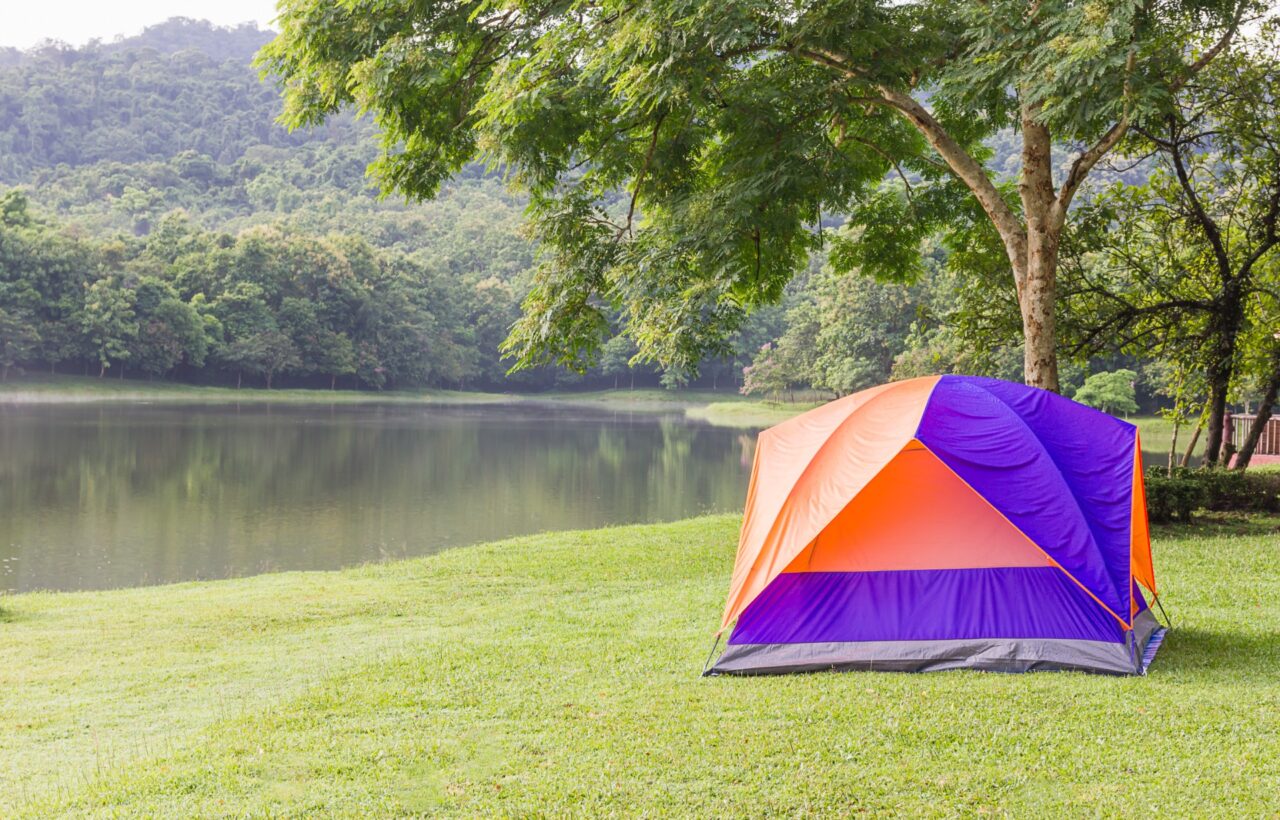

A dome tent is a freestanding shelter held up by poles that cross near the top and arc down to the corners, forming a curved roof. That shape is why dome tent camping is the default for most weekend and backpacking trips: the tent can stand before you stake it, wind tends to slide over the curve instead of hitting a flat wall, and a practiced pitch takes one person a short stretch of time. The trade is space. Headroom is best under the peak and shrinks toward the walls, so a dome that looks roomy in a product photo often feels tighter once sleeping pads and packs are inside.
The useful decision is not whether dome tents are “better.” It is whether the trip needs a stable, easy shelter more than it needs standing room.
What the Pole Layout Actually Does
Most recreational dome tents use two poles that cross at the apex. Each pole runs from one corner, over the roof, and into the opposite corner. Clips or sleeves hold the fabric to those arcs. Once both poles are seated, the structure supports itself. That is what “freestanding” means: the tent can stand on a platform, gravel pad, or rocky patch where stakes will not bite.
Freestanding does not mean unanchored. A dome will still slide, lift, or spin in a gust if it is not staked. Stakes hold the floor corners. Guylines, usually attached partway up the rainfly over a pole, stop the panels from flexing and keep the fly from collapsing onto the inner tent.
A geodesic tent is a related design, not a separate category of camping. Extra poles cross in more places and create shorter spans, which handles high wind and snow load better than a simple two-pole dome. Most car-camping and three-season trips do not need that complexity.
Dome, Cabin, and Tunnel Tents Solve Different Problems
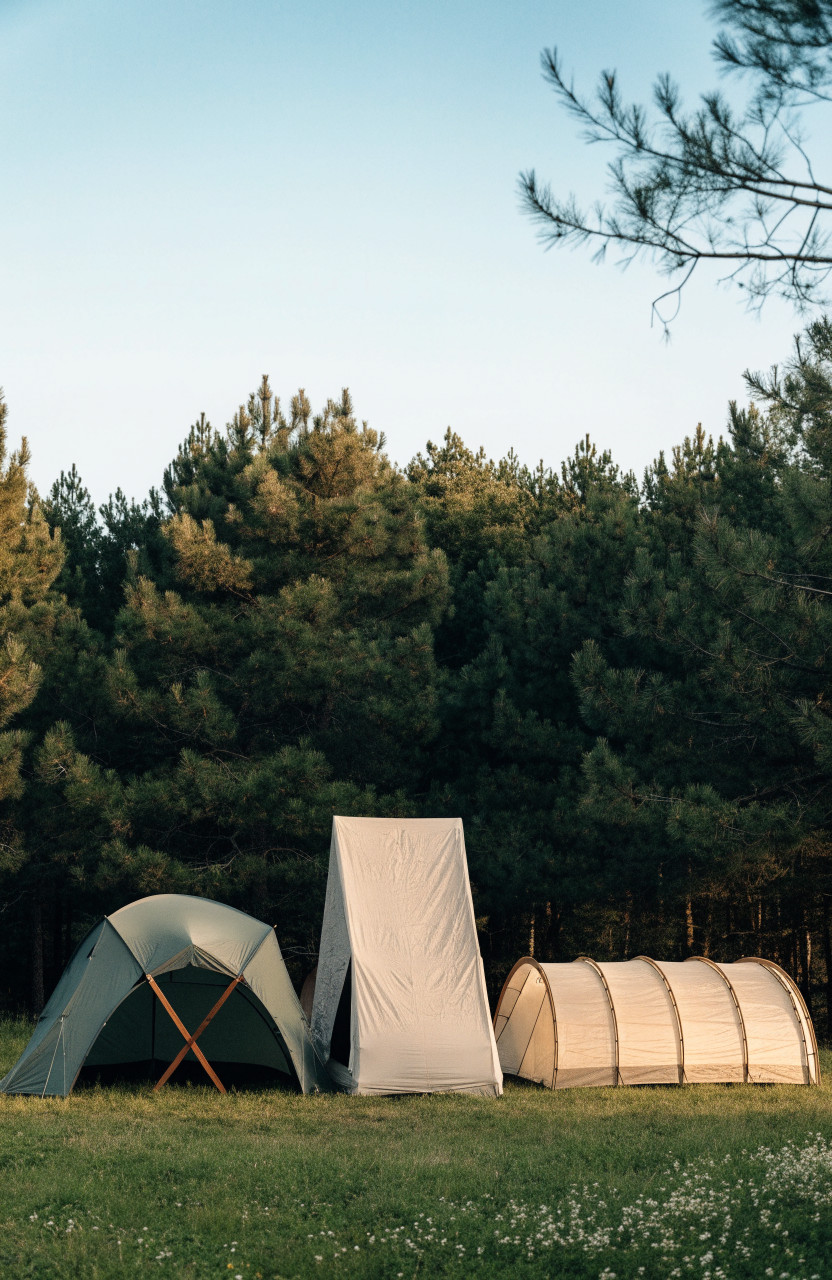
| Dome tent | Cabin tent | Tunnel tent | |
|---|---|---|---|
| Structure | Crossing poles, usually freestanding | Near-vertical poles, often freestanding | Parallel hoops, needs stakes to stand |
| Wind | Curved walls shed gusts better than flat sides | Tall flat walls catch wind | Low profile helps, but only if well staked |
| Headroom | Best at the center, slopes at the edges | Standing room across most of the floor | Good along the length, lower at the ends |
| Setup | Often solo after one practice pitch | Slower; larger models are easier with two people | Must be staked as you build it |
| Best fit | Mixed sites, wind, backpacking, first tents | Family base camps where comfort beats weather | Weight-conscious hiking on stakeable ground |
Cabin tents win when several people will change clothes, play cards, or stand up for several nights at a drive-in site in mild weather. Tunnel tents can give more floor per pound, but they collapse if the stakes pull. A dome is the safer general choice when the site might be exposed, the ground might be hard, or the person pitching it has not done this before.
When Dome Tent Camping Is the Right Call
Choose a dome if any of these describe the trip:
- The site may be windy, elevated, or on a ridge where a flat wall would act like a sail.
- You may camp on a platform, gravel, or rock and cannot count on every stake holding.
- One person may have to pitch in fading light.
- Pack weight or trunk space matters. Even car-camping domes are usually lighter and smaller packed than cabin tents of similar sleep capacity.
- Rain is likely and you want a curved roof that sheds water instead of pooling on a flat panel.
Skip the large dome, or switch styles, if the priority is living space. A six-person dome has more fabric for wind to push on, and the structural advantage of the curve weakens as the tent gets wider. Families who mostly car camp in sheltered campgrounds often sleep better in a cabin tent with vertical walls, room dividers, and enough height to stand while sorting gear.
A two-person backpacking dome and a six-person family dome share a shape and almost nothing else about how the night feels. Match the tent to the number of people who must sleep, not to the number printed on the bag.
What to Check Before You Buy
Sleeping capacity is smaller than the label
Manufacturers rate capacity by how many pads can lie side by side, not by how comfortably those people can move. A “two-person” dome is a close fit for two adults plus bags. A “three-person” is the more realistic two-person tent if anyone is taller than average or wants gear inside rather than in the vestibule. For car camping, buying one size up is the usual correction. For backpacking, that extra size costs weight, so many pairs accept a tight floor and keep packs in the vestibule.
Floor area matters more than peak height. A tent can list a 48-inch center height and still force you to crawl once you leave the middle.
Full rainfly, bathtub floor, and a real vestibule
A partial fly covers the roof and leaves mesh walls exposed. That is fine for dry, bug-light summer nights and poor in wind-driven rain. A full-coverage fly wraps most of the body and is the standard for three-season dome tent camping.
The floor should rise several inches up the walls in a bathtub shape so groundwater does not seep through floor seams. A footprint, or groundsheet, protects that floor from abrasion. It must be smaller than the tent floor or tucked fully underneath. A sheet that sticks out past the walls becomes a gutter and feeds rain under the tent.
A vestibule is the covered area outside the door and under the fly. It is where wet shoes, packs, and a stove stay out of the sleeping space. Two doors and two vestibules matter more than they sound: nobody has to climb over a sleeping partner to get out, and gear has a dry place on both sides.
Poles and attachment style
Fiberglass poles are common on budget car-camping domes. They flex well and cost less, and they can splinter after repeated stress or cold. Aluminum poles resist fatigue better and are standard on tents meant to be pitched often. Color-coded poles and clips are faster for beginners than long pole sleeves. Sleeves can add strength; they also take longer and are harder to thread in the dark.
Season rating
A three-season dome is built for spring, summer, and fall: mesh for airflow, a full fly for rain, and enough structure for ordinary wind. A four-season or mountaineering tent uses more poles, less mesh, and stronger fabrics for snow and serious wind. It is hotter and heavier than most campers need. A summer-only tent with a partial fly is a fair-weather shelter, not an all-purpose one.
Seam sealing matters more than a headline waterproof number. Factory-taped seams on the fly and floor are the baseline. If water beads through stitching after a heavy night, a seam sealer made for that fabric is a normal repair, not a sign the design is flawed.
How to Pitch a Dome Tent
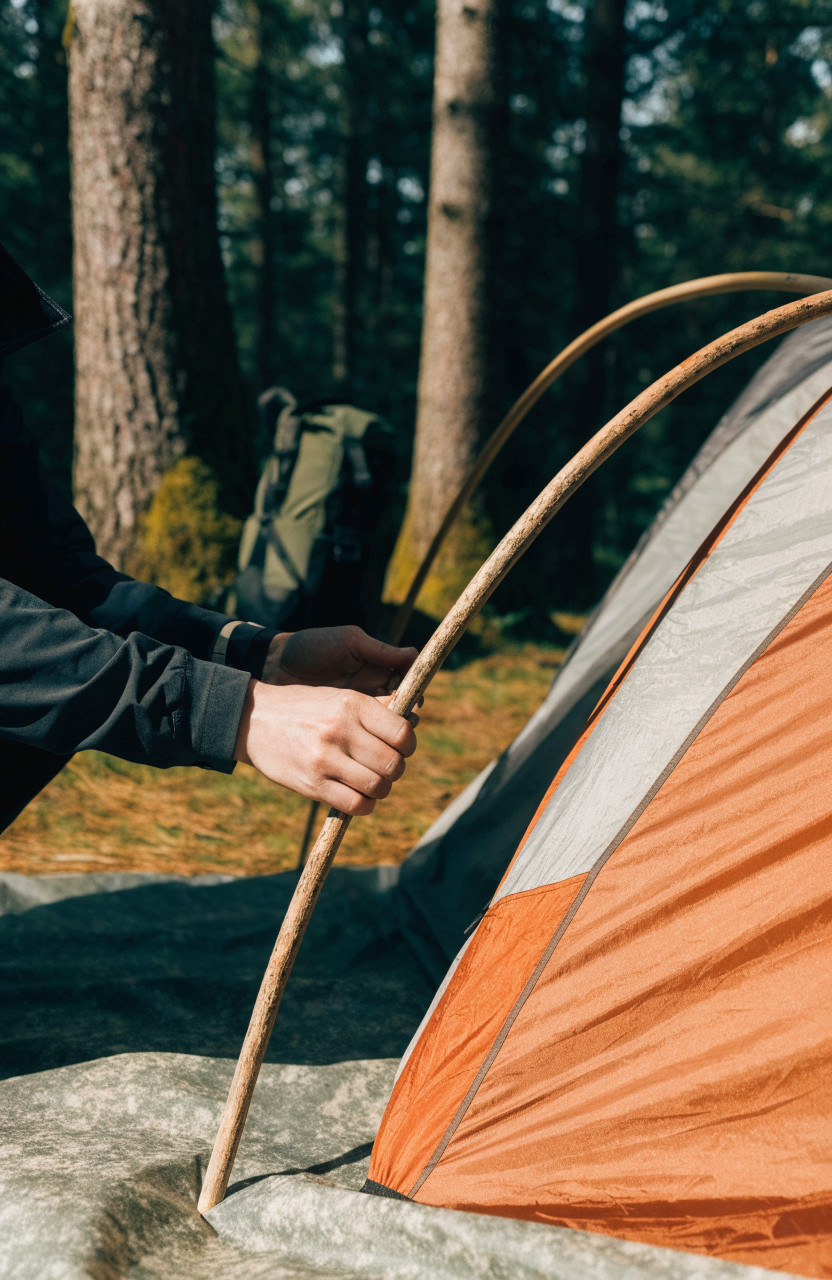
Practice once at home. The first campsite pitch is slower, and rain makes every step worse.
- Clear a flat patch. Remove sticks and cones. A slight crown is better than a hollow. If the ground slopes, put heads uphill.
- Lay the footprint, then the tent body, with the door facing the direction you want. In fair weather a door toward a breeze helps airflow. In driving rain, point the door away from the weather.
- Assemble the poles and seat the ends in the corner grommets. On a crossed-pole dome, the poles form an X. Do not force a pole that is in the wrong corner; the color marks exist to prevent that.
- Clip or sleeve the body onto the poles until the dome stands. Stake the four corners so the floor is taut and square, not puckered.
- Drape the rainfly, align the doors, and clip or buckle it to the body. Tension the fly so it does not touch the inner tent. Contact points transfer condensation and can drip.
- Stake the fly and run the guylines. Pull them out from the structural points on the fly, roughly in line with the pole they support, and tension opposite lines so the tent stays balanced. Use every guyout the maker provides if wind is forecast.
- Walk the pitch. Zip doors, check that the bathtub floor is not folded under itself, and confirm the footprint is fully covered.
In wind, stake the upwind side before the structure is fully raised, and do not leave an unstaked dome while you unpack the rest of the camp.
Site Choice Changes the Night More Than the Tent Model
A well-made dome still fails in a bad spot. Avoid dry creek beds, the base of slopes, and low pockets where cold air and moisture collect. Under trees is often warmer than an open field, which reduces condensation on the fly, but check for dead limbs overhead. Stay clear of the fire ring’s smoke path and far enough from the fire that sparks are not a problem.
On hard ground, longer or angled stakes hold better than short needle stakes. On sand, wider stakes or deadman anchors buried in the sand do more than skinny pegs. If stakes will not hold at all, weight the corners with rocks or gear and accept that this is a sheltered-night site, not a wind site.
Living Inside the Dome
Sleep with your head toward the higher side if the floor is not level. Keep bags and pads off the walls. Condensation forms on the cooler fly and can wet anything touching the fabric.
The moisture is mostly from breath and damp clothing, not from a leak. Open the protected vents even in rain. Stake and tension the fly so air can move in the gap between fly and inner tent. Leave wet layers in the vestibule. In cold, still, humid weather, some condensation is normal in every tent; ventilation reduces it, it does not erase it.
For rain, the fly should reach low enough that water is not blown under the edge, and guylines should hold that fly off the inner wall. Cooking inside a standard dome is a bad idea: flames, spilled fuel, and carbon monoxide do not belong in a small fabric room. Use the vestibule only if the tent maker says that door can be used that way, and keep the stove outside the sleeping area with full ventilation.
Problems That Show Up on the First Night
The fly touches the inner tent. Retension the fly and guylines. If the fly is simply too small, water will find the contact point.
The floor is wet at the edges. Check that the footprint is tucked under, the bathtub is sitting flat, and you did not pitch in a drainage line.
Poles creak or the dome flattens in gusts. Add the remaining guylines, face the narrowest profile toward the wind if the design allows, and move if the site is fully exposed and the tent is a large budget dome.
Zippers snag. Keep sand out of the coils and do not force a misaligned slider. A stuck door in the rain is how people tear sliders.
Too little room to sit up. That is the shape, not a setup error. Use the vestibule as the mudroom and accept that changing clothes happens near the center or outside.
Frequently Asked Questions
Are dome tents good in wind?
A properly staked and guyed dome handles ordinary campground wind better than a tall cabin tent because the curve gives the gust less flat surface to push. Very large domes and untensioned flies are the weak cases. Above a certain wind, site choice and anchoring matter more than shape.
Do I have to stake a freestanding dome?
Yes, whenever you leave it or expect any wind. The structure stands without stakes. It does not stay put without them.
Why is the inside wet if the fly did not leak?
Breath and damp gear raise humidity. That moisture condenses on the cooler fly, then drips if the fly sags onto the inner tent or if vents are closed. Open protected vents, keep fabric off the walls, and dry wet clothes outside the sleeping area.
Is a dome tent good for beginners?
For most first trips, yes. The pitch is repeatable, the tent stands while you figure out the fly, and the same shelter works for a car camp and, in lighter models, a short hike-in. Beginners who want to stand up and spread out with kids are often happier in a cabin tent at a sheltered site.