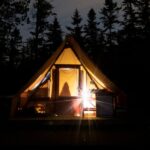
At home, a heater warms a room whose walls hold the heat. Tent heaters for camping work against thin fabric that sheds warmth quickly, and fuel-burning models add carbon monoxide, an odorless gas that kills campers every year when heaters, lanterns or stoves run inside tents, campers and vehicles.
The U.S. Consumer Product Safety Commission advises against using portable heaters or lanterns while sleeping in enclosed areas such as tents. Electric heat avoids the gas; propane does not. The focus here is matching a heater to your power, your tent, and a routine you can follow while awake.
Why a Tent Loses Heat So Fast
A typical camping tent is a windbreak, not insulation. Thin fabric, mesh panels, and an uninsulated floor dump heat almost as quickly as a small heater can make it. Radiant heaters warm people and gear in their line of sight more than they warm the air. Fan heaters move air, then lose it through the walls.
That is why a heater that feels strong in a garage can feel modest in a two-person tent, and why running one all night in a sealed tent is both inefficient and dangerous. The practical job of a tent heater is short: warm the space while you change clothes, dry damp gloves, or take the edge off before you get into a sleeping bag. Overnight warmth belongs in the bag and the pad under it.
Match the Heater to the Campsite
Start with power, not BTU ratings.
If the site has a reliable hookup, or you are in an RV or van with shore power, an electric ceramic heater is the cleaner option. It makes no carbon monoxide and adds no combustion moisture. The limit is the circuit. Many campground pedestals and RV outlets trip on a full 1,500-watt load, especially if a fridge or charger is already on. A true low setting around 750 watts is easier to live with. A 1,500-watt heater is roughly 5,100 BTU per hour; 750 watts is about 2,600. That is enough to take the edge off a small tent, not to hold a large one at room temperature in a hard freeze.
If you are off-grid in a normal camping tent, the common fuel option is a small propane heater rated for indoor or recreational-enclosure use, with an oxygen depletion sensor (ODS) and a tip-over shutoff. The Mr. Heater Buddy line is the category most campers actually mean by “tent heater”: the Little Buddy at about 3,800 BTU, the Portable Buddy at 4,000 to 9,000 BTU, and the Big Buddy up to 18,000 BTU. Bigger is often worse. An oversized heater forces you to shut it off, then the tent cools, then you turn it back on. A unit matched to the tent is easier to run on low while you are awake.
A battery power station can run a small electric heater, but the math is unforgiving. A 1,000 watt-hour station feeding a 750-watt heater, after inverter losses, is often under an hour of heat. That can work for getting dressed. It is a poor plan for an all-night warm tent.
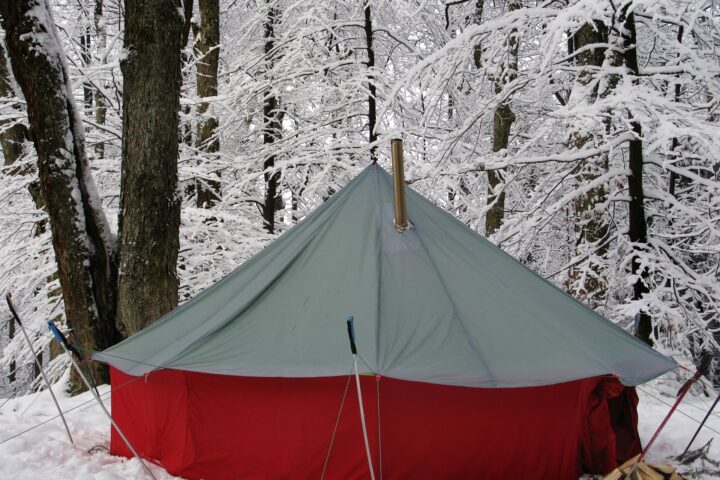
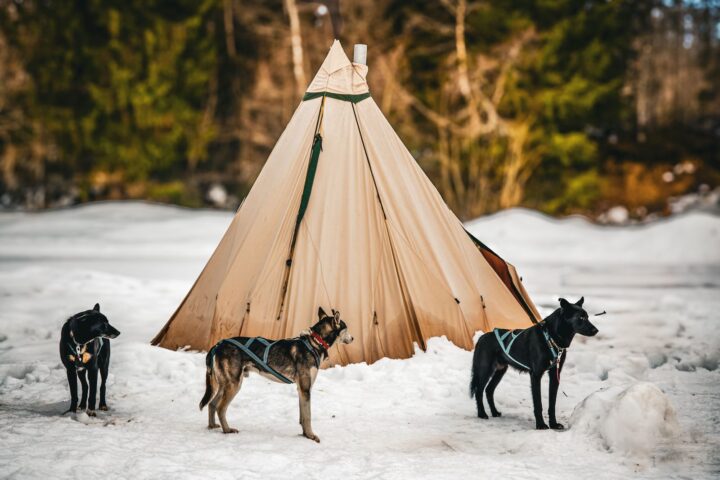
Purpose-built hot tents are a different system: canvas, a stove jack, and a small wood stove with the chimney exiting the tent. They do not belong in a standard nylon tent. Diesel parking heaters, which burn outside and duct heat in, are a van and overland tool, not a casual tent add-on.
How the Main Options Compare
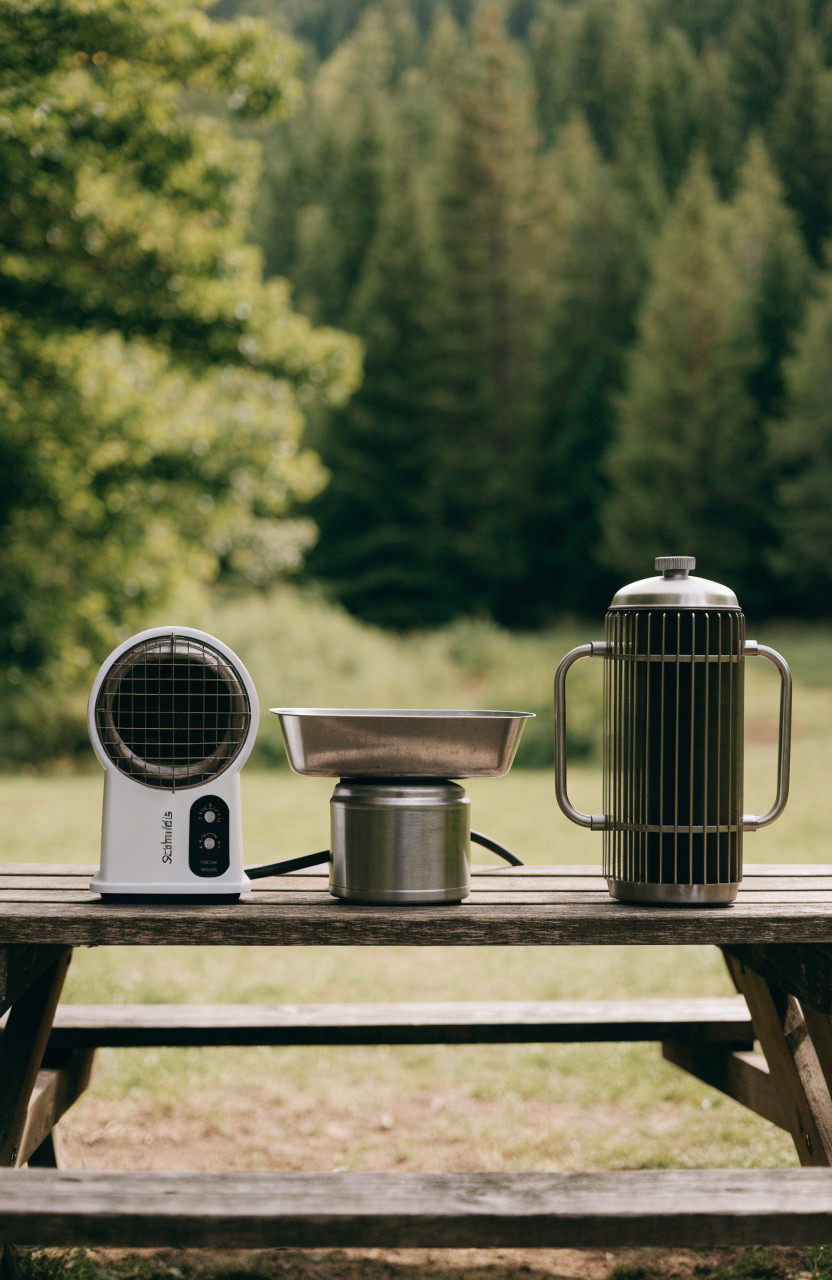
| Option | Best for | Main limit | Overnight while sleeping |
|---|---|---|---|
| Electric ceramic heater | Hookup sites, RVs, vans | Needs real power; fire risk if fabric touches it | Only if the unit and cord are rated for unattended use and kept clear of fabric — still a fire risk |
| Indoor-rated propane radiant (ODS + tip-over) | Cold camps without power | Carbon monoxide, moisture, oxygen use | No |
| Catalytic propane | Lower-flame heat in ventilated shelters | Still burns fuel; still makes CO and water vapor | No |
| Wood stove in a hot tent | Dedicated winter tent camping | Needs a stove-ready tent and constant tending | Only with a setup built for it, and never unattended in a way the stove maker forbids |
| Heated pad or blanket | Personal warmth at a powered site | Does not heat the tent air | Often yes, if the product allows it |
| Sleep system only | Most cold-weather trips | No extra air heat while you change clothes | Yes — this is the default |
What “Indoor Safe” Actually Means
An oxygen depletion sensor does not measure carbon monoxide. It watches oxygen and is designed to shut the heater off if oxygen falls too low, often around the high teens percent. That is a backup for incomplete combustion, not a carbon monoxide alarm. Mr. Heater’s own guidance treats Buddy heaters as usable in ventilated recreational enclosures, including tents, and also says never to operate the heater while sleeping and not to leave it unattended.
CPSC symptoms of carbon monoxide poisoning are headache, dizziness, weakness, nausea, vomiting, sleepiness, and confusion. They are easy to mistake for a cold, altitude, or a bad night’s sleep. If anyone in camp develops those symptoms, get them into fresh air and seek medical help. Opening a flap helps airflow, but CPSC notes that a cracked window or flap does not always clear carbon monoxide. Ventilation is required. It is not a guarantee.
Propane combustion also releases water vapor. In a cold tent that moisture condenses on walls, bags, and clothing. A dry bag in the morning is often worth more than a briefly warmer tent at midnight.
Altitude matters. Oxygen sensors can shut a propane heater down as elevation rises, commonly becoming unreliable well below high alpine camps. Electric heat does not have that failure mode.
How to Run a Propane Heater in Camp
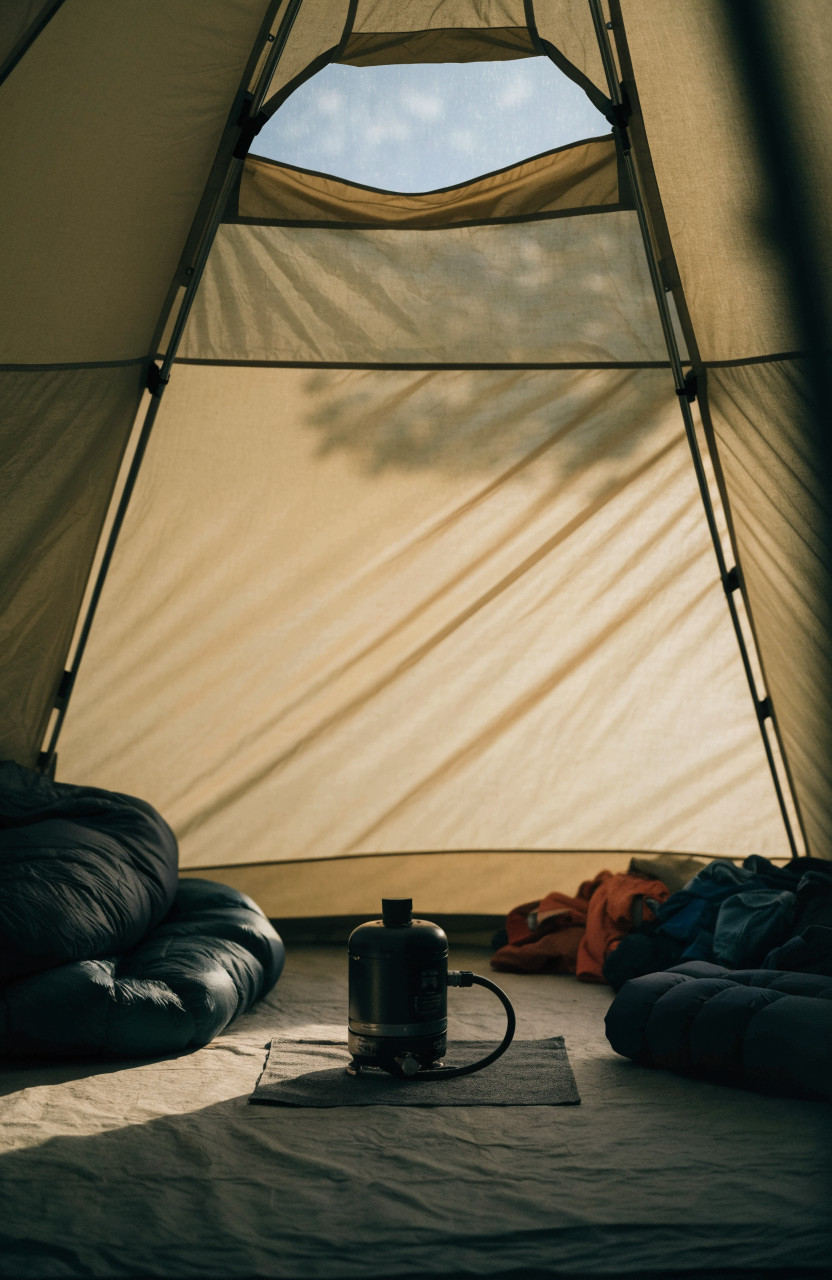
Use this only with a heater the manufacturer rates for enclosed recreational use, and only while someone is awake.
- Read the manual for that model. If it says outdoor use only, or bans tents, do not bring it inside.
- Set it on a flat, stable surface, on a heat-resistant pad if the floor is thin, with clear space around it. Two to three feet from sleeping bags, nylon walls, and loose clothing is a practical minimum. Tip-over shutoff does not help if a bag melts onto the face of the heater first.
- Open ventilation before you light it. A low inlet and a high outlet move air better than one barely cracked door. If condensation builds fast or you smell gas, increase airflow and shut the unit down.
- Keep a battery-powered carbon monoxide alarm in the tent, near where people sit, not buried in gear. Test it at home.
- Run the heater to warm the tent and dry out, then turn it off and let it cool before anyone sleeps. Relight it in the morning if you need it.
- Store and swap cylinders outside. Check the connection for leaks with soapy water, not a flame. Disconnect fuel before packing the heater away.
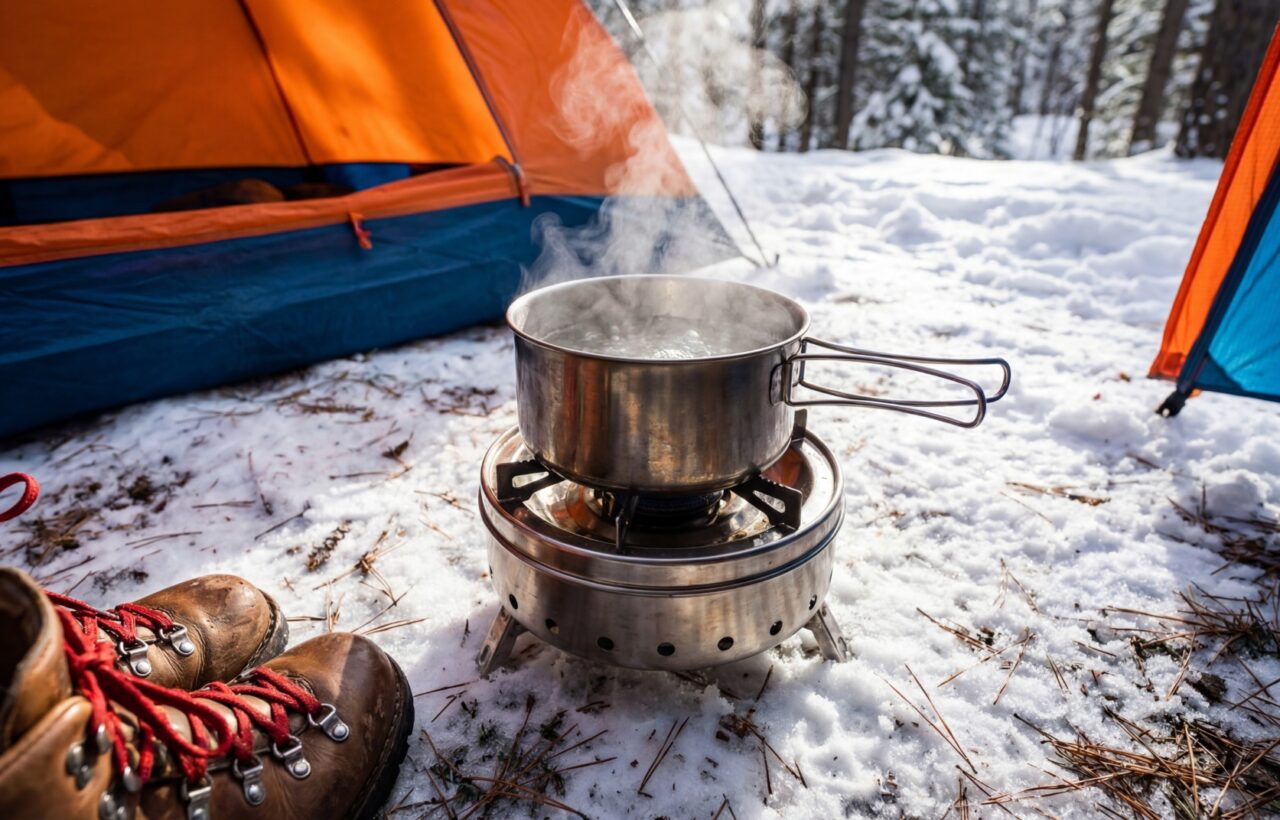
Never use a camp stove, lantern, or grill as a tent heater. Those are a common source of the same poisoning the CPSC warns about.
Electric Heat, Without the False Comfort
Electric heat removes the carbon monoxide problem. It does not remove fire risk. Keep the intake and outlet clear, use a heavy extension cord rated for the load, and do not run the cord under bags or through a pinched tent door. A heater that tips into a sleeping bag can scorch fabric even if it has a tip switch.
At a powered site, a heated mattress pad or low-watt blanket often beats a space heater. You are warming the person, not the night air leaking through mesh. Confirm the product is meant to run under bedding. Many household space heaters are not.
The Warmth That Should Come First
For most trips below freezing, fix the sleep system before you buy a heater.
- Ground contact is the largest heat leak. A pad with an R-value around 4 or higher is a reasonable target below 40°F; closer to 5 or 6 as you near freezing. Stack a closed-cell foam pad under an air pad if the rating is marginal.
- Use the sleeping bag’s comfort rating, not the extreme rating, and choose a bag rated colder than the forecast low.
- Change into dry base layers at bed. Cotton holds sweat and steals heat.
- A durable water bottle filled with hot water, wrapped in a sock, at the foot of the bag is simple radiant heat with no combustion.
- Eat something before bed. A cold, underfed body cannot warm the bag.
A heater is the tool for the hour you are upright in camp. The bag is the tool for the eight hours you are not.
Heater Habits That Lead to Emergencies
Real heater emergencies come from a handful of repeat habits, matched here with the safer approach for each one.
| Issue | Where it comes from | Better approach |
|---|---|---|
| Propane heater running in a sealed tent | Every vent closed because of rain, turning the tent into a closed box | Keep airflow open even in rain; rain is never a reason to skip ventilation. |
| Falling asleep with the heater on | Trusting ODS and tip-over switches, though sensors fail and vents get blocked | Never sleep with a fuel-burning heater running, per CPSC guidance and manufacturer warnings. |
| Outdoor heater used for a few minutes | Patio heaters, construction heaters and stoves put out too much heat and carbon monoxide | Keep patio heaters, tank-top construction heaters and stoves out of the tent, even briefly. |
| Next night colder than the last | Wet bags and damp walls left without a proper dry-out | Dry out bags and tent walls, since damp gear costs more warmth than a heater adds. |
Frequently Asked Questions
Can you safely use a heater in a tent?
Yes, with the right device and a short, supervised routine. Electric heat is the lowest-risk air heater if you have power. An indoor-rated propane heater with an ODS and tip-over shutoff can warm a ventilated tent while you are awake. Fuel-burning heaters should be off before anyone sleeps.
Do you need a carbon monoxide alarm?
Yes, if any fuel is burning in or near the tent. An ODS is not a carbon monoxide detector. A battery alarm is a backstop, not permission to seal the tent or sleep with the heater on.
Will a Buddy-style heater work at high altitude?
Often poorly. The oxygen sensor can shut the heater off as oxygen drops with elevation. Check the manual’s altitude limit before a mountain trip, and plan on insulation rather than propane if you will be above that range.
Is a catalytic heater safer than a radiant propane heater?
Catalytic units burn without a large visible flame and can run cleaner, but they still consume oxygen and still produce carbon monoxide and water vapor. They need ventilation, a working safety shutoff, and the same rule: off before sleep.
What is the safest way to stay warm all night?
A pad with enough R-value, a bag rated for the real low, dry clothes, and a hot-water bottle. Use a tent heater to make camp livable in the evening and morning, not to heat the tent while you sleep.