Take ordinary cold-weather camping, add a stove and a chimney, and you have hot tent camping in winter. The stove can turn a freezing shelter into a place where you can cook, dry gloves, and sit without a puffy on. It does not replace a winter sleep system, open vents, or a clear exit. Treat the fire as comfort you can shut down, not as the thing keeping you alive at 3 a.m.
The useful version of this trip is simple: a stove-ready tent, a matched stove and pipe, ventilation that stays open, and clothing and bedding rated for the overnight low with the fire out. Everything else is detail around that rule.
What a hot tent changes, and what it does not
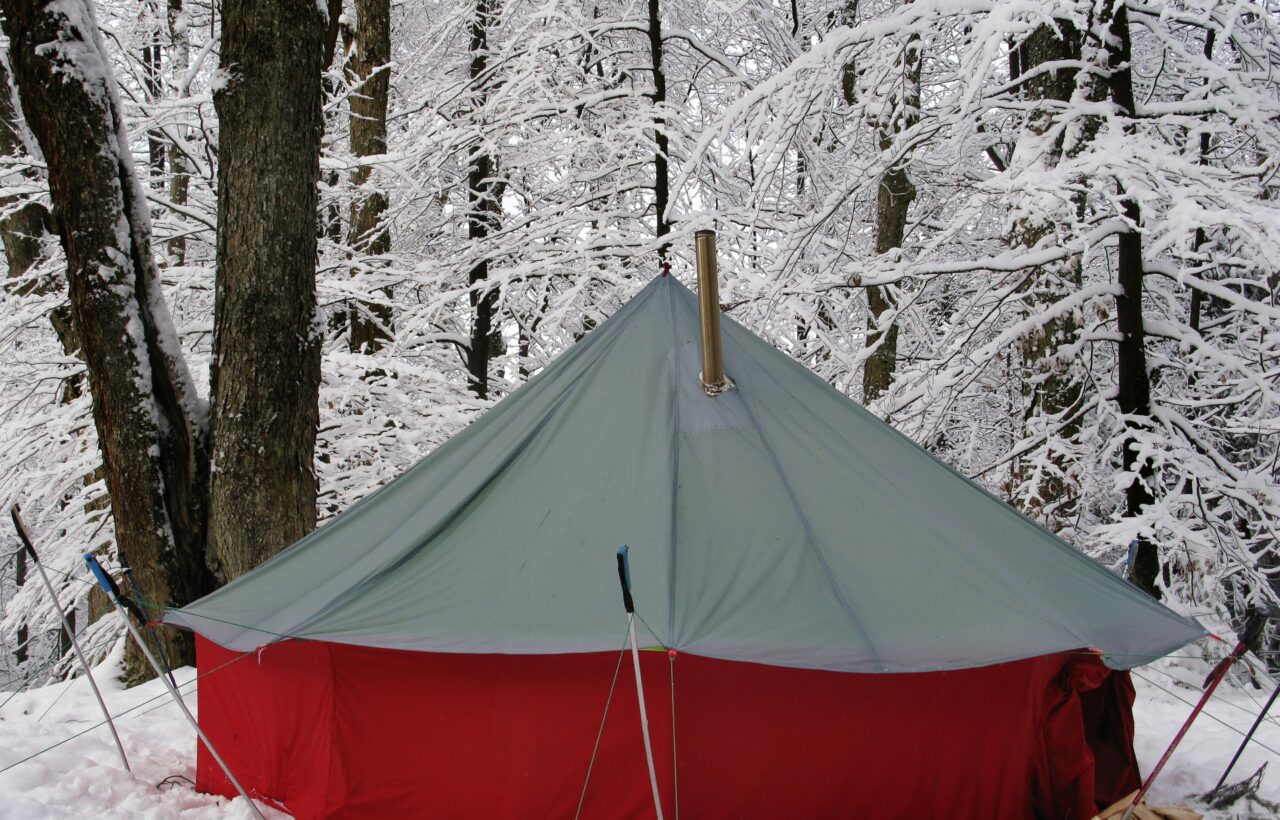
A hot tent is a shelter with a heat-resistant stove jack, a port the chimney passes through. Heat comes from a small wood stove, sometimes a pellet stove, and less often a vented or carefully managed fuel heater. The chimney carries smoke and most combustion gases outside. That is the difference from sitting next to an open fire or running an unvented heater in a sealed tent.
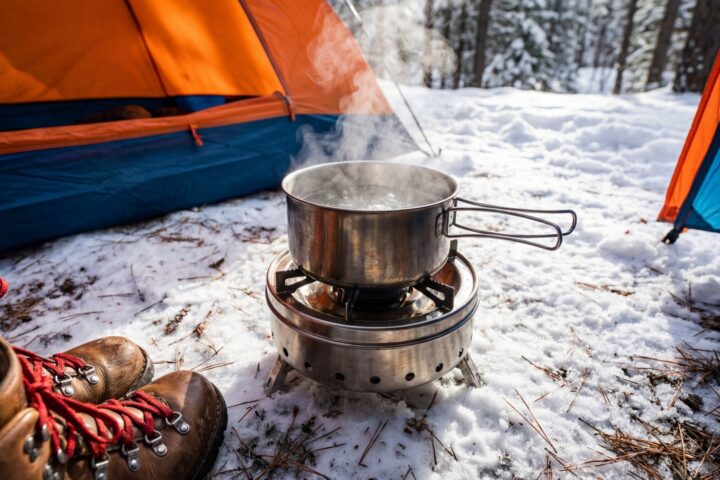
What the stove does well is raise air temperature while you are awake, dry damp layers, melt snow for water, and make camp livable after dark. A well-drafting stove in a small shelter can take the edge off sub-freezing air in minutes. Larger canvas wall tents take longer and hold heat better once the fabric and stove mass are warm.
What it does not do is make winter safe by itself. Fabric still loses heat. The ground still pulls warmth from your body. A damped fire can go out, a pipe can clog with creosote or snow, and a strong wind can kill the draft. Sleeping bags and pads should be chosen for the coldest temperature you might face with no stove running. Several outfitters and stove makers state the same limit: do not treat overnight survival as dependent on a portable heater staying lit.
Pick the shelter for the trip, not the photo
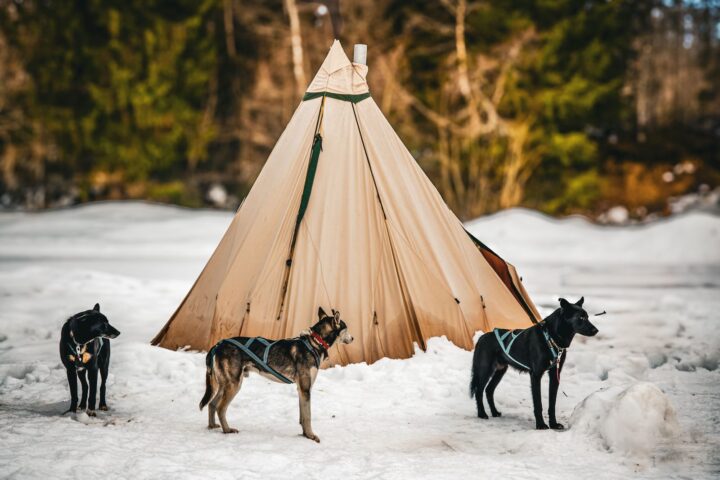
The tent has to be built for a stove. A reinforced jack, stated clearances, and a floor plan that still leaves an exit after the stove and mat go in are the minimum. Retrofitting a standard nylon backpacking tent with a pipe hole is how people burn holes in fabric. Nylon melts on contact with a hot pipe or a spark. Canvas is slower to ignite and more forgiving, which is why wall tents and bell tents dominate base-camp hot tenting. Ultralight pyramid and tipi shelters can work, but only with the maker’s jack, spark arrestor, and clearances.
Shape matters in snow.
- A pyramid or tipi sheds snow and heats efficiently because warm air pools in the cone. It needs solid anchors. Most are not freestanding.
- A wall tent gives standing room and a more livable layout for multi-night camps. It is heavy, often 30 to 80 pounds, and better for sled, snowmobile, or vehicle access than for a long walk-in.
- A bell tent sits between those: roomy, simple center pole, slower to dry if the canvas gets soaked.
Capacity ratings shrink once the stove, mat, and required gap to walls are in place. A “six-person” tent may sleep four comfortably with a stove. Measure the stove zone against the floor, then leave a path to the door that does not cross the stove or the pipe.
Match the stove to fuel, weight, and how long you want to sleep
Wood is the default because dead wood can be gathered where it is legal and dry enough to burn, and a flat top doubles as a cook surface. Titanium stoves are light, often pack flat, and resist corrosion. They heat fast and cool fast, so the tent temperature drops soon after the fire dies. Stainless or steel stoves are heavier, usually cheaper, and hold heat longer after the flames drop. They need more care against rust if stored damp.
Pellet stoves burn more evenly and can run longer on a full hopper, which appeals on car-camp trips where you can haul fuel. You cannot forage pellets. Propane heaters are easy to control and shut off, but combustion adds water vapor, so condensation is worse, and cold reduces canister pressure. An unvented propane heater inside a winterized tent is a carbon monoxide problem, not a shortcut. If you use gas, it needs the maker’s indoor rating, open vents, and a working alarm. Many public-land fire orders allow gas devices with a shutoff while banning wood and charcoal fires. Check the order before you pack a wood stove.
Size the stove to the tent. Too small and you feed it constantly in deep cold. Too large and a small nylon shelter overheats, and clearances become hard to keep. A damper and an air inlet let you slow the burn once the pipe is hot. Load only part of the firebox. Overfilling dumps smoke into the tent when you open the door and raises the chance of a runaway fire.
First firing belongs outside. New stoves off-gas oils and sealants. Burn that off in open air for the time the manual specifies, often around an hour, before the stove ever goes under canvas.
Set up for snow, wind, and a working chimney
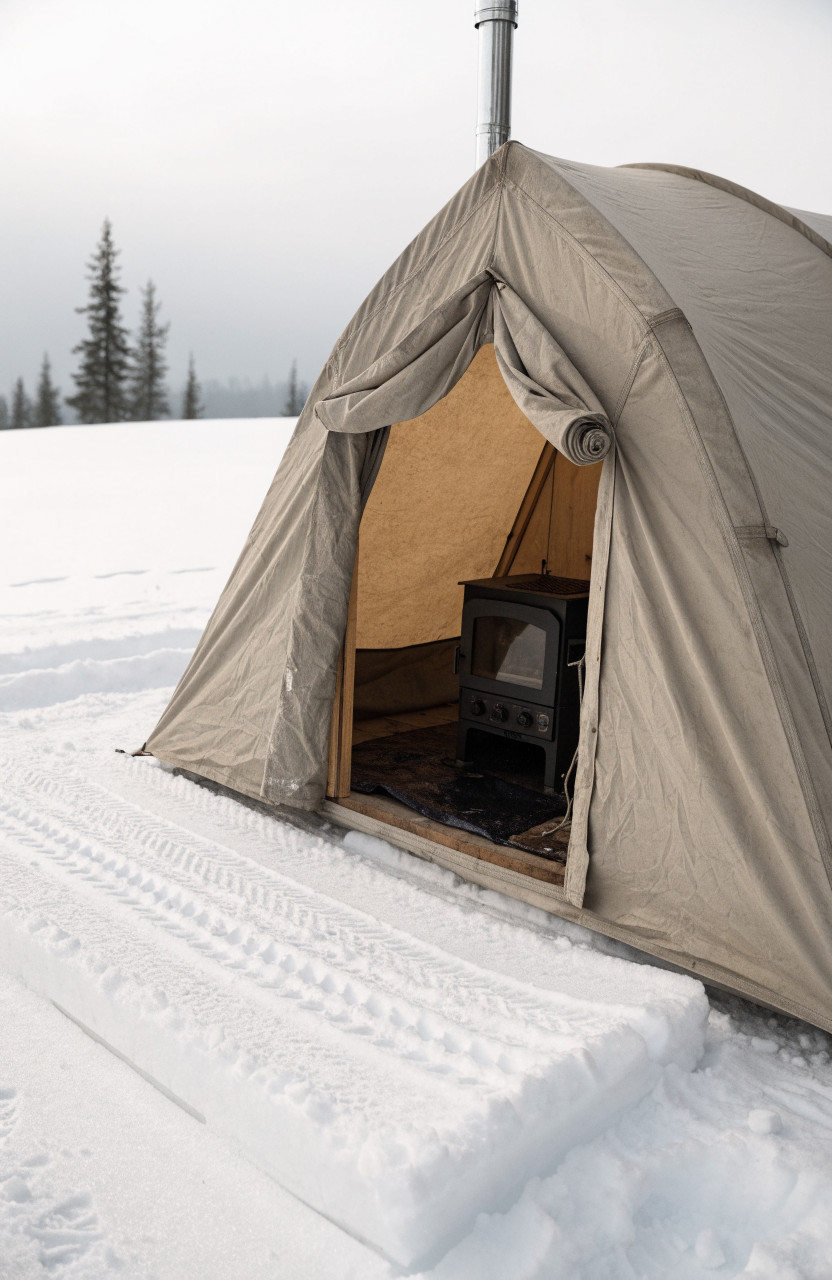
Level ground away from dead trees, cornices, and terrain that funnels wind or avalanche debris. Face the door so you can leave without stepping over the stove. In snow, stamp a platform, then set the stove on a fire-resistant mat over a stable base. A stove will melt the snow under its legs. On lake ice that can turn the surface to slush and tip the unit. An insulated board or packed, leveled base under the legs reduces that.
Standard wire stakes pull out of soft snow. Use wide snow stakes, or deadman anchors: a buried stick, stuff sack of snow, or branch tied to the guyline and stomped in until the snow sets. Guy the chimney the way the stove maker shows, and fit the spark arrestor. The arrestor is what keeps embers off the roof. Do not run the stove without it, especially under nylon.
Light a small, hot fire at the base of the flue first. A cold pipe has no draft, so smoke spills into the tent until the column of air in the chimney warms. Once it draws, add larger wood. Keep the pipe clear of drifting snow. A blocked outlet sends smoke and carbon monoxide back inside.
Sleep for the temperature with the fire out
The ground is the main heat sink. A sleeping pad’s R-value measures resistance to that loss. For frozen ground and snow, pads in the R-5 to R-6 range are the usual winter starting point. Below 0°F (−18°C), or if you sleep cold, stack a closed-cell foam pad under an inflatable so the R-values add, and so a puncture does not leave you on bare ground. A cot gets you off the floor in a wall tent, but you still need insulation under you. Air under a cot is cold air.
Choose the bag for the overnight low, not for the 60°F (16°C) you enjoyed at dinner. A bag rated near that low, or a little colder, is the realistic margin. Wear dry wool or synthetic base layers. Cotton holds water and stops insulating once damp. Keep a dry spare set in a stuff sack so you are not putting on the clothes you sweated in while hauling wood.
Most experienced hot-tent campers run the stove through the evening, then either let it die or tend a low fire only while someone is awake. A portable wood stove is a poor unattended overnight heater. Embers still produce carbon monoxide. If you wake to add wood, treat that as a choice, not as the plan that keeps you safe.
Condensation, frost, and snow load
A stove does not end moisture. Breath, wet boots, boiling water, and drying clothes still put vapor into the air. On cold fabric that vapor freezes into frost, then melts and drips when you fire the stove in the morning. Ventilation is the control. Leave a low intake and a high vent cracked even when it feels wasteful. Canvas breathes more than coated nylon, so nylon hot tents need the vents more, not less.
Brush frost off the walls before you light up, or it rains on your bag. Cook with a lid on the pot. Leave wet outer layers in the vestibule if you have one, or hang them where drips miss the sleep system.
Snow on the roof is a structural problem, not insulation. Do not bank snow against the walls to “hold heat.” That blocks low vents, loads the fabric, and can press the wall toward the pipe. Knock snow off from inside with a gentle push before it packs, shovel a trench around the base so the door still opens, and keep the chimney outlet above drifting snow. Heat from a running stove helps snow slide off a steep pitch. It is not a substitute for going out and clearing a heavy fall.
Safety rules that stay in force after you are comfortable
Carbon monoxide is odorless. A poor draft, a snow-capped pipe, or a sealed tent lets it build. Keep at least two air paths open. Carry a battery-powered carbon monoxide alarm, test it, and store spare batteries warm. Cold kills batteries. Place the alarm near sleeping height. If it sounds, open the door and get outside. Do not wait to see if it stops.
Fire clearance is the other hard limit. Follow the stove and tent manuals for distance to walls, bedding, and fuel. A common stated minimum is on the order of 12 to 20 inches (30 to 50 cm), and larger stoves need more. Use a fire-resistant mat. Keep gloves, a small shovel or scoop, and a way to extinguish a fire within reach. Do not dry gloves on the stove. Wool shrugs off a spark better than a synthetic puffy, which can melt through.
Check the land manager before the trip. Winter does not automatically mean wood stoves are allowed. Fire restrictions on national forests and other public land often prohibit wood and charcoal devices outside developed rings, while allowing pressurized gas stoves with a shutoff. Private land and some provincial parks have their own rules. A legal camp is part of the setup.
Before the second night: vents, pads and wet wood
People close every vent to “save heat,” then wonder about headaches or a screaming alarm. They pack a three-season pad because the stove will be on. They pitch on unpacked snow, and the stove settles as the platform melts. They skip the spark arrestor for one night. They store the tent wet, so canvas mildews or nylon freezes into a brick. They gather wet wood and spend the evening fighting a smoky fire.
A short practice burn at home, or on a mild night close to the car, exposes most of this. Confirm the pipe locks, the jack seal sits flat, the alarm works, and you can kill the fire and exit in the dark.
Questions people ask after the first trip
Can you run the stove all night? You can tend a small fire if you stay awake enough to manage it and the vents stay open. You should not need it. The bag and pad are the overnight system. Many stove manuals say not to sleep with a portable fuel-burning heater operating.
Is a hot tent warmer than a four-season tent with no stove? While the stove is lit, yes, by a wide margin. After the fire dies, a hot tent is often draftier than a small four-season tent. That is another reason the sleep system has to stand alone.
Do you need a floor? A floor keeps spindrift and mud out. It also needs a real stove mat, because coals fall when you load wood. Some winter campers use a floorless shelter on packed snow and a mat under the stove only. Either works if the stove cannot sink or tip.
How much wood should you plan on? Dry hardwood burns longer than punky softwood. In moderate cold you may get through an evening on a modest pile. In deep cold a small stove can need feeding every hour or two if you want steady heat. Gather more than you think, split it small enough to catch, and keep a stash inside the tent so you are not digging in the dark.
Hot tent camping in winter works when the stove is a tool you understand and the cold-weather kit underneath it would still be enough if the fire never lit. Get those two layers right, and the rest of the trip is cooking, drying gear, and waiting out weather that would have ended a cold camp at dusk.