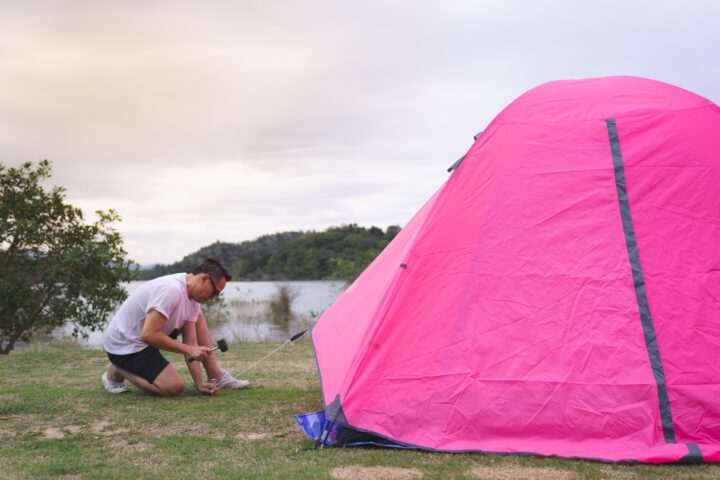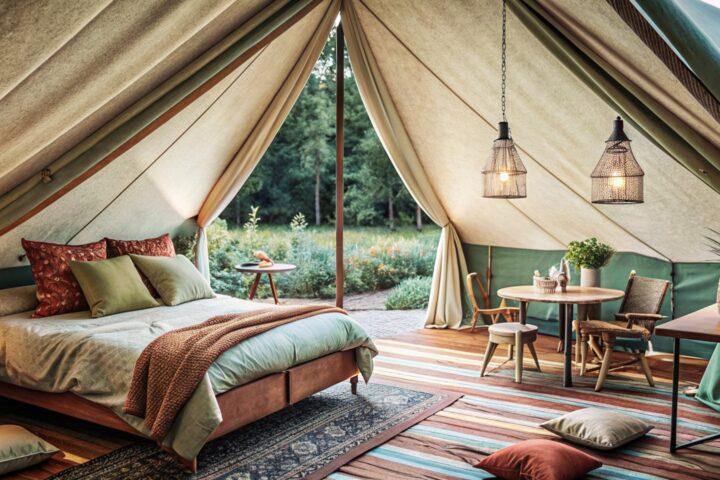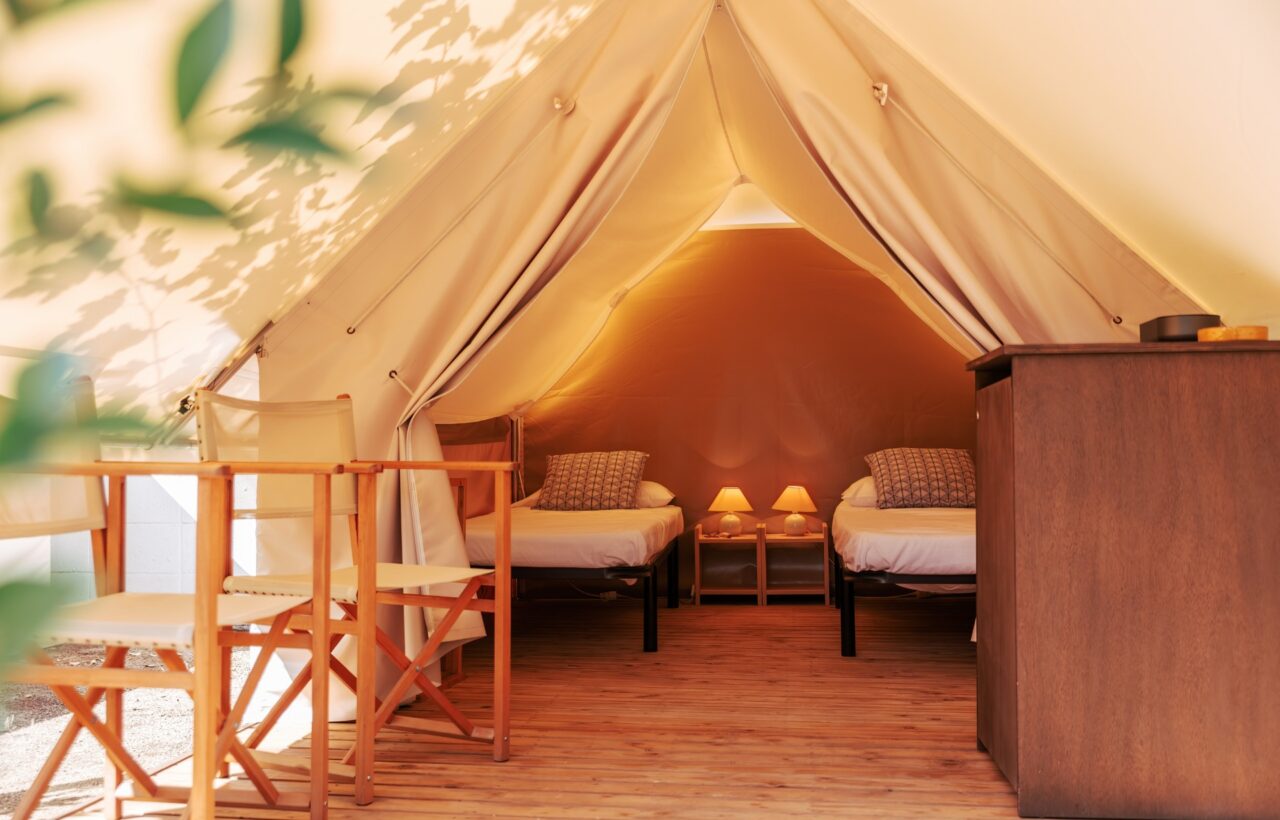

Cozy tent camping starts with sleep. Decorations come last.
Ground cold, a bare floor, one harsh lantern and gear dumped beside the bed are what make a night feel temporary. The 15 ideas below tackle those problems in order of impact: bedding and insulation first, then warm light, the floor, storage, and a small porch that lets the tent stay a bedroom. Most suit a drive-in campsite with gear from home, and a few scale down for a backpack.
What actually makes a tent feel cozy
Softness is only part of it. Heat leaves your body fastest through the ground, so a thin pad under a thick quilt still feels cold. A single overhead light throws hard shadows and keeps you alert. A floor covered in packs makes every small task annoying. And if the only dry seat is the sleeping bag, the tent stops being a place to read and becomes a place to endure.
Cozy setups also have a limit. Battery lights and layered bedding change the mood of a night. They do not change the weather rating of the tent, the safety of a storm, or the rules of the campground. Open flames, fuel lanterns, and camp heaters do not belong inside a tent: they are a fire risk and a carbon monoxide risk. Use battery or rechargeable LEDs only.
Match the idea to the trip before you pack it.
| Trip type | Worth bringing | Leave at home |
|---|---|---|
| Car camping or backyard | Real pillows, quilt, rug, string lights, bins, a chair | Anything you cannot carry 20 feet from the car |
| Walk-in or short hike | Compact pad, warm bag, one lantern, stuff sacks | Air mattress, crates, canopy |
| Cold or wet forecast | Higher-R pad, dry sleep clothes, vestibule plan | Cotton layers, decorative fabric that will soak |
Sleep first: the ideas that change the night
1. Build the sleep system before you decorate
The tent, the pad, and the bag do the real work. A pad’s R-value is a measure of how well it blocks heat loss into the ground. For mild summer car camping, an R-value around 2 is usually enough. Shoulder season and cooler nights call for something closer to 4 or higher. Stacking a closed-cell foam pad under an inflatable pad raises insulation without a new purchase.
Read the sleeping bag’s comfort rating, not only the lower “limit” number. A bag rated near the overnight low often feels chilly to anyone who sleeps cold. A roomy rectangular bag, or a quilt you can kick off, is more pleasant for campground camping than a tight mummy bag. Backpackers still need the mummy: warmth-to-weight matters when you carry it.
2. Use bedding from home on car-camping trips
Sheets, a familiar pillow, and a quilt change the feel of a tent faster than any accessory. A fitted sheet over a thick pad or air mattress stops the sleeping bag from sliding, and a top sheet lets you vent if the night is warmer than forecast. Camp-specific sheet sets exist, but ordinary bedding works if you do not mind washing it afterward.
Keep a dry sleep outfit in a stuff sack: base layer, warm socks, and a light hat. Change into it after dinner so damp day clothes never go into the bag. Cotton against the skin is a poor choice once temperatures drop, because it stays wet and pulls heat away.
3. Get the bed off the cold floor when the tent is large enough
A cot or a thick self-inflating mattress lifts you off ground chill and creates a pocket of storage underneath. That is a car-camping move. Cots are bulky, and a cheap air mattress with no insulation still dumps heat into the ground. If you use an air bed, put a foam pad or folded blanket on top of it, not only under it.
In a small tent, skip the furniture. A full-length pad and a pillow you actually like will outperform a half-inflated lounger that crowds the door.
4. Add one soft layer at the foot of the bed
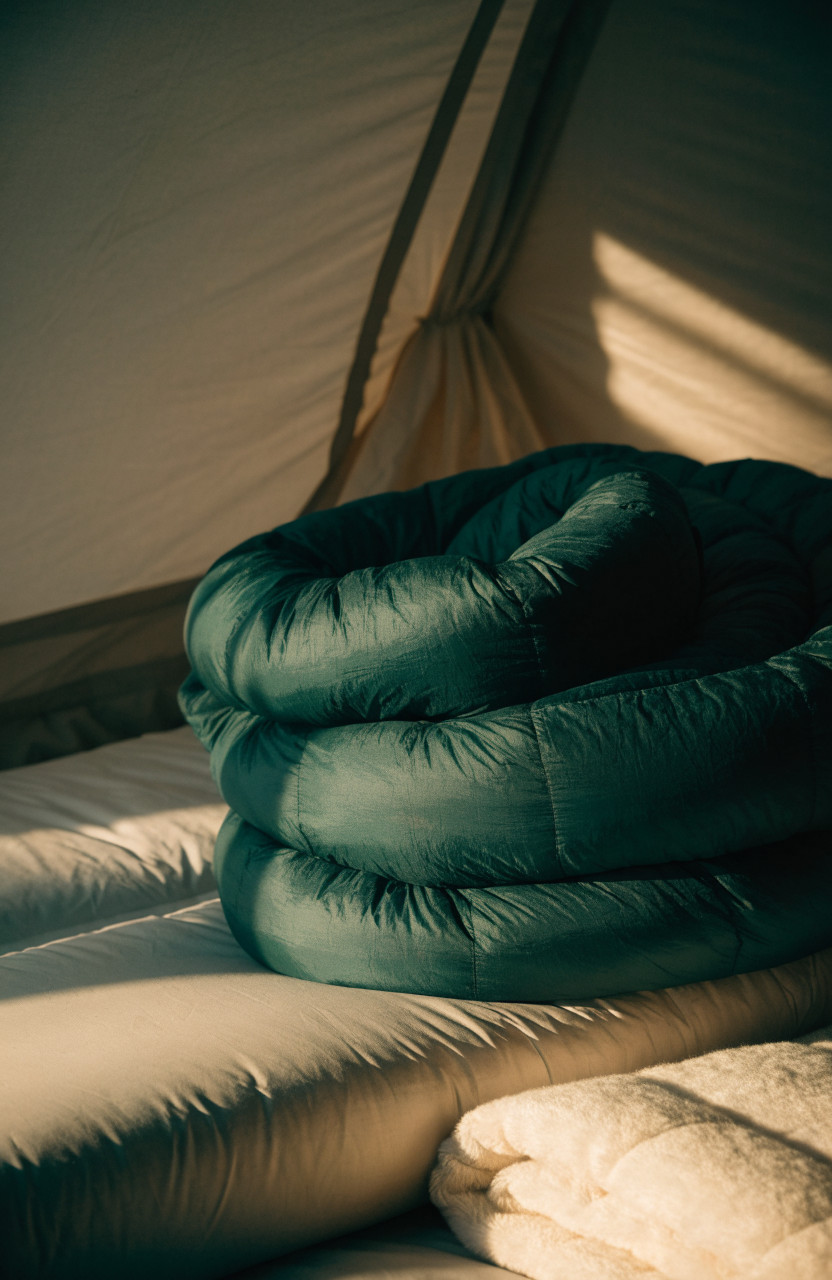
A folded fleece or light quilt at the foot gives you a middle option between “fully in the bag” and “too warm.” Nights often start mild and drop after midnight. Being able to add a layer without getting up is the difference between a cozy night and a 2 a.m. reshuffle.
Light that feels warm instead of harsh
5. Hang warm-white battery string lights along the ceiling
Small warm-white LEDs along a seam or around a center pole give even, low light you can read by. Cool-white bulbs look flatter and harsher after dark. Battery or USB strands are the right choice inside a tent. Solar strands are better outside, where they can charge.
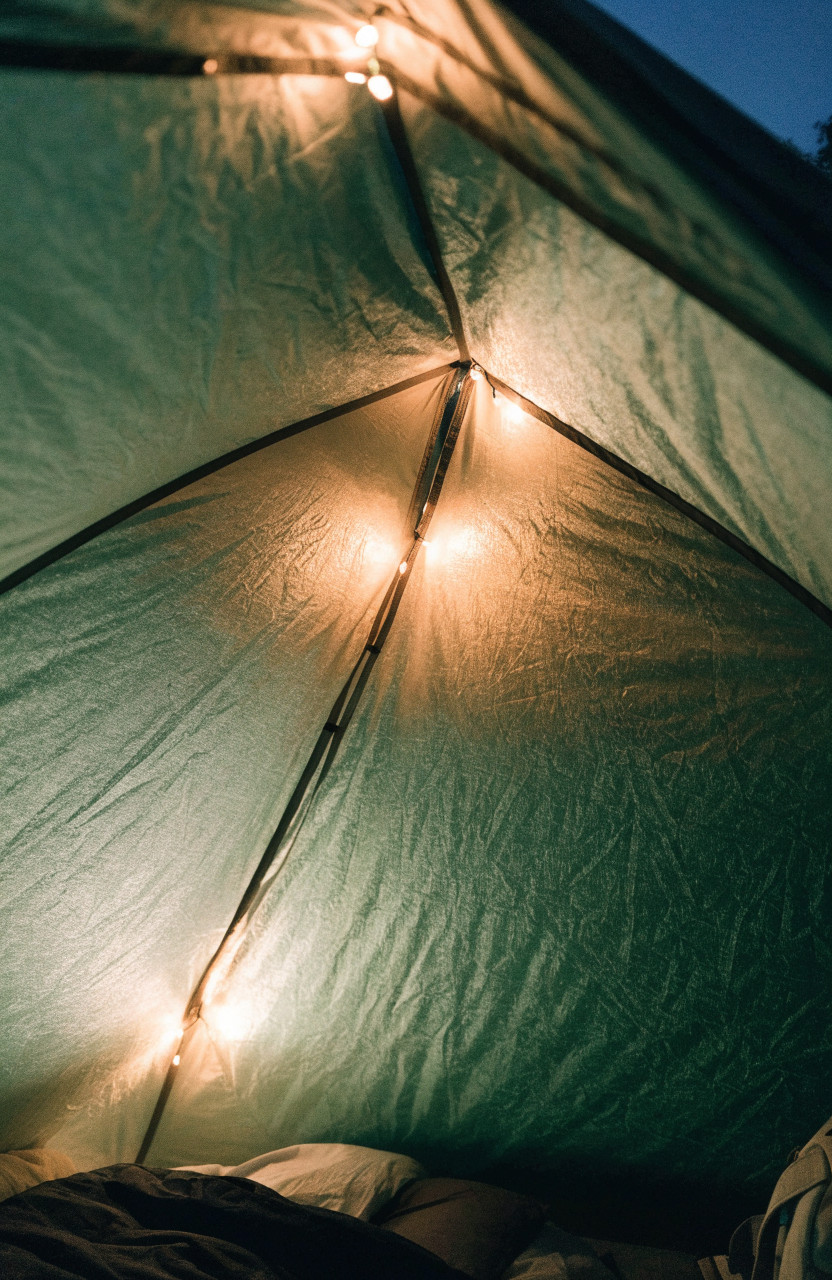
Do not nail into trees or cinch thin cord into bark. If you hang lights outdoors, use a wide strap or an existing branch collar, and take everything down when you leave. Inside, clip lights to existing loops so they do not rest on fabric.
6. Layer a lantern and a headlamp instead of using one bright lamp
One overhead lantern lights the whole tent and blinds anyone already in bed. A dim lantern at sitting height, plus a headlamp for tasks, is easier to live with. Red or warm modes are less disruptive if you need light after someone is asleep. Put the headlamp where your hand lands in the dark — not in the pack — so a bathroom trip does not become a search.
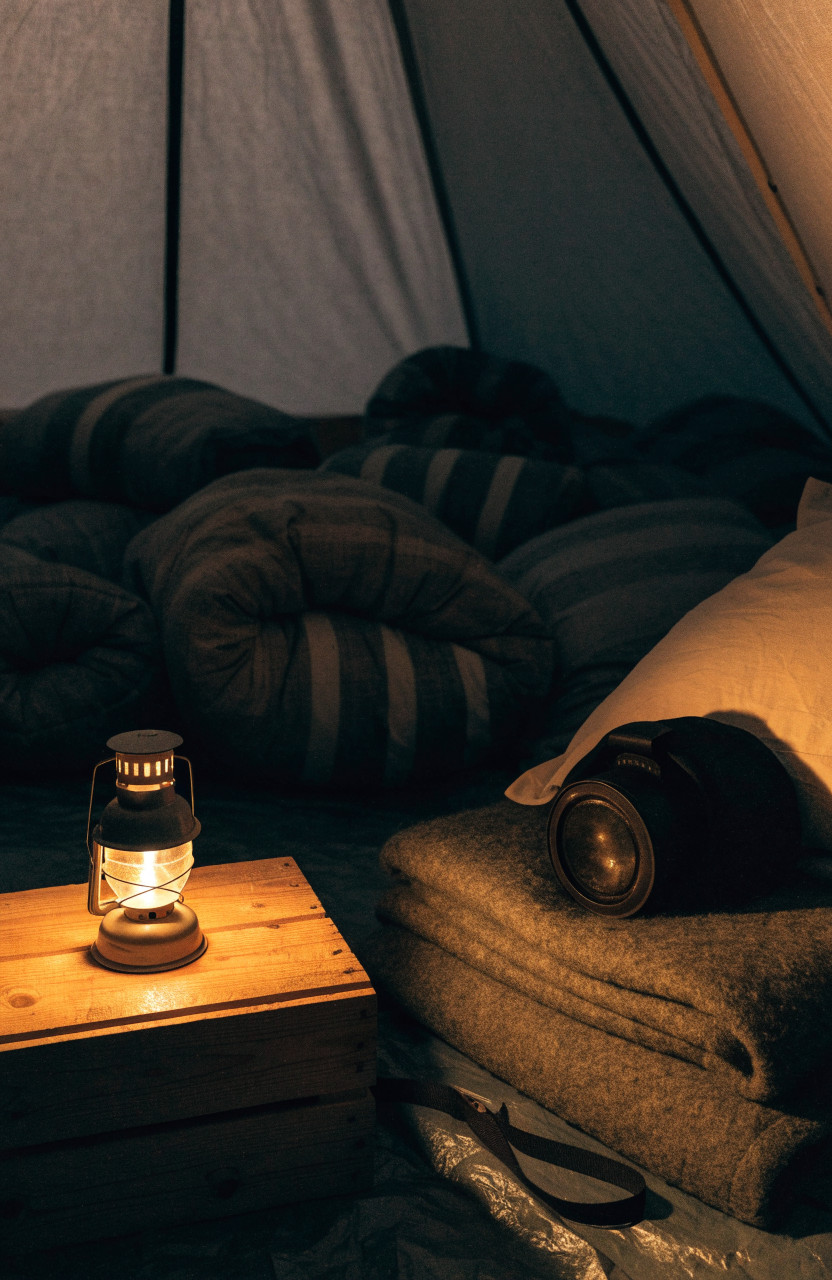
A water jug in front of a small light softens the beam if you do not own a diffuser. Skip real candles. Tent fabric and dry leaves do not forgive a tip-over.
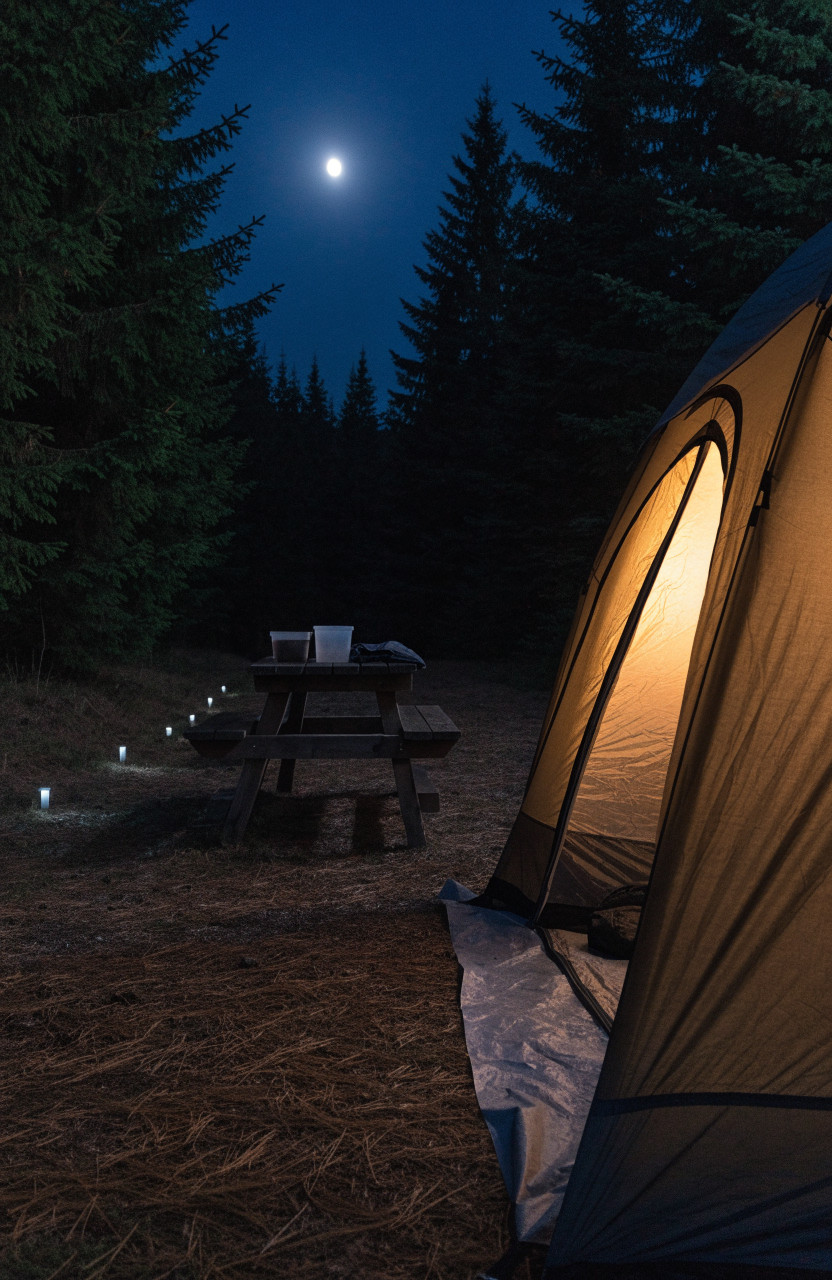
7. Mark the path, not the whole campsite
A few low lights from the tent door to the table or restroom path reduce the stumble that ruins a calm evening. Keep them dim. Bright campsite lighting bothers neighbors and makes the dark beyond camp feel sharper by contrast. Many campgrounds quiet down early; a cozy site is one that does not announce itself across the loop.
Make the inside feel like a room
8. Cover the floor where your feet actually land
A tent footprint under the tent protects the floor and adds a little insulation, but it must be the same size as the tent floor or slightly smaller. A larger tarp sticks out, catches rain, and funnels water underneath. Inside, a small outdoor rug, foam tiles, or even a bath mat at the door stops the cold-plastic feeling and catches dirt before it reaches the bed.
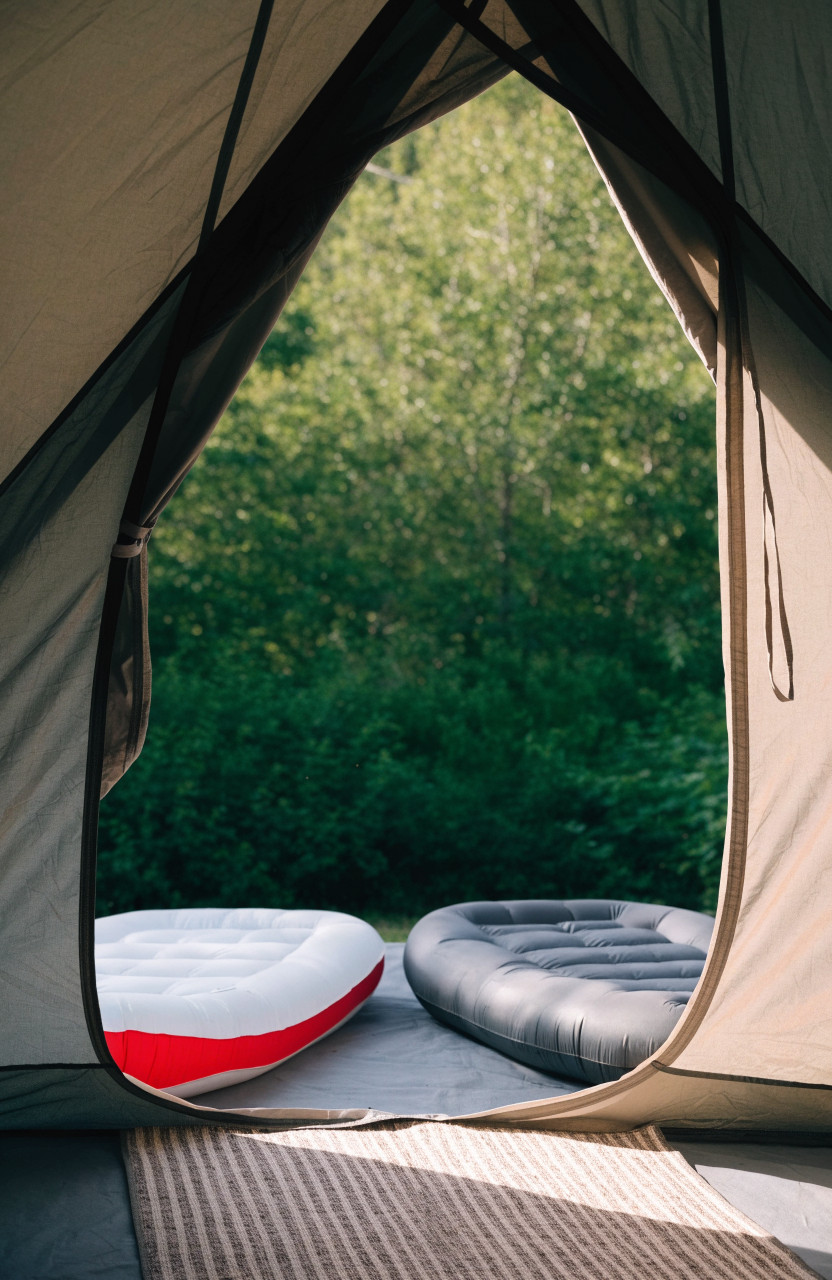
Shake rugs out before packing. A damp rug in a closed tent smells by morning.
9. Give every item a place so the floor stays clear
Cozy and cluttered are opposites in a tent. A hanging pocket organizer takes flashlights, glasses, and a battery bank off the floor. A single bin or crate at the foot of the bed holds clothes you will wear again. Stuff sacks work in a small tent and keep the same logic: sleep zone clear, gear zone defined.
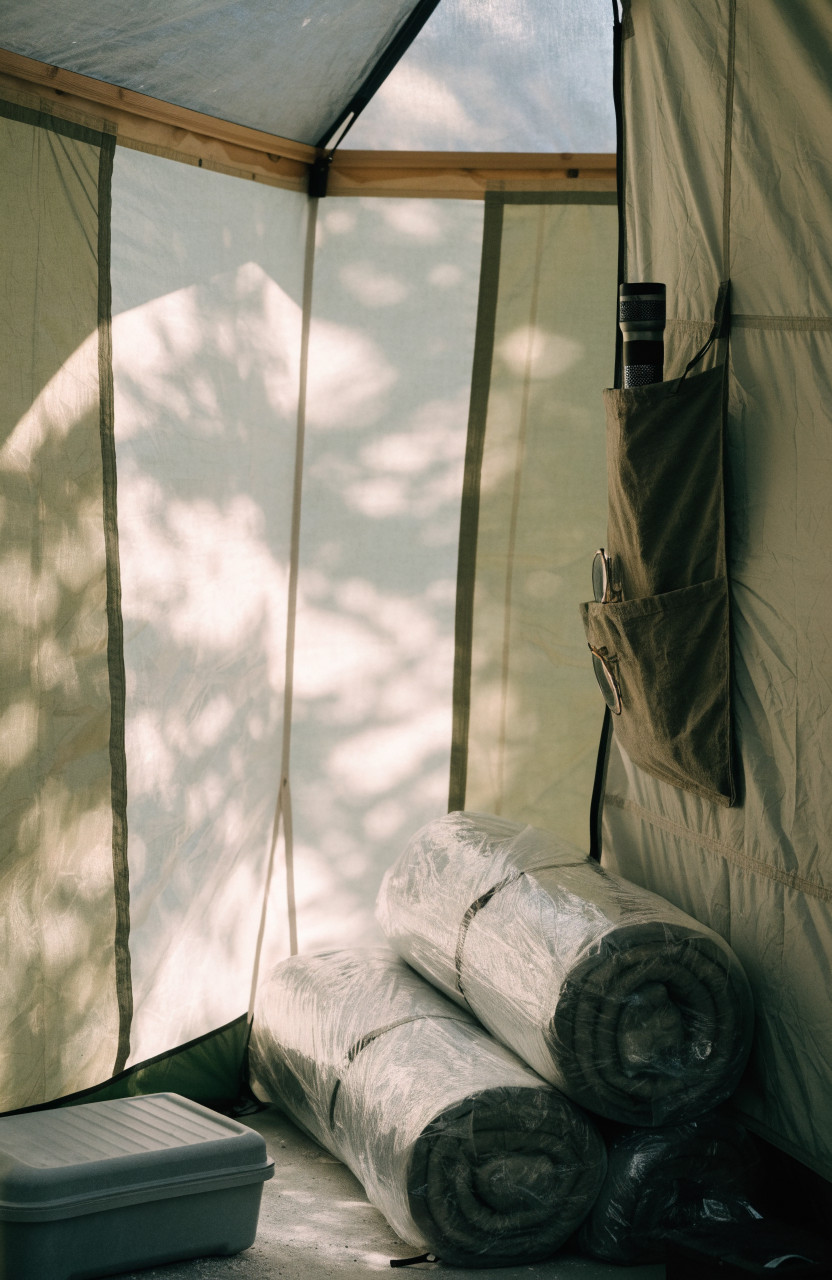
In bear country, that logic has a hard stop. Food, trash, toiletries, and scented items do not belong in the sleeping tent. Use the site’s locker, a bear canister, or a proper hang, whichever the area requires.
10. Put a tiny table where your hand already reaches
A folding side table, an upturned crate, or a stuff sack used as a nightstand holds water, the headlamp, and a book. Reaching across a dark tent for any of those is how drinks spill and lights get lost. In a two-person tent, one shared surface between pads is enough. In a cabin tent, a table on each side stops the bed from becoming a shelf.
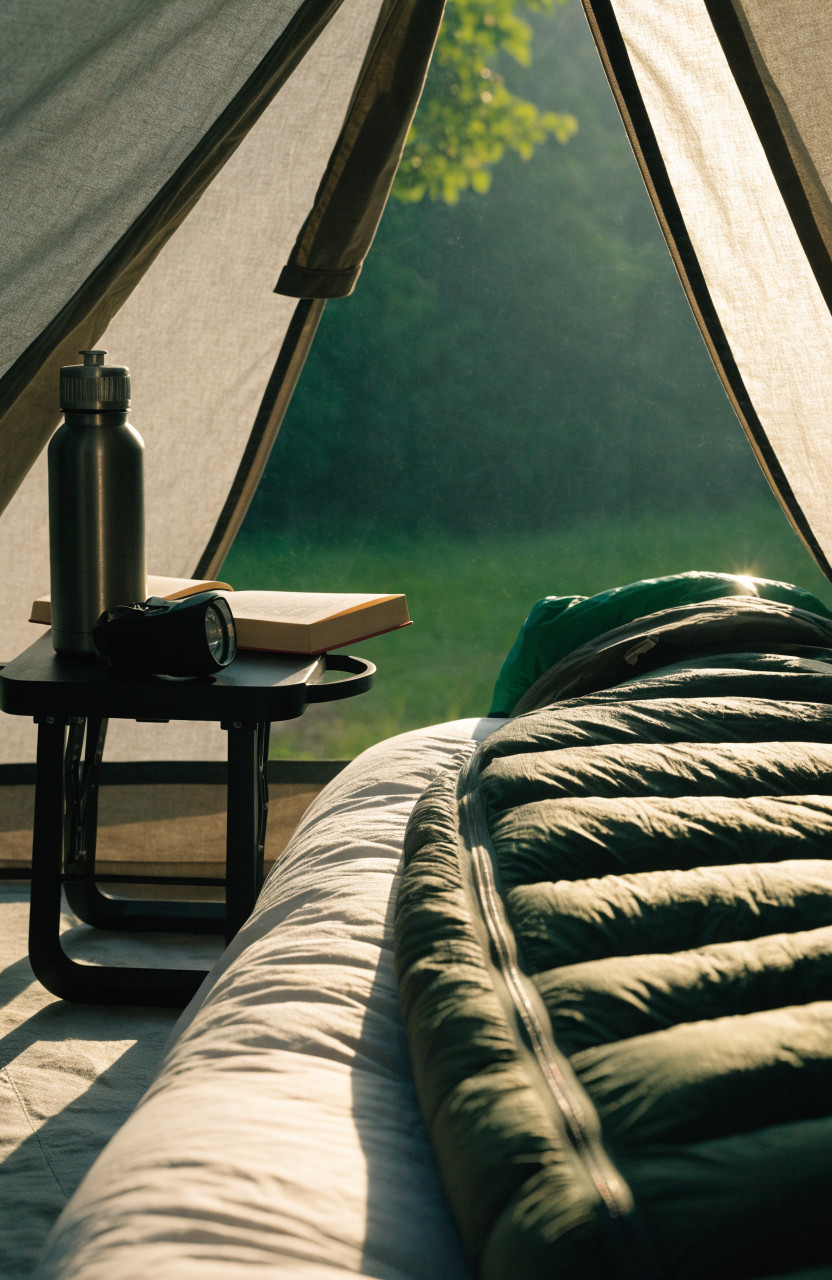
11. Add one seat only if you have standing room
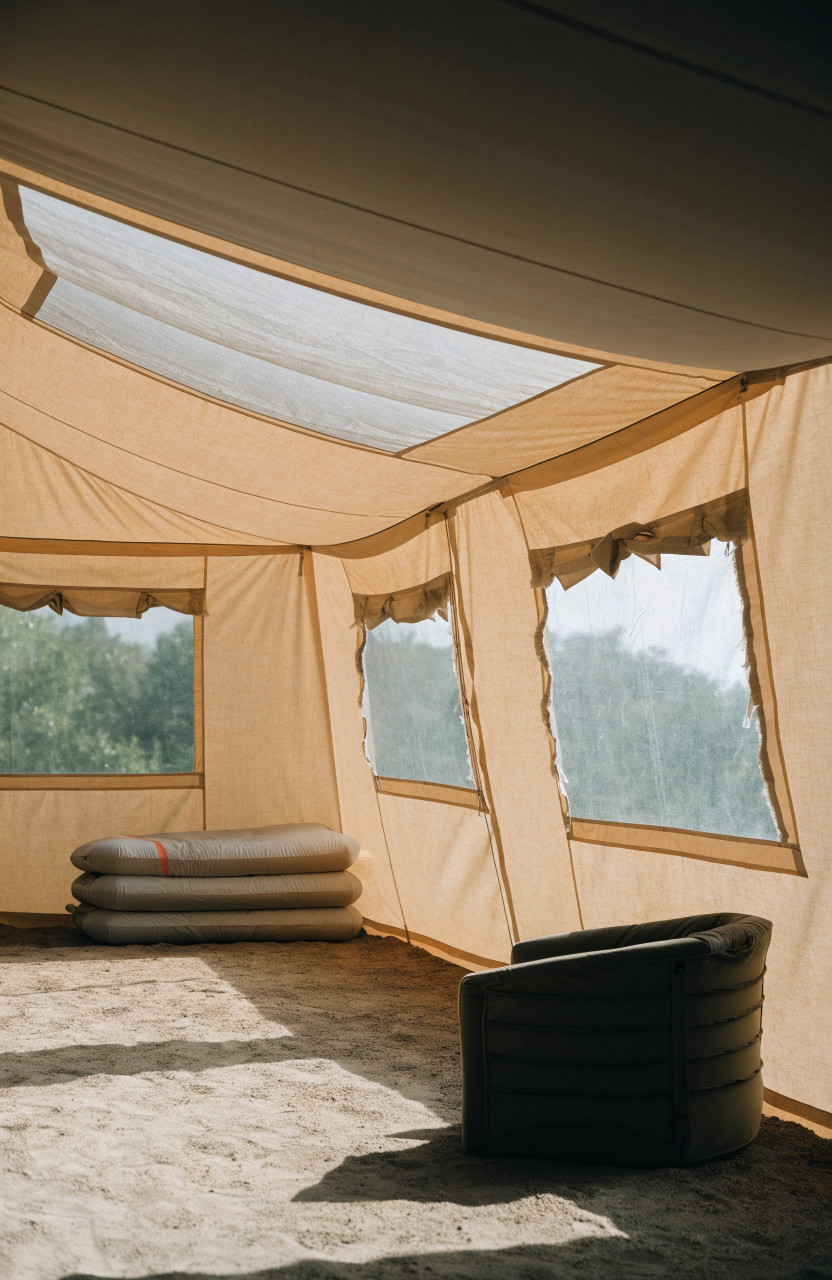
An inflatable chair or a low camp stool makes a large tent usable in the rain. In a dome you cannot stand in, the same chair eats the space you needed for sleeping. If the tent is small, put the seat in the vestibule or under a tarp and keep the bedroom clear. Headroom does more for comfort than furniture: a tent you can stand in turns changing clothes from a wrestling match into a normal task.
Build a porch so the tent can stay the bedroom
12. String a tarp or pop-up as the living room
Most of a cozy evening happens outside the tent. A tarp over the picnic table, or a small canopy just beyond the door, creates a dry place to cook, play cards, and leave muddy shoes. Pitch it so runoff falls away from the tent, not onto the door. A ridgeline between two trees is enough if the site has them; otherwise a freestanding canopy is simpler and does not depend on anchors you may not have.
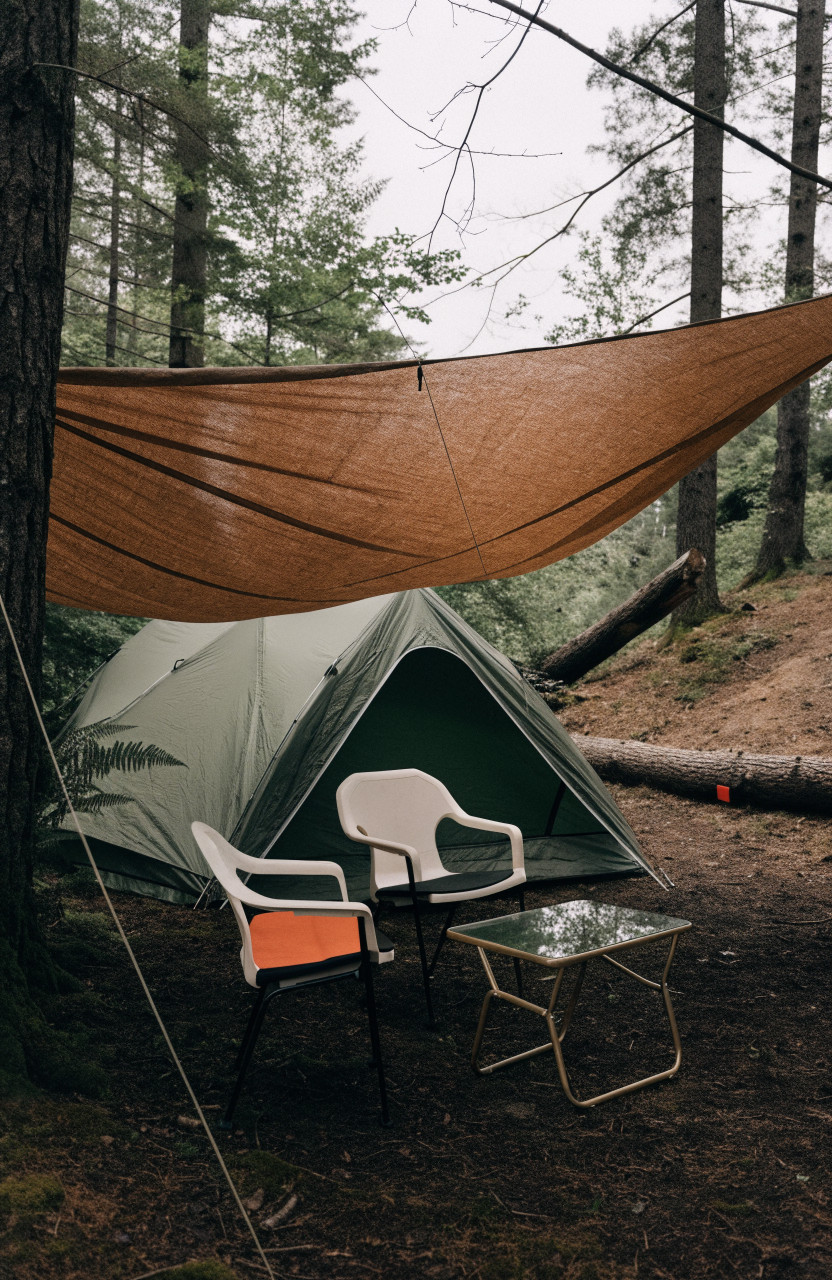
This is also the right place for the brighter lantern. The tent can stay dim.
13. Use a small, repeatable set of textures outside
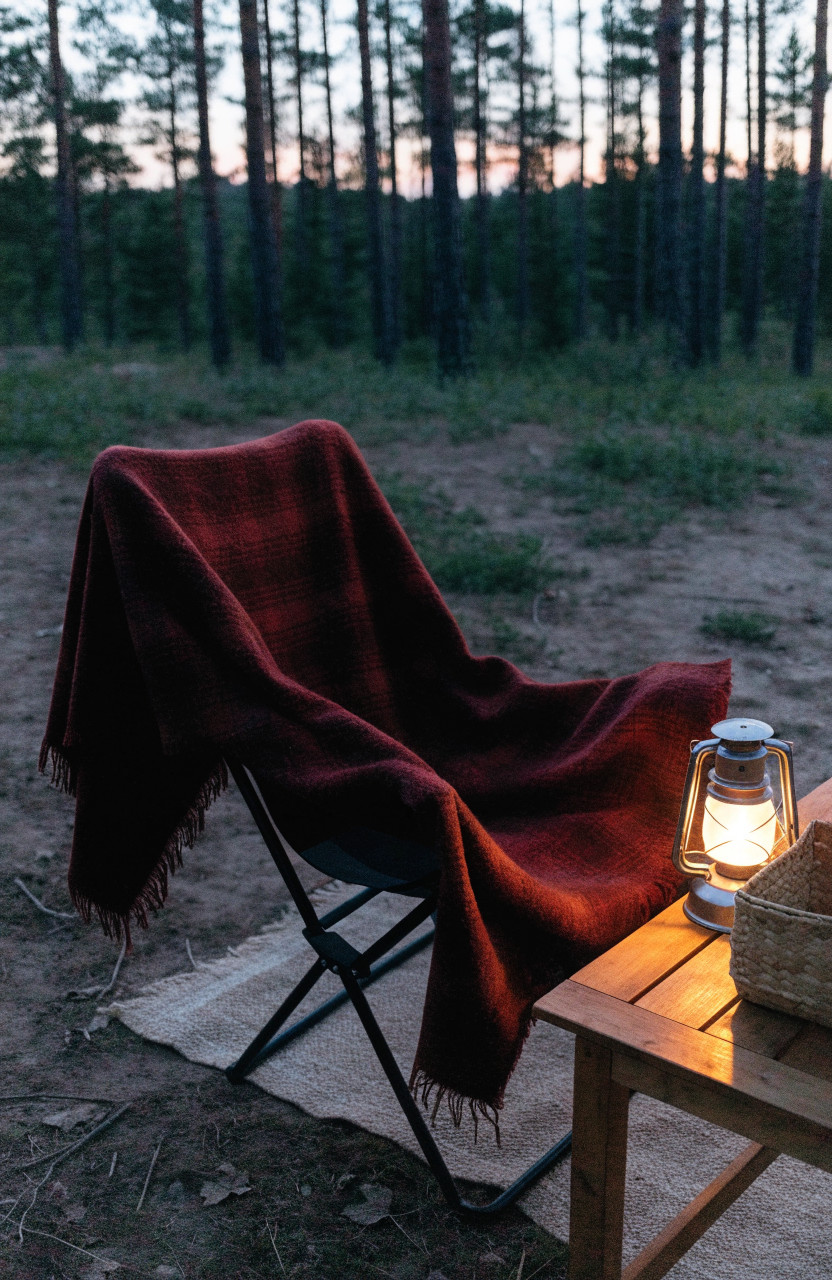
A plaid blanket on a chair, a neutral rug at the door, and one warm lantern read as a cabin corner without a theme-party’s worth of gear. Matching every item is unnecessary. Two or three repeated colors — brown, cream, dark green — are enough to make a site feel intentional. Skip flags, rugs, and lights you will not want to pack wet.
14. Keep the fire as the gathering point, at a safe distance
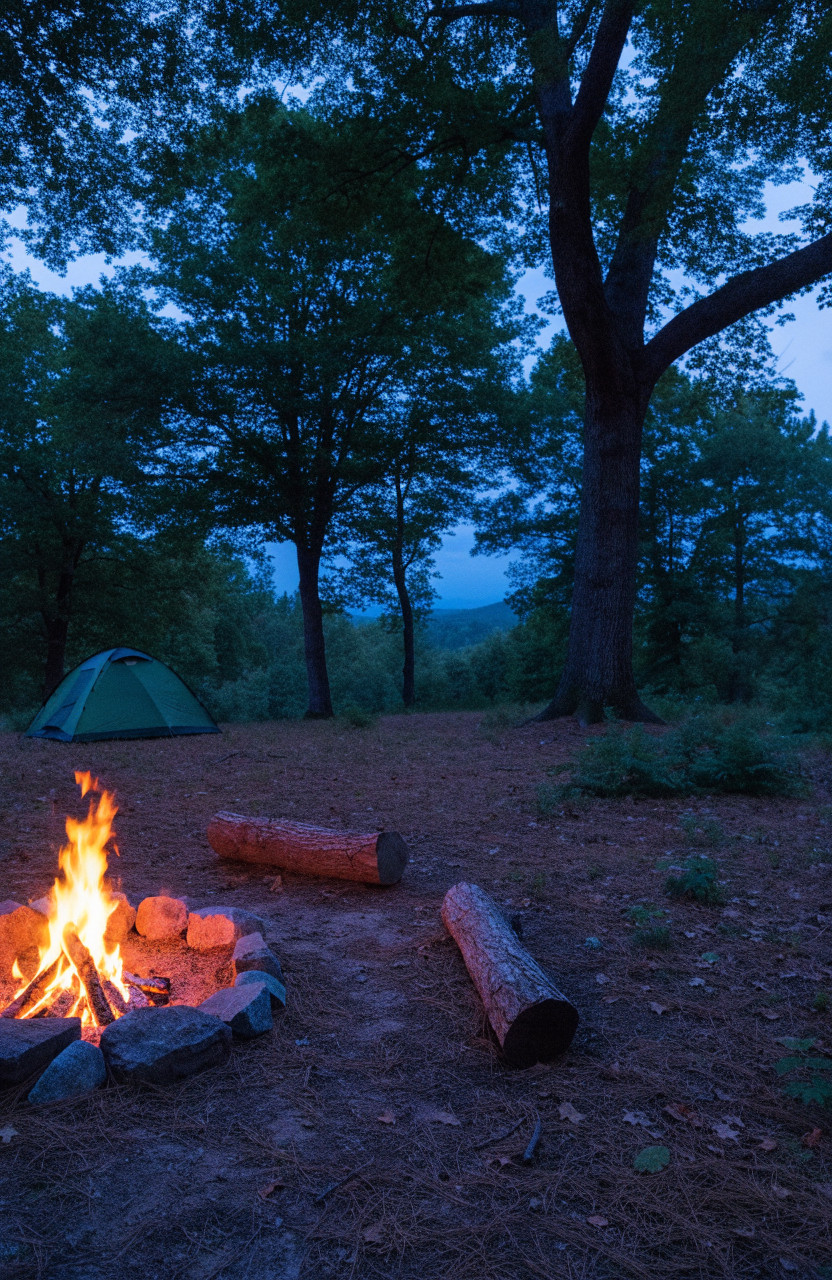
Where fires are allowed, a small fire in an existing ring is the part of camp no string light replaces. Keep the tent well back from the ring — a common campground rule of thumb is at least 15 feet — and never leave it unattended. Do not cook in the tent to avoid the smoke. If the site has a fire ban, a small camp stove under the tarp and a thermos of something hot cover the same evening ritual without the risk.
Adjust the setup for rain and cold
15. Plan a dry entry and a cold-night routine before you need them
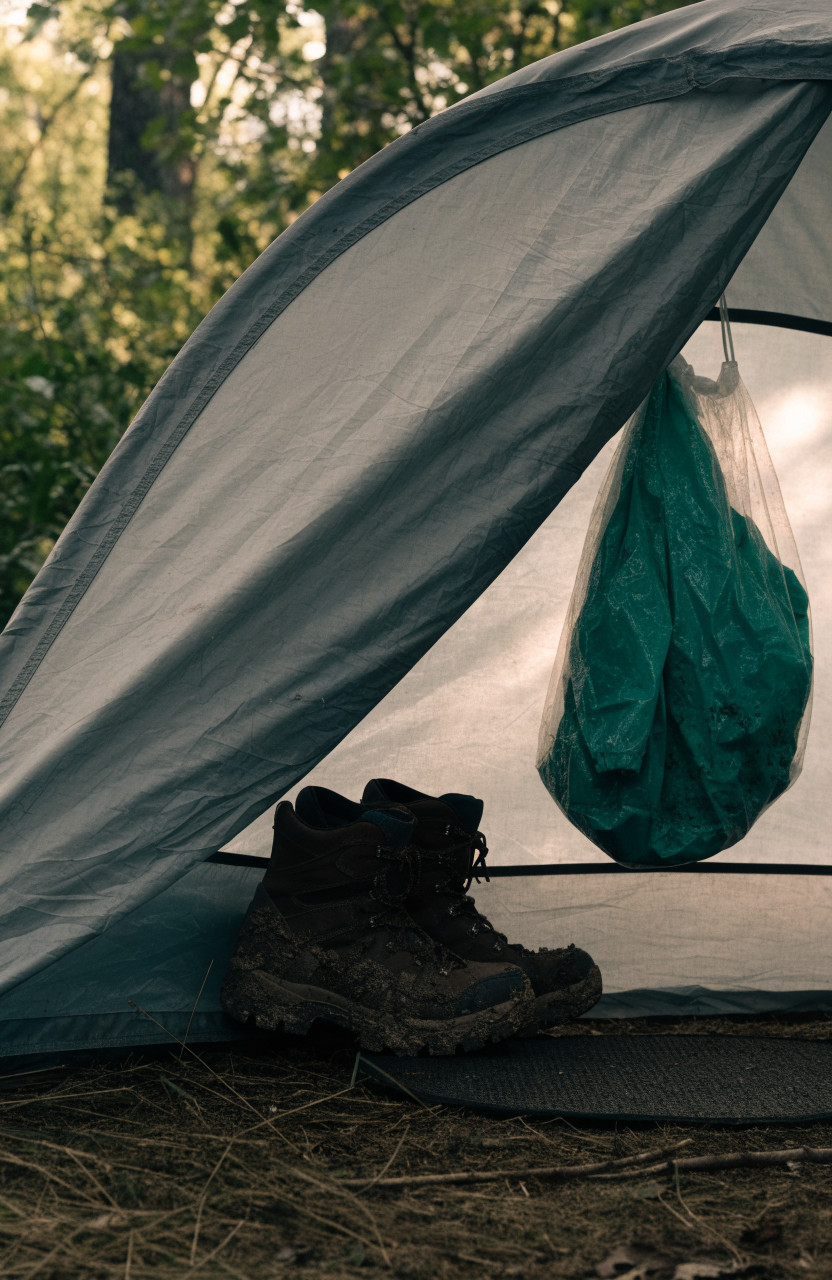
Rain coziness is mostly a vestibule habit. Shoes live under the fly, not in the bed. A small mat at the door and a dedicated wet bag for rain jackets keep the floor from becoming a puddle. Site choice matters more than any accessory: avoid low spots, dry creek beds, and the drip line under a tree. After rain stops, branches keep dripping, and wind can bring dead limbs down.
For a colder night, the routine is short. Eat something warm, change into dry sleep clothes, fill a bottle with hot water only if the lid is reliable and you keep it outside the bag’s insulation path, and vent the tent a crack so breath does not condense on the walls and drip back on you. A hat and dry socks solve more cold complaints than an extra decorative blanket.
If thunder is in the forecast, cozy lighting is not the priority. A tent is not shelter from lightning. Move to a hard-topped vehicle or a building when you can.
Choices that make a cozy camp soggy or unsafe
- Decorating before the pad and bag are right for the overnight low.
- Using a footprint that sticks out past the tent and channels rain under the floor.
- Bringing candles, a fuel lantern, or a heater inside.
- Storing food in the tent because the bins look tidy.
- One brilliant lantern that keeps everyone awake.
- Packing a cabin’s worth of textiles for a site you have to walk into.
- Choosing a low, pretty spot that becomes a basin in the first shower.
A simple order for setting up
Pitch the tent on level, slightly raised ground, door toward the morning sun if the site allows and away from the fire. Lay the sleep system before you unpack clothes. Hang the warm lights, then set the rug and the one bedside surface. Only after the bedroom works should you build the tarp porch and the chair corner. Taking camp down in reverse keeps the tent from becoming a dumping ground on the last morning.
Frequently asked questions
Do I need a special glamping tent? No. A standard tent one size larger than the number of sleepers is enough for car camping, because a “two-person” tent usually fits two pads and almost no gear. A canvas bell tent or cabin tent adds standing room, which feels luxurious, but the bedding and light matter more than the silhouette.
What is the cheapest change that still feels cozy? Bedding you already own, a warm headlamp, and a mat at the door. String lights are the next step if you want the evening to feel different, not just the night.
Can I use an extension cord or house lights at a campground? Only if the site provides a hookup and the campground allows it. Most tent sites do not. Battery lights avoid cords across walkways, which are a trip hazard after dark.
How do I keep a cozy setup from bothering other campers? Point lights downward, skip music after quiet hours, and keep the fire inside the ring. A campsite that feels intimate from the inside should look ordinary from the road.