You unzip the door at dusk holding wet boots, a damp jacket and a bag of snacks, and the sleeping pads are still rolled up in the corner. Whatever comes in next decides how the night goes inside a camping tent.
Put the pads down first and keep a clear path to the door. Boots, wet clothes and food belong in the vestibule or outside. Morning moisture on the walls usually comes from breath and damp gear, and open vents with the rainfly held off the inner tent cut it sharply. A small dome and a tall cabin tent follow the same rule: keep the sleeping floor clean and dry.
What belongs in the sleeping area
The inner tent is the breathable room under the rainfly. On a double-wall tent, the floor is sewn in and waterproof from below, the walls are often mesh so moisture can leave, and the fly is the waterproof shell outside. A gap between those two layers is what keeps rain off you and gives condensation somewhere to form that is not your sleeping bag.
Treat that floor as sleeping space only. A useful split looks like this:
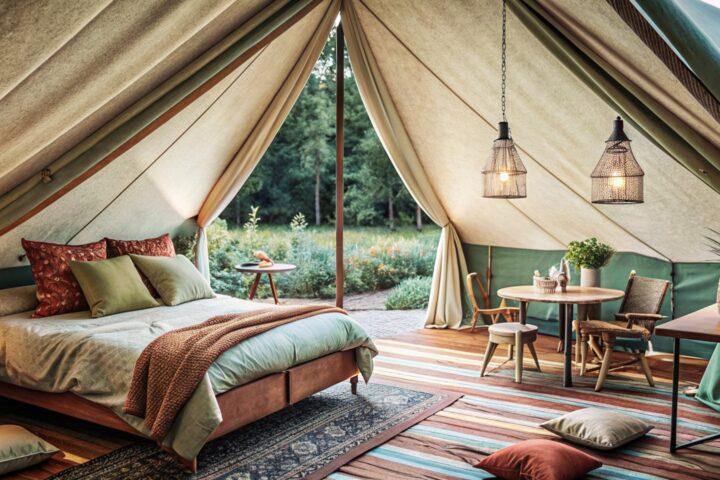
- Sleeping zone. Pads, bags or quilts, and a pillow. This takes most of the floor.
- Reach zone. Headlamp, glasses, phone, and any medication, in a wall pocket or a small sack by your head.
- Dry clothing zone. The next day’s layers, still in a stuff sack, at the foot or beside the pad.
- Door lane. Empty. You should be able to kneel, unzip, and step out without standing on a pad.
The vestibule is the covered porch under the fly, usually with no floor. That is the mudroom: boots, a wet jacket, and often the pack. If the tent has no vestibule, those items go under a separate tarp or in a waterproof bag outside, not against the inner wall.
Lay the floor before anything else comes in
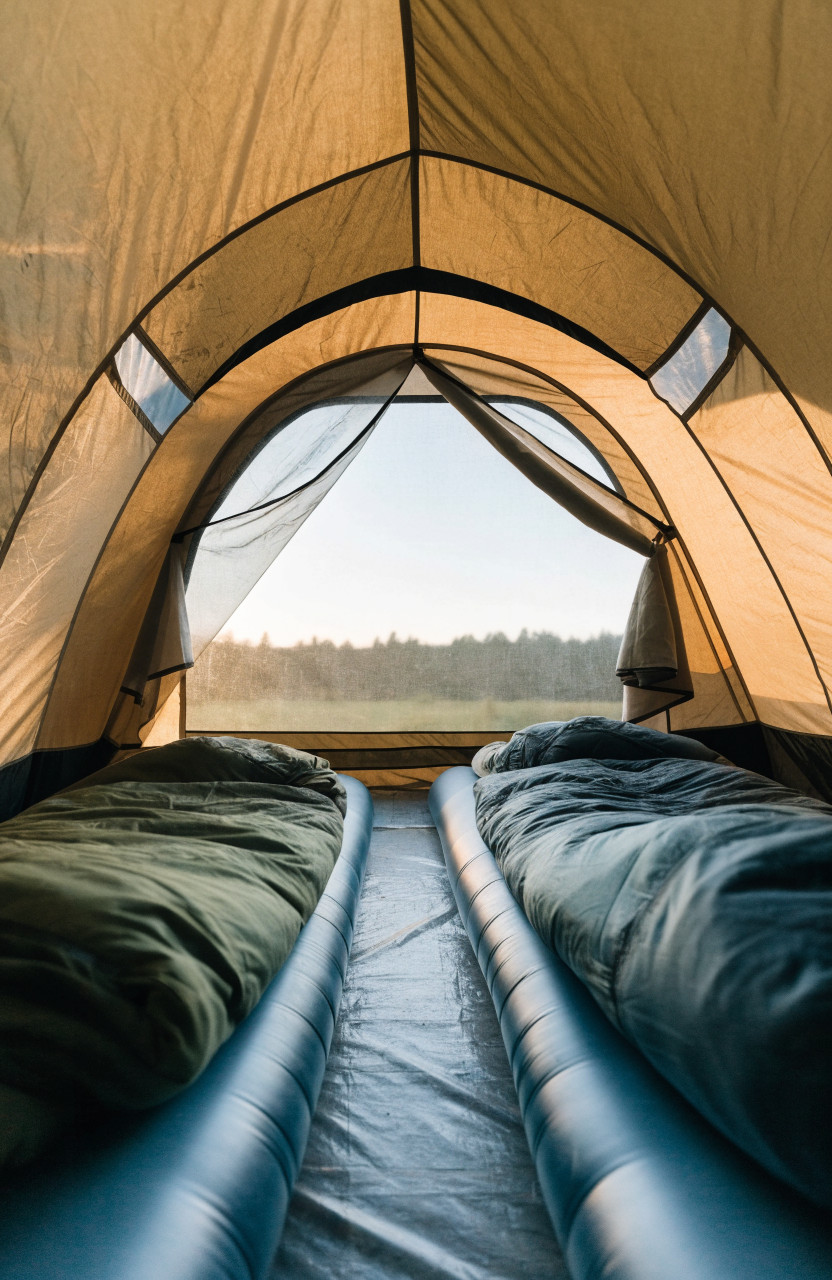
Sleeping pads go down before packs, bins, or spare clothes. Once the floor is covered with loose gear, you will not get the pads straight, and a crooked pad is what slides you into the wall at 2 a.m.
Place each pad along the longest practical line of the floor. In a tapered backpacking tent, heads usually go at the wider end so shoulders are not pinched. In a rectangular family tent, run pads parallel to the long walls and leave a center aisle if more than two people are sleeping. A diagonal pad can work in an odd-shaped tent, but only if both people can still sit up and reach the zipper.
Leave a small gap between bedding and the fabric when you can. A sleeping bag pressed into the wall wicks condensation off the fly or mesh and wakes you damp. In a very small tent that gap may be an inch. It still helps.
If the site is not level, put heads slightly uphill. Feet-downhill is more comfortable than rolling toward the door all night. Clear twigs and cones before the tent goes up. A root under a thin pad feels larger at midnight than it did at setup.
Inflate pads fully, then let them sit while you finish the outside of the tent. Air pressure drops as the evening cools, and a pad that felt firm at 5 p.m. can be soft by bedtime. Top it up once after the temperature falls.
Use the walls and ceiling, not more floor
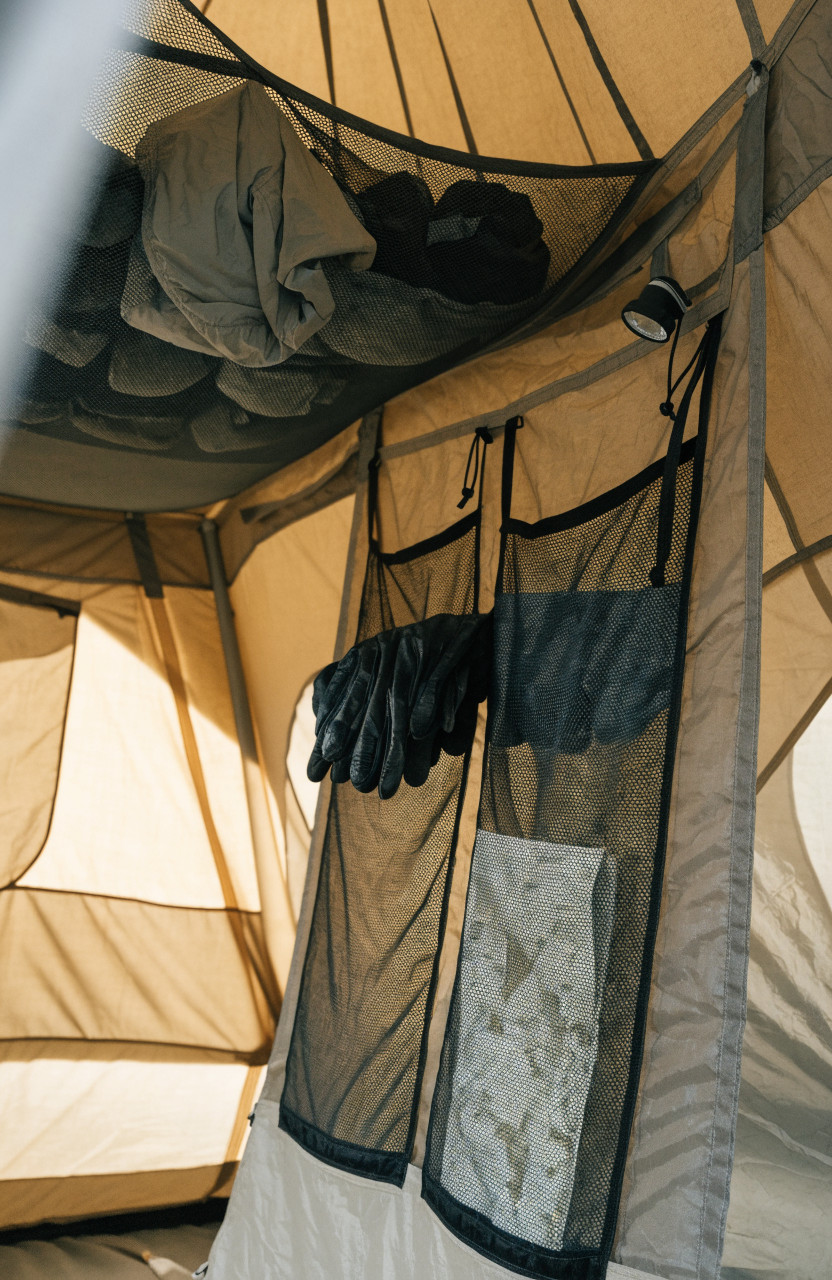
Floor space is the scarce resource. Most tents already have the hardware for vertical storage.
Wall pockets take light items only: a headlamp, a charging cable, gloves, a map. A full water bottle in a pocket pulls the wall in and can drip if the bottle sweats. Hang the bottle from a ceiling loop instead, or keep it in the vestibule.
A gear loft is a mesh shelf that clips to ceiling loops. It holds glasses, a book, socks, and a small lantern above the sleepers, where nobody has to rummage at the foot of the tent. Do not load it with heavy gear. The clips and the fabric are sized for ounces, not pounds.
Ceiling hooks are for a lantern or a short clothesline of dry socks. A lantern should be LED, hung so it cannot touch fabric. Open-flame lanterns and candles inside a tent are a fire risk and add water vapor. Skip them.
In a car-camping tent, a hanging organizer or a shallow bin at the side wall can hold toiletries and layers. Keep that bin out of the door lane. A large plastic tote in a backpacking tent usually costs more comfort than it saves.
Keep the inside dry
Water on the inside of a tent in the morning is usually condensation. Warm, moist air from breathing and damp clothing hits cold fabric and turns to droplets. A person exhales a surprising amount of moisture overnight. Add a wet rain jacket and a sealed tent, and the ceiling drips.
You cannot remove every drop in cold, still, humid weather. You can keep it off your bag.
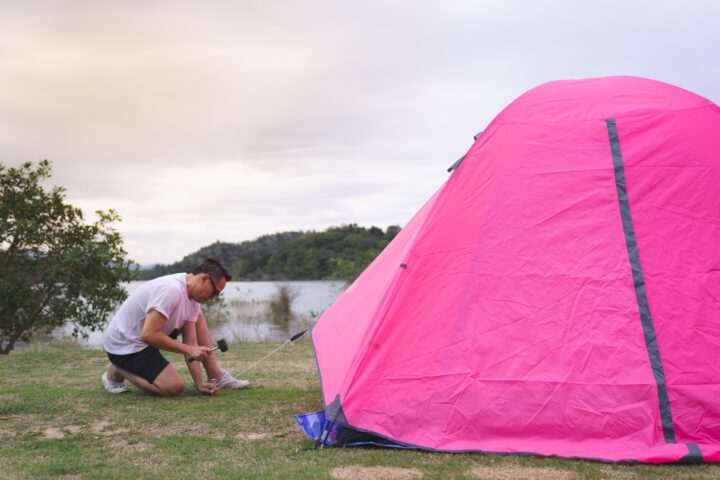
Pitch so the fly does not touch the inner tent. Stake the body, then tension the fly and guylines until the outer fabric is taut and separated from the inner. If the fly sags onto the mesh, water on the fly transfers straight through. Recheck tension after the fabric relaxes, especially if it rained or the temperature dropped.
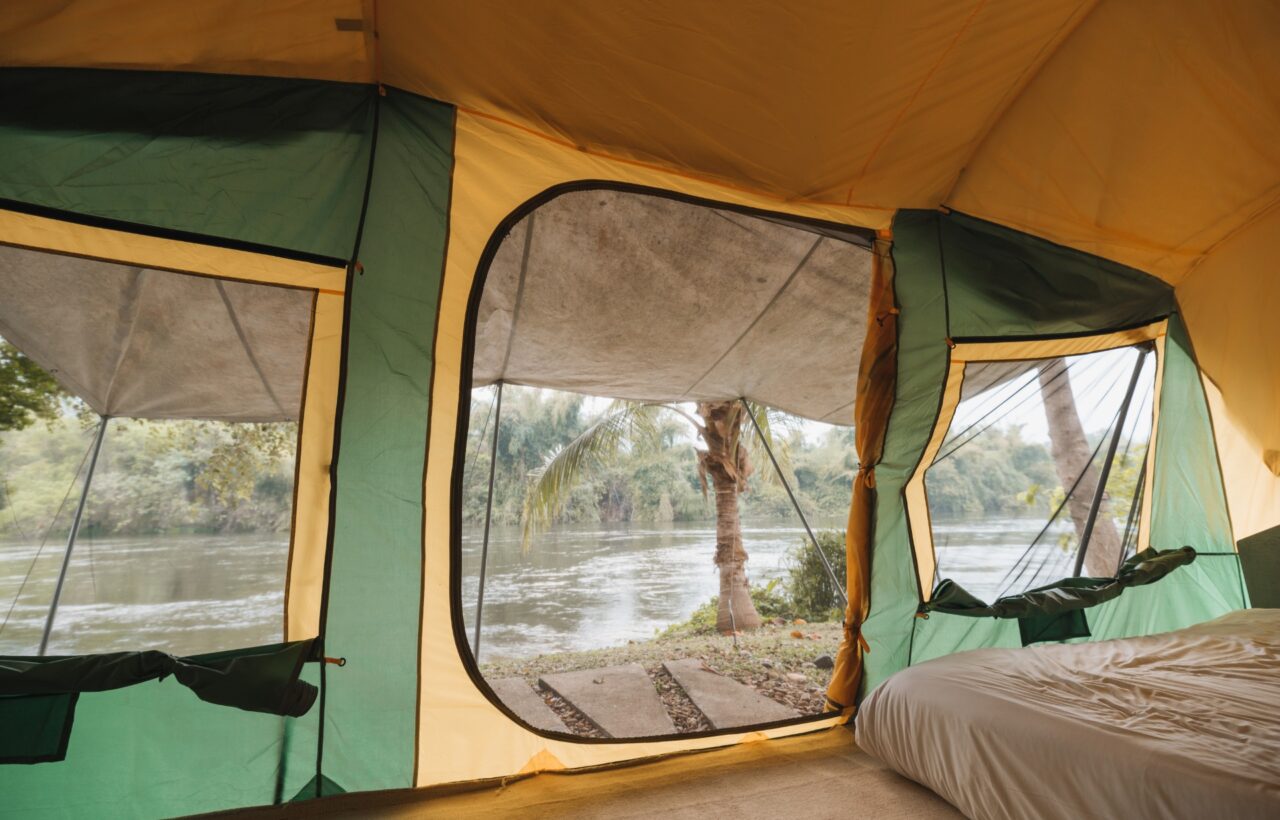
Open vents, including in cool weather. Use high vents and a low opening together so moist air can leave at the top while drier air enters lower down. Opposing vents work better than one cracked zipper. In rain, open only the vents the fly actually covers. A mesh inner door with the fly door mostly closed still moves air and keeps insects out.
Choose the site with moisture in mind. Higher ground drains better than a hollow. Air near a lake or river is often damper. Trees can reduce the temperature gap between the inside air and the fly, which means less condensation, but do not pitch under dead branches or in a spot that collects runoff.
Control what you bring in. Change into dry sleep clothes. Hang the wet layer in the vestibule, openings down, not in the sleeping area. A footprint under the tent should be slightly smaller than the floor. If it sticks out, rain runs onto it and under you.
Do not cook in the sleeping area. A stove adds steam and, in a closed space, carbon monoxide. Cook outside. A vestibule is still a poor kitchen: it is small, the fly is fabric, and ventilation is limited. If weather forces you to cook under the fly, keep the stove outside the inner door, open the vestibule as far as rain allows, and never leave it burning while you sleep.
If the walls are wet in the morning, wipe them with a small cloth before you pack, and open the doors while you eat breakfast so the fabric can dry. Packing a wet tent is sometimes unavoidable. Dry it within a day or two so the coating and seams do not stay damp in the stuff sack.
Light and the things you need at night
One headlamp per person covers almost every task inside a tent. A small LED lantern on a ceiling hook is worth carrying in a family tent, where several people are reading or changing at once. String lights are optional atmosphere, not a substitute for a light you can aim.
Put the nighttime kit where your hand lands without sitting up:
- Headlamp, in the pocket on your side of the tent
- Glasses or contacts case
- Any medication
- A warm layer, already out of the sack, for cold trips
Everything else can stay packed until morning. The pile of “just in case” items at the foot of the tent is what gets kicked into the door and stepped on.
Shoes stay paired in the vestibule, openings down so they do not fill with drips. A small mat or the lid of a bin just inside the door gives you a place for the dry camp shoes you actually sleep near, without tracking the site across the floor.
What should stay outside the inner tent
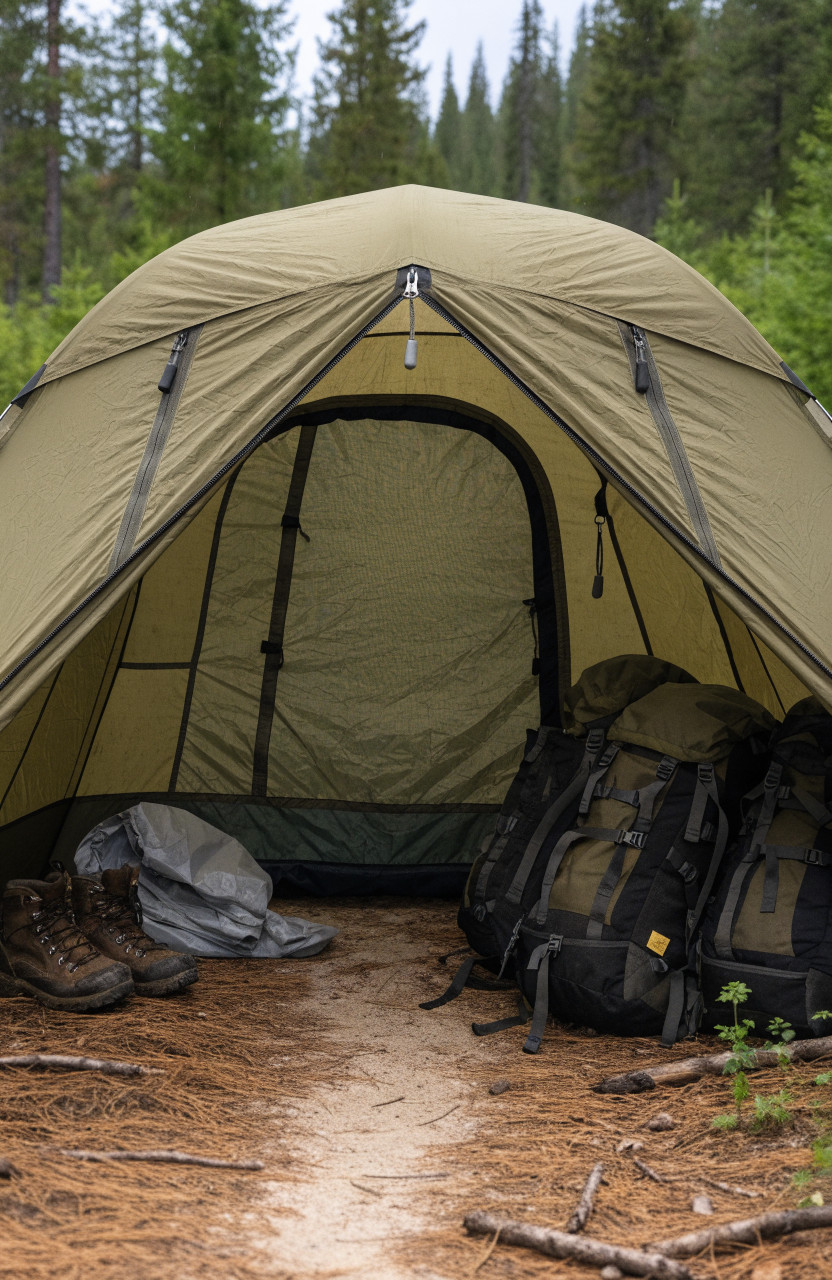
Some items cause problems that organization cannot fix.
Food and scented toiletries attract animals. In bear country, store them in a locker, a hang, or a canister, as the local rules require, not in the tent. Even where bears are not the issue, raccoons and mice will open a tent for snacks. Trash goes out with the food.
Wet boots, rain pants, and a soaked pack belong in the vestibule or under a tarp. They add humidity and mud.
Stoves, fuel, and matches used for cooking stay outside the sleep space. Fuel stored in a hot car and then brought into a tent can leak vapor. Keep canisters outside.
A dog can sleep inside if the tent has room and the animal is dry. A wet dog is one of the fastest ways to soak a small tent. Towel the dog off in the vestibule first.
Solving damp, cramped and blocked interiors
A tent interior gets colder, wetter or harder to leave for specific reasons, and each has a straightforward correction.
| What you notice | Why it happens | What to do |
|---|---|---|
| Waking cold in a damp bag | Every zipper sealed to hold heat traps the moisture you exhale | Leave a vent cracked, since a damp bag costs more warmth than the vent does. |
| Stuffy air and poor airflow | Gear stacked against mesh panels blocks the airflow they provide | Keep gear off the mesh and use corner pockets only for small items like a headlamp. |
| Rain pooling under the floor | A groundsheet larger than the tent floor channels water underneath | Keep the groundsheet edges tucked in so nothing sticks out past the tent floor. |
| Wet patches on the sleeping bag | The bag touching a wet fly or inner wall pulls droplets in | Keep the bag on the pad and away from the walls, even when moving at night. |
| Door that will not open fully | An overpacked vestibule turns a quick exit into a crawl over wet nylon | Pack the porch so one person can leave without unpacking it. |
A simple order that works on a normal evening
- Pitch and tension the tent so the fly is separated from the inner and the vents can open.
- Put pads down, heads slightly uphill if the site slopes, door lane clear.
- Lay bags or quilts on the pads so they can loft while you finish camp.
- Place only the nighttime kit in pockets or at the head of the pad.
- Park boots, wet layers, and packs in the vestibule, clear of the zipper.
- Store food and trash away from the tent before dark.
- Open the vents you can safely leave open, then close up only as far as weather and insects require.
That sequence takes a few minutes once the tent is standing, and it prevents the usual late-night shuffle through a dark pile of gear.
Frequently asked questions
Why is the inside of the tent wet if it did not rain? Condensation. Breath, damp clothes, and humid air meet cold fabric. Better ventilation and drier gear reduce it. Some moisture on a cold morning is normal, especially in a single-wall tent, where droplets form on the same fabric you are sleeping next to.
Should I put a blanket or rug on the tent floor? A thin mat at the door helps with dirt. A full rug or blanket under the pads can trap moisture against the floor and is rarely worth the bulk unless you are car camping in dry weather and will air it daily.
Can I hang wet clothes inside to dry? Only if you accept more condensation. The vestibule is the better drying rack. Inside, a single pair of damp socks on a ceiling line is a small load. A soaked jacket is not.
How do I organize a tent with kids? Give each child a pad against a wall and a single pocket or small bag for their headlamp and a book. Keep toys in one bin that leaves the tent during the day. The center stays empty so nobody steps on a sibling in the dark.
Is a gear loft worth it in a small tent? Yes, if the tent has loops and you are sharing the floor with another person. It moves the items you actually reach at night off the ground. Skip it if you are solo and already have empty pockets.