Measure the floor and mark where the walls drop to knee height before buying a single cushion. On a classic canvas bell, standing room sits near the centre pole and the walls slope steeply, so the usable circle is smaller than it looks. The bell tent interior ideas worth keeping all fit inside that real footprint.
Size decides what is possible, and themes come last. Layouts that hold up put a low bed opposite the door, layer the floor for warmth and dryness, use warm low-level light and hide camping kit in storage. Each extra piece of furniture takes space from a room with none to spare.
Plan the circle before you buy cushions
Bell tents are sold by diameter. A 4 metre model has about 12.6 square metres of floor. A 5 metre model has about 19.6 square metres. A 6 metre model has about 28 square metres. Those numbers include the low edges, where adults cannot stand and tall furniture will press into the canvas.
On a 4 metre tent, a double bed usually sits with one long side against the wall and the other toward the centre pole, so you climb in from one side only. A 5 metre tent is the first size where a double or king can sit at the back, heads toward the wall and feet toward the pole, with a small table on both sides and a clear path from the door. A 6 metre tent is where a real second zone appears: bed at the back, seating or a stove nearer the entrance, without one swallowing the other.
Guy ropes add roughly 1.5 to 2.5 metres of footprint outside the walls, depending on size and supplier. Interior plans that ignore that still fail outside: a porch chair placed on a guy line becomes a trip hazard the first night.
| Diameter | Rough floor area | Layout that usually works | Layout that usually fails |
|---|---|---|---|
| 3–4 m | About 7–13 m² | One low double, two floor cushions, bags under the bed | Sofa plus dining table plus wardrobe |
| 5 m | About 20 m² | Double at the back, two side tables, one chair or pouffe | Two doubles plus a lounge set |
| 6 m+ | About 28 m² and up | Sleep zone and a small seating or stove zone | Full-size dresser, desk, and dining table together |
Manufacturer peak and wall heights vary. Some modern bells have taller side walls than the classic 60 centimetre canvas wall, which changes how close you can place a headboard. Measure the model you own before you commit to a frame.
Put the bed opposite the door
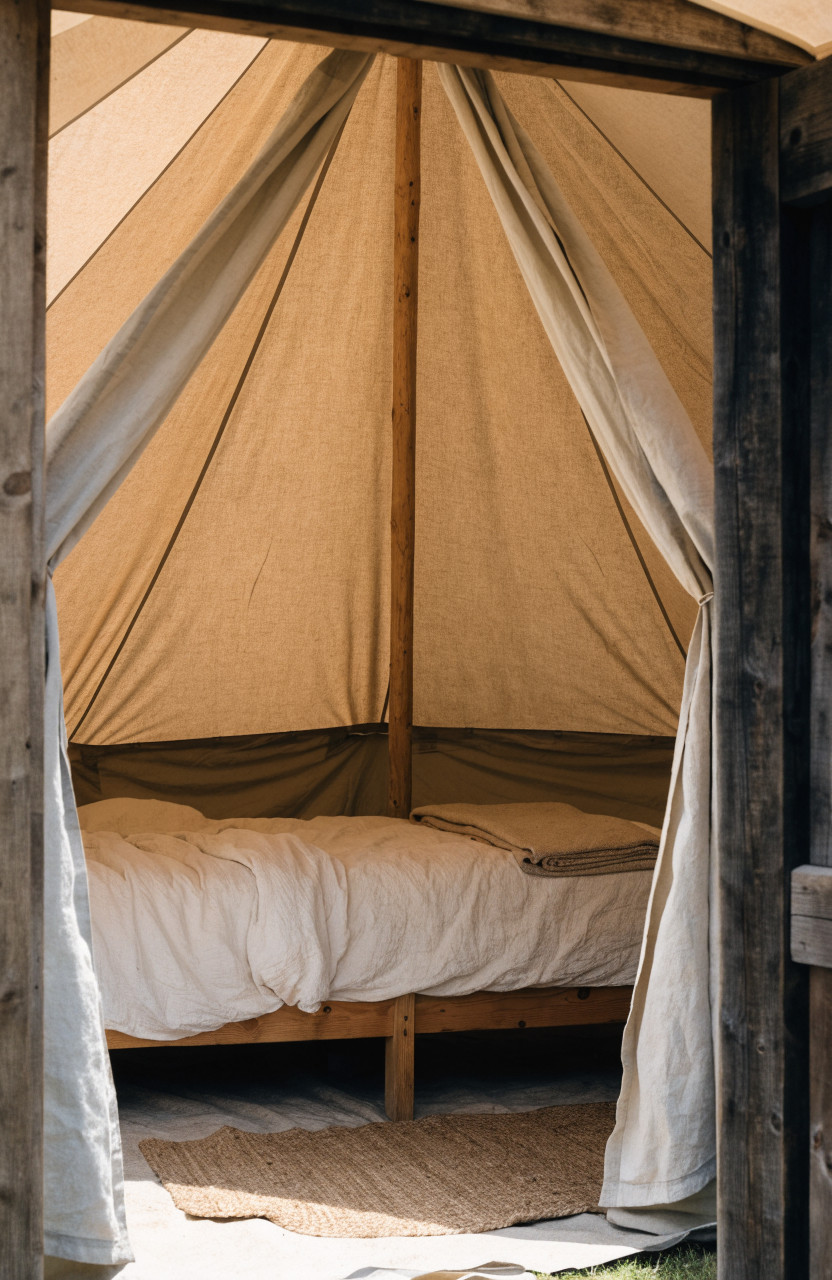
The bed is the first thing guests see, so it should face the entrance rather than hide behind the pole. Place the head against the rear wall, not against the centre pole. The pole stays clear so people can walk around it and so nothing hangs where it can rub the canvas in wind.
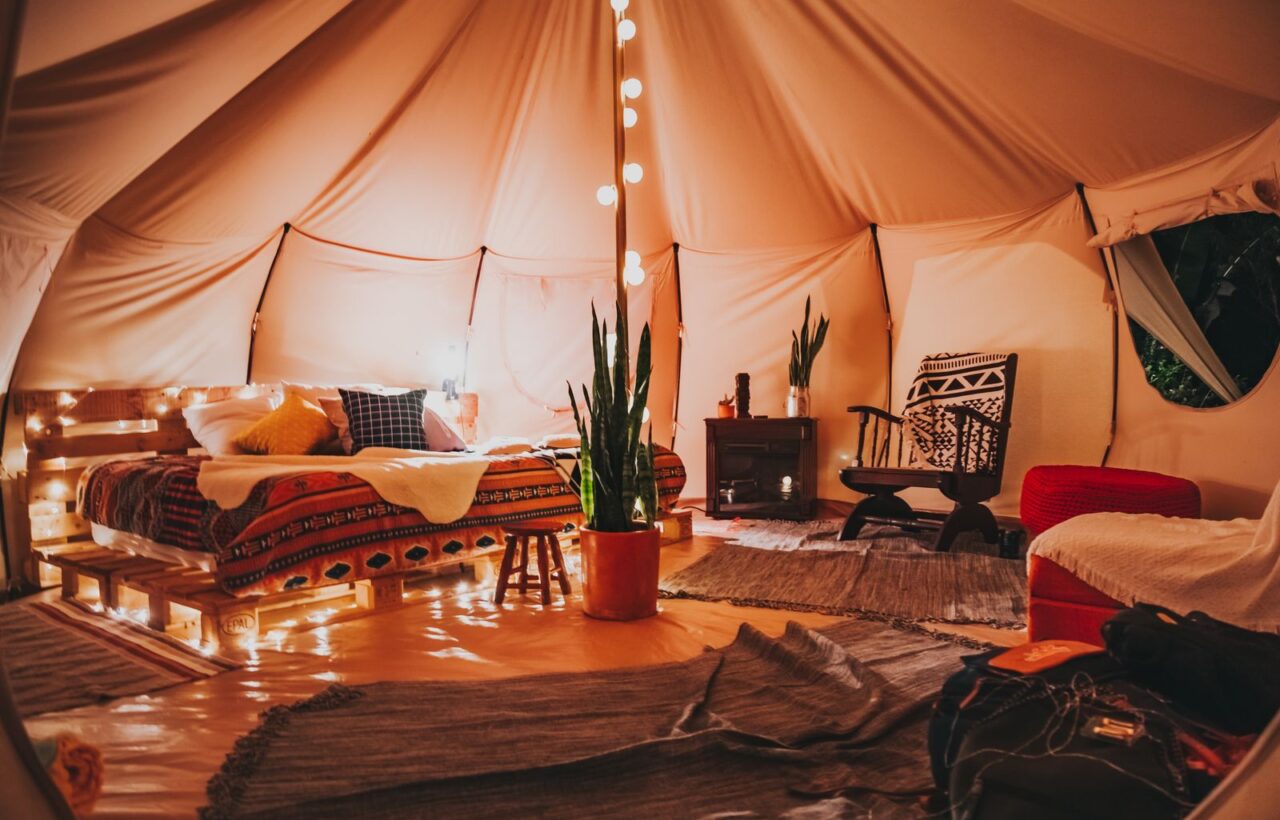
Keep the frame low. A platform, pallet base, or camp bed with a real mattress uses the sloping edge without stealing headroom. Air beds work for a weekend, but they lose air in cold nights and read as camping rather than glamping once the lights are on. A mattress on a raised base also creates a place for suitcases, which matters because there is nowhere else to put them.
Dress the bed in sheets, a duvet or wool blankets, and a few pillows. Sleeping bags are warmer for some trips, but they make the room look unfinished. If nights drop near freezing, the gain comes from insulation under the sleeper and a closed groundsheet, not from more decorative throws on top.
On a 4 metre tent, accept one-sided access. Forcing two bedside tables into that diameter usually blocks the door path.
Layer the floor so it stays dry and warm
Bare groundsheet is cold, slippery when damp, and visually unfinished. Build the floor in three layers.
- A footprint or tarp under the tent, slightly smaller than the groundsheet so rain does not run underneath and pool.
- The tent’s own groundsheet, zipped or weighted so it does not creep.
- Rugs only where people walk and sit: a runner from the door, a larger rug under the bed and seating. Leave a margin at the walls so wet canvas and condensation are not trapped under textile.
Outdoor rugs and flatweave cotton beat deep shag for anything longer than a dry weekend. Shag holds grit and takes days to dry. A doormat just inside the entrance stops most of the mud that would otherwise end up on the bed.
If the tent stays up for weeks, a deck changes the problem. The platform needs to be larger than the floor so guy lines can still leave the wall at their intended angle, often tied to posts just off the deck rather than stretched down to distant ground pegs. A deck sized only to the floor circle is the usual failure.
Zone the circle the way a small room is zoned
Treat the door arc as the hall. Shoes, a lantern, and a crate or basket live there, not beside the pillows. The rear third is sleep. The middle, around the pole, is circulation. Anything left is seating, and only if the diameter allows it.
Useful pieces in that order:
- Two low side tables or crates, one each side of the bed on a 5 metre tent or larger
- One seat: a moon chair, floor pouffe, or low bench, placed off the door path
- A small table that can also be a coffee table, not a separate dining set unless the tent is 6 metres or more
- Soft storage: lidded baskets, an ottoman, or under-bed boxes so dry bags are not the decor
Skip full wardrobes, desks, and second sofas. Guests stay a few nights. The room should feel open when they walk in, not like a furniture showroom squeezed into a cone.
A full-length mirror leaned on the wall, not hung from canvas, bounces light and makes a 5 metre tent feel larger. A single plant does the same job. More than that starts to compete with the bed.
Light the cone, do not fight it
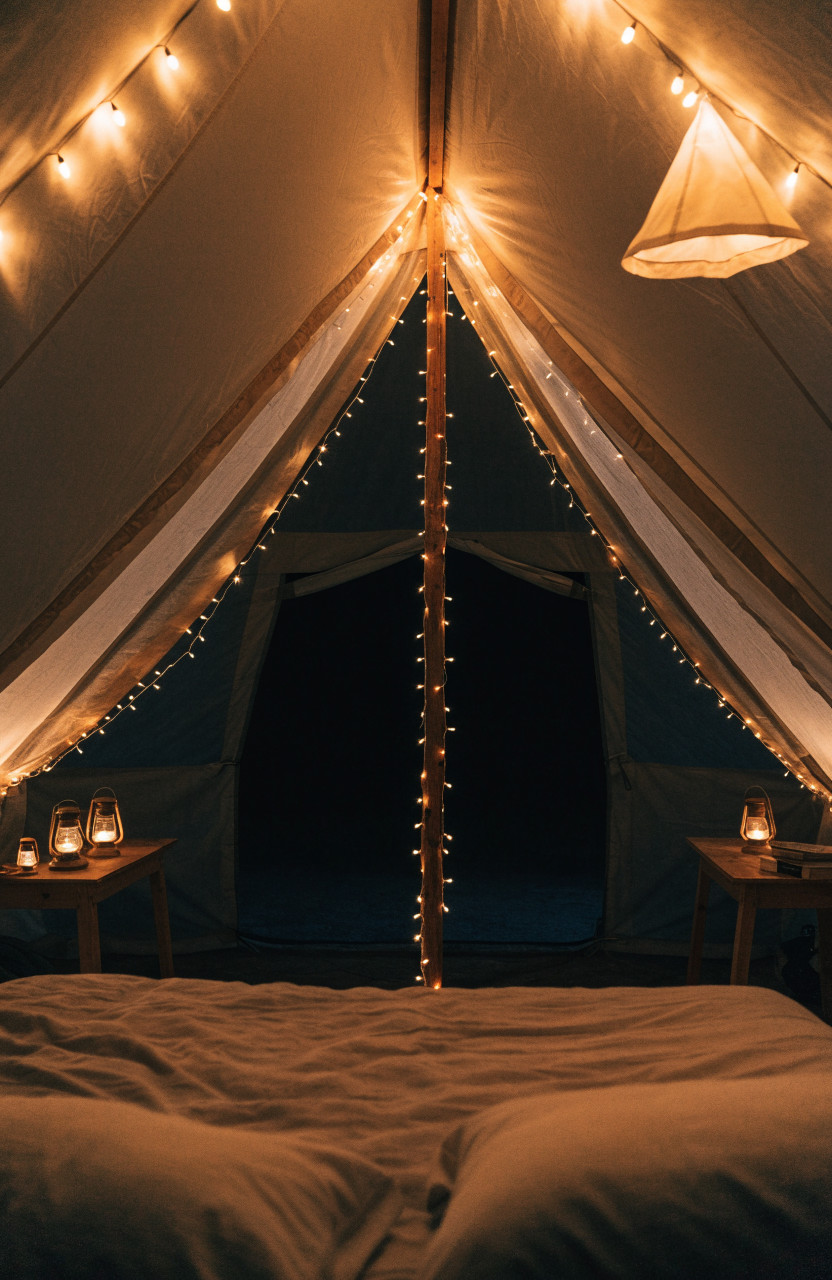
Canvas glows. Warm, low light is what makes a bell tent read as glamping after dark. Cool white bulbs flatten the fabric and show every crease.
Battery lanterns on the side tables cover reading and moving around at night. A short run of warm string lights along the upper wall seams, or looped loosely near the pole, supplies the rest. Keep leads off the groundsheet walkway. Solar lights are fine outside the door, where they mark the path without heating the interior.
Open flame is the constraint people underplay. Canvas burns. Oil lamps and candles look right in photographs and are a genuine fire risk if left burning, knocked by a guy-line gust, or set near the wall. If you use them, they need a stable base, clearance from fabric, and they go out before sleep. Many hosted sites ban them for that reason. A wood stove belongs only in a tent with a proper stove jack, a heat shield, and the clearances the stove maker specifies. It also needs a zone of its own, which is why it suits 5 and 6 metre tents better than a 4 metre couple’s pod.
Choose a palette that survives daylight and dust
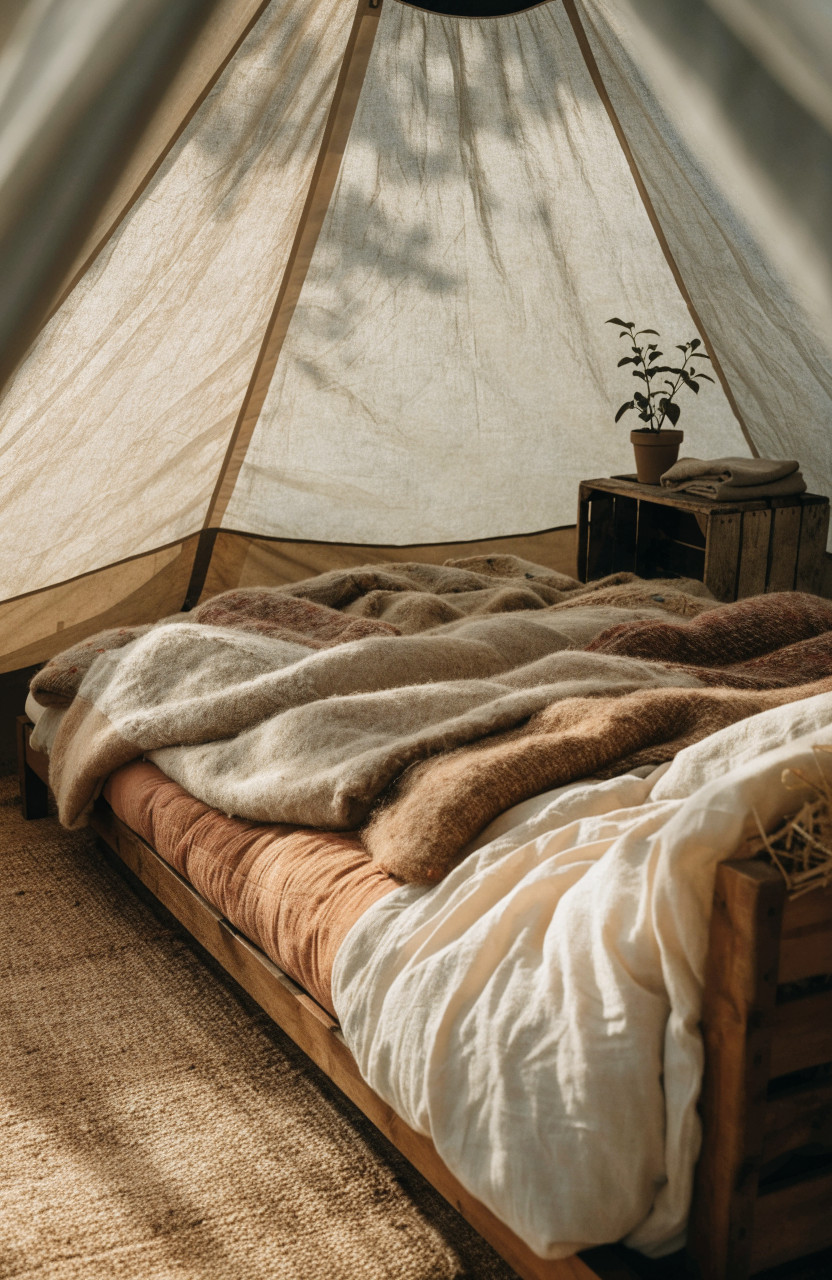
Boho layering, lodge neutrals, and simple linen all work. The difference is how much textile you are willing to shake out.
Earth tones, cream, terracotta, and one pattern hide dust and photograph well in warm light. High-contrast rainbow schemes look cheerful in a family tent and show every footprint. Heavy faux fur is warm and photogenic, and it mats if the site is damp. Wool blankets and cotton throws are easier to air.
Hang almost nothing from the canvas. The centre pole can take a lightweight lantern hook if the tent maker allows it. Bunting and garlands belong on the pole or on a freestanding frame, not stitched through the wall. Holes in the fabric are how a styled tent starts to leak.
For a hosted pitch, choose surfaces you can wipe between stays: wooden crates, outdoor rugs, washable cushion covers. Decorative objects that cannot be cleaned become a labour problem by the third booking.
Comfort fixes for a styled bell tent
Styling choices can quietly make a bell tent damp, crowded or risky, so each issue is paired with a better approach.
| Issue | Where it comes from | Better approach |
|---|---|---|
| No path through the tent | A king bed, chairs, table, stove and three rugs crowd a 5 metre tent | Remove one category of furniture before adding another. |
| Condensation dripping onto bedding | Closed windows and covered roof vents trap breath and cooking moisture | Leave one high vent open, even on cool nights, and crack a window on the lee side. |
| Damp pillows at the headboard | Tall headboards pressed into the canvas slope wick damp onto pillows | Keep tall headboards clear of the sloping canvas walls. |
| Rug edges staying wet after rain | Rugs run all the way to the tent wall | Stop rugs short of the wall so their edges stay dry. |
| Room still looks like a campsite | Bags and storage left in plain sight around the tent | Keep storage out of view so the tent reads as a room. |
| Lights or heater creating a hazard | Lights clipped through fabric, or a stove used with no stated clearance | Never clip lights through the fabric, and skip any heater without a stated clearance. |
| Setup too heavy for a weekend | Planning a platform bed setup that cannot be carried from the car | For a weekend, use a raised air frame, two rugs and lanterns instead. |
Frequently asked questions
What size bell tent do you need for a glamping interior?
A 4 metre tent suits a couple who want a bed and little else. A 5 metre tent is the usual point where a bed, side tables, and one seat fit without blocking the door. A 6 metre tent is the size that can hold a separate seating area or a stove zone.
Can you put a real bed in a bell tent?
Yes, if the frame is low and the mattress fits the diameter. On a 5 metre tent, a double or king at the back is a standard layout. On a 4 metre tent, expect one-sided access and little room beside the mattress.
How do you stop the floor feeling cold?
Use a groundsheet, keep the mattress off the floor, and add a rug only in the walking and sitting areas. Insulation under the sleeper matters more than extra blankets on top.
Are string lights safe inside a canvas tent?
Battery and low-voltage LED strings are the usual choice. Keep them off the fabric where they can heat a seam, and do not leave mains leads where they can be walked on in the wet. Open flame is a separate risk and should not be left burning unattended.
What should you leave outside?
Cooking, wet kit, and most of the seating if the tent is under 5 metres. A small outdoor rug and two low chairs by the door extend the room without crowding the cone, provided they sit clear of the guy ropes.