
Tent trailer camping sits between a ground tent and a hard-sided travel trailer. You tow a low, folded box to the site, then raise a canvas roof and pull out sleeping ends so you sleep off the ground with a small galley nearby. Most common models weigh roughly 1,500 to 3,000 pounds dry, fold to about 10 feet long and under five feet tall, and sleep four to eight once the beds are out. The trade is real: lighter towing and a closer-to-tent feel, in exchange for setup time, canvas care, and weaker insulation than a hard-sided RV.
What “Tent Trailer” Usually Means
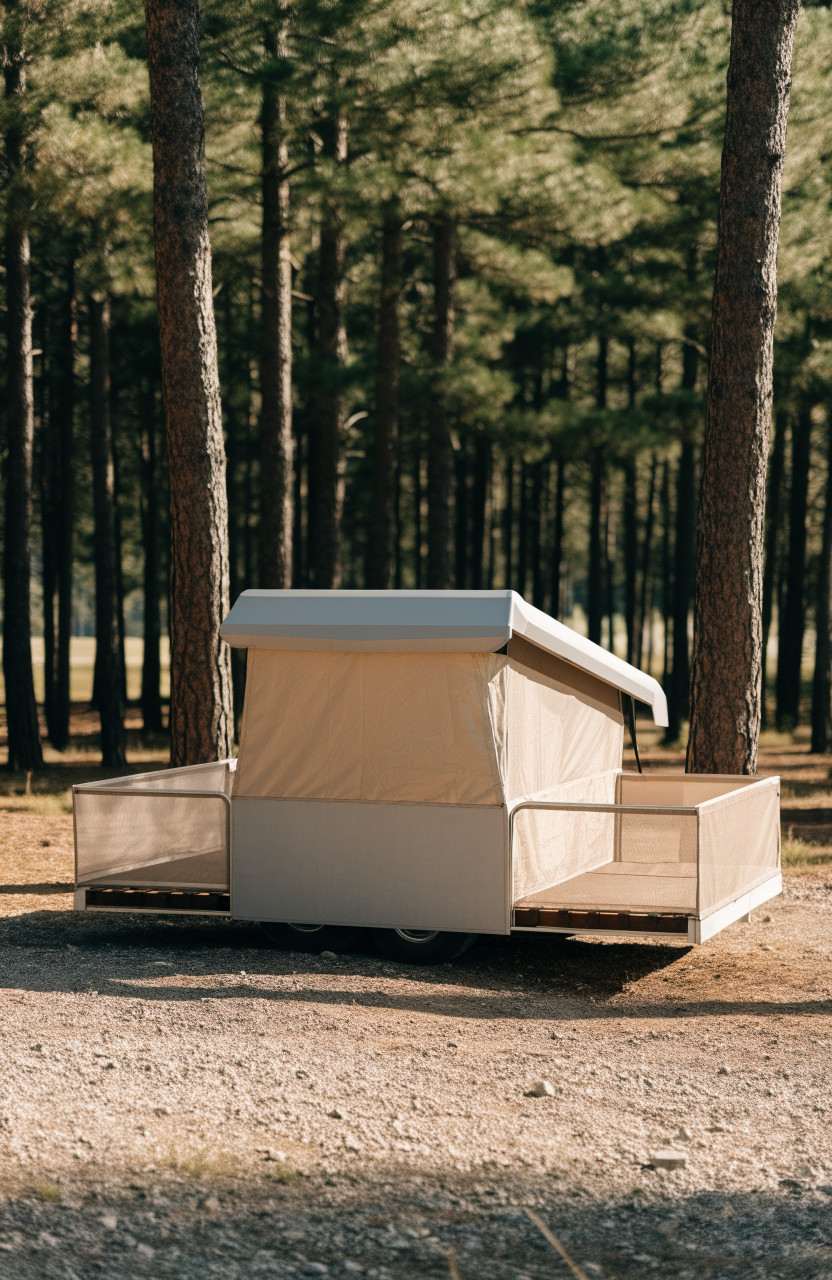
In North American campground use, tent trailer and pop-up camper (also called a folding camping trailer) refer to the same idea: a hard box that collapses for the road and opens into canvas-sided living space. The center section is solid. The ends slide out into bunks, often queen-size, under canvas and screen. A crank or lift system raises the roof. Stabilizer jacks hold the box once you are parked.
A few sellers use “tent trailer” for a simpler steel-base unit with a tent top and almost no built-in appliances. Those are closer to a utility trailer with shelter. Hard-sided fold-ups, such as A-frame campers, are a different product: rigid panels instead of canvas, usually better in wind and cold, and often heavier. This article is about the soft-sided folding type most people mean by tent trailer camping.
Expanded length is often about double the towing length, so a unit that looks compact on the highway needs a full campsite pad, not a tight tent pad with trees on both sides.
Who Tent Trailer Camping Fits
It fits people who want more than a tent without the tow vehicle, storage, or cost of a travel trailer.
It is a practical match if you:
- Already camp in tents and want mattresses, a sink, a small fridge, and a furnace without packing a full car of gear every trip
- Drive a midsize SUV, crossover, or half-ton that is rated for the trailer’s loaded weight, not just its brochure dry weight
- Camp mostly in mild weather, spring through fall
- Need to store the unit in a garage or a standard storage bay when it is folded
- Want a lower purchase price than a hard-sided trailer of similar sleeping capacity
Dealer and rental guides commonly place new soft-sided units in a broad band from the high four figures for basic models to the mid-teens and low twenties for larger floor plans with a better galley. Used units are widely available for less. Rental rates are often cited around $65 to $125 a night before fees, which is a reasonable way to test the format before buying.
Skip it, or at least do not treat it as a four-season RV, if you want an onboard bathroom as standard, need real insulation for winter or desert heat, dislike 20 to 40 minutes of setup after a long drive, or camp so often that teardown becomes the thing you resent. Hard-sided trailers win on weather, noise, and “park and live.” Ground tents win on cost and on sites with no trailer access.
How Setup and Teardown Actually Work
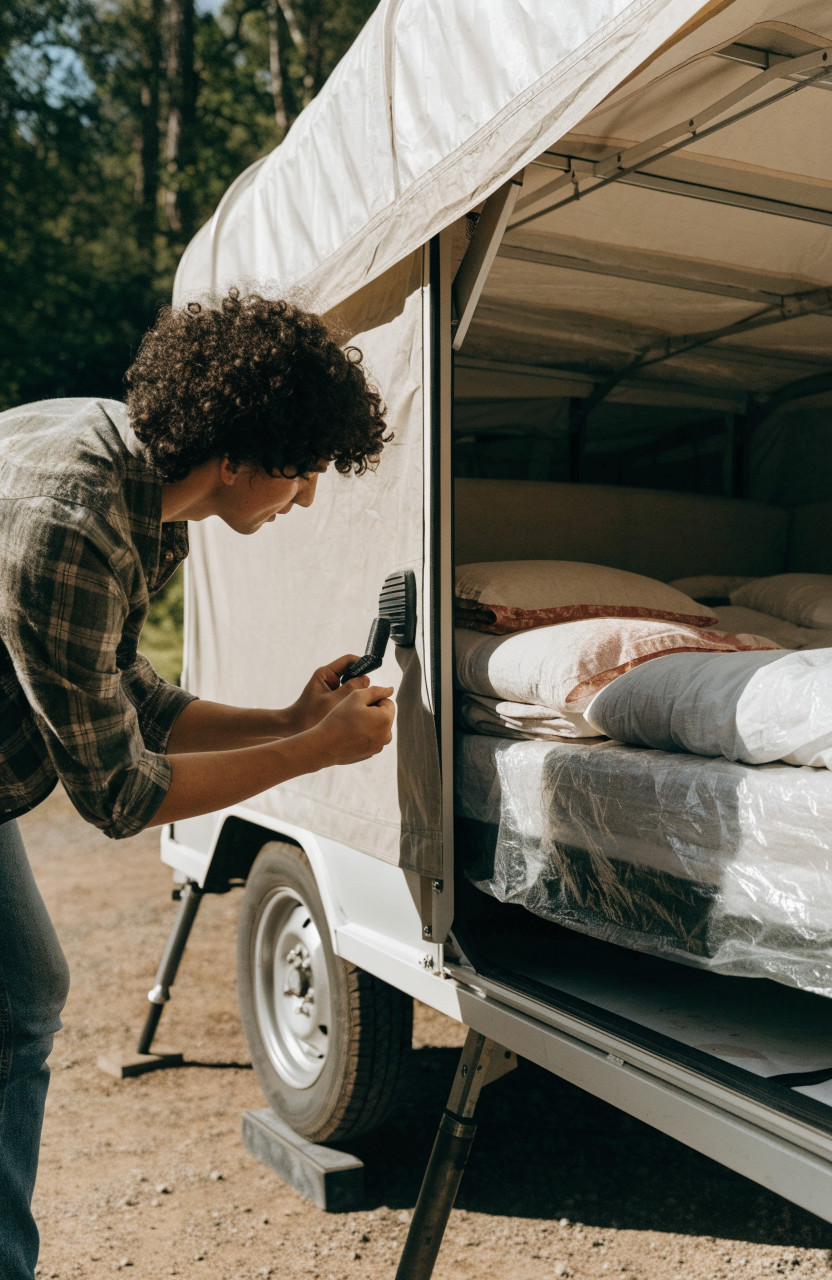
The sequence is similar across most crank-lift pop-ups. Practice it once at home before the first trip. First setups in the dark, in rain, are where new owners lose an hour.
- Park on the most level ground you can find, then chock the wheels.
- Level side to side with blocks under the tires, then front to back with the tongue jack. A bubble level on the floor or frame is enough. Beds and the door work poorly if the box is racked.
- Drop the stabilizer jacks. They steady the camper; they do not carry the full weight.
- Unlatch the roof, crank it up, and lock it at height.
- Slide out the bed ends, set the support poles or cables as the manual specifies, and tension the canvas so it sheds water instead of pooling.
- Attach the door, set any interior poles, and stake guy lines if the site is exposed to wind.
- Hook up power if the site has it, and run the water or gray-water hose the way that model is built.
Teardown reverses the order. The failure point is canvas that is still wet. Folding damp fabric into the box is how mildew starts. If you must leave in the rain, open and dry the unit fully within a day or two at home.
Experienced owners often finish a familiar unit in under 30 minutes. A first attempt, or a unit with a screen room and awning, can take longer. That is still less gear-sorting than a family tent camp, and more work than unhitching a travel trailer.
New canvas is sometimes “seasoned” by the owner or dealer: set up, lightly wet the fabric, dry completely, and repeat so the threads swell and seal. Follow the maker’s instructions rather than a pressure washer.
Towing Limits That Matter More Than Dry Weight
Dry weight is the empty-ish number in the brochure. Gross vehicle weight rating (GVWR) is the maximum the trailer is allowed to weigh loaded. Cargo carrying capacity is the difference. Water, bedding, food, camp chairs, and a full propane cylinder consume that gap quickly. Fresh water weighs about 8.3 pounds per gallon; a 20-gallon fill is more than 160 pounds before anyone packs a cooler.
Tongue weight — the downward force on the hitch — should generally sit around 10 to 15 percent of the loaded trailer weight. Too little and the trailer can sway. Too much and you overload the rear of the tow vehicle.
The limit that surprises people is the tow vehicle’s payload, not its maximum tow rating. Payload has to cover passengers, cargo in the vehicle, and tongue weight. A truck or SUV that “can tow 5,000 pounds” may only have 1,000 to 1,500 pounds of payload, and a loaded pop-up can put several hundred pounds on the hitch. Weigh the loaded vehicle and trailer at a public scale before a long trip rather than trusting the sticker math.
Hitch class follows the trailer’s GVWR and tongue weight, not the brand name. Many pop-ups fall in Class II territory (often up to about 3,500 pounds gross trailer weight and a few hundred pounds of tongue weight). Lighter units may be within Class I. Confirm both numbers on the camper’s weight sticker and on the hitch. Brake controllers and trailer brakes matter once the trailer is heavy enough to require them; check your state rules and the manufacturer’s threshold.
Electric brakes, safety chains, and a working breakaway system are not optional details. First-time towers also benefit from a slow practice loop in an empty lot before highway speeds.
What You Usually Get Inside
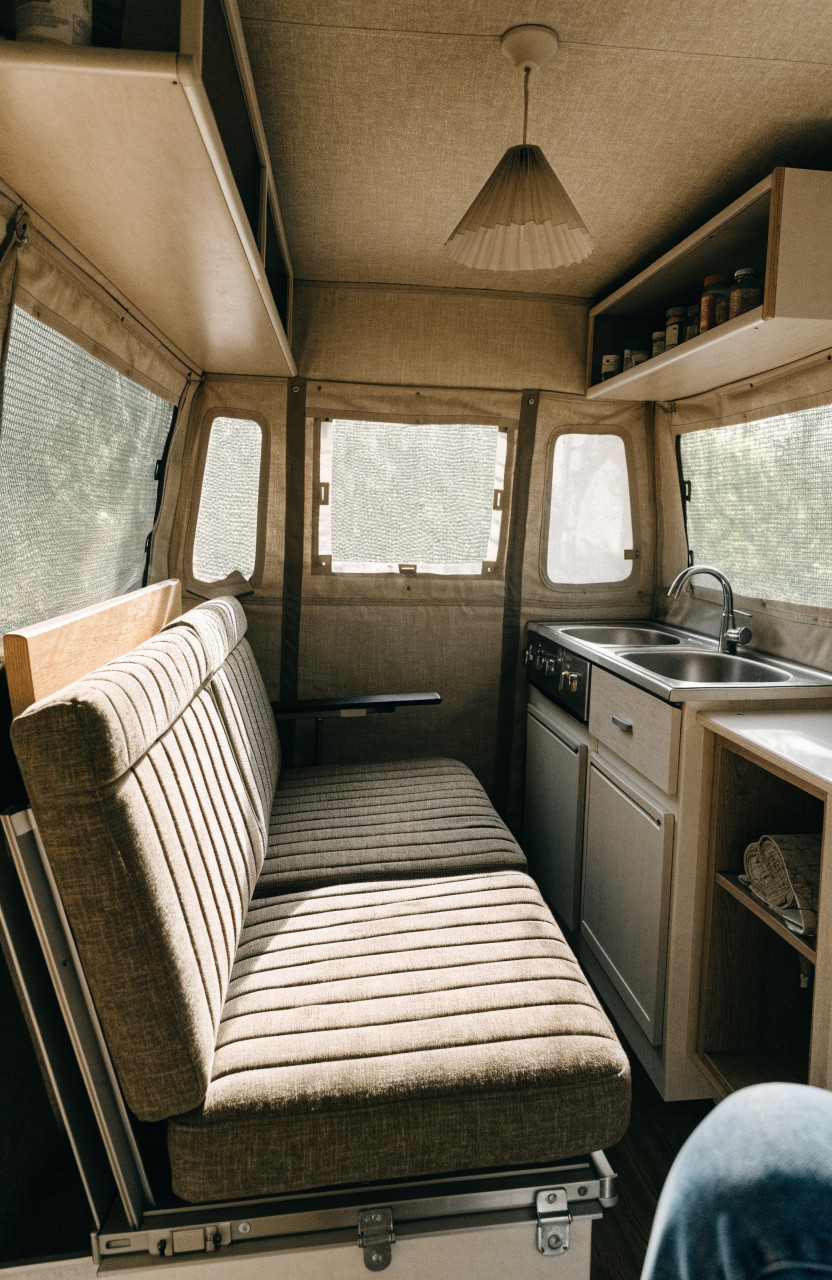
A typical family tent trailer has a dinette that may convert to a bed, a two-burner stove, a small sink, an icebox or 12-volt fridge, and a furnace. Front and rear bunks account for most of the sleeping capacity. Some floor plans add a cassette toilet, a portable toilet closet, or a simple shower. Full bathrooms with black tanks are the exception, not the rule.
Fresh water is often a modest tank, sometimes only a few gallons on basic models, sometimes 10 to 20-plus on larger ones. Gray water is frequently handled with an external hose into a portable tank or the site’s sewer, because many units have no built-in gray tank. Confirm that before you book a site with no dump station nearby.
Power is usually a mix of 12-volt battery and a shoreline cord for campground pedestals. Air conditioning is optional and power-hungry; many owners never add it and simply camp in seasons where screens and a fan are enough. Storage inside the box is limited. Bulky gear often rides in the tow vehicle, which is another reason payload matters.
Weather, Condensation, and Canvas Care
Canvas breathes, which is why these trailers feel less sealed than a hard-sided RV and why moisture management is part of the trip, not an afterthought.
Condensation forms when warm, humid air from people, cooking, and a heater meets cooler fabric. On cool nights it can wet bunks and walls even if the canvas is not leaking. The practical controls are airflow and heat discipline: crack a roof vent and a window, run a small fan across the canvas, avoid superheating the interior, and use bedding layers instead of blasting the furnace all night. A moisture barrier under mattresses helps on the bunks.
Rain performance depends on tension, seams, and age of the waterproofing. Sagging canvas pools water and then leaks. After storms, check the bunk ends. Reproof fabric with a product the manufacturer approves, and seal seams if the manual calls for it. Clean with mild soap, rinse gently, and dry completely before travel mode. Mold is a canvas problem, not a cosmetic one; a musty used trailer is a negotiation point, not a detail to ignore.
Wind is the other limit. Guy lines and a sheltered site matter more than they do for a travel trailer. In a real storm, a hard-sided unit is the more predictable shelter. Tent trailers are a mild-season tool unless you have specifically prepared one and accept the compromises.
Choosing Sites and Running the Camp
Book a trailer site, not a tent-only site, unless the campground explicitly allows pop-ups in tent loops. You need room for the expanded length, stabilizer jacks, and usually an awning or screen room on one side. Full hookups are optional. Many owners do well on electric-only sites and carry water.
A workable daily pattern:
- Arrive with enough daylight to level and raise the roof.
- Keep cooking smells and steam vented; the canvas will hold odor and moisture otherwise.
- Use the campground bathhouse if the unit has no toilet. That is normal for this category, not a failure of the trip.
- Stake the awning and check poles after wind shifts.
- Pack so teardown does not require unloading the entire galley.
Off-grid use is possible with a decent battery, solar, and conservative water, but the fresh-tank size and lack of insulation set the ceiling. Boondocking in a tent trailer is closer to car camping with a better bed than it is to a self-contained RV week.
Payload, Wet Canvas and Other First-Season Trouble
Buying on dry weight alone. The loaded trailer plus tongue weight is what your vehicle has to handle. Families who fill the truck bed with firewood, coolers, and tubs often discover they were over payload before the trailer was even counted.
Skipping the home setup. Hitch height, crank direction, bed-support pins, and the water hookup are easier to learn in a driveway.
Folding wet canvas. One rainy departure is fine if you dry the unit immediately. Repeated damp storage shortens the life of the fabric.
Expecting travel-trailer quiet and temperature. You will hear neighbors, rain, and wind. In a heat wave without air conditioning, or a freeze without a plan for lines and canvas, the format is the wrong tool.
Ignoring the used-canvas inspection. Check for mildew, cracked vinyl, separated seams, soft floor spots, and a lift system that binds. Parts for older lift cables and canvas are model-specific.
Overpacking the box. Payload on the trailer and payload on the tow vehicle are separate budgets. If it does not fit in the folded camper without crushing the canvas path, it rides in the vehicle or it stays home.
Frequently Asked Questions
Is a tent trailer the same as a pop-up camper?
In campground speech, yes. Both names usually mean a folding soft-sided camper. Hard-sided A-frames and bare utility tent trailers are related but not the same product. Read the floor plan, not just the label.
How long does setup take?
Often 15 to 40 minutes once you know the unit. The first time takes longer. Leveling and wet-canvas decisions add more time than the crank itself.
Can a car or small SUV tow one?
Some can, if the loaded trailer and tongue weight sit inside that vehicle’s tow rating, payload, and hitch class. Many crossovers are fine with a lighter pop-up and a disciplined pack list. Confirm with the door-sticker payload and a scale, not with a forum average.
Do tent trailers have bathrooms?
Many do not. Some offer a cassette or portable toilet and a simple shower. Plan on campground facilities unless the specific floor plan includes a toilet you are willing to maintain.
Are they worth it compared with a tent?
If you camp several times a year with more than two people, the raised beds, galley, and “gear stays packed” layout usually justify the cost and the towing. If you camp once a year or need backpack-style sites, a tent remains the simpler tool.