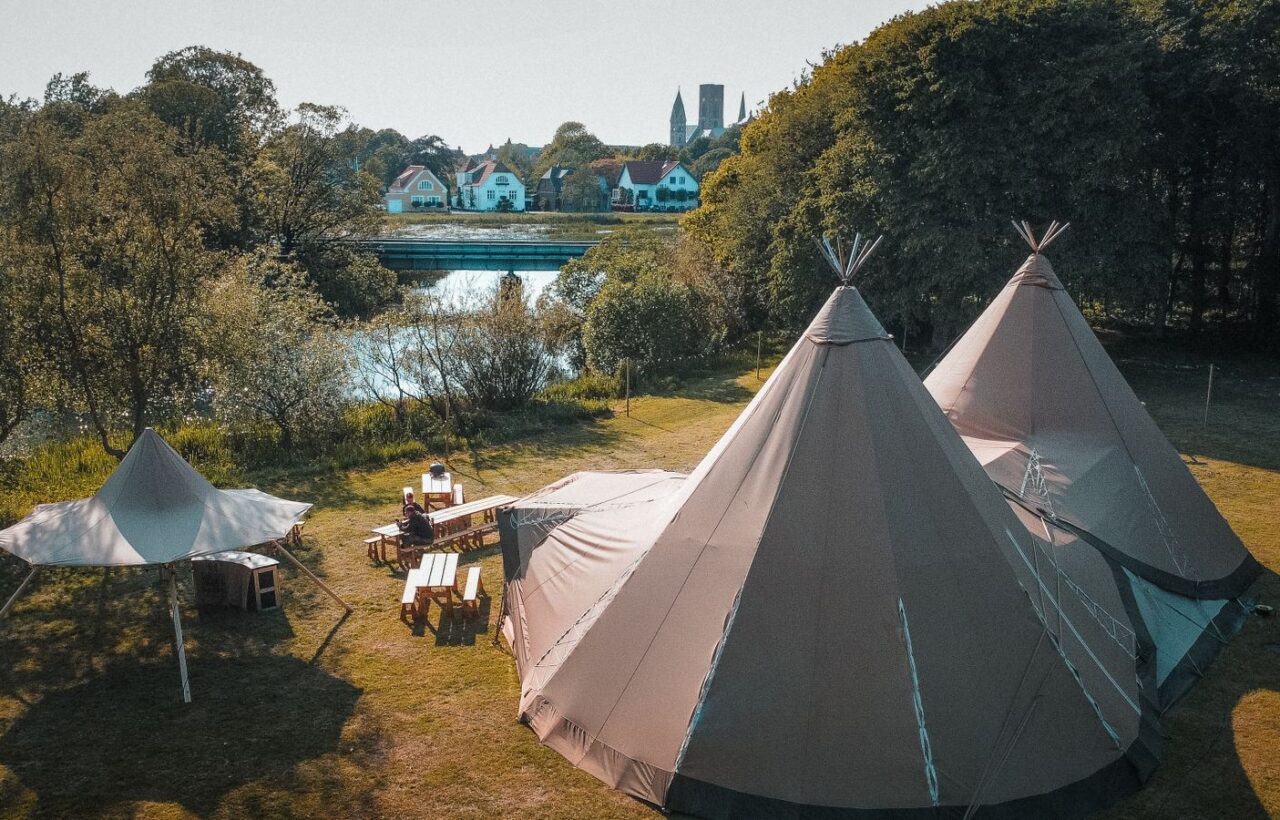
A teepee tent is a cone-shaped shelter held up by a single center pole. That shape is the reason people camp in one: you can stand in the middle, rain runs off the steep walls instead of pooling, and setup is usually stake the base, raise the pole, tension the lines. It is a weak choice for backpacking unless you buy a dedicated lightweight pyramid, and a strong one for car camping, basecamp, and cold trips where a proper stove jack is part of the plan.
The shape also creates the problems. Usable floor space is smaller than the diameter suggests, because the walls slope inward. The pole sits where you want to walk. Single-wall fabric collects condensation if you seal the tent shut. Most models are not freestanding, so soft ground and real stakes matter more than they do with a dome.
Teepee tent camping works when those tradeoffs match the trip. It disappoints when the tent is treated like a cabin with a pointy roof.
What Counts as a Teepee Tent
Commercial camping teepees are not traditional Plains tipis. A traditional tipi uses many poles lashed at the top, smoke flaps controlled by extra poles, and a cover that is pitched as a precise cone. Most tents sold as teepees use one center pole, a sewn cone of polyester, nylon, or canvas, and a door panel. Some add a floor and mesh. Some are floorless pyramids meant for a wood stove.
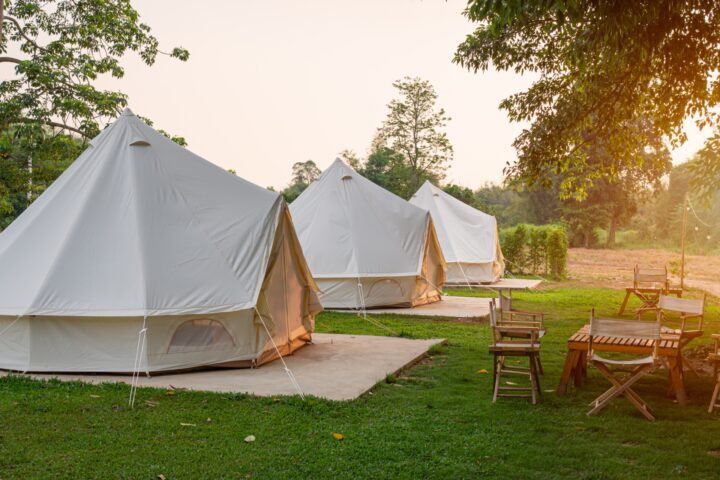
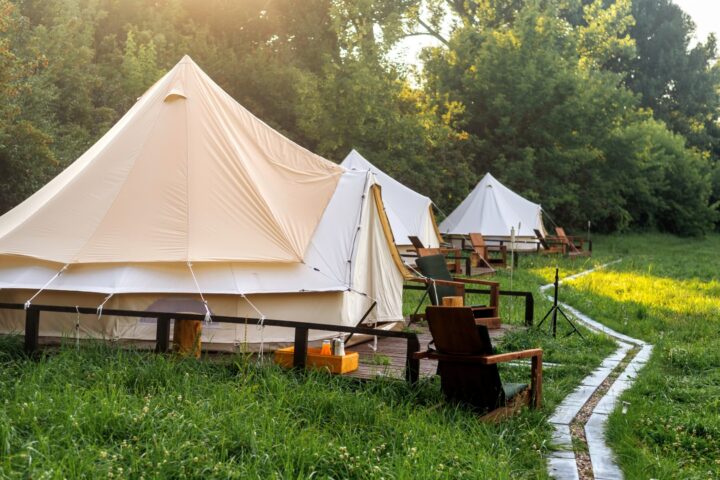
A bell tent is the closer cousin. Both use a center pole and a round floor. A bell tent has a short vertical wall before the roof slopes, so you can push a cot to the edge and still sit up. A true teepee slopes from the peak to the ground, so standing room is concentrated near the pole and the outer ring is storage, not living space. Bell tents usually weigh more and catch crosswind on those upright walls. Teepees shed wind better and give you less furniture-friendly floor.
Dome and cabin tents invert the priorities. They are freestanding or nearly so, pack smaller for the sleep space, and put headroom in a low band across the floor. They cannot take a stove. They also force adults to crouch for most of the evening.
When Teepee Tent Camping Is the Better Shelter
Choose a teepee when the site is reached by car or a short carry, and at least one of these is true:
- Adults want to stand and change clothes without a vestibule dance.
- The group is sharing one shelter and needs open floor for bags, a table, or kids moving around.
- Wind is a real concern and the tent will be fully guyed.
- The trip is cold enough that a stove-ready shelter is the point, not a bonus.
Skip it when the walk from the car is long, the ground will not take stakes, or the goal is the lightest shelter that still keeps rain off a sleeping bag. A quality family teepee often lands in the 10–25 lb range. Ultralight pyramid shelters can drop to roughly 3–6 lb, but they usually arrive floorless, with no bug net unless you add one, and they still need stakeable ground.
Capacity numbers on budget teepees are optimistic. A 10-foot model may be labeled for four or five people and still feel right for two adults plus gear once the pole, sloping walls, and sleeping pads are in place. Measure the diameter, then subtract a ring of unusable edge and the pole footprint before you trust the sleep rating.
How to Pitch One So It Stays Taut
Site selection does more work than the pole. Use ground that is level, drains away from the tent, and will hold stakes. Low meadows collect cold air and moisture overnight. A teepee that is not freestanding cannot be moved after it is up without pulling every stake, so orient the door before the first peg goes in. For comfort, face the door away from the prevailing wind and weather. Check the maker’s note if the tent is a pyramid designed to take wind on the door.
A reliable pitch for a single-pole camping teepee:
- Spread the tent and confirm the door direction and the stove-jack side, if there is one, before any stake is set.
- Stake the base into an even circle. Start at the door, then the point opposite the door, then work around so the floor is not pulled into an oval. Soft or sandy soil needs longer stakes than the thin pegs packed with many budget tents.
- Insert the center pole and raise it until the walls are smooth. Too low and the fabric sags and flaps. Too high and the base bells outward, which is a common leak and flapping point on pyramid-style shelters.
- Tension the guylines so the cone is even all the way around. A wrinkle that runs to one stake usually means that stake is in the wrong place, not that the pole is short.
- Recheck after the first hour. Synthetics relax as they warm, and canvas tightens when it gets damp.
If the tent has a sewn-in floor, keep the floor flat rather than stretched into a bowl. If it is floorless, a separate groundsheet should stop inside the wall line so rain running down the outside cannot wick underneath.
Raise the pole only until the walls sit taut, not until the base flares into a bell shape, which is a pitch error rather than a design feature. In sand, forest duff, or after rain, the included stakes are unlikely to hold.
Living with the Center Pole and the Sloping Walls
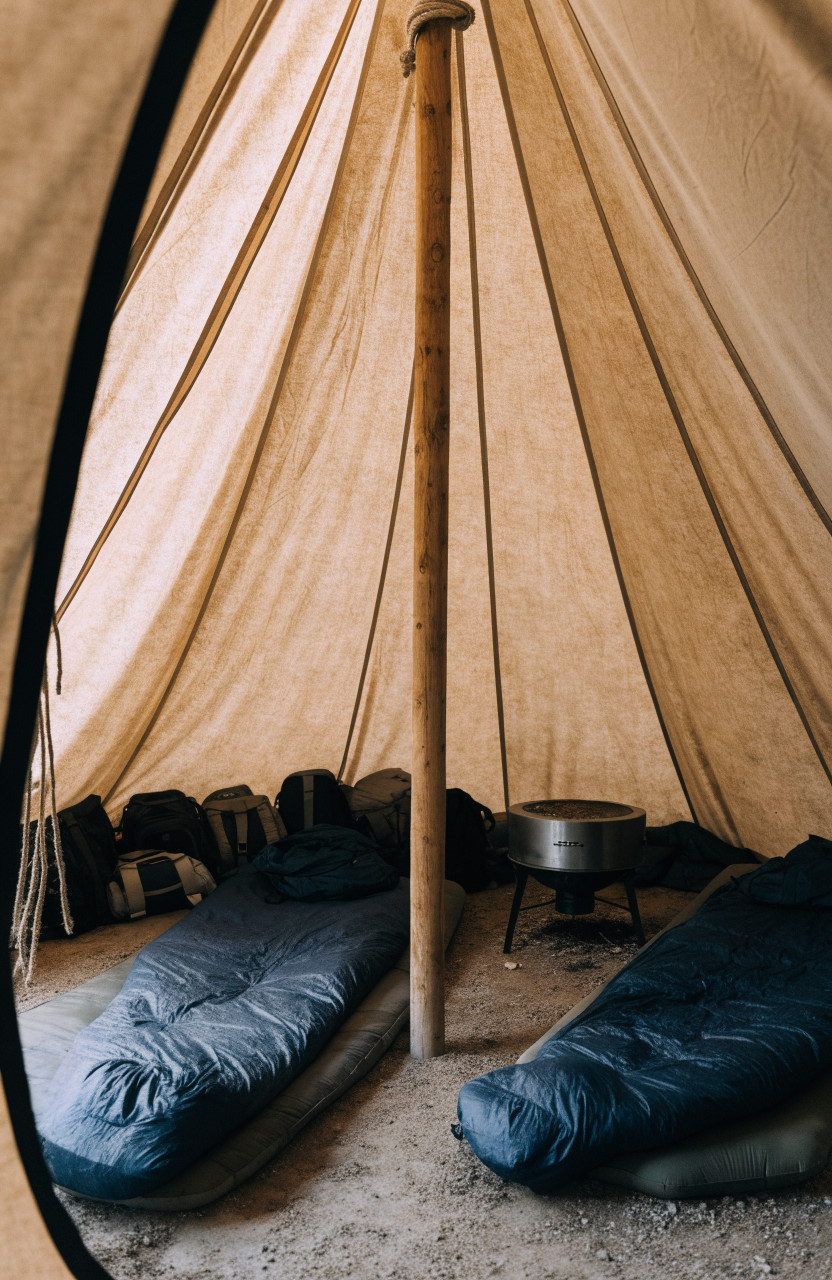
The pole is the feature people underestimate. It blocks the natural path through the door and splits the floor into wedges. Place sleeping pads in those wedges, heads toward the wall and feet toward the pole, or run pads parallel to the wall if the diameter allows. Keep the stove, if you use one, offset from the pole on the jack side, with a clear radius around the stove body.
Gear belongs at the edges. The low outer ring is poor for sitting and good for duffels, boots, and a bin of food. A small hanging loop or a line from the pole can hold a lantern, but keep anything that melts or drips well clear of a stove.
Bug pressure changes the layout. A floored teepee with a mesh inner is a normal camp bedroom. A floorless hot tent is closer to a tarp with walls: you need a groundsheet, a bug strategy, and a plan for boots and wet gear that does not soak the sleep system.
Rain, Wind, and Condensation
The cone handles rain well when the fabric is actually waterproof and the pitch is tight. Water sheds instead of sitting in pockets. Seams are the weak point on many inexpensive polyester teepees. If the tent is single-wall and the seams are not taped, seal them before the first wet night, and do not trust a “waterproof” claim that has not been checked at the floor seam.
Wind performance depends on anchors more than on the silhouette. The cone presents less flat wall than a cabin tent, which is why a well-guyed teepee can ride out exposed sites that punish boxy shelters. One pulled stake removes that advantage and loads the remaining points and the pole. Carry stakes matched to the soil, and add guylines at the mid-panel points if the tent has loops for them.
Condensation is the complaint that shows up after the first calm, cool night. Warm, moist air from breath, wet clothes, and cooking hits cold fabric and turns to water. Single-wall nylon does this readily. Canvas breathes better and usually condenses less, at the cost of weight and a strict drying rule: pack canvas wet and it mildews.
Air has to move. Teepee ventilation works as a chimney: a small opening low on the wall and an open peak vent. Closing every zipper to “hold the heat” is what wets the sleeping bags. On a still night, a gap of an inch or two at the base, plus the apex vent, moves more moisture than a single roof vent with the walls sealed. On a windy night you can close the upwind gap and leave a downwind opening. Pitching on a slight rise, rather than in a hollow, reduces the moisture available to begin with.
Stoves, and What Not to Burn Inside
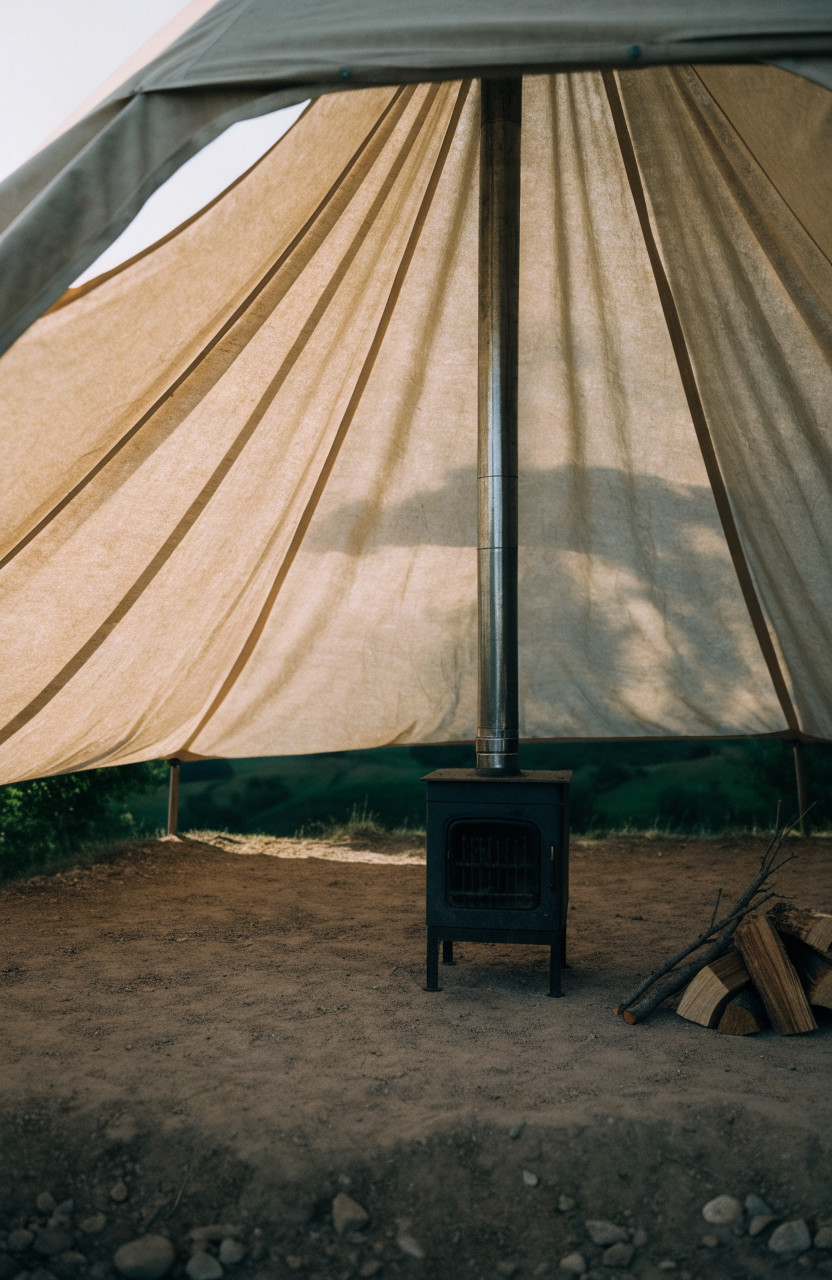
Some teepees and pyramid tents are built for a small wood stove: a stove jack, a spark arrestor plan, and clearances stated by the maker. That is a different tool from a family polyester teepee with no jack. Do not cut a hole in a tent that was not designed for one, and do not run a stove in a model whose instructions forbid it.
A correctly installed wood stove vents combustion gases out a chimney. The tent still needs intake air, and the stove should be set on a fireproof pad with the clearances the manufacturer specifies. Carbon monoxide risk rises when the draft is poor, the pipe is blocked, or the stove is damped down so hard that smoke spills into the tent. A battery carbon monoxide alarm is a reasonable backup, not a substitute for draft and ventilation.
Unvented heaters are a separate problem. Propane and similar fuels produce water vapor and carbon monoxide as they burn. Consumer safety guidance is direct: do not use portable fuel-burning heaters or lanterns while sleeping in a tent. People die from this every year, and the early symptoms resemble a cold or the flu. If the goal is a warm shelter overnight, use a tent and stove system built for that job, follow that maker’s ventilation rules, and do not improvise with a buddy heater.
Canvas and polycotton still need airflow with a stove running. They handle moisture better than coated nylon, but they are not a closed room.
The peak of a teepee may look like a chimney, but it is not a flue. An unvented stove has no place inside for cooking, no matter how open the top of the tent appears.
What to Check Before You Buy
Ignore the person-count on the hangtag and compare these instead:
- Peak height and diameter. Under about 6.5 feet at the center, most adults will still crouch. A larger diameter does not fix a low peak.
- Floor or floorless. Floored models are simpler for summer family trips. Floorless models are lighter and better for stove use, and they demand a groundsheet and more site care.
- Fabric. Coated polyester is cheap and light and needs seam care. Silicone-coated nylon sheds water well and packs smaller. Canvas breathes and lasts if it is dried, and it is a car-camping material.
- Stove jack. Standard on hot-tent models, absent or unsafe to add on most family teepees.
- Pole. A sectional metal pole is normal. Confirm it cannot slip off its peak fitting in wind.
- Stakes and guylines. Budget kits often include stakes that bend. Plan to replace them.
- Weight versus carry. If the tent will leave the parking pad, weigh the packed tent, pole, and stakes together.
Price tracks material more than shape. A large polyester teepee can be an inexpensive basecamp. A canvas bell-style or a expedition pyramid costs more because the fabric, jack, and pole are built for repeated weather, not a single fair-weather weekend.
A Simple Way to Decide
Use a teepee when the trip is a basecamp, the walk is short, and standing room or a stove matters more than pack weight. Use a dome or tunnel when you are walking far, the ground is hard, or you want the most sleep space per pound. Use a bell tent when the priority is furniture against the wall and you can accept more weight and more wind surface.
The cone is an old shape because it works. It works on a modern camp trip only if the pitch is even, the stakes hold, and the vent at the top stays open.
Questions Campers Actually Ask
Are teepee tents good in the rain? They shed rain well when the seams are sealed, the fabric is tight, and the base is not flared. Floor seams and an undersized groundsheet cause more wet nights than the cone shape does.
Can you stand up in one? In the center, usually yes, if the peak is around 6.5 feet or taller. A step toward the wall and the ceiling drops fast. That is the main difference from a bell tent.
Do they work for winter camping? Only models built for it: stove jack, appropriate fabric, and a stove sized to the volume. A summer polyester teepee with no jack is a three-season shelter regardless of the label.
Why is the inside wet when it did not rain? Condensation. Breath and damp gear met cold single-wall fabric, and the vents were closed. Open a low gap and the peak vent, and dry the tent before it goes back in the bag.
Is the center pole a deal-breaker? For two people with pads arranged around it, usually no. For a family trying to use the rated capacity, often yes. Lay the pads out at home in a circle the size of the floor before you commit.