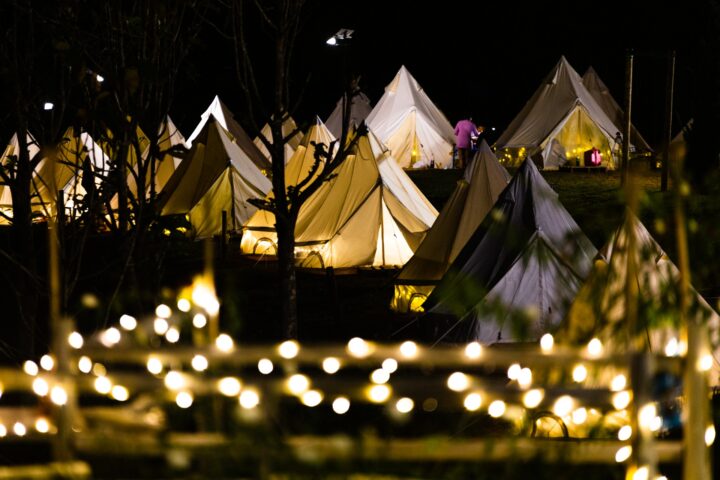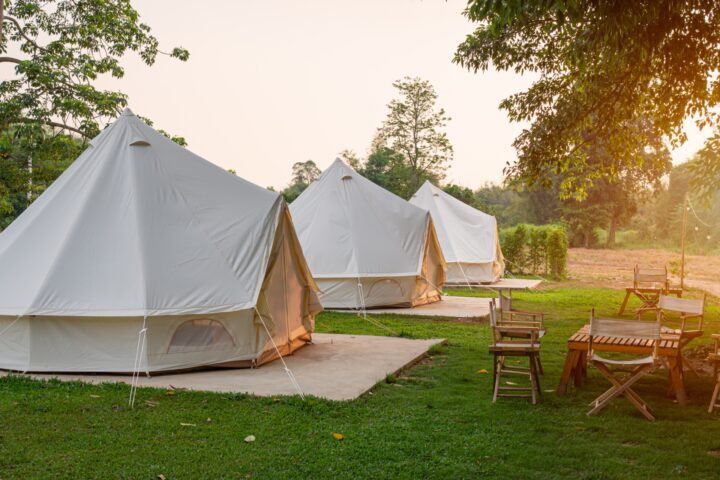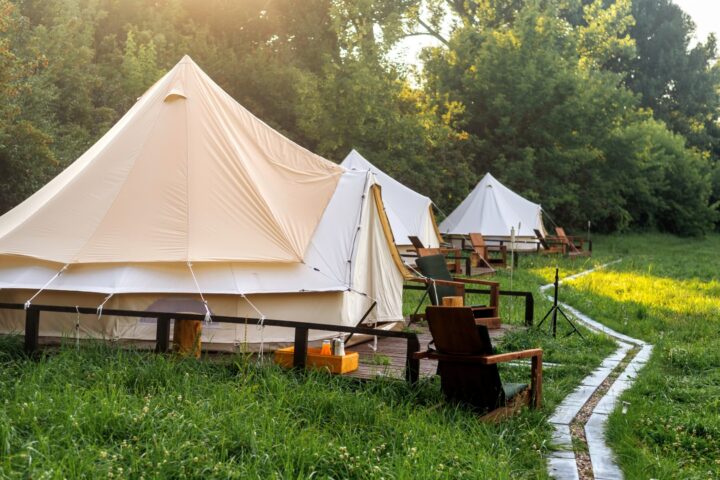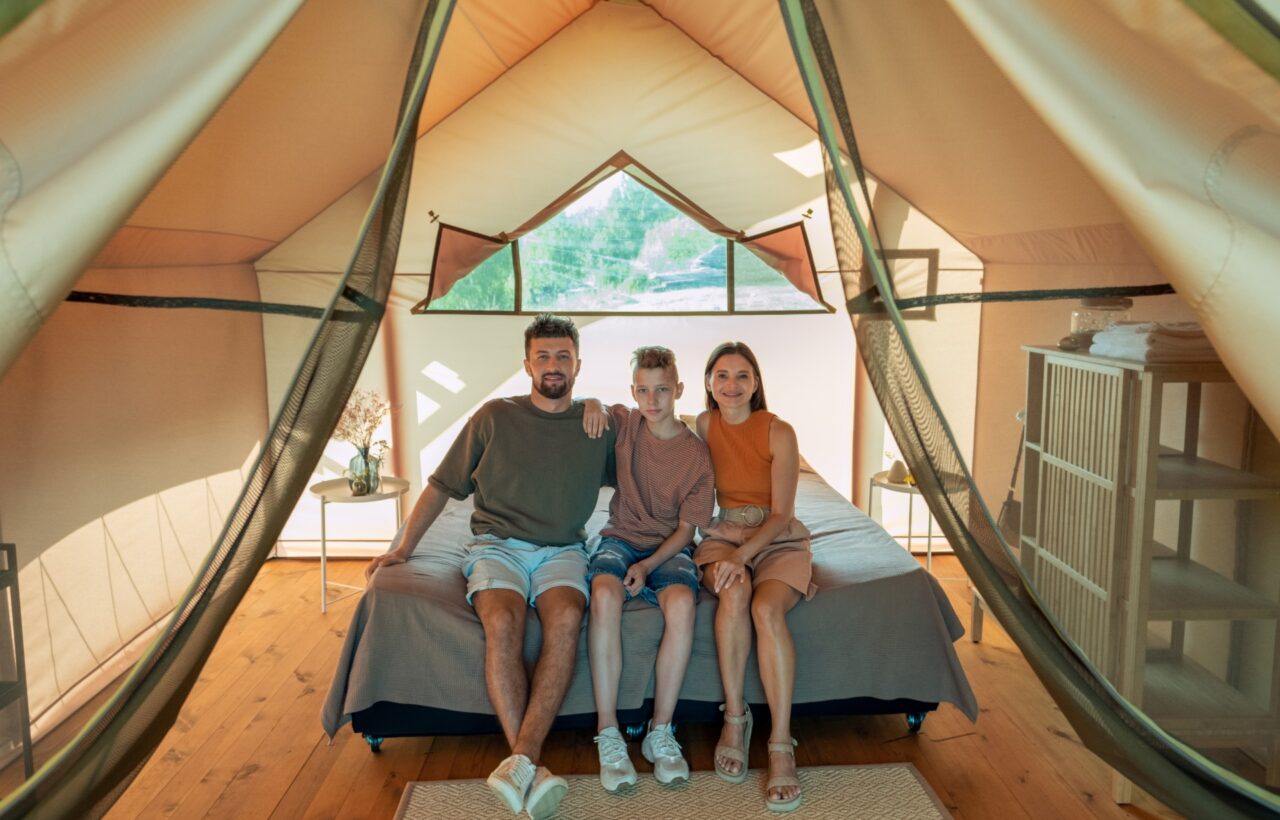
Many parents assume family tent glamping means booking a furnished safari or bell tent. Booking is one route. The other is building the same comfort into a tent you own and pitch at an ordinary campground.
Either way, comfort rests on the same few things: canvas or a tall cabin tent, a real bed or cot off the ground, enough floor that nobody sleeps on the gear, and a bathroom close enough for a 2 a.m. trip. The useful question is which discomforts you can handle with kids in the car, and how often you plan to go.
What separates family tent glamping from ordinary tent camping
Glamping is not a tent style. It is a short list of upgrades that change the trip for children and the adults managing them.
The upgrades that matter most:
- Sleeping off the cold ground. A camp cot, a thick pad with real insulation, or a mattress on a platform stops the ground from pulling heat out of a sleeping child. An air mattress alone often fails this test: it loses air, and the air inside it gets cold.
- Standing height. Adults who can change a diaper or find a headlamp without crouching will stay longer. A peak around 6 feet 6 inches is a practical floor for cabin-style family tents; wall height matters as much as the peak, because that is where people actually stand.
- Room to zone the tent. Parents on one side, kids on the other, gear in a corner. A single open floor with four sleeping bags touching is still camping, even if the tent is expensive.
- Light and airflow. Mesh windows, a second door, and a lantern change rainy afternoons. Dark tents make bored kids faster.
- A short walk to a toilet, or a toilet in the tent. This is the difference between a relaxed evening and a parent standing in a field with a flashlight.
Resort glamping often adds a wood stove, real linens, a deck, and sometimes an ensuite shower. DIY glamping rarely includes plumbing. Both can still be tent camping.
Booked tent or your own tent
Use trip frequency and the ages of the children, not the photos.
| Decision point | Furnished glamping tent | Your own family tent, glamped up |
|---|---|---|
| Best first trip | Yes, if budget allows | Only if you have already practiced the pitch at home |
| Setup | Arrive and unpack | 30–90 minutes, longer in wind or with toddlers underfoot |
| Sleep | Bed, linens, often a cot add-on for one child | You supply cots, pads, bags, pillows |
| Bathroom | Shared bathhouse, or private ensuite on higher-priced tents | Campground toilets and showers, distance varies by site |
| Weather buffer | Stove and solid canvas on many sites | Depends on tent fabric and whether you packed layers |
| Cost pattern | High per night, nothing to store | Higher upfront, low after several trips |
| Repeat use | Pay again each stay | Gear you already own |
Book the furnished tent if this is the first overnight with a baby or toddler, if only one adult can manage setup, or if the point of the trip is a park or beach and you do not want the campsite to become the project. Under Canvas, for example, lists family layouts such as a deluxe tent with an adjacent kids’ tent (two twin beds) and private bathroom; its Great Smoky Mountains camp listed a starting rate of $251 per night for the 2026 season, with more expensive tent types above that. Other operators sit lower or much higher depending on park proximity and whether meals are included.
Bring your own tent if you expect to camp more than a few weekends a year. A workable DIY setup — tall tent, cots or a good pad system, real pillows, lighting — is commonly quoted in the $1,000–$3,000 range before campground fees. Spread across ten trips, that is often less than two or three nights in a premium safari tent. Canvas costs more and weighs more than polyester, and it needs to dry fully after rain, but it breathes and holds up for years if you store it dry.
A middle path exists and is underused: a developed campground with a large cabin tent or bell tent you own, plus the campground’s bathhouse and a reserved site near it. You get electricity hookups at some sites, a picnic table, and a short bathroom walk without resort pricing.
How much tent a family actually needs
Ignore the “sleeps” number on the box. A tent rated for six usually fits six people shoulder to shoulder with no bags, no shoes, and no room to sit up. For comfortable family tent camping glamping, plan on about half the advertised capacity.
Practical footprints:
- Two adults and one young child. A tent in the 140–200 square foot range can work if the peak is high and you are using cots or a single mattress plus a small pad, not three full air beds.
- Two adults and two children. Aim closer to a 10-by-14 cabin layout or a bell tent around 16–20 feet across. Product guidance aimed at family glamping often points to a 20-foot tent, on the order of 300 square feet, when the goal is a king-size bed plus two cots and walking space. That is resort-scale. At a campground, a well-laid-out 8- or 9-person cabin tent with near-vertical walls is the more realistic owned option.
- Five or more, or a multi-night rain plan. One tent gets miserable. A sleeping tent plus a screened canopy or a second smaller tent for older kids is calmer than one enormous floor.
Check site rules before you buy. Many public campgrounds limit tent footprint, number of tents per site, and where you can stake. A 20-foot bell tent that looks perfect online may not fit the pad you were able to reserve.
Sleep layouts that survive the night
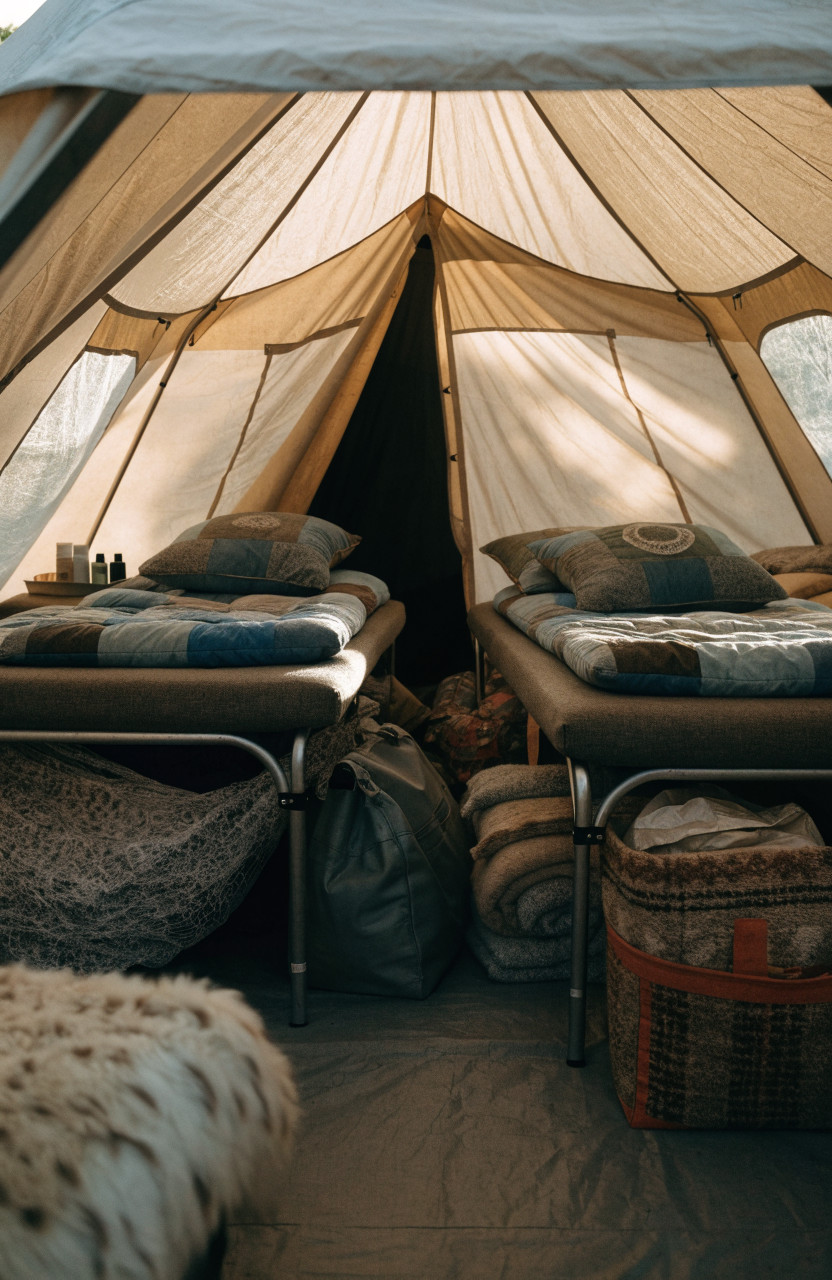
The bed configuration decides whether the trip feels like glamping.
Cots work best for school-age kids and adults. They lift sleepers off the ground, create storage underneath, and do not sag by morning. A standard camp cot is often enough; a pad on top of the cot matters more than a luxury frame. Air mattresses suit a parent bed in a large tent if you bring a reliable pump and accept that they sleep colder. Thick closed-cell or insulated inflatable pads are the better default for children, because they stay warmer and do not beach a kid on the floor at 3 a.m. when the valve leaks.
For babies, use a travel cot or firm approved sleep space inside the tent, never a loose setup directly on the tent floor. The floor conducts cold even in summer. Most families do better waiting until an infant is a few months old unless the accommodation is a heated glamping tent with a proper cot already in place.
Two timing problems show up on almost every family trip. Tents brighten and heat up early, so 5:30 a.m. wake-ups are normal with toddlers; a site with afternoon shade and a door that can face away from the morning sun helps. Bedtime runs long because the place is new. Build an extra 30–45 minutes into the evening instead of treating a late bedtime as a failure.
If you are booking, ask what the kids actually sleep on. A king bed for adults and a single camp cot add-on is common; some operators charge roughly $25–$35 per night for that cot. Adjacent kids’ tents with real twin beds are the layout that keeps both generations asleep. Futons on the floor are a step down from that, and they should be described that way in the listing.
Bathrooms, cooking, and the limits of the word “glamping”
Read the bathroom line before the photo gallery.
Ensuite means a toilet, sink, and usually a pull-chain or low-flow shower inside the tent or in a private attached room. Shared means a bathhouse with lockable stalls, sometimes a short walk, sometimes across the property. “Toilets on site” can mean a vault toilet with no running water. Families with nighttime needs should filter for private or immediately adjacent facilities, then confirm the walk in daylight on arrival so the route is obvious after dark.
Cooking splits the same way. Some glamping stays include a kitchenette or a camp kitchen with gas burners. Many safari tents expect you to use a communal fire pit and a picnic table, or to eat at an on-site café. If you are self-catering, simple meals beat ambitious ones: things that need one pot, food that does not have to be kept cold for long, and breakfast that does not require a clean pan at dawn. At a campground, a two-burner stove on the table is enough. Keep food and scented items stored to local rules, especially in bear country; a nice tent does not change wildlife rules.
Electricity is another listing detail that gets skipped. Battery lanterns are standard in many canvas resorts. Outlets, if they exist, may be limited. Pack a power bank either way.
What to pack when the tent is already there
Furnished stays fail when families pack as if they were backpacking, or pack as if they were moving house. Confirm the inventory, then bring the gaps.
Usually still on you: layered clothes, rain jackets, swimwear if there is water, toiletries beyond the basic bottles, any medications, a headlamp per person, and shoes you can slip on for the bathroom. Kids need a small downtime kit — cards, a book, a compact game — because rain and rest hour happen inside the tent. Wool or synthetic sleep socks beat cotton once the temperature drops.
Usually provided, but verify: beds, pillows, duvets or blankets, towels, a fire pit, sometimes firewood, sometimes s’mores kits. Stakes, poles, and a footprint are the resort’s problem.
For a tent you own, the priority order is different. Sleep system first, then a footprint and extra stakes, then lighting, then a weather layer for each person rated below the overnight low you actually expect. Test the full pitch at home, including the cots inside, before the trip. Missing a pole section is a daylight problem in the yard and a bedtime problem at the campground.
Heat, cold, and stoves with children in the tent
Summer afternoons overheat tall tents with the windows closed. Open the mesh, use the rain fly only when you need it, and plan the hot hours outside or under a canopy. Nights are the opposite problem. Rural summer lows often fall into the 40s or 50s °F in much of the U.S., and lower in the mountains or shoulder season. Rate kids’ bags about 10–15°F below the forecast low, and do not skip the pad underneath. A warm bag on a bare tent floor still sleeps cold.
Wood stoves are a genuine glamping advantage and a genuine hazard. Keep roughly three feet of clearance from bedding, bags, and children. Use a screen if kids are small. An adult stays responsible while the stove is hot. A carbon monoxide alarm belongs in any tent where a stove or other combustion heater is burning; crack ventilation even when the tent feels cozy. If fire restrictions shut the stove down, the backup is clothing layers, not a random indoor heater that was not designed for canvas.
Bug pressure is regional. Mesh doors only work if they stay closed. A site near still water in peak mosquito season can erase the luxury of an open-air evening; ask about that before you book a “sunset deck” trip in midsummer.
Where family glamping slides back into hard camping
Families usually lose the glamping part of the trip in predictable ways.
- Choosing the tent for the photo instead of the floor plan. A beautiful bell tent with one door and no standing room at the walls is a hard place to dress two kids.
- Trusting the sleeps number and then adding a pack-and-play, a dog, and four duffels.
- Booking a glamorous tent a long walk from the only toilets.
- Skipping the home pitch, then assembling a new tent in the dark while someone needs dinner.
- Treating air mattresses as the whole sleep system.
- Ignoring the morning sun. The tent becomes a greenhouse, and the early wake-up gets blamed on the kids.
- Overpacking activities and underpacking margin. One short outing and a loose afternoon beat a schedule that collapses when someone will not put on shoes.
What it costs, without the brochure range
Private tent sites in a 2026 campground pricing analysis sat at a median around $45 per night early in the year, with later-season private tent medians closer to the mid-$50s. Glamping at traditional campgrounds in that same early-2026 dataset had a median around $145, while standalone glamping medians later in 2026 were reported near $209, with safari-tent averages often in the mid-hundreds and premium park-adjacent canvas higher still. Geography moves these numbers more than the season does.
So a long weekend in a furnished family tent can cost as much as a modest hotel, sometimes more, once you add a cot, firewood, and meals. The trade is that you are not packing a tent, and the beds are made. A family that already owns a tall tent and cots is mostly paying the site fee plus food. Neither price is the “right” one. The furnished night is cheaper than it looks if it is the only way the trip happens. The owned setup is cheaper only if you use it.
Questions families ask before they book or buy
Is a glamping tent suitable with a baby? It is the easier outdoor option, not an automatic yes. You still need a firm, flat sleep space off the tent floor, a way to keep the baby warm after dark, and a bathroom plan that works at night. Heated canvas with a proper cot is a different trip from a nylon dome in a standard site.
Do kids need camping experience first? No. Furnished tent stays are built for people who have never pitched anything. The learning curve is the outdoors itself: bugs, dark, weather, and a bedtime that will not match home.
Can we bring our own tent to a glamping resort? Sometimes. A few properties allow a small kids’ tent on a glamping site. Most sell the tent as the accommodation and do not want a second structure on the pad. Ask before you pack it.
Is canvas worth it for a family that camps a few times a year? Only if you have the storage and the vehicle space, and you will dry it after every wet trip. Polyester cabin tents with high peaks are the sensible owned option for occasional use. Canvas earns its weight when you camp often enough that breathability and lifespan offset the bulk.
What should we confirm in the listing before paying? How many real beds, whether kids sleep on cots or the floor, private versus shared bathroom and the distance, what cooking gear exists, whether the stove can be used in the season you are booking, and the exact tent footprint against the site you reserved. Those six answers predict the trip better than the scenery.