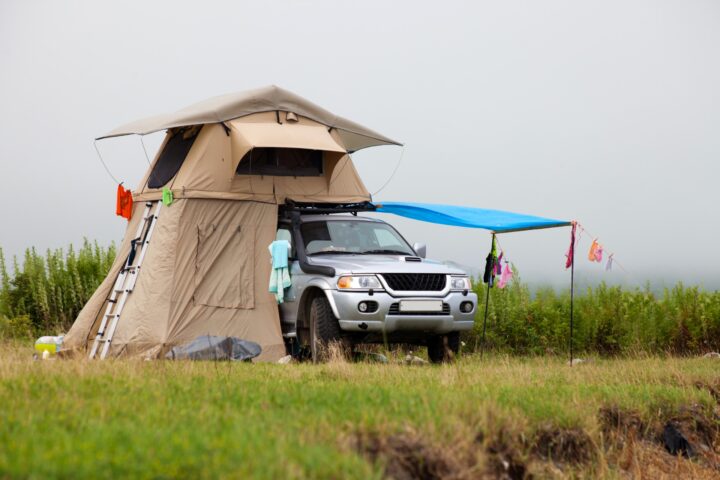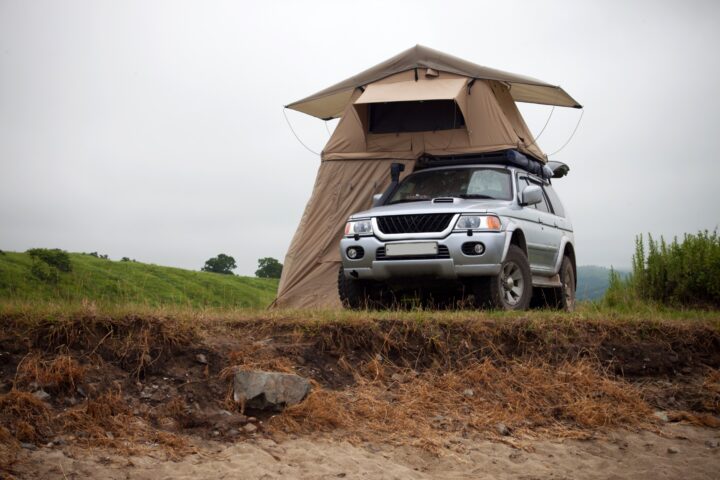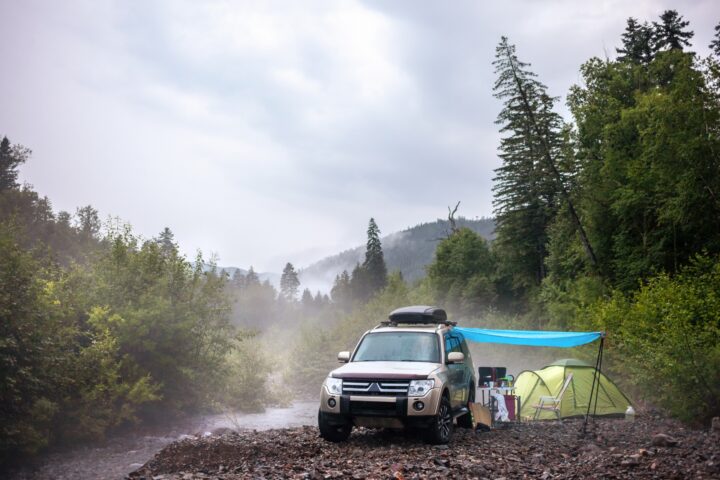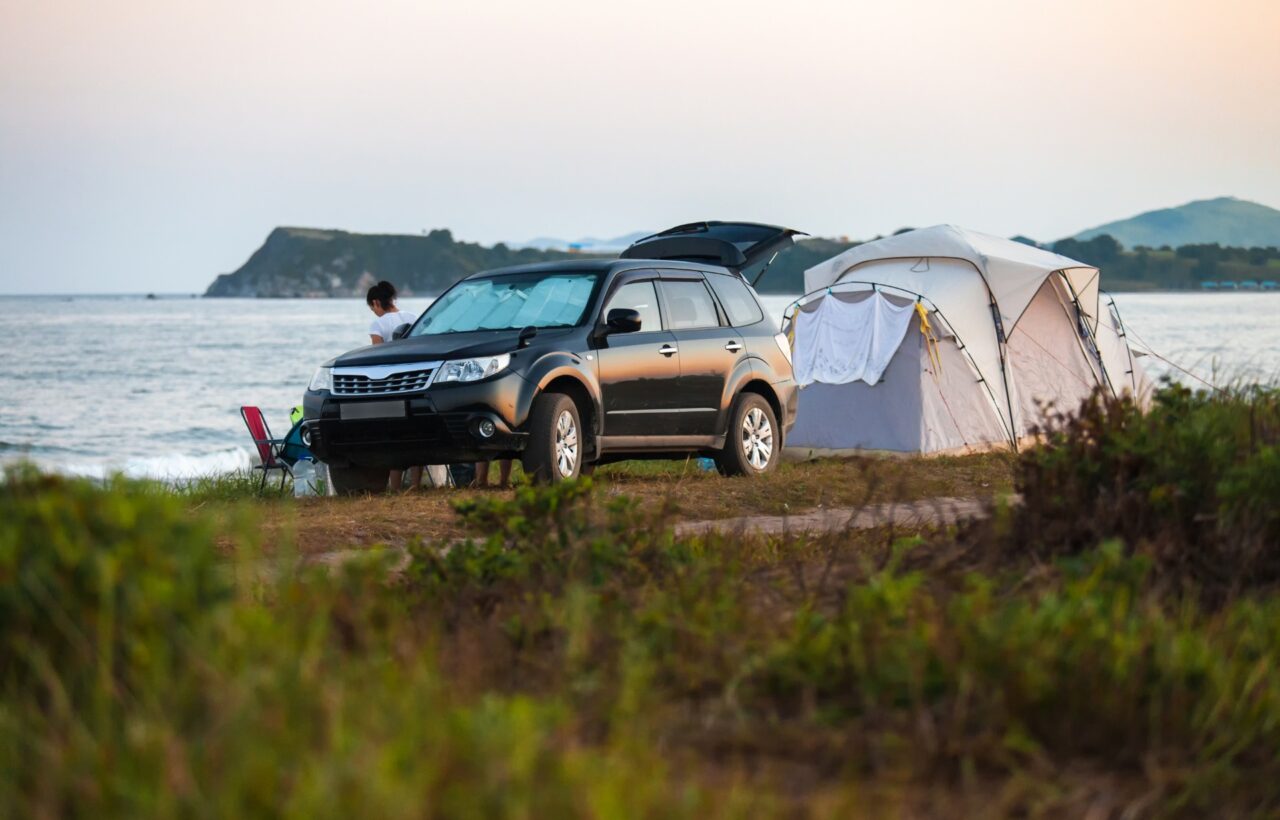

An SUV camping tent attaches to the open rear hatch and turns the cargo opening into a doorway between the vehicle and a sheltered room on the ground. The useful part is not the fabric itself. It is the fact that bedding, clothes, and the cooler stay one unzip away, without a walk across wet grass in the dark. That convenience only pays off if the hatch actually seals, the site is level, and you accept that the vehicle cannot leave until the tent comes down.
What an SUV camping tent is, and what it is not
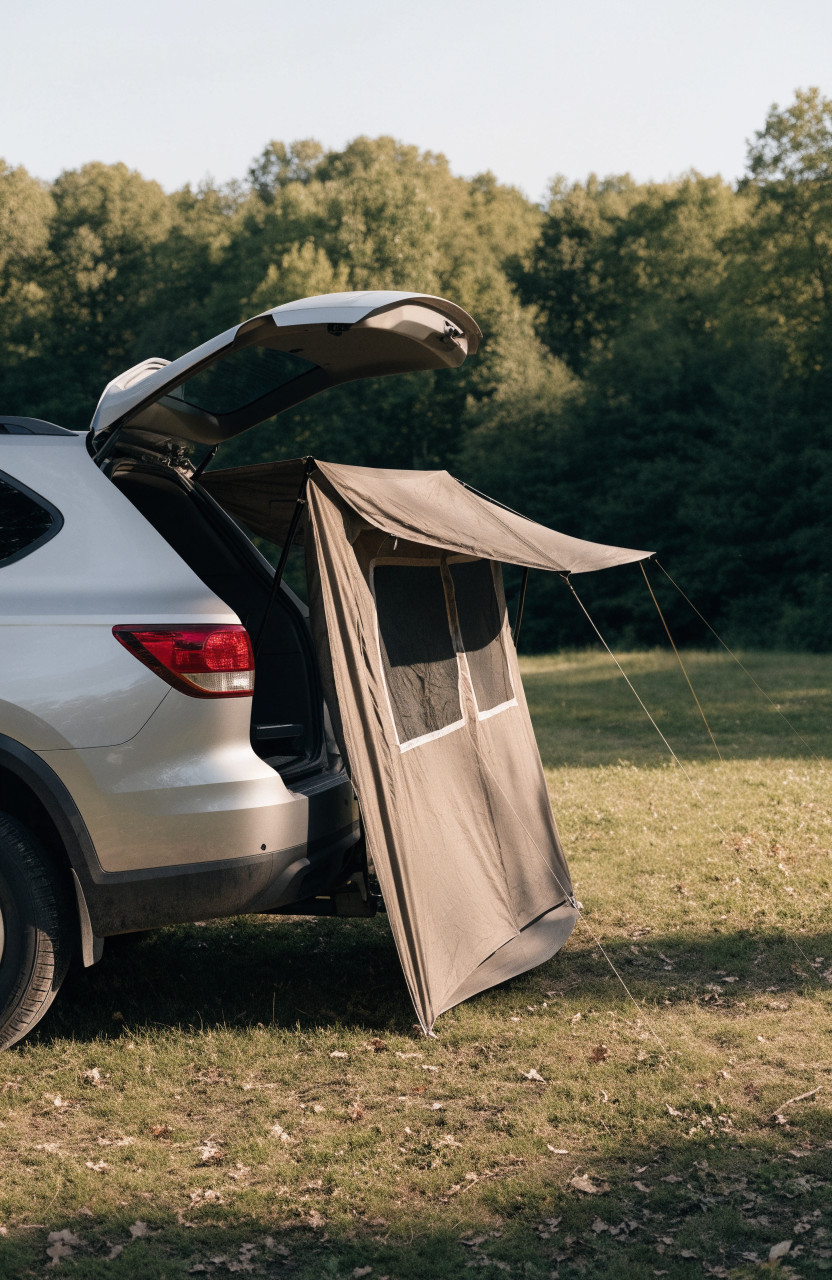
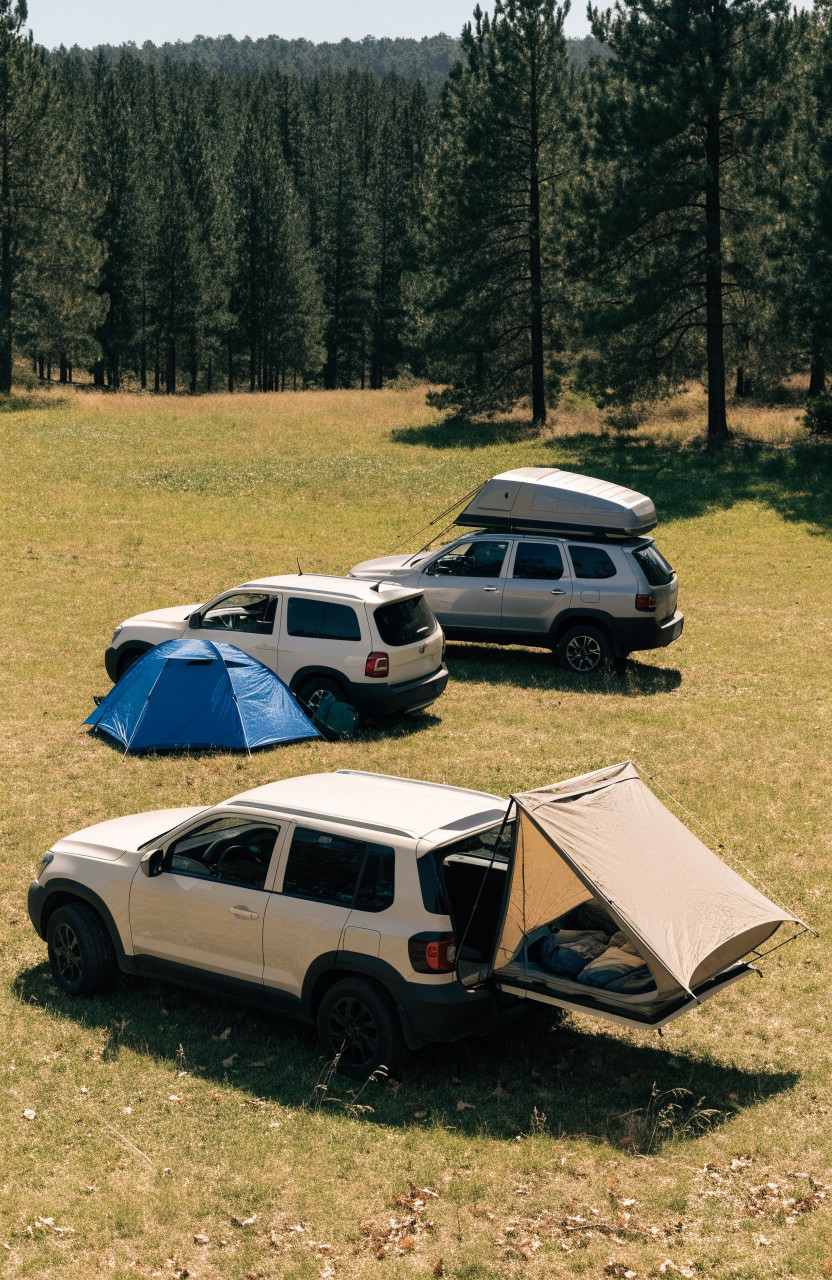
Most products sold as an SUV camping tent are hatch tents, also called tailgate tents. A fabric sleeve or strap system wraps the open rear door. The tent body sits on the ground behind the bumper, with poles or an inflatable frame holding the walls up, and stakes and guylines holding it down. Sleeping can happen on the tent floor, in the cargo area with the rear seats folded, or across both.
That is different from three products that get mixed into the same search results:
- A hatch screen or small tailgate shelter only covers the open cargo door. It keeps bugs out of the vehicle. It does not add a room.
- An awning or side canopy gives shade. It is not a sealed sleeping space.
- A rooftop tent mounts on a rated roof rack and sleeps above the vehicle. It does not use the hatch at all, costs far more, and needs a rack that can carry the dynamic load.
A full hatch tent usually claims a “universal” fit for crossovers, SUVs, and minivans. Universal means the sleeve stretches. It does not mean every hatch shape seals cleanly. Squared cargo openings tend to work better than rounded or heavily sculpted liftgates. Pickup truck-bed tents are a separate design; some SUV models can be adapted to a bed, but the reverse is often a poor fit.
Who an SUV camping tent actually suits
The setup makes sense for drive-in car camping where the vehicle stays parked all night: a developed campground pad, a trailhead lot, or a dispersed site the car can occupy. Families use the cargo floor as part of the sleep space and the tent as a standing room for changing and gear. Parents of small children like the short path between the car seats and the tent. People camping where food has to stay in a locked vehicle also gain a covered route between storage and the sleeping area.
It is a weak choice if any of these are true:
- You need the car for a day trip, a store run, or a trailhead shuttle. The tent has to come down first, which is the same constraint rooftop campers complain about.
- The site is sloped, rocky, or soft. The floor needs a reasonably flat patch directly behind the bumper, and the vehicle has to sit at the right height for the sleeve.
- You want to leave the car and walk the tent to a better spot. A freestanding cabin tent or a quick-pitch hub tent does that. A hatch tent does not.
- Wind is the main weather problem. A large fabric box tied to a vehicle catches gusts. Campers who use these regularly often unhook in strong wind rather than leave the sleeve loaded.
A plain ground tent plus the open hatch under a small tarp solves many of the same problems for less money and without locking the vehicle in place. The hatch tent wins when the sealed connection itself is the point.
Hatch tent, instant tent, and rooftop tent compared
| Decision | Hatch SUV tent | Freestanding ground tent | Rooftop tent |
|---|---|---|---|
| Typical price | About $150–$400 | About $100–$400 for a car-camping tent | Often $1,200–$3,500, plus a rack |
| Setup | Roughly 10–20 minutes once practiced; faster on instant and inflatable frames | 15–30 minutes for a family cabin tent | A few minutes after the rack is already installed |
| Vehicle while camped | Immobilized until the sleeve is removed | Free to drive away | Immobilized until the tent is closed |
| Sleep surface | Tent floor, cargo floor, or both | Ground, with a pad or cot | Mattress on the roof |
| Ground quality | Needs a flat patch behind the bumper | Needs a flat pitch anywhere | Sleeps level if the vehicle is close to level |
| Best fit | Base camp at the vehicle | Mixed trips, groups, walk-in sites | Frequent movers who already have rack capacity |
Capacity numbers on hatch tents usually assume people sleep partly in the vehicle. A “5-person” model with a 9-by-9-foot floor is comfortable for two adults and gear, or a small family if some sleep in the cargo area. Treat the person count as a ceiling, not a plan.
How to match the tent to the vehicle
Measure before you buy. The numbers that matter are hatch opening width and height with the door fully open, rear bumper height, and how much flat ground you will have behind the vehicle. A lifted SUV can leave a gap under the sleeve. A low crossover can force the tent floor to buckle. Spoiler, bike rack, hitch, and rear wiper can all block the sleeve.
Check the maker’s fit chart against your exact model year, not the vehicle class. Napier’s Sportz SUV tent (model 82000) is the model most roundups treat as the default full-size hatch tent: on the order of a 9-by-9-foot floor, a bit over 7 feet of center height, a separate rainfly, and a sleeve aimed at crossovers, SUVs, and minivans. Packed weight is in the high 30-pound range, so it lives in the cargo area rather than on a backpack. Rightline Gear’s SUV tents are the usual lighter, lower-priced alternative and are often listed for both SUVs and trucks, with floors around 8 by 8 feet. Kelty’s Caboose is closer to a conventional camping tent that can connect to a tailgate, with color-coded poles and a removable fly.
Instant and inflatable hatch tents trade pole assembly for a pop-up frame or air beams. They go up faster. They also depend on a working pump, or on a folding pattern that is harder to reverse than the instructions suggest. Aluminum poles bend less than fiberglass in wind and cold. Fiberglass is lighter and cheaper, and it splinters if it is forced.
A model that can also stand alone is worth paying for if you sometimes camp away from the car. Not every “convertible” claim is equal. Read whether the sleeve opening zips shut into a real door, or whether it leaves a hole you have to clip fabric over.
What to look for in the fabric and the seal
Waterproof ratings on these tents commonly fall between 1,500 mm and 3,000 mm hydrostatic head on the fly or floor. A coating in that range sheds rain on the panel. It does not describe the seam, the zipper, or the sleeve. Those are where water gets in.
Prefer a separate rainfly that covers the tent body and extends as far toward the vehicle as the design allows. Some sleeves sit outside the fly. In a driving rain, that gap is the leak. Taped or sealed seams matter more than a higher millimeter number on the fabric. A bathtub floor, with the waterproof material turned up the wall, keeps splash and runoff out better than a flat tarp floor.
Ventilation is the other half of staying dry. Breath and damp gear put moisture into the air. On a single-wall tent that moisture condenses on the ceiling and drips. Mesh doors, high vents, and a fly you can leave partly open on clear nights move that air out. Dark fabric in full sun also turns the room into a greenhouse. Lighter colors and a fly that can be pitched for shade help on hot afternoons.
Other details that change daily use more than the marketing photos:
- A door you can use without crawling past the bumper.
- Enough center height to stand, if anyone in the group is tall. Many “SUV tents” still peak under 6 feet.
- A footprint or groundsheet, sold separately on a lot of models. The sewn-in floor wears fast on gravel.
- Guylines and stakes included, and spare points to add your own in wind.
- Interior pockets. Gear otherwise migrates into the cargo area and blocks the sleep space.
How to set it up so the first night is not the test
Practice once at home. The first pitch is slower than the bag claims, and a windy trailhead is a bad place to learn the pole order.
- Pick a level pad and park so the hatch faces away from the prevailing wind if the site allows it. Set the brake. Chock a wheel on any slope. Turn the engine off and leave it off.
- Clear rocks and sticks from the floor area. A slight downhill tilt behind the bumper pools water under the floor by morning.
- Stake the floor before you raise the poles, on any model that allows it. A staked floor keeps the tent from walking while you fit the sleeve.
- Open the hatch fully. Fit the sleeve over the door edge and snug the straps. Tight enough to kill gaps, not so tight that the fabric saws on paint or a sharp spoiler edge. Rubber-coated magnets sometimes close leftover gaps on curved bodywork. Bare magnets can mark paint.
- Raise the frame, clip the fly, and guy out every available point. The vehicle is an anchor only at one end. The other three sides still need stakes.
- Put a groundsheet under the floor, folded so it does not stick out and channel rain underneath. Add a closed-cell pad in the cargo area. Carpet over metal does not insulate.
Leave a crack of mesh vent open unless rain is blowing in. Close the vehicle doors you are not using so the cabin does not dump cold air into the tent all night, and so interior lights do not drain the battery.
Rain, wind, and the problems reviews understate
Light and moderate rain is what these tents are built for, if the fly is on and the sleeve is seated. Heavy wind-driven rain is a different test. Water follows the hatch seal, the wiper, and any fold in the sleeve. Seam sealer on the fly and floor seams is ordinary maintenance, not a sign the tent failed. A small towel along the bumper lip catches what the sleeve misses.
Wind loads the sleeve and the poles at the same time. Gusts make the fabric drum against the hatch. If the forecast is for strong wind, a freestanding tent pitched beside the car, with the hatch used only as a gear door, is often the more stable camp. If you stay with the hatch tent, add guylines, lower the profile if the design allows, and do not leave it up unattended.
Heat is the other common complaint. Polyester walls in direct sun, plus a vehicle that has been baking all day, push the interior well above the outside air. Pitch with the long side in shade if the pad allows, keep the fly on as a sun shield with the walls vented, and do not expect the tent to replace shade from trees.
Bugs find the same gaps rain does. A sleeve that looks closed in daylight often has a finger-width opening at the corners of the hatch. Walk the seal with a flashlight before dark.
Safety rules that are not optional
Do not run the engine with the hatch open and the tent attached. The exhaust outlet sits close to the floor and the sleeve. Carbon monoxide is odorless, and a fabric room does not vent it reliably. Product guidance for hatch tents treats a running engine as a poisoning risk, not a heating method. The same rule applies to fuel-burning heaters, lanterns, and stoves inside the tent or the connected cabin. The U.S. Consumer Product Safety Commission warns that portable fuel-burning heaters and lanterns should not be used while sleeping in tents, campers, or vehicles, and that carbon monoxide symptoms are easy to mistake for a cold or flu.
A battery-powered carbon monoxide alarm in the sleeping area is a reasonable backup. It is not permission to idle the car. If you need heat, use insulation: a sleeping pad with a real R-value, a bag rated below the night’s low, and dry clothes. If you need cooling, a battery fan moves air without exhaust. Electric vehicles are a separate case for climate control, but the tent is still a poor insulator, and any combustion heater remains off-limits inside it.
Also plan the battery. Dome lights, a phone charger on accessory power, and an open door switch can leave you with a no-start in the morning. Use a power station for lights and fans.
Frequently asked questions
Can you sleep entirely in the SUV and use the tent as a room? Yes. That is how many owners use a smaller tailgate shelter. The limit is cargo length with the seats folded, and how flat the load floor is. A pad matters more than the tent brand.
Do these tents work on a minivan or crossover? Often, if the hatch opening matches the sleeve range. Very small crossovers can hold the sleeve and still look wrong because the tent floor is wider than the vehicle. Check the fit chart and the return policy.
Will it stay up in a storm? Rain, usually, if the fly and seams are sound and the site drains. Wind is the weak case. Stake every point and do not treat the vehicle as a full anchor.
Is a rooftop tent better? Only if you already have a properly rated rack, camp mostly as a pair, move sites often, and accept the cost, fuel economy, and garage-height tradeoffs. For a family at a campground a few times a year, a hatch tent or a normal cabin tent is the more proportional buy.
What should you do if the sleeve leaks? Confirm the fly covers as much of the sleeve as it can, seal the tent seams, and add a small diverter or towel at the bumper. If the hatch shape leaves a structural gap, magnets or a different model fit better than more seam sealer.