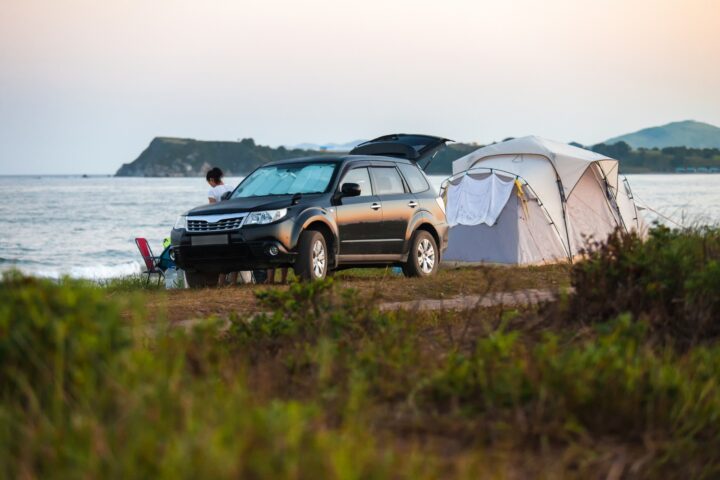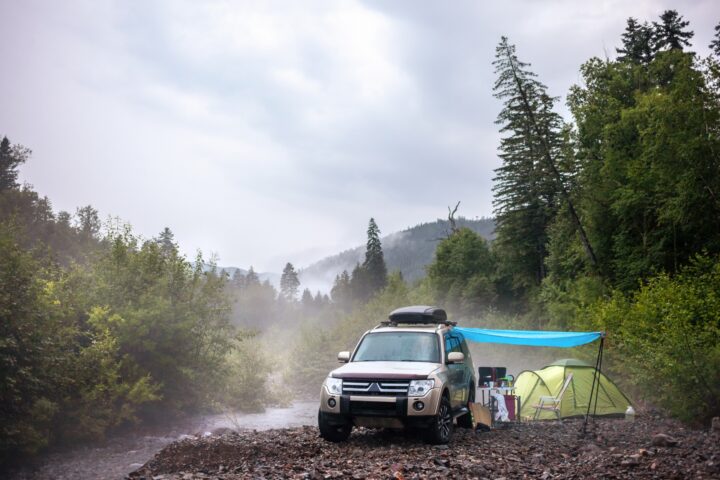
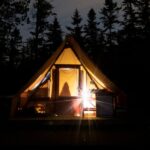
Your pickup already has a raised, dry platform: the bed, a shell or the roof can all serve for truck tent camping, keeping you off wet ground. The key question is whether you need to drive away from camp during the day, because a bed tent strapped to the rails ties the truck to the site.
The twelve ideas below are grouped by how the shelter attaches. A $100 to $400 bed tent is the cheapest raised sleep. A hard shell or rooftop tent costs more and changes how the truck drives. A ground tent beside an empty bed suits trips where the truck keeps moving.
Match the idea to the truck and the trip first
Measure the bed with the tailgate closed. Full-size short beds are usually about 5.5 feet, standard beds about 6.5 feet, and long beds about 8 feet. Midsize trucks such as a Tacoma, Colorado, Ranger, or Maverick are shorter and narrower, so a “full-size” tent often will not strap correctly. Confirm the maker’s bed-length range before you buy.
Then answer three questions:
- Do you stay in one spot, or drive out for trails, fishing, or town runs? A pitched bed tent means the truck is camp. You tear it down to leave.
- How many people sleep there? Two adults is the honest limit of most beds once a mattress is in. Kids, dogs, or a third adult need a second room.
- What is the weather? Polyester bed tents are three-season gear. Canvas or a hard shell is the version that still works when nights drop near freezing.
| Idea | Typical cost to start | Setup once practiced | Truck free while camped? | Best trip |
|---|---|---|---|---|
| Bed tent over the rails | $100–$400 | 10–20 min | No | Weekend campground |
| Floorless bed tent | $150–$300 | 10–15 min | No | Hunting or fishing with gear in the bed |
| Bed tent plus ground room | $300–$500 | 20–30 min | No | Family or dog trips |
| Hard shell or cap | $1,000–$3,000+ | None after install | No | Repeated weekends, mixed weather |
| Rooftop tent on a bed rack | $1,500–$4,000+ | 1–5 min | Bed free, truck not | Moving camp often |
Twelve truck tent camping ideas
1. Classic bed tent over a cleared bed
This is the standard truck tent: fabric walls and a rainfly strap to the bed rails, poles hold the roof, and you sleep on the bed floor with the tailgate down or closed depending on the model. Brands in this category, including Napier’s Backroadz and Sportz lines, are sized by bed length and usually claim a practiced setup near 10 minutes.
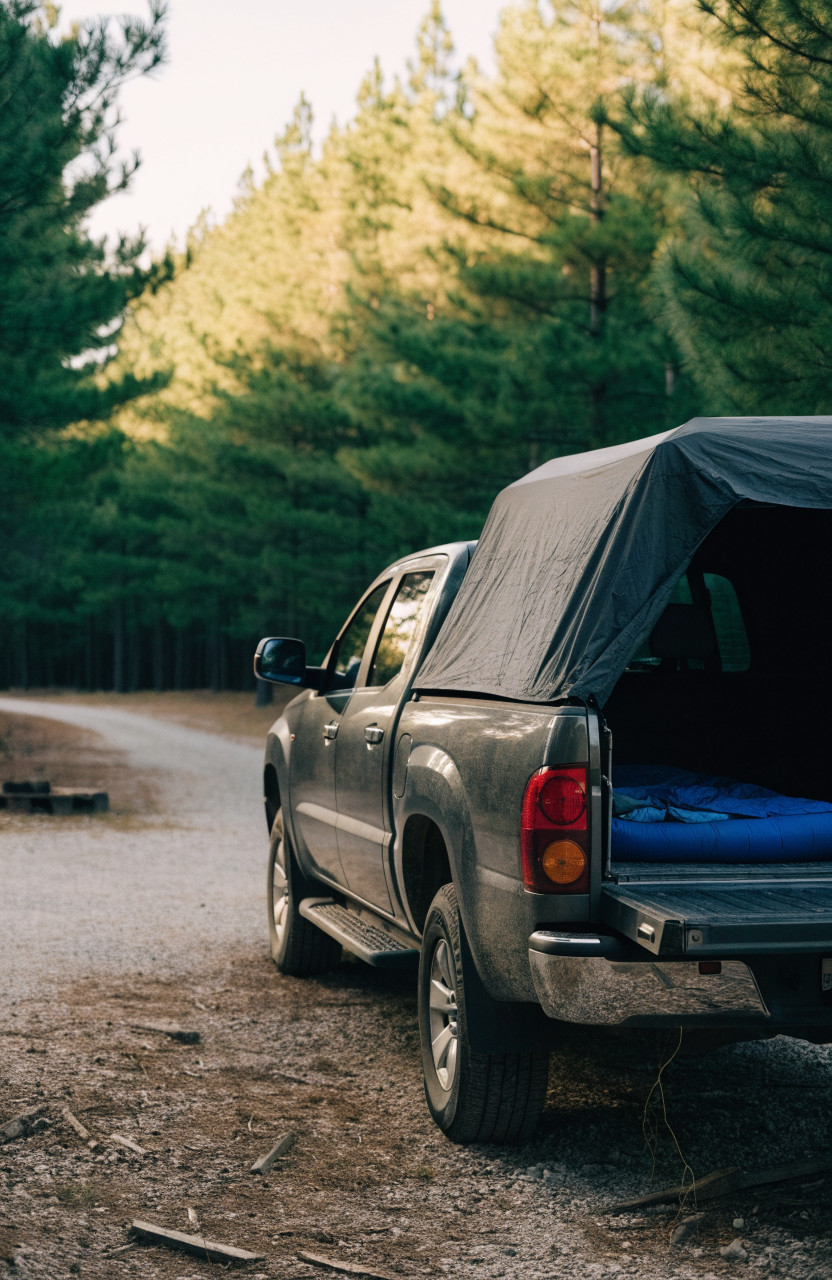
Use it when you camp a handful of times a year at established sites and can empty the bed. Headroom in better models is enough to sit up near the center, often around 5.5 feet, but the sides slope. Bring a pad. The truck bed is hard and conducts cold.
Skip it if you need the truck during the day. Breaking camp to buy ice is the complaint that shows up most often from people who have used one.
2. Floorless bed tent over gear that stays in the bed
Some tents, including Rightline Gear’s floorless models, have no tub floor. The bed itself is the floor, so coolers, bins, and a low platform can stay put. That matters for hunters and anglers who live out of the bed and do not want to unload before dark.
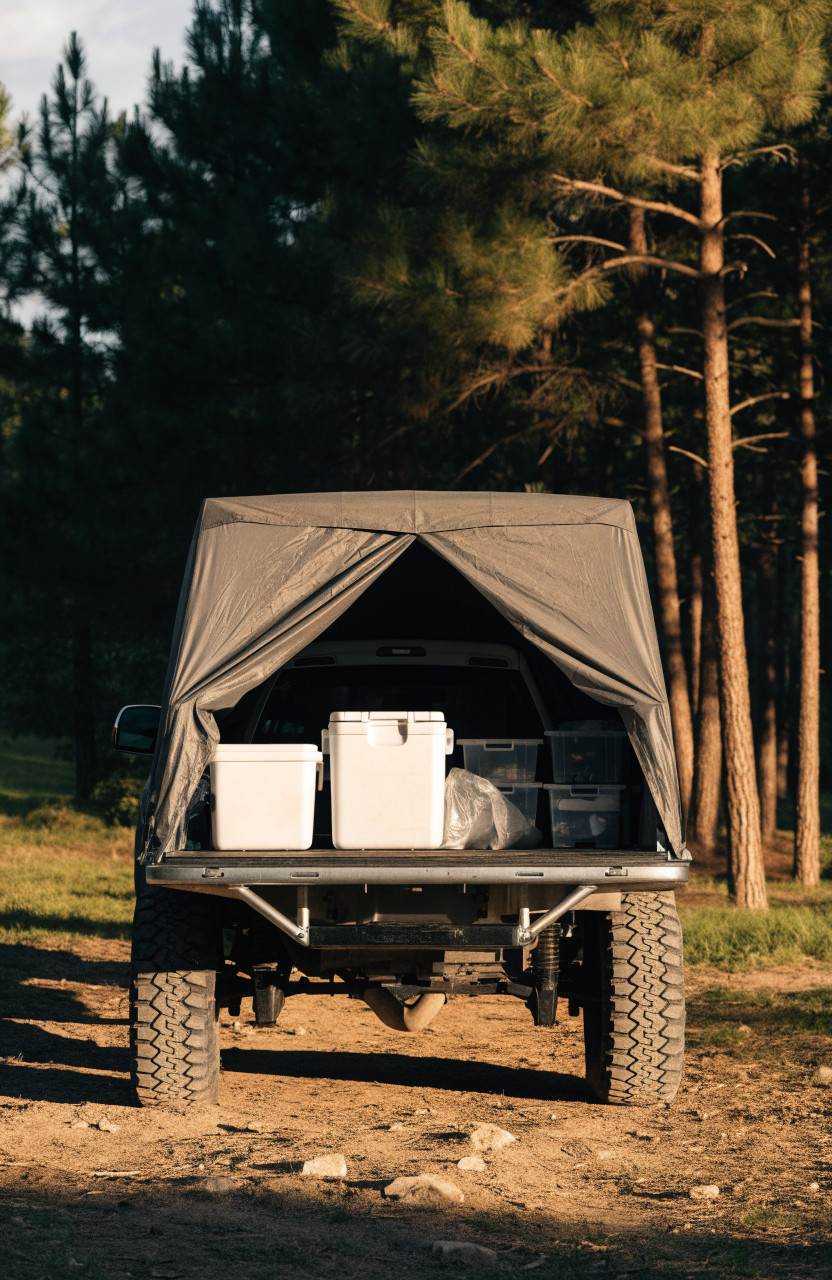
The tradeoff is weather sealing. A floored tent sheds water at the bottom edge; a floorless one relies on the bed drains, a good rainfly, and you not parking in a low spot. Check that drains are clear before the first rain.
3. Bed tent with a zip-on ground room
A few kits add a second room that sits on the ground off the tailgate, so two people sleep in the bed and others sleep below. Napier has sold combinations in this style for family use.
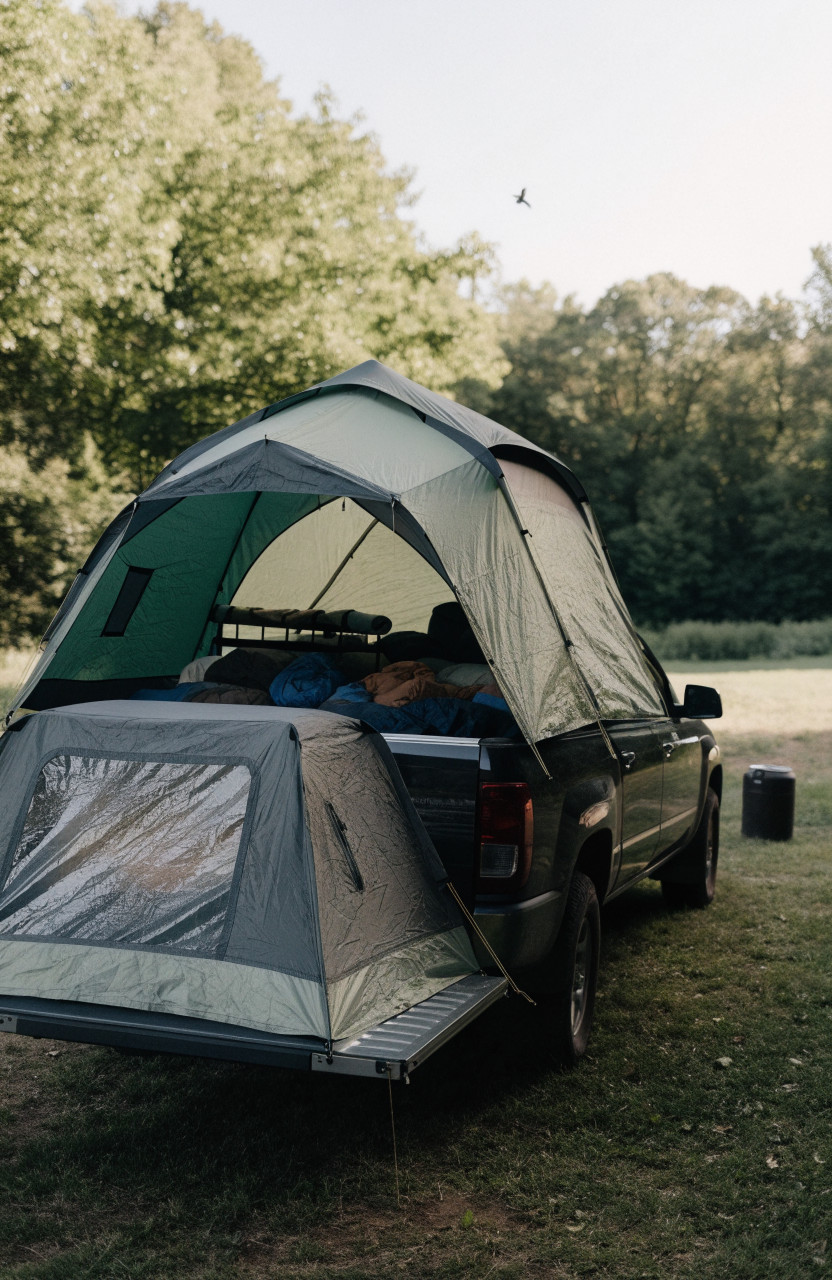
It solves the capacity problem without a second vehicle. It also creates a muddy transition zone in rain, and the ground room still needs a flat pad and a footprint. Stake it even if the truck tent is strapped down. Wind loads the whole assembly, not just the truck half.
4. Tailgate-down porch with the tent body over the bed
Many bed tents are cut so the tailgate drops and becomes a small deck under an awning or extended fly. That is the sitting and boot-changing space the bed itself does not have once a mattress is in.
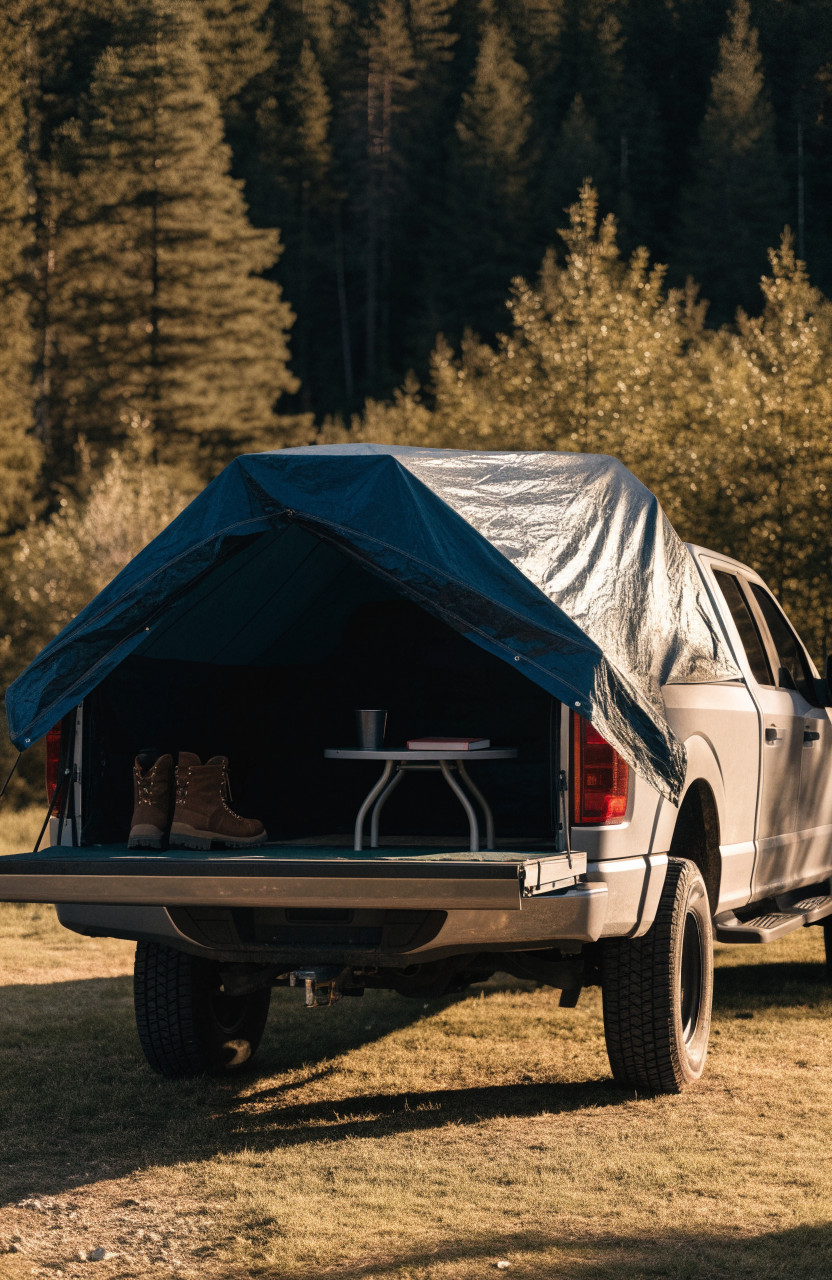
Level the truck first. A tailgate that slopes dumps people and gear. A short camp table under the fly is more useful than trying to cook inside the tent, where fabric and sleeping bags are close to any stove. Keep flames outside.
5. Inflatable-pole bed tent for late arrivals
Air-beam versions replace most fiberglass poles with tubes you inflate. Setup can drop to a couple of minutes after the first practice run, which is the point if you reach camp in the dark.
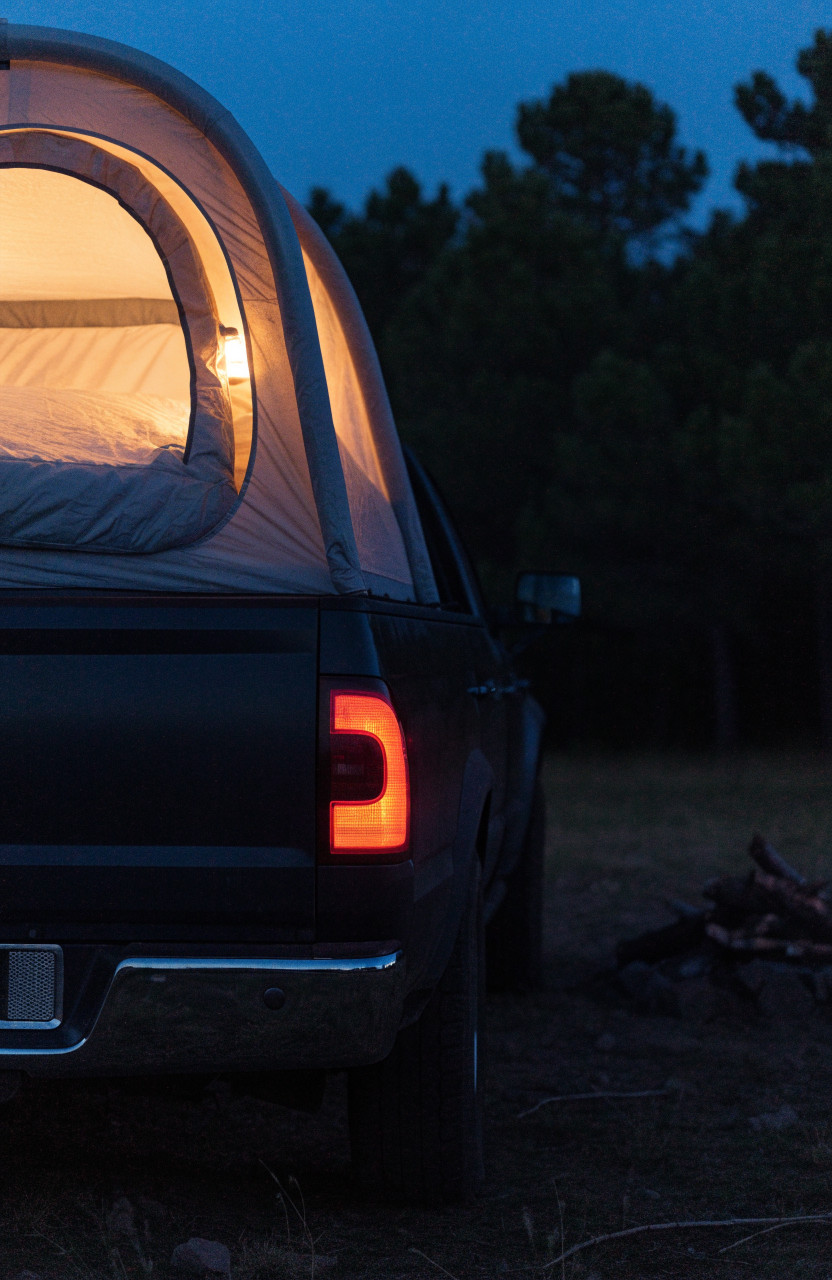
They cost more than a basic pole tent and add a pump to the kit. A puncture is a bigger failure than a bent pole segment, so pack a repair kit. Treat the speed claim as real only after you have done it once in the driveway.
6. Canvas bed tent for cold or windy nights
Cotton-duck tents such as Kodiak’s truck models use a heavier fabric and a stiffer frame. They handle wind and hold warmth better than thin polyester, and the fabric breathes, which cuts condensation. Weight is the cost: these run well above the $100–$200 polyester tents, often near 30–40 pounds, and setup is slower.
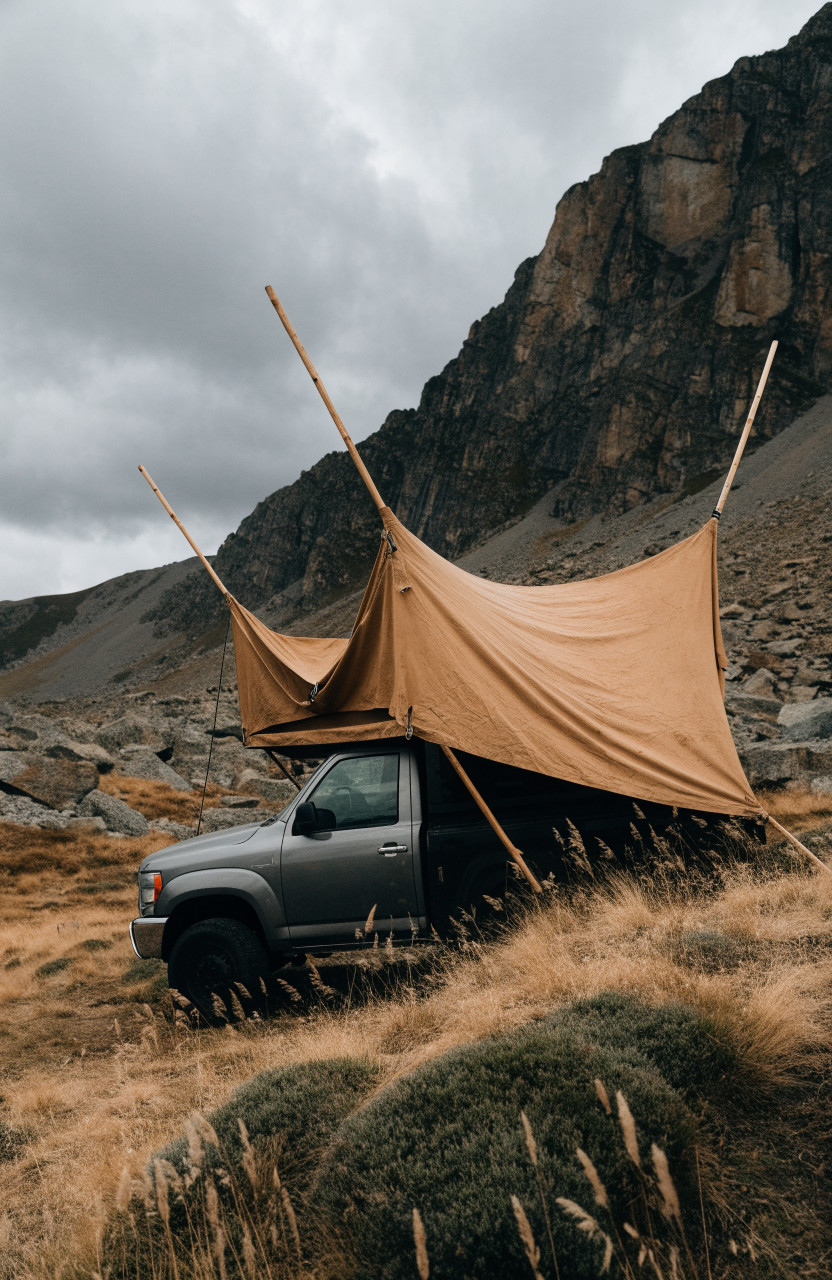
They are the bed-tent answer for shoulder season, not for summer-only campers. Below freezing, you still need a sleeping bag rated for the night and a pad with real insulation. The tent is a windbreak, not a heater.
7. Hard camper shell with a mattress on the floor
A fiberglass or aluminum cap is not a tent you pitch. It is a lid that stays on. Sleeping is immediate, the bed locks, and rain is a non-event if the shell seals. Campers who use a truck as a daily driver often prefer this to fabric because there is nothing to dry or mildew between trips.
Headroom is the limit. Cab-height shells do not let most adults sit up. Condensation is the other limit: two people breathing in a sealed cap will wet the inside unless a window is cracked for cross-vent, even in cold weather. A roof vent helps.
8. Sleeping platform under the shell or tent, storage below
Cut plywood or a simple slat platform at wheel-well height, then sleep on top and slide bins underneath. This is the layout that makes a short bed usable for more than one night. Memory foam in the 4-inch range is a common choice because it packs thinner than a tall air mattress and does not puncture on a bolt head.
Measure before you build. Wheel wells, tie-downs, and bed ribs eat width. A platform that sits too high can press the tent roof or block the shell’s rear glass. Leave a path to the tailgate so you are not climbing over the sleeper to reach water.
9. Soft topper for warm-weather overnights
A canvas or vinyl soft topper is lighter and cheaper than a hard shell and still gives you a covered bed. It is a fair summer and early-fall shelter if you already want a cover for gear. Insulation and security are weaker than a hard cap, and a soft skin moves in wind.
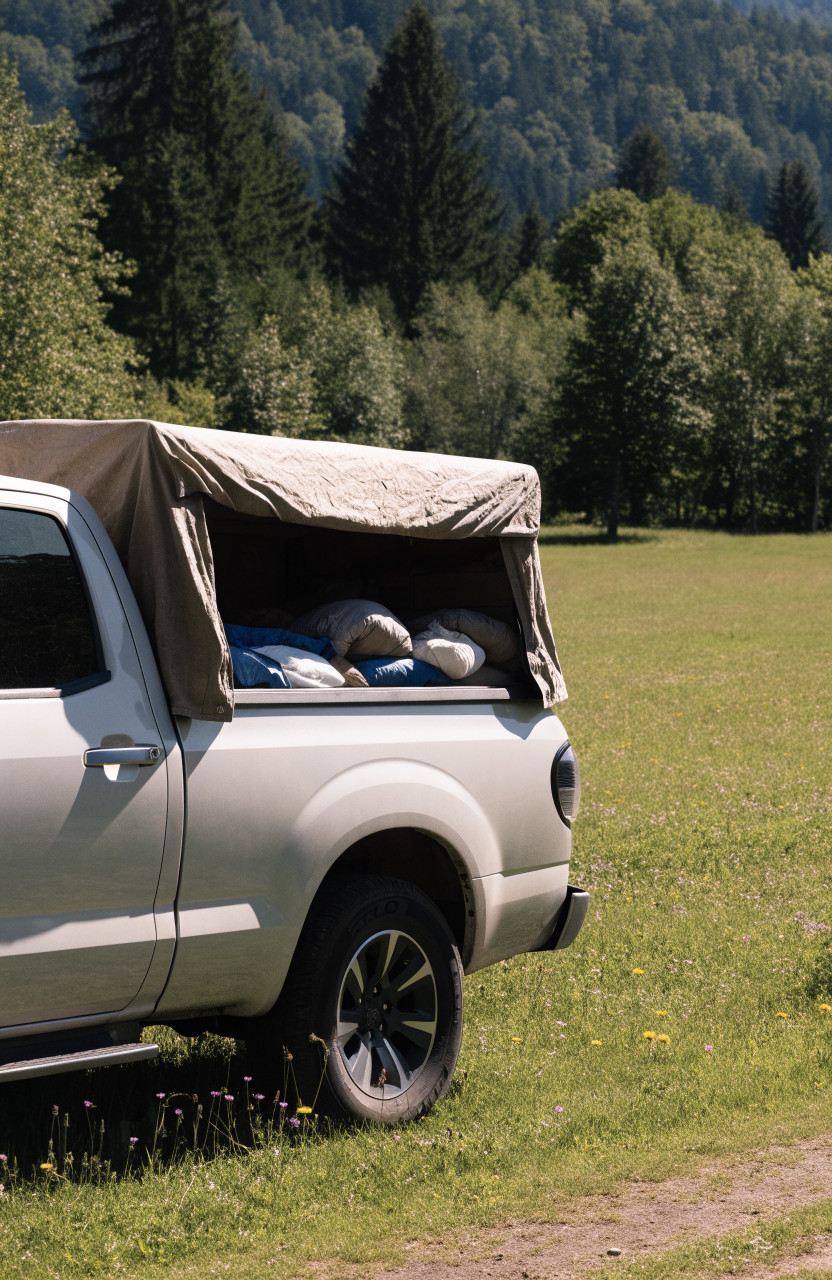
Use it with a real pad and cracked windows. Do not treat it as winter gear.
10. Rooftop tent on a bed rack, gear in the bed
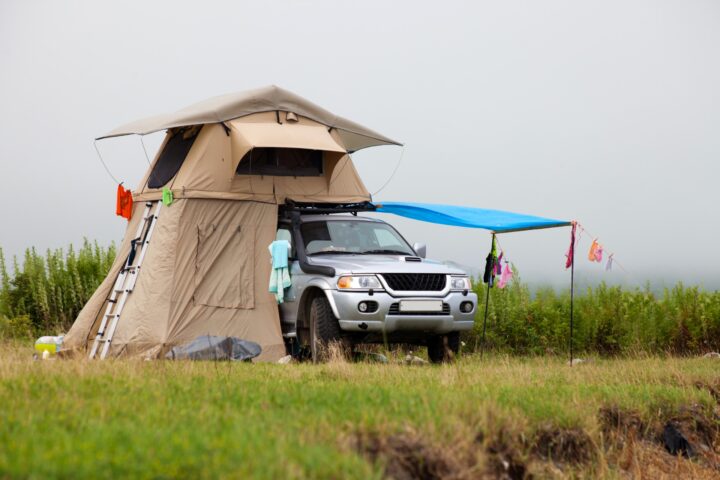
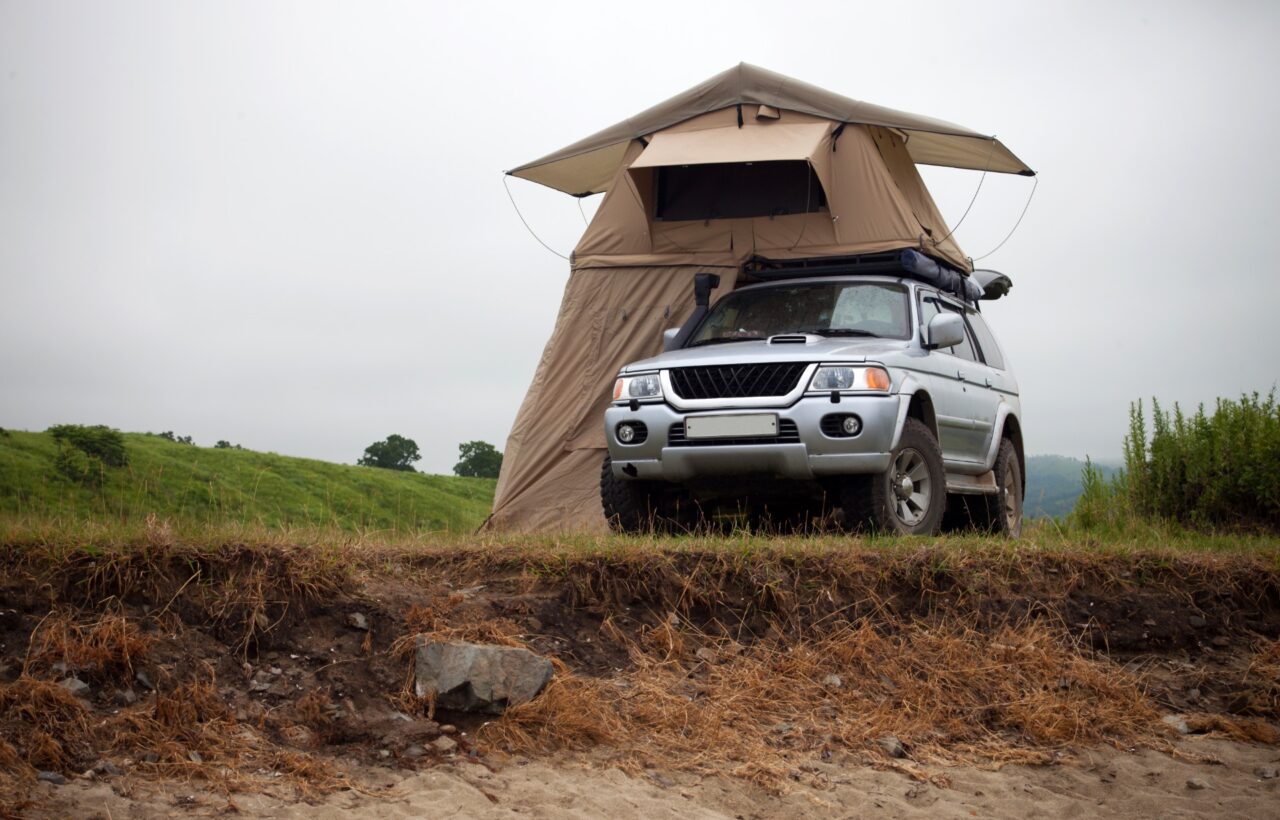
A rooftop tent on a bed rack or cab-and-bed rack keeps the sleeping platform off the ground and leaves the bed for water, recovery gear, and food. Hard-shell versions open in about a minute once the rack is installed. Soft shells are cheaper and taller on the highway.
The costs are real. Plan on roughly $800–$4,000 for the tent plus several hundred dollars for a rack rated for the load. Weight sits high, fuel economy drops, and parking garages become a measurement problem. You also still cannot drive away without closing the tent. The gain over a bed tent is the free bed and the faster open, not a free truck.
11. Open bed under an awning, no full tent
On dry, mild nights some people skip the tent: mattress in the bed, awning or easy-up off the side, bug net if insects are active. Setup is the mattress and the shade. There is no rain plan and no wind plan.
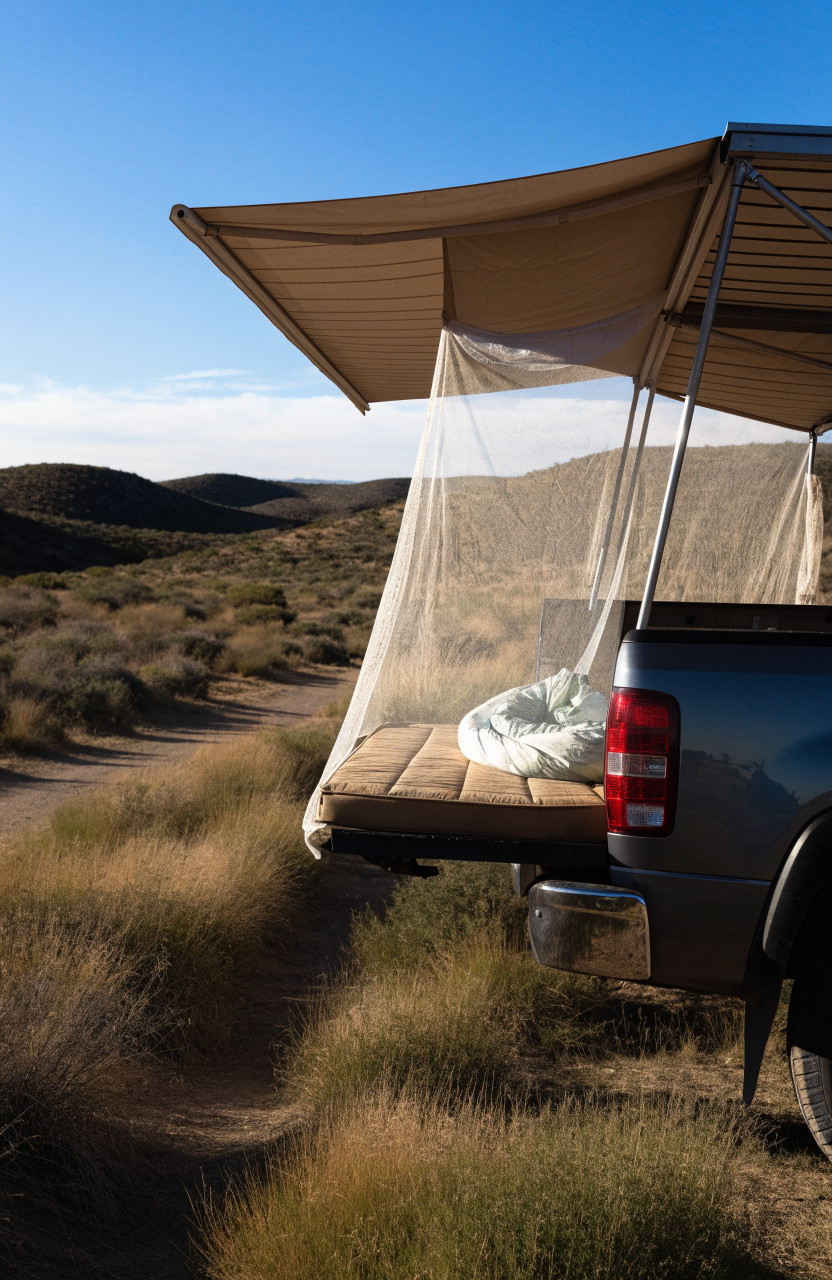
This works as a fair-weather add-on to a bed tent you leave packed, not as the only shelter on a trip with a forecast.
12. Ground tent beside the truck, bed as the locker
The truck does not have to be the bedroom. A normal tent on a flat pad, with the bed locked under a tonneau or shell as the kitchen and gear room, keeps the vehicle free. You can drive to a trailhead at dawn without packing a bedroom.
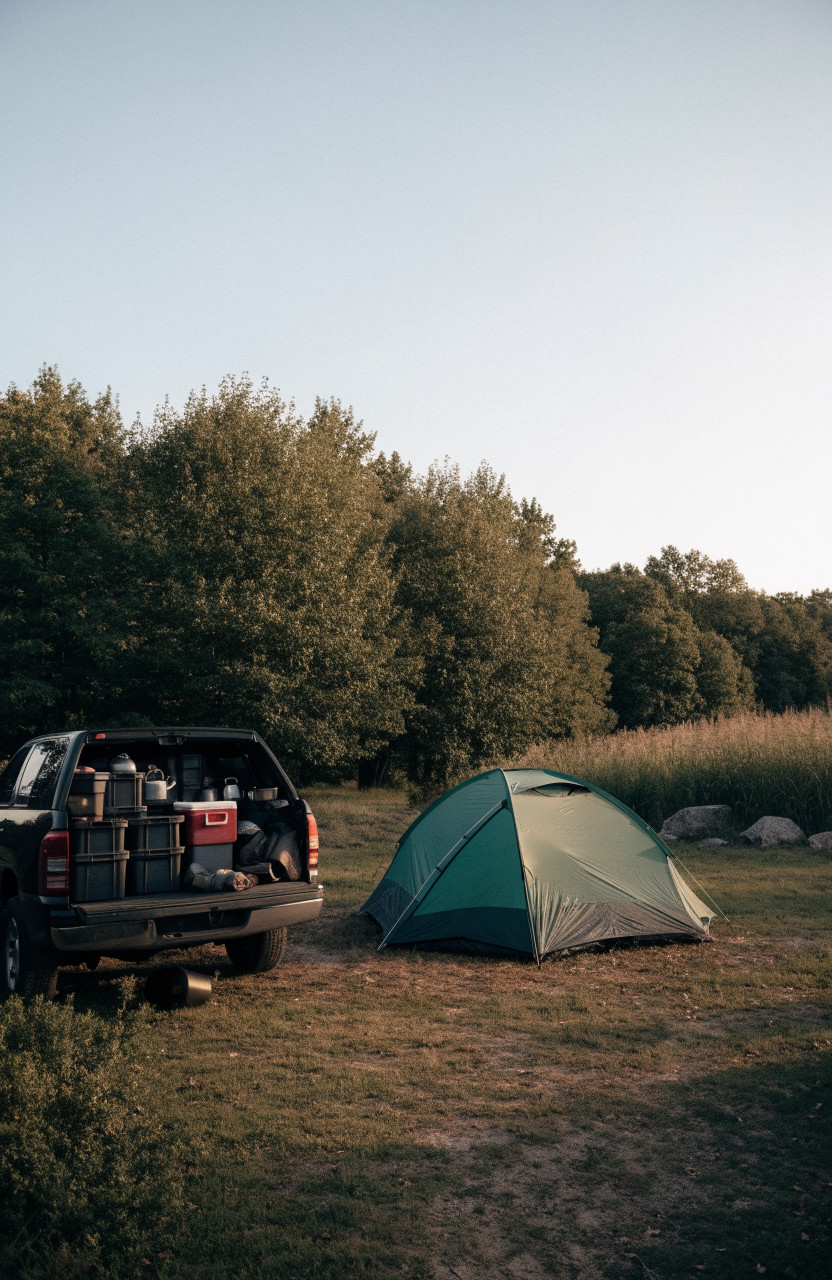
This is the right idea when the group is larger than two, the site is uneven, or you already own a tent that sleeps more people than the bed can. The bed tent’s only clear advantages over this are elevation off wet ground and a faster “floor” that does not need staking in mild wind.
What makes any of these setups work overnight
Level the truck before you make the bed. A few degrees feels like rolling all night. Boards or leveling blocks under the tires are enough on most sites. Set the parking brake and chock a wheel.
Choose the pad for temperature, not just softness. An air mattress with no insulation is cold on a metal bed. A closed-cell pad under an air mattress, or a foam topper on a platform, fixes that. Keep the bag off the bare floor.
Vent on purpose. Mesh windows plus a cracked rainfly beat a sealed tent. Condensation on the inside of a fly is normal; dripping onto the bag is a venting problem.
Practice the pitch at home. Color-coded poles are only fast after the first assembly. Confirm every strap reaches your rails, and seam-seal a new tent before a wet weekend if the coating looks thin.
Weight matters on half-ton trucks. A bed tent is 10–25 pounds and irrelevant to payload. A rooftop tent, rack, shell, full water, and passengers add up. Check the door-sticker payload before you stack a rack system on a truck that is already near its limit.
Truck bed tent troubleshooting for the first trip
First truck tent trips tend to fail on fit, flooding, cooking and storage, each with a clear fix.
| Problem | Likely cause | Fix |
|---|---|---|
| Rainfly gap or tent will not anchor | Buying by price without measuring the length of the truck bed | Measure the bed first, since a 5.5-foot tent leaves a gap on a 6.5-foot bed. |
| Stuck at camp without a vehicle | Planning day drives while the bed tent is the main shelter | Use a ground tent for trips with day drives, or accept the teardown. |
| Fire or carbon monoxide risk inside | Cooking with a stove inside the small fabric room | Cook outside under the awning and store fuel in the bed or a bin, away from bags. |
| Floor flooding in a storm | Parking in a swale, since bed tents sit only a couple of feet up | Face the nose slightly uphill if the site allows, and keep the drains open. |
| Mildew on the tent after trips | Polyester left packed wet inside its stuff sack | Dry it at home, even if that means draping it over the truck for an afternoon. |
Frequently asked questions
Is a truck bed tent better than a rooftop tent? For occasional campground trips, yes on cost. A bed tent is often $100–$400 and needs no rack. A rooftop tent is the better tool if you move camp most nights and need the bed for gear. It is the wrong spend if you camp fewer than about ten nights a year and can empty the bed.
Can two adults sleep in a short bed? Yes, if both people accept a 5.5-foot length and bring a mattress that fits the width between the wheel wells. Tall sleepers do better in a 6.5-foot bed or with the tailgate down under a tent that is cut for that.
Do bed tents work in winter? Thin polyester tents are cold and can sag under wet snow. A canvas model or a hard shell is the workable version, and only with a winter bag and an insulated pad. Neither replaces a heater used safely outside the sleeping space.
What if I need the truck during the day? Do not make a bed tent the only shelter. Pitch a ground tent and use the bed as locked storage, or use a rooftop tent only if you are willing to close it before every drive.