Shape decides most cute tent ideas. Textiles and light come second.
Bell tents, teepees, cabin tents and clear domes photograph well because there is room to stand and a floor that can look finished. The thirteen ideas here begin with that shape, then add rugs, color and warm lighting that pack into a car and hold up at a real campsite. A small dome can still look intentional, though it leaves less room to hide gear. Nothing heavy should hang from the poles.
Match the idea to the tent you can actually pitch
Shape decides how “cute” the camp can get before you buy a single pillow.
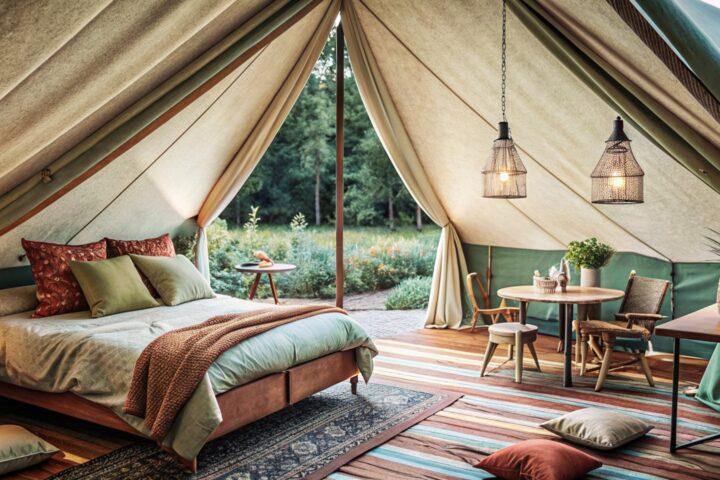
- Bell tents have a round floor, a high center, and short vertical walls. One center pole holds them up, so they are not freestanding and need a full set of stakes and guy lines. The open circle is why rugs, low beds, and lanterns look composed inside them.
- Teepees are a tighter cone with little or no vertical wall. Floor cushions and a low bed work. Tall furniture does not.
- Cabin and wall tents give straight sides and enough headroom for cots, a small table, and storage along the walls. They photograph more like a room than a shelter.
- A-frame canvas tents read as retro even when the inside is simple. Slope limits standing room at the edges.
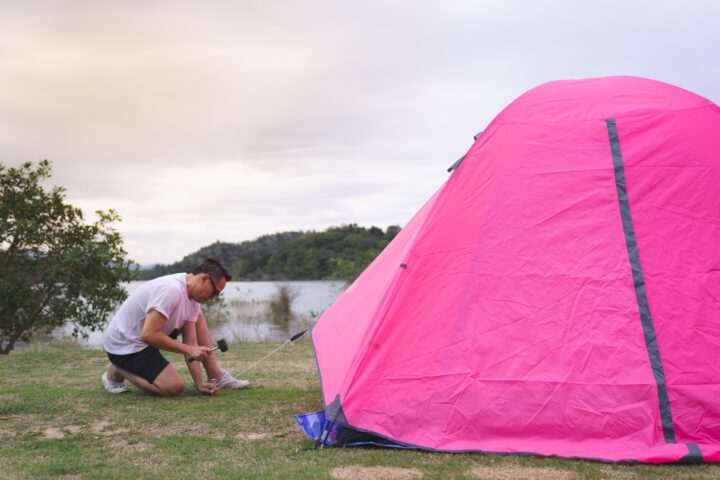
- Dome and pop-up tents are the practical choice for most campers. Style them with color and light, not with heavy décor on the poles.
- Clear bubble or geodesic domes are a view-first shelter. They usually need a deck or very level pad, and they heat up fast in sun.
Canvas looks warmer than nylon, but a mid-size canvas bell tent often weighs 30 to 60 pounds packed. That is car camping or a short carry from the vehicle, not a hike-in site. Synthetic cabin tents are the lighter stand-in if you want the room without the canvas weight.
13 cute tent ideas for camping
1. Blush bell tent with a low lounge
Best for a couple or two friends on a car-camping weekend. Push the bed or two cots against the back curve so the door stays clear. Add a washable indoor-outdoor rug, two or three pillows in dusty pink and cream, and a low trunk used as a table. Warm-white battery lanterns do more for the photo than extra décor.
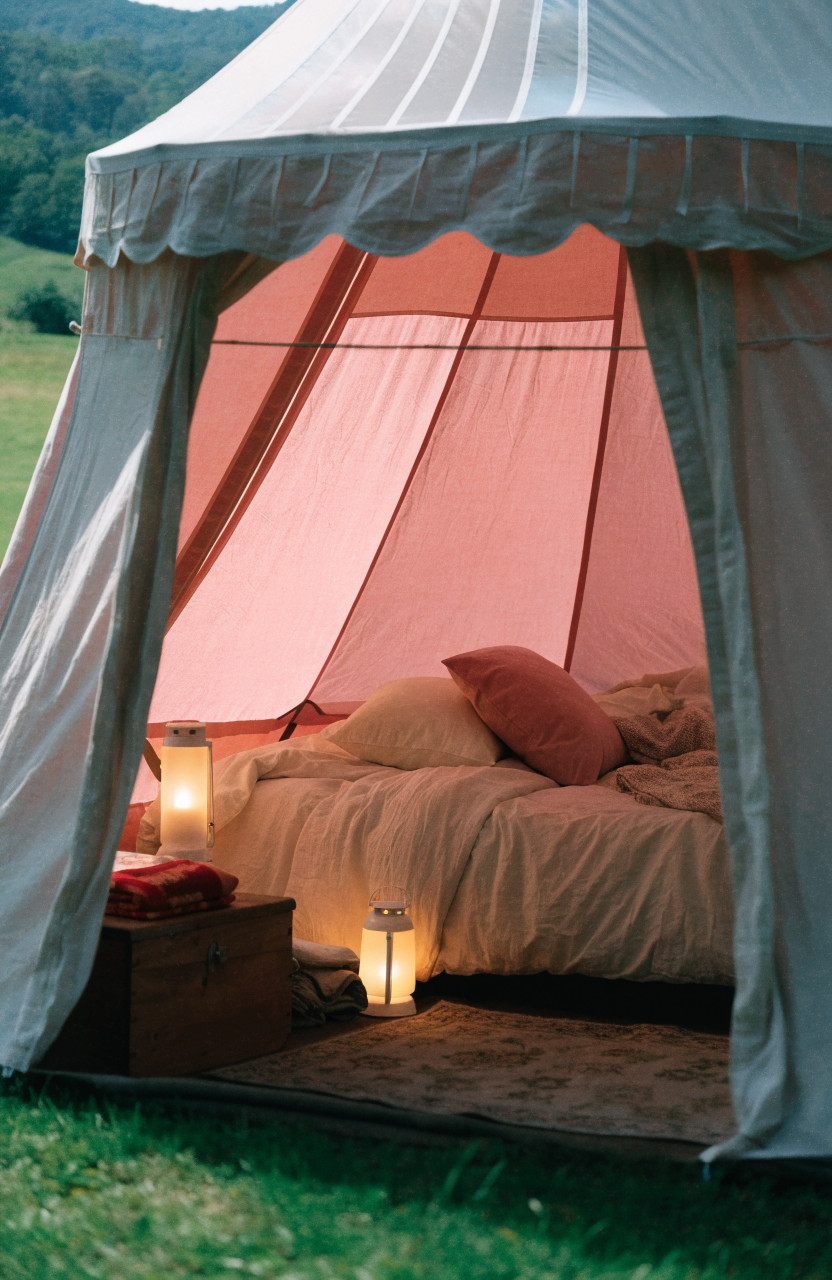
The limitation is the center pole. Plan the bed around it, and do not hang a heavy canopy from it.
2. Bunting inside a family bell tent
Fabric flags along the door edge and a short run inside the ceiling turn a plain canvas tent into a party without covering the vents. Keep the bunting light and clipped to existing loops or a separate cord, not tied tight around guy lines. Floor mats and floor cushions around the pole make a daytime play space that converts to beds at night.
3. Storybook teepee
A teepee already looks like a drawing. Lean into that with one color story: moss green, cream, and wood. A round floor cushion, a folded quilt, and a basket of books by the door are enough. Pinecones or a short garland only work if the site allows collected natural material and you are not in a fire-restricted area where dry décor is a bad idea.
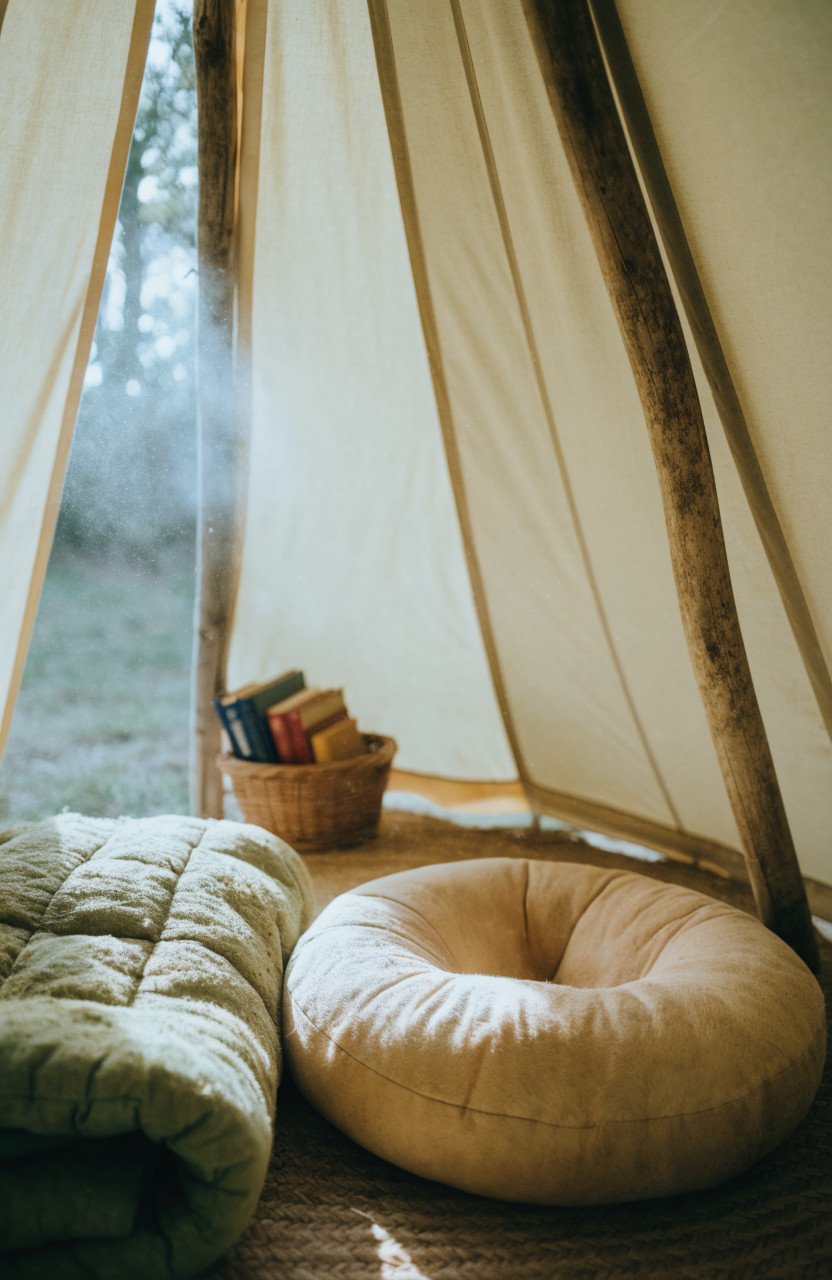
Skip tall shelves. The walls slope in immediately.
4. Retro A-frame with quilts instead of props
An A-frame does not need fake vintage signs. A checked quilt, one enamel lantern, and a wooden crate used as a nightstand carry the look. Face the door toward morning sun if the site allows, so the triangle reads clearly in daylight photos.
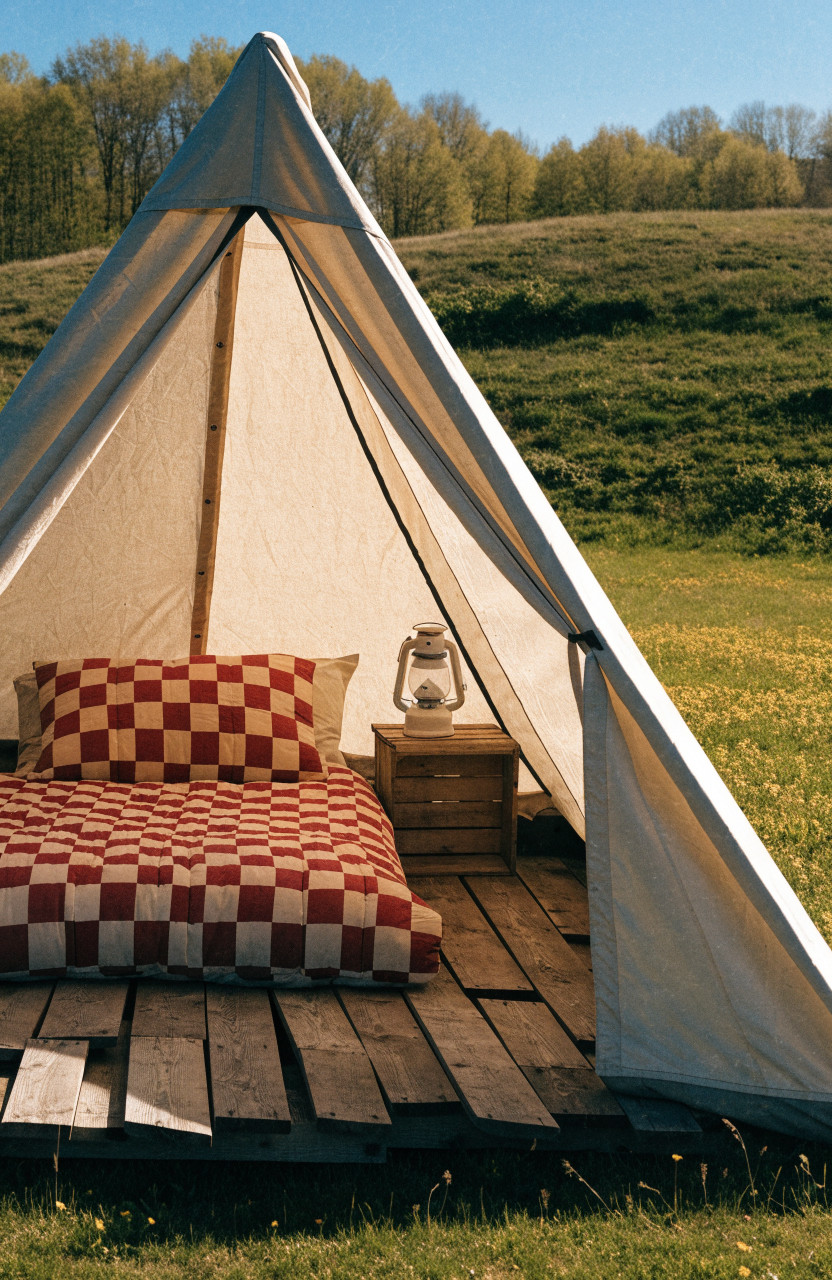
Rain runs off an A-frame well only if the pitch is tight. Loose fabric and sagging quilts draped over the outside hold water.
5. Fairy-light dome for backyard or drive-up sites
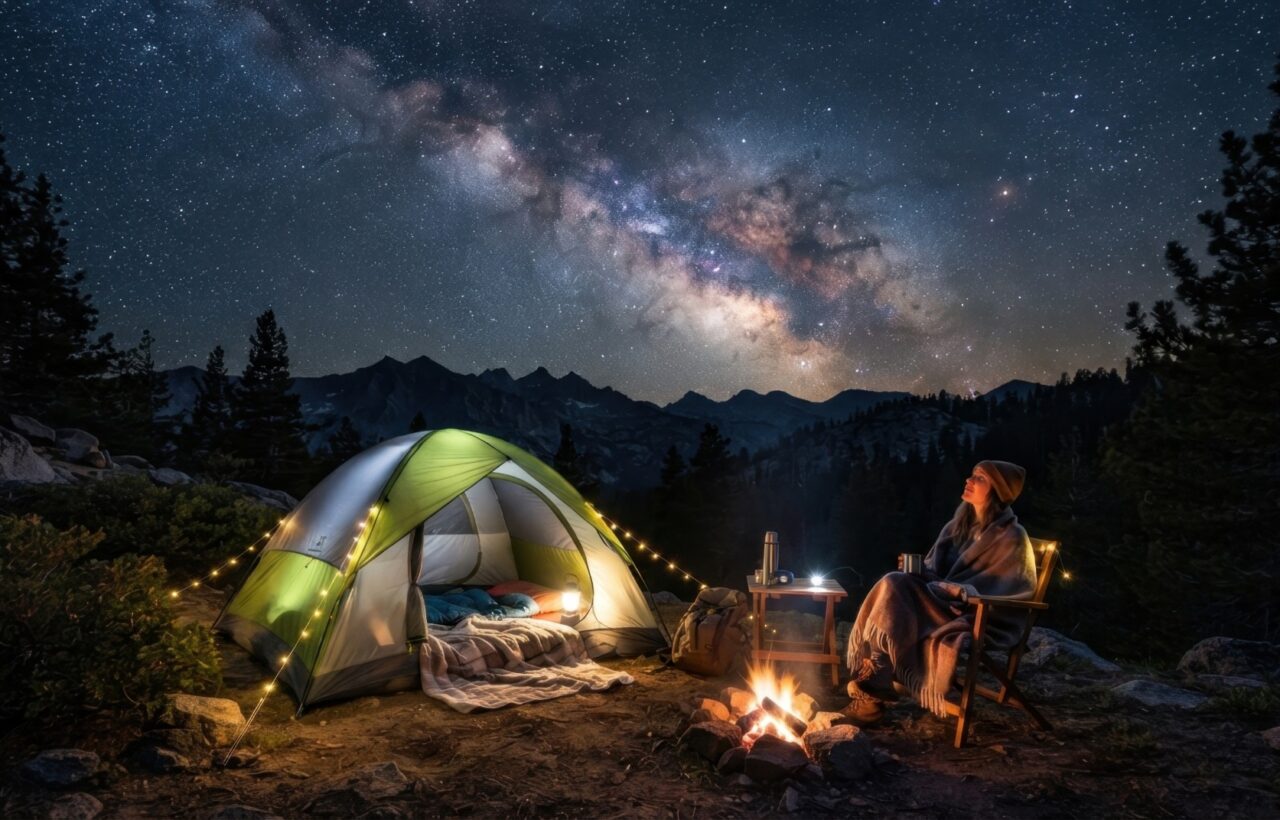
A standard family dome becomes the cute tent when the lights are the décor. Drape outdoor-rated battery or solar string lights in loose swoops over the rainfly, and keep a second short strand inside along the ceiling seam. Kids’ sleepover versions work with named pillowcases and a shared floor blanket.
Do not wrap lights around poles so tightly that you cannot open the door, and do not leave solar panels buried under the fly.
6. Clear bubble for stargazing
A transparent dome is the idea, not the styling. Put the bed where you can see sky without stepping over bags, and keep furniture low so it does not cut the curve. A single textured blanket and a dim lantern are plenty. Bright fairy lights inside mostly reflect on the plastic and hide the stars.
These shelters need shade by day. Direct sun can make them uncomfortable fast, and many campgrounds will not allow a structure this size on a standard pad.
7. Coastal cabin tent in white, sand, and blue
A straight-wall cabin tent takes this better than a dome. Use a pale groundsheet cover or rug, navy or sea-glass pillows, and rope-tied curtains only on the outside of the door, clipped so they can come down in wind. Shells and glass belong in a box, not loose on the floor.
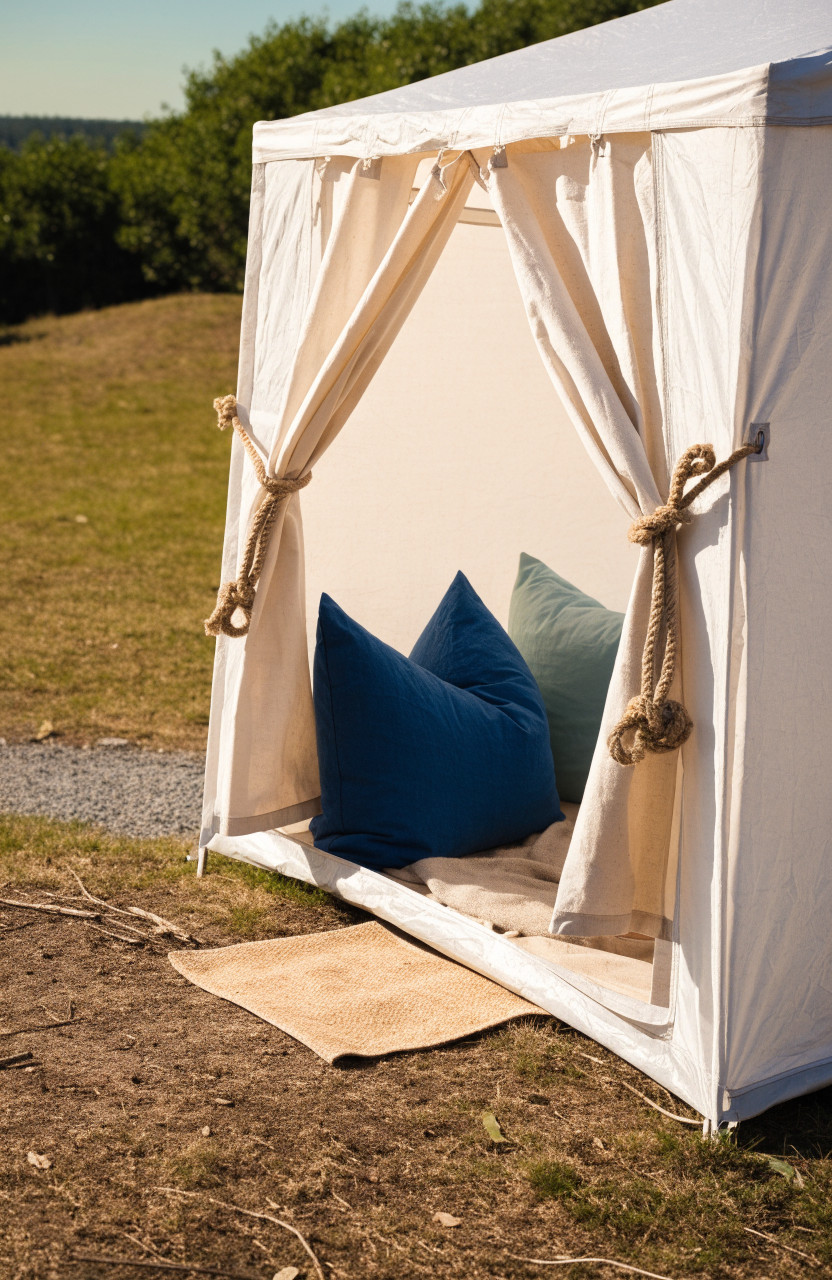
Gauze at the door looks soft and also catches wind. Take it down before you leave the site.
8. Woodland porch, not a decorated rainfly
The cute part sits outside: a small tarp or the tent’s own awning, a camp rug that can get wet, two low chairs, and a lantern on a crate. Inside, keep earth tones and one wool throw. Garlands of fabric leaves beat real branches, which drop debris and can hide ticks depending on the region.
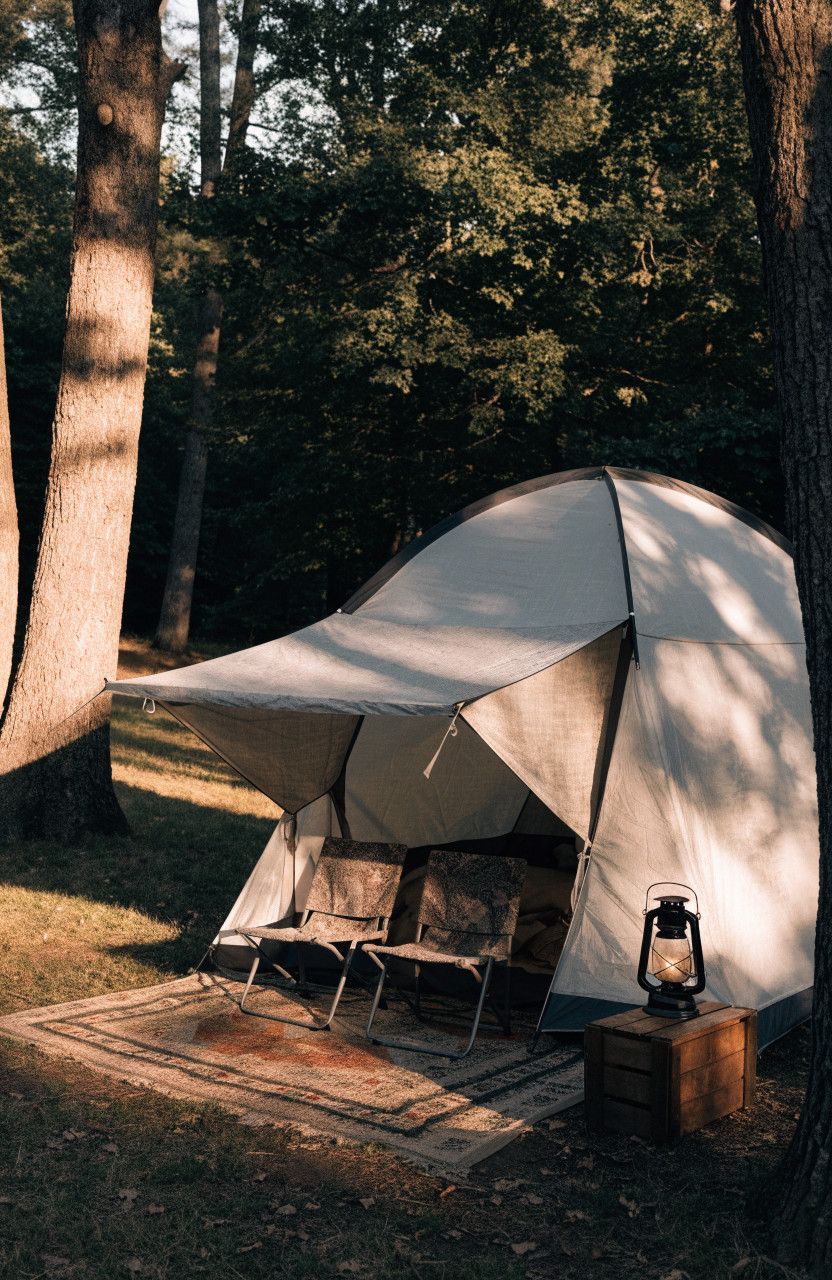
This works on ordinary dome and cabin tents, so it is the best “cute” option if you are not buying a glamping tent.
9. Color-flag picnic camp
String a short line of outdoor bunting between two trees or trekking poles well clear of the fire ring, and set a low table in front of the tent rather than inside it. Bright bowls and a spill-proof tablecloth do the work. The tent itself can stay neutral.
Check the campground rules before you tie anything to trees. Many sites ban nails, screws, and rope that can cut bark.
10. Moody navy evening tent
Navy bedding, one brass or black lantern, and a dark outdoor rug make a small tent feel finished after sunset. This is a lighting idea more than a furniture idea. Use warm bulbs around 2200K to 2700K. Cool white LEDs make the same textiles look harsh.
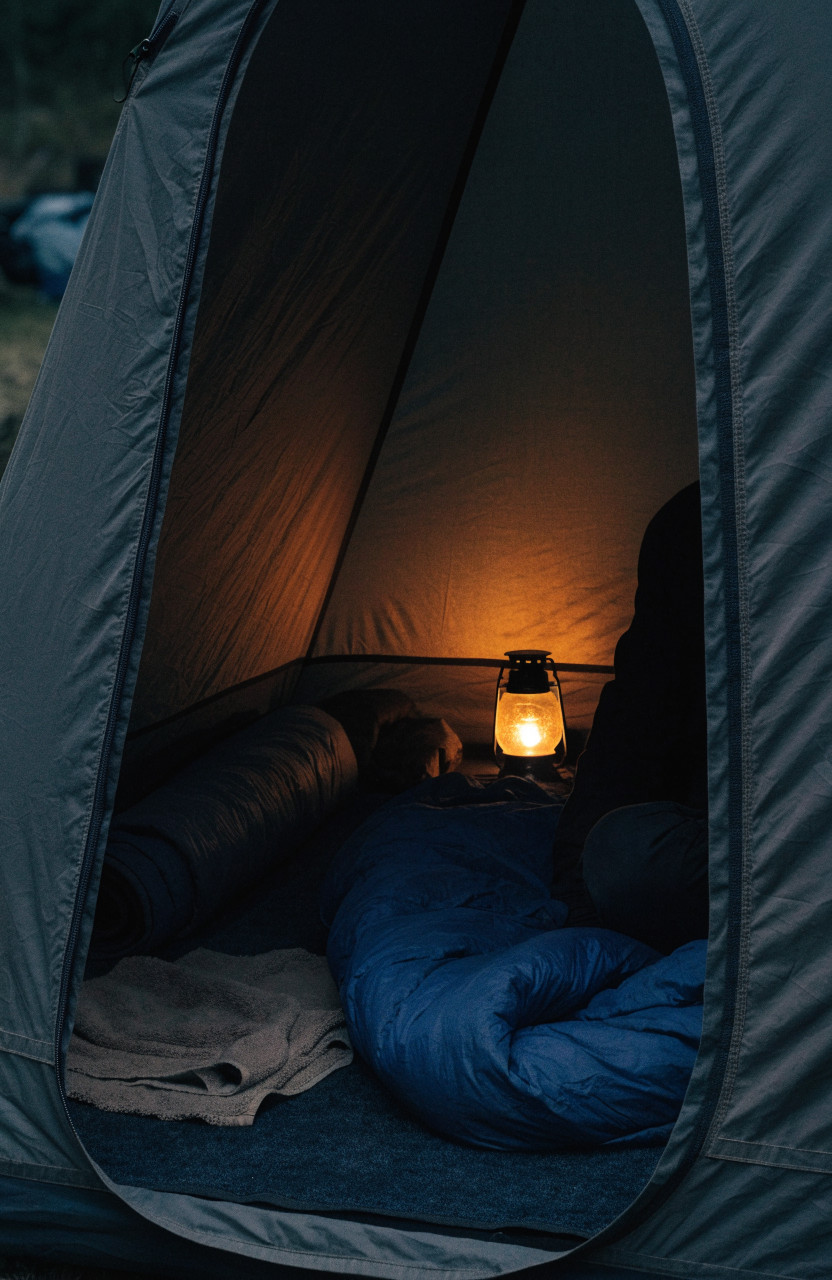
Dark canvas or a dark fly also hides dirt better than white, which matters on a second or third night.
11. Reading-nook cabin
For rainy days, a cabin tent with cots, a real pillow, and a crate of books beats a pile of floor pillows. Put storage in lidded bins under the cots so the center aisle stays open. A clip-on book light is safer and more useful than a strand of lights over the sleeping area.
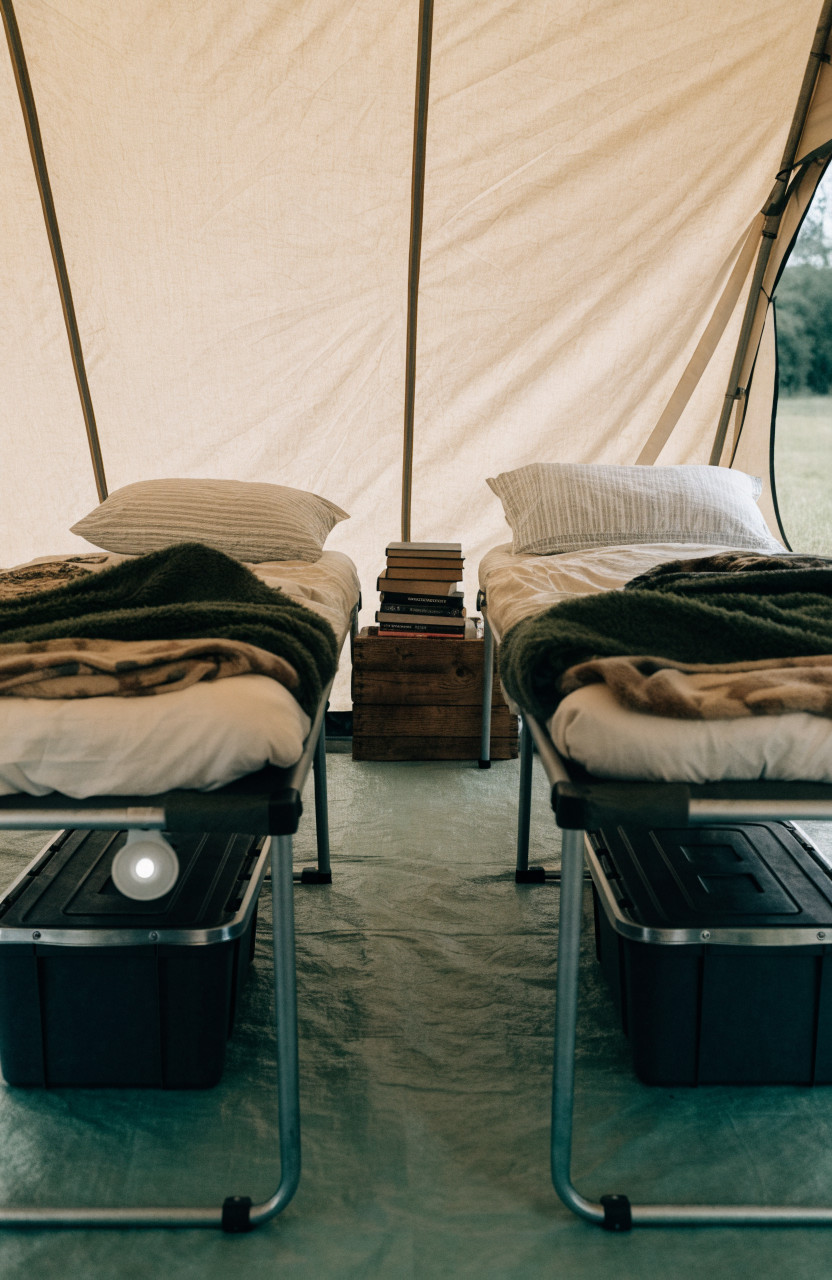
This is the idea to copy if the trip is about weather, not photos.
12. A small backpacking tent, styled on purpose
If the shelter is a one- or two-person dome, cute means edited, not decorated. One colored stuff sack used as a pillow layer, a short battery light, and gear stored in matching dry bags. Nothing hangs from the single pole. The “room” is the vestibule: shoes lined up, one sitting pad, stove just outside.
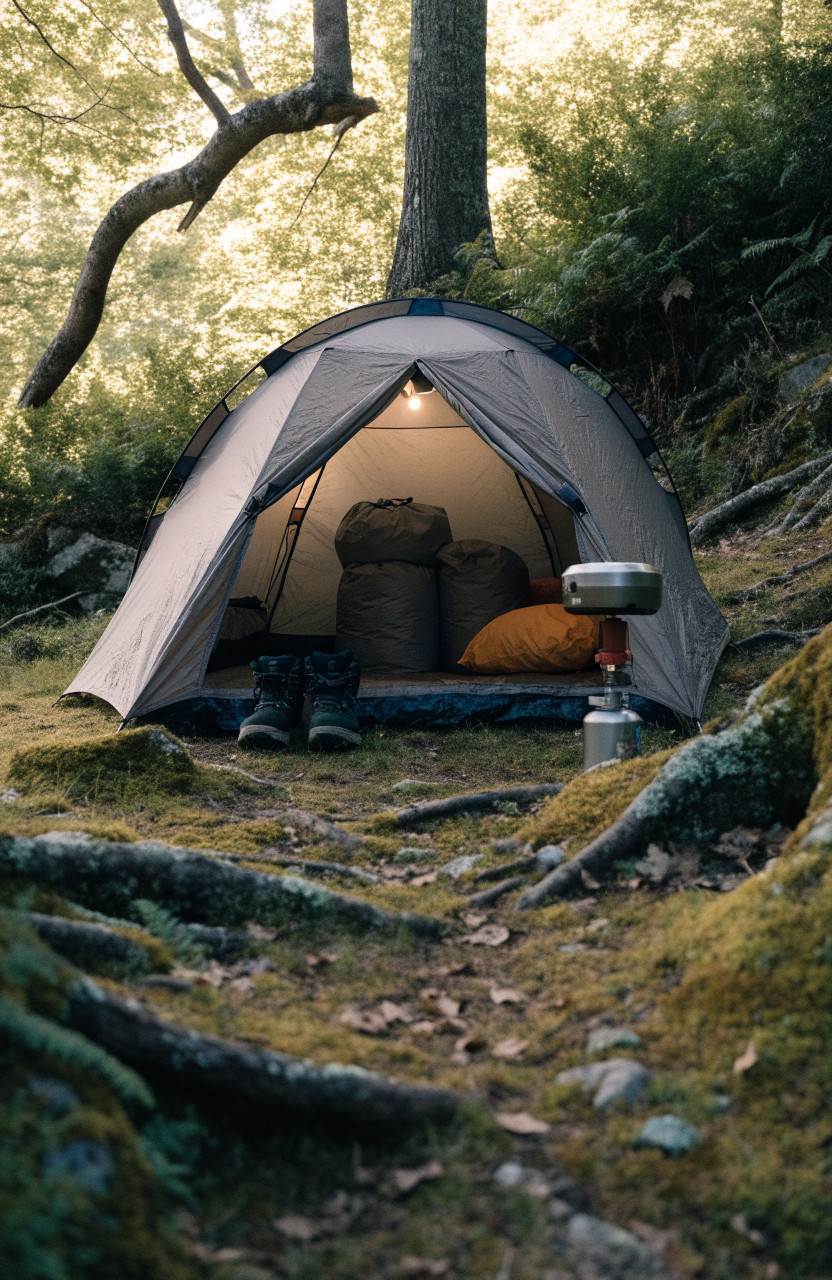
Trying to recreate a bell-tent interior in a backpacking tent only steals sleep space.
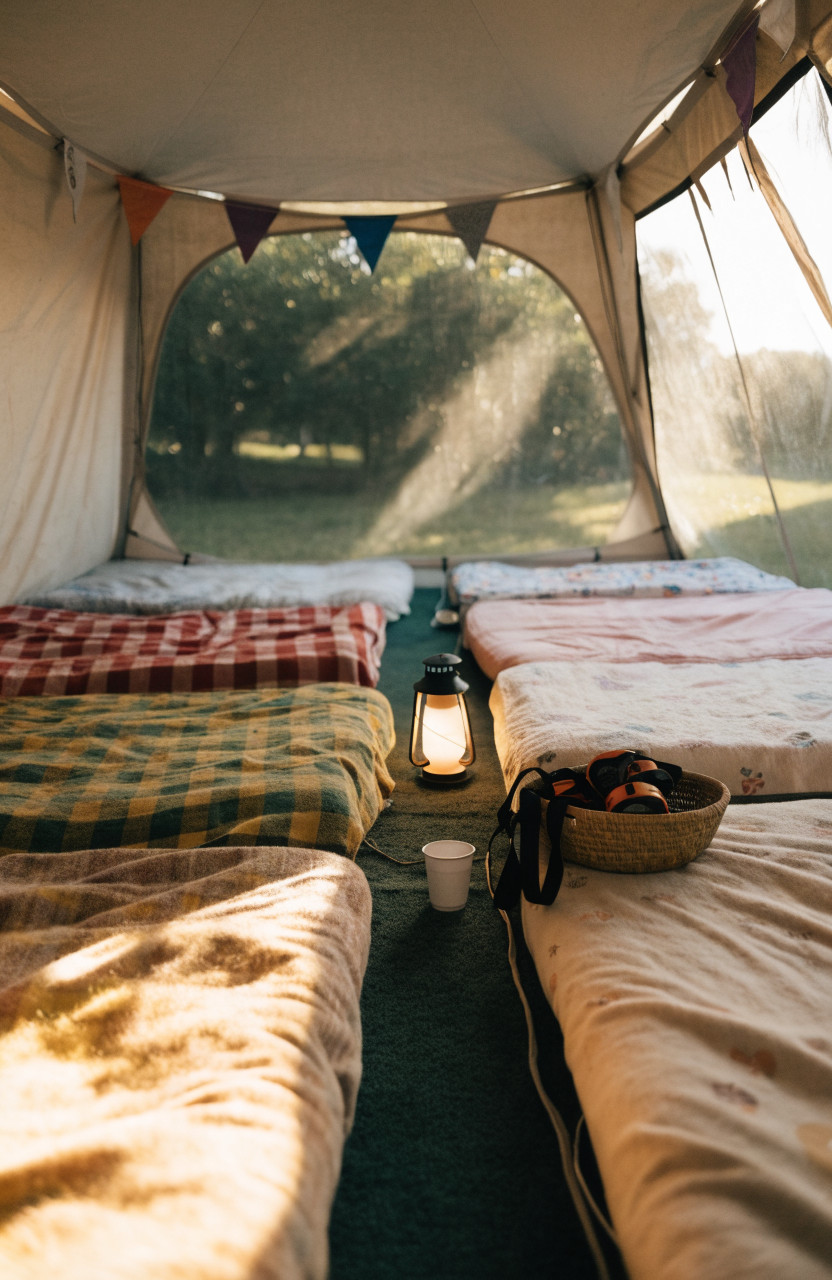
13. Named-flag sleepover tent
For kids at a backyard camp or a group site, give each sleeper a small fabric flag with a name or a simple symbol and clip it above their pad. Add one shared lantern and a basket for headlamps. The flags solve the “whose spot is this” problem and look intentional in daylight.
Skip candles, real cake candles, and anything with a flame inside the tent.
How to style a tent without making it less safe
Cute fails when décor blocks the things that keep the tent dry and breathable.
Leave roof vents and low wall vents open. Canvas needs airflow, or condensation wets the “cozy” bedding by morning. Do not run rugs over the door sill in a way that stops the door from closing, and do not cover the bathtub floor so completely that you cannot find a wet spot.
Use battery lanterns and outdoor-rated string lights. Open flames and real candles do not belong in a tent. If a campground limits generator hours or outside lighting, solar lights charged during the day are the workaround.
Stake every bell tent and teepee even if the evening is calm. These shapes are not freestanding. A styled interior does not matter if a gust lifts the wall. In high wind, take down exterior bunting and door curtains before you go to sleep.
Pack textiles that can get dirty. Outdoor rugs, washable pillow covers, and a cheap fleece beat anything you would mind leaving in a damp stuff sack.
What actually creates the look
Most of the difference comes from five items, not a theme kit.
| Piece | Why it works | Skip it when |
|---|---|---|
| Tent you can stand in | Makes the camp feel like a room | You are backpacking |
| Rug or groundsheet cover | Hides the plastic floor | The site is very wet and the rug cannot dry |
| Real pillow and a quilt | Reads as a bed, not a bivy | Pack weight is the limit |
| Warm battery light | Does the evening photo and the practical job | Rules ban overnight exterior lights |
| One crate or basket | Holds clutter off the floor | You have no car to carry it |
Add bunting, garlands, or extra pillows only after those five are sorted. A bare bell tent with a made bed looks better than a cramped dome full of props.
Styling a campsite that stays safe and dry
A cute campsite still has to shed rain, keep exits clear and stay unattractive to animals, as these fixes show.
| Symptom | Cause | Fix |
|---|---|---|
| Water pooling in rainfly folds | Fabric, lights and flags left on the fly through rain | Take decorations off the rainfly before the rain arrives, not after. |
| Muddy rug and a slow exit | The nicest rug placed where it blocks the door | Keep rugs out of the doorway so you can zip out fast without tracking mud. |
| Resort look that will not fit the pad | Copying bubble, safari or platform setups on a standard pad | Confirm the space, level ground and a reservation that allows larger setups first. |
| Wet jackets crowding the center pole | Using the center pole as a closet for gear | Hang wet jackets in the vestibule or on a separate line. |
| Animals drawn to open food boxes | Styling the tent while forgetting about the camp kitchen | Store food in the site locker or a hard-sided container away from the sleeping tent. |
Frequently asked questions
Do I need a canvas tent for a cute setup? No. Canvas photographs softly and breathes well, but a cabin-style synthetic tent with a rug, real bedding, and warm light gets most of the effect at a lower weight and price.
What size works for two people who want room to style it? A bell tent around 13 feet across, or a four-person cabin tent, usually leaves space for a bed and a small floor area. A two-person backpacking tent does not.
Are string lights allowed in campgrounds? Often, if they are battery or solar and not left on all night. Some parks restrict exterior lighting and anything attached to trees. Check the site rules before you pack a long strand.
Can these ideas work in the backyard? Yes, and backyard camps are the easiest place to try bunting, named flags, and a dome sleepover, because you are not hauling canvas or following pad-size rules. Use the same flame rule: lights only, no candles in the tent.