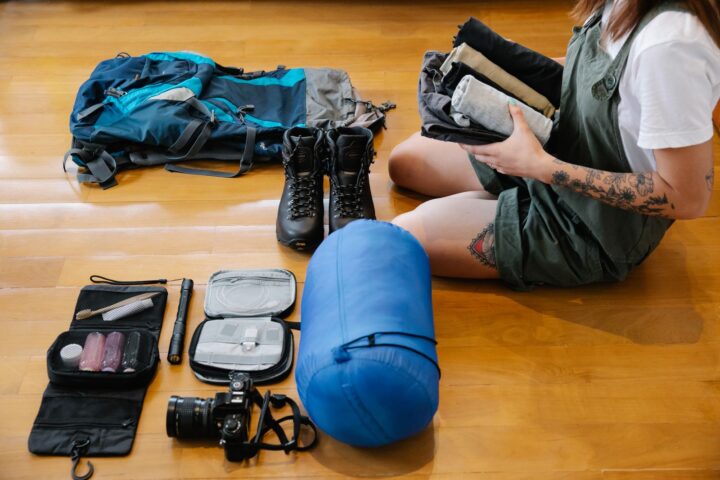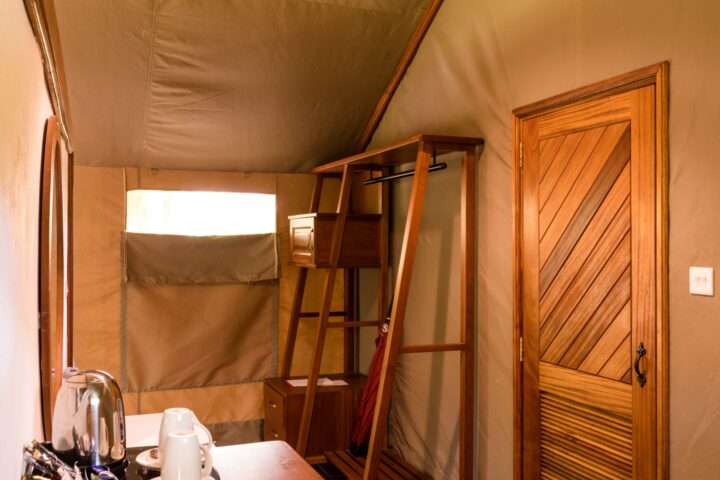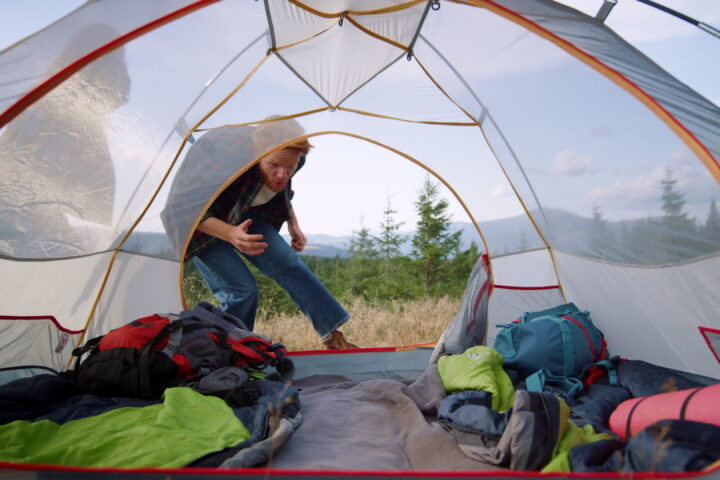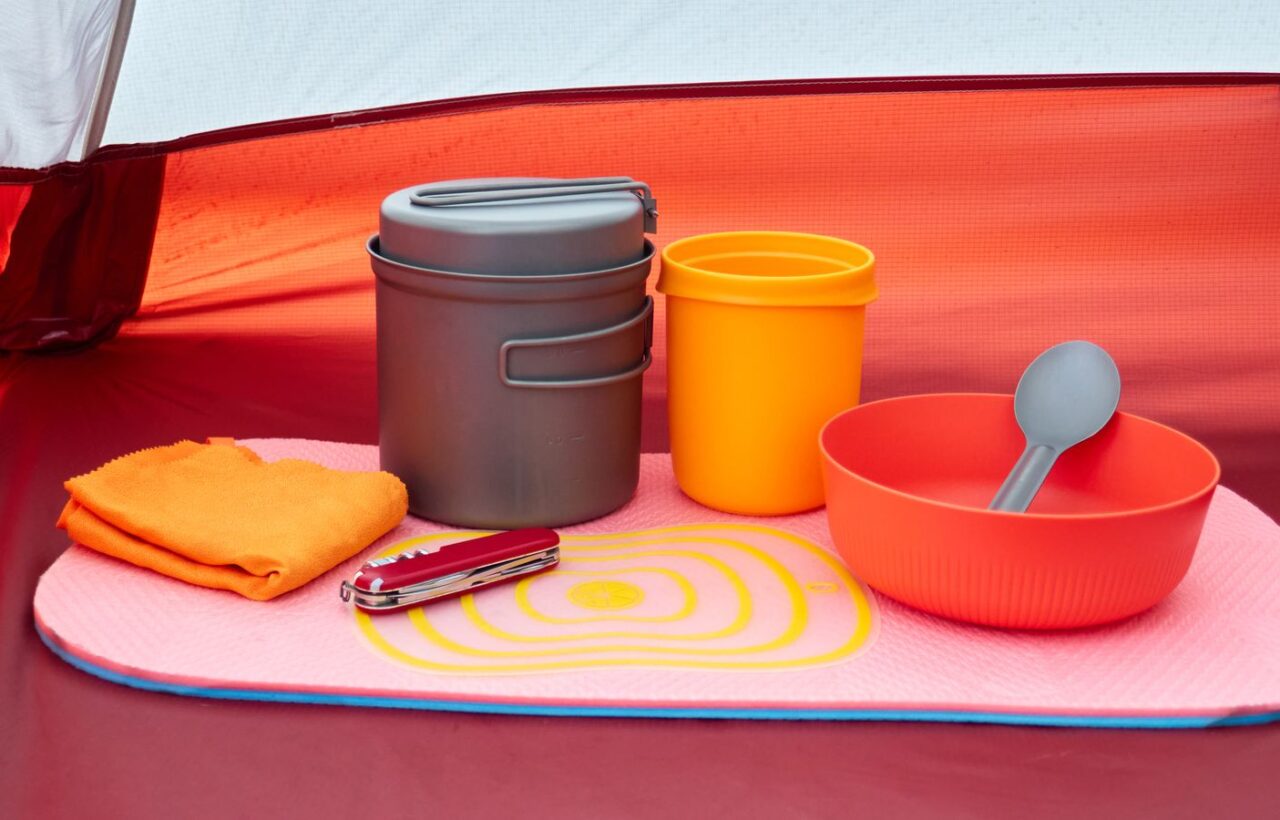

Storage that follows the floor plan keeps a tent usable; another pouch for every spare item does not. These 16 camping storage ideas for a tent split gear into a clear sleeping area, a small nighttime reach zone, clothing, a wet vestibule, and an outside place for food and anything with a scent. That split matters because floor clutter blocks the door in the dark, overhead weight pulls on seams, and food left inside can draw wildlife. The ideas work for backpacking shelters and larger car-camping tents. Each one notes where it fails so you can skip what does not fit the trip.
Start with zones, not more containers
Extra organizers only help if each item has a default place. Before you hang anything, mark five zones.
- Sleeping zone: pads, bags or quilts, and pillows. Keep this area free of boots, packs, and loose bottles.
- Nighttime zone: headlamp, glasses, medication, and one warm layer within arm’s reach of your head.
- Clothing zone: clean sleep clothes and next-day layers in one bag, not spread across the floor.
- Wet and dirty zone: boots, rain gear, and muddy items in the vestibule or on a mat outside the inner tent.
- Outside zone: food, trash, cooking gear with food residue, and scented toiletries, stored the way local rules require.
Recheck the layout while lying on the pad. You should be able to sit up and exit without crawling over a pack.
Vertical storage that does not stress the tent
1. Use the built-in mesh pockets for night items only
Many tents already have wall pockets. Reserve them for a headlamp, glasses case, and small medication pouch. Filling every pocket with snacks, cables, and spare socks turns the wall into a junk drawer you still have to search in the dark. If a pocket sits over the door zipper, leave it empty so the zipper does not snag.
2. Clip a gear loft, and keep it light
A gear loft is a mesh shelf that clips to ceiling loops. It suits hats, gloves, a book, or a light stuff sack. Place lighter, often-used items toward the center and slightly heavier pieces nearer the attachment points, where the structure is stronger. An oversized loft sags into headroom; a loft loaded with water bottles, stoves, or bear spray can pull fabric and stress seams in wind. Treat it as secondary storage for small items, not as a shelf for the pack.
3. Hang a shoe organizer only in a tall tent
A hanging shoe organizer works in cabin-style and many family tents, where you can clip it to a pole or a sturdy loop away from zippers. Pockets hold sunscreen, a utensil roll, a repair kit, or a power bank. It is a poor fit for a low backpacking tent: the organizer eats headroom, and ultralight poles are not meant to carry a loaded rack. Most hanging organizers are only sensible in the roughly 5 to 15 pound range if the tent’s poles and webbing can take the load. Never clip a loaded organizer to mosquito mesh or seam tape.
4. Add a few hooks to factory loops
Lightweight carabiners or S-hooks on existing gear loops hold a stuff sack, a wet-sack of socks, or a headlamp lanyard. String a short length of cord between two ceiling loops if you need a simple clothesline for a damp shirt. Stop when the cord starts pulling the walls inward. Point loads on fabric, not on webbing, are how mesh tears.
5. Make a temporary loft from a stuff sack
If the tent has ceiling loops but no loft, clip an empty stuff sack or a small mesh bag between two loops. Use it for the same light items a loft would hold. Remove it before you strike the tent so the clips do not get packed into a pole sleeve.
Bags that replace floor piles
6. Color-code dry bags or stuff sacks by job
One bag for sleep clothes, one for food you are allowed to keep nearby, one for electronics and repair parts. Color or a strip of tape beats opening every sack at dusk. On a backpacking trip, this uses bags you already carry. On a car-camping trip, 10- to 20-liter dry bags are enough; larger ones become too heavy to shift once the tent is full.
7. Compress only what you will not need at night
Compression sacks shrink a sleeping bag or a spare quilt for the hike in. Once you are in camp, take the bag out so insulation can loft. Leave the sack in a corner as the “morning pack” target, not as a pillow, unless it is actually comfortable. Compression is for volume on the move, not for storage inside a lived-in tent.
8. Park soft cubes in the corners
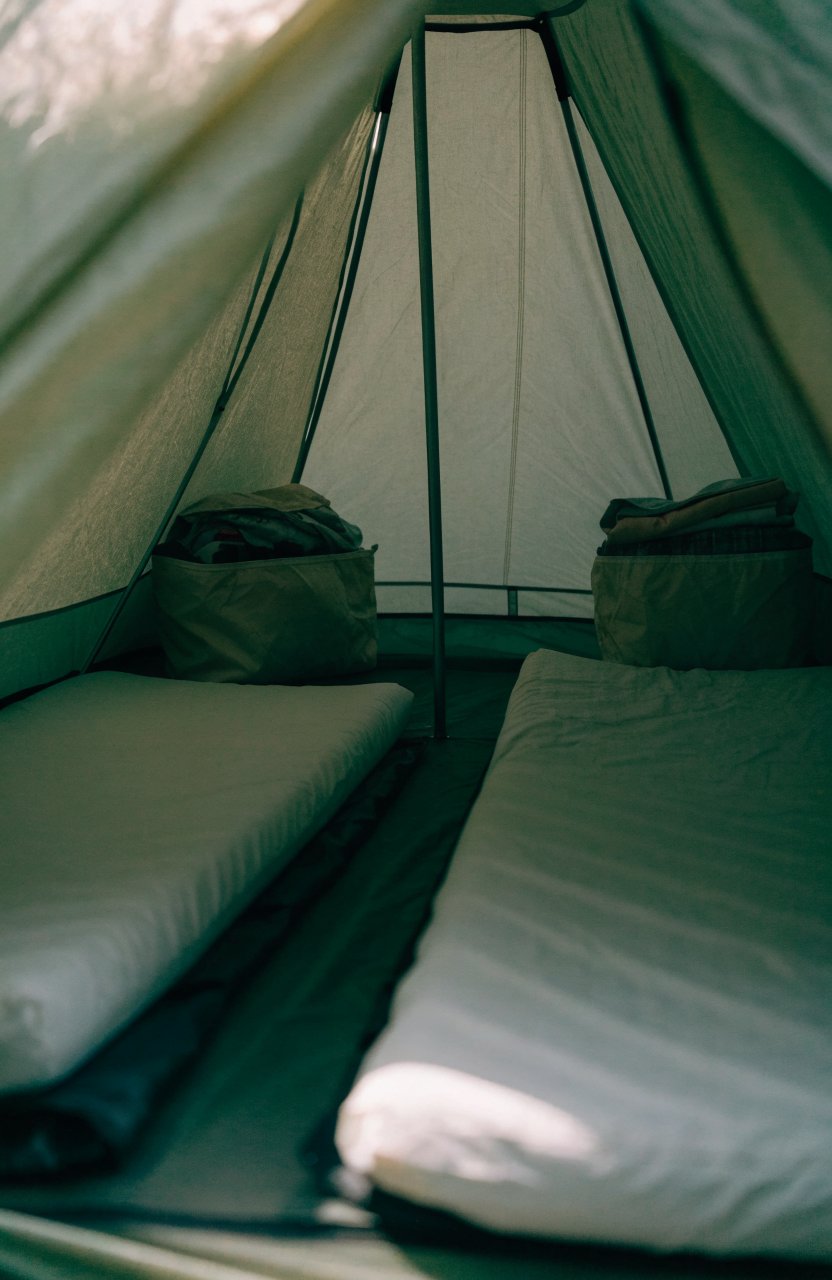
Soft-sided cubes divide toiletries, cables, and a small first-aid kit without the sharp corners of a plastic bin. Tuck them beside the pad, not in the center aisle. In a two-person tent, one cube per person is usually the limit before the floor disappears.
9. Split clothing into clean, worn, and wet
Three small bags stop the common failure mode: yesterday’s shirt, tomorrow’s socks, and a damp base layer in one heap. The wet bag lives in the vestibule. The clean bag stays by the head of the pad. The worn bag is what you repack first in the morning so dirty clothes do not migrate into the quilt.
10. Build one bedside kit and stop there
A single small sack or pocket should hold the headlamp, glasses, any nightly medication, and a watch. Add a warm layer beside the shoulder of the pad, not under a pile of other gear. If you need a second “essentials” bag, the first one is already too broad.
Vestibule, floor, and what stays outside
11. Treat the vestibule as the wet room
Boots, the pack, and rain gear belong in the vestibule, openings of boots facing down or covered so they do not fill with runoff. Place the pack on the side opposite the zipper path. If the vestibule is too small for the pack and two pairs of boots, leave nonessential gear packed and put only the boots outside on a mat. Do not cover vents or block the door; a tidy vestibule that traps you in a storm is not organized.
12. Put muddy gear on a footprint or mat, not on the inner floor
A footprint under the tent protects the floor. The same sheet, or a small piece of it extending past the door, is also the place for boots you do not want inside. A hand towel or a large plastic bag under shoes works when you have no extra groundsheet. The inner tent floor should stay the sleeping surface.
13. Keep food and scented items out of the tent
In bear country, national park rules commonly require food, trash, and scented items — toothpaste, deodorant, sunscreen, and food-scented clothes among them — in a hard-sided vehicle, a locker, or an approved bear-resistant container. Coolers, dry bags, and stuff sacks are not bear-resistant, and tents are not approved storage. Do not store a bear canister inside the tent while you are away from it. Outside designated bear rules, the same habit still reduces mice, raccoons, and a tent that smells like dinner. Cook and store food away from the sleeping area, and follow the local land manager’s rule rather than a generic checklist.
14. Give trash its own bag before the first wrapper appears
A small odor bag or a dedicated zip bag for wrappers, wet wipes, and stove trash keeps scraps out of pockets and off the floor. Empty it into the camp trash or the bear canister on the same schedule as food storage. A tent with no trash plan fills with loose wrappers by the second night.
Car-camping storage that should not move into a backpack
15. Use clear bins to move camp into the tent, then take most of them back out
Clear latched bins are excellent in the vehicle: kitchen, sleep system, lighting, and tools stay sorted, and you can see the contents without opening every lid. At the site, bring in only the bin or cube you need that night. A plastic tote left in a backpacking tent blocks the door and concentrates weight on the floor. Stacking bins in a cabin tent can work if you still have a clear exit and the bin is not under a slope where it will slide.
16. Store the tent itself loose and dry between trips
The stuff sack is for travel. For the weeks or months between trips, the tent should be fully dry and stored loose in a breathable bag, such as a mesh sack or an old pillowcase, in a cool, dry indoor spot. A damp tent grows mildew and can break down the polyurethane coating on the floor and rainfly; REI’s storage guidance is to dry the tent completely, then keep it loose rather than compressed in the original sack. Pitch or hang it at home if you packed up in rain. Avoid long-term storage in a hot attic, a damp basement, or a car trunk. Poles can be stored partly assembled so the shock cord is not left under full tension. Sleeping bags are a separate case: store them uncompressed so the fill can loft, not crushed in the tent sack.
How storage goes wrong in a small tent
- Hanging weight from mesh or seams. Factory loops and poles are the attachment points. Fabric is not a shelf.
- Blocking the nighttime exit. If you cannot trace a clear path from the pad to the zipper while lying down, move the pack.
- One bag for everything “small.” Headlamp, batteries, snacks, and a multitool in the same sack means a search every time.
- Leaving the tent damp “until the weekend.” Moisture in seams is enough to start mildew. Dry it before it goes into any bag.
- Copying a car-camping setup into a one-person shelter. Bins, shoe racks, and shelves need height and floor area that a trekking-pole tent does not have.
What to set up first
On a short trip, do these four things and skip the rest until you feel the gaps: pockets or one bedside sack for the headlamp, clothing in a single bag, boots in the vestibule, food and trash outside. Add a loft, hooks, or cubes only after those four are consistent. Organization that you will actually repeat beats a hanging system you abandon on night two.
Frequently asked questions
Can I store food in the tent if it is in a dry bag? No, not where bears or other wildlife are a concern. A dry bag blocks water, not smell, and park rules in places such as Kenai Fjords specifically say not to store food in tents, coolers, or dry bags. Use a vehicle, locker, or approved canister.
How much weight can I hang inside a tent? There is no single number. Ultralight ceiling loops may only tolerate a pound or two total. Larger tents can hold a light organizer if you use the designed loops and stay well under whatever limit the loft maker states. If the ceiling sags or the walls pull in, remove weight.
Should the backpack stay inside? In the vestibule, yes, if it fits without blocking the door or vents. Inside the sleeping area, only if the tent is large enough and the pack is empty of food. A full pack in the middle of a two-person tent is the usual reason people kick gear all night.
Is a shoe organizer better than a gear loft? They solve different problems. A loft holds light items overhead in tents that have the loops and the height. A shoe organizer needs a tall wall and is mainly a car-camping tool. Many trips need neither if pockets and two labeled sacks are already in use.
What is the best way to store the tent at home? Clean off dirt, dry it completely, and keep it loose in a breathable bag in a cool, dry room. Use the compression sack for the trip, not for the off-season.