Furnishing a canvas tent has more in common with setting up a studio flat than with pitching at a campsite. Floor plan comes first and pillows last, and these glamping tent setup ideas follow that order: a tent tall enough to stand in, a bed off the ground, a clear walkway and one outdoor zone for eating or sitting.
A 16-foot bell tent gives roughly 200 square feet, enough for a queen bed, two small tables and a chair, or two tighter sleeping zones. Cabin and wall tents use the same logic. Sleep at the back, move through the middle, store along the edges and keep the entrance clear.
Choose the tent and site before you furnish it
Manufacturer capacity counts sleeping pads packed edge to edge. For a setup that feels like a room, plan on about half that number. A tent rated for eight is comfortable for three or four once beds, bags, and a walkway are inside.
Standing height matters more than floor area. A dome you have to crawl through will not feel like glamping no matter how many throws you add. Canvas bell tents, cabin tents, and wall tents with near-vertical walls are the usual shelters for this style of camping. Air-beam tents with no center pole are easier to furnish, because furniture does not have to work around a pole in the middle of the floor.
Site choice decides whether the layout holds. Pitch on level ground, not in a low spot that collects rain. Face the door away from the prevailing wind and, if you can, away from afternoon sun so the interior does not bake. Leave room outside the door for chairs. Guy lines on a 16-foot bell tent can push the full footprint well past the canvas circle, so a pad that looks big enough often is not.
Sleeping layouts that leave room to walk
1. Couple layout in a bell tent
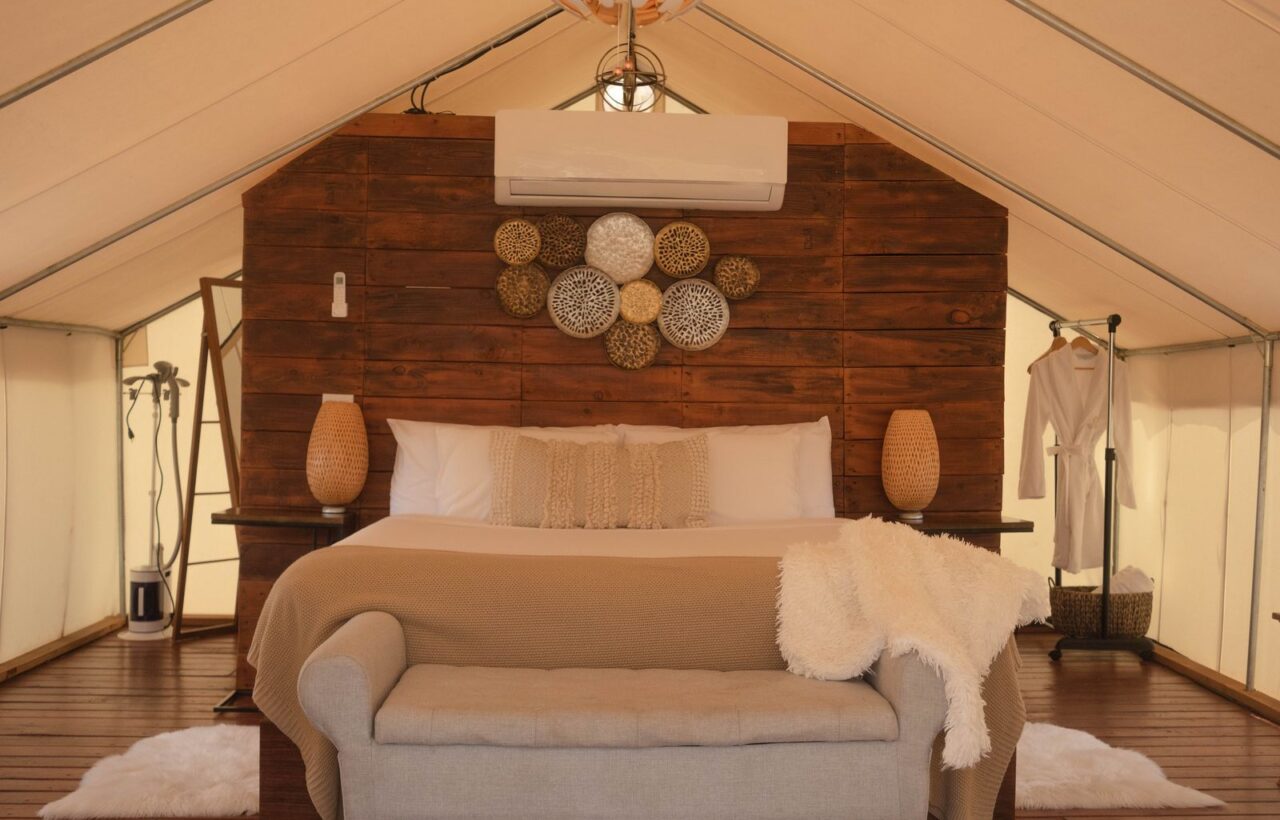
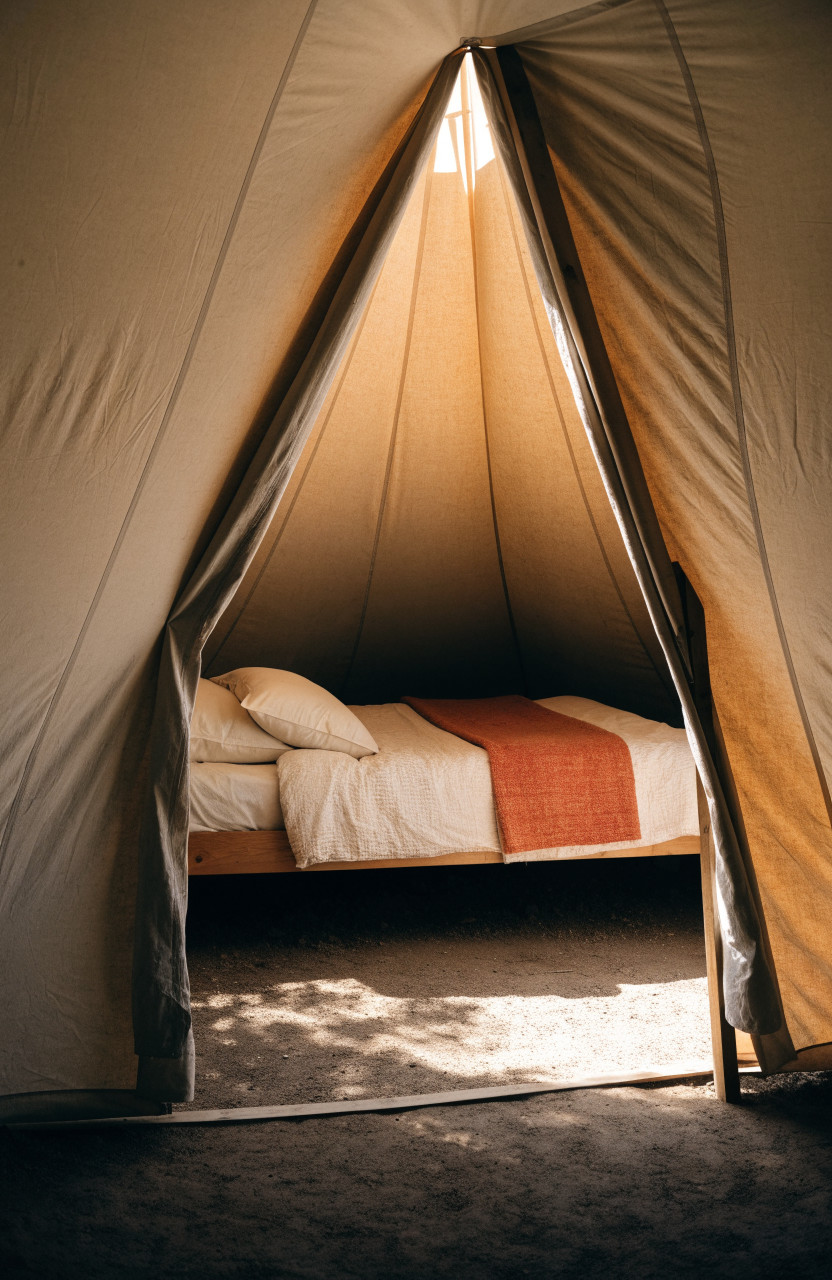
Put the bed against the rear curve, opposite the door, so the first thing you see is the bed and the center of the floor stays open. A queen fits in a 13-foot bell tent, but nightstands and a chair only fit comfortably in a 16-foot. A king can fit in some 16-foot models if the bed is centered and nothing else is large. Keep bags under the frame, not beside it.
2. Family split: one bed, two cots
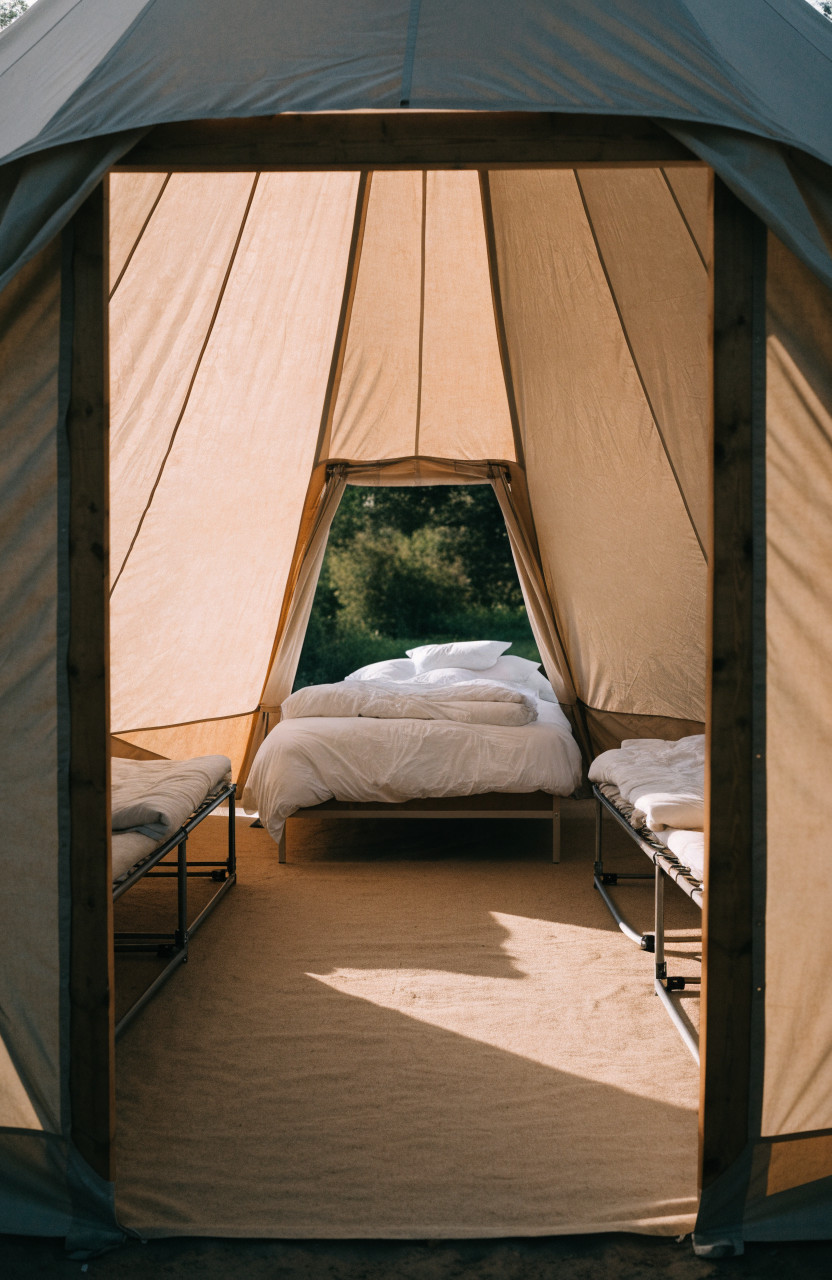
In the same 16-foot circle, one queen or full at the back and two cots along the side walls works better than two queens. Two queens is tight and kills the walkway. Cots also lift sleepers off cold ground and create storage underneath.
3. Cabin or wall tent with rooms
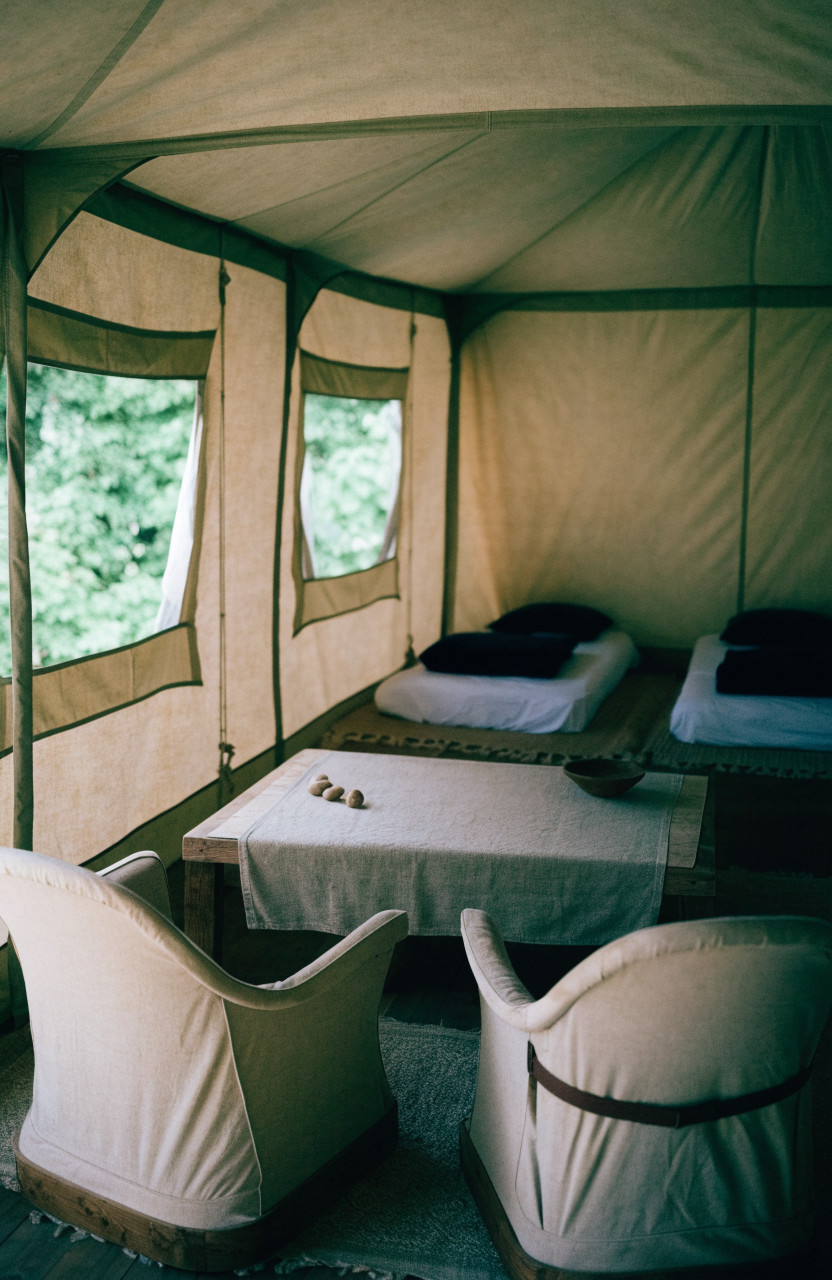
A cabin tent or a wall tent with a divider turns one shelter into a sleep zone and a living zone. Use the divided end for beds and the open end for a low table and two chairs. Without a divider, a rug boundary does the same job: sleeping rugs at the back, a different mat near the door.
4. Real bed on a frame, not a pad on the floor
A mattress on a low frame or a sturdy cot is the single change that makes a tent feel furnished. The gap under the bed stores luggage and keeps the sleeper off ground chill. Air mattresses work for a weekend if they are thick and placed on a closed-cell pad, but they sag, puncture, and feel colder than a cot or camp bed. Bring sheets, a duvet, and real pillows from home. A mummy bag fights the look and the comfort.
Floor, entry, and storage
5. Rug down before anything else
Lay the floor covering as soon as the tent is pitched. A washable indoor-outdoor rug or a set of foam tiles hides the plastic groundsheet, warms bare feet, and marks the living area. Keep a smaller mat at the door so dirt stops there. Do not cover every inch; a border of bare floor near the walls makes sweeping easier.
6. A mud zone at the entrance
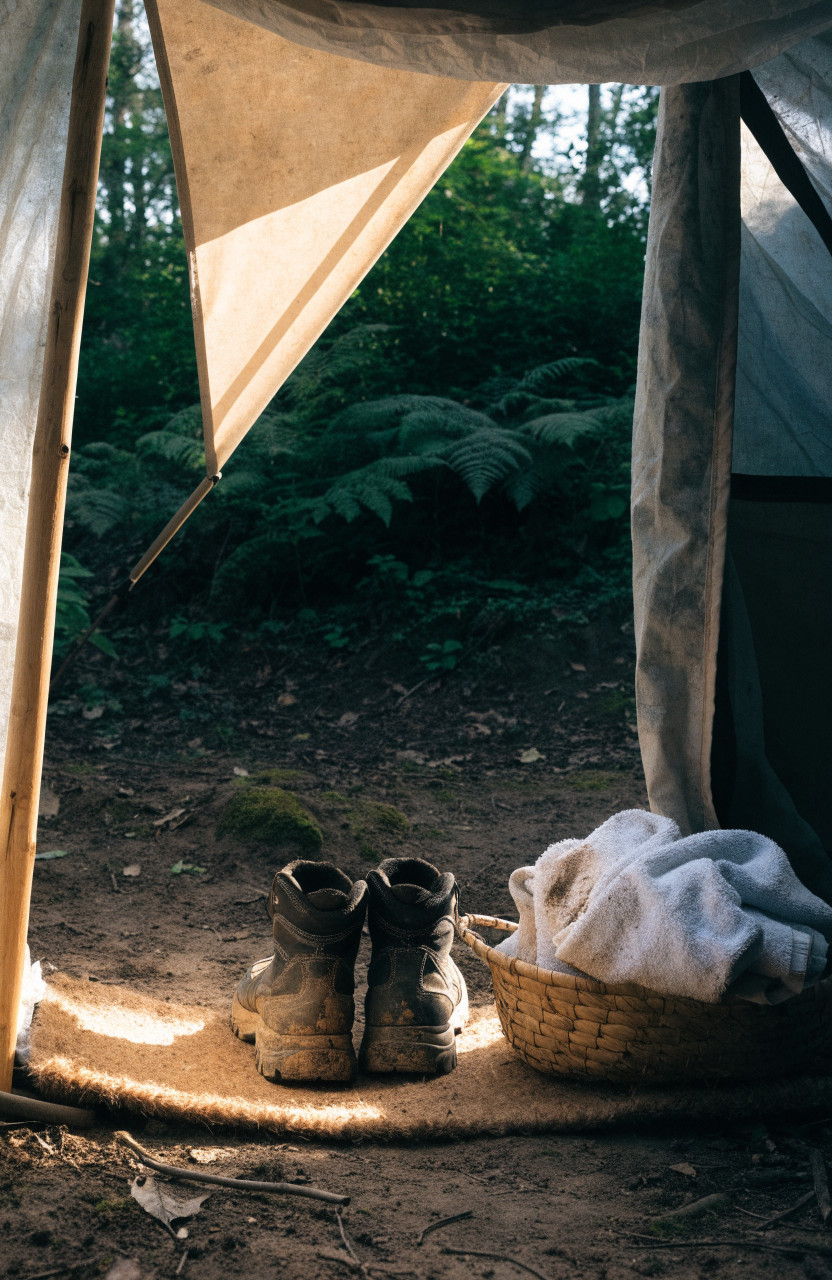
Shoes, a small bin, and a towel live in the first two feet inside the door, or just outside under the awning. Wet shoes in the sleeping area are what make a styled tent feel like a regular campsite by night two. If the tent has a vestibule, that is the zone. If it does not, a footprint under the door flap does the job.
7. Storage that doubles as furniture
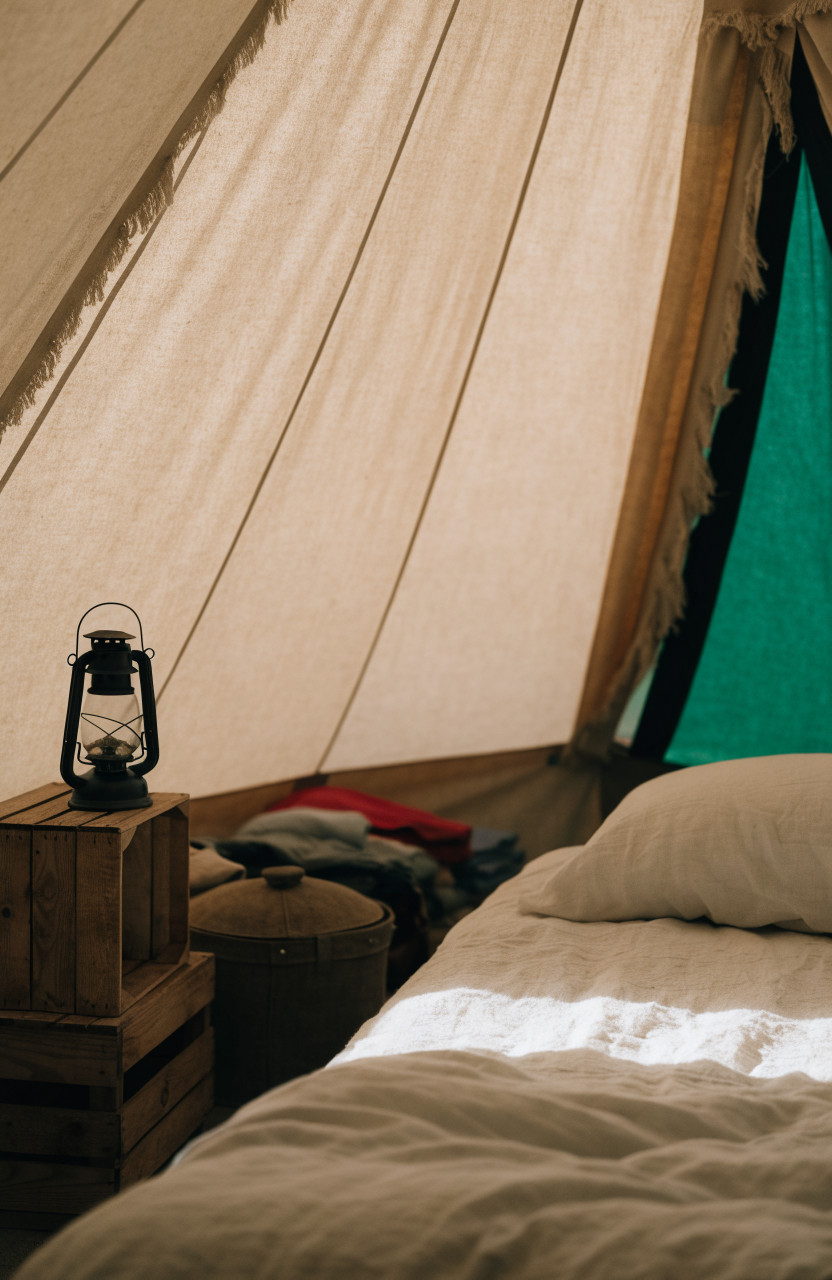
Crates, lidded bins, and a narrow folding table beat a pile of duffels. Two crates at the head of the bed become nightstands. A stack against the wall holds clothes and keeps the floor clear, which is what makes a small tent feel larger. Every piece should have a job. A second chair that nobody sits in is the usual thing to leave at home.
Lighting that feels warm instead of harsh
8. Three low sources, not one overhead light
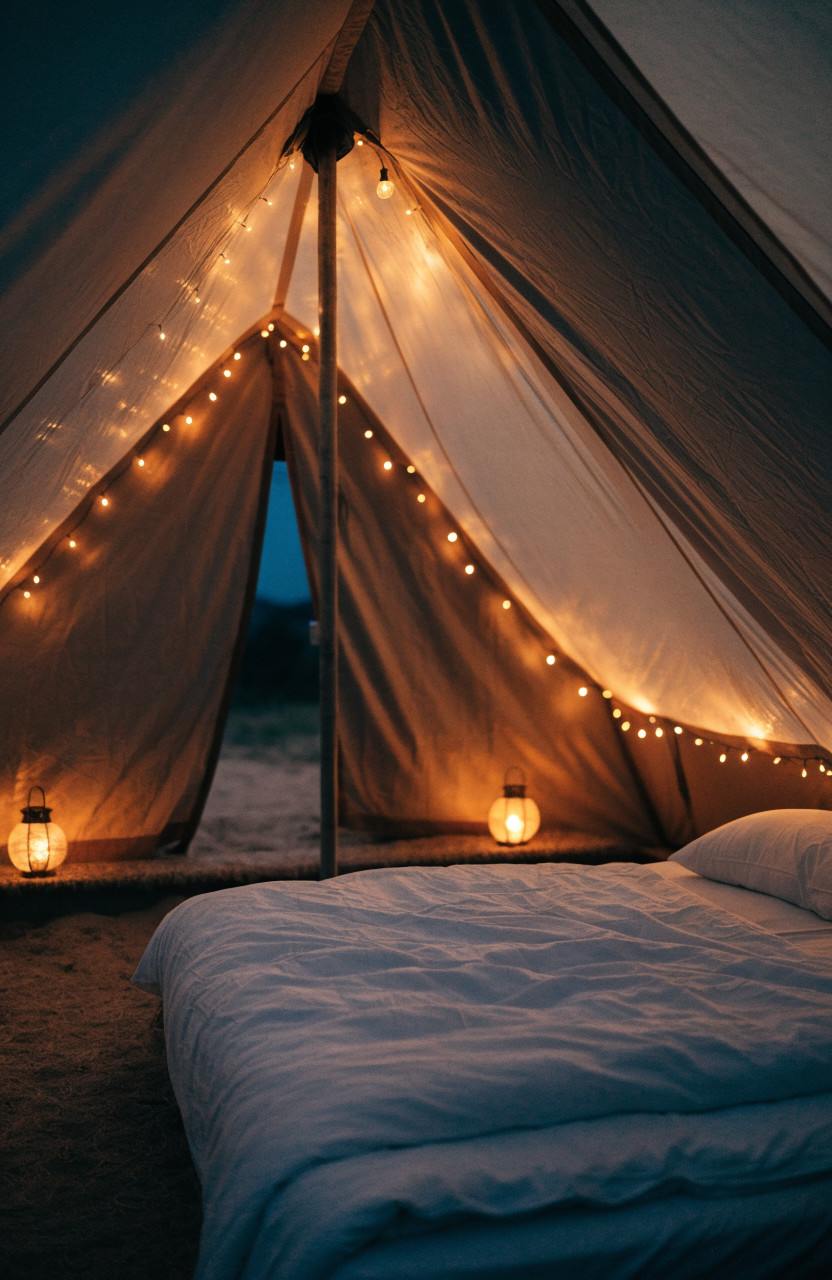
Hang warm battery or solar string lights along the wall-ceiling seam or loosely around a center pole. Add a lantern on each side of the bed. Skip a bright clip light at the peak. Overhead light flattens the room and makes it hard to sleep. Multiple dim sources at different heights are what photographs well and what is actually pleasant after dark.
9. Stargazer or clear-panel night layout
If the tent has a mesh crown or clear roof panels, keep the area under them clear of tall furniture and face the bed toward the opening. Blackout is the tradeoff. A light blanket or a spare sheet clipped over the panel works on bright mornings. In a standard canvas tent, roll one window opposite the bed so you get sky without losing the whole wall to mesh.
The outdoor room
Most of the “glamping” feeling happens outside the door. The tent is the bedroom. The awning, screen shelter, or a second canopy is the living room.
10. Awning lounge
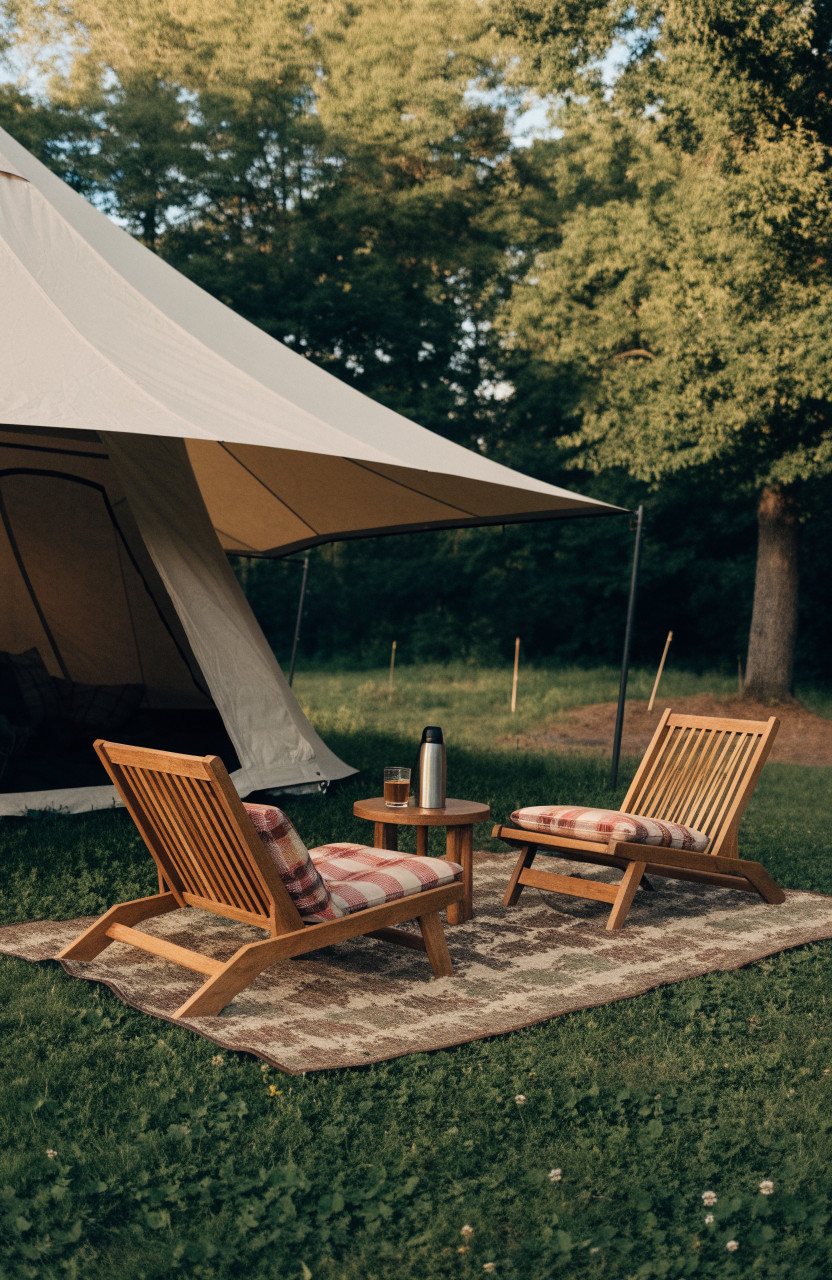
Two low chairs, a small table, and a rug under the tent’s awning or a freestanding canopy. Place this on the shady side in summer. String lights between two trees or from the awning pole to a stake only if the site allows it and the line is high enough to walk under.
11. A dining table that is not the picnic table bare
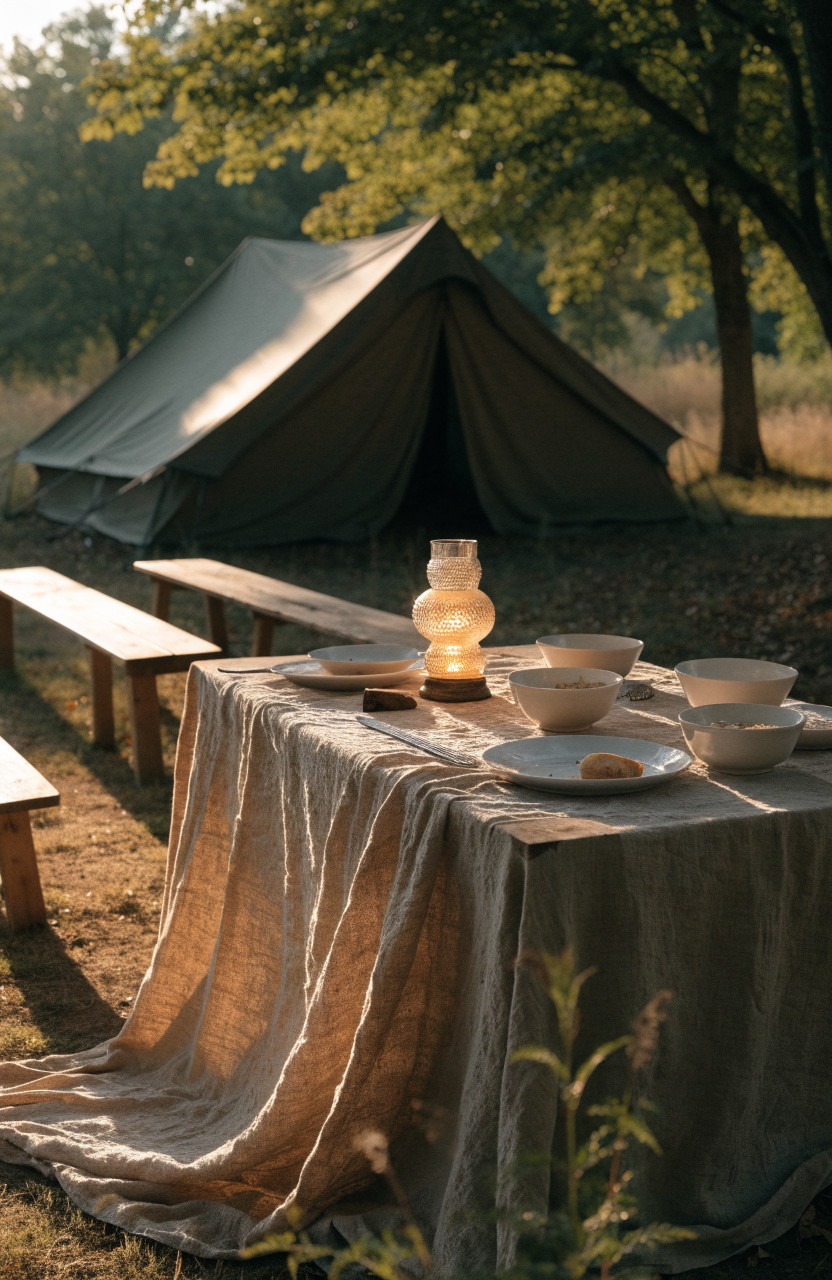
A fitted cloth, real plates for the evening meal, and a lantern in the center change a camp table without any special gear. Cook on a separate surface so the eating table stays clear. Keep the stove and fuel downwind of the tent door so smoke and grease do not settle on bedding.
12. Fire seating with a real gap
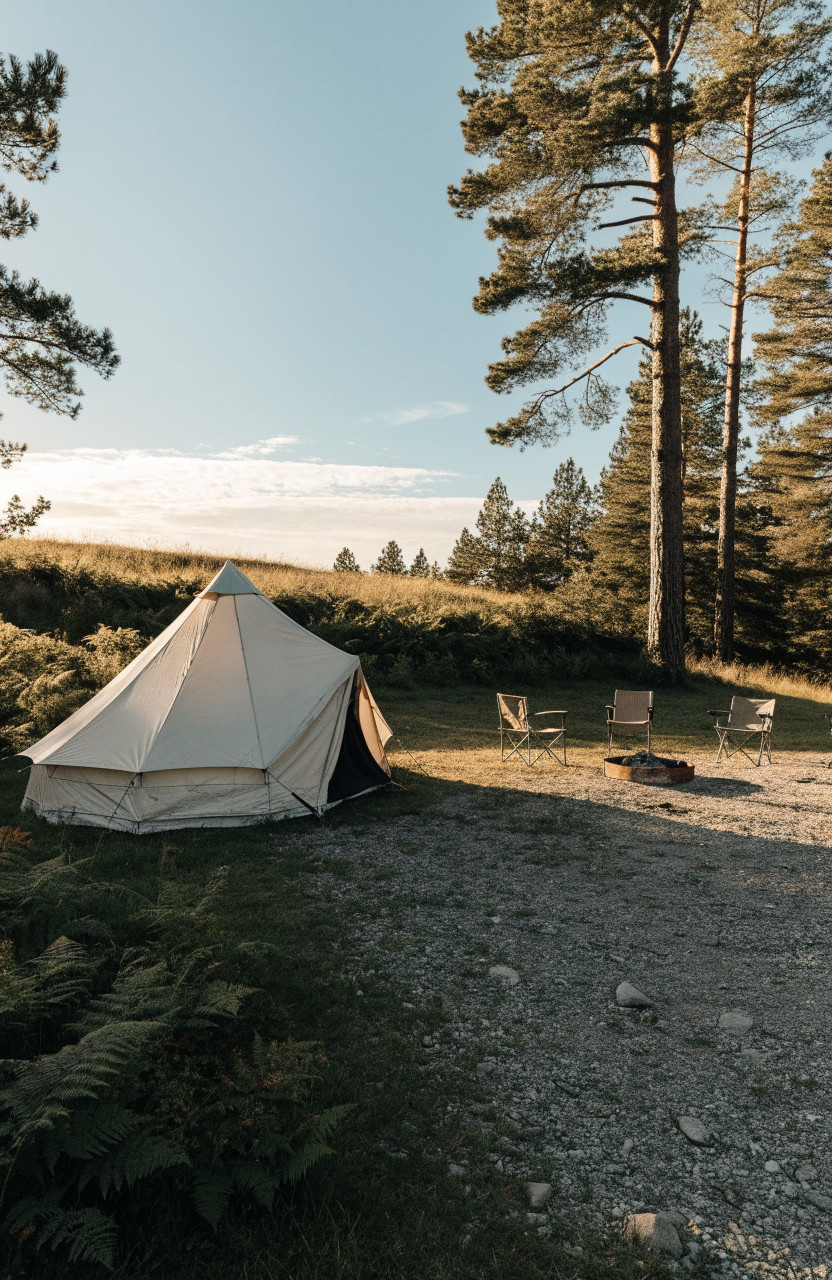
Chairs around a ring or pit only where fires are allowed. Leave several feet between canvas and flame, and more if the canvas is untreated cotton. Never run a stove pipe or heater through a tent that does not have a proper stove jack, and follow the tent maker’s clearance rules if it does. A wood stove is a cold-weather tool for a compatible tent, not a decoration.
Climate versions of the same camp
13. Hot-weather airflow layout
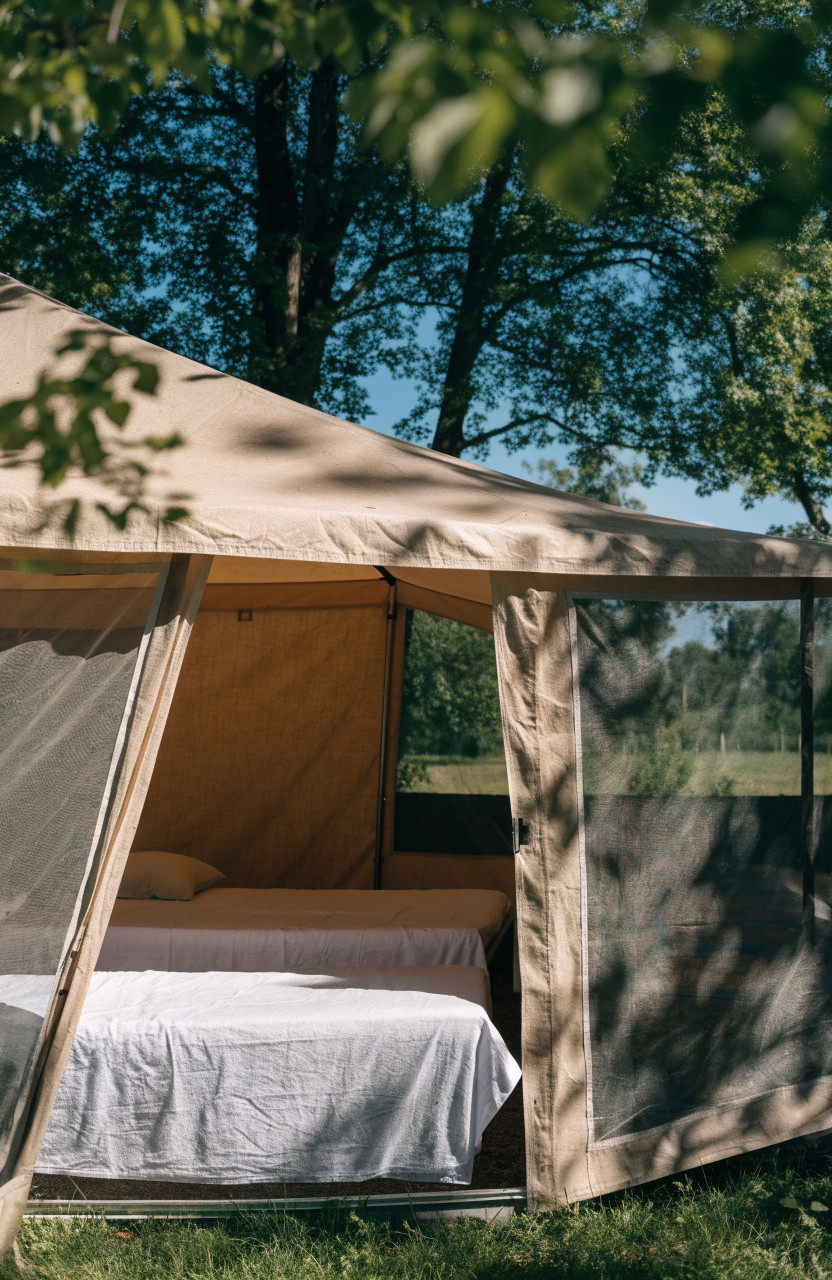
Pitch for afternoon shade. Open opposite windows so air crosses the tent, and use mesh doors in the evening. Choose cots over thick foam stacks, which hold heat. A reflective tarp above the tent, not touching the canvas, cuts sun load. Light colors inside help. Dark rugs look richer and run warmer.
14. Cold-weather basecamp
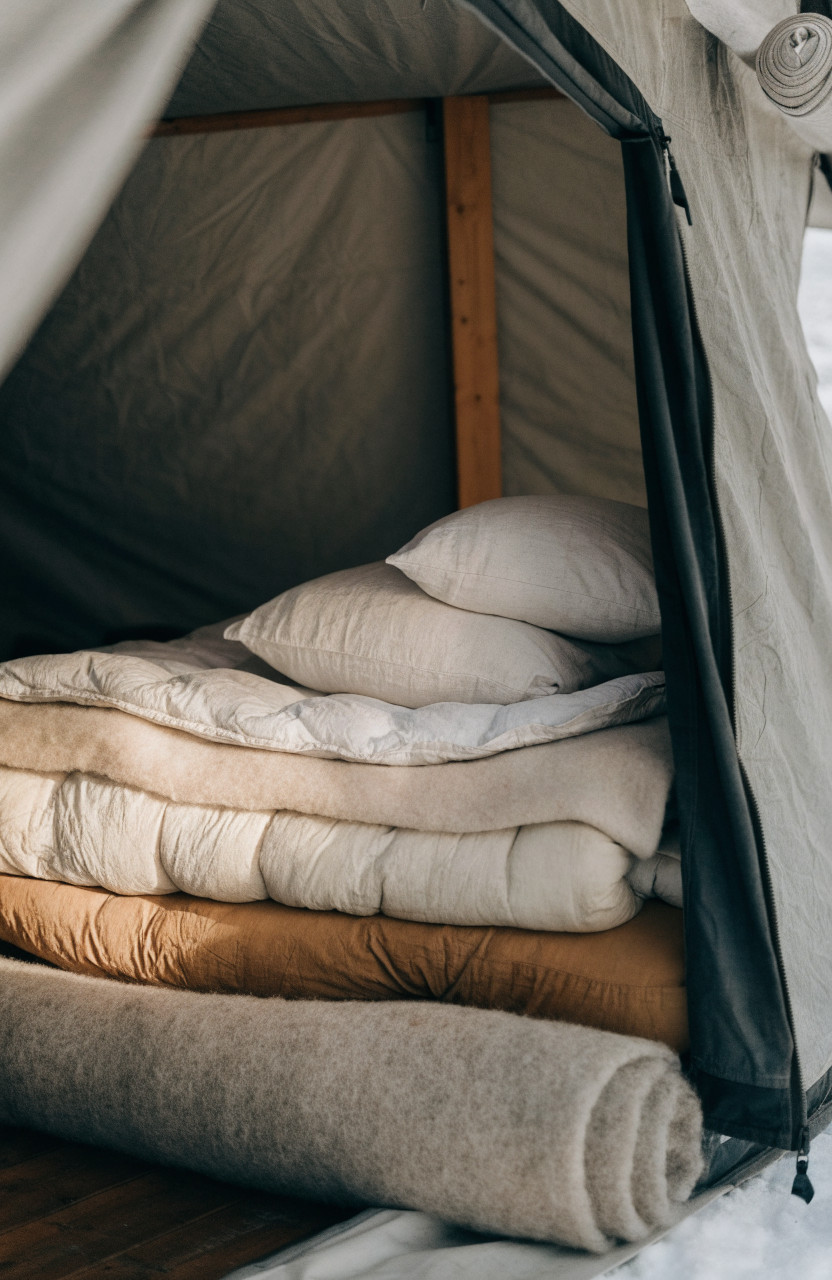
Layer under the sleeper: closed-cell pad, then the camp bed or mattress. Ground cold is what ends most early-season trips, not the air temperature alone. A draft stopper along the door, a heavier duvet, and a small safe heat source only if the tent is rated for it. Canvas breathes better than coated nylon in condensation, but it also takes longer to dry, so do not pack it wet for the drive home.
Two setups that are not a standard campground pitch
15. Backyard platform staycation
A level deck or pallet platform a little larger than the tent keeps the floor dry and gives you a porch for chairs. This is the easiest place to use a real mattress and home bedding, because you are not carrying them far. Stake or weight the tent even in a yard. Wind does not care that you are at home.
16. Tent plus canopy hybrid
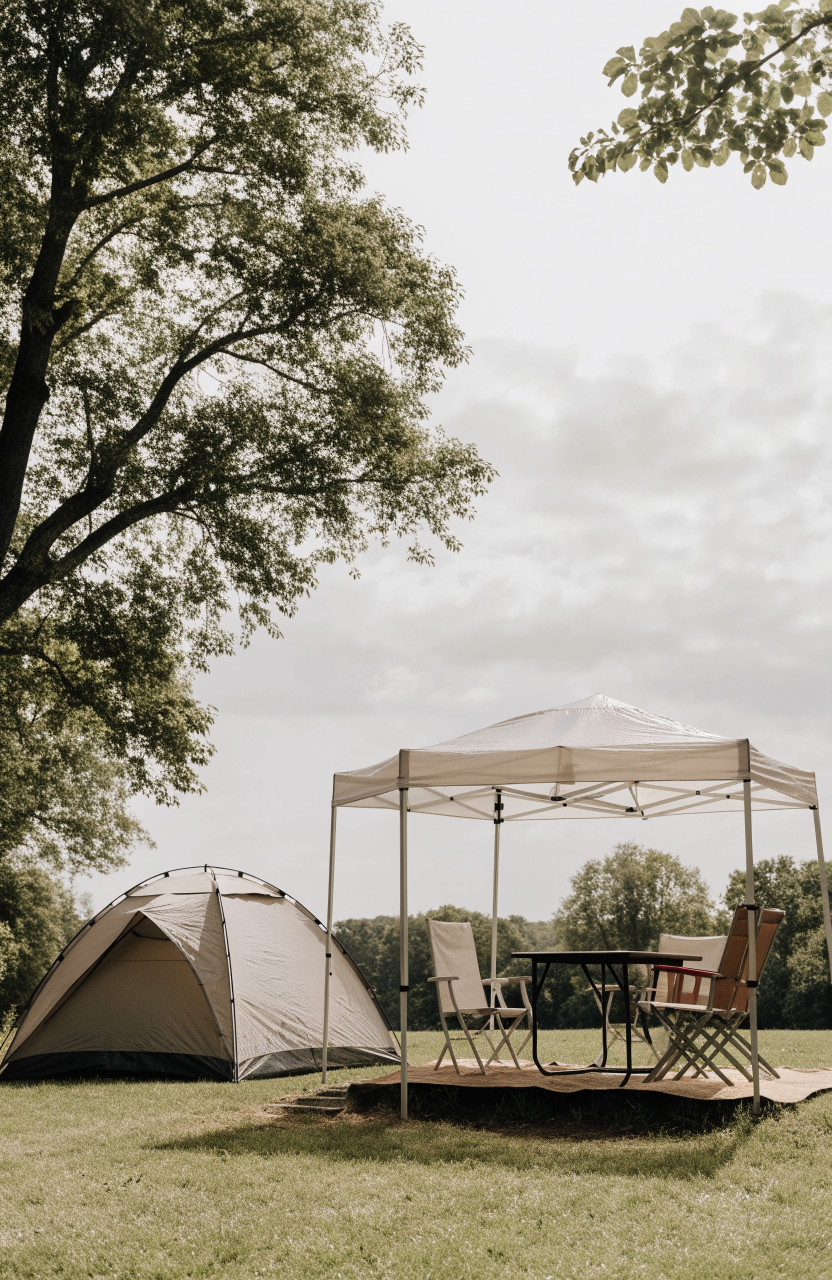
Sleep in the tent. Live under a 10-by-10 canopy or screen house set a few steps away, with a rug, table, and chairs. The tent stays uncluttered, and rain does not force everyone onto the beds. On a small pad, attach the canopy to the tent awning only if both are staked independently so one gust does not pull the other down.
The order that keeps you from rearranging at dusk
- Walk the pad for level ground, drainage, shade, and distance from the fire ring.
- Pitch and stake the tent fully before any furniture goes in.
- Lay the door mat and main rug.
- Place the bed or cots and confirm you can walk past them.
- Hang lights while it is still bright.
- Set the outdoor chairs and table, then cook.
- Add pillows and extra blankets last.
Lights are miserable to hang in the dark. Beds are miserable to shift once the rug is covered in bags.
Space, smoke and damp in a glamping tent
A styled glamping tent feels cramped or damp for predictable reasons, and most of them are fixed before the first night.
| Problem | Likely cause | Fix |
|---|---|---|
| Tent unpleasant to walk through | A 16-foot tent filled with a king bed, sofa, trunk and four chairs | Remove one large piece of furniture before you add another. |
| Air mattress sliding all night | The tent pitched on a sloped pad | Pitch on level ground so air mattresses stop sliding. |
| Smoke filling the bedding | The tent door aimed toward the fire pit | Point the door away from the fire pit. |
| Mildew on the canvas | Damp canvas left sitting on wet grass | Use a footprint and let the walls dry before packing. |
| Lights dead on night one | Battery lights brought along with no spare cells | Pack spare cells for every battery light you bring. |
| Four-person tent too small for four | A four-person rating does not allow for real bedding | Size up, since a four-person tent is not a glamping tent for four. |
Frequently asked questions
Does a 16-foot tent fit a king bed? In many 16-foot glamping tents, yes, with room left for small tables if the bed is centered. Check the floor diameter and whether a center pole lands in the middle of the mattress. A queen plus walking space is the safer plan if you also want a chair inside.
Can you glamp in a normal camping tent? Yes, if you can stand up in it or you treat it only as the bedroom and move living space outside under a canopy. The upgrades that matter are a bed off the ground, home bedding, a rug, warm low lighting, and shoes left at the door.
What lighting is worth bringing? Warm string lights plus two lanterns. Solar lights are fine in open sun and unreliable under dense trees, so carry batteries or a charged power bank either way.
How do you keep the tent from feeling damp? Pitch on high ground, use a footprint, ventilate even in cool weather, and do not store wet towels inside. Condensation on the walls is normal in the morning. Wipe it or open the doors rather than closing everything up.
Is a wood stove necessary for glamping? No. Most fair-weather setups never need one. It only belongs in a tent with a stove jack, used with the clearances the manufacturer specifies. For cold nights without that, extra insulation under and over the sleeper does more, more safely.