Good tent camping clothes storage means keeping clean, worn and wet clothing in separate bags, each with a fixed place in the shelter. The point that matters most is keeping those groups apart: sleep layers sealed and raised, clothes for rewearing in breathable bags off the groundsheet, and anything damp or dirty out in the vestibule.
Moisture reaches a tent three ways. Breath condenses on cool fabric, ground damp moves through the floor, and wet gear comes in from outside. Loose clothes turn musty fast in that air, even over a weekend.
Why clothes fail in a tent even when the rainfly holds
A double-wall tent can shed rain and still leave clothes damp. Warm, humid air from sleeping meets cold fabric and turns into droplets that run down walls and collect in corners. Single-wall shelters often put that condensation directly on the inner surface. Groundsheets also sit on cooler soil, so anything resting on the floor can pick up moisture from below even if the fabric feels dry to the touch.
Odor builds the same way. Sweat left in a sealed bag has nowhere to go. Bacteria that cause the typical camp smell need moisture more than they need dirt. A shirt that airs for an hour before it is packed often smells better after three days than a dry shirt stuffed into a plastic bag within minutes of coming off.
Food smells are a separate problem. Clothes that picked up cooking odor should not live in the sleeping area in bear country or anywhere food storage rules apply. Treat them like dirty laundry and keep them with the rest of the smell-prone gear, outside the tent if local rules require it.
Sort clothes into four piles before you pack
The useful split is not “tops and bottoms.” It is what each item is allowed to do to the rest of the kit.
- Sleep kit. One dedicated base layer, sleep socks, and a light insulating layer that never leaves camp chores. This set has one job: stay dry enough to sleep in.
- Next wear. Tomorrow’s hiking or camp clothes, folded or rolled as a single grab. You should be able to dress without unpacking the whole bag.
- Worn but reusable. Day clothes that are dry enough to wear again. These need air more than they need a waterproof seal.
- Wet or dirty. Rain shells, muddy pants, soaked socks, and anything that smells. These are isolated so they cannot wet or scent the other three.
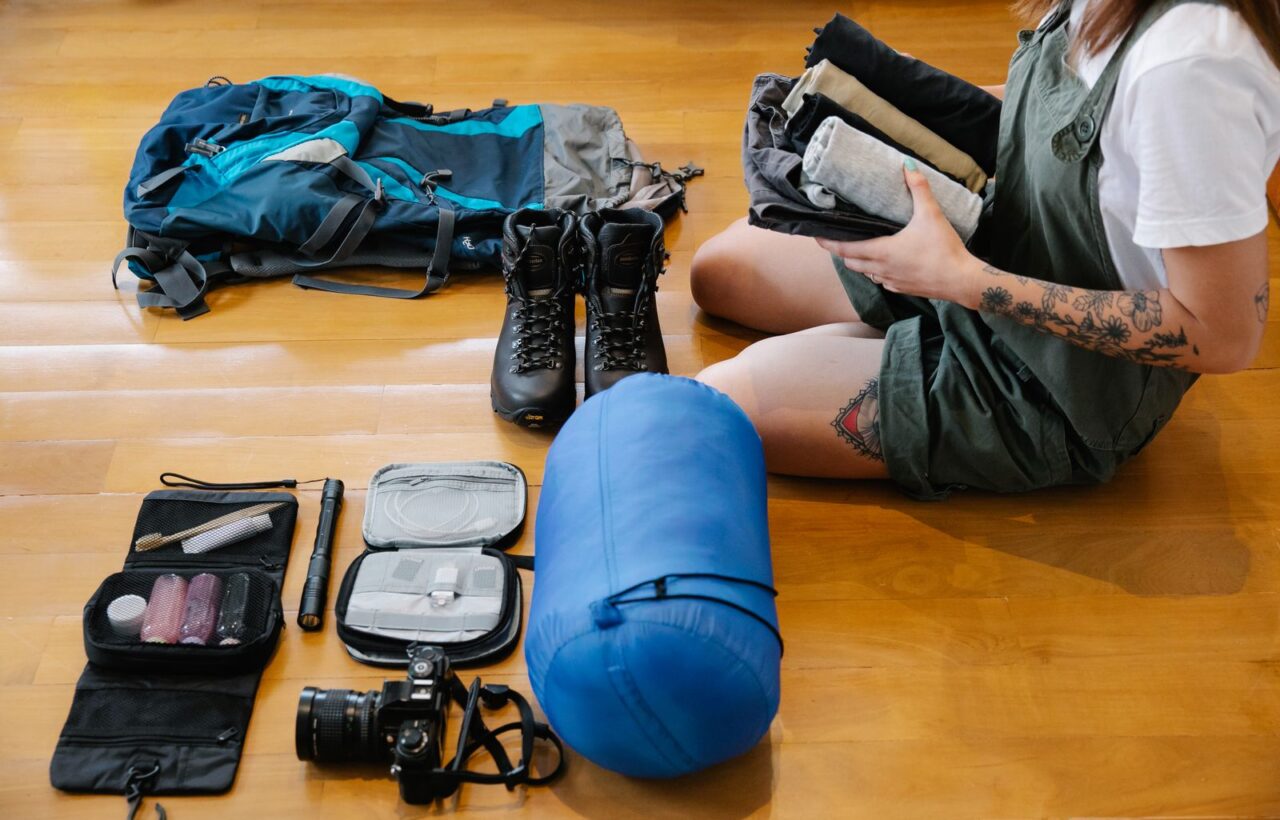
Pack the sleep kit at home in its own bag and do not open it until you are changing for bed. Build next-wear bundles the same way: shirt, bottoms, underwear, and socks together, one bundle per morning. On a two- or three-day trip that is often easier than sorting by garment type, because you never have to dig for a single sock in the dark.
Where each bag should sit inside the tent
Location matters as much as the container.
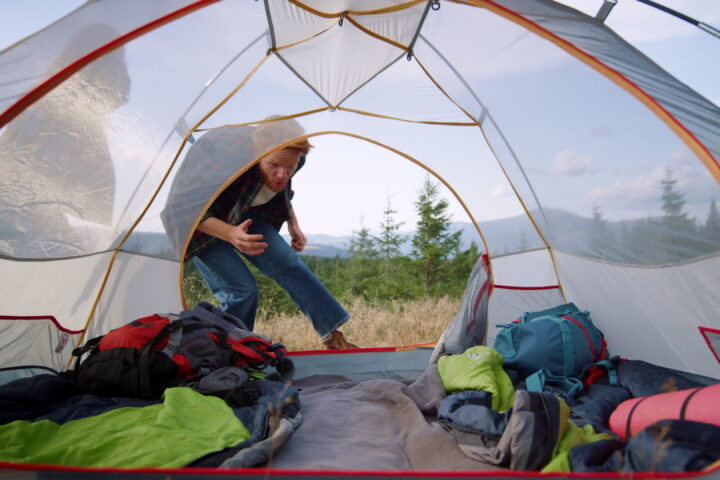
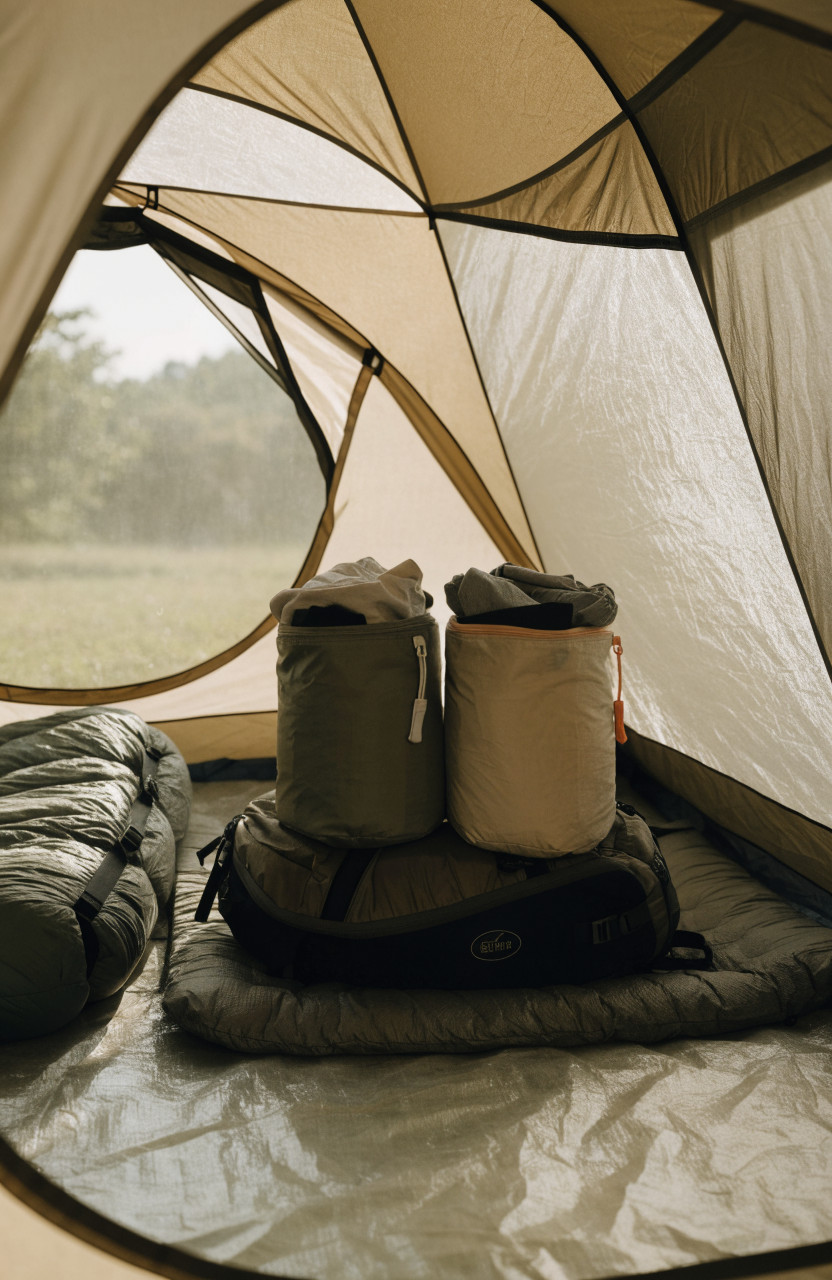
Keep the sleep kit and next-wear bundle in the sleeping area, but not on the bare floor and not against the wall. Set them on your pack, a sit pad, or the foot of the sleeping pad. The center of the tent is drier than the corners, where condensation collects and runs.
Hang what you can. A short guyline between poles, a daisy-chain loop, or a small hanging organizer keeps a fleece and the next morning’s clothes off the floor and in moving air. In a cabin tent this is easy. In a one-person backpacking tent, one loop near the peak is often all you have, so use it for the item you will want first at night: insulation or the headlamp pocket, not the whole wardrobe.
The vestibule is the wet zone. Boots, the rain shell, and the dirty-clothes bag stay there, with the vestibule door cracked if weather allows so moisture can leave. Do not store the sleep kit in the vestibule unless the sleeping area is flooded. Vestibules stay damper than the inner tent.
If you are car camping, the vehicle can take the overflow. Wet layers and the bulk of the clean clothes can live in the car, with only that night’s sleep kit and the next morning’s outfit in the tent. That single change cuts clutter and humidity more than any organizer.
Keep the clothes bag off the tent wall. Condensation runs downward, and a bag in the corner sits in that runoff by morning. On longer trips the dirty bag belongs outside the inner tent, though it can live just inside the door if the vestibule is flooded.
Match the bag to the job
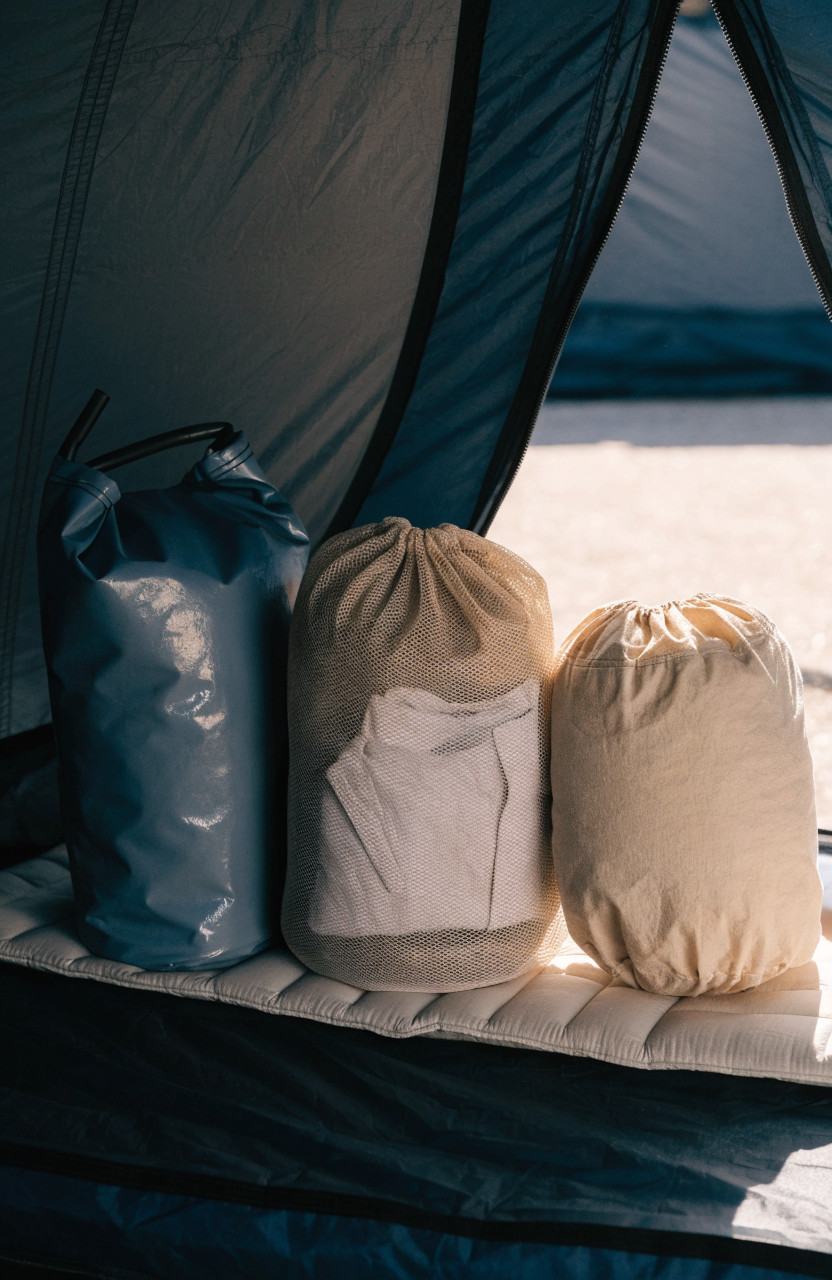
No single sack is right for every piece of clothing. Waterproof bags block rain and tent drips, but they also trap whatever moisture is already in the fabric. Breathable bags let odor escape and let clothes dry a little, but they do nothing against a leaking fly or a wet floor.
| Container | Moisture barrier | Airflow | Best use in a tent |
|---|---|---|---|
| Roll-top dry bag, about 5–10 L | High when sealed with several rolls | None | Sleep kit and any spare layer that must stay dry |
| Mesh stuff sack or mesh packing cube | None | High | Clean camp layers in fair weather, airing worn clothes |
| Packing cube with a mesh panel | Low | Moderate | Next-wear bundles and socks in a cabin tent or car-camp duffel |
| Ordinary zip bag or trash bag | High until it punctures | None | Dirty laundry isolation, short trips only |
| Compression sack | Moderate | None | Avoid for everyday clothes; it presses residual sweat into the fabric |
A 5–10 liter roll-top is enough for a sleep top, bottom, and socks for one person. Larger dry bags waste space and are harder to seal in a small tent. Heavy zip bags work as a backup for a single pair of socks, not as the main system. They puncture on zippers and tent stakes.
Seal a dry bag only when the clothes going in are actually dry. If you close it on a damp base layer, you have built a small humid box. In that case, hang the layer in the vestibule or under a tarp until it is no longer cool to the touch, then bag it.
Use the dry bag for the sleep kit and for rain protection in transit, not as sealed storage for clean clothes all trip. Sweat and humidity stay trapped inside, so mesh or an open stuff sack suits clothes that are already dry and merely waiting.
Set the system up for the tent you actually have
Backpacking tents. Volume is the limit. Carry two small bags: a dry bag for the sleep kit and a stuff sack that starts empty and becomes the dirty bag. Worn clothes that are still dry can go back into the pack liner. Skip hanging organizers. A clothesline between two trees, used only in daylight and taken down at night, does more for drying than any in-tent shelf.
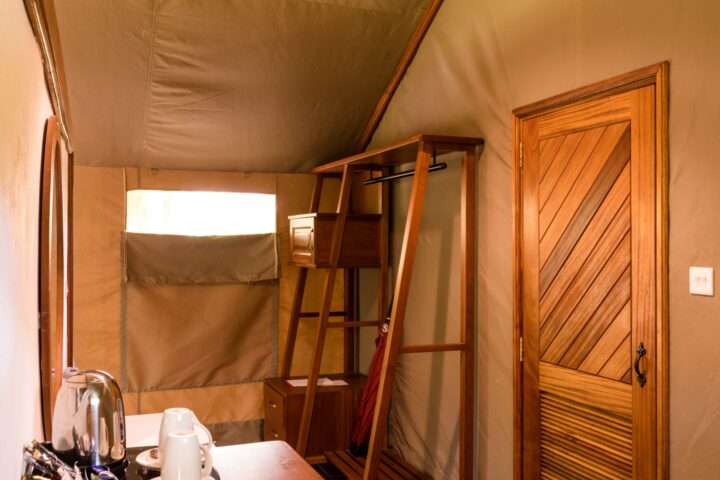
Cabin and family tents. Floor space disappears under loose shirts. Give each person a colored packing cube or a labeled dry bag, and add one shared dirty bag in the vestibule. A hanging shelf on the gear loft or pole system keeps cubes at hand height so nobody dumps a duffel to find underwear. Outfit bundles help with kids: one shirt, bottoms, underwear, and socks rolled together, pajamas in a separate cube.
Cold or very wet trips. Bias toward waterproof storage. Condensation is heavier when the temperature drops at night, and rain may keep the vestibule wet for days. The sleep kit stays in the dry bag even inside the tent. Crack vents anyway. Sealing the tent to “keep heat in” usually makes the walls wetter, and that water ends up on the bag you set against the fabric.
Dry wet clothes without soaking the sleep area
Deal with water outside the inner tent first.
- Wring or press the garment before it comes near the sleeping area.
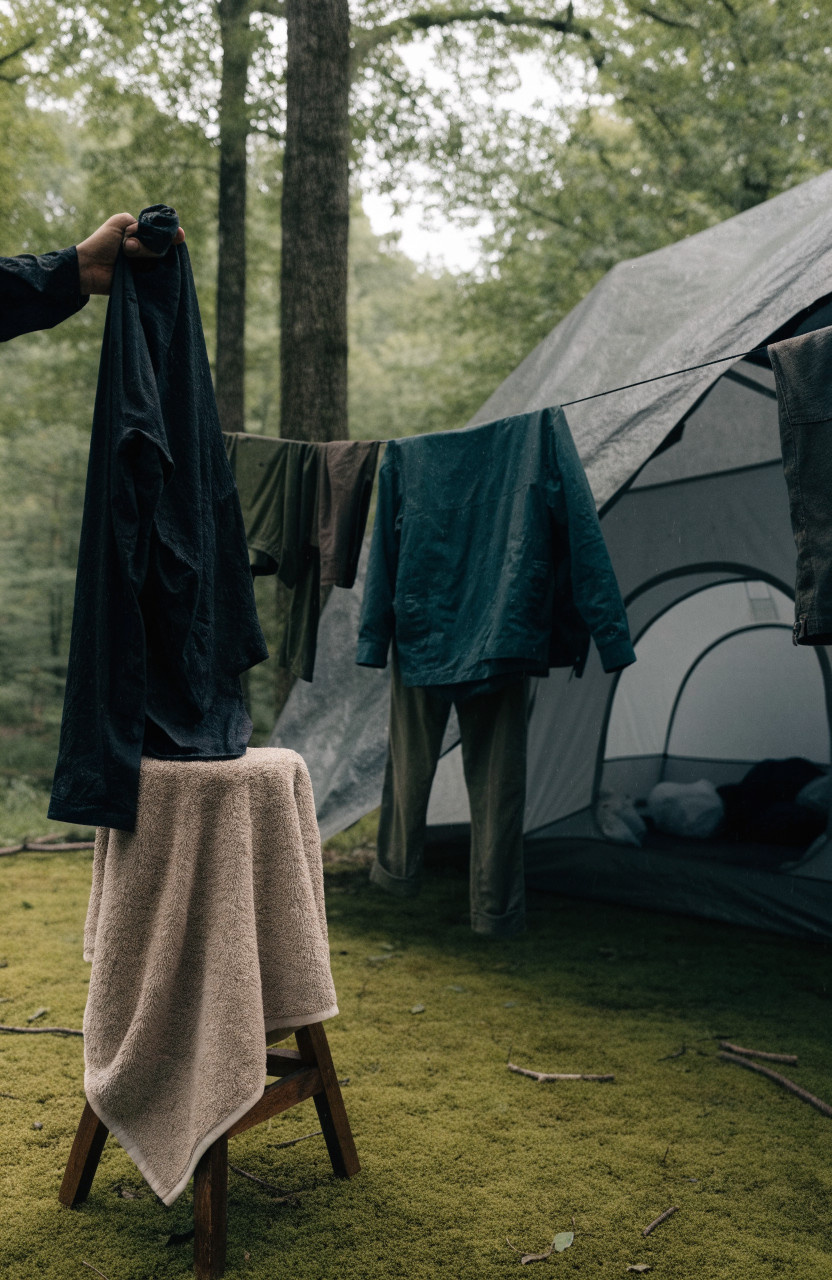
- Roll it in a dry camp towel or microfiber cloth for several minutes. This pulls out water hanging would take much longer to evaporate.
- Hang it under a tarp, on a line in moving air, or in an open vestibule. Sun and wind beat tent heat.
- Bring it inside only if there is no covered outside option, and only with vents open. Do not drape wet clothes on the sleeping bag.
A campfire can speed drying if local rules allow fires and the clothes stay well clear of flame and sparks. Synthetic fabric melts. A line several feet from the fire, watched the whole time, is the only version of this that is worth the risk. Never use a stove or unvented heater inside the tent to dry clothes.
If nothing will dry, isolate the wet items in a closed bag in the vestibule and keep wearing the driest layer you have. Sleep clothes stay reserved so you still have a dry layer at night.
Frequently asked questions
Should all camping clothes go in dry bags? No. Dry bags are for the sleep kit and for anything that would be ruined by rain in the pack. Clean, dry camp clothes do better in a mesh sack or packing cube so residual moisture can leave. Wet and dirty clothes can use a sealed bag because the goal there is containment, not freshness.
Can clothes stay in the tent all day while you hike? Yes, if they are bagged, elevated, and away from the walls. Close the tent against rain, but leave a vent cracked if the weather allows so the interior does not turn into a still, humid box. In campgrounds with theft risk, the car or a locked bag is safer than an empty tent.
What size bag works for one person’s clothes on a weekend? A 5–10 liter dry bag for sleep layers and a similar stuff sack for worn clothes cover most people for two or three nights, assuming you rewear camp layers. Bulky insulation rides outside the clothing bag so it is not crushed.
How do you stop clothes smelling musty? Air them before bagging, keep clean and dirty separate, and do not store clean clothes in a sealed waterproof bag for days. Open the tent each morning so overnight condensation can leave before you repack.
Is a hanging organizer worth packing? In a cabin tent or rooftop tent, yes. It uses space you cannot sleep on and keeps cubes visible. In a backpacking tent, the weight and bulk rarely pay off. A short line and two small stuff sacks do the same job.