
Thin walls, a dark floor, and one overhead loop are why most camping tents look unfinished. Decorating it is not about turning it into a hotel suite. It is about adding light, texture, and a few fixed points so the space feels like a room instead of a bag of poles.
The ideas below are built for actual tents — two-person backpacking shelters, family dome tents, and weekend cabin tents — not just canvas bell tents with furniture budgets. Each one includes how to attach it, what it packs like, and where it fails.
Decide These Four Things Before You Buy Decor
Where it will hang. Most modern tents already have ceiling gear loops, lantern loops, and seam lines. Use those first. Tape, Command strips, and hot glue fail in cold and damp conditions and can pull coating off nylon.
How much it weighs. Tent fabric is not a curtain rod. Lightweight LEDs, fabric, and clips are safe. Glass jars, metal lanterns, and ceramic pieces belong on the ground or a table, not on the peak.
Weather and wind. Anything outside the tent needs extra ties. Festival and event campers learn this the hard way: one gusty night will take flags, bunting, and cheap solar lights with it.
Leave No Trace. Do not pick wildflowers, cut living branches, stack cairns, or “garden” the site for a prettier photo. Public-land guidance is to leave plants, rocks, and natural objects where they are so the next visitor still finds them. Bring decorations from home instead.
How to Hang Decor Without Damaging the Tent
Use the tent’s own hardware whenever you can:
- Ceiling and corner gear loops for lights and a single lantern
- Guy lines and pole sleeves for outdoor flags and bunting
- Binder clips, curtain clips, or small spring clamps on seams and rainfly edges
- Carabiners and S-hooks on existing loops
- Magnets only if both sides are padded and the item is very light
Avoid puncturing fabric, stretching the peak with a heavy lantern, and running cords across the doorway. People trip. Lights break. The night ends early.
Avoid tape on silicone- or PU-coated fabric, which lets go and takes coating with it. Keep heavy loads off the center peak as well; one metal lantern can stretch the fabric and collapse the profile in rain.
15 Camping Tent Decorating Ideas
1. Warm LED fairy lights along the ceiling seams
This is the fastest visual change because it lifts a dark ceiling and hides the “plastic cave” look.
Use warm white LEDs around 2700K–3000K, not cool white. Cool, blue-heavy light looks harsh, wrecks night vision, and pulls more flying insects toward the door. Warm light reads closer to firelight and is less attractive to bugs.
Thread a thin cord through the gear loops first, then clip the light strand to that cord. That spreads the weight and keeps bulbs off your face. Battery or USB-power-bank packs belong in a pocket or hanging organizer — not dangling from the peak.
Skip: incandescent Christmas lights and anything that gets hot against nylon.
2. A waterproof rug at the door, not just inside
An outdoor rug outside the door does more work than a pretty interior rug. It knocks off grit, marks the “room,” and keeps the vestibule from turning into a mud tray.
Choose a low-profile outdoor rug or a cheap plastic mat that can be shaken out and hosed. Put a smaller washable layer just inside the door for socks-off evenings.
Inside a small tent, a full-size living-room rug steals floor space and holds damp. A runner or 3×5 outdoor mat is enough.
3. Bedding that looks finished and actually keeps you warm
A made bed is the difference between “we are camping” and “we live here for the weekend.”
Cover the sleeping pad or air mattress with a fitted sheet if it will stay put. Add one throw at the foot of the bed in a color you like. That throw is not only decoration — it is the extra layer you grab at 2 a.m.
Pack pillowcases separately from bulky inserts if space is tight. Patterned cases change the whole interior for almost no volume.
4. A cluster of LED lanterns at different heights
One bright lantern in the center of the ceiling creates glare. Three smaller LED lanterns — one hung from the center loop, one on a packing crate, one near the door — feel like a room with lamps.
Never hang a fuel or open-flame lantern inside a tent. Tent fabric melts and ignites more easily than people expect, and enclosed combustion is a carbon monoxide risk. LED only inside. Flame stays outside, on a stable surface, away from nylon and dry grass.
If you want flicker, use flameless LED candles in a metal or plastic lantern housing.
5. Short bunting or pennant flags at the entrance
A small run of fabric pennants across the doorway is cheerful, photographs well, and helps you spot your tent in a crowded campground.
Keep it short and light. Long plastic party banners act like sails. Tie to poles or guy lines, not to thin tent fabric. Bring extra zip ties or paracord.
This is one of the better “personality” items for family trips and festival weekends because it packs flat and survives a little weather if the fabric is outdoor-rated.
6. One tapestry or scarf on a single wall
A tapestry adds color and can give a sliver of privacy in a large cabin tent. In a small tent, it can also trap moisture.
Condensation forms when warm, damp air from breathing hits cold tent fabric. Blocking vents or pressing extra fabric against the walls makes that worse. Leave roof vents open and do not cover mesh panels.
Hang with clips on seams, not nails or adhesive. Take it down before you pack if it picked up overnight damp.
7. A clip line for photos, postcards, or a simple packing list
A thin cord with mini clothespins turns the wall into a tiny gallery and a command center. Kids like it. Adults use it for the campground map, the shower-token pouch, and the “do not forget the headlamp” note.
This is decoration that earns its space. It weighs almost nothing and uses gear you may already own.
8. A doorway wreath or fabric swag you brought from home
A small wreath on the entrance is a strong “this site is ours” signal. Make it at home from fabric, dried supermarket eucalyptus, or a cheap seasonal wreath. Do not harvest living plants from the campsite.
On public land, picking wildflowers and removing plants reduces seed, removes food for pollinators, and is often restricted. Photos last longer than a wilted bouquet in a hot car.
Hang it from a pole or a clip on the rainfly zipper pull so it does not stress the door fabric.
9. Two floor cushions that become extra seating
In a family or cabin tent, two compact floor cushions create a reading corner that is not the bed. Outside, they move to camp chairs.
Look for outdoor fabric or cheap indoor cushions you accept might get dirty. Pack them in a compression sack. If the tent is a tight two-person, skip this — floor space is already the scarcest resource.
10. Storage that looks like furniture
Visible clutter makes a tent feel smaller than it is. A collapsible canvas bin, a hanging mesh organizer on a gear loop, and a shoe tray by the door do more for “decor” than another string of lights.
Choose one color family — khaki, rust, forest, cream — so bins and bedding look intentional instead of like a gear explosion.
Hanging organizers belong on side loops, not the center peak. You still need that peak for a light.
11. A tabletop still life from items you already pack
You do not need a vase of foraged flowers. A mug, a small cutting board, a paperback, and an LED tea light on a crate already look like a campsite table instead of a pile of cookware.
If you want greenery, pack a small faux stem or a grocery-store herb in a jar you will cook from. That keeps the look and respects the site.
12. A lightweight doorway drape for privacy
A thin cotton or mesh panel clipped inside the door gives a dressed entrance and a bit of privacy when the fly is open. It is especially useful in campgrounds where tents sit close together.
Do not use a heavy blackout curtain in a small tent. You will block airflow and wake up wetter. Mesh or a gauzy cotton scarf is enough.
13. Low path markers so you can find the tent at night
Decorative and practical overlap here. A couple of solar stake lights, glow sticks on guy lines, or a warm LED on the vestibule pole keep you from kicking a stake on the walk back from the bathroom.
Keep bright lights off the door itself if bugs are bad. Put the glow a few feet away so insects gather on the marker, not on the mesh you have to unzip.
Reflective guy-line sleeves are not pretty in daylight photos. They are excellent at 11 p.m.
14. A small camp flag or banner on a pole, not on the tent body
A flag helps friends find you and gives the site a finished edge. Attach it to a dedicated lightweight pole, a spare trekking pole, or a guy line with room to move.
Do not zip-tie a heavy wet flag to thin tent fabric. Wind load is real. Bring extra fasteners. Festival campers who decorate the outside almost always mention wind as the thing that destroys the look overnight.
15. A coordinated color story instead of more objects
The most overlooked decorating idea is editing.
Pick two colors plus one metal or wood tone — for example, rust and cream with black lanterns, or olive and mustard with warm lights. Apply that to the rug, pillowcases, throw, bunting, and bin. Five matching items look styled. Twelve unrelated cute things look like a garage sale in a tent.
This also makes packing easier. You are not hunting for “the good pillow.” You packed one set.
Whatever the theme, open flames stay out entirely: no candles, no incense, and no gas lanterns under nylon. Cool-white party lights over the door are another poor fit, since they are bright and draw bugs.
What Changes in a Small Tent vs. a Large Tent
Two-person backpacking or compact car-camping tent: Prioritize lights on existing loops, one small door mat, pillowcases, and a clip line. Skip rugs that cover the whole floor, hanging jars, and wall tapestries. Floor space and ventilation matter more than atmosphere.
Family dome or cabin tent: You can add a seating corner, a hanging organizer, and a short interior light run. Still keep weight off the center peak.
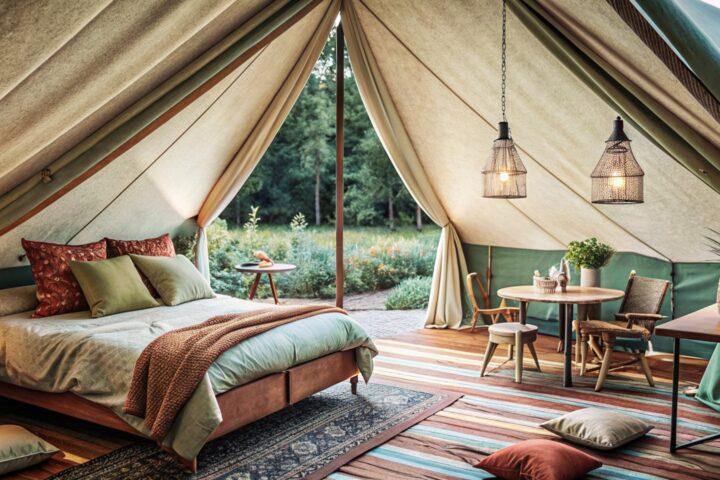
Canvas bell or glamping tent: Rugs, layered bedding, and hanging lanterns work because the structure is built for it. The same objects will sag or tear a lightweight nylon tent.
A Simple Packing List That Covers Most of These Ideas
If you want one kit instead of fifteen separate projects:
- One strand of warm USB or battery fairy lights
- Two small LED lanterns
- Binder clips or curtain clips
- Two carabiners
- A small outdoor door mat
- Two pillowcases and one throw
- A short fabric bunting
- A collapsible bin
- Extra paracord
That kit fits in a stuff sack and works in almost any tent you already own.
Frequently Asked Questions
What are the easiest camping tent decorating ideas for beginners? Fairy lights on gear loops, a door mat, and pillowcases. Those three change light, dirt, and color without new furniture.
Can I use regular indoor string lights in a tent? Only if they are LED, stay cool, and you can power them safely. Outdoor-rated or camping-specific strands handle damp better. Keep connections off the floor.
How do I decorate a tent at a festival? Favor items that tie to poles and guy lines, not to fabric. Lights, tapestries on a shade canopy, a flag, and a ground tarp or rug are the usual combination. Pack extra zip ties. Assume wind.
Is it safe to hang lights while I sleep? LED fairy lights and LED lanterns are widely used overnight. Check that battery packs are not crushed in a sleeping bag, cords are not across the door, and nothing is hot to the touch. Turn lights down or off if they attract insects into the tent.
Should I decorate the inside or the outside? Inside is more reliable in rain. Outside is better for finding your site and for photos. A door mat, a short banner, and one warm light at the vestibule cover the outside without turning the tent into a sail.
A decorated tent should still pitch fast, vent, and pack down dirty. If an idea fails any of those tests, leave it at home and keep the lights, the mat, and the throw. Those three already do most of the work.