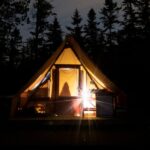
A closed rooftop tent changes how a vehicle drives, parks, and sleeps. The useful hacks are the ones that stop the usual failures: a wet mattress by morning, a ladder that rocks, a shell that will not close, and a campsite you cannot leave without packing the whole bed.
These 14 rooftop tent camping hacks come from the problems that show up on real trips — condensation, slope, height clearance, wet pack-up, and gear that lives one ladder climb away. None of them require a new tent. They change setup order, airflow, and what you leave on the roof.
1. Measure closed height before the first drive
A folded rooftop tent commonly adds several inches to overall vehicle height, often in the 6–12 inch range depending on the shell and rack. That is enough to hit a parking garage, a drive-through canopy, a low bridge, or a campsite tree limb that was fine last season.
Write the new height on a card in the glovebox and check it against the route, not just the destination. Softshells and hardshells sit differently, so measure the vehicle you will actually drive, with the cover latched.
2. Do one full open-and-close at home
First-night arguments usually start because a pole, strap, or cover latch was never practiced in daylight. Open the tent in the driveway, note which face needs clear space for the ladder, and time a calm pack-down.
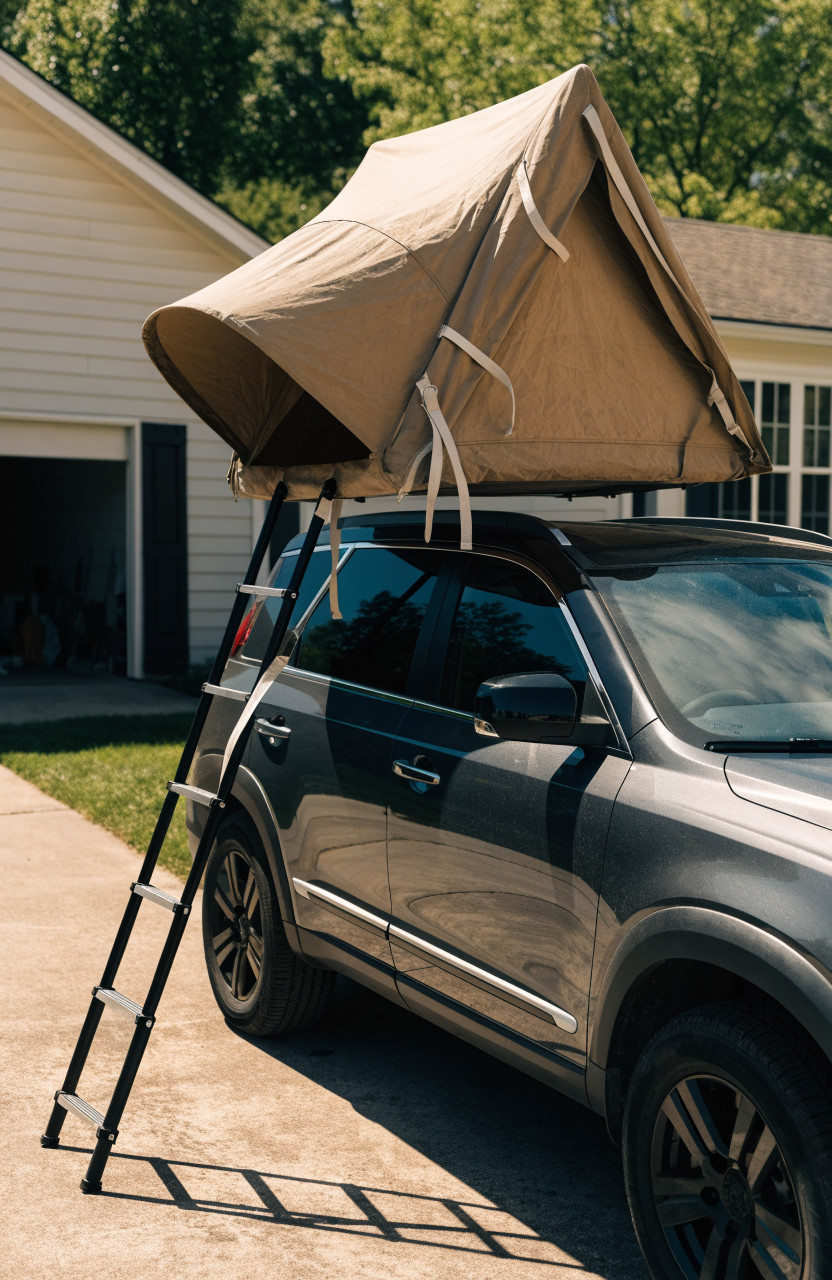
Home practice also shows whether you can reach the cover without a step, whether bedding stops the shell from closing, and whether every mounting bolt is present. A rooftop tent that takes a few minutes once you know the sequence still takes much longer the first time you invent that sequence in the dark.
3. Level the tires, not the mattress
Sleeping on a slope rolls you into the wall all night and loads one side of the ladder. Park on the flattest pad you can find, then correct the rest with leveling blocks or recovery boards under the tires.
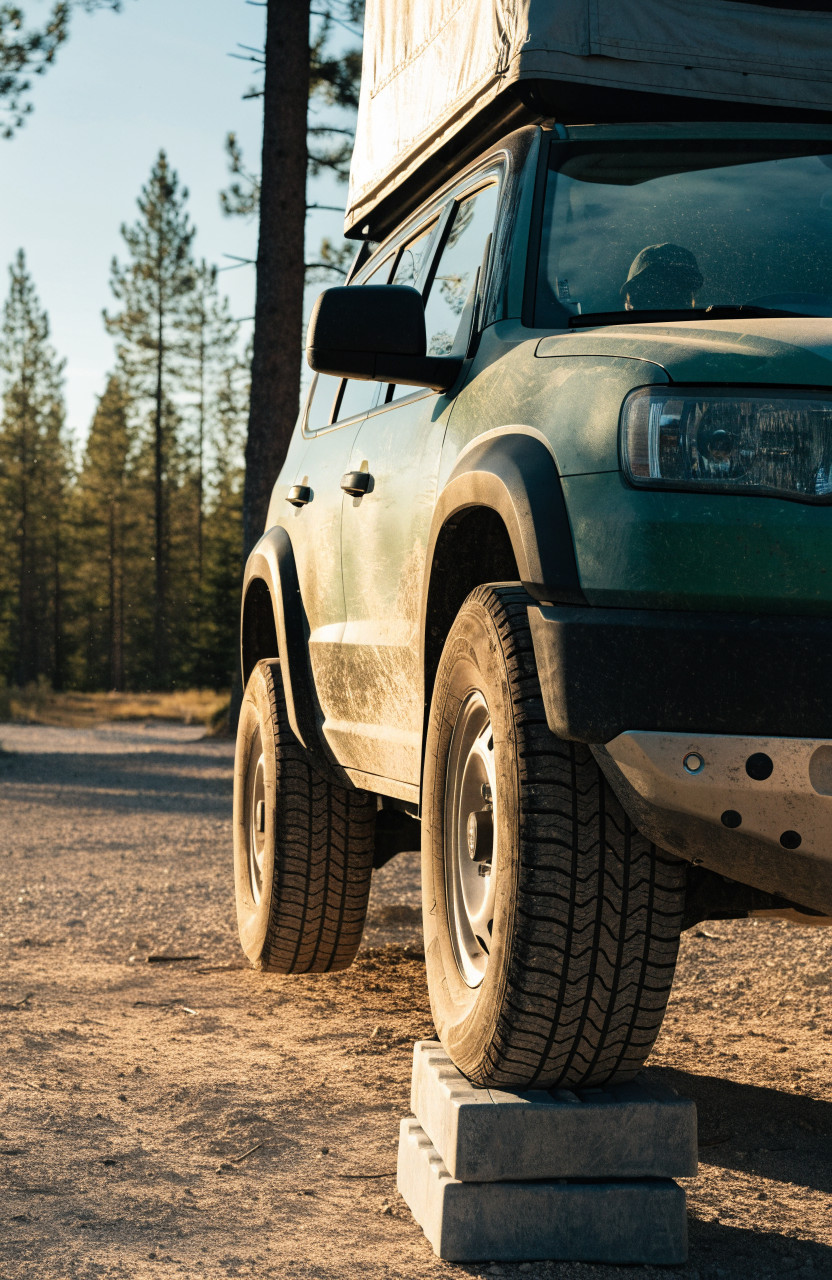
Rocks work in a pinch and shift. Stackable blocks are lighter to carry and easier to adjust in two directions. A small bubble level on the dash, or a phone level app, is enough. You are aiming for a bed you can lie still on, not a survey-grade pad.
4. Set the ladder so it carries weight, then clear the exit
A ladder that is nearly vertical dumps load into the tent mounts. One that is too flat pulls outward at the base and feels unstable on the way down. A common working target is about 75 degrees — roughly one unit out for every four units of height — with both feet planted and no wobble after you adjust the telescoping sections.
Before you commit to the spot, walk the ladder path. Trees, neighboring rigs, and rocks that block the base turn a simple night exit into a climb over the side. Telescoping ladders are generally less fussy than sliding ladders, whose tracks fill with grit.
5. Point the opening at the problem you care about most
When the site allows it, face the door away from the prevailing wind and away from the nearest neighbor’s talking circle. Wind into the opening pushes rain at the zipper and makes the wall noisy. A door aimed at another camp makes every late zip audible.
You cannot always get both. Wind and rain beat social preference. If the only flat pad faces the wind, use the rainfly and guy lines rather than chasing a prettier view.
6. Leave a vent open even when it is cold
Condensation is breath meeting a cold wall. Sealing the tent to stay warmer traps that moisture, and people wake up to damp fabric and wet bedding. Crack at least one vent or mesh window. If the site has a breeze, park so that breeze crosses the openings instead of hitting a solid panel.
An extra blanket is cheaper than a soaked quilt. If a storm forces the windows shut, wipe the walls in the morning and air the tent before you close it. A small USB fan helps move air, but it does not replace an open vent.
7. Put an air gap under the mattress
The floor of many rooftop tents is a cold metal or composite plate. Moisture collects there and soaks the foam from below. A mesh anti-condensation mat creates a thin air channel so water is less likely to sit against the mattress.
The mat does not stop condensation from forming. It keeps that water off the foam. Lift the mattress for a few minutes in the morning so the mat and floor can dry. A closed-cell pad or folded blanket at the foot end also cuts the cold spot where the base plate pulls heat out of the bed.
8. Keep night gear in one bag at the ladder
The slow part of rooftop camping is the second and third climb for a headlamp, glasses, or charger. Pack a small tent bag that stays with the bedding: headlamp, phone, power bank, earplugs, layers, and anything you will want after you are already up.
Shoes stay at the bottom. A simple shoe bag or mat at the ladder base keeps grit off the rungs and out of the sleeping platform. Wet rain gear belongs under the awning or in the vehicle, not on the mattress.
9. Compress bedding so the cover closes without a fight
Quilts and compressed pillows pack flatter than bulky sleeping bags inside a closed shell. Vacuum or compression bags help on softshells that must fold cleanly. If the cover will not latch without kneeling on it, something inside is too thick — usually a mattress topper.
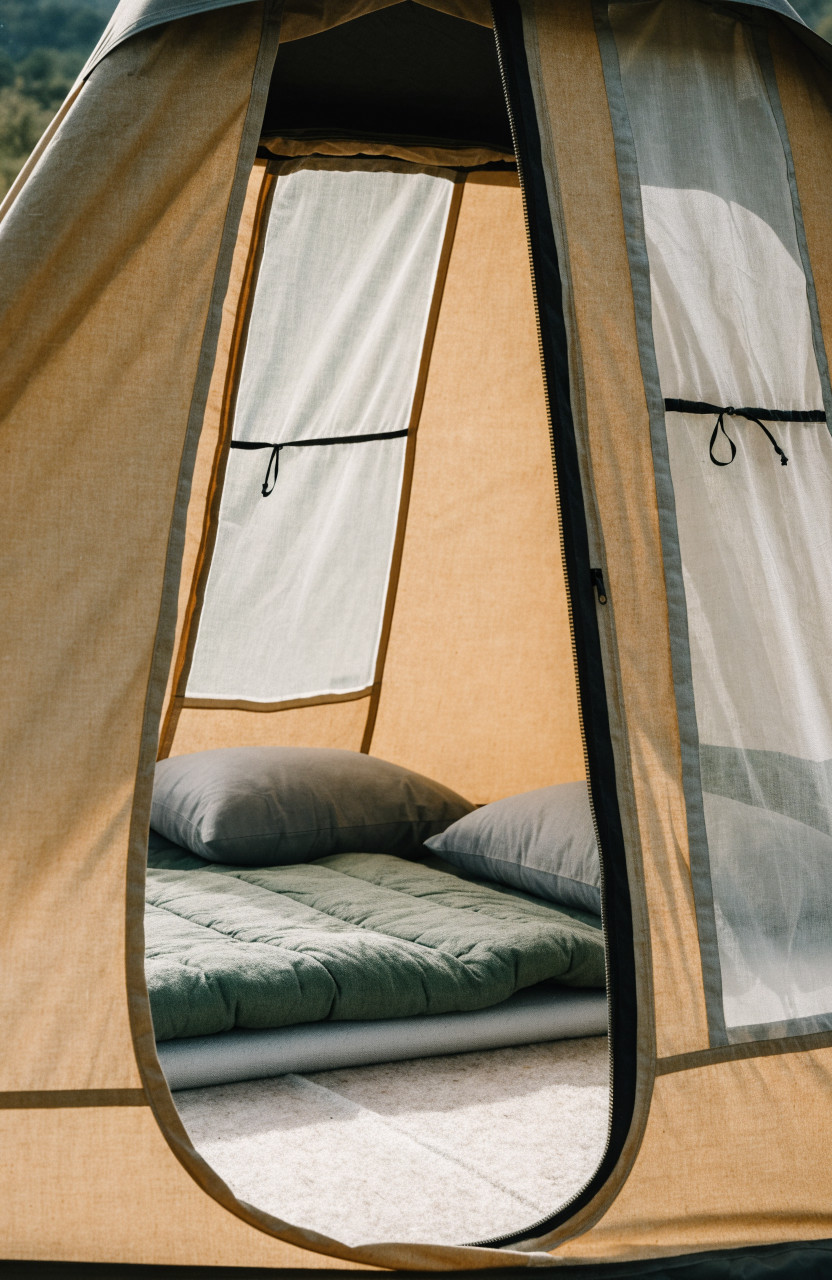
A topper can fix a thin stock pad, but extra inches steal headroom and can stop the shell from seating. Stay within what the tent was designed to fold around. Forcing the cover stresses zippers, hinges, and gas struts.
10. Shade the shell before the afternoon heat builds
Dark fabric over a vehicle roof heats fast. A light-colored tarp or reflective emergency blanket clipped over the shell reflects sun before it reaches the interior. Open windows on opposite sides so you get a cross-breeze rather than a closed box.
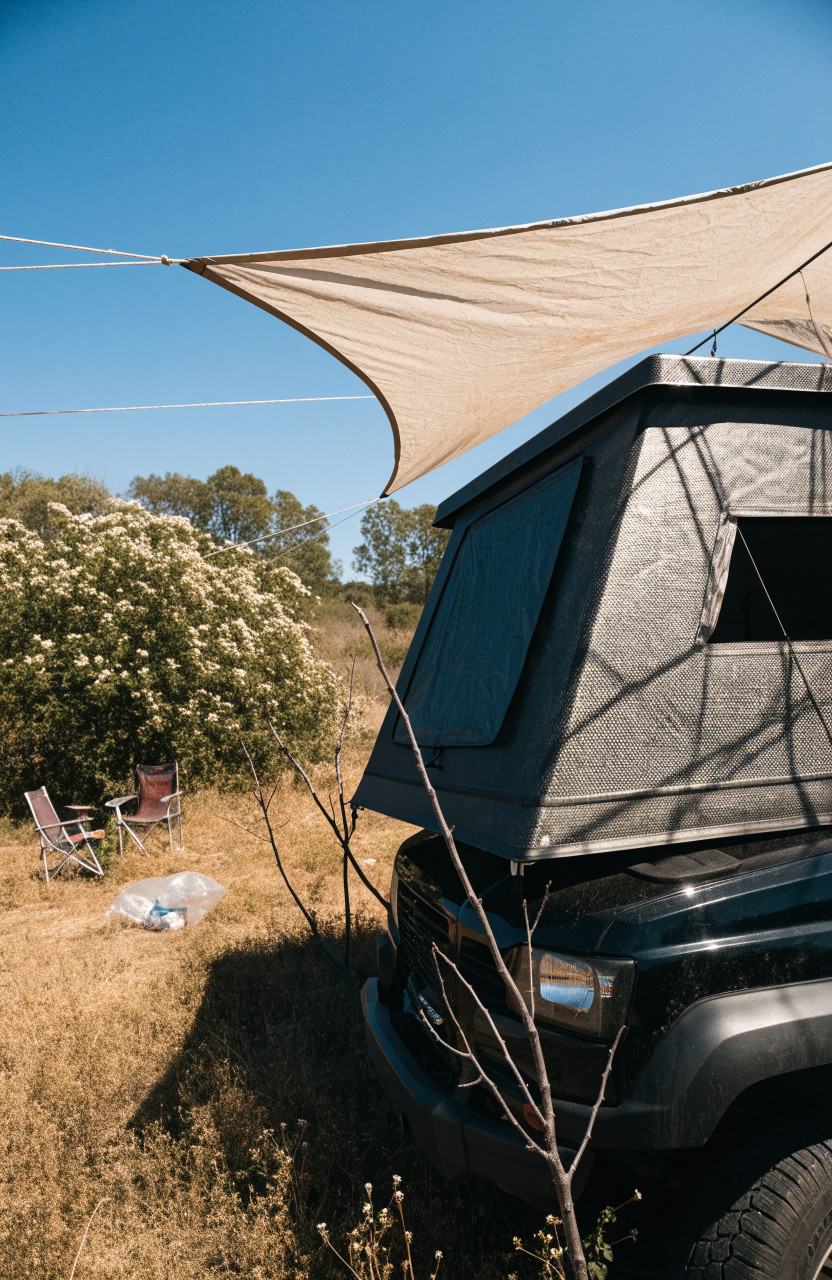
In dry heat, a damp towel hung near a vent adds a little evaporative cooling. It adds humidity, so skip it on already muggy nights. Sit with the door open and your feet on the ladder during the hottest hour instead of sealing yourself in at 3 p.m.
11. Treat a wet pack-up as unfinished business
Rain does not always give you time to dry the tent before you leave. Closing it damp is sometimes the only option. Mold risk rises if that moisture stays sealed. Open the tent again the same day or the next — campers and makers commonly treat about 24 hours as the window — and dry the walls, floor, and mattress before long-term storage.
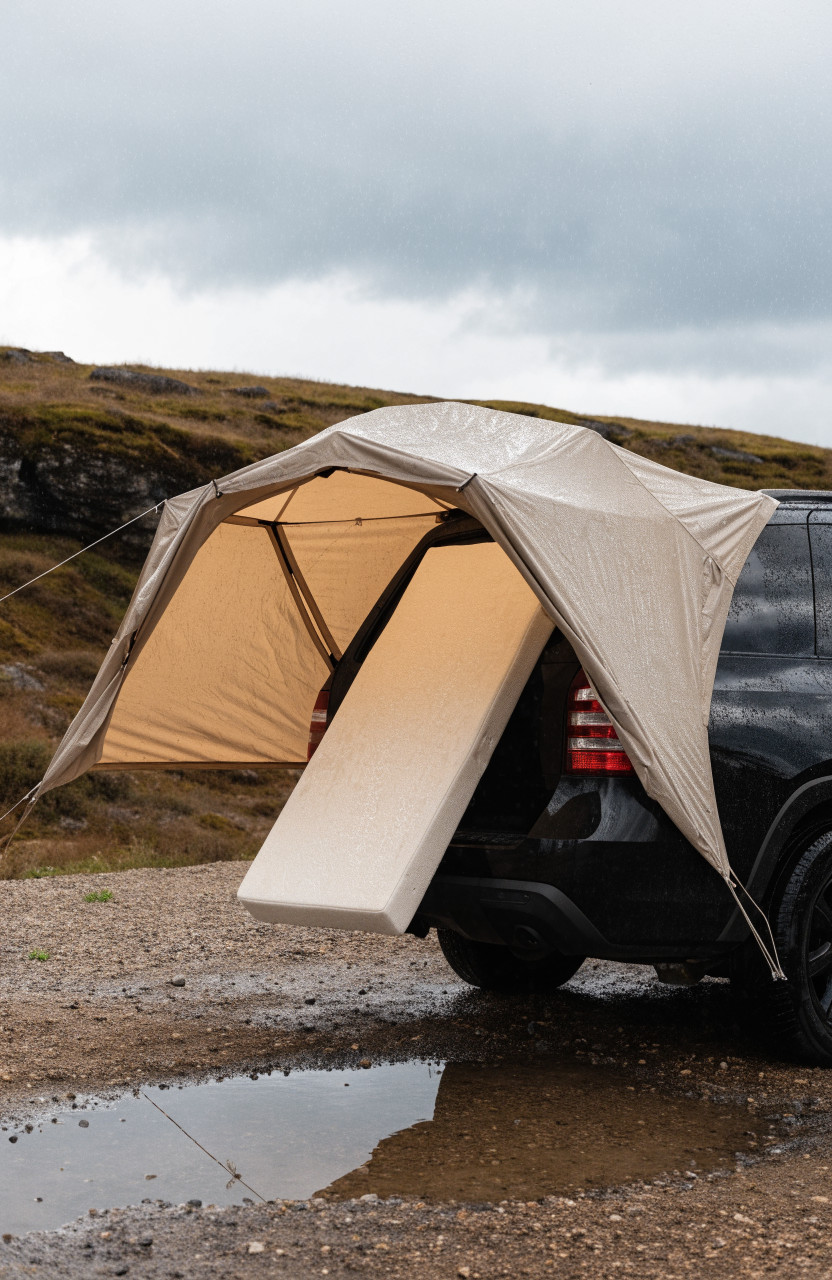
If you are moving camps, open it at the next site before dinner and prop the mattress so air reaches the floor. Never store wet clothes inside the closed shell.
12. Recheck mounts after highway miles
Road vibration loosens brackets. Before a trip, and again after rough roads, check the tent-to-rack bolts against the torque the manufacturer specifies. Carry the wrench or socket that fits those bolts.
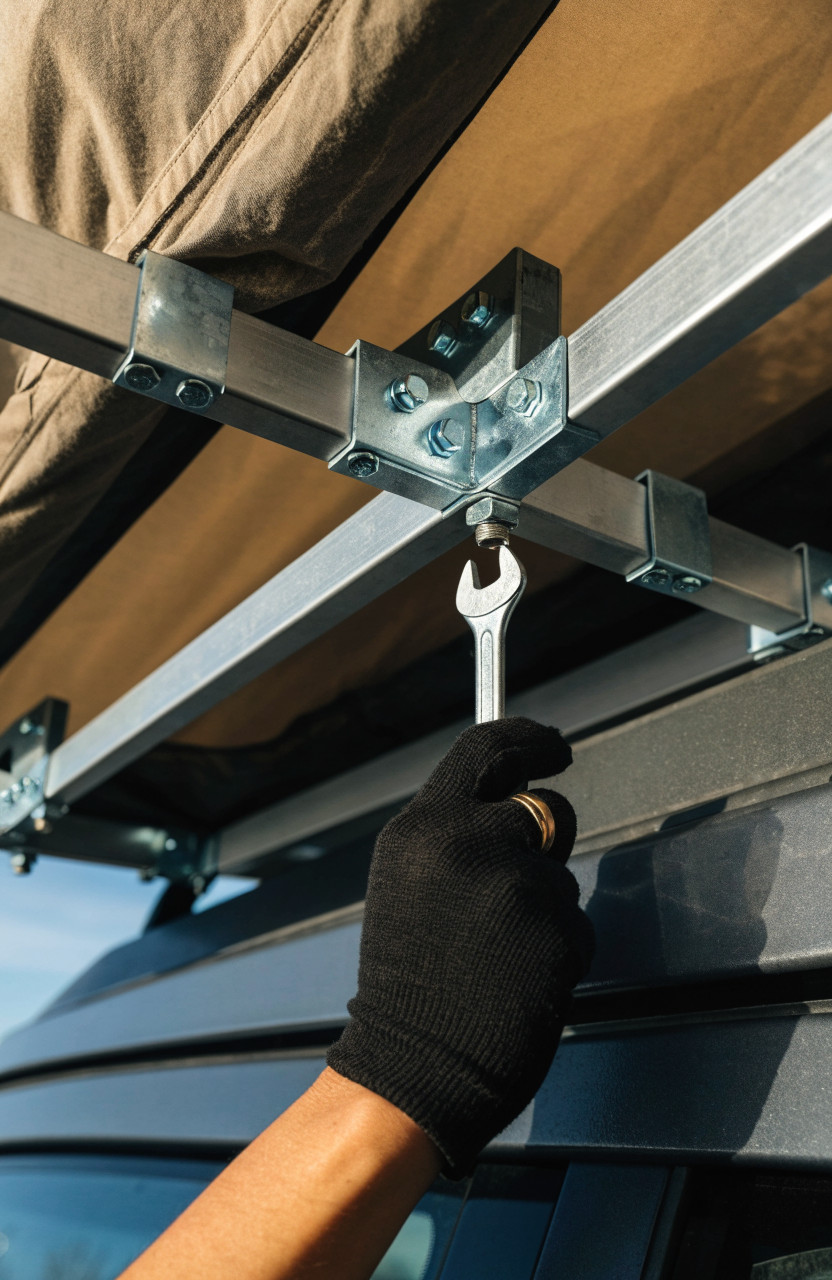
The number that matters while driving is the dynamic roof load in the vehicle manual, plus the rack’s own dynamic rating. The lower of those two limits is the cap for tent, rack, and anything else on the roof. Sleeping weight applies only when you are parked, and it still has to stay inside the tent’s stated capacity and whatever static guidance the rack maker publishes. Do not invent a “three times dynamic” static limit if your manual does not give one.
13. Guy the annex and rainfly like a ground tent
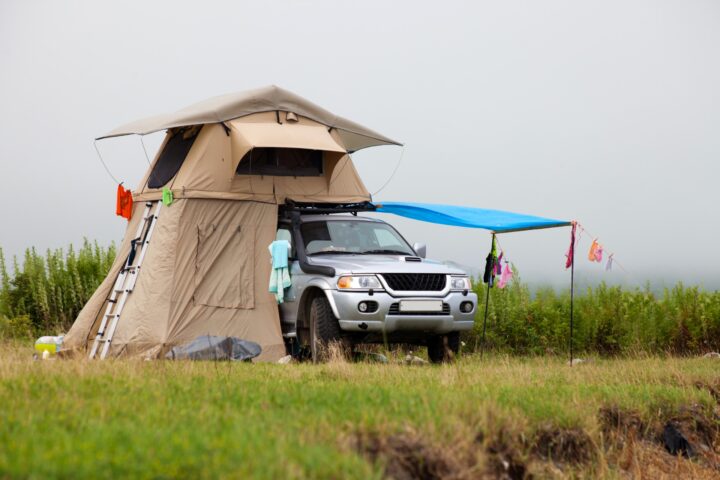
An annex or awning is useful only if it is tensioned. Stake guylines at a solid angle — often near 45 degrees if the ground allows — so fabric does not flap itself loose overnight. Color-code poles with tape if your rainfly uses several similar sections. You will not sort them calmly in rain.
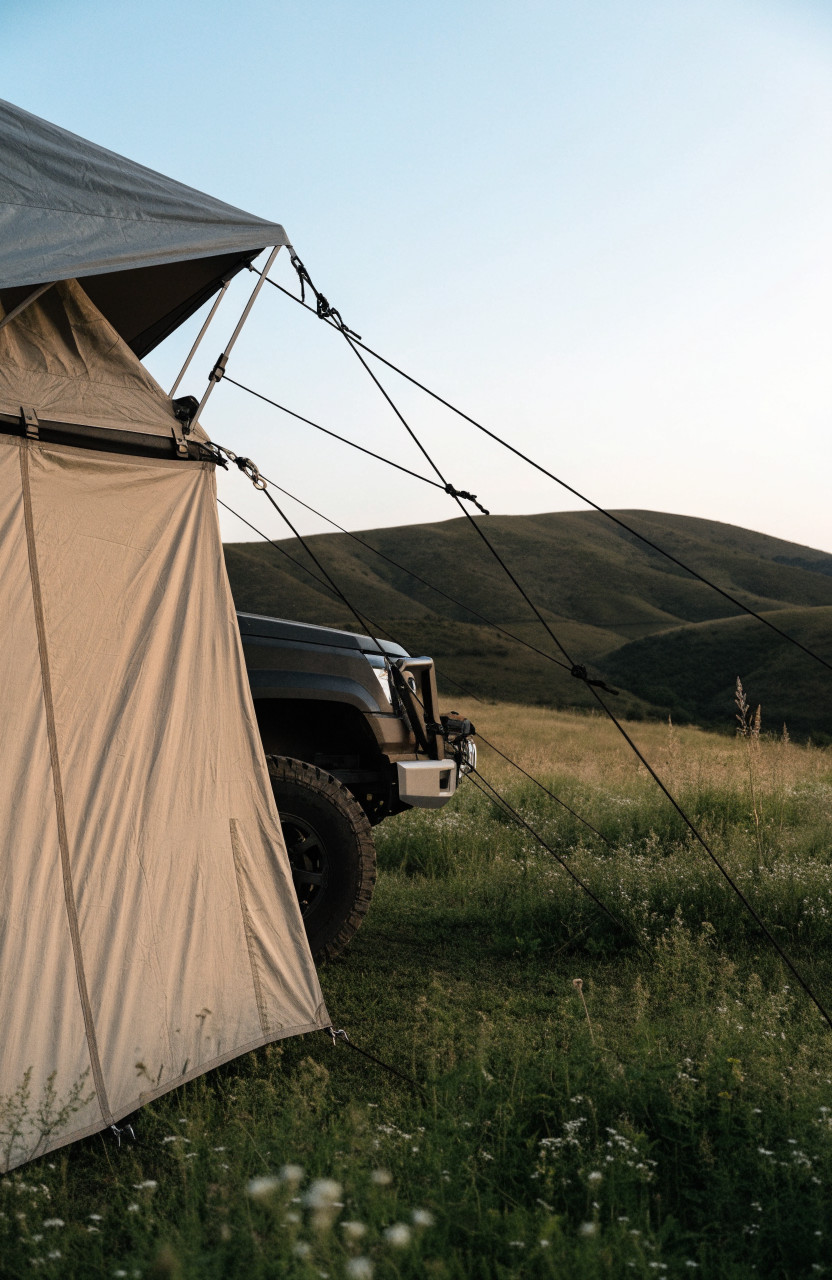
In wind, a hard shell generally holds shape better than a soft shell, but neither is a reason to ignore a high-wind forecast. If gusts make the tent hard to close or the ladder walk unsafe, sleep in the vehicle. Practice a fast close once at home so that choice is available.
14. Air it after the trip, not only during it
Condensation and camp damp do not end when you unhitch the weekend. If the tent lives on the vehicle, open it every week or two, unzip the windows, and lift the mattress for half an hour. Store a removed tent off the bare floor, out of direct heat, and under cover if you can.
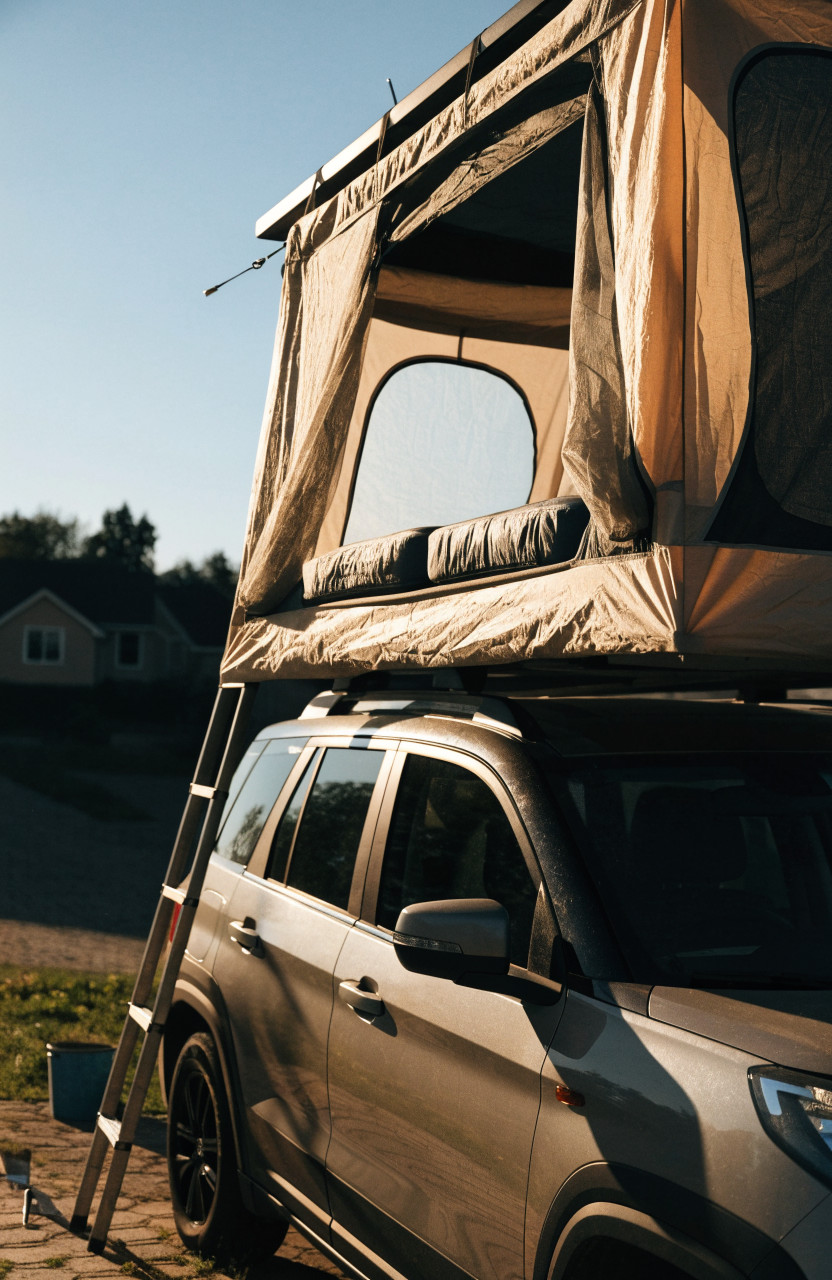
Clean with water and a soft brush. Skip harsh detergents that strip water-repellent coatings. Zipper pulls are easier to find at night if you add a short glow fob or a strip of light-colored tape. That is a small fix for the most common 2 a.m. fumble.
What to skip
Unvented fuel heaters and any cooking stove inside the tent are a carbon monoxide risk. If you use a properly vented diesel heater, follow the maker’s clearance rules and keep a carbon monoxide alarm in the sleeping space. A rooftop tent is also a poor place to store the camp kitchen “just for the night.” Weight up high and food smells in the bedding are both avoidable.
Quick decisions by condition
| Condition | Do this first | Skip this |
|---|---|---|
| Cold night | Open a vent, add a blanket, use a floor mat | Sealing every window to “keep the heat” |
| Hot afternoon | Shade the shell, open opposite windows | Closing up and waiting it out inside |
| Wet morning | Wipe walls, air the floor, dry within a day if you must travel closed | Leaving damp fabric sealed until next weekend |
| Sloped site | Level under the tires, then set the ladder | Stacking rocks against the ladder feet |
| Windy forecast | Face the door out of the wind, guy the fly, know the fast-close | Treating the annex as optional tension |
Frequently asked questions
Why is my rooftop tent wet inside when it did not rain? That is almost always condensation. Breath and a cold shell make water on the walls and under the mattress. Vent, use a mesh mat, and dry the interior in the morning.
Can I leave the tent on the vehicle all year? Many people do. The cost is height, fuel use, and UV on the cover. Open it regularly so trapped moisture does not sit in the shell, and recheck rack bolts after long drives.
Do I need a bigger tent if the label says two people? Labels often assume minimal bedding. If two adults will sleep with quilts and a change of clothes inside, look at the floor dimensions, not only the person count. A larger tent still has to fit your dynamic roof load.
What should I do if I have to drive away from camp for the day? A rooftop tent does not leave a standing shelter behind unless you also have an annex you can leave, and even then the vehicle is the anchor. Pack the night before if you need an early start, or accept that the site goes with the car.