
Ten minutes after you arrive, your toddler finds the one puddle at the campsite, and bedtime is still hours away. Moments like that shape tent camping with toddlers far more than any activity list.
The trip most families can repeat is a one- or two-night car-camping stay at a developed campground. Bring a roomy tent, a sleep surface that stops heat draining into the ground, and spare dry clothes. Choose a site where an adult can see the child at all times, away from roads and open water, and keep bedtime close to the routine at home.
What actually changes when the camper is one to three
Older kids can be given a headlamp, a buddy rule, and their own chair. A toddler cannot. The constraints are physical and logistical.
They cannot regulate temperature as well as an adult, and they will kick off a loose bag. They will walk toward a fire ring, a road, or standing water the moment attention slips. Pit toilets scare a lot of them. Campground noise carries straight through tent fabric, so a child who sleeps alone at home may treat the shared tent as playtime.
The failure mode parents describe most often is not boredom. It is a good afternoon followed by a night that never settles. First trips should be planned so a bad night still leaves a way home in the morning.
Pick the site for supervision, not for the view
Site choice decides more of the trip than the tent brand.
Look for a developed campground with toilets, potable water, and a short drive from home. A side loop or a site with a natural edge (brush, a low berm, the car parked as a boundary) is easier to watch than a site on the main camp road. Skip sites that open directly onto water or a through-road. Standing water and vehicle traffic are the hazards a toddler reaches before you can close the distance.
Pitch on level, well-drained ground. A slope turns a sleeping pad into a slide and puts the tent floor in the path of runoff. Clear the pad of sticks and rocks before the tent goes up. That is also the moment to walk the fire ring with the child and mark a line they do not cross: a camp chair, a log, or a rope on the ground works better than a verbal rule alone.
A mesh play tent or a travel play yard at the picnic table gives you a bounded spot while the stove is lit. It is not a substitute for watching them. It is a way to cook without one hand on a toddler and the other on a hot pot.
Sleep is the part that makes or breaks the night
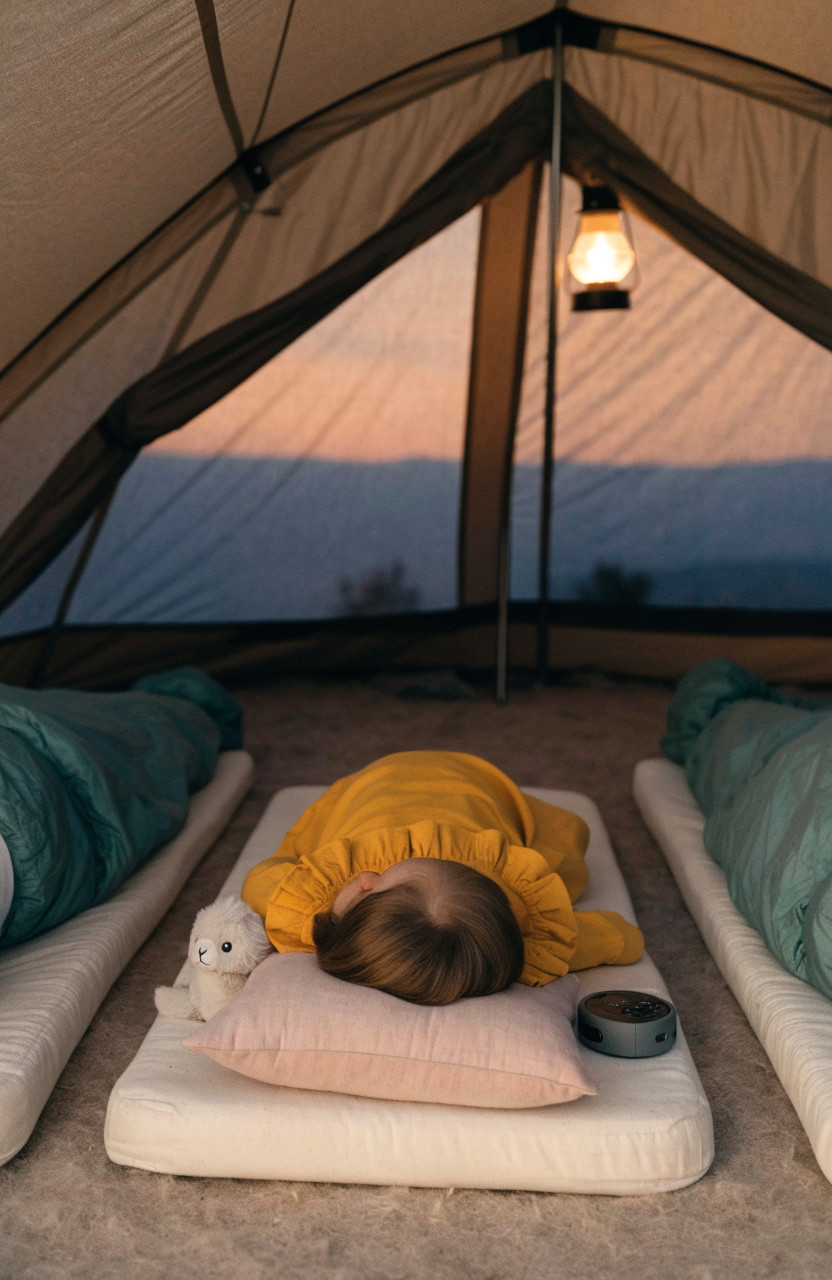
Recreate the home sequence in the same order: wash or wipe, pajamas, the same book, the same object, lights down. A portable sound machine helps because neighboring voices and car doors come through canvas. If the child still naps, plan a quiet tent window even if they do not sleep. Skipping the nap to “wear them out” often produces a wired child, not a tired one.
Where they sleep depends on age and what already works at home.
- A travel play yard with a firm, flat mattress is the closest match to a crib for a younger toddler who still sleeps in one. Use it as the manufacturer specifies. Do not add pillows, loose blankets, or a dome tent clipped over the top. Crib and play-yard tents have been recalled for entrapment when the canopy inverts or detaches.
- A narrow kids’ sleeping pad beside a parent works for many toddlers who will not stay in a separate bed. The pad matters more than a thick bag. The ground pulls heat away continuously. An adult air mattress that softens overnight is a poor surface for a small child: it can sag, bunch, and leave them on the cold floor.
- A wearable sleeping bag or sleep sack with sleeves is the practical fix under about age three. A standard adult bag is too wide. Children crawl out of the footbox and wake cold. Zip them into something they cannot kick off, and put a hat on if the night is cool. Check the neck and chest once after they settle. Those should feel warm, not sweaty.
Darkness helps. A tent with a solid rainfly, or a dark sheet clipped over a bright panel, keeps early summer light from ending the night at 5 a.m. Practice the bag and the pad on the bedroom floor before the trip if sleep is already fragile. The tent is a poor place for the first introduction to both.
Temperature: insulate the child, not the tent
A tent is a windbreak, not a room. Heaters inside a tent with a toddler are a bad trade. Combustion heaters add carbon monoxide and burn risk in a small fabric space. The reliable method is layers and a barrier under the body.
Use a synthetic or wool base layer, not cotton. Cotton holds sweat and stops insulating once it is damp. Add a light fleece if the forecast low is cool, then the rated kids’ bag or sack. Bag temperature ratings are usually a survival or limit figure, not a comfort figure. A bag rated near the forecast low will feel cold to many children. For a first trip, mild nights are the reasonable filter: if the low is near freezing and you do not already own a cold-rated kids’ sack plus a real pad, wait.
Hot nights fail differently. A dark tent in direct sun becomes an oven by late afternoon. Pitch in shade if the site allows, leave the rainfly off when rain is not expected, and open every vent. A small battery fan moves air. It does not cool an 80°F night. If the forecast barely drops after sunset, a different weekend is the safer call.
What to pack so the ordinary problems stay small
Double the clothes you think a day requires, plus one full warm layer and extra socks. Mud and spills are the schedule. Rain pants and boots belong in the bin even on a clear forecast, because a toddler will find the wet spot.
| Need | What solves it | Why it matters |
|---|---|---|
| Sleep | Kids’ pad, wearable sack or kids’ bag, familiar object, sound machine | Ground chill and a kicked-off bag are the usual 2 a.m. wake-ups |
| Containment | Play yard or mesh tent, carrier for walks | Hands free at the stove and on the toilet path |
| Mess | Wipes well beyond a home day, dedicated wet bag, small basin | Dirt is the activity; the reset has to be fast |
| Sun and bugs | Separate sunscreen and repellent, hat, long light layers | Combination products are the wrong dose schedule |
| Food | Finger foods they already eat, a way to warm one familiar meal | Hunger plus a new menu ends the afternoon early |
Sunscreen goes on first, broad spectrum, and gets reapplied. Insect repellent is a separate product. The American Academy of Pediatrics advises against repellents on infants under 2 months, and recommends no more than 30% DEET on children. About 10% DEET lasts around two hours; about 30% lasts around five hours. Do not put repellent on hands, and do not spray a child’s face. Spray a little on your hands and rub it on, avoiding eyes and mouth. Wash it off with soap and water at the end of the day. Apply repellent to clothes and exposed skin only, and never under clothing.
A basic kit should include the child’s usual pain and allergy medicines with the dose written on the bottle, plus tweezers, bandages, and oral rehydration packets. Write the campsite number on the child’s hand or shoe in case they reach a neighbor’s site before you do. A bright layer makes them easier to spot in brush.
Fire, water, and the rest of the day
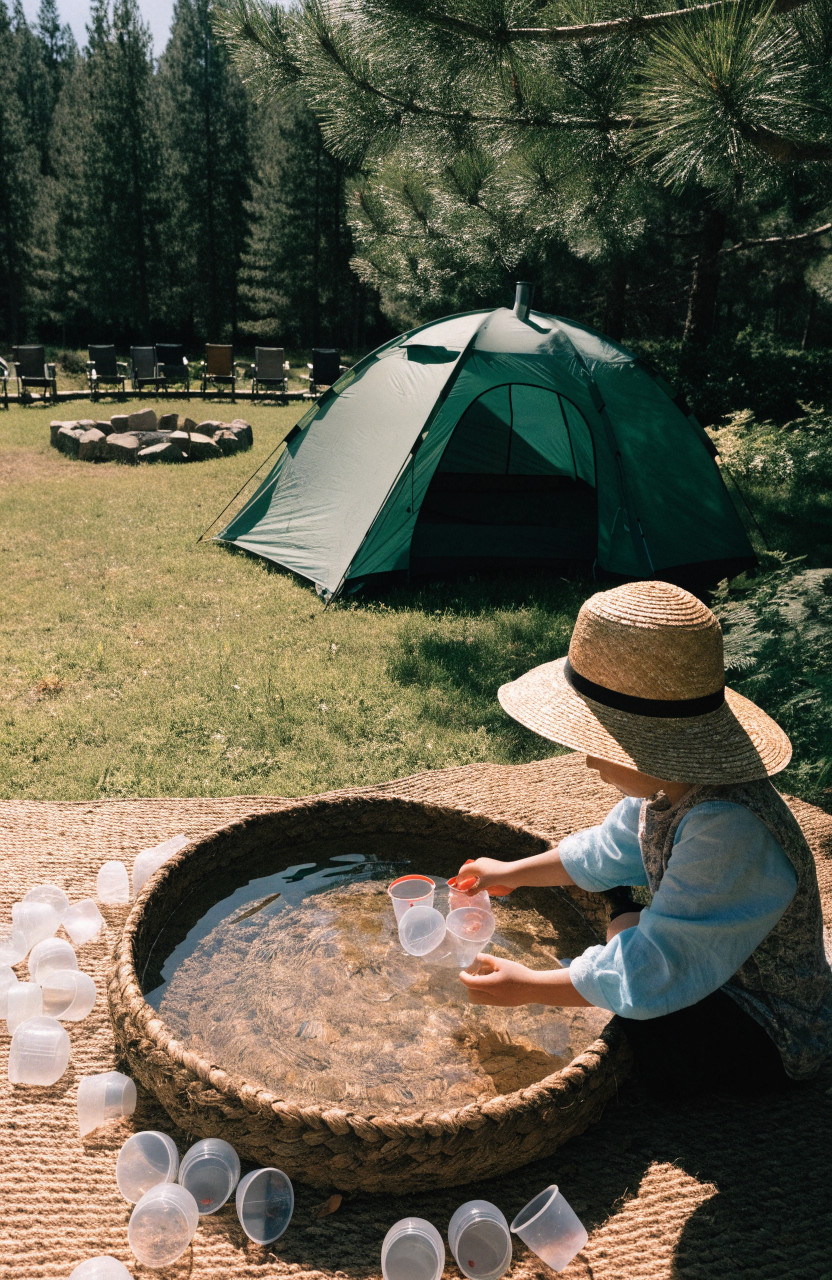
A basin of water and a few cups will hold a toddler longer than most brought toys. Sticks and rocks are the program. Let that be the program.
The fire gets a physical boundary from the moment the ring is cold, and no one sits a toddler on a lap facing the flames with a stick in hand. Coals stay hot long after the flames drop. Shoes stay on outside the tent. The road and any water get the same rule as the fire: an adult between the child and the hazard, not a reminder from a chair.
Food stays in the cooler or the locked car, not in the tent. A toddler will not distinguish a snack bag from a raccoon attractant, and neither will the raccoon.
Diapers, potties, and the campground toilet
Used diapers and wipes get packed out. Do not bury them and do not put them in the fire pit. Diapers smolder rather than burn, and animals dig up buried waste. A dry bag or a double zip bag with a little baking soda handles a weekend if the dumpster is far from the site. Bring more diapers than a home day uses. Outdoor time means more changes.
A freshly potty-trained child often will not use a vault toilet. A travel potty or a folding seat at camp, emptied into the campground toilet, removes that standoff. Away from facilities, human waste goes in a cat hole about 6 to 8 inches deep and well away from water, trails, and camp, the same rule used for adults. Wipes still come back out in a bag.
Hand cleaning is the step that gets skipped and then matters. A small sanitizer clipped where an adult can reach it one-handed, plus soap and a jug at the table, covers the gap between the pump and the next cracker.
How long to go, and when to stay home
One night, close enough to bail, teaches more than a three-night trip booked months out. The first night is often the rough one. A second night sometimes settles once the tent is no longer new. That is a reason to allow two nights if the drive is short, not a reason to commit to a far park.
Skip the weekend if the forecast is a washout and you have no dry indoor backup, if overnight lows are below what your actual kids’ sleep system is built for, or if the only open site sits on a road or a shoreline you cannot block. A cabin or a yurt is a fair substitute while you learn the sleep setup. It is still camping-adjacent, and it removes the variable that ends most early trips.
Toddler night problems and how to solve them
Most rough toddler nights trace back to gear, schedule, noise or temperature, and each cause has a practical answer.
| What you notice | Why it happens | What to do |
|---|---|---|
| Toddler cold and off the pad | An adult bag on a thin pad that the child slips out of | Skip the adult bag on a thin pad so the child stays covered and off the floor. |
| Toddler wide awake as it gets cold | A festival-style schedule with a missed nap, new dinner and late fire | Protect the nap, dinner and bedtime routine instead of packing the schedule. |
| Neighbor noise waking the child | Campground neighbors do not keep toddler hours at night | Bring a sound machine and keep the routine rather than asking for quiet. |
| Overheating or carbon monoxide risk | Heating the tent or closing every vent on a warm night | Do not heat the tent or seal the vents; solve temperature before anyone is zipped in. |
Questions parents ask before the first night
Is tent camping safe for a toddler? It is safe when an adult can see the child, the site is not open to traffic or water, food and fire are controlled, and the sleep setup matches the night temperature. It is not safe as unsupervised roaming or as a cold-weather experiment with summer gear.
Can a toddler sleep in the parents’ sleeping bag? Some families use a double bag so no one kicks free. The risk is overheating and a child ending up under bedding they cannot push off. A wearable kids’ sack on their own pad is the cleaner setup. If you share, check temperature at the neck and keep faces clear.
Do we need a special tent? You need floor space for a play yard or a second pad, and enough mesh to vent on a warm night. A four-person tent is tight once bags, a toddler, and night waking are in it. Dark fabric or a full fly helps morning sleep. Brand matters less than those two traits.
What if they refuse the play yard? Use the arrangement that already works on trips: beside you, on a firm pad, in the wearable sack. Forcing a separate bed on night one often means no one sleeps. A play yard can still be the daytime holding spot.
How do you handle bugs without coating a toddler in repellent? Long sleeves, pants, and a hat do the first job. Repellent goes on exposed skin and clothing, at the lowest concentration that covers the time outside, and never as a sunscreen combination. Under two months, repellent is not recommended. Ticks get a full check at bedtime, especially behind ears, at the hairline, and in waistbands.