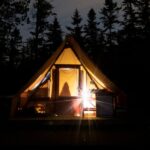
Luxury tent camping is a furnished outdoor stay: a canvas or structured tent that is already pitched, with a real bed, lighting, and some mix of heat, power, and a bathroom. You arrive and sleep. You do not pitch a tent, inflate a pad, or haul a camp kitchen unless you want to. Nightly rates in the United States commonly fall between about $100 and $500, with many safari tents and yurts clustering in the $150 to $300 range and sites near national parks or with private baths and soaking tubs running higher. The price buys setup, furniture, and location. It does not automatically buy a private toilet, reliable heat, or meals.
The useful decision is not “glamping or camping.” It is which version of a tent stay matches the trip you are actually taking.
What separates a luxury tent from a nicer campsite
Traditional tent camping means you bring the shelter, the sleep system, and the cooking gear. Site fees at public campgrounds often run roughly $10 to $50 a night. Comfort depends on what you own and how well you set it up.
Luxury tent camping, usually marketed as glamping, flips that. The operator owns the structure and the furniture. A typical included set looks like this:
- A tent you can stand in, already pitched on a platform or prepared pad
- A real mattress with sheets, pillows, and blankets rather than a sleeping bag
- Some lighting, often lanterns or low-voltage fixtures
- Heat or cooling for the season, which may be a wood stove, a heater, or air conditioning
- Access to a toilet and shower, either inside the tent or in a shared bathhouse
What varies wildly, and what photos rarely settle, is the bathroom, the power, and the walk. A listing can look identical in a wide shot and still mean a private rainfall shower or a two-minute walk to a lockable stall with limited hot water. Operators such as Under Canvas, for example, put en-suite baths in higher-tier safari tents and shared bathhouses a short walk away for standard tents, and some of their camps deliberately omit outlets in the tents so the stay stays off-grid. Meals at that operator are extra, often in the $10 to $25 range per person.
If a private bathroom is non-negotiable, filter for “en-suite” or “private bathroom,” then confirm it in the amenity list and in recent reviews. “Bathroom on site” usually means shared.
Book a site, or build the setup yourself
Luxury tent campers usually want one of two things.
A booked stay makes sense for a first outdoor trip, a couples weekend, a national-park base, or any trip where setup time would eat the point of going. You pay a nightly rate. Gear, pitch, and teardown are someone else’s job. The downside is occupancy limits, cleaning fees, and rules about fires, pets, and check-out that a normal campsite does not have.
Your own luxury tent makes sense if you already camp several times a year and want the same bed every trip. A canvas bell tent often costs a few hundred to a few thousand dollars. A heavier wall tent or small safari tent costs more and takes longer to pitch. Add a decent mattress or cot, rugs, and lighting and the first weekend is expensive. After that, the marginal cost drops back toward a normal campsite fee. The catch is weight and time. A real canvas tent can weigh 50 to 100 pounds or more. It is a car-camping tool, not a backpacking one, and a one-night stop rarely justifies the pitch.
Festival “luxury tent” packages sit in a third category. You are mostly paying for location, shade, and air conditioning inside a crowded site. Travelers who have done both often say the AC and the short walk to toilets are the only parts that earn the premium. If the unit has no shade and weak cooling, the same money usually buys a better ordinary campsite plus a decent air mattress.
Tent types, and what each one is actually good at
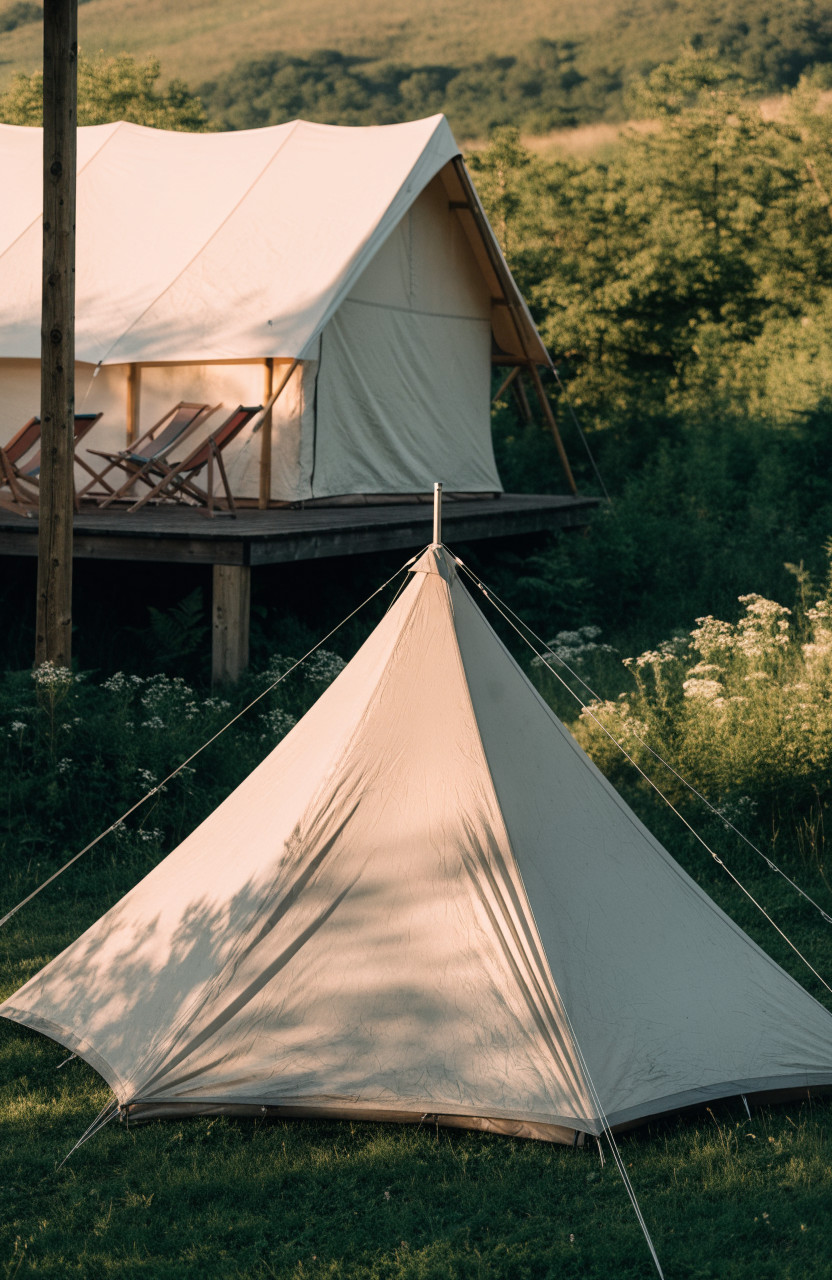
Shape matters more than the word “luxury” on the listing.
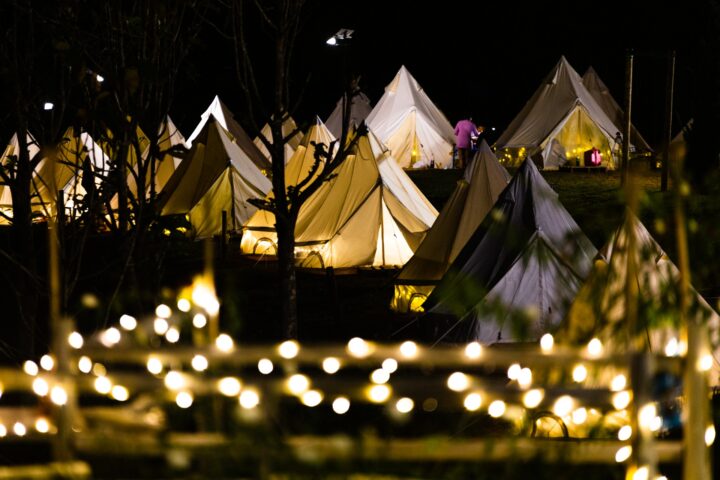
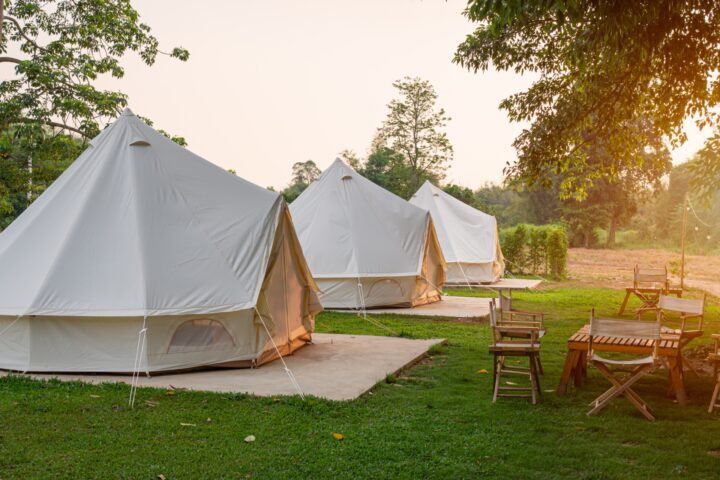
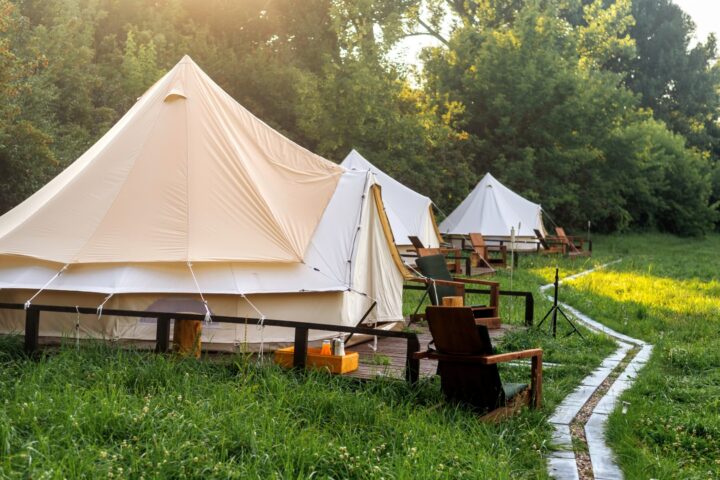
Bell tents use one center pole and canvas that slopes to the ground. They pitch relatively fast, photograph well, and suit couples or a small family for a weekend. Usable floor space is mostly the center. Edges are low, so a queen bed plus luggage fills a smaller bell quickly. Stove jacks are common, which helps in shoulder seasons.
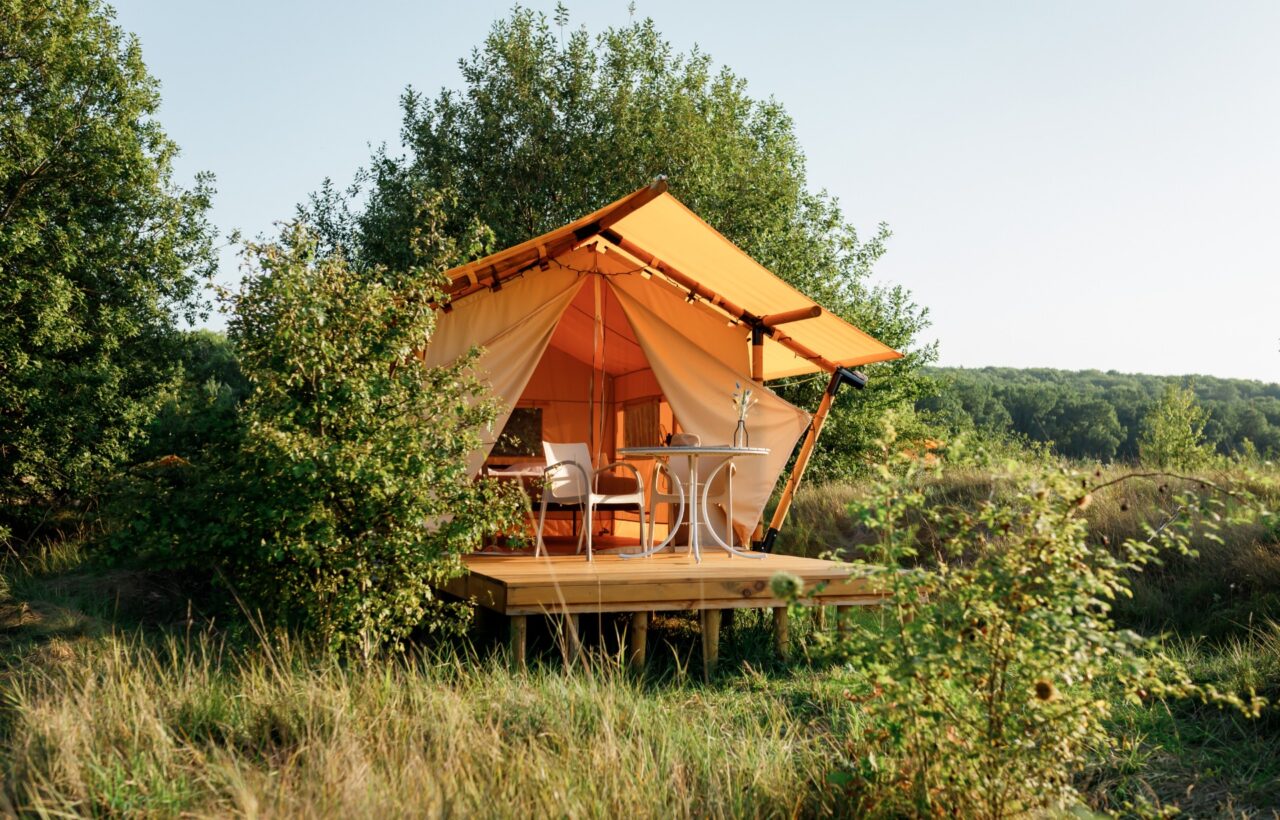
Safari and wall tents have straighter walls and a frame, so more of the floor is standing room. Commercial sites use them for zoned layouts: a bed, a small sitting area, sometimes an attached bath. They need a level platform and are awkward to move, which is why you usually rent them rather than own them.
Yurts have near-vertical walls and a roof ring. They feel more like a round room than a tent, hold heat better when insulated, and work for longer stays. A portable “yurt tent” is lighter and less permanent than a framed yurt on a deck. Do not treat the two as the same product.
Domes and bubble tents trade weather performance or privacy for the view. Geodesic domes shed wind and snow better than a bell tent. Clear bubble tents are for stargazing and mild weather. They heat up fast in sun and offer little visual privacy.
A furnished safari interior is the version most people mean by luxury tent camping: a real bed, layered textiles, and enough floor to move around without crouching.
Ignore advertised sleep capacity. A “sleeps 6” bell tent means six pads on the floor. For a furnished stay, plan on one bed plus a bit of living space, or confirm a second bed in writing.
What the nightly rate usually covers, and what it does not
| Item | Often included | Often extra or absent |
|---|---|---|
| Pitched tent and bed with linens | Yes | Confirm bed size; sofa beds are common for extra guests |
| Towels and basic toiletries | Sometimes | Pack your own if the listing is vague |
| Private toilet and hot shower | Only on higher tiers | Shared bathhouse a short walk away is common |
| Electricity and outlets | Sometimes | Many canvas camps are lantern-and-stove only |
| Heat or cooling | Seasonal, not guaranteed | Wood stove needs you to tend it; AC may be weak in full sun |
| Meals | Rarely | On-site café, or you bring food and use a fire ring or grill |
| Firewood, s’mores, activities | Sometimes a nightly fire | Bundles and experiences are usually add-ons |
| Wi-Fi and cell service | Unreliable | Assume you will not work from the tent |
Read the rate as lodging, not as a resort package, unless meals and activities are itemized. A $250 night plus two dinners, firewood, and a park shuttle can land closer to a hotel weekend than the headline price suggests.
How to choose a stay that matches the photos
Work through these in order. The first three prevent most bad bookings.
- Bathroom. Private and inside, private and attached, or shared. Note the walk and whether showers are pull-chain or timed. Hot water that runs out is a frequent review complaint on otherwise well-reviewed camps.
- Season fit. Canvas breathes, which is good in mild weather and poor insulation by itself. A summer desert tent without shade or cooling, or a fall mountain tent without a working stove, will not feel luxurious at 2 a.m. Ask what the heat source is and whether staff light it or you do.
- Site, not just the tent. Shade, distance to generators, and neighbor spacing decide sleep more than thread count. Festival and peak-park sites can be loud. A pretty tent on a gravel pad next to a road is still a gravel pad next to a road.
- Access. Some luxury camps are a short drive from a trailhead. Others require a rough road, a shuttle, or a walk with luggage. If anyone in the group cannot carry a bag a few hundred yards, say so before you book.
- Rules that affect the trip. Pet policies, quiet hours, fire bans, minimum stays, and strict check-out are normal. Late checkout is often impossible because housekeeping turns the tent for the next arrival.
Recent reviews are more useful than amenity icons. Search the review text for “bathroom,” “cold,” “hot,” “generator,” and “shuttle.”
What to pack when the tent is already there
You need less than for camping, not nothing.
- Clothes for the temperature swing, including a layer for sitting outside after dark. Canvas holds the day’s heat, then drops with the air.
- A headlamp. Interior lighting is often dim on purpose.
- Toiletries, any medication, and sandals for the walk to a shared bath.
- Power bank if the listing does not mention outlets. Do not assume you can charge a phone overnight.
- Earplugs. Canvas does not block wind, generators, or neighboring conversations.
- Food and a small cooler if meals are not included. Many sites have a fire ring or grill and little else.
Leave the sleeping bag, stove, and tent poles at home unless the listing says bedding is not provided. Bringing them “just in case” only clutters a tent that was furnished to avoid that.
Problems that show up after you arrive
The tent is beautiful and the night is cold. A wood stove heats the peak first. Sleeping near the floor, or in a tent with a large uninsulated window, stays colder than the photo suggests. Ask whether extra blankets are available before you need them.
Cooling does not keep up. A single AC unit in a dark canvas tent in full afternoon sun often loses. Shade, a reflective fly, and arriving after the heat peaks matter more than the word “air-conditioned.”
The bathroom is the disappointment. Shared baths at good camps are private, lockable rooms, not campground troughs. They are still a walk in the dark, and hot water can be limited. If that will bother you, pay for the en-suite tier or book a cabin.
You cannot cook the way you expected. “Kitchenette” may mean a kettle and a mini-fridge. Open flames inside canvas are a fire risk and are often banned except in an approved stove. Plan meals that match the actual cooking setup.
Occupancy is tighter than the floor area. A couple with luggage is comfortable in a large bell or safari tent. Add two children and the sitting area disappears. Book the next size up if anyone needs a separate sleep space.
When the premium is worth it
Luxury tent camping earns the rate when the alternative is a hotel far from the trailhead, or a first camping trip that would otherwise fail on sleep. It is a poor trade when you already own solid gear, camp often, and like the routine of setting up. In that case a roomy car-camping tent, a thick pad or cot, and real bedding gets most of the comfort at a campsite price.
It is also a poor trade against a simple cabin if you need reliable heat, a desk, and strong Wi-Fi. A tent wins on the feel of being outside. A cabin wins on weather and work. Pick the one the trip actually requires.
For a single weekend near a park, a furnished safari tent or yurt in the middle of the usual rate range is the straightforward version. For repeated trips to the same region, owning a canvas bell or wall tent and reserving ordinary sites is usually the cheaper luxury after the first season.
Questions people ask before booking
Is luxury tent camping the same as glamping?
In practice, yes. Glamping is the common name for a furnished tent, yurt, dome, or similar stay. Some operators stretch the word to cabins and trailers. If you want canvas and a bed rather than a hard-sided room, filter for tent, safari tent, bell tent, or yurt.
Do you still have to do any camping chores?
You skip the pitch and the sleep system. You may still tend a wood stove, walk to a bathhouse, haul your own food, and pack out trash. Read the listing for “housekeeping,” “firewood provided,” and “shared restrooms” rather than assuming hotel service.
Can you luxury tent camp in bad weather?
Only if the structure and the season match. A stove-equipped canvas tent on a platform handles cool nights. It is not a substitute for a four-season mountaineering tent in wind and snow, and a clear dome is a mild-weather product. Check cancellation rules for storms. Canvas camps sometimes close or move guests when wind ratings are exceeded.
Is it cheaper than a hotel?
Sometimes, for the location. A mid-range glamping tent can undercut a lodge at the same park gate, especially if you cook. Add private baths, meals, and peak-season minimums and it often matches a boutique hotel. The comparison that favors the tent is experience and setting, not a guaranteed discount.