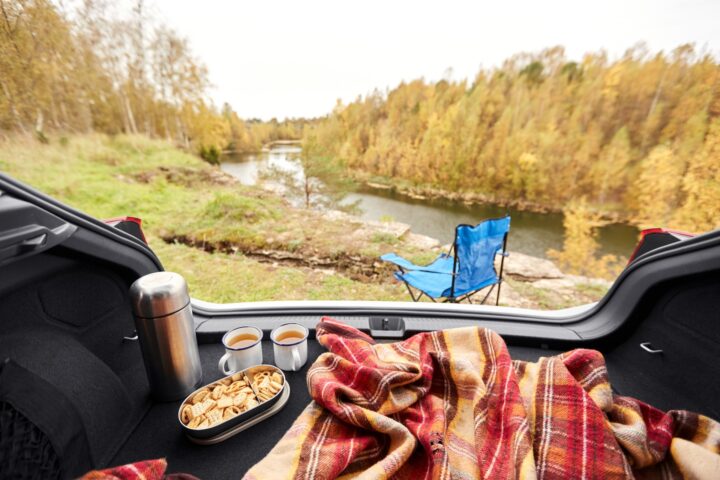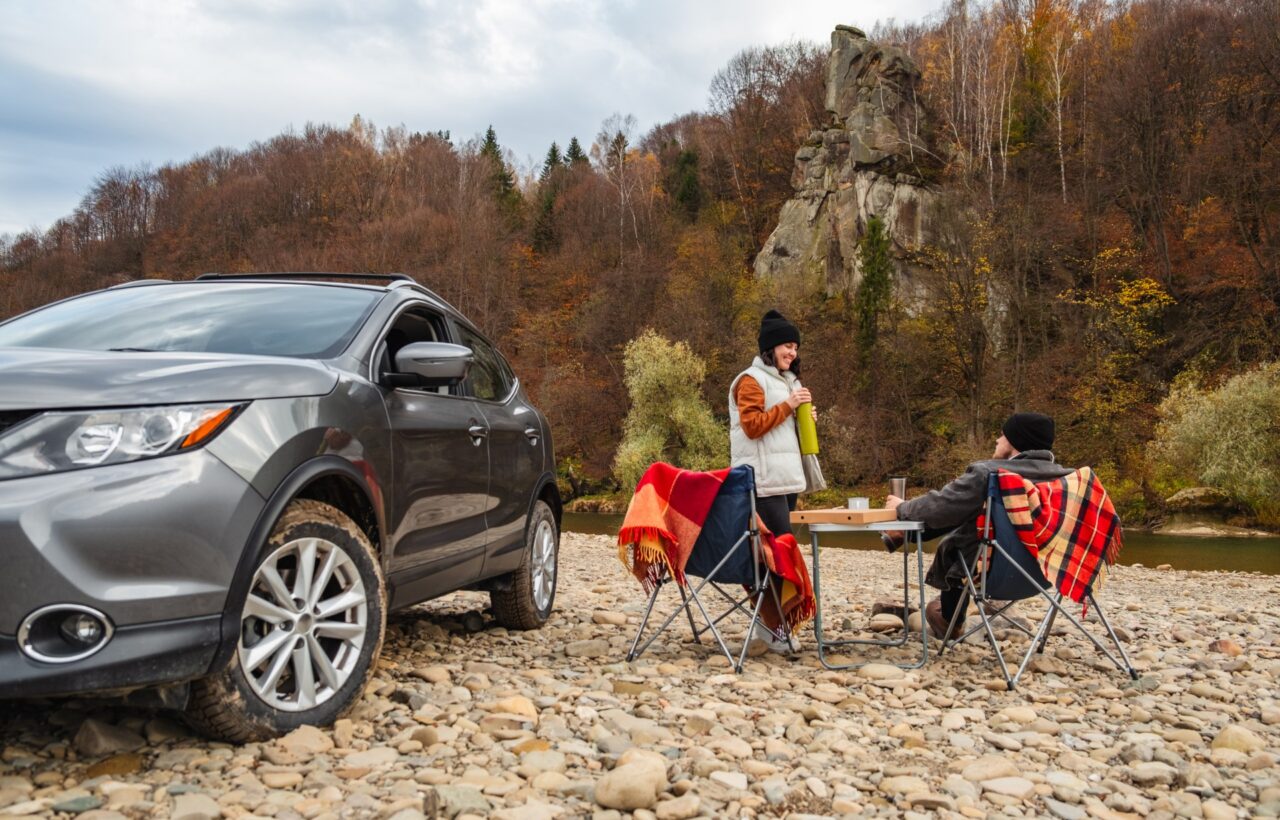
The Nissan Rogue is a compact SUV, and its folded rear seats leave a step that turns a pad thrown in the back into a cramped, uneven bed. Nissan Rogue car camping gets comfortable once that floor is level, using the Divide-N-Hide panels where equipped, a strip of foam, or a removable plywood platform.
With the floor sorted, the rest is choosing a mattress thick enough to bridge any remaining gap, organizing gear under the platform, and handling power, airflow and privacy. Each step is covered below.
Sleeping Space in the Nissan Rogue
Model year decides everything. A 2021 Rogue has about 72 inches of flat floor once the rear seats fold. That matches most 2020 and newer Rogues. Older 2014-2019 models only give around 62 inches. If you are over six feet and drive an older one, you sleep diagonal or curl up.
Width between the wheel wells sits near 43 inches. A twin mattress fits with a little room to spare. Two adults can share if they stagger heads, but shoulders touch. Headroom over the load floor runs about 34 inches. You can sit up to change clothes. You cannot stand.
Cargo volume hits 74.1 cubic feet with seats down. That number looks generous on paper. In practice it means smart packing. Sliding the front seats forward and tipping the seatbacks adds a few extra inches for taller sleepers. The power liftgate helps when you need air or want to sit with legs hanging out.
Measure your own floor with a tape rather than relying only on forum numbers. The Divide-N-Hide panels make a big difference if your Rogue has them.
Tape a cardboard template of 72 by 43 inches at home to test twin mattress fit before buying gear.
Creating a Flat Sleeping Surface
The rear seats do not fold perfectly level. There is almost always a step where the seatbacks meet the cargo floor. Sleep on that step and your hips will hate you by morning.
Raise the Divide-N-Hide panels to the upper track. The floor lifts and meets the folded seats, and most of the gap disappears. If your model lacks the system, roll towels or cut a piece of foam to fill the dip. Foam lasts longer.
Some owners remove the rear seats completely, a job that takes basic hand tools and around an hour, then build a 2×4 frame around the spare tire well and cover it with plywood. That opens storage under the platform. Removal is a big commitment for a daily driver, though, so keep the seats if you still need the back row for passengers.
A simple DIY platform works if you want height and under-bed storage. One sheet of 3/4-inch plywood, a pair of 2x4s, and deck screws cost roughly $35 at a hardware store. Cutting it to 70 by 40 inches clears the wheel wells. Legs keep it level over the seat step, and a two-piece design lifts out when you need the seats again.
Level the vehicle first. Point the nose slightly uphill or use plastic leveling blocks under the tires. Sliding downhill while you sleep is the fastest way to ruin a night.
Plywood platform over 70 inches can trap Divide N Hide latches, so test lift access before final screw down.
Choosing the Right Mattress
Thin air mattresses fail here. They sag into every gap and leave you on the hard floor by 3 a.m.
The Therm-a-Rest MondoKing 3D is a strong pick. It self-inflates, stays thick, and bridges the remaining step. A Milliard tri-fold foam mattress also works; cut to fit the width, it stays firm. Budget memory foam camping pads around $30 are fine for summer but feel cold in shoulder season.
Twin size is the sweet spot. Standard full or queen mattresses are too wide. Custom foam cut to the exact floor shape exists if you measure carefully. Thickness matters more than brand. Three inches of dense foam beats six inches of soft air.
Layer a thin moving blanket underneath for extra insulation from the cold floor. In winter, a 15-degree down bag on top of a regular synthetic bag adds serious warmth for nights in the low 20s.
Pads rated near R value 7, like the MondoKing 3D, prevent cold seeping from the steel floor on 22 degree nights.
Storage and Gear Organization Under the Platform
Space under a raised platform becomes pure gold. It fits a collapsible water jug, spare clothes in a duffel, and a small tool kit. Soft bags slide into the front footwells. Hard coolers sit in the front passenger seat or behind the driver.
Totes with hinged lids hold food and cooking gear. A basic Coleman two-burner stove from Walmart and a roll-up table beside the hatch cover the kitchen. Everything packs in under five minutes when it is time to leave.
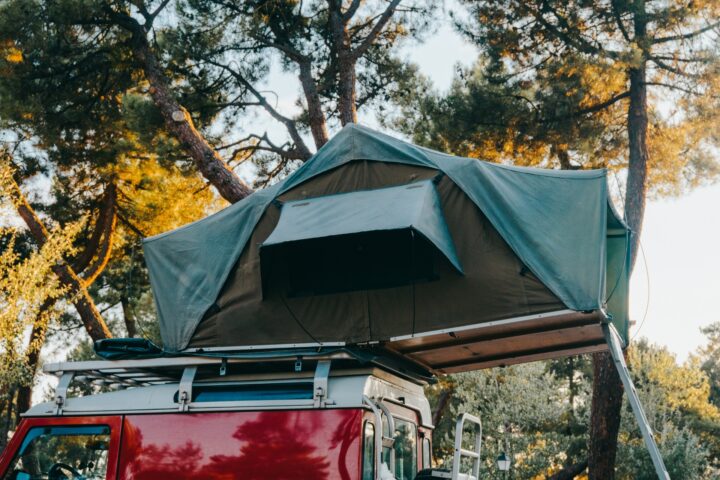
Roof space stays free for a lightweight cargo box if you need more volume. Avoid heavy roof loads because the Rogue is not built for serious weight up high. Hitch carriers work better for bulky items.
One concrete tip: keep a cargo net or bungee barrier between the sleeping area and the gear zone. Things shift on rough roads, and loose items like lanterns end up on the floor.
Rogue roof rails often cap near 100 pounds, so bulky gear rides safer on a hitch carrier rated for that load.
Power, Ventilation, and Comfort Tricks
The Rogue gives you 12-volt outlets and USB ports. No household AC. A Jackery Explorer 300 handles phone charging, a small fan, and LED lanterns. It charges while you drive and lasts about two nights of light use. Larger stations work if you cook with induction, but they eat cargo space.
Crack two opposite windows an inch for airflow. Condensation builds fast without it. Mesh window screens that press into the frames keep bugs out and still let the breeze through. A small battery fan pointed at your face makes summer nights tolerable.
Privacy comes from reflective window covers cut to fit. Inexpensive foam board and reflective film make an easy DIY version. They block light and prying eyes. Homemade curtains on tension rods work too. Park with the rear facing away from roads when you can.
Keep a headlamp and a battery lantern within reach. The dome light drains the main battery if left on all night. Do not do that.
Set dome light switch to off door mode before nightfall to avoid accidental main battery drain from hatch activity.
Frequently Asked Questions
Can two adults sleep in a Nissan Rogue for car camping? Yes, but it is tight. Stagger your heads so shoulders sit in the wider section. Two narrow pads side by side fit better than one wide mattress.
Do the rear seats fold completely flat? No. Most models leave a small step. Raise the Divide-N-Hide floor or fill the gap with foam or towels. That single fix improves sleep more than any other change.
What size mattress fits best for nissan rogue car camping? A twin or custom foam cut to roughly 70 by 40 inches. Avoid full or queen sizes. Thickness of three inches or more keeps you off the hard spots.
Is a portable power station necessary? Not for basic phone charging, but yes if you want lights, a fan, or a cooler that runs overnight. The car outlets alone will kill the starter battery if you rely on them too long.
Should I remove the rear seats permanently? Only if you never need them. A removable platform gives the same flat surface and storage without the commitment.
The Rogue can stay a daily driver all week, with the camping setup stored in the garage until Friday afternoon. Then it drops in and the weekend starts. The vehicle looks ordinary on the outside, which is part of the appeal. No one looks twice when it pulls into a trailhead lot.
You do not need a custom van or a $3,000 kit. Start with the dimensions of your specific year. Fix the floor step. Pick a firm mattress. Add a power station and screens. The rest falls into place after a couple of nights.
The first night may feel awkward, but the Rogue soon becomes a rolling basecamp that still fits in a regular parking space. Grab your pad and try one night. You will figure out the rest faster than you think.