Anyone trying to choose a glamping site for a first stay, a group trip or a cold-season weekend will get the most from these checks. Travellers who already know a property well, or who expect full hotel service, will find less here.
The method is simple. Decide which parts of camping you still want, then confirm the listing covers the rest. Disappointing stays tend to fail on a bathroom farther or less private than the photos implied, a structure that cannot hold a comfortable temperature, too few beds, or a drive and night noise nobody mentioned. Price comes after.
Decide the kind of night you want before you open a map
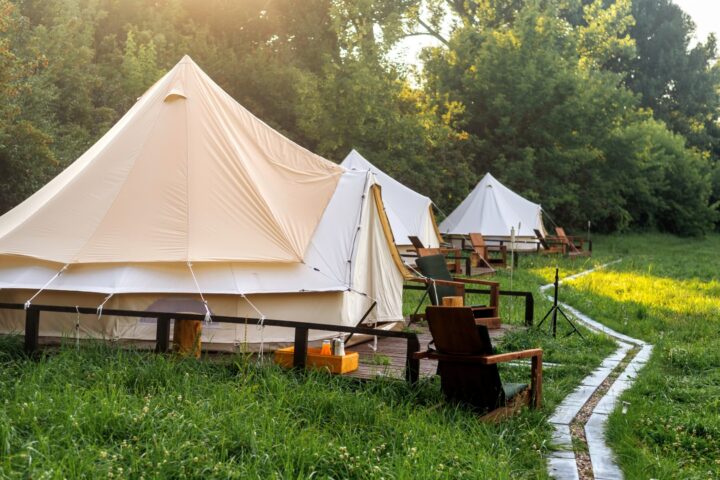
Glamping covers safari tents, bell tents, yurts, geodesic domes, pods, shepherd’s huts, treehouses, and cabins that still sit in a camp-style setting. The label does not guarantee a private bathroom, heating, cooking, or even a solid floor. Two listings with the same hero photo can produce completely different trips.
Start with the constraint that would ruin the stay if it failed:
- A couple who want quiet and a hot shower should filter for private facilities and spacing, not for a communal fire circle.
- Parents with young children should filter for a short, lit path to the toilet, a real bed rather than floor mats, and a site that is not beside water or a steep drop.
- A group that wants to cook should confirm a kitchenette or a usable fire setup, not assume “outdoor living” includes either.
- Someone booking for shoulder season or winter should treat insulation and a named heat source as mandatory, not as a bonus photo of a stove.
If the goal is only a pretty overnight, almost any well-reviewed site will do. If the goal is a specific kind of comfort in a specific kind of landscape, write that down first. It stops the listing with the best sunset from winning by default.
Lock the non-negotiables before you compare prices
Amenities on glamping sites are not standardized. “Bathroom available,” “facilities nearby,” and “heated” are marketing phrases until the listing names the setup.
Bathroom: private, shared, or a walk in the dark
This is the detail that most often changes how the stay feels. An ensuite means the toilet and usually a shower are inside the unit or in a private attached hut. A private external bathroom can still be excellent if it is yours alone, close, and reachable on a lit path. A shared bathhouse is closer to traditional camping, even if the bed is hotel-grade.
Before you book, look for the exact words: ensuite, bathroom inside the tent, private bathroom hut, shared bathhouse, composting toilet, chemical toilet, or porta-loo. If the listing only says “private facilities” and never shows the toilet or the distance, assume it is not ensuite until the host confirms otherwise.
Ask, in one message:
- Is the toilet inside the unit, in a private hut, or shared?
- If it is outside, how far is it, and is the path lit?
- Is it flush, composting, or chemical, and how is odor handled?
- Is there hot water, and is the bathroom heated in cold weather?
- Are towels, soap, and a sanitary bin provided?
Composting toilets are common on off-grid sites and can be clean when they are serviced. They are a poor surprise if you expected a flush toilet at 2 a.m. with a small child. For families and light sleepers, an ensuite or a private hut within a short walk is the safer booking.
Heat, cooling, and what the structure can actually hold
Canvas and single-skin tents lose heat quickly and can overheat in direct sun. A wood stove in a photo does not mean the unit stays warm overnight, especially if fuel is limited, the stove is decorative, or the bathroom plumbing is not protected from frost. Air conditioning is not standard, even in hot regions.
Check the heater or cooler by type, not by adjective. Useful answers are electric heater, wood stove with fuel included, propane, heat pump, or air conditioning, plus the months those systems run. “Cosy” and “suitable for autumn” are not specifications. In winter, also ask whether water lines are winterized. A warm bed next to a frozen shower is a common shoulder-season failure.
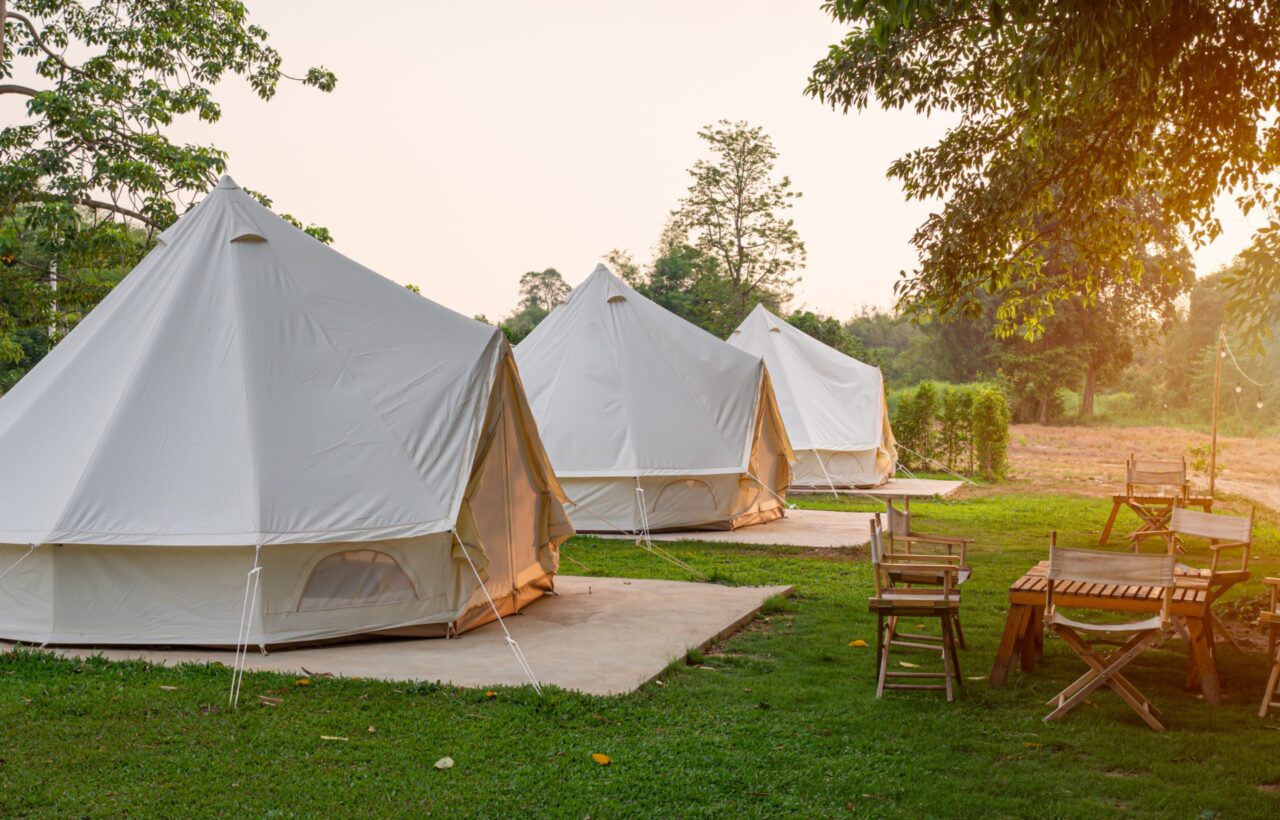
Raised decks matter here too. A unit on a platform stays drier than canvas pegged into grass, and it is easier to level a bed. Low ground that looks fine in a dry-season photo can sit in runoff after rain.
Beds, occupancy, and who is actually sleeping where
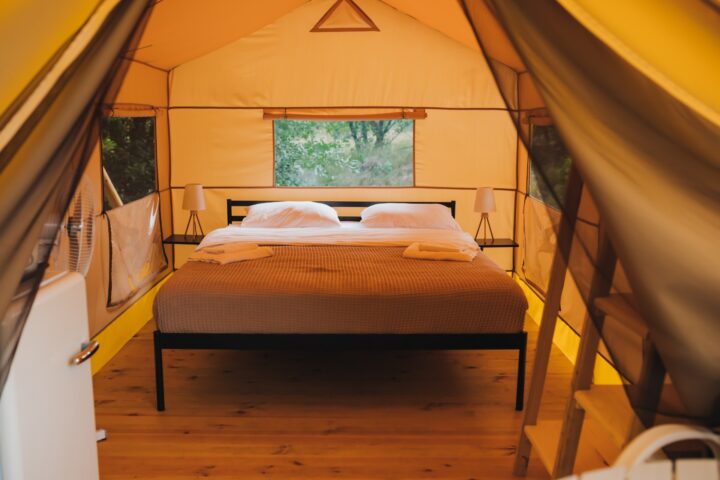
Maximum occupancy is often a floor-space number, not a comfortable sleeping number. A “sleeps six” safari tent may be a double bed plus four camp mats. Confirm mattress type, whether bedding and pillows are included, and whether extra guests are on proper beds or on the floor.
Also check door locks, window coverings, and whether the unit has solid walls or only canvas. Tents transmit neighbor noise and offer less security than a cabin or pod. That difference is minor for many couples and decisive for people traveling alone with children.
Arrival: the last part of the trip is still the trip
A scenic dirt track is fine if you have the right vehicle, daylight, and a short walk from parking with luggage. It is a problem if you are arriving after dark in a low car, with a stroller, or with mobility limits. Listings rarely lead with this.
Check the road surface, whether a standard car is enough, how far you carry bags, and whether check-in is hosted or self-service with a code. If you need cell service for navigation or emergencies, say so. “Good for disconnecting” in reviews often means no signal. That is a feature only if you planned for it.
Match the structure to the season and the group
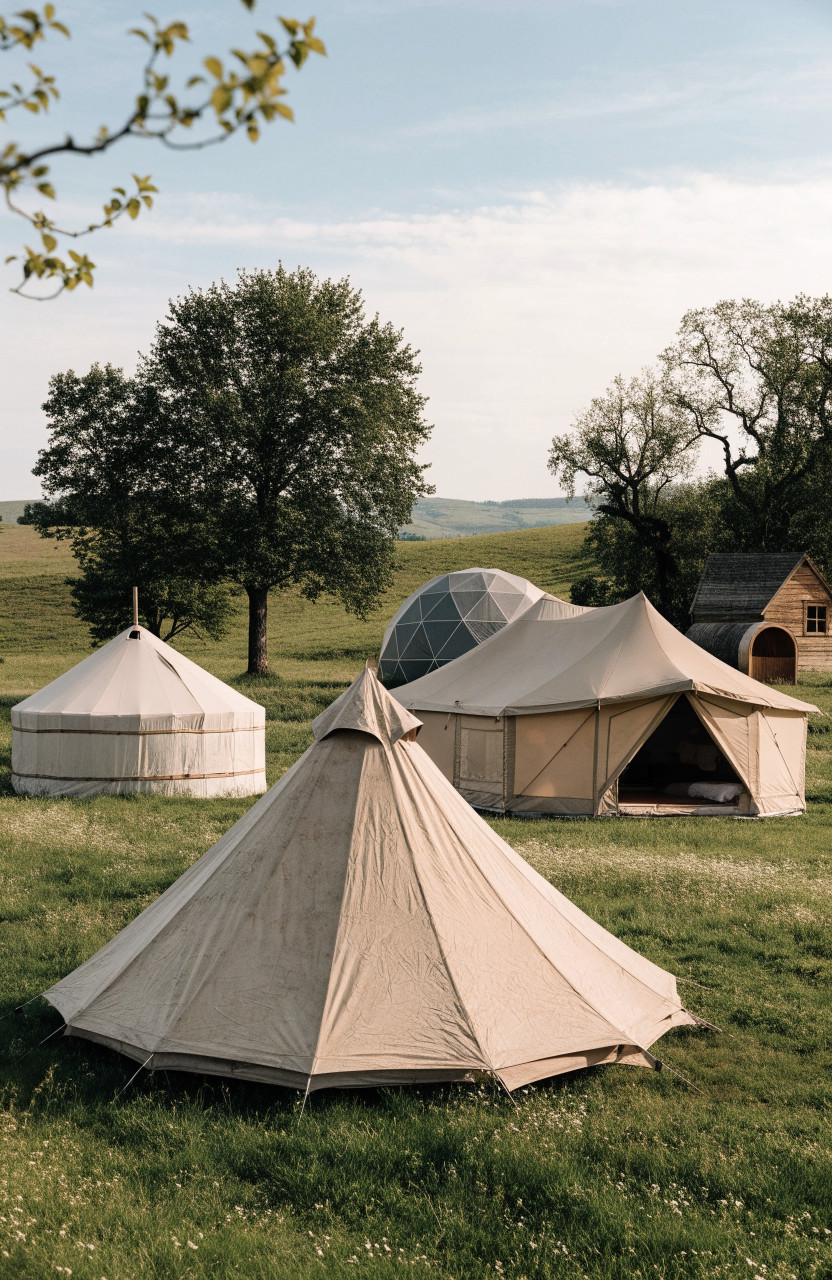
The shelter type is the second filter, after bathroom and climate. It changes weather tolerance, privacy, and how much the stay still feels like camping.
| Structure | What it usually feels like | Where it tends to work | Where it tends to fail |
|---|---|---|---|
| Bell tent | Closest to camping: canvas, often no standing height throughout, simpler kit | Fair-weather weekends, couples who want the tent experience | Wind, heavy rain, cold nights, families who need a private toilet |
| Safari tent | Larger canvas room, often on a deck, sometimes with a real bed and a stove | Warm and mild seasons, longer stays if facilities are private | Storms, winter, sites with thin canvas and no insulation |
| Yurt | Round room with a deck, better insulation than a basic tent, often a stove | Shoulder season, small groups who want one shared space | Very hot exposed sites, guests who want separate bedrooms |
| Dome | Striking, often glazed, can feel bright and modern | Clear-sky stays, couples, photo-led trips | Hot sun without shading or cooling, echo and privacy if units are close |
| Pod, hut, or cabin | Solid walls, more like a small room outdoors | Cold weather, families, anyone who wants quieter sleep | Guests who specifically wanted canvas and a campfire-only setup |
Solid walls win when the forecast is uncertain or the group includes children or light sleepers. Canvas wins when the point of the trip is to hear rain and wake up with the fly open, and only if the dates are inside the site’s reliable season. A beautiful dome with no shade and no cooling is a greenhouse by mid-afternoon. A yurt with a working stove and a deck is often the better cold-night choice even if it photographs less dramatically.
Basic tents are fair-weather structures unless the listing proves otherwise, so glamping should never be treated as weatherproof. For a wet or shoulder-season trip, look for clear proof of heating and solid protection in the listing itself before booking.
Judge the setting by how the days will actually run
Location is more than the landscape in the first photo. A field beside a main road can still be marketed as countryside. A remote meadow can be an hour from dinner with no on-site food.
Separate three questions:
- What do you want to look at? Coast, woodland, lake, vineyard, and desert produce different insects, wind, and evening temperatures. Open water and low ground usually mean more mosquitoes. Exposed ridges mean wind on canvas.
- What do you want to do between meals? If hiking, swimming, or a town matter, check real distances and whether those places are open on your dates. “Near the national park” can mean a 10-minute drive or a 45-minute one.
- How social should the site be? Sites with few units and no shared schedule are quieter. Sites with a fire circle, shared kitchen, or on-site bar are easier if you want company and harder if you want silence after 9 p.m.
Read recent reviews for behavioral clues rather than star averages: neighbors audible through canvas, generators at night, a road you can hear, showers that ran cold, a host who answered before arrival. One complaint is noise. The same complaint in several recent stays is a pattern.
Wildlife rules belong in this check. In bear country, food storage is not optional, and a listing should say whether lockers or a fridge are provided. Dogs may be welcome in the listing tag and banned from decks, beds, or trails in the house rules. Confirm the fee, the weight or number limit, and whether waste bags are on site. A tag that says “pets considered” is not a policy.
Read the listing for what it refuses to specify
Photos are staged in good light. Use them to verify claims, not to set expectations.
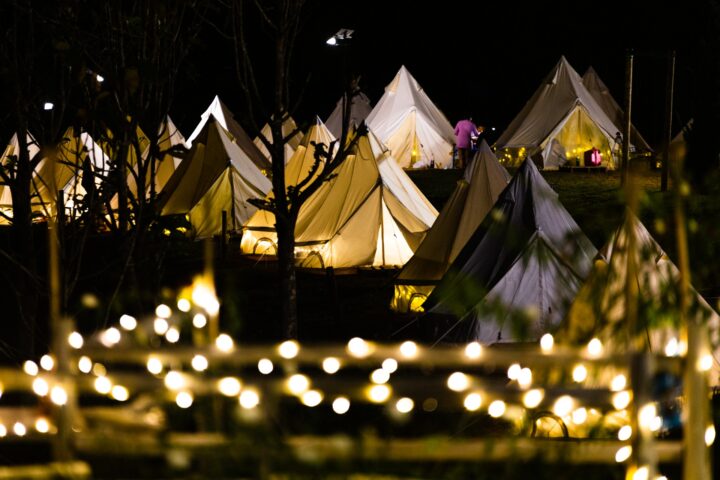
Look for a clear photo of the bed, the toilet, the cooking setup, and the approach path. Wide shots of canvas and string lights do not answer those questions. A site map, if one exists, shows whether you are next to the car park, the bin store, or another unit’s deck.
Then price the stay as a package, not a nightly rate. Add cleaning fees, pet fees, firewood, towel hire, breakfast if you need it, and the cost of eating out if there is no kitchen. A cheaper tent with a shared bathroom and no cooking can cost more in practice than a pricier pod with an ensuite and a kitchenette, once you add meals and the friction of the facilities.
Cancellation terms matter more than on a standard hotel booking. Canvas sites often close or rebook guests when wind or heavy rain makes the unit unsafe. Ask what happens if the site cancels for weather, and whether your dates sit inside the published open season.
If anything load-bearing is vague, message the host before you pay. Useful hosts answer with distances, photos, and a direct yes or no. Vague replies (“you’ll be fine,” “most guests love it”) are a reason to keep looking.
Never assume electricity, drinking water, Wi-Fi, or bedding are included because a site looks polished. Recent reviews that mention cleanliness, heating, or the accuracy of photos deserve a close read, since those three details predict the stay better than the design of the tent.
A short order of checks before you book
- Name the trip in one line: who is coming, what month, and which comfort would ruin it if missing.
- Filter for bathroom type and heat or cooling that match that line.
- Confirm beds, bedding, and real occupancy.
- Check road, parking, bag carry, and phone signal against your arrival plan.
- Match structure to season: canvas for fair weather, insulated or solid-walled units when nights drop or rain is likely.
- Read recent reviews for bathroom, noise, temperature, and photo accuracy.
- Add fees and food costs, then ask the host anything the listing still has not answered.
That sequence is enough to reject a mismatch quickly and to book a site whose limits you already accept.
Questions people still ask after the main checks
Do all glamping sites have private bathrooms?
No. Some have an ensuite or a private hut. Others share a bathhouse, offer a composting or chemical toilet, or only have facilities a walk away. Confirm the exact setup and the distance before you book.
Is glamping suitable for winter?
Only if the unit is built and operated for it. Look for insulation, a named heat source, fuel included or easy to buy, and winterized water. A summer safari tent with a blanket on the bed is not a winter site.
What should you pack if the listing already looks fully equipped?
Ask for an inventory. Many sites include bedding and towels; some do not. You may still want layers, a torch for unlit paths, basic first aid, and any food the kitchen cannot cover. Insect repellent matters near still water even at polished sites.
Are glamping sites a good choice with young children?
They can be, if the toilet is close and private, sleeping is on real beds, and the unit is away from unfenced water or steep edges. Canvas is noisier and less secure than a pod or cabin. Shared bathrooms at night are the usual point of failure, not the lack of activities.
How far in advance should you book?
Popular weekends near parks, coasts, and wedding venues go first, especially in peak summer. Shoulder-season weekdays are easier, but the open season and the heating setup matter more than the discount. If the host cannot describe the bathroom and the heat source clearly, a later date at a clearer site is the better booking.