Shared campsite looks come down to a small color range, warm light, and one common lounge, so a tent camping aesthetic with friends reads as a single scene instead of a pile of mismatched gear. It is built from ordinary car-camping kit, not a rented bell tent, and it only works if the trip still feels like camping.
The look that shows up on mood boards is usually golden-hour fabric, a low seating circle, and lights that read amber rather than white. Groups get that by agreeing on a palette before anyone packs, clustering tents around one shared zone, and treating photos as a side effect of the setup. Cool-white headlamps, five different tent colors, and an afternoon spent styling the site are what break it.
What the look is actually made of
The repeat elements are simple.
- Color. Two or three families only: cream or sand, olive or forest, rust or warm brown, sometimes navy. Neon and primary-colored gear fight the frame.
- Light. Warm sources only, roughly the color of a camp lantern rather than an office bulb. Interior tent glow at dusk does more than any filter.
- A shared foreground. One rug or ground cloth, a low table, and seating facing the same direction give photos a subject. Separate tents in a row do not.
- Texture over props. Blankets, canvas, wool, and enamel beat bunting, fake plants, and letter boards. Those extras photograph once and then become packing weight.
Festival-camp and “cozy tent” boards lean on the same ingredients: string lights, layered textiles, and a tent that reads light rather than technical. The friend-group version adds a second constraint. Several people have to live in the scene, so the style has to survive cooking, wet shoes, and someone who packed a bright blue dome.
Pick one palette before the group chat fills with gear photos
Ask everyone to send a photo of the tent and the outer layer they already own. Sort those into the closest shared family and ban new purchases that fall outside it.
A workable default for mixed gear is sand, olive, and rust. White or tan rain flies photograph cleanly at golden hour. Olive and brown outer layers disappear into trees instead of punching a hole in the frame. If half the group already owns bright tents, park those slightly behind the neutral ones and let the shared blankets carry the color. Matching tents are optional. Matching temperature of color is not.
Skip a uniform. Bandanas, enamel mugs, or the same warm beanie color are enough repetition. Identical outfits read as a costume and date the photos.
Lay the site so the group has one picture and several private tents
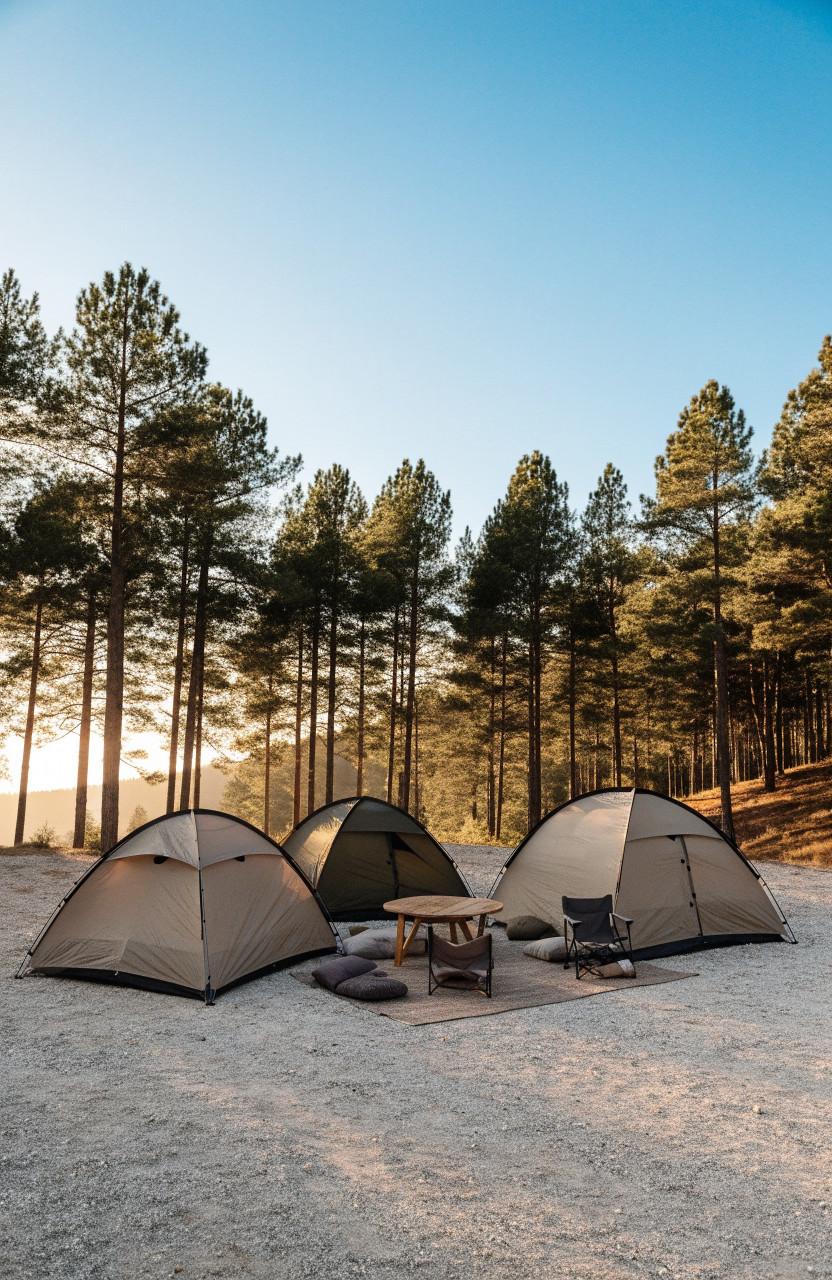
Pitch sleep tents in a loose arc or two short rows, doors facing a common patch of durable ground: an existing pad, gravel, or bare dirt, not a new patch of grass. Put the shared zone in the middle: a packable outdoor rug or a clean tarp, camp chairs or floor cushions, and the stove or fire ring if the site already has one.
That layout does three jobs. People can talk without shouting between tents. Cooking mess stays out of sleeping space. A phone held at chest height catches tents, people, and light in one frame.
Keep the arc small. Leave No Trace guidance is to use existing sites, keep the camp footprint tight, and avoid building furniture or clearing vegetation. A good site is found, not rebuilt into a set.
If the campground assigns pads, accept the pad. Aesthetic loses to the site map, and dragging tents onto the verge to “get the trees behind you” is how groups annoy neighbors and damage roots.
Light the camp in amber, then turn it off
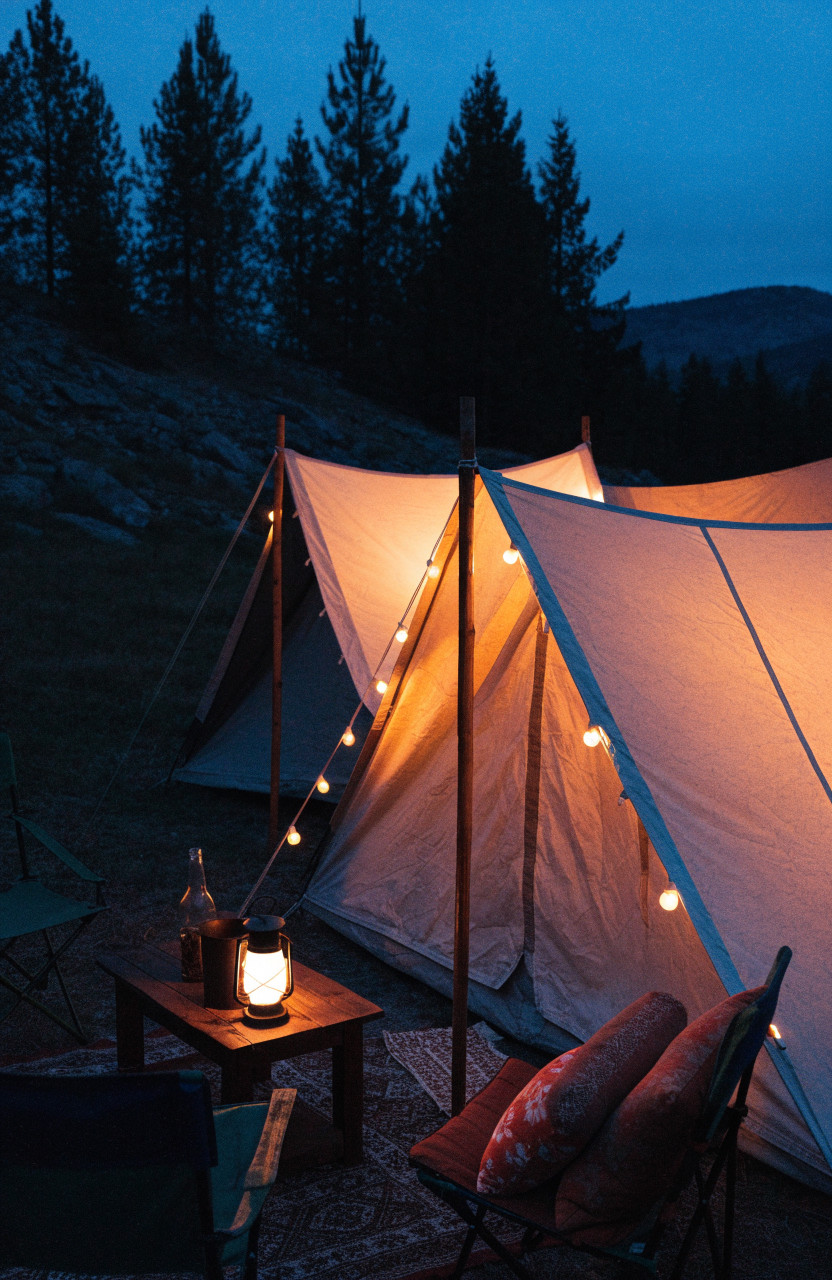
Warm light is the difference between a campsite and a gear pile after dark. Use battery or solar string lights and lanterns labeled warm white, not daylight or cool white. Hang them from tent poles, a freestanding stake line, or a low ridge you brought with you. Do not nail trees, cinch cord tight around bark, or leave lights on past the campground’s quiet hours.
A practical set for four to six people:
- One short warm string along the shared zone, not a full perimeter
- One lantern on the table
- A small light inside each tent so the fabric glows at dusk
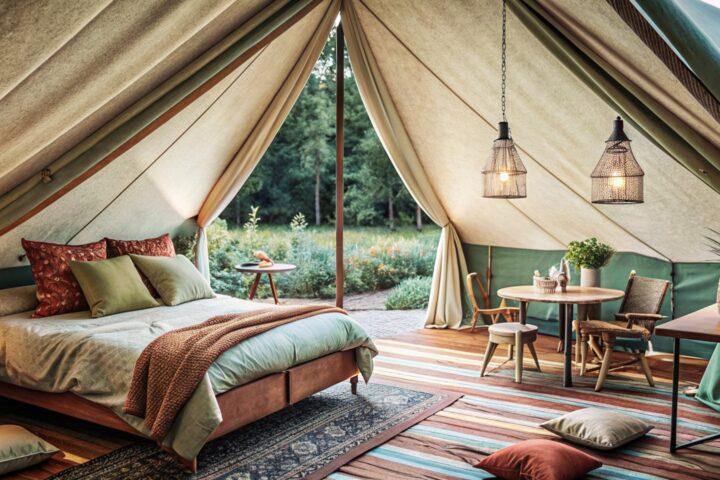
Inside the tent, a single lantern low and to the side beats a ceiling full of lights. Overhead strings look bright on camera and then snag sleeping bags. Battery LED candles are safer than open flame inside fabric.
Check the park rules before you pack lights. Some campgrounds limit external lighting, and dark-sky sites expect lights off once people turn in. Soft warm LEDs that shut off overnight are the version that stays welcome.
Use textiles as the shared decor
Blankets and a floor layer do more for the look than any dedicated “camping aesthetic” product. Assign textiles the way you assign meals: one person brings the rug, two bring extra blankets in the palette, one brings floor pillows that pack flat.
Put the rug only where people sit. A full-site carpet collects mud and makes packing out harder. Outside the tent door, a small mat is enough to keep the interior from becoming the boot room, which matters if anyone wants a clean interior shot later.
Leave natural objects where they are. Pinecones, shells, and branches used as decor often count as “leave what you find,” and gathering them for a photo is a poor trade. The textiles you carried in are the decorations you can carry out.
Clothing that holds up in the frame and on the trail
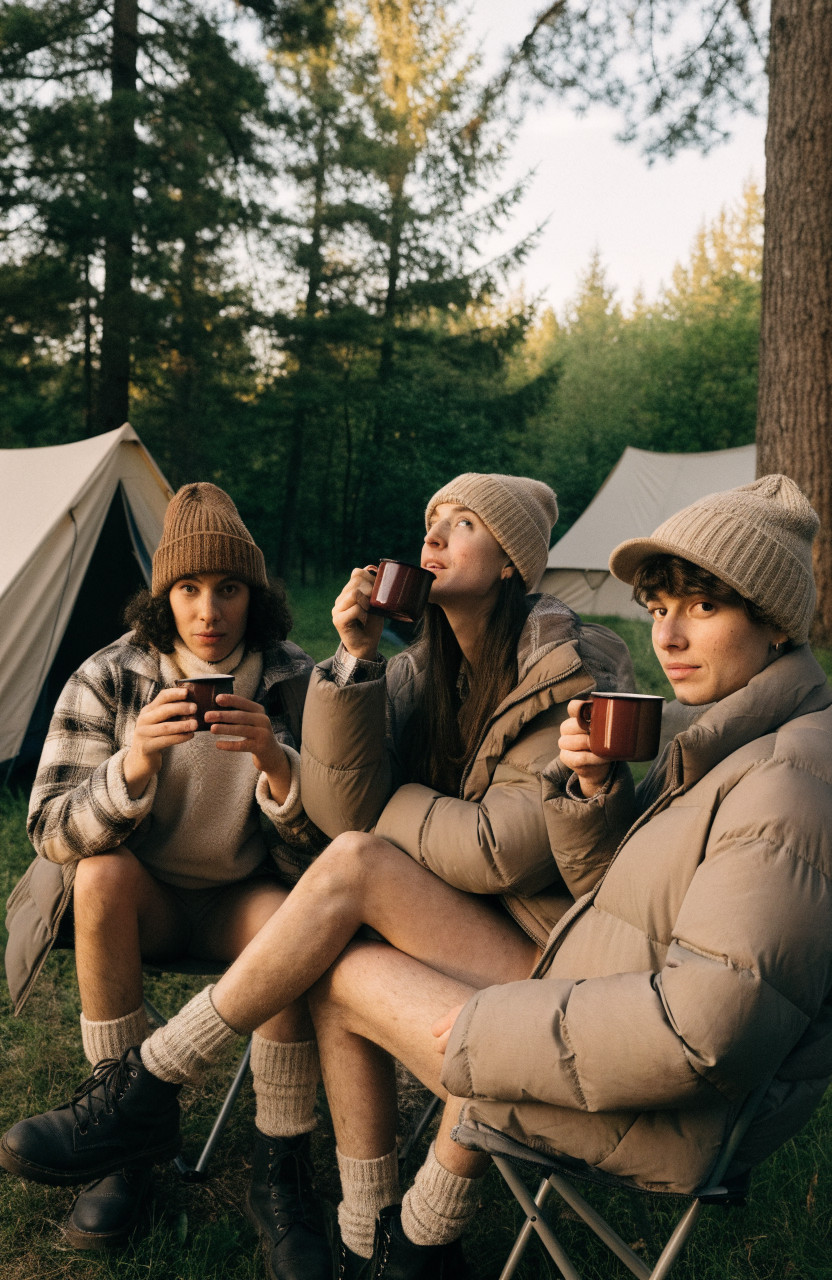
Shoot-friendly layers are the same layers that work after sunset: flannel, fleece, a neutral puffer, wool socks, a hat. Avoid large logos and high-vis panels in the photos you care about; wear the bright layer on the road or the hike, then swap to the quieter one at camp.
For the tent itself, people often want something that looks like sleepwear and still walks to the bathroom. A knit set or flannel under a real jacket solves that. Costume pajamas fail the first cold wind.
Agree on one “photo window,” usually the last hour before sunset, when tent fabric and faces both look warm. Outside that window, dress for weather. An aesthetic that requires people to be cold is a bad plan.
Photo moments that do not take over the trip
The frames that match this search are ordinary camp actions, not poses.
- Tent doors open toward the light, people partly inside and partly out
- Backs to the camera around the fire or stove, mugs in hand
- A walk between tents with packs already off
- Hands and food on the low table, faces optional
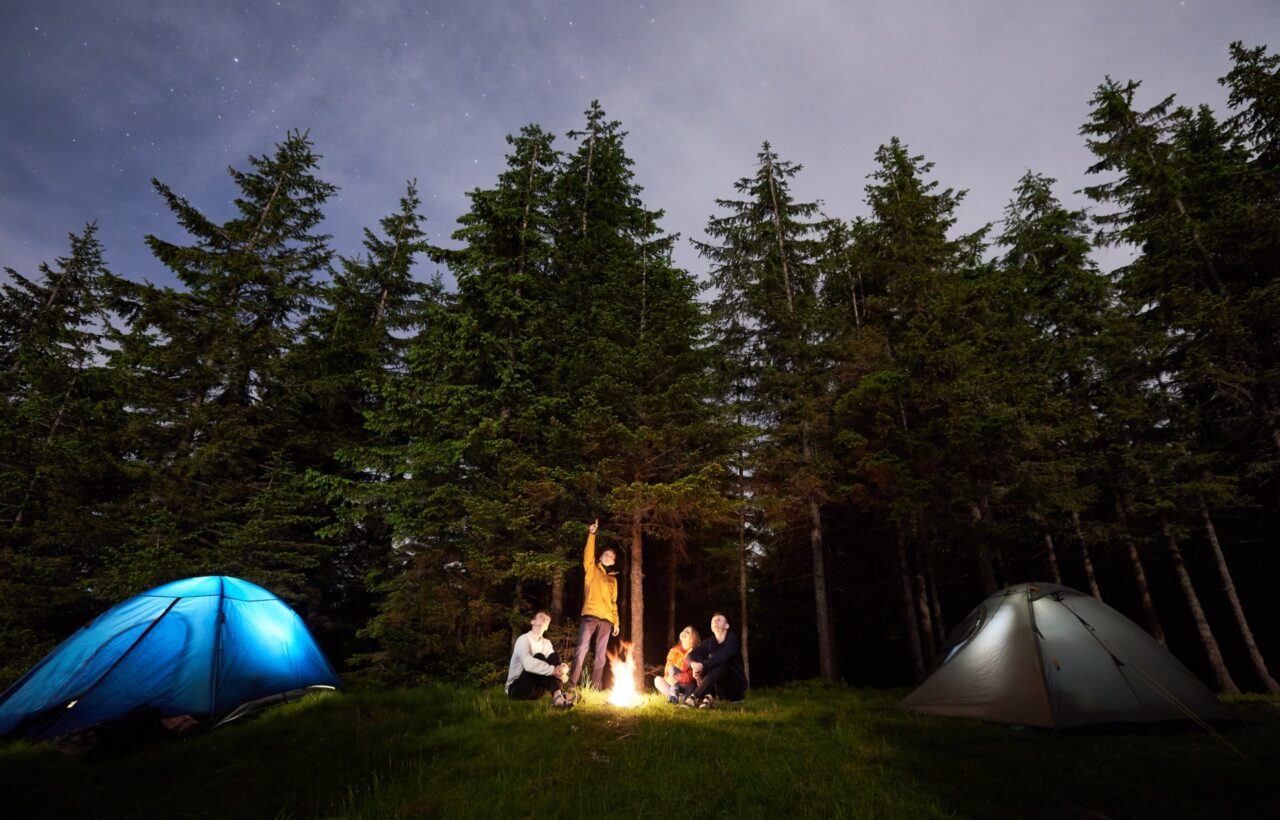
- One wide shot of the arc at blue hour, lights on, no one arranging themselves
Put one person on photo duty for ten minutes, then put the phone away. A tripod or a propped phone covers the group shot so nobody is missing from every frame. Golden hour and the first minutes of tent-glow after sunset are the only times that need planning. Midday sun on nylon is harsh, and fixing it later rarely looks like the boards people saved.
Where the look fails
Cool-white lights. They make canvas look clinical and skin look gray. If a light has a warm and a cool mode, tape over the cool switch.
Decorating the trees. Cord around bark, nails, and imported branches create damage that outlasts the weekend. Freestanding lines and tent poles are the limit.
Setup as the activity. If styling takes the first afternoon, the aesthetic has already cost the trip. Palette, rug, and one light string should be up in the time it takes to pitch tents.
Ignoring the neighbors. A shared lounge that spills into the next pad, or lights left on through quiet hours, turns a pretty site into a complaint. Contain the scene to your site.
Buying the full kit for one weekend. A bell tent, macrame, and a wagon of pillows photograph well and then need a second car. Repeat color and warm light get most of the result from gear the group already owns.
A packing split that keeps the palette intact
| Role | Brings | Leaves behind |
|---|---|---|
| Site lead | Rug or clean tarp, warm string lights, one lantern | Extra bunting, anything that must be tied to a tree |
| Cook | Neutral tableware, low table or crates | Bright plastic sets that clash |
| Each sleeper | Tent in or near the palette, blanket, real layers | A second “photo outfit” |
| Photo duty | Charged phone, small tripod if you own one | A shot list longer than five frames |
Run the split in the same message as the meal plan. Aesthetic gear that arrives as a surprise is how the site ends up half styled and half neon.
Frequently asked questions
Do the tents have to match? No. Similar value and warmth matter more than the same model. Park brighter tents behind neutral ones and let blankets carry the color.
Can this work on a basic campground pad? Yes. Pads are easier than dispersed sites for a shared lounge, because the ground is already durable. Stay inside the pad, follow quiet hours, and skip anything the host rules forbid.
Are real candles worth it for the glow? Not inside a tent. Battery lanterns and warm LEDs give the same amber read without the fire risk. Use a campfire only where a ring already exists and fires are allowed.
How do we keep it from looking staged? Limit formal photos to one short window, shoot actions instead of lineups, and leave the site usable. If someone cannot cook or sit down without moving a prop, the setup is too styled.