
Sleep, dirt and the night bathroom run decide most family trips. The best tent camping hacks with kids deal with them early.
Those problems are predictable, right down to the child who is done with the tent by 7 a.m. The 17 fixes here change the setup before anyone is tired, wet or arguing in the dark. They follow the order a trip unfolds: site and tent, the door, sleep, then bugs, meals and rain, and finally a plan in case a child gets separated. None of them needs a specialty gadget that gets used once.
Set the site up before the hard parts start
1. Choose the site for the 2 a.m. bathroom, not the view
With a newly potty-trained child, distance to the restroom matters more than trees or a lake glimpse. A site a short, lit walk from the bathhouse beats a prettier site at the far end of the loop. If the campground map shows restrooms, pick the loop nearest them and ask for a site on the bathhouse side when you check in.
That tradeoff flips with older kids who can walk farther, and it flips again if you are in bear country and a quiet site away from dumpsters is the safer call. For toddlers, also pack a small travel potty with a liner for the middle of the night so a full crossing of the campground is optional, not required.
2. Practice one night at home before the first real trip
Pitch the tent in the yard or the living room and sleep in it once, with the same pads, bags, and pajamas you plan to use. The point is not nostalgia. It is to find out whether the zipper scares a toddler, whether the pad is too slippery, and whether anyone panics when the room goes dark.
A backyard night will not reproduce campground noise or a temperature drop, so treat it as a gear and routine check, not proof the trip will be easy. If the only tent you can borrow is for this test, that is enough. Buying a tent after a failed first night is an expensive way to learn the same lesson.
3. Ignore the person-count on the box
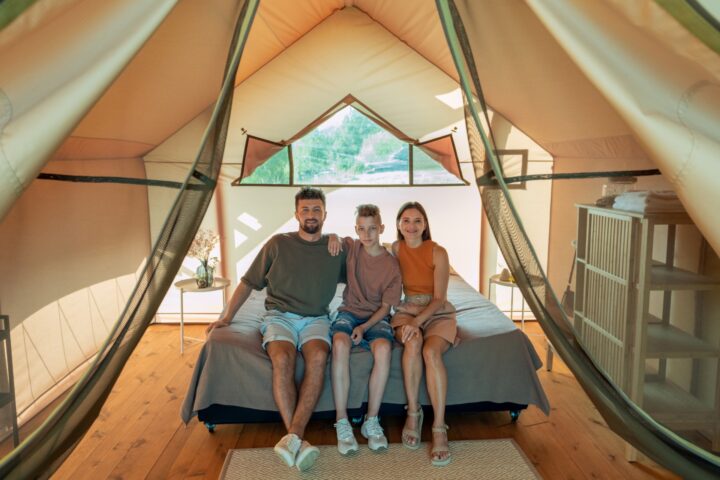
A “six-person” tent means six people lying shoulder to shoulder with no gear. A family of four with pads, duffels, and a toddler who starfish-sleeps needs the next size up, or a two-room tent so bags are not piled on sleeping space.
Use the extra room for a gear wall, not another air mattress. Crowding the floor is what makes a wet sock end up in someone’s bag. Height matters too: a tent tall enough for an adult to kneel in is the difference between a calm diaper change and a fight with the ceiling.
Stop dirt, trips, and darkness at the door
4. Make a two-step entry so shoes never reach the floor
Put a plastic bin or rubber tray just outside the door for shoes, and a small mat or towel just inside for feet. Shoes go in the bin before anyone steps on the mat. In rain, the bin gets a lid or moves under the vestibule so it does not become a bucket.
Shower caps over shoe soles are a backup if you forgot the bin. They work for a quick in-and-out. They do not replace a bin on a muddy weekend, because caps tear and still track grit if kids sit down in them.
5. Sleeve the guy lines before dark
Guy lines are thin, at ankle and neck height, and nearly invisible at dusk. Slit a foam pool noodle lengthwise and slip a section over each line, or tie short strips of bright flagging tape every foot or so. Do this as soon as the tent is staked, not after the first trip.
Noodles are easier for small children to see. They also hold water and can flap in wind, so flagging tape is the better choice if the site is exposed or you need to re-tension lines overnight. Reflective cord replaces both if you are buying new lines anyway.
6. Put a light on every zipper pull
Thread a glow bracelet or a short loop of reflective cord through each door zipper. At night the pull is the thing people hunt for while a child is already cold and awake. A glow stick lasts one evening, so pack one per door per night, or use a reusable clip light.
The same trick works on the cooler and the bear-box latch. It does not replace a headlamp at the door. It only removes the ten-second search that wakes everyone else.
7. Cut the footprint smaller than the tent floor
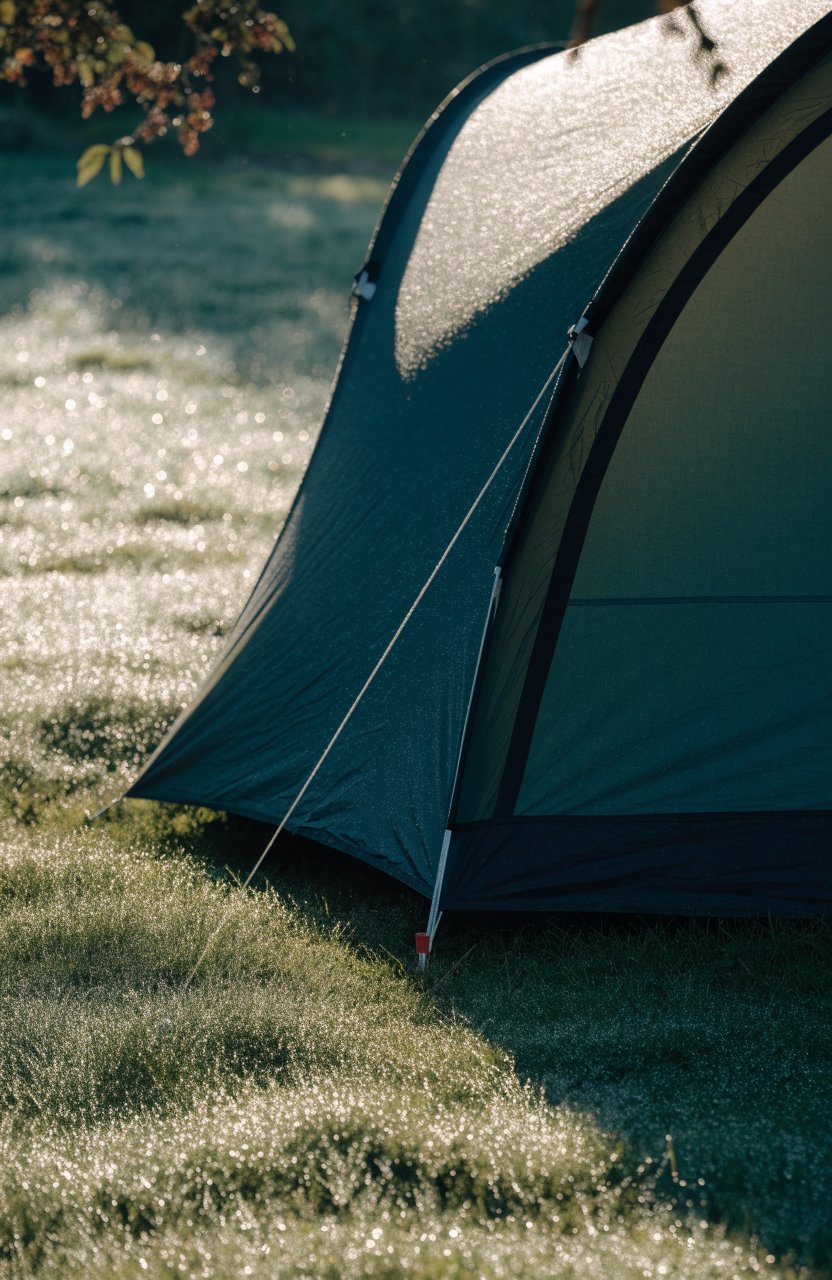
A ground tarp should stop short of the tent edges on every side. If it sticks out, rain runs onto it and under the floor. Tuck the excess or fold it before you stake. A footprint sold for your tent model is cut this way already. A bargain tarp is not.
This is also why bedding gets wet from the side, not from a leak overhead. Sleeping bags pressed against a condensation-covered wall wick moisture. Leave a few inches of gap, and vent the tent even in light rain if the fly covers the mesh.
Fix sleep before you fix the menu
8. Insulate the ground before you add another blanket
Cold comes up through the floor faster than it comes through the air. A sleeping pad with an insulation rating (R-value) matters more than a thicker bag if the night will drop. Tall guest air mattresses feel soft and insulate poorly, because the air inside moves and pulls heat away. They are fine for mild car-camping nights. They are a bad bet near freezing.
Closed-cell foam under an air pad adds insulation and protects against punctures. For a toddler still in a crib at home, a pack-and-play or travel crib inside the tent keeps them off the floor and off the walls. Check that it fits with the door closed before you leave.
9. Match clothing to the overnight low, not the afternoon
Kids lose heat faster than adults, especially if they are still and damp. Pack one more layer than you would wear, and skip cotton next to the skin for sleeping. Wet cotton holds water and stops insulating. Synthetic or wool base layers and a fleece layer still work if they get damp from condensation.
Check the sleeping bag’s rating against the forecast low, then assume a child needs more margin than the label suggests. The label is usually based on an adult in a dry bag on a pad. A hat helps. A bag that is too warm can be vented. A bag that is too cold cannot be fixed at midnight without waking the tent.
10. Give the early riser a closed activity bin
Sunrise is bright inside most tents, and a child who wakes at 5:30 will wake everyone else unless there is something to do that does not involve the zipper. Pack a small bin they already know: a board book, a quiet toy, a snack that will not melt or crumble into the bag. Put it by their pillow before lights out.
Blackout fabric or a darker tent delays this. It does not remove it. A bin still helps on the morning the birds start at dawn. If the child is too young to stay on the pad, the bin is for you, staged so the first half hour does not require a full camp kitchen.
11. Stage a night kit and do not rearrange it
One small bag at the door: headlamps, wipes, a spare pull-up or underwear, and the potty liner if you are using one. Shoes for the adult on night duty live next to it, not in the bin outside. The rule is that nobody hunts through duffels after dark.
Tell older kids the kit is the only thing they touch if they need to get up. A whistle on that same bag is for outside the tent, not for play. Three short blasts is the standard distress signal. Teach it as “only if you cannot see us,” so it is not a toy.
Handle bugs, meals, and rain without losing the evening
12. Pre-bag meals so cooking is assembly
Measure pancake mix, oatmeal, or trail-mix snack portions into bags at home. At camp you add water or pour. The time you save is the time a hungry child is not circling a hot stove. Label the bags with the meal and the amount of water, and let an older child write the label.
Keep the stove, the grill, and any fuel lantern outside the tent, always. Tents are not ventilated for combustion. Carbon monoxide from a stove, charcoal, or a propane heater used inside a tent is a real risk, not a technicality. A vestibule is still inside. Cook in the open or under a separate canopy with airflow.
13. Add shade and a screen, not just a bigger tent
The sleeping tent is a poor hangout in sun or bugs. A pop-up canopy or a screened shelter gives you a place to sit, change a diaper, and eat without baking or getting bitten. Set it up before you unpack toys. Once kids are in the dirt, you will not get a clean window to build it.
Insect repellent has age limits on the label. Follow those, and for infants too young for repellent rely on long sleeves, pants, a hat, and the screen. After any time in grass or brush, do a full tick check on every child, including the hairline, behind ears, and waistband, before they get into the tent.
14. Pack a rain block that is not the sleeping tent
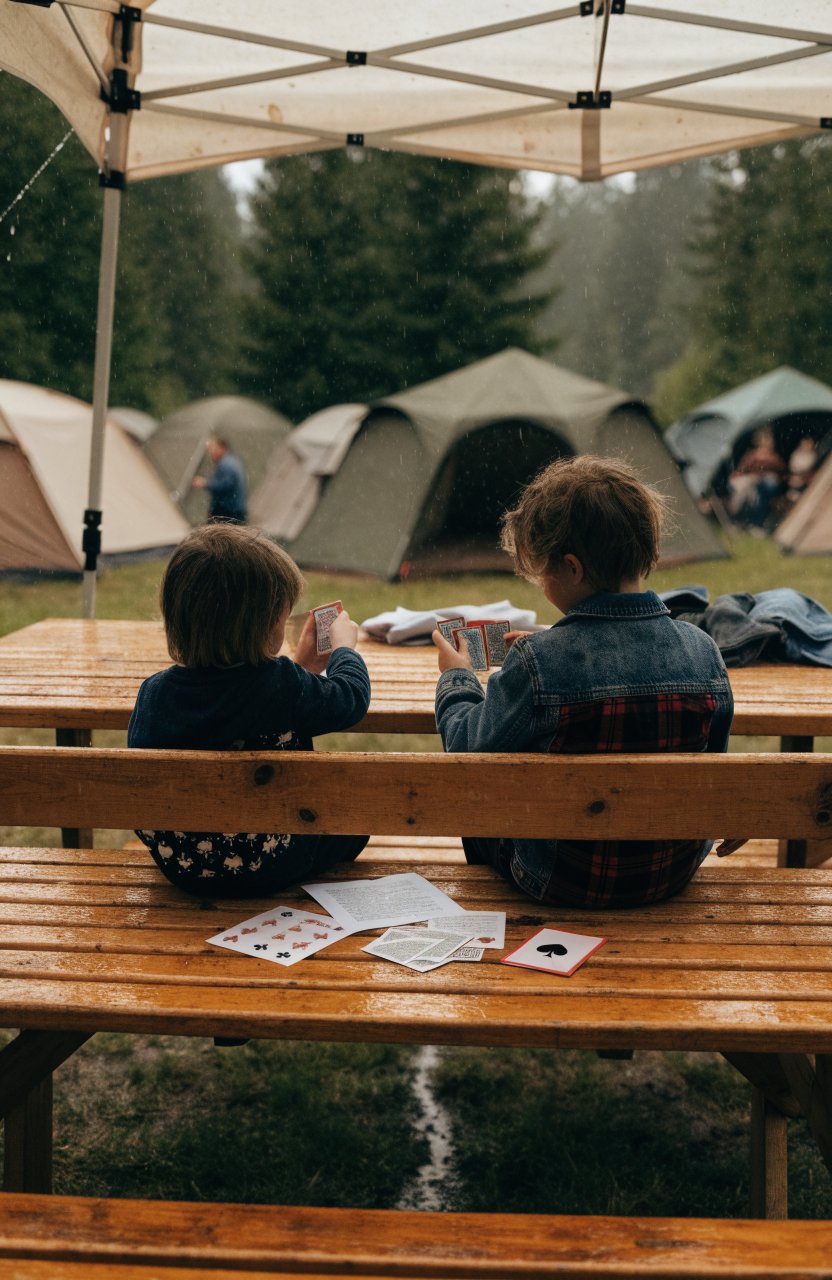
A afternoon storm should not mean six hours on sleeping bags. A canopy, a deck of cards, a printed scavenger hunt, and one dry change of clothes per child turn rain into a pause. Rain pants save more outfits than an extra sweatshirt.
Stake the canopy, and do not run a tarp as a roof over the fire pit. If the forecast is a washout and the kids are young, a cabin or yurt night is often the better first trip. Forcing a tent in steady rain teaches them that camping means being cold, which is a hard impression to undo.
15. Freeze water instead of buying a bag of ice
Fill gallon jugs about two-thirds full and freeze them. They keep the cooler cold, and as they melt you have drinking water instead of a cooler full of soggy food. Leave headspace so the jug does not split. This works for car camping. It is useless if you cannot refreeze and you are out for many days in high heat, so still pack a water plan.
A headlamp strapped around a clear jug, facing inward, makes a soft lantern for the table. It is dim enough for a late diaper change without blasting the tent awake.
Give kids a job and a plan if they get separated
16. Hand out real tasks with a visible result
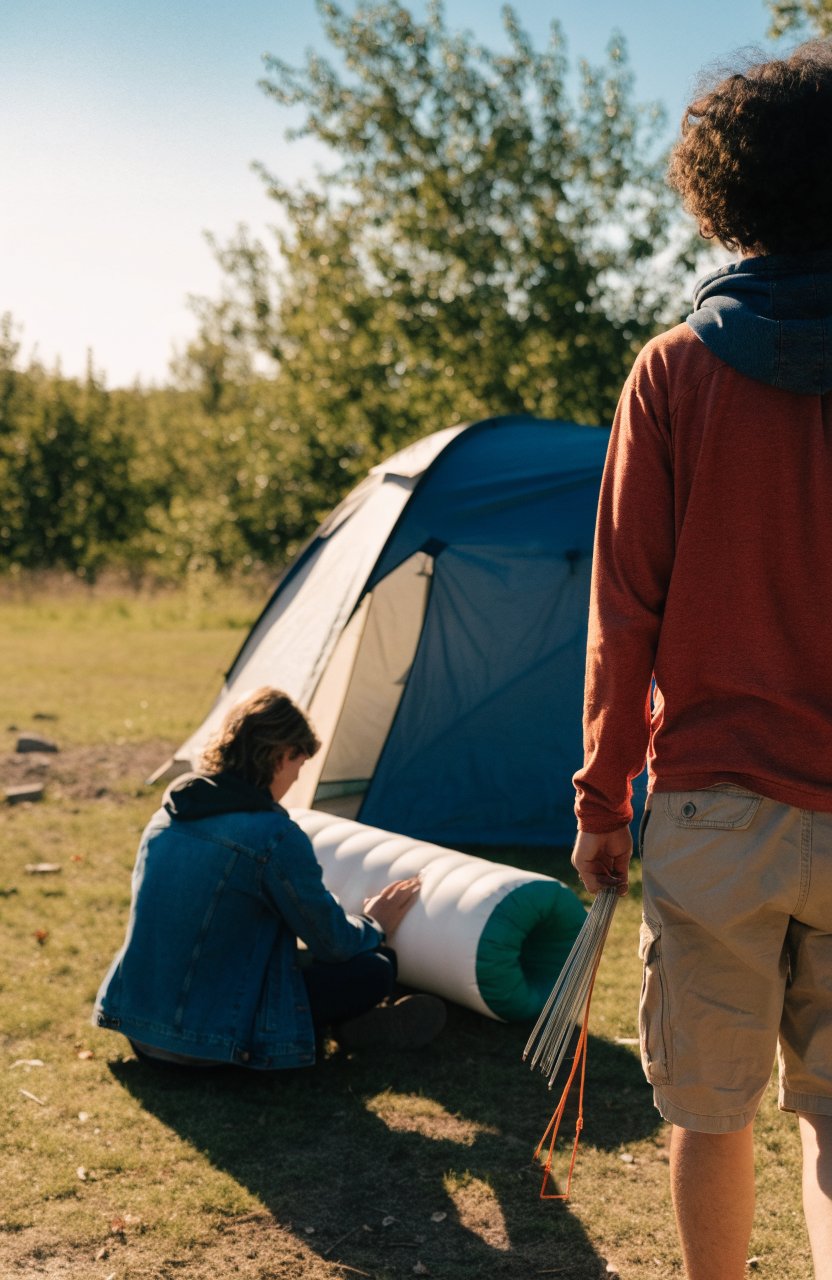
Kids last longer when they are doing part of camp, not watching it. Younger children can carry the stakes, unroll pads, and fill water bottles. Older children can own one meal or the dish bin. National Geographic’s family camping reporting makes the same point from a working campsite routine: a timer at arrival, then kids raising the tent and laying out bags, so setup is a shared job instead of a parent performance.
Skip fake chores. “Hold this stick” while you do the work reads as busywork. A task with an end state — pads flat, table set, kindling stacked away from the fire ring — is the one they repeat next time. Fire itself stays adult-led. Loose sleeves, no running, and a clear “behind this line” rule. Dryer-lint fire starters in cardboard egg cartons are a safe prep job at home, not a reason to hand over matches.
17. Teach the lost plan on arrival, not on the trail
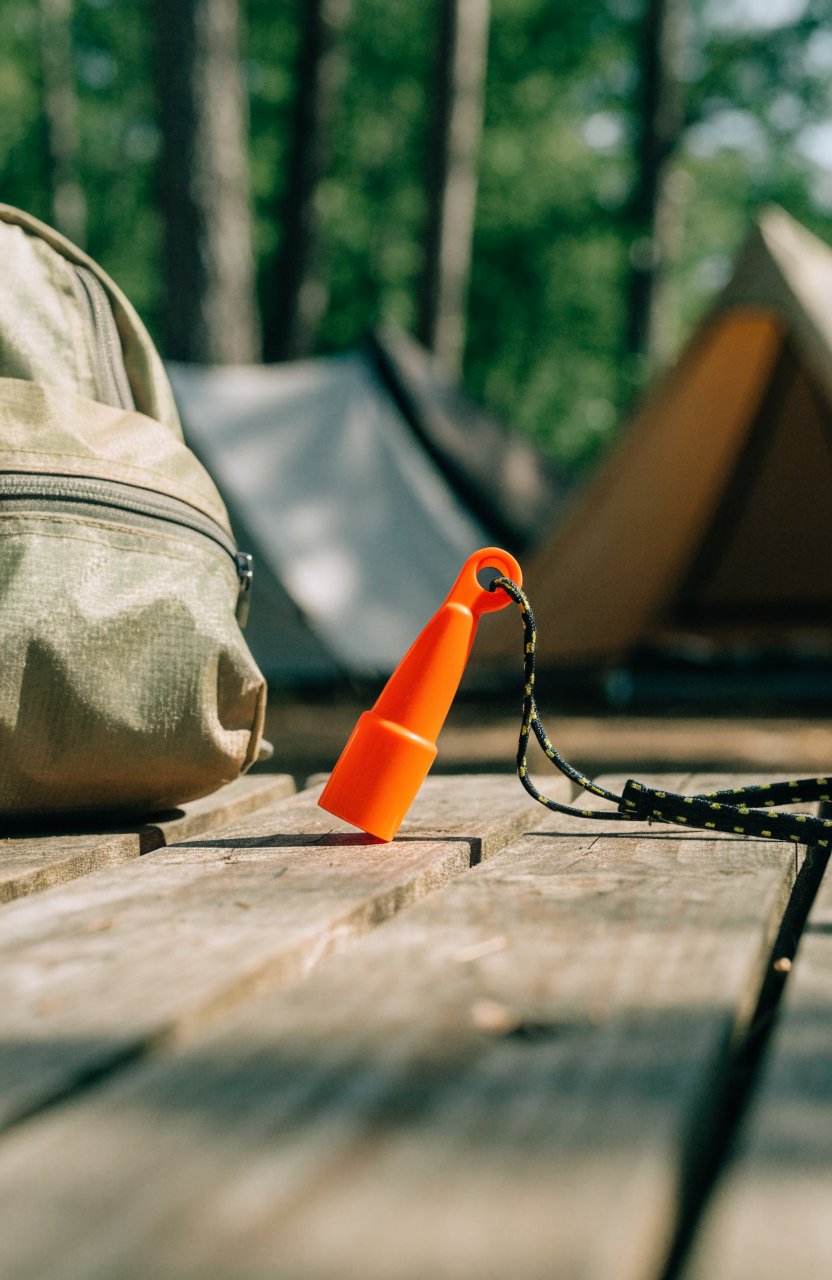
Before anyone wanders, walk the boundaries: the site pad, the road, the water, other people’s tents. Agree on a meeting spot, usually the picnic table or the campground host sign. The rule for a child who cannot see you is to stop and blow the whistle, not to search.
Buddy rules only work if the buddy is an adult or a much older sibling you have named. Two small children together are not a safety system. A bright layer or a matching bandana makes a headcount faster in a crowded bathhouse line. None of this replaces watching a toddler near water. It only shortens the delay if an older child takes a wrong turn on the loop.
Where kid camping hacks fall short
A few habits can cancel out every clever kid camping hack, and the fixes for them are simple.
| Symptom | Cause | Fix |
|---|---|---|
| Fire or carbon monoxide danger | Cooking or heating inside the tent, including the vestibule | Keep all cooking and heating outside the tent; the convenience is not worth the risk. |
| Sleeping bag feels like it leaked | Bags and pads touching walls let condensation wick in on cool nights | Keep bags and pads off the tent walls on cool nights. |
| Kids wired at bedtime | Chocolate and a long campfire story push the routine later | Serve marshmallows without chocolate, or a cinnamon-apple foil packet earlier in the evening. |
| Rough first night with the kids | Campground noise and a new floor often make night one the worst | Judge the trip on night two if the pad, layers and bathroom plan were right. |
| Toys everywhere but no wipes | Too many toys packed and too few wipes brought along | Bring a ball, bubbles and a nature list, plus plenty of wipes for hands and table. |
Frequently asked questions
What tent setup works for a baby or toddler? A travel crib or pack-and-play inside a tent large enough to walk around it, plus a pad under the crib if the floor is cold. Practice naps at home first. Battery fans are for heat only, used outside the crib and never as a reason to seal the tent. No fuel heaters inside.
Do pool noodles on guy lines actually help? Yes for visibility, especially with small children at dusk. They are worse in high wind and heavy rain than flagging tape or reflective line. Use one or the other, not both on every line.
How do you keep kids warm without overdoing the bag? Start with a pad under them, a dry non-cotton layer, and a bag rated below the forecast low. Add a blanket you can remove. Extra blankets on a pad with no insulation still leave them cold from below.
What if it rains the whole trip? A separate canopy, rain pants, and a plan that is not “everyone in the sleeping tent” matter more than a fancier tent. If the forecast is a washout and this is the first trip, switching to a cabin is a reasonable call, not a failed camp.
What should kids do if they get separated? Stop, stay, and signal. Three short whistle blasts is the standard call for help. Practice it once at the site so it is a rule, not a surprise.