Privacy is the whole job of a camping shower tent: a freestanding enclosure for rinsing, changing, or using a portable toilet away from your sleeping tent. It does not heat or pressurize water. The tent that works is the one that matches your height, your campsite wind, and how the water will leave the floor — not the one with the shortest setup claim.
Most failures are predictable. Pop-up models cartwheel if they are not staked. Solid floors turn into standing puddles. Thin fabric shows a silhouette at night. A roof loop rated for a dry bag will not hold a full solar shower. Treat the enclosure, the water source, and the drainage as one system.
What a camping shower tent is actually for
The enclosure solves three problems that a sleeping tent should not handle: privacy in a shared campground, a place to get wet without soaking gear, and a windbreak so a rinse does not become a public event.
People use the same shelter for three jobs:
- A quick body rinse after a hike, beach, or dusty drive
- Changing clothes when the site has no facilities
- Screening a portable toilet on dispersed or primitive sites
Those jobs pull the design in different directions. A shower wants water to leave the floor. A changing room or toilet shelter wants a dry, closed floor and fully opaque walls. A single-room tent can do all three only if the floor is removable or has a drain you can close.
It is not a bathroom. A typical solar bag holds about 10 to 20 liters (roughly 2.5 to 5 gallons). That is a short rinse for one or two people if the valve stays mostly closed, not a home shower. Continuous hot water needs a separate pump and heater, which most privacy tents are not built to support.
Match the tent to how you camp
The useful split is not brand. It is structure.
Pop-up (spring-hoop) tents open in under a minute and pack flat. Floor plans are often about 4 by 4 feet (around 1.2 meters square), with peak heights commonly in the mid-6-foot range. They suit car camping, festivals, and beach days when you want speed and can accept a tight interior. The hoop frame catches wind, and the hem takes wear every time you collapse it. User reports on camping forums consistently describe cheap pop-ups tearing or losing shape after a few seasons of ordinary use. Plan on them as short-lived gear, and stake them every time.
Pole-frame tents use aluminum, fiberglass, or steel poles with guylines. They take 5 to 15 minutes to pitch, weigh more, and hold shape better in a breeze. Larger footprints — about 5 by 5 feet, or dual-room layouts — leave room for a dry side where clothes and a towel stay off the wet floor. This is the better default for multi-night car camping, van travel, and windy sites.
Awning annexes and vehicle-side curtains only make sense if you already have a compatible awning or a rear door you can hang fabric from. They borrow the vehicle as a wall, which improves privacy, but they are useless on a hike-in site.
| How you camp | Prioritize | Accept |
|---|---|---|
| Weekend car camping | Standing height, stake points, removable or mesh floor | A few extra pounds in the trunk |
| Van or overland basecamp | Frame stiffness, roof strap rating, door that seals in wind | Longer setup |
| Festival or beach | Pop-up speed, opaque walls, sandbag loops | Weak performance in gusts |
| Hike-in | Packed size and weight under about 5 lb | Cramped interior, less wind resistance |
| Toilet plus shower | Dual room or a fully removable floor | More bulk and a higher price |
If you are over about 6 feet, ignore “spacious” in the title and read the interior height. A 70-inch peak forces most adults to duck while rinsing hair. Something in the 78- to 84-inch range is the practical target for standing use. Shoulder width matters as much as peak height: a 4-foot square is workable for one person and tight once a bag, towel, and soap are inside.
Specs that change the shower, not the listing
Floor. A solid bathtub floor keeps mud out and holds water in. For showering, that is often the wrong trade. Look for a removable floor, a mesh panel, or a zippered drain so greywater can leave. If the floor is solid and has no drain, you will be standing in a puddle within a minute or two.
Privacy fabric. Silver-coated or blackout polyester blocks light better than thin, pale walls. At night, a lantern inside a light-colored tent throws a clear silhouette. Mesh windows are useful for airflow only if they have solid covers you can close when people are walking past.
Ventilation. Warm shower air condenses on single-wall fabric. A high vent or a mesh roof panel, plus a low opening, moves that moisture out. Condensation on the walls is normal; it is not automatically a leak. If the only “vent” is a tiny grommet, expect a damp interior.
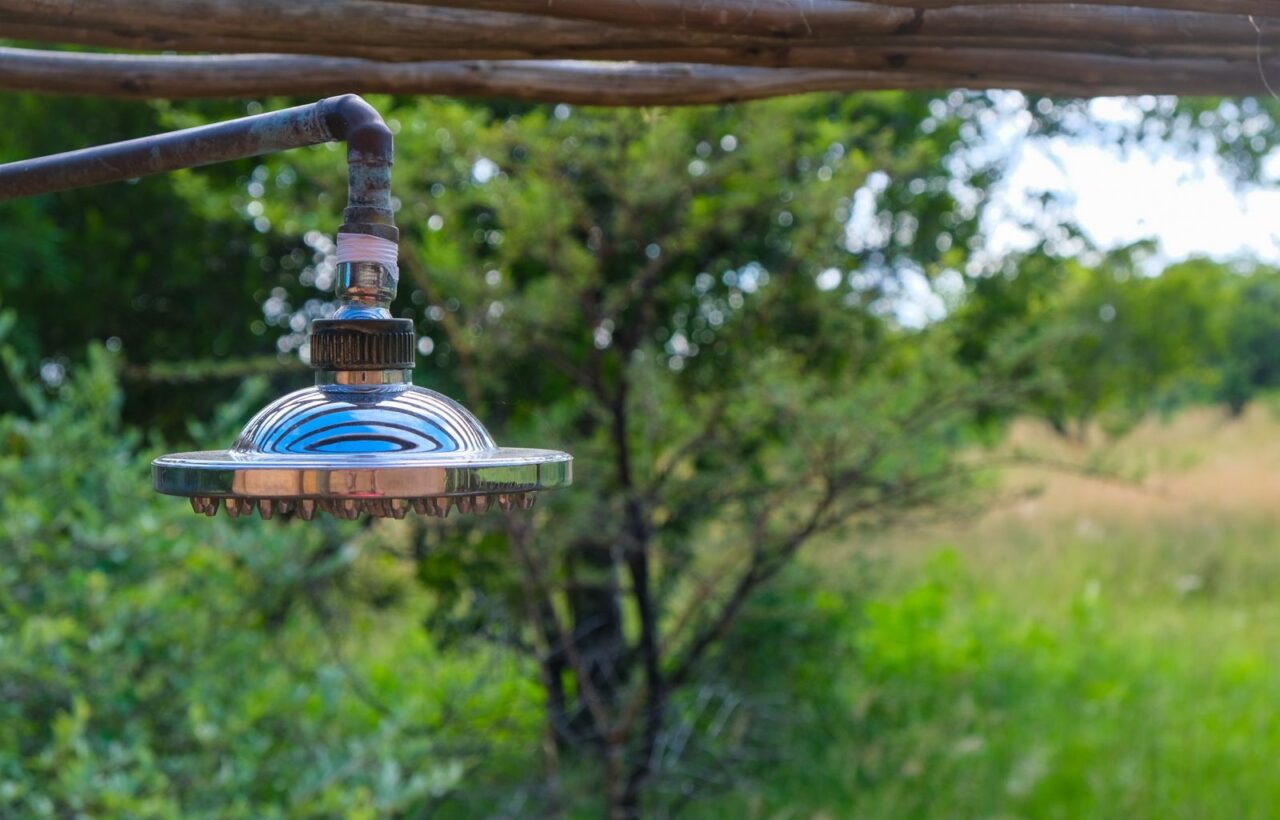
Roof attachment. A full 20-liter bag weighs about 44 pounds (20 kilograms) before the bag and hose. Many roof clips are rated closer to 10–15 kilograms. Hang a heavy bag from a stout branch, a roof rack, or a freestanding stand, and run the hose in through a port or the top. Do not trust a thin fabric loop with a full bag overhead.
Door and stakes. A double zipper with a storm flap is easier to manage with wet hands than a single slider. The included stakes are often short and soft. Carry longer steel stakes, and use every guyline point the tent has. On sand or rock, weigh the base down with water jugs or sandbags.
Weight. A 4- to 6-pound pop-up is reasonable for the car. Frame models in the 10- to 17-pound range are basecamp gear. Neither belongs in a backpacking kit unless the trip is built around a short walk from the vehicle.
Price tracks build more than features. Roughly $25–$50 buys a basic pop-up for occasional use. The $60–$120 range is where aluminum or thicker steel frames, taped seams, and real vents usually show up. Above that, you are often paying for a second room or a heavier commercial frame. Warranty length is a better signal than a long feature list.
Pair it with a water source that fits the tent
The tent is the room. The shower is a separate decision.
A black solar bag is the simplest match. Fill it in the morning, leave it in full sun, and hang it above head height so gravity supplies pressure. A 10- to 12-liter bag heats faster and is easier to hang; a 20-liter bag covers two short rinses if you use a low-flow nozzle. Solar bags do little on cloudy or cold days. Water that has been sitting in a dark bag can also overheat — test it before you step under it.
A 12-volt pump shower or a small propane inline heater gives more consistent temperature and pressure for car and van camping. Those systems need a reservoir, power or fuel, and a hose route that cannot yank the tent over. Keep the reservoir outside the enclosure so a spill does not flood the floor.
Hang the hose so the nozzle sits at shoulder height and the line cannot pull a wall inward. A short hose forces you to stand directly under the bag, which is how people soak the door zipper.
Soap should be minimal and, if you use any, biodegradable. Most of a camp rinse can be plain water. Soap residue on the floor is what makes the tent smell on the next trip.
Set it up so it stays up and drains
Placement matters more than pole order.
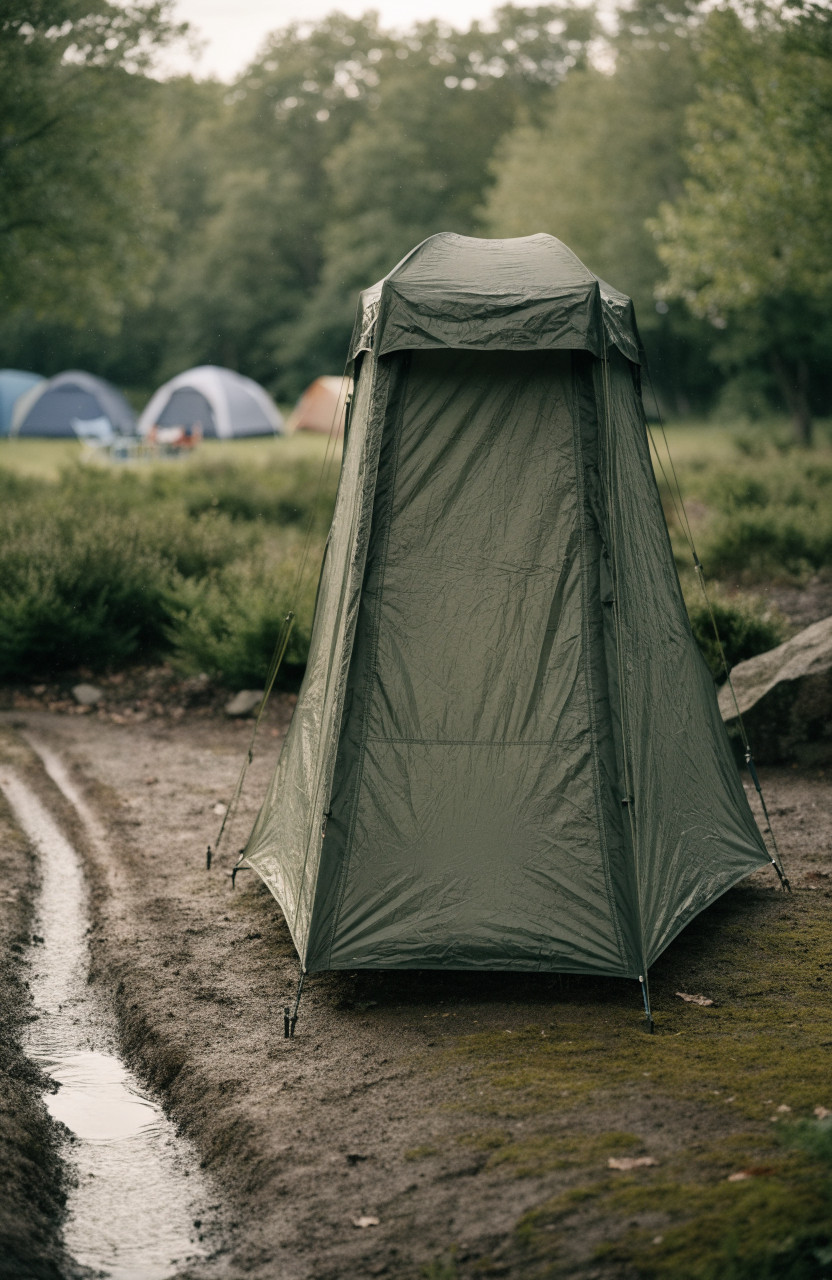
Choose ground that is firm and slightly sloped so water moves away from your feet and away from the sleeping tent. Avoid a low spot. Put the door outside the path between the kitchen, the fire, and the vehicle, and face it away from foot traffic. A vehicle, hedge, or rock behind the entrance stops a gust from opening the view to the whole site. In wind, put the narrow face toward the breeze and keep the door on the lee side so the tent does not inflate.
Stay well clear of lakes and streams. Leave No Trace practice is to wash at least 200 feet (about 70 paces) from water, campsites, and trails. Developed campgrounds often require greywater in a utility sink or a designated drain — check the site rules before you assume the ground is acceptable.
Then:
- Open or pole the tent until the frame is fully seated. Do not force a pop-up that is tangled.
- Stake every corner at roughly 45 degrees, points angled away from the tent, and tension the guylines. Do this before you hang water, even if the air is still.
- Set the floor for the job: out or open for a shower, in and closed for changing or a toilet.
- Hang the bag or route the hose, then do a one-second spray to confirm the water leaves the tent instead of pooling.
- Keep a towel and dry clothes on a hook or in a dry corner, not on the floor.
Afterward, wipe soap film off the walls, leave the door and vents open until the fabric is dry, and only then pack it. Storing a pop-up damp is a common reason the hoop corrodes and the fabric mildews. Practice the fold at home; the figure-eight collapse is awkward the first time and worse in the dark.
Problems that show up on the first trip
The tent moves when you step in. It was not staked, or the stakes are too short for the soil. Add guylines and longer stakes before you blame the frame.
You are standing in water. The site is flat or dished, or the floor has no exit. Move it, open the drain, or shower with the floor removed and sandals on.
Walls drip on you. That is condensation from warm, wet air on a cool single wall. Open the high vent and a low gap. Do not seal every opening to “keep the heat in.”
You can see the person inside at night. The fabric is too light, or a lamp is on inside. Use a dim light outside the door, or choose a coated fabric next time.
The zipper fails. Sand and soap in the teeth. Rinse the zipper, dry it, and use a zipper lubricant. A flap over the zipper lasts longer than an exposed slider.
The bag will not hang. The loop is under-rated. Move the bag to a branch or rack and bring only the hose inside.
What to buy, by constraint
Buy a pop-up if you camp a few times a year, pack in a car, and will stake it every time. Check that the interior height clears your head and that the floor can drain.
Buy a pole-frame or dual-room shelter if you camp often, deal with wind, or want a dry side for clothes and a toilet. The extra weight is irrelevant in a vehicle and obvious on a trail.
Skip a shower tent entirely if the only goal is a backcountry rinse and you already have a dark bag and a private thicket. A tent that fails in wind is worse than no tent. Also skip it if the campground forbids greywater on the ground and you have no way to collect and dump it.
Before you pay, confirm four things on the spec sheet: interior height, floor type, whether a roof point has a stated load rating, and that stakes and guylines are included. If those are vague, the rest of the feature list will not fix the shower.
Frequently asked questions
Can one tent be a shower and a toilet shelter? Yes, if the floor is removable or has a closable drain, and the walls are opaque. Do not leave a portable toilet in a soaked shower room. Use the dry configuration for the toilet and open the floor only when you rinse.
How much water do you need? A careful rinse with a shut-off nozzle can use 5 to 10 liters per person. A 20-liter bag is enough for two short showers, not for washing hair, body, and clothes at full flow.
Do you need hot water? No. A solar bag is enough in warm, sunny weather. In cold or cloudy conditions, heat water on a stove and mix it in a container, or use a 12-volt or propane shower. Never put a stove or open flame inside the tent.
Will it work on sand? Only if you can anchor it. Standard stakes pull out of loose sand. Use sandbags, buried stakes, or weights on the base loops, and avoid exposed beaches in a breeze.
How long does a pop-up last? There is no fixed life. Careful drying and gentle folding extend it; packing it wet and collapsing it roughly shortens it. Many inexpensive hoop tents are a few seasons of occasional use, not a decade of gear. A pole-frame tent is the more realistic long-term buy if you shower often.