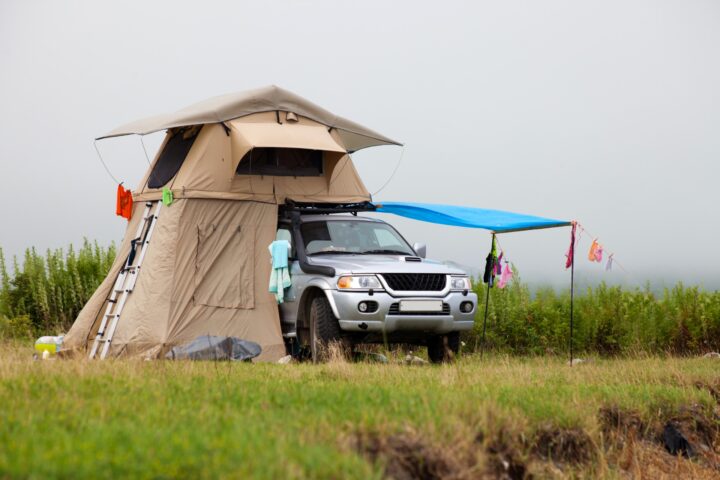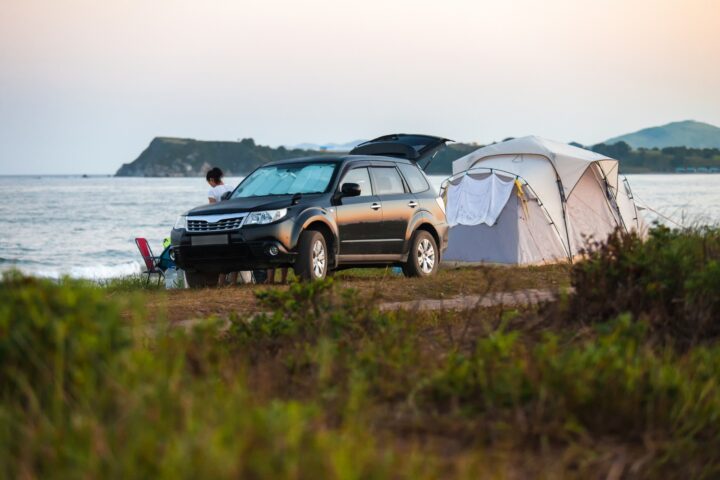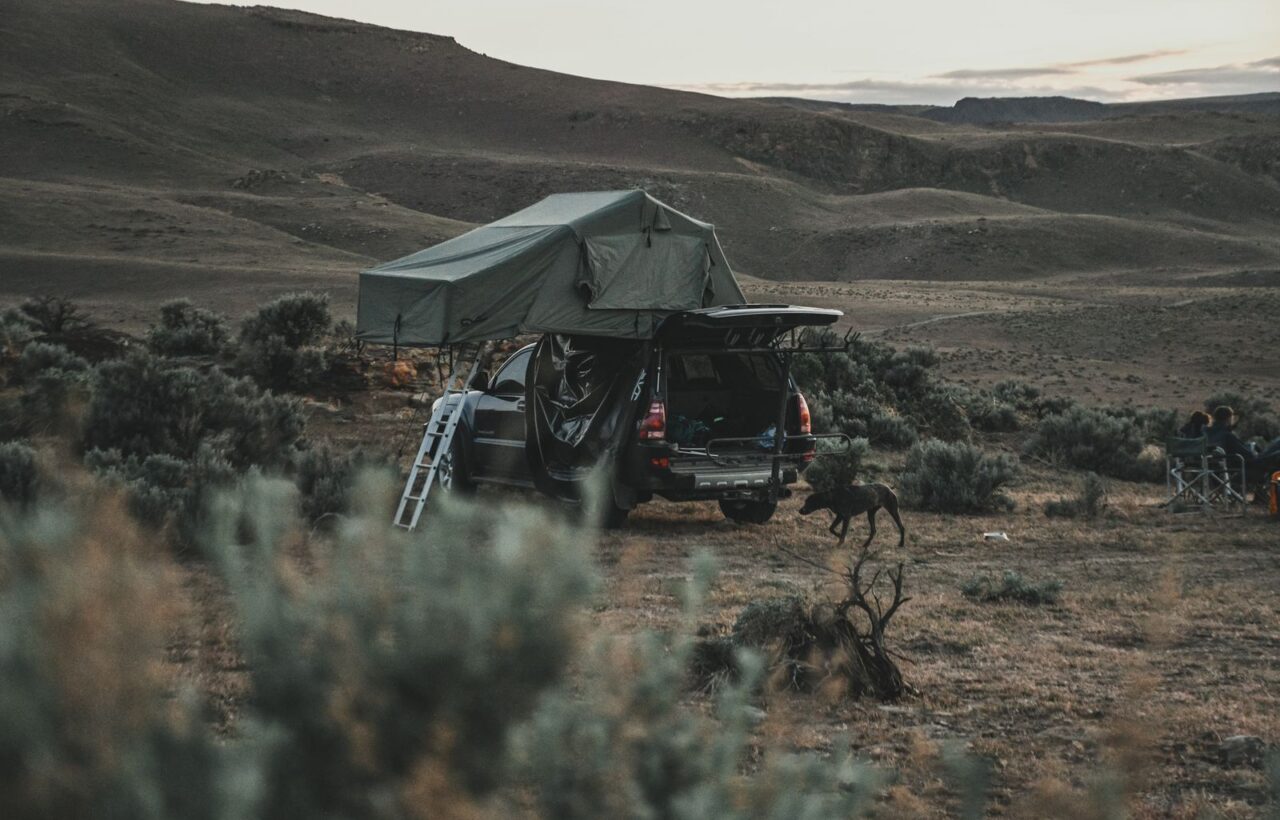
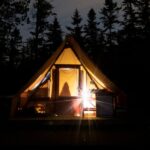
Attach a shelter to the open rear hatch and an SUV tent camping setup turns the cargo area and the tent into one covered space. You sleep on the cargo floor, in the tent, or across both, and you use the vehicle as a windbreak, gear locker, and elevated bed. The setup is most useful when the cabin alone is too tight, a full rooftop tent is more cost and roof load than the trip needs, and you still want a dry place to stand, change, and keep gear off the ground.
The hard part is not the poles. Fit, site choice, hatch electronics, and how you split sleeping from storage decide whether the night works.
Three setups that get called “SUV tent camping”
Most SUV tent camping setups use a hatch-attached tent. Two other arrangements solve related problems and are easy to mix up with it.
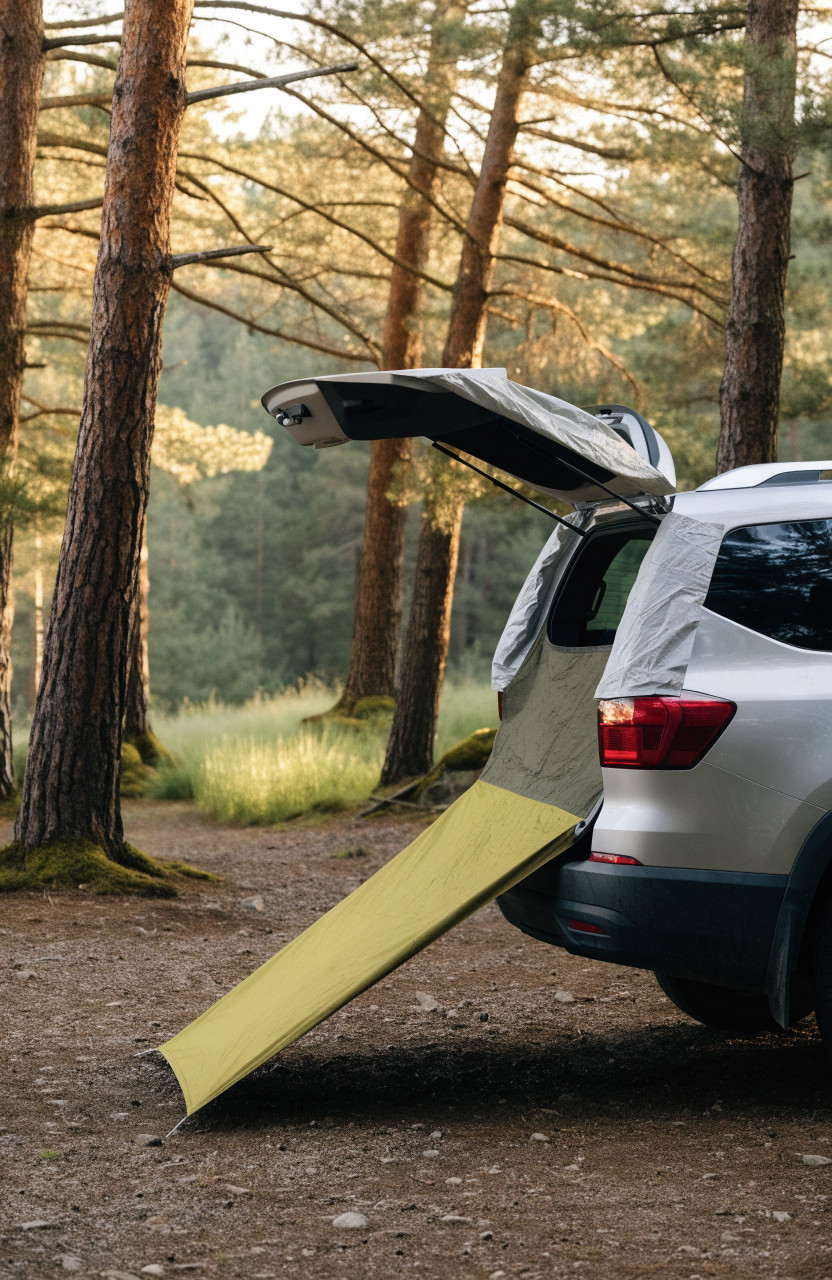
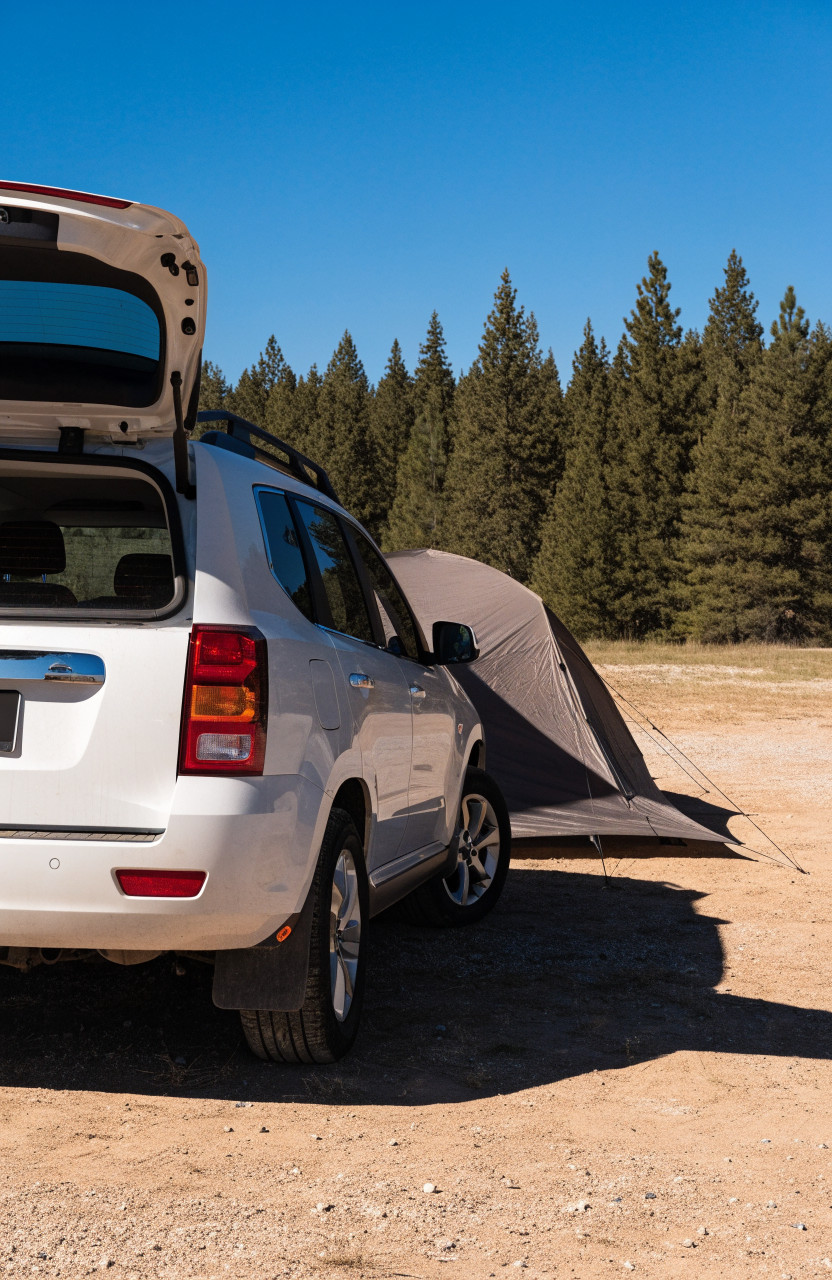
Hatch-attached (tailgate) tent. A fabric sleeve or strap system seals around the open rear hatch. The tent body extends behind the bumper and is staked at the outer corners. You can sleep in the cargo area with the tent as a standing room and vestibule, sleep mostly in the tent with the hatch as a door, or split the group. Common floor sizes run about 8 by 8 feet to 10 by 10 feet, with peak heights often high enough to stand. Pole tents usually take 10 to 20 minutes once you have done it once; pop-up and inflatable frames are faster and often less stable in wind. Typical street prices for this category sit roughly in the $150 to $400 range.
Cabin sleep with no tent, or with a separate ground tent. Seats fold flat, a pad or simple platform goes down, and the vehicle is the bedroom. A normal tent pitched beside the SUV holds extra people or gear. Nothing has to match the hatch shape. You can drive away without striking a sleeve.
Rooftop tent. The tent mounts on crossbars and unfolds above the vehicle, usually with a mattress and ladder. Setup after the rack is installed is often a few minutes. The cargo area stays free. Cost is a different category: the tent alone commonly runs from about $800 into the low thousands, plus a rack rated for the load. Dynamic roof capacity (what the vehicle can carry while moving) and static rack capacity (what it can hold while parked, with people inside) both matter. Many midsize crossovers can take a lighter softshell or low-profile hardshell only after you confirm those numbers.
A hatch tent is a campsite annex. A rooftop tent is a bed that travels on the roof. They are not substitutes for the same trip.
Which layout fits the trip
| Priority | Better fit | Why |
|---|---|---|
| Lowest cost, first few weekends | Hatch tent or cabin sleep | No rack, no permanent hardware |
| Standing room and a place to change | Hatch tent | Cabin sleep forces dressing lying down |
| Dog that cannot climb a ladder | Hatch tent or ground tent | The dog stays at ground level and can be near you |
| Move every night | Cabin sleep, or a rooftop tent already mounted | A hatch tent is slow if you strike it daily |
| Stay put 2–3 nights | Hatch tent | Setup time is paid once; the annex earns its space |
| Wet, muddy, or uneven ground | Rooftop tent or a raised platform in the cabin | Ground floors soak and slope |
| Leave camp during the day | Hatch tent that can be unhooked, or a ground tent | Many sleeves release so you can drive and reattach |
| Strong wind or exposed ridgelines | Cabin sleep or a low rooftop tent | A tall fabric room behind the bumper catches gusts |
Capacity ratings on hatch tents are optimistic. A “5–6 person” tent usually means two adults on a mattress plus room to stand and stash bins, not five sleeping pads. If kids go to bed earlier than adults, a two-room design (sleeping area plus screen porch) is more useful than a larger single floor.
Measure the vehicle before you buy the tent
Hatch tents are sold as universal. Fit is not universal.
Measure the rear opening with the hatch fully open: width at the widest usable point and height from the bumper lip to the top of the opening. Compare that with the sleeve dimensions, not the floor size. A compact crossover, a midsize SUV, and a minivan can all “fit” the same listing and still leave gaps at the corners.
Also note:
- Bumper height and whether a trailer hitch or bike rack blocks the sleeve.
- Cargo floor length with the rear seats up and with them folded. A queen mattress often needs the seats down; that removes passenger space and daytime storage.
- Whether the hatch can stay open without hitting a low branch or a site post.
- Spare-tire swing gates and split tailgates. Some sleeves assume a single top-hinged hatch.
If you are also considering a rooftop tent, read the door-sticker roof load and the rack maker’s static rating. Tent weight of roughly 45 to 90 kg before bedding is common. Highway range, garage clearance, and fuel use change once that mass is up top.
Practice the full pitch once at home. The first campsite attempt in the dark is where poles get crossed and the sleeve sits crooked.
How to pitch a hatch-attached setup
Order matters more than speed.
- Pick the pad, then the spot. You need a level patch at least the tent floor long behind the bumper, plus room to open the hatch fully. A slight nose-up or nose-down angle is tolerable for the vehicle and miserable for sleep. Clear rocks and sticks under the floor. If the site is crowned, park so the cargo floor, not the tent, is the flatter sleeping surface.
- Set the tent body before you commit the sleeve. Stake the floor corners loosely, raise the poles, then align the open end with the bumper. Pulling a half-built tent onto a crooked hatch twists the sleeve and opens gaps.
- Seat the sleeve on a clean hatch. Dirt and wax on the paint make the elastic crawl. The sleeve should be snug, not drum-tight. Guy lines and stakes, not the sleeve alone, hold the tent in wind. Add the rainfly so it covers the pole tops and sheds away from the vehicle. On many designs the sleeve itself is the weak point in heavy rain; a small tarp or the fly extended over that joint helps.
- Stake and tension. Drive stakes at an angle away from the tent. In soft sand or loose forest duff, use longer stakes or bury a stuff sack of rocks as a deadman. Re-tension after an hour; fabric relaxes.
- Deal with the open-hatch electronics before dark. Many SUVs keep cargo lights on, disable auto-lock, or draw from the battery while the latch reads “open.” A common workaround is to press the hatch latch with a key or carabiner so the body computer thinks the hatch is shut. That trick is model-specific. Confirm it on your vehicle, and do not rely on it if the car still clicks relays or runs a fan. A small power station for lights is safer than leaving the ignition accessories on.
- Close the weather loop. Zip the fly, check that no guy line crosses a door you need at night, and put a doormat or small rug at the tent entrance so mud stays out of both the tent and the cargo area.
If you will drive out during the day, unhook the sleeve, move the vehicle, and leave the tent staked. Reattaching is a reverse-and-align job of a few minutes if the stakes have not been pulled.
Sleeping layout and where gear goes
The comfortable version is a split room, not a pile of bins on the mattress.
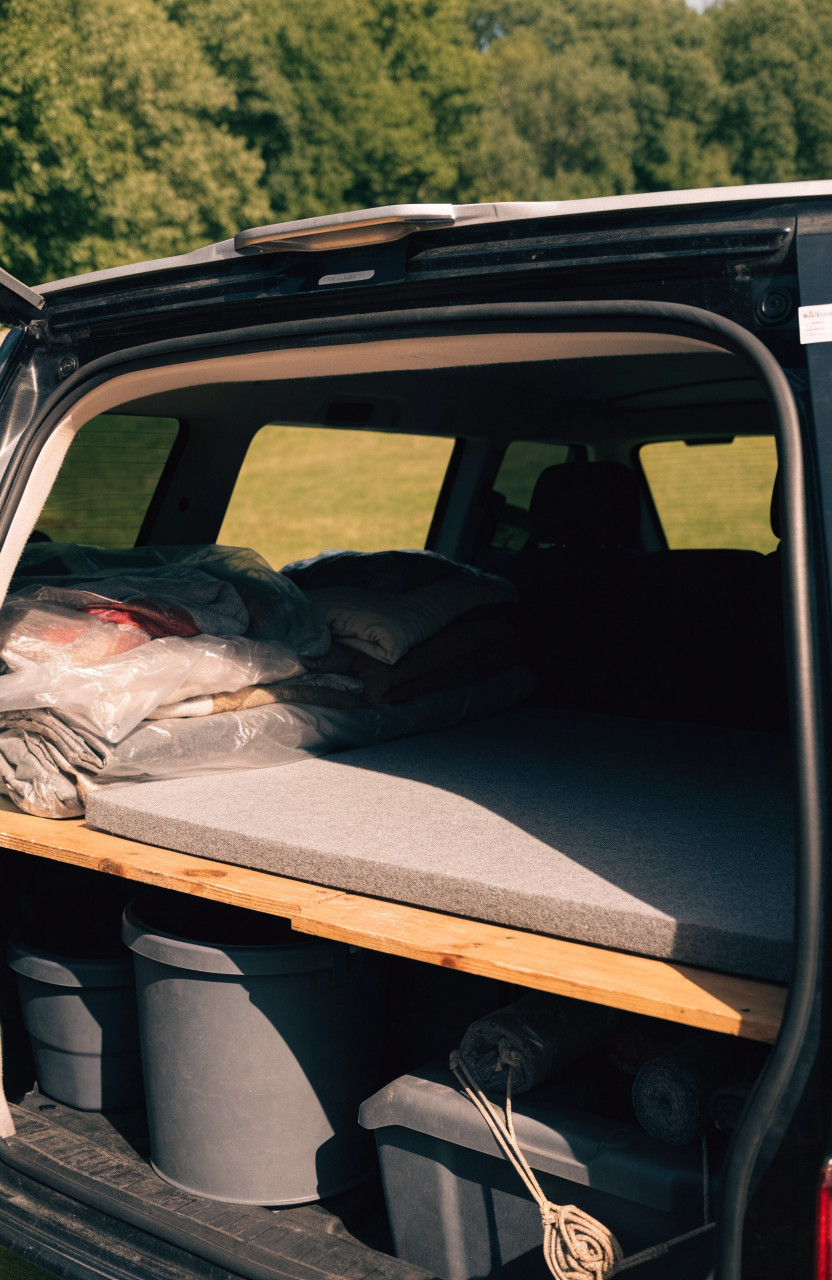
Use the cargo floor as the bed if you want to be off the ground. A 3-inch self-inflating pad or foam mattress on a flat floor beats a thick air mattress that wobbles and squeaks against plastic trim. If the floor has ridges, a sheet of plywood or a folding platform with bins underneath levels it and recovers storage. Measure before you cut anything: the platform has to clear the hatch opening when you load it.
Keep the tent floor for standing, a chair, and soft gear. Coolers, stoves, and food do not belong in the sleeping zone. In bear country this is not optional. An open hatch means the cargo area is not a closed metal box. Food-storage rules in many parks treat an open vehicle like a tent. Use the camp bear locker or a proper canister, and do not cook in the annex. The “drive away and drag the tent” story is not a bear plan.
Vent the cabin. Body moisture has nowhere to go in a sealed SUV. Crack windows behind mesh, open tent vents on the lee side, and keep wet clothes out of the sleeping bag. Condensation on the headliner is the usual sign that airflow lost.
Weather problems that show up after the photo
Rain at the sleeve. Taped seams on the tent body do not seal the vehicle joint. Water follows the hatch edge and drips at the bumper. A slightly nose-down park angle can send that drip into the tent; nose-up can send it into the cargo area. Watch the first shower and add a small diverter rather than assuming the listing’s waterproof rating covers the joint.
Wind. A tall annex acts like a sail. Gusts make the fabric slap even when the stakes hold. On an exposed site, drop to cabin sleep or lower the fly and unhook if the tent is only a daytime shade. Aluminum poles bend less than thin fiberglass, but no pole fixes a bad guy-out.
Heat. Dark fabric over a cargo area in full sun overheats by late morning. Pitch with the tent on the shaded side of the vehicle if the site allows, or strike the annex and leave windows cracked rather than napping in a closed sleeve.
Cold. The cargo floor pulls heat. A closed-cell pad under an inflatable pad matters more than a thicker bag. The tent blocks wind on the rear door, which helps, but it is not insulation.
When the attached tent is the wrong tool
Skip it if you change sites every night and hate setup. Cabin sleep with a good pad is faster. Skip it if the only legal pads are uneven, sloped, or too short for the floor behind the bumper. Skip it if you need the vehicle ready to leave in a hurry: striking a sleeved tent in a storm is slower than closing a hatch. Skip it if roof cargo, a hitch rack, or a swing-out spare already owns the rear opening.
A rooftop tent earns its price when you camp often, want bedding to stay packed, and have confirmed the rack and roof ratings. A plain ground tent earns it when the vehicle is only the way you arrived.
FAQ
Does the SUV have to stay parked all weekend? No. Many hatch tents unhook so you can leave the tent staked and drive. You need a site where you can reverse straight back onto the sleeve.
Can you sleep entirely in the tent and use the SUV for storage? Yes. Close the hatch and use the tent as a normal shelter, or leave the hatch open and put bins in the cargo area. If the hatch stays open, treat that space as tent space for food rules and for battery draw.
Are SUV tents waterproof? The better double-wall models shed rain on the fly and body. The sleeve-to-hatch joint is the usual leak. Seam sealer helps factory seams; it does not fix a gap at the bumper.
Do you need a roof rack? Not for a hatch tent. You need one for a rooftop tent, and it has to match the tent’s mounting tracks and the vehicle’s load limits.
Is a hatch tent safe in bear country? Only if food, trash, and scented items are stored the way the park requires, which usually means not in an open vehicle. The tent does not add protection. It removes the closed-door barrier.