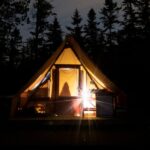
Headlamps go missing at dusk, wet shoes end up beside sleeping bags, and half the kitchen turns up under a chair at pack-out. Good tent camping organization fixes that with one repeatable system that gives every item a home at each stage: at home, in the car, at camp and inside the tent.
The system has three parts. A packing method has to survive the next trip, the campsite layout has to stay usable after the first meal, and the tent interior has to keep dirt and moisture away from where people sleep. Each part is covered in the order it happens.
What Disorganization Costs at Camp
A messy camp wastes time, but the bigger costs are comfort and safety. Gear that has no home gets left on the ground, where it collects grit that later wears through a tent floor. Food and toiletries left “just for tonight” attract animals. Wet boots inside the sleeping area raise humidity and soak insulation. In the dark, a missing headlamp or pair of glasses turns a simple bathroom walk into a scramble.
Organization solves those problems by giving every category a zone and a return path. The system below works for car camping first, then notes what changes if you are backpacking.
Organize at Home Before You Touch the Tent
The trip starts in storage, not at the trailhead. If camping gear lives mixed with holiday decorations, every outing becomes a rebuild.
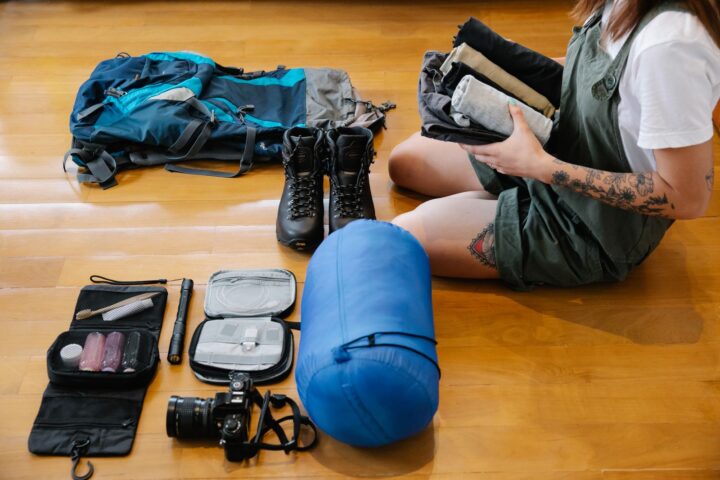
Pack by function, not by “camping stuff”
Sort gear into kits that match how you use it. Clear or labeled bins work well for car camping because you can see contents without opening every lid. Soft duffels work better for bulky sleep gear that should not stay compressed for months.
A practical kit list:
- Shelter kit: tent body, rainfly, poles, stakes, extra stakes, footprint or groundsheet, guylines, mallet, repair tape or pole splint
- Sleep kit: bags or quilts, pads, pillows, extra blanket if needed
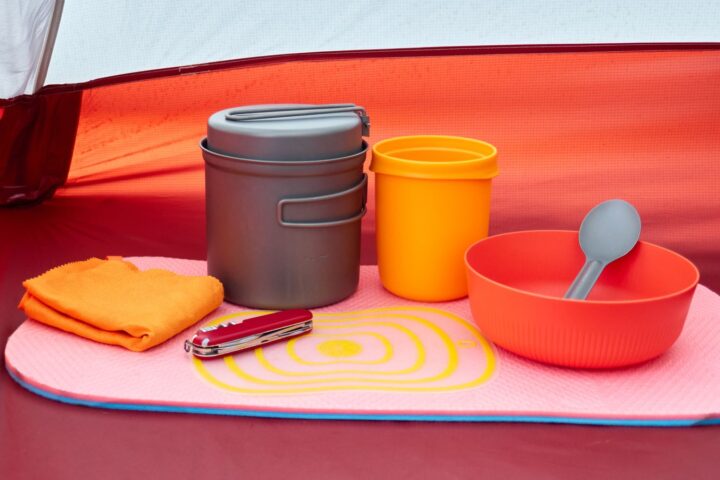
- Kitchen kit: stove, fuel, cookware, utensils, cutting board, spice tin, dish kit, trash bags
- Utilities kit: headlamps, lantern, extra batteries, first-aid, fire starters, multi-tool, extra cord, repair items
- Personal kits: one bag per person for clothes, toiletries, and small valuables
Keep consumables on a restock list taped inside the kitchen lid: matches, soap, paper towels, batteries, first-aid items you used last time. Restock at home, not on the drive out.
REI’s campsite-organization advice follows the same idea: treat camp like rooms and keep a ready-to-grab kitchen box so you are not assembling a household from scratch every weekend.
Do not store the tent wet or the sleeping bag stuffed
Organization includes care. Store the tent only after it is fully dry. Moisture left in packed fabric grows mildew and can damage waterproof coatings. Sleeping bags should live loosely in a large cotton or mesh sack at home, not compressed in the stuff sack they travel in. Compact storage is for the car, not the off-season closet.
Practice pitching a new tent at home once. Confirm poles, stakes, and fly are all in the bag before the first trip. That five-minute check prevents the most common “we packed the tent but not the poles” failure.
Load the Vehicle So Unloading Has a Sequence
How you pack the car decides whether camp setup is calm or chaotic.
Put first-needed items last in, first out:
- Shelter kit and rain layers
- Sleep kit
- Kitchen kit and cooler
- Chairs, table, shade, and play gear
- Personal bags
Keep a small “arrival pouch” somewhere obvious: headlamps, vehicle keys assigned to one adult, insect repellent, and a lighter or stove igniter. If you arrive after dark or in rain, those four items matter more than the camp chairs.
Separate coolers when you can. A drinks cooler gets opened constantly; a food cooler stays colder if it stays closed. That is a storage decision as much as a food-safety decision.
For families, give each person one bag that stays with them. Shared clothing piles are how kids’ socks vanish into the vestibule.
Set Camp in a Fixed Order
A good layout starts before the first bin comes out. Walk the site for two minutes.
Look for:
- A flat, durable tent pad with drainage, not a low dip that will puddle
- Dead branches overhead
- Wind direction
- Distance from the fire ring, picnic table, and water
- A clear path from the parking pad to the tent that will not become a mud track
Then set camp in this order:
- Claim and clear the tent pad. Remove sticks and pinecones. Lay the footprint.
- Pitch the tent and stake it taut. Shelter first. A square, tight pitch sheds rain and leaves more usable floor inside.
- Build the sleep system. Pads, bags, and pillows go in while the tent is still empty and clean.
- Set the kitchen and wash station.
- Park remaining bins at the edge of camp, not in walking lanes.
This sequence keeps dirty work outside the tent and prevents the common beginner pattern of cooking first, then trying to pitch a tent in the dark with tired people.
Give the Campsite Rooms
Think of the site as a small house with rooms that should not overlap.
Sleeping zone
The tent sits on high, well-drained ground, upwind of the kitchen and fire when the site allows it. Smoke and cooking smells should blow away from where you sleep. Keep a doormat or small rug at the door. Dirt control starts there. A compact broom or brush lives next to the door, not “somewhere in the kitchen bin.”
Kitchen zone
Split cooking into three stations even if they share one picnic table:
- Prep: cutting board, knife, ingredients for the current meal
- Heat: stove or grill, fuel, pot gripper
- Cleanup: wash basins, soap, strainer, trash
Keep the stove on level ground, away from tent fabric and dry brush. Place the kitchen downwind of the tent so fumes and food odor do not sit in the sleeping area. Wash dishes away from lakes and streams; many land managers ask campers to keep soap and gray water at least 200 feet from water sources.
Storage and vehicle zone
Unused bins, extra firewood, and the car form the edge of camp. Leave a walking lane between tent, table, and fire. People trip on “temporary” piles that stay there all weekend.
Food storage zone
This is its own room, not a corner of the tent. Rules change by location. In many developed campgrounds, scented items go in a provided locker or a locked hard-sided vehicle. In backcountry bear country, agencies often require a certified canister, locker, or approved hang, and they treat toothpaste, sunscreen, trash, and cookware residue as food. The National Park Service is direct: do not store food in a tent or backpack.
A common field layout is a triangle: sleep area, cook area, and food storage separated as the terrain allows, often on the order of 100 feet in backcountry settings. Follow the local rule first; distance is not a substitute for the required container.
Organize the Tent Interior Without Filling the Floor
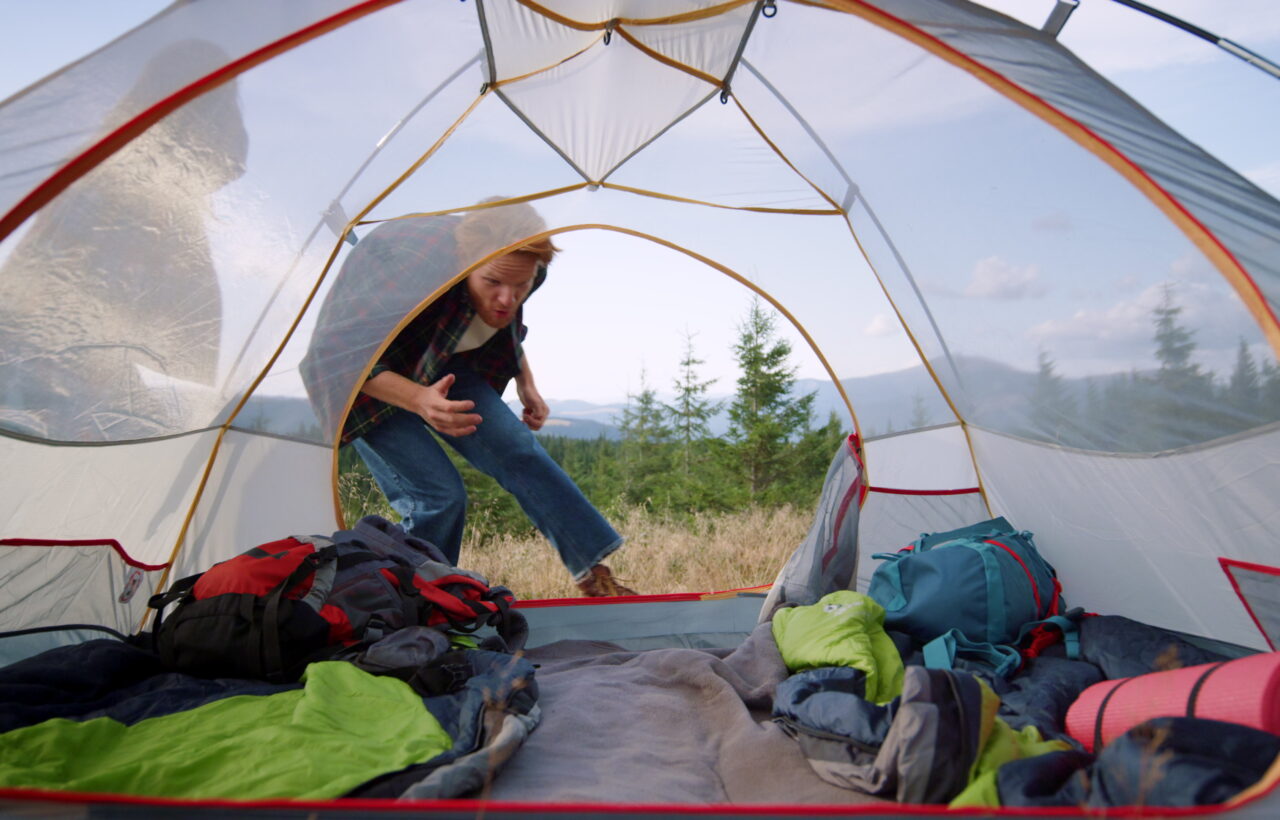
Inside the tent, the floor is for sleeping, not storage. Clutter on the floor is what makes a four-person tent feel like a two-person tent.
Use four interior zones
Adapt these to your tent size:
- Sleeping zone: pads, bags or quilts, pillows. Place pads so nobody has to climb over another person to reach the door.
- Night kit zone: headlamp, glasses, medication, phone if you keep one inside, and a warm layer within arm’s reach. Use the tent’s built-in pockets or a small stuff sack at the head of the pad.
- Clothing zone: one labeled bag or cube per person for clean sleep clothes and tomorrow’s layers. Keep it at the foot or along the wall, not in the aisle.
- Wet and dirty zone: vestibule first. Boots, gaiters, and damp rainwear stay off the sleeping floor.
A gear loft or ceiling loops can hold a lantern or a few ounces of small items. Do not hang heavy wet gear from points the manufacturer did not design for load. Weight in the wrong place distorts poles and fabric.
Keep the doorway as an aisle
The most useful square feet in a tent are the ones you can walk through at 2 a.m. Do not park a backpack in front of the zipper. If the pack must come inside during a storm, stand it on a footprint scrap or stuff sack at the foot end, away from walls so condensation does not soak the fabric.
Cots help in large car-camping tents because they create under-bed storage. They also eat floor area. Measure the tent and the cot before you count on that extra space.
Hanging shoe organizers, hanging toiletry kits, and packing cubes are useful only if they hold items you actually retrieve from inside the tent. If the item belongs in the kitchen or the car, hanging it in the tent just moves clutter to eye level.
Keep a Wet-Dry Line
Moisture is the hidden organization problem. A tent already collects condensation from breath and damp ground. Adding wet jackets and muddy boots raises humidity and can leave sleeping bags clammy by morning.
Rules that hold up in rain:
- Shake off water before the inner door opens.
- Boots and soaked rainwear stay in the vestibule or under a small tarp porch.
- If wet gear must come inside during severe weather, seal it in a dry bag and keep it off insulation.
- Leave a clear path to the door so you are not stepping on wet fabric in socks.
- Vent the tent. Crack doors or vents even in rain, as long as the fly still sheds water. Stale, sealed air holds more moisture.
A small door mat and a no-shoes-inside rule do more for organization than most interior gadgets. Grit on the floor is not only messy; it abrades tent fabric.
What Stays Out of the Tent
Organization includes a short ban list. These items do not belong in the sleeping shelter:
- Food, snacks, flavored drinks, wrappers, and dirty cookware
- Trash
- Toiletries and other scented products where wildlife rules require it
- Fuel bottles and anything with an open flame
- Stoves, grills, and fuel-burning heaters or lanterns used inside the tent
- Muddy boots as a default habit
- Sharp tools left loose on the floor
The reasons stack: fire and carbon monoxide risk, animal attraction, moisture, and punctures. “Sealed snack in a pocket” still counts as food storage in bear country. Local rules vary, so check the campground or land manager before you treat the car or a cooler as enough.
Assign one person as key-keeper for the vehicle. Lost keys are an organization failure with a long walk attached.
Family and Group Systems That Survive Real People
Perfect labeling fails when six people are hungry. Build a system that still works if items come back to the right bin, not the exact slot.
What works in family threads and group trips is simpler than most blog “hacks”:
- One personal bag per person
- One kitchen tote that stays packed between trips
- One utilities tote for lights, first aid, and repair
- One sleep/shelter load that can go straight into the tent
- A dirty-clothes bag that is ugly on purpose so clean clothes never join it
- A written or shared checklist for group gear: tarp, stove, propane, first aid, bug spray, towels
For groups, assign roles before arrival: who pitches tents, who runs kitchen, who handles food storage. Shared trips fall apart when everyone brings a chair and nobody brings a lighter.
Kids do better with visible homes for items: a bin by the tent door for shoes, a cube for each child’s next-day clothes, and a rule that food never enters the tent “because it’s easier.”
Pack-Out Is Part of Organization
The last morning decides the next trip.
Work in reverse of setup:
- Pack personal bags and sleeping gear.
- Sweep the tent floor before the tent comes down. Grit packed into a rolled tent becomes next month’s abrasion.
- Collapse the tent only as dry as conditions allow. If you must pack it damp, unroll it at home the same day.
- Return kitchen items to the kitchen bin as you clean them, not into a mixed “car pile.”
- Walk the site for stakes, utensils, and trash.
At home, restock before the bins go back on the shelf. Note what ran out while you still remember. That is the difference between a ready kit and a decorative pile of gear.
Troubleshooting a Camp Organization System
The table below matches each sign of a slipping system with what caused it and how to put it right.
| Symptom | Cause | Fix |
|---|---|---|
| Tent crowded with stray gear | Treating the tent as overflow storage for everything | Keep only sleeping and dressing items inside; the rest goes in a bin or the vestibule. |
| Picnic table buried on arrival | Unloading everything at once with no arrival order | Follow a set arrival order so unloading does not become a second packing job. |
| Wildlife problems at night | Kitchen and tent sharing the same smell zone | Keep the kitchen in a separate smell zone from the tent. |
| Digging repeatedly for the can opener | One giant unlabeled tote holding everything | Split gear into labeled containers so items are quick to find. |
| Mess tracked into the tent | Skipping the door mat, since most mess starts on feet | Lay a door mat at the tent entrance. |
| Mildew on a tent packed wet | Packing the tent wet just this once | Do not pack the tent wet, even once. |
| Organizers bought but chaos remains | Buying organizers before building a system of zones | Build zones first, then add organizers to support the system. |
Frequently Asked Questions
How do you organize a small tent?
Shrink the zones, do not abandon them. Sleeping pads stay centered. One shared night-kit pocket holds lights and glasses. Clothes stay in one stuff sack per person. Everything dirty or bulky goes to the vestibule. In a backpacking tent, the pack itself is the dresser; the floor stays clear.
Is a hanging shoe organizer worth it?
It can be, in a tall car-camping tent, for small dry items you use inside: headlamps, sunscreen you apply in the morning, glasses cases. It is a poor home for cookware, food, or wet shoes. If the organizer blocks a door or sags into sleeping space, skip it.
Should clothes stay in the tent or in the car?
Clean sleep clothes and the next day’s layers can live in the tent. Extra outfits, towels, and dirty laundry are often happier in the vehicle or a closed bin. That keeps the tent livable on a multi-day trip and reduces the temptation to store scented laundry detergent inside the shelter.
How do you stay organized in the rain?
Pitch the tent first, keep a dry bag ready, and enforce the vestibule as the wet room. Cook under a tarp if you have one, not under the tent fly. Pack a dedicated stuff sack for soaked layers so they cannot touch sleeping bags. Ventilation still matters in rain; a sealed tent gets wetter from the inside.
What is the simplest system if you only camp a few times a year?
Two clear bins and one large sleep duffel. Bin one is kitchen. Bin two is lights, first aid, stakes, and repair. The duffel holds tent, pads, and bags. Add a checklist on the inside of a lid. That covers most weekend car-camping trips without a garage full of specialized organizers.
A useful organization system is boring on purpose. Same kits, same unload order, same rooms at camp, same wet-dry line, same pack-out. Once those habits exist, the hanging pockets and labeled cubes become optional extras instead of the whole plan.