Floor clutter is what makes most tents feel cramped. Most campers do not need more fairy-light photos. They need a setup that stays dry, stays walkable, and still lets people sleep.
The ideas below work best when you treat the tent like a tiny room with four jobs: sleep, store, move, and breathe. Decor comes last. If an idea blocks a door, presses against a wet wall, or adds moisture, skip it.
A well-used interior usually looks more like this than a styled photoshoot: sleeping pads along the walls, a clear center path, hanging storage on poles, and lights that do not blind anyone at 2 a.m.
Decide the Layout Before You Add Anything
Tents fail from the floor up. Put sleeping pads first, then walk the route from door to bed in the dark. If you have to step on a bag to reach the zipper, the layout is wrong.
Use four zones:
- Sleeping zone: pads, bags, pillows. This takes most of the floor.
- Nightstand zone: headlamp, glasses, water, warm layer, medication.
- Dirty zone: shoes, wet rain gear, muddy clothes. Vestibule if you have one.
- Open path: door to each sleeper. Keep it empty.
Family cabin tents can add a small lounge strip. Backpacking tents usually cannot. Do not copy a 14-person cabin layout into a 2-person dome.
1. Push Sleeping Pads to the Walls
The fastest way to make a tent feel bigger is to stop parking the bed in the middle.
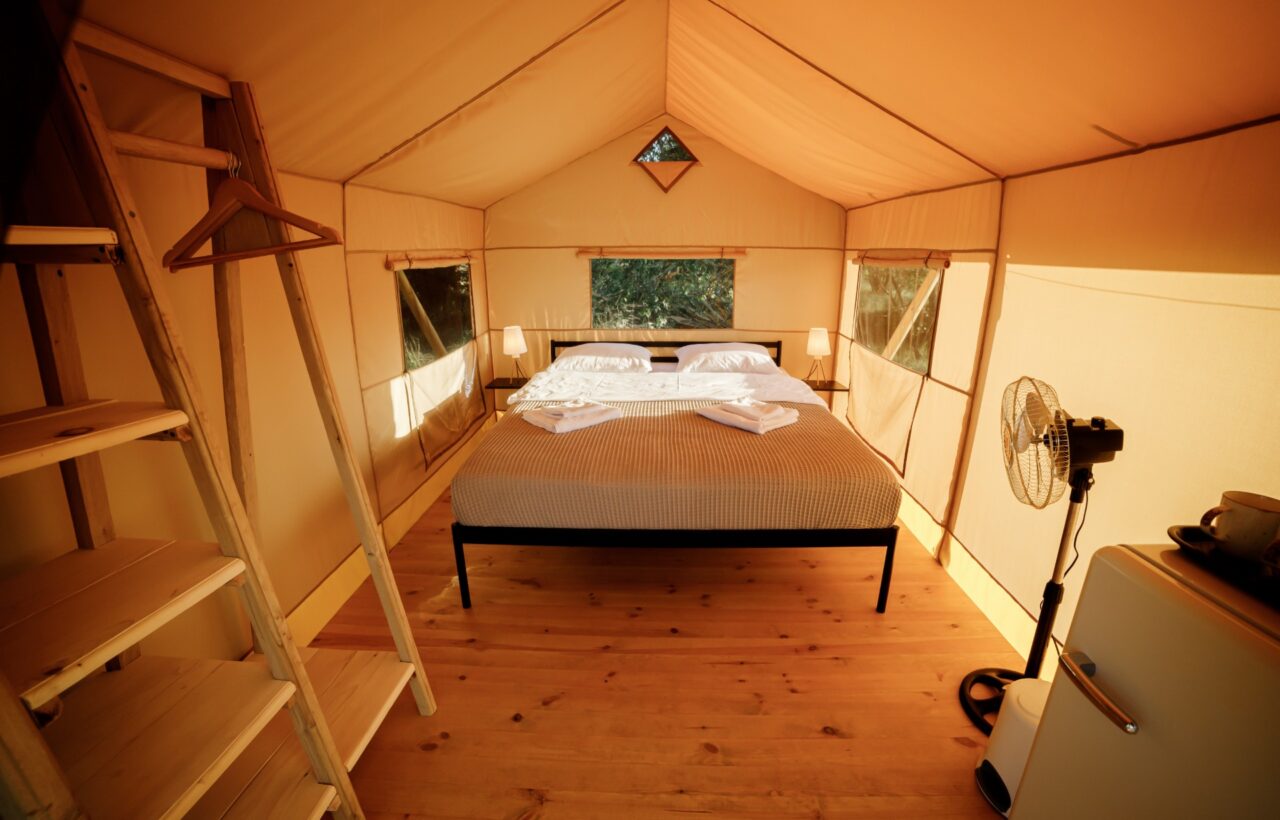
Slide pads or cots against the long walls and leave a center aisle. In a shared tent, sleep head-to-toe so a midnight bathroom trip does not require climbing over someone’s face.
Leave a few inches between bedding and tent fabric. Gear pressed against the wall blocks airflow and turns condensation into a wet sleeping bag.
Car camping: cots work if ceiling height allows standing or sitting. Small tents: a pad plus quilt uses less floor than a thick air mattress that barely fits.
2. Give the Floor a Soft, Dry Layer
Cold and grit come through the floor first. A lightweight rug, outdoor mat, or interlocking foam tiles change how the tent feels the moment you crawl in.
What the floor layer should do:
- Protect the tent floor from grit
- Keep bare feet off cold or damp fabric
- Catch dirt before it reaches bedding
- Shake out easily at pack-up
Avoid thick household carpets that hold water. In humid weather, a washable outdoor rug or closed-cell foam is easier to dry. A footprint under the tent still matters; the inside layer is for comfort, not waterproofing.
3. Build Sleep Comfort in Layers, Not One Giant Mattress
Comfort inside a tent comes from insulation under you more than from a pile of blankets on top. Ground contact steals heat quickly.
A practical stack:
- Tent floor
- Closed-cell foam or rug in high-traffic spots
- Insulated sleeping pad
- Sleeping bag or quilt rated for the night’s low
- Real pillow or a stuff-sack pillow
Air mattresses feel great for car camping, then leak, sag, and take forever to dry. If you use one, add a foam topper and keep a patch kit in the nightstand bin.
Cots help older knees and keep bedding off cold ground, but they steal standing room and can make a small tent feel packed.
4. Turn the Vestibule Into a Mudroom
The cleanest tents have a rule: shoes and wet shells do not enter the sleeping space.
Use the vestibule or the first 12 inches inside the door as a mudroom:
- Small mat for wiping feet
- Shallow bin or tray for shoes, soles down
- Hook or clip for dripping rain jackets
- Pack or dry bag parked off the sleeping pad
If there is no vestibule, keep one “dirty corner” on a waterproof stuff sack. Do not scatter boots along both walls. That is how people trip and how wet dirt migrates into bags.
5. Hang Storage From Poles and Loops, Not Fabric
Vertical storage is the highest-value inside tent idea, but hanging the wrong way wrecks tents.
Attach organizers to:
- Factory gear loops
- Tent poles with padded straps or pole hooks
- Ceiling loops designed for a lantern or loft
Do not clip heavy loads to mesh, taped seams, or thin canopy fabric. Point pressure stretches coatings and can tear stitching.
A hanging shoe organizer or mesh shower caddy near the door holds headlamps, sunscreen, bug spray, snacks that are allowed inside, and charging cables. Keep the heaviest items low.
Backpacking tents can only take a pound or two overhead. Car-camping canvas tents can take more, but still distribute weight.
6. Add a Gear Loft Instead of a Floor Pile
A gear loft is a mesh shelf that clips into the ceiling. It uses dead air above your head.
Good loft items: hats, gloves, a book, glasses case, spare socks, a light lantern. Bad loft items: water bottles, hard-sided boxes, anything that can fall on a face.
If your tent has no loft attachment points, a short piece of paracord between two loops can hold a lightweight mesh bag. Keep it off the door zipper so it does not snag.
7. Use a Bin as a Nightstand
A lidded plastic bin or a packing cube stack beats a pile of pockets on the floor.
Put one bin beside each sleeper, or one shared bin at the head of the pads. That bin becomes the nightstand:
- Headlamp
- Phone and battery pack
- Medication
- Earplugs and eye mask
- Next-morning layer
When you pack up, the same bin goes back in the car. Label the lid if several people share the tent. Soft packing cubes work in smaller shelters where a rigid tote will not fit.
8. Light the Tent in Three Layers
One bright lantern in the center creates glare and deep shadows. Better lighting is layered.
- Overhead: a lightweight LED lantern on the center loop for setup and packing
- Task: a headlamp or clip light at the nightstand
- Low night light: warm string lights or a lantern on the dimmest setting
Use battery or USB LEDs only. Fuel lanterns and open flames do not belong inside a nylon or polyester tent. Hang lights from poles, loops, or magnetic clips. Warm white is easier on tired eyes than cool white or flashing color modes.
String lights look nice draped along poles. Do not tape them to fabric or overload a ceiling loop with a heavy battery pack.
9. Keep Air Moving on Purpose
Condensation is not a leak. Warm, moist air from breathing hits cold fabric and turns into droplets. Sealing the tent “to stay warm” often leaves bags damper by morning.
Inside-tent airflow ideas that help:
- Open high vents and a low window when weather allows
- Clip a small rechargeable fan to a pole to mix air
- Keep gear off mesh panels
- Store wet clothes outside the sleeping area
- Tension the rainfly so it does not touch the inner tent
A fan also helps on hot nights. Point it across the space, not only at one face. In bear country or heavy rain, you may need to compromise: crack vents rather than leave doors wide open.
10. Make a Soft Privacy Wall in Family Tents
Cabin tents and multi-room tents feel chaotic when everyone changes clothes in the same open box.
A lightweight sheet, scarf, or camping curtain on paracord between poles creates a changing stall or splits adult and kid sleep areas. Tension rods work in boxy cabin tents. Do not block vents or emergency exits.
This is one of the few “decorating” ideas that solves a real problem. Kids sleep better when the room is darker and quieter on their side. Adults get a place to change without announcing it to the whole campsite.
11. Separate Clean Clothes From Dirty Ones
Clothes explode across a tent by day two unless they have a home.
Use two systems:
- Packing cubes or stuff sacks by person, or by day
- One mesh laundry bag hung from a pole for worn clothes
The dirty bag should not sit on a sleeping pad. Hang it or park it in the vestibule. Damp hiking socks inside a closed cube will smell through everything else.
A short interior clothesline between loops is useful after a swim or rain, but only for a few items. A full wet laundry load inside the tent raises humidity.
12. Give Kids a Reachable Pocket Wall
Family camping interiors fall apart when kids cannot find a headlamp or drop crumbs into bedding.
Hang a low organizer at kid height with only the items they may touch: stuffed animal, book, headlamp, water bottle, extra socks. Keep knives, stoves, medications, and scented toiletries out of that row.
A small battery lantern on a dim setting reduces “I’m scared” wake-ups better than a bright overhead light. Skip real candles, incense, and oil diffusers inside a tent. Scent and flame both create problems.
13. Keep Food, Trash, and Strong Scents Out of the Sleeping Space
This is the idea many cozy-tent articles skip.
Food, toothpaste, flavored drinks, trash, and greasy cookware attract animals. Rules vary by park and region, but the inside of a tent is almost never the right place for a snack stash.
Better habit:
- Eat outside or under a dining tarp
- Store food as local rules require
- Hang or seal trash away from the tent
- Keep a tiny bag for wrappers and empty it before bed
If you need a midnight snack for medical reasons, use a sealed container and follow the land manager’s rules. Do not treat hanging organizers as a pantry.
14. Pack a Two-Minute Cleanup Kit
A tent stays comfortable when dirt leaves daily instead of grinding into the floor.
Keep a small kit by the door:
- Handheld broom and dustpan
- Extra trash bag
- Microfiber cloth
- Tent-safe repair tape
- Spare guyline or a few clips
Sweep before shoes come back in for the night. Shake pads and bags if grit got in. Open doors in the morning so moisture can leave before you pack a wet tent.
That kit is less photogenic than pillows and string lights. It is the reason the other 13 ideas still work on day four.
Ideas That Look Good and Still Cause Problems
Skip or limit these unless the tent is large and the weather is easy:
- Household candles and fuel lanterns inside. Fire and carbon monoxide risk.
- Cooking in the sleeping compartment. Steam, smell, and spill risk.
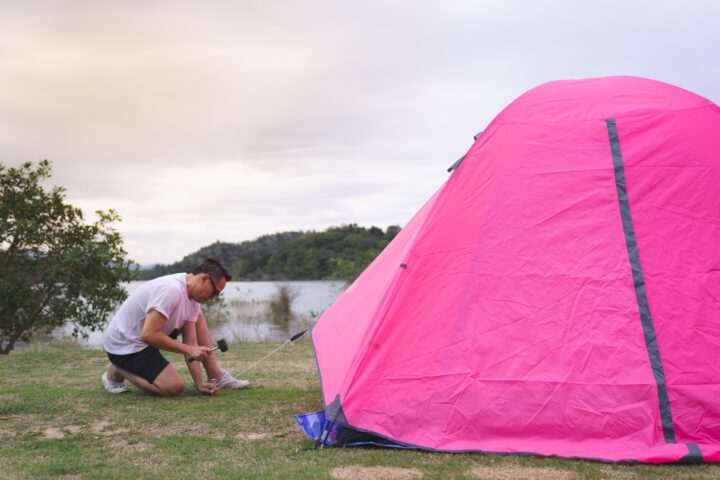
- Heavy furniture in a backpacking tent. Poles and fabric are not furniture frames.
- Too many rugs and tapestries. They trap moisture and add pack volume.
- Gear stacked against walls. Condensation transfers onto clothes and bags.
- Decorative plants, incense, or strong oils. Extra scent in bear or rodent country is a bad trade.
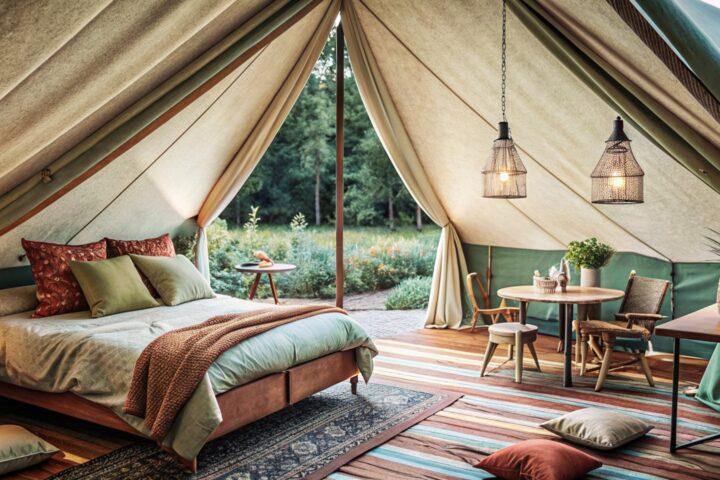
Glamping photos often show a full bedroom set inside a canvas bell tent. That can work at a drive-up site with a huge shelter. It is the wrong model for a weekend dome tent.
How Many Ideas You Actually Need
You do not need all 14 on every trip.
| Trip type | Worth bringing | Usually skip |
|---|---|---|
| Backpacking | Pad layers, headlamp, one stuff-sack nightstand, vents open | Rug, cot, string lights, furniture, big bins |
| Car camping couple | Rug, hanging organizer, layered lights, bin nightstand | Full living-room setup |
| Family cabin tent | Zones, privacy curtain, kid pocket wall, shoe bin, broom | Open-flame decor, food inside |
| Hot weather | Fan, vents, light bedding, shade-aware pitch | Extra blankets and sealed windows |
| Cold weather | Insulated pad, dry layers, controlled ventilation | Wet gear inside, sealed tent, unvented heater |
A cheap hanging organizer and a door mat improve more trips than a new set of pillows.
When the Tent Floor Becomes Storage
Filling every square foot. Empty floor is not wasted space. It is how you dress and leave in the dark.
Treating condensation as a defective tent. If droplets cover large areas of fabric after a cold night, ventilate and keep wet gear out before you recaulk seams.
Using the tent as a closet and kitchen. Sleep quality drops as soon as the floor becomes storage.
Hanging weight from mesh. Mesh rips. Poles and factory loops are the structure.
Bringing the whole house. Every extra object becomes something to trip on, dry, and pack.
Frequently Asked Questions
What should go inside a tent and what should stay out?
Inside: sleep system, dry clothes, lights, personal items, and a small organization kit. Outside or in the vestibule: shoes, wet shells, cooking gear, food, and trash, unless local rules and conditions say otherwise.
How do I decorate a tent without damaging it?
Use existing loops, poles, carabiners, pole hooks, and lightweight clips. Avoid tape on coated fabric, nails, and heavy adhesive hooks on thin nylon. If fabric wrinkles hard around an attachment point, the load is too heavy.
Are string lights safe inside a tent?
Low-heat battery or USB LED lights are commonly used and much safer than fuel lanterns. Keep battery packs off sleeping bags, do not pinch cords in zippers, and take lights down before packing so they do not tear fabric.
How can I make a small tent feel less cramped?
Use the walls for sleep, hang small items, keep one clear path, and leave bulky extras in the car. A 2-person tent is already tight with two pads. Adding a table, two chairs, and four bins will not feel cozy. It will feel stuck.
Do I need a rug inside the tent?
No. It helps most in car-camping tents where you stand and change clothes. In a tight backpacking shelter, a small sit pad or the existing sleeping pad is enough.
A good interior is not a Pinterest tent. It is a shelter where you can find a headlamp, keep the floor dry, and sleep without climbing a pile of gear. Start with zones, then add only the ideas that protect those zones.