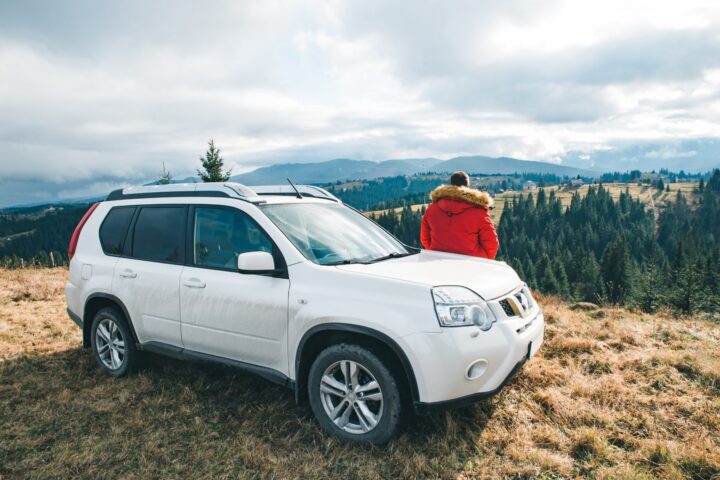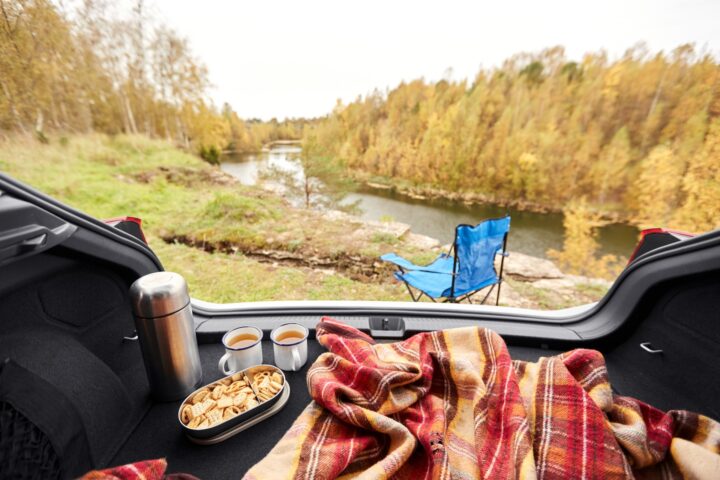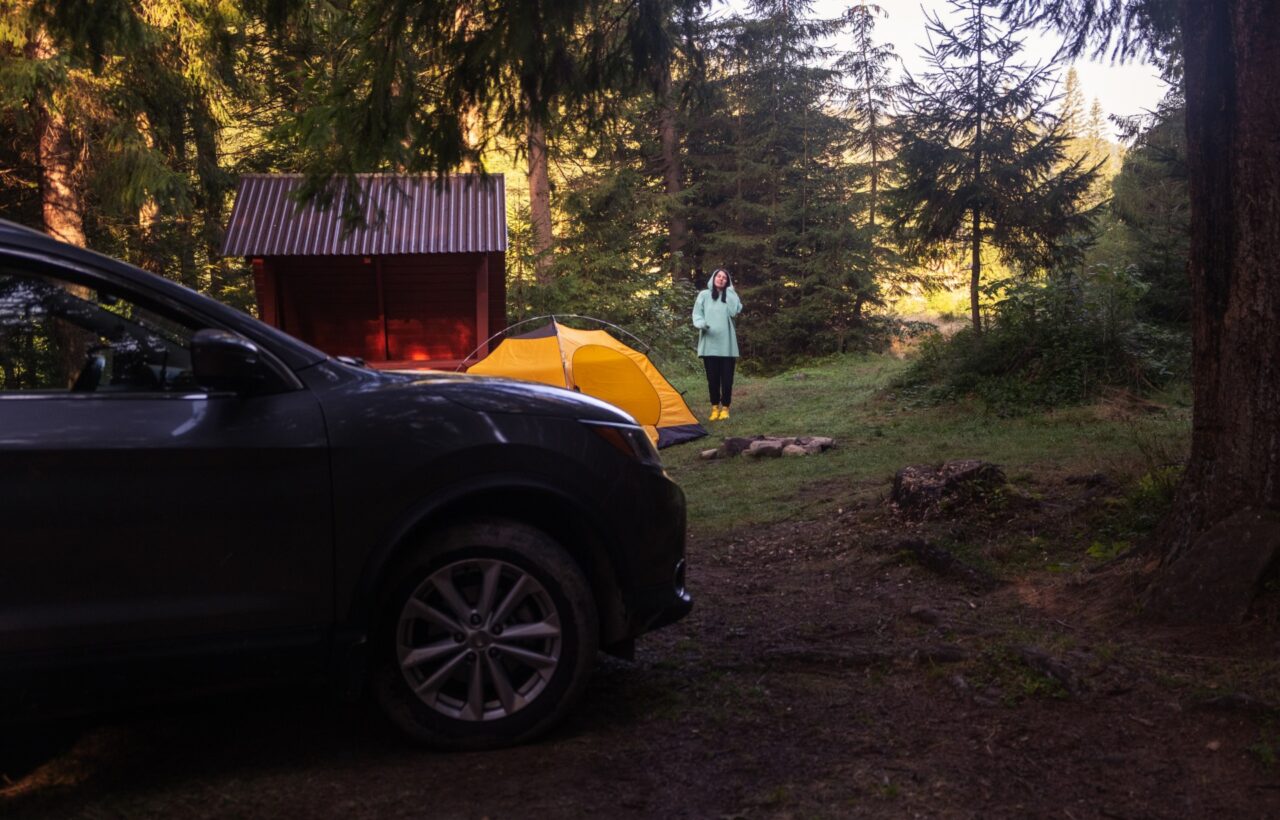

Before buying any gear for small car camping, fold the rear seats down, slide the front seats forward and measure the flat length and width you actually have. Those numbers decide which mattress fits, how much room is left for storage and where gap fillers will be needed.
The 13 ideas that follow build on that measurement to turn limited cargo space into a usable bedroom, kitchen and storage system. None of them require permanent modifications, so the car goes back to normal when the trip ends.
1. Fold the Seats and Drop in a Crib Mattress
Measure the flat area first. Most compact cars give you 65 to 72 inches once the rear seats go down and the front seats slide forward. A standard crib mattress runs about 28 by 52 inches and costs around $40 at most big-box stores. Slide it in, then fill any remaining length with a folded yoga mat or extra foam. The result is a firm, continuous surface that does not sag like a cheap air mattress. The mattress rolls up and stores in the trunk when you need the seats for passengers.
2. Bridge Every Gap with Soft Fillers
Even the best fold leaves a dip between the seat backs and the trunk floor. Stuff that space with rolled jackets, a duffel of clothes, or a couple of firm seat cushions. The goal is zero pressure points under the hips or shoulders. A gap of just two inches can leave you with a stiff back, and filling it takes two minutes. Soft fillers also serve double duty as extra insulation on cold nights.
Place heavier duffels low in the gap first, then top with jackets to prevent shifting during sleep in small cars.
3. Move the Bins to the Front Seats at Night
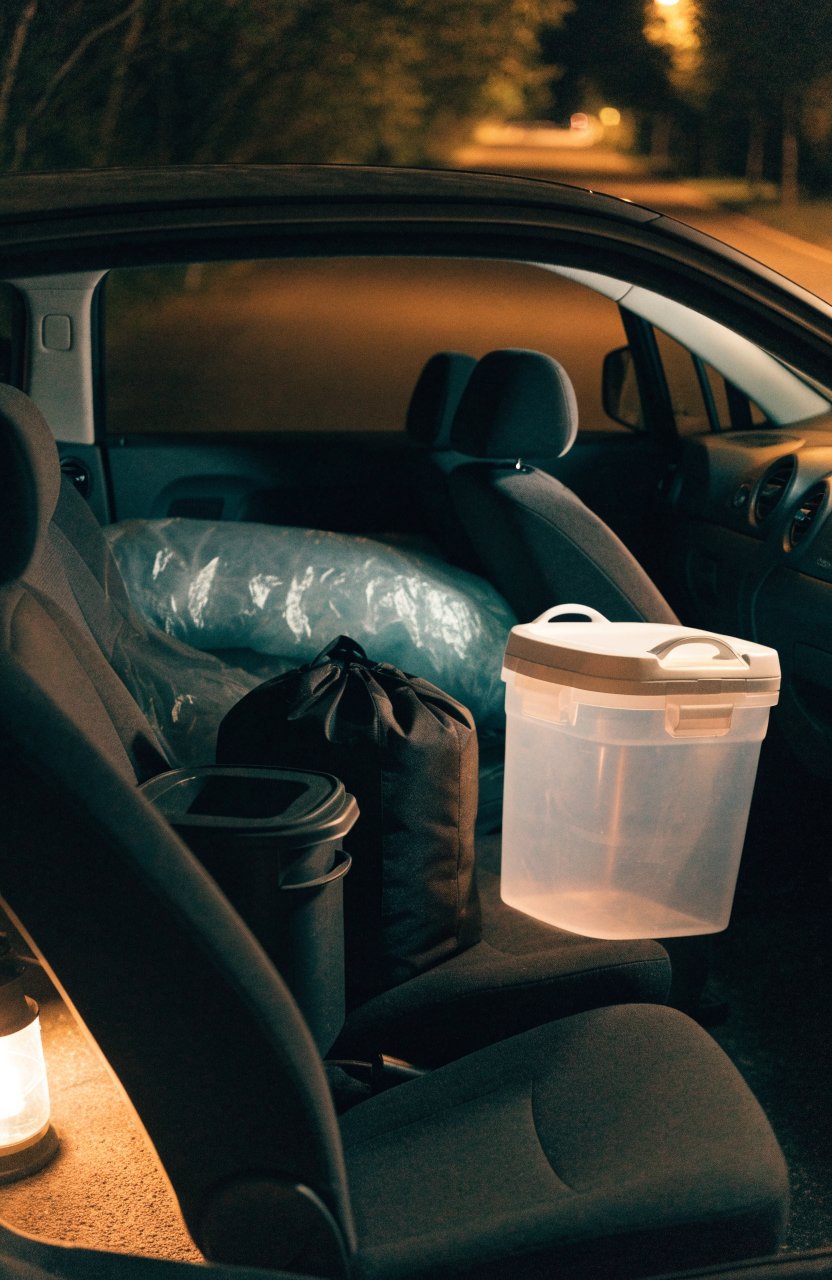
In a small car the cargo area has to be both the storage room and the bedroom. Make it a nightly routine: once dinner is done, slide the food bin, the main duffel and the cooler onto the front seats. The whole floor is free for sleeping, and in the morning everything goes back in the same order.
4. Pack Soft Duffels Instead of Hard Bins
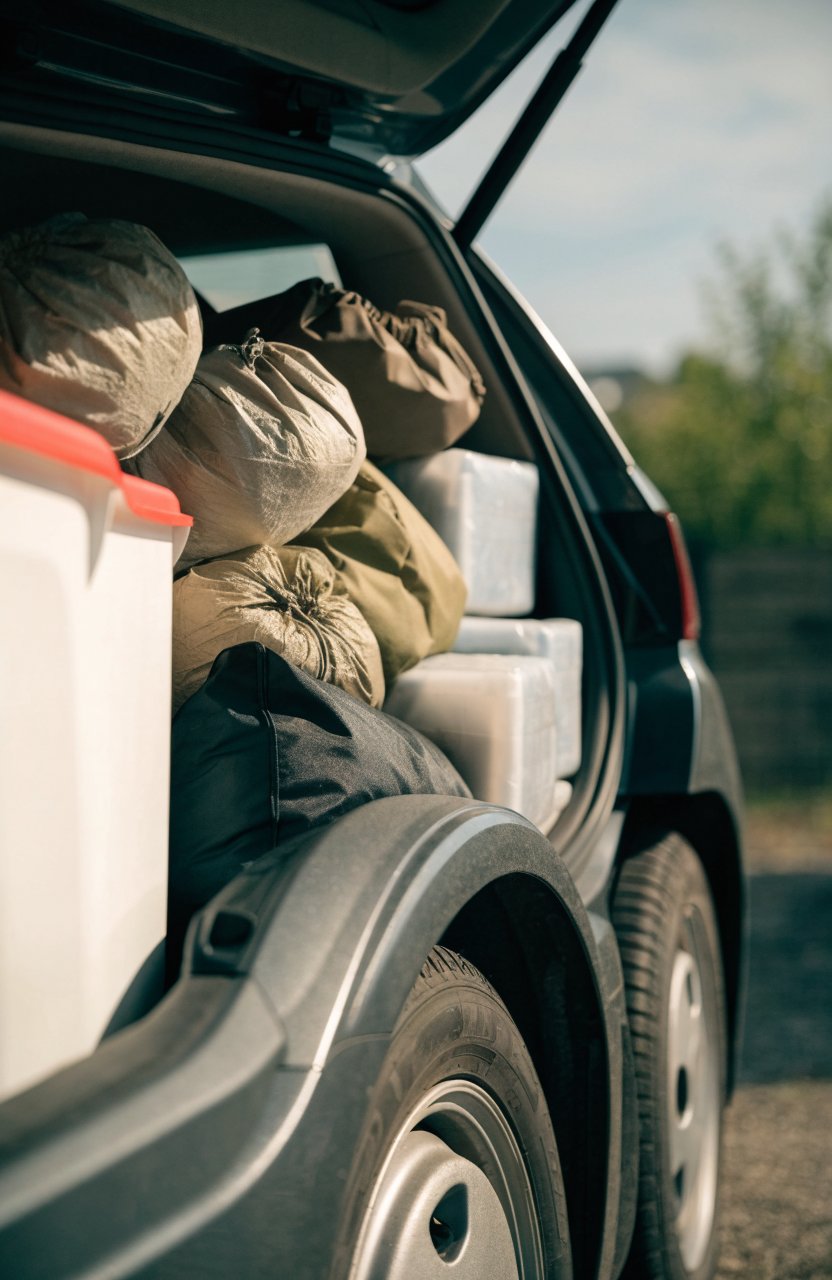
Hard bins waste space in a small car, because cargo areas are full of curves, wheel wells and slanted seat backs. Soft duffels and packing cubes squash into those odd shapes and fold flat when empty. Save one hard bin for the kitchen, where the rigid lid doubles as a prep surface.
5. Add Rain Guards So the Windows Can Stay Cracked
Condensation builds fast in a closed small car, and the fix is a window cracked about an inch on each side. Rain guards, also called window visors, are what make that possible on wet nights: they shed rain away from the gap so the windows can stay open through a shower. Most fit into the window channel of a specific model, so order the set made for your car.
6. Switch to a One-Burner Stove and Nesting Cook Kit
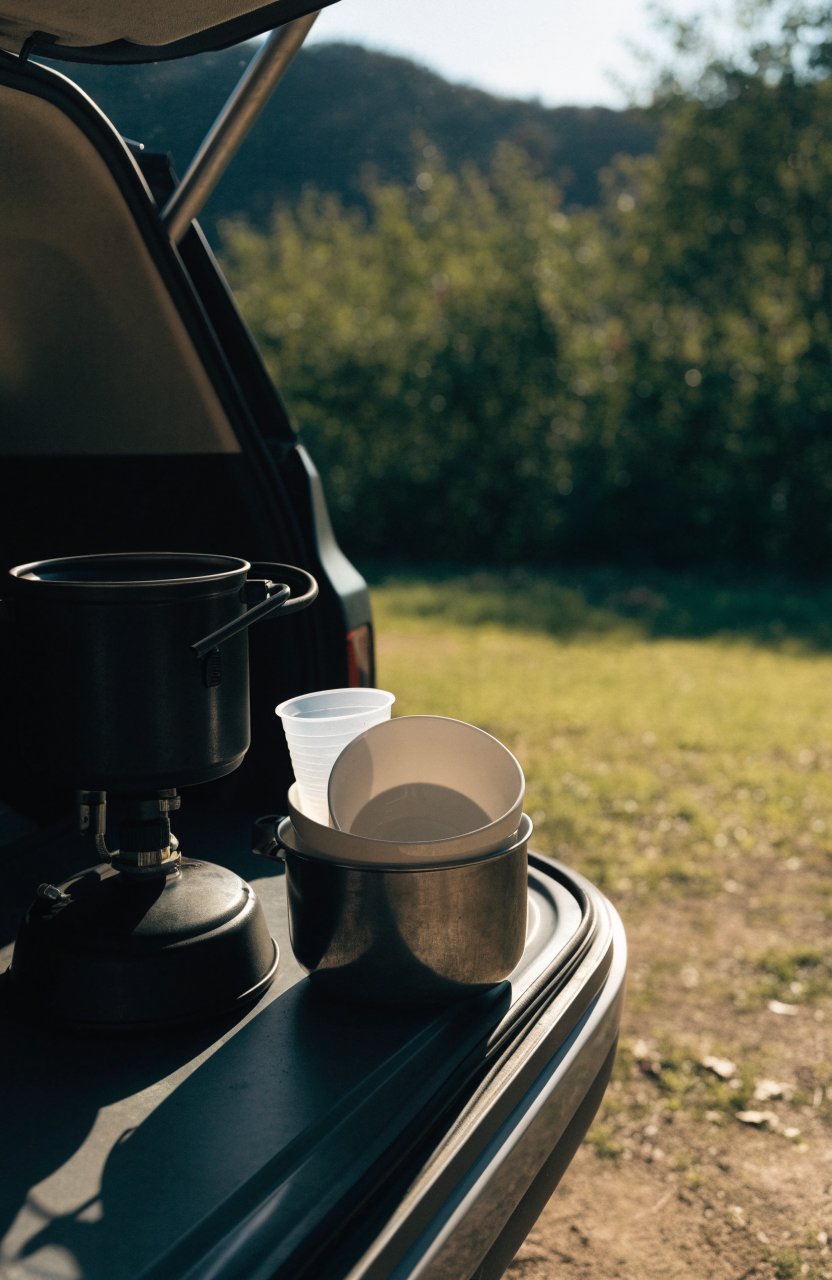
A two-burner stove takes up a big share of a small trunk. A single-burner stove plus a nesting pot set, where the cups, bowls and lid all fit inside the pot, cooks most camp meals in a fraction of the space. Plan one-pot dinners and the smaller kitchen never feels like a compromise.
7. Carry Collapsible Water Containers
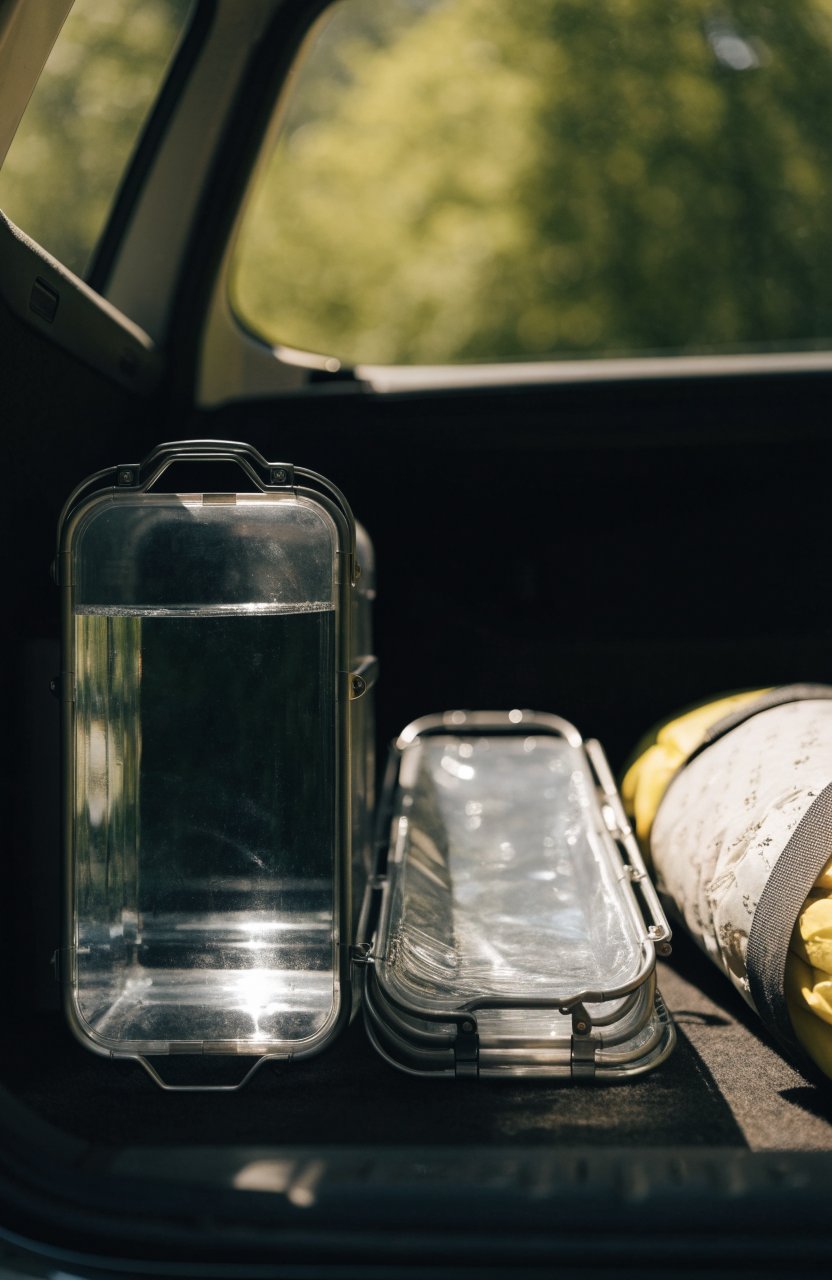
Rigid jugs take up the same space empty or full. Collapsible water containers fold down as you use them, and a pair of 2.5-gallon ones fits gaps a single large jug never could. Keep one for drinking and one for washing, and refill both whenever you pass a tap.
8. Use the Passenger Footwell as a Closet
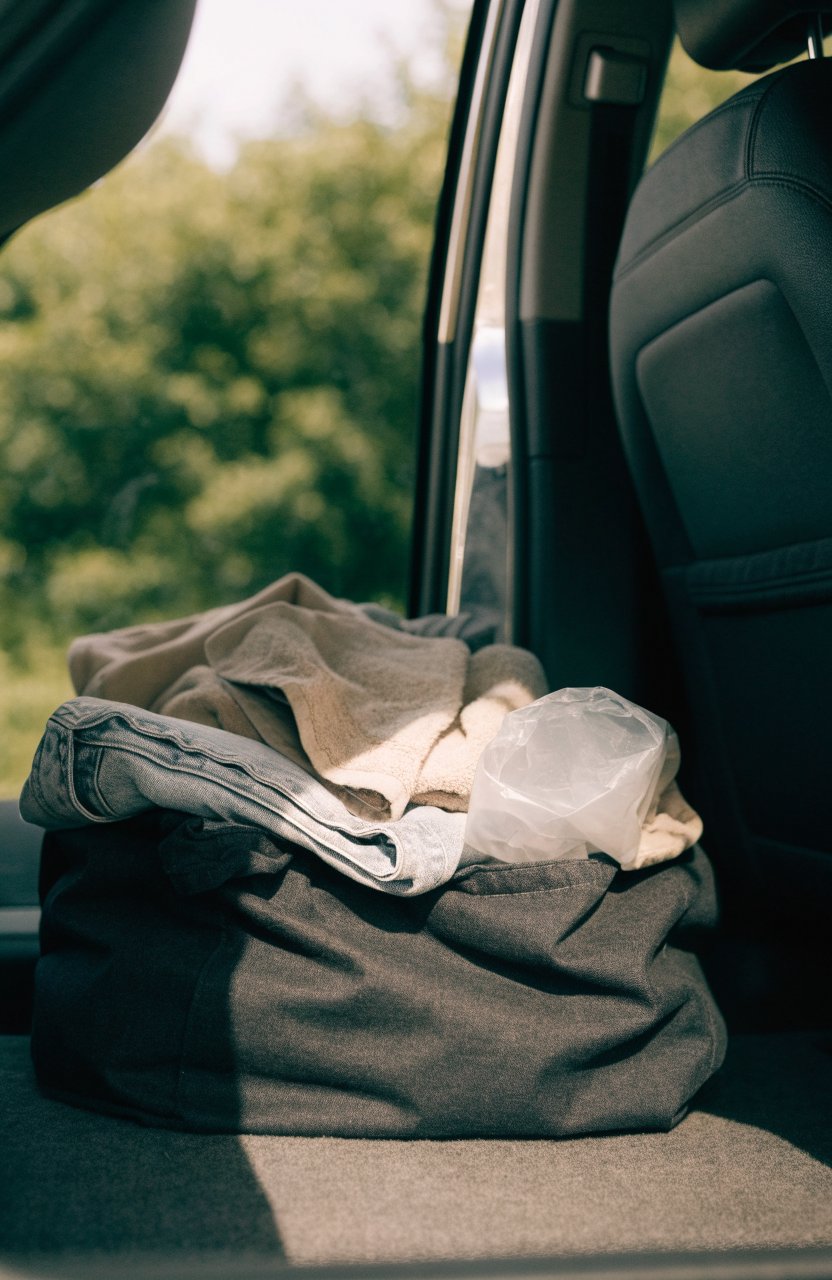
The front passenger footwell is the most overlooked storage in a small car. One small duffel there holds the day’s clothes, toiletries and a towel, so you never open the cargo area just to change socks. At night it stays where it is while the bigger gear moves onto the seats above it.
9. Keep Wet Gear Outside the Car
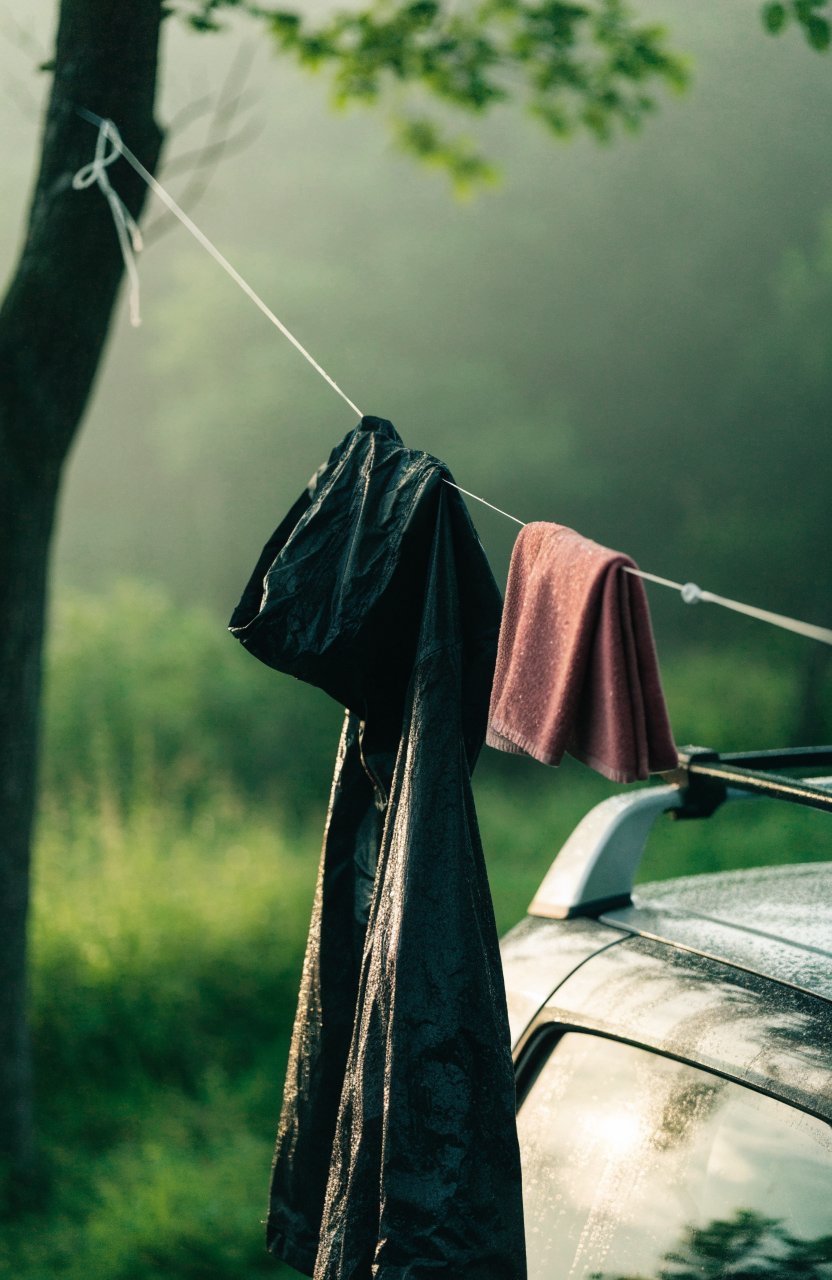
In a small car, one wet towel or rain jacket fogs every window by morning. Give damp gear a home outside the sleeping space: a dry bag strapped to the roof rails, a hook under the hatch tent, or a line tied to a tree. Only fully dry layers come inside for the night.
10. Choose Multi-Use Items Only
Every object has to earn its space. A yoga mat becomes a changing pad, picnic blanket, or extra insulation layer. A cooking pot doubles as a mixing bowl and a wash basin. A buff works as a hat, a neck warmer and an eye mask. Trimming single-purpose gadgets from the packing list in favor of multi-use pieces frees up noticeable room.
11. Add a Hitch Cargo Carrier for Bulky Gear
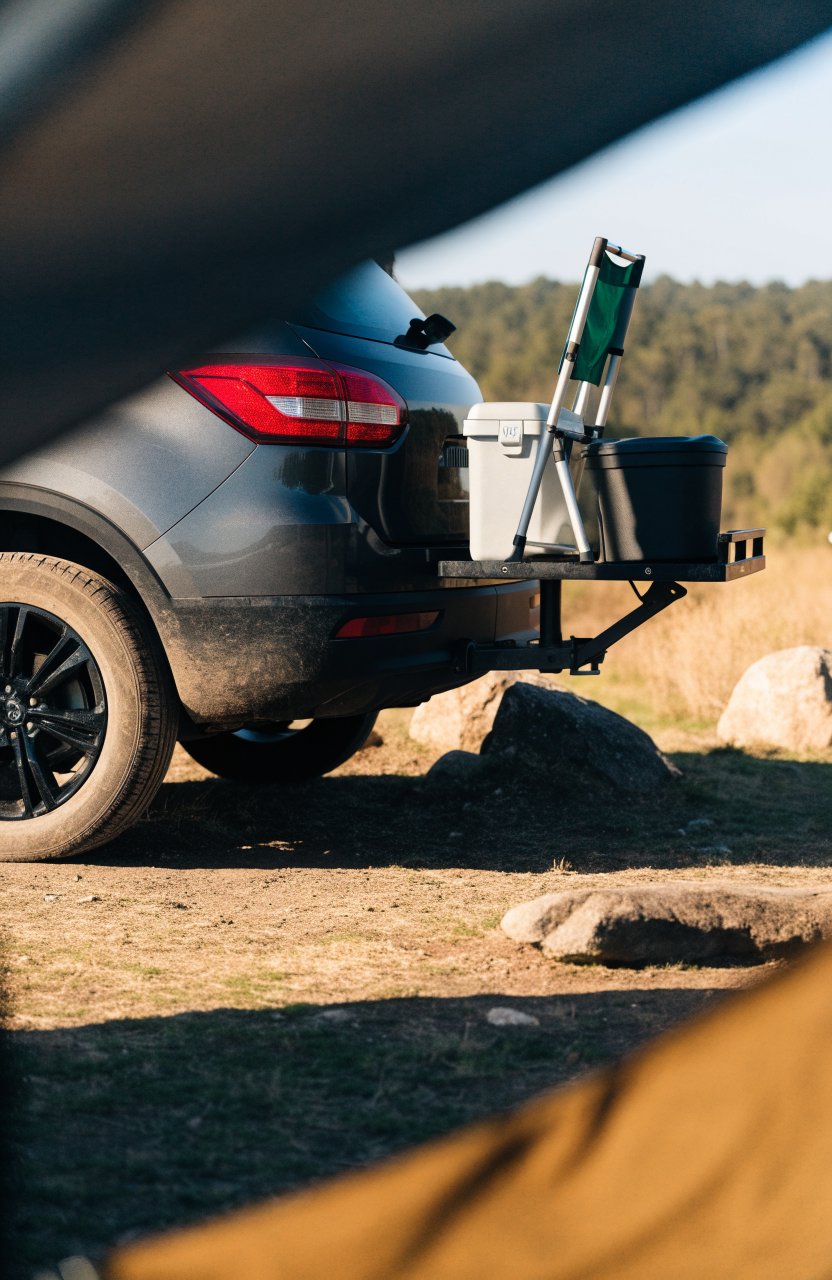
If your car has a hitch or can take one, a hitch-mounted cargo tray moves the bulkiest items out of the cabin entirely. The cooler, fuel, camp chair and muddy boots ride outside, which frees the cargo area for sleeping. Use a waterproof bag or a lidded bin on the tray, and check your car’s tongue weight limit before loading it.
12. Attach a Hatch Tent for Extra Living Space
A simple rear-hatch tent such as the Napier Sports Cove clips to the open hatch and creates a screened porch area. It costs around $150 and packs into a bag the size of a sleeping bag. On warm nights, leave the hatch open and sit under the tent to cook or read without mosquitoes. When rain hits you still have a dry zone for gear and wet shoes. The tent adds roughly 20 square feet of usable space without changing the car itself.
13. Layer Real Bedding for Actual Comfort
Skip the ultralight mummy bag most nights. A regular comforter, a real pillow from home, and a lightweight fleece blanket pack down smaller than expected once compressed. The extra warmth and familiar feel make the small space feel less like a car and more like a tiny bedroom. A proper pillow is one of the simplest sleep upgrades available.
These ideas work because they focus on the three things that matter most in a small car: a flat place to sleep, clear organization, and controlled temperature. Rotate them depending on the season and trip length. Solo weekend runs need fewer items. Two-person trips add the hatch tent and a second collapsible water container.
Air out comforter each morning to prevent condensation buildup inside small cars, especially after cold Sierra style nights.
Frequently Asked Questions
Can I really sleep comfortably in a sedan with these 13 small car camping ideas? Yes. The combination of a flat platform, gap fillers, and proper bedding turns even a compact sedan into a usable bed for one or two people on short trips.
How much does a basic small-car setup cost? You can start under $150 with a crib mattress, soft duffels, collapsible water containers and rain guards. Add a hitch carrier and hatch tent later if you want more room.
Do I need to modify my car permanently? No. Every idea on this list uses removable gear that leaves the vehicle stock when you finish the trip.
What is the hardest part of small car camping? Condensation and clutter. Rain guards and cracked windows handle the moisture. Moving the bins to the front seats each night keeps the clutter under control.
Is it safe to crack the windows at night? Yes, as long as the openings stay under two inches and mesh screens block insects. Rain guards let you keep airflow even in light weather.
A small car slips into tight trailhead lots that larger vehicles cannot reach, and fuel costs stay low. The 13 ideas above remove the usual excuses. Once the sleep surface is solid and the gear has a home, the small car stops feeling small. Grab the mattress, pack the duffels, and go. The first night will tell you everything you need to know.