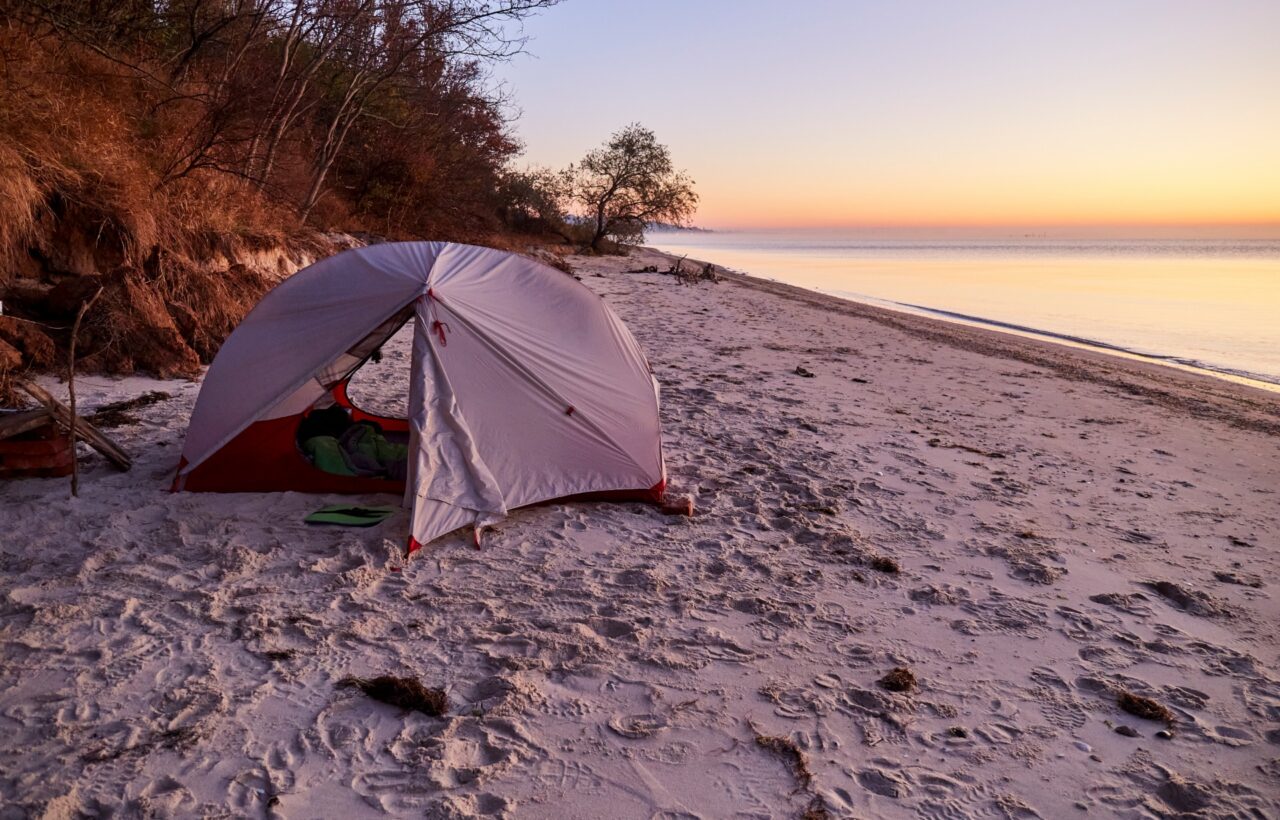
Sand, wind and tide make beach tent camping different from a grassy campground pitch in three ways: whether you may stay overnight at all, where the water will be in the middle of the night, and what holds the tent down. The tent itself can be an ordinary one.
Many beaches ban overnight tents, so the rules come first. A dry stretch of sand at noon can sit underwater at 3 a.m. once the high tide arrives, and standard stakes pull loose from sand in modest gusts. The focus here is choosing a site above the tide line, anchoring for sand and wind, and keeping sand out of the tent.
Daytime beach tents and overnight beach camping are different problems
A beach tent is usually a lightweight pop-up shade with sandbag pockets or short poles, meant for a few hours of sun protection. Overnight beach tent camping means sleeping in a camping tent on or beside the sand, often with no facilities and with wind, tide, and salt air acting on the shelter all night.
Those uses follow different rules. Many towns allow small shade canopies during the day and ban anything left unattended after sunset. Cape Hatteras National Seashore, for example, does not allow unattended canopies, umbrellas, or tents between sunset and sunrise, and overnight camping on Outer Banks beaches is limited to designated campgrounds rather than open sand. Other national seashores do allow beach or backcountry camping with a permit. Padre Island National Seashore requires a camping permit for North and South Beach; the beach permit itself is free, while developed sites such as Malaquite Campground are fee sites.
Treat a product labeled “beach tent” as shade unless the manufacturer rates it for overnight wind and rain. Pop-ups catch a lot of air. In a rising breeze they become airborne hazards if the bags are light or the stakes are short.
Confirm that camping is allowed before you pack
Open beach access almost never includes permission to sleep there. City and state beaches commonly prohibit overnight tents. Federal coastal parks vary: some allow designated beach or backcountry camping, others restrict stays to campgrounds behind the dunes or ban beach camping outright. On Assateague Island, oceanside backcountry use is limited to posted areas, and camping on the beach or dunes is prohibited in the park’s published rules.
Before the trip, check the land manager—not a general camping map—for four things:
- Whether overnight tents are allowed, and only in designated zones
- Permit or reservation rules, stay limits, and group-size caps
- Bans on digging, collecting driftwood, fires, glass, or leaving gear unattended
- Seasonal closures for nesting birds or sea turtles
Fines and removal of gear are common where shade structures are left overnight. Wildlife closures can shut an otherwise legal site with little notice.
Pick a site that stays above the water and out of the dunes
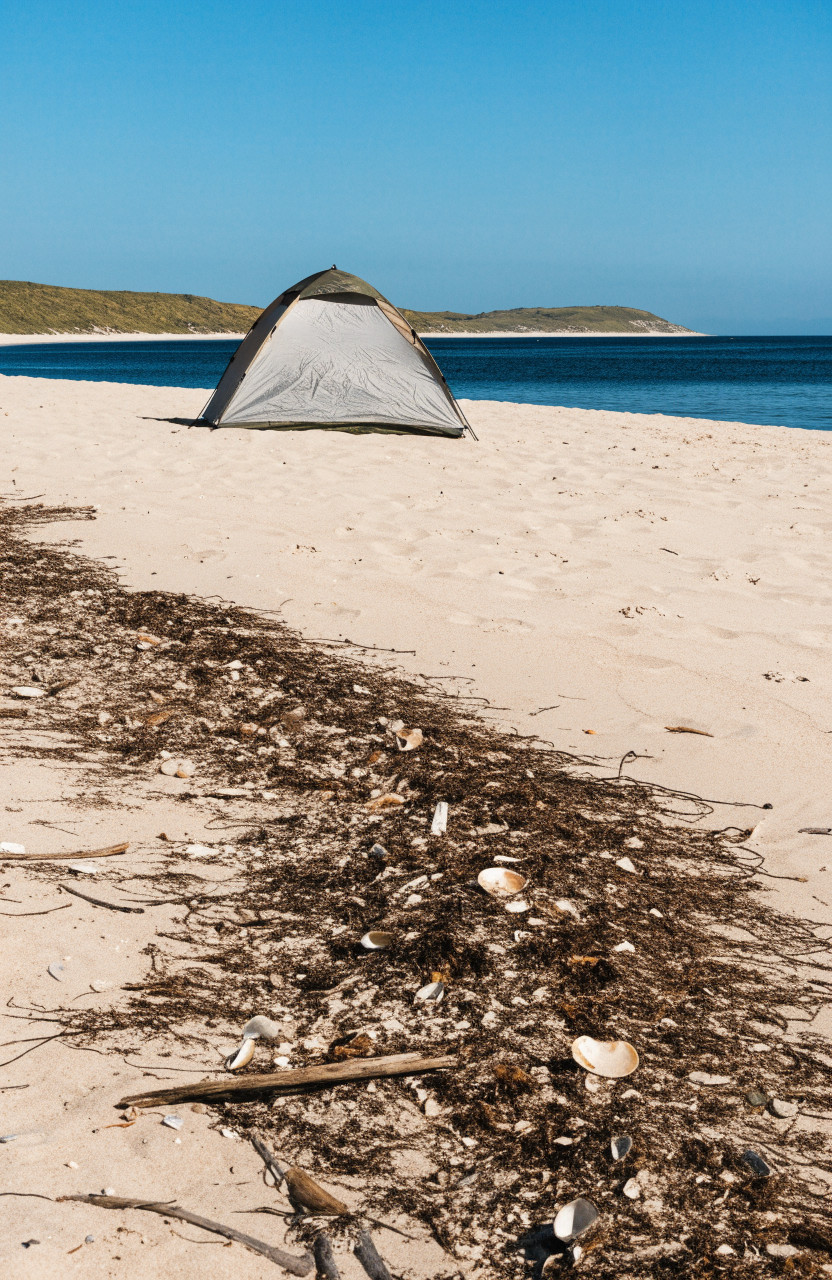
The wrack line—the band of dried seaweed, shells, and driftwood—is the visible mark of a recent high tide. Pitch well above it, on the highest firm sand you can use legally. Spring tides around full and new moons run higher than average, and onshore wind or large surf can push water past the ordinary high-tide mark. Check a local tide table, such as NOAA Tides and Currents in the United States, for every night you plan to stay, not just the arrival afternoon.
Firmer, slightly damp sand holds anchors better than deep, dry powder. Avoid dune faces, beach grass, and posted restoration areas. Walking and pitching on dunes damages the plants that hold the sand and is often illegal. Also leave a clear path for lifeguard sightlines and emergency vehicles if you are on a managed swimming beach.
Point the tent’s narrowest, lowest end into the prevailing wind, and face the door away from the wind if the design allows. A broad wall or an open vestibule pointed into the breeze acts like a sail. Afternoon sea breezes often strengthen, then ease; do not judge the night by a calm morning.
Sand that looks dry at noon can still sit below the wrack line, so pitch above it. On a second night, check the tide again, because the high tide arrives later and comes in higher than it did the first night.
Anchor for sand, then pull-test every point
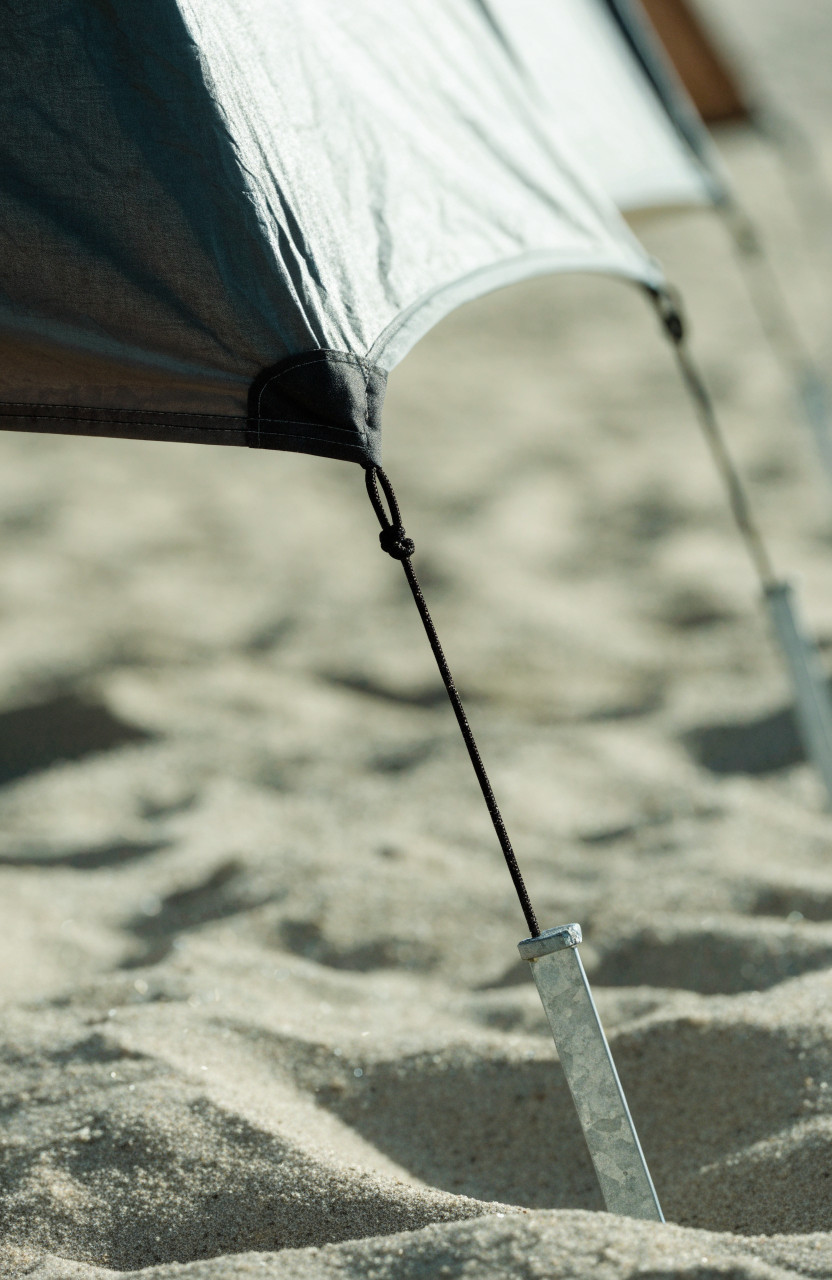
Ordinary thin stakes work because soil locks around the shaft. Dry sand grains slide. A stake that feels firm when you push it in can release on the first real gust. Use every structural stake loop and guy-out the tent has.
Useful options, from simplest to strongest in loose sand:
- Wide or spiral sand stakes, about 12 inches or longer. Drive them at roughly 45 degrees, angled away from the tent, so the pull is across the stake rather than straight up its shaft. Spiral or screw anchors grip by turning into the sand.
- Sandbag anchors. Fill built-in corner pockets or separate bags until they are heavy and firm. Dry sand shifts inside a bag; damp sand packs better. Burying the bags increases hold, but only where digging is allowed.
- Deadman anchors. Dig a trench on the order of 10–12 inches deep, tie the guyline around the middle of a stick, spare stake, or flat rock, lay that anchor across the direction of pull, bury it, and tamp the sand. The buried object has to drag a mass of sand with it, which is why this beats a short peg in powder.
Compact the sand around each anchor and pull hard on the guyline before you trust it. If the anchor creeps, add burial depth, a second anchor, or a heavier bag. Leave the beach and use a sturdy building or vehicle if the forecast calls for high wind, thunderstorms, or lightning. No stake system makes a tent a safe shelter in severe coastal weather.
Saturated sand also loses grip. An anchor that held at low tide can fail if rising water reaches it, which is another reason to stay well above the high-tide line.
If the tent starts to lift, lower the profile if the design allows, add buried weight on the windward side, and loosen nothing until the new anchors are set. Chasing a loose canopy across a windy beach is how poles bend and bystanders get hit.
Choose a tent and a short list of beach-specific gear
A freestanding tent is easier on soft ground because it can stand while you work on anchors. Low dome shapes generally handle wind better than tall cabin tents with large flat walls. Mesh panels help with humidity and let some sand shake out, but you still want a full rainfly: coastal nights can be wet from dew and salt spray even without rain.
A few items change the trip more than a premium tent:
- Sand stakes or screw anchors, plus extra guylines longer than the stock set
- A footprint or groundsheet to protect the floor from abrasion and damp sand
- A mat or towel used only as an entry zone
- Shade for daytime—the camping tent is a poor sun shelter once the fly is on
- More water than a wooded site would need; beach camping often has no tap
- A hard-sided cooler; ice disappears faster in full sun and reflected heat
Sand reflects ultraviolet light, so sunburn happens faster than the air temperature suggests. Salt air also corrodes zippers and pole ends. Rinse poles, zippers, and stakes with fresh water after the trip, and dry the tent fully before packing it for storage.
Keep sand and moisture at the door
Sand is the ongoing cost of beach tent camping. A groundsheet under the tent blocks dampness from below, but sand still enters on feet, clothes, and wind. Put a mat at the entrance, brush off before you crawl in, and store shoes in a bag in the vestibule rather than inside. Keep the door on the lee side when you can. A small brush is more useful than most people expect.
Do not strip the fly off to “air the tent” in a breeze. Wind-driven sand and salt spray will coat the inside. Food should stay in sealed containers; open bags become sand traps and attract animals. Secure trash so it cannot blow into the water.
If the site allows a fire, use only the approved method—often a metal ring or an elevated pan—and drown coals completely. Buried coals stay hot and burn bare feet later. Many beaches ban fires outright during nesting season.
Frequently asked questions
Can you use a normal camping tent on the beach?
Yes, if the beach allows overnight camping and you replace or supplement the stock stakes. The tent body is rarely the weak point. Anchoring and site choice are. A freestanding tent with a full fly and low profile is easier to manage than a tall cabin tent.
How far above the high-tide line should the tent be?
There is no single safe distance. The wrack line shows recent high water, not the highest water possible on your night. Check the tide table, add margin for surf and onshore wind, and use the highest legal firm sand rather than the closest flat patch to the water.
Do sandbags work as well as stakes?
Heavy, buried sandbags hold well in loose sand and are the system many daytime beach tents are built around. They are weaker if underfilled, left on the surface in dry sand, or used on a shelter with a large wind profile. Stakes or deadman anchors are more reliable for an overnight tent in steady wind, and combining weight with angled stakes is stronger than either alone.
Are beach fires part of beach tent camping?
Only where the land manager allows them, often by permit and only in approved containers or rings. Many swimming beaches and nesting areas ban open fires. Unattended or buried coals are a common injury and a common violation.
Beach tent camping is less about special equipment than about treating sand, tide, and local rules as the site conditions they are. Confirm the permit, pitch above the water that is actually coming, and anchor as if the wind will rise after dark—because on most coasts, it will.