
14 beach camping outfits work best when each one solves a beach problem first: sun, sand, wet fabric, and a cool night by the water. The right set lets you move from tent to shoreline without a full change, and it keeps more skin covered when light reflects off sand and water. That matters because beach camping adds problems that a normal day trip does not, including clothes that stay damp, sand that gets into shoes, and evenings that turn windy after a hot day. After reading this list, you will be able to pick an outfit for swimming, walking, cooking at camp, and sleeping, and pack fewer pieces that do more work.
What a Good Beach Camping Outfit Has to Do
A good beach camping outfit has to do three jobs at once: cover skin from sun, dry after getting wet, and stay comfortable in sand. Fast-drying coverage is the main rule, because a shirt that stays wet can chill you in wind and rub skin raw during a walk. Quick-dry fabric is fabric made to shed water and dry faster than cotton, so it is useful for swim tops, shorts, and camp shirts. Ultraviolet Protection Factor, or UPF, is a rating for how much ultraviolet light a fabric blocks, and a higher number means more protection from that piece of clothing.
Sand changes the choice too. Loose, open shoes let sand in and out, while closed shoes trap it. Light colors show less salt and sand than dark colors, and simple cuts with fewer pockets collect less grit. The best outfits below are built around those trade-offs, not around looking neat for a photo.
14 Beach Camping Outfits for Sand, Swimming, and Camp Nights
Use the list as a menu, not a packing order. Pick one outfit for the main activity of the day, then add a dry change and a warm layer for night.
| Situation | Best base | Coverage to add | Footwear |
|---|---|---|---|
| Hot midday at the shore | UPF swim top and board shorts | Wide-brim hat and sunglasses | Water shoes or sandals |
| Windy afternoon | Hooded sun shirt and shorts | Light wind layer | Closed camp shoes |
| Cool night at camp | Long-sleeve base layer and long pants | Fleece pullover | Slip-on shoes and socks |
| Sudden rain shower | Quick-dry tee and shorts | Light rain jacket | Waterproof sandals |
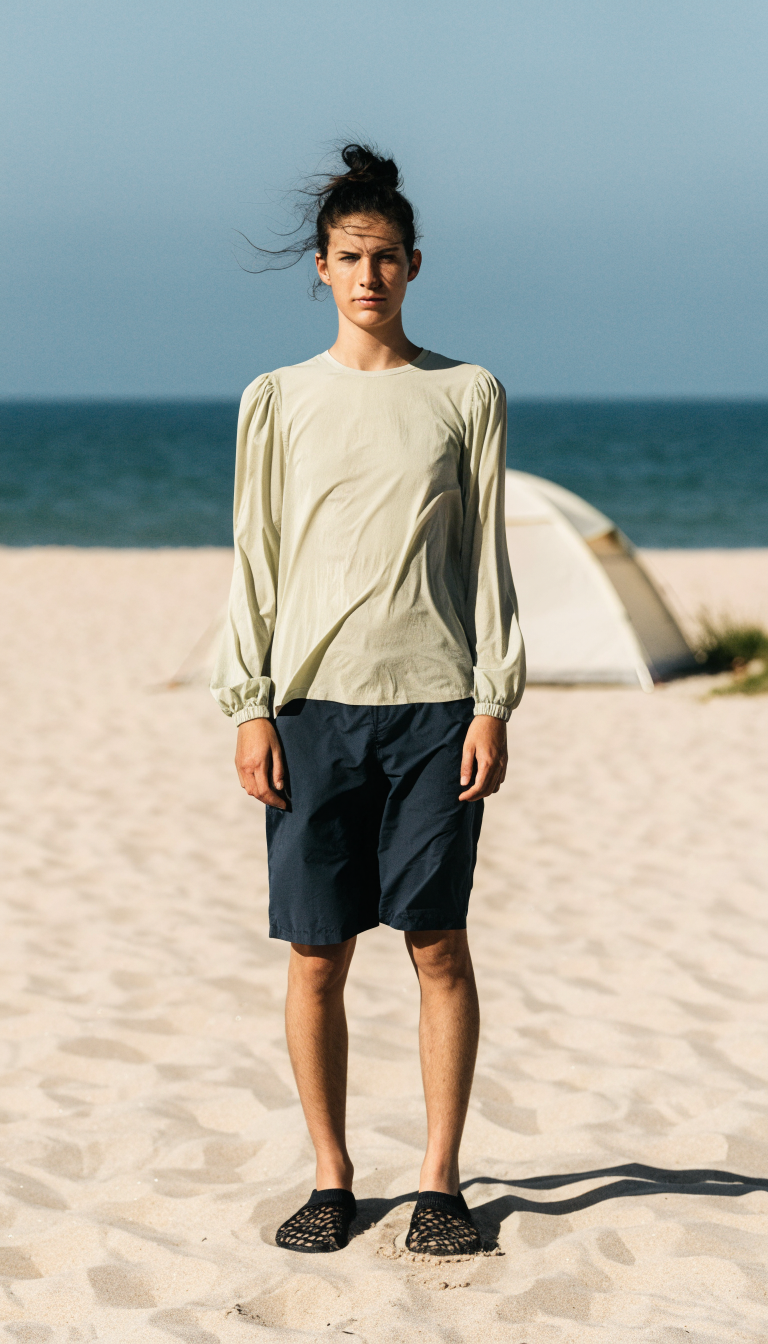
1. Long-Sleeve UPF Top, Board Shorts, and Water Shoes
This is the all-day base for most beach campers. The long sleeves cover arms without sunscreen reapplication on that skin, the board shorts dry after a swim, and water shoes protect feet from shells and hot sand. Choose it for days when you will move between swimming, walking, and sitting at camp.
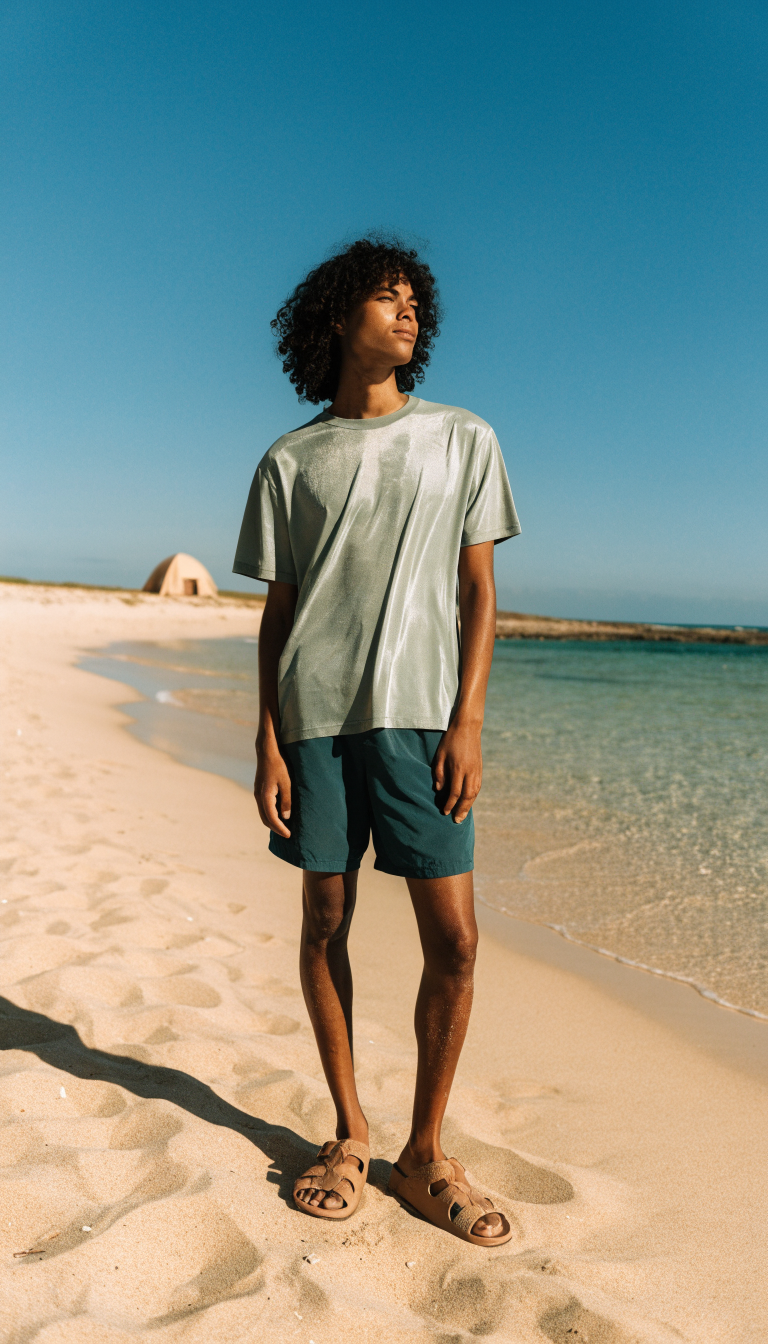
2. Quick-Dry Tee, Swim Shorts, and Sandals
This is the simple hot-morning set for calm water and short walks. The tee dries faster than a cotton shirt, and swim shorts work for both wading and camp chores. Add sunscreen to arms, neck, ears, and legs, because short sleeves leave more skin exposed.
3. Rash Guard and Swim Leggings
A rash guard is a close-fitting, long-sleeve swim top, and swim leggings are stretchy leggings made for water. Together they cover most of the body during long swims, snorkeling, or bodyboarding. Choose this set when you plan to stay in the water for a long stretch, since it reduces the skin you need to keep sunscreen on.
4. Swimsuit and Lightweight Cover-Up
A swimsuit with a sarong, dress, or loose cover-up is the easiest tent-to-water outfit. It lets you swim, then cover up for a walk to the camp store or a meal without changing into street clothes. Pick a cover-up that dries fast and does not drag in sand.
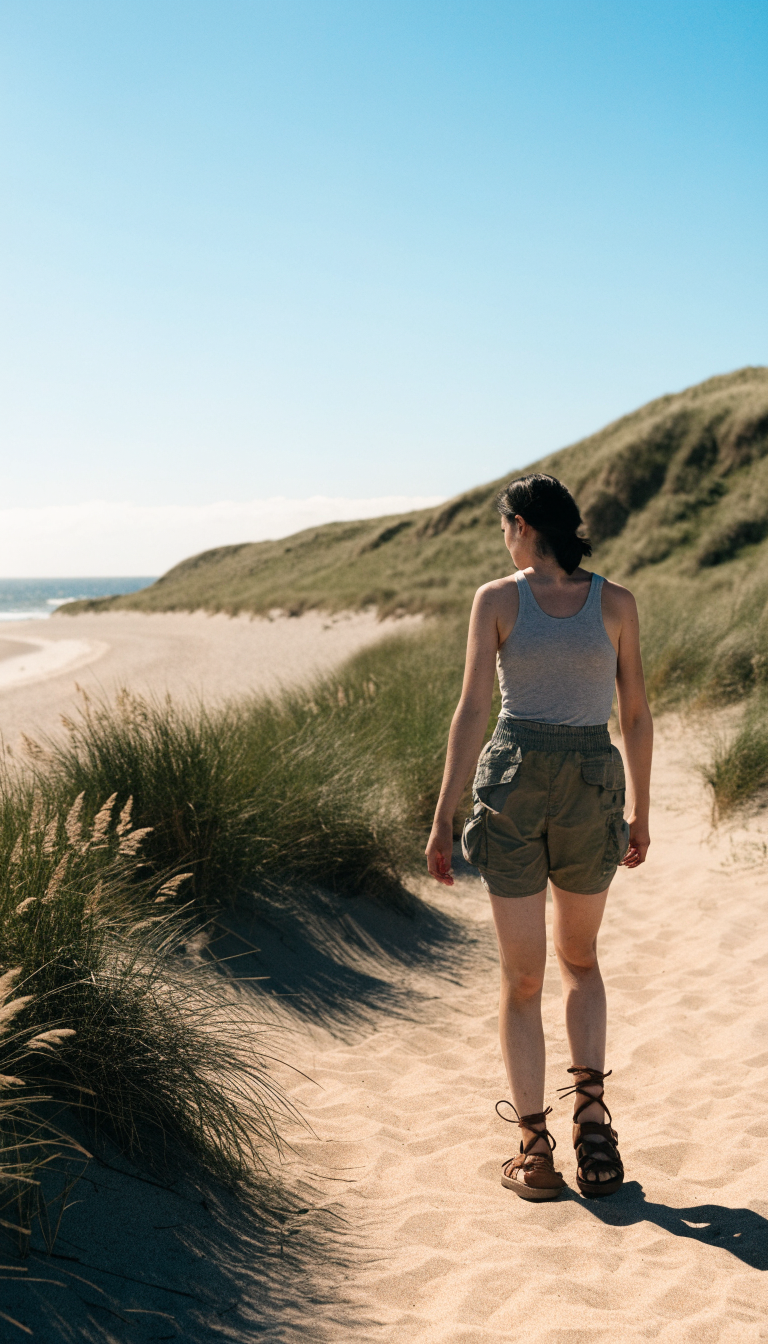
5. Tank Top, Quick-Dry Hiking Shorts, and Trail Sandals
This set suits a beach trail, a walk to a viewpoint, or setting up camp in sand. Hiking shorts usually have a stronger waistband and pockets than swim shorts, and trail sandals give more grip than flat flip-flops. Keep a sun shirt in your bag for the return walk, when the sun is higher.
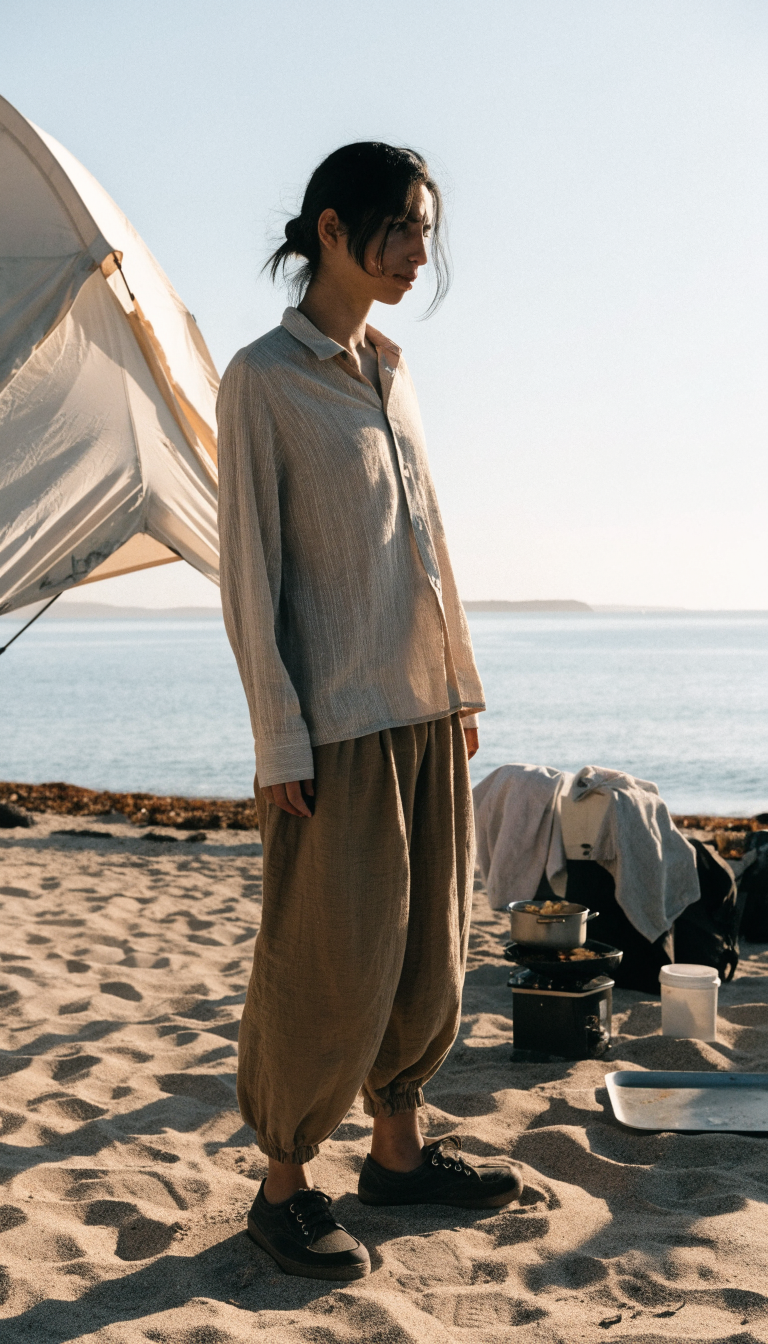
6. Button-Up Sun Shirt, Loose Long Pants, and Closed Camp Shoes
This outfit works when you want shade and sand protection without a wetsuit feel. A collared, long-sleeve shirt shades the neck, loose pants protect legs while sitting on sand, and closed shoes keep grit out during cooking or camp setup. Roll the sleeves only when you are fully in shade.
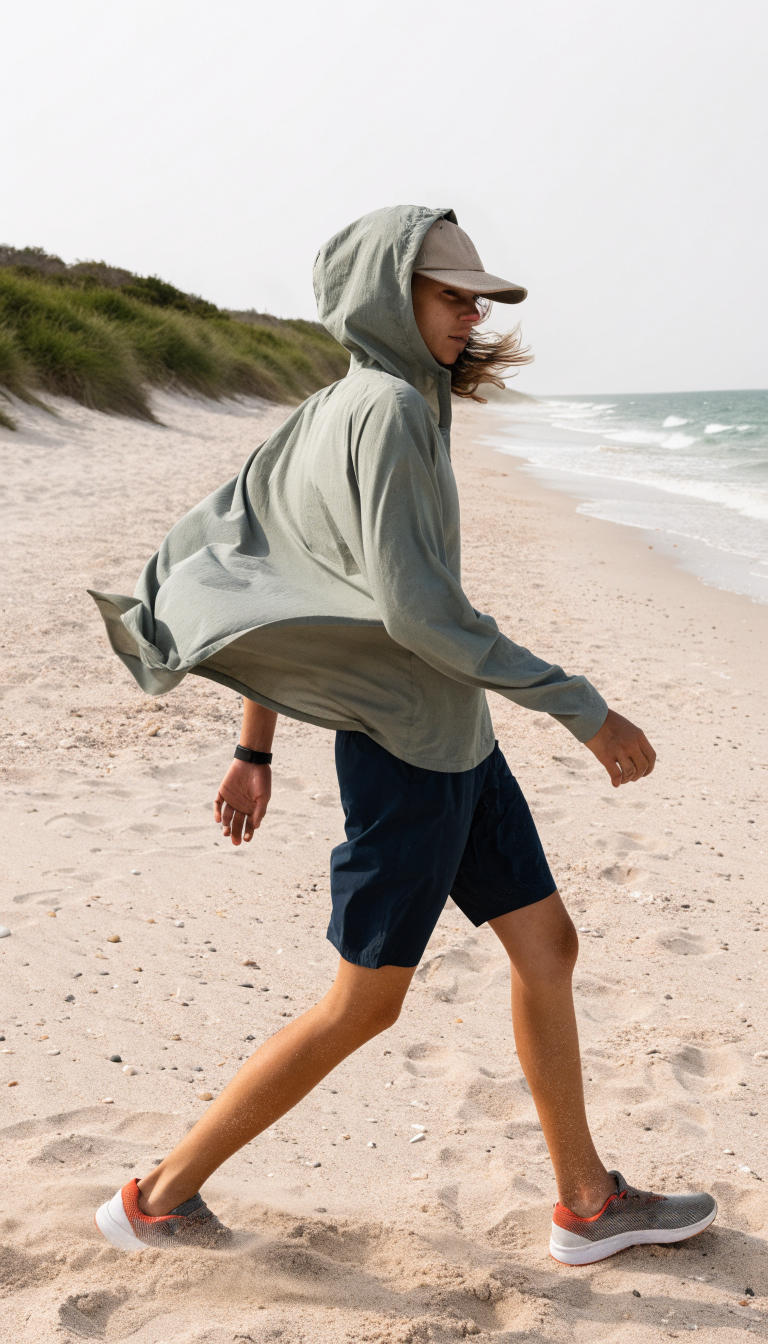
7. Hooded Sun Shirt, Shorts, and a Cap
A hooded sun shirt adds cover for the neck and ears when wind picks up, and the hood can go up over a cap for extra shade. Pair it with quick-dry shorts so you can still wade without changing. This is a strong choice for windy points, boat ramps, and long walks along open beach.
8. One-Piece Swimsuit or Swim Dress Plus Shorts
This combination gives secure swim coverage plus a modest camp layer. Shorts over a swimsuit make sitting, bending, and walking around camp easier, and they dry with the suit. Choose shorts with a drawstring so they stay in place after swimming.
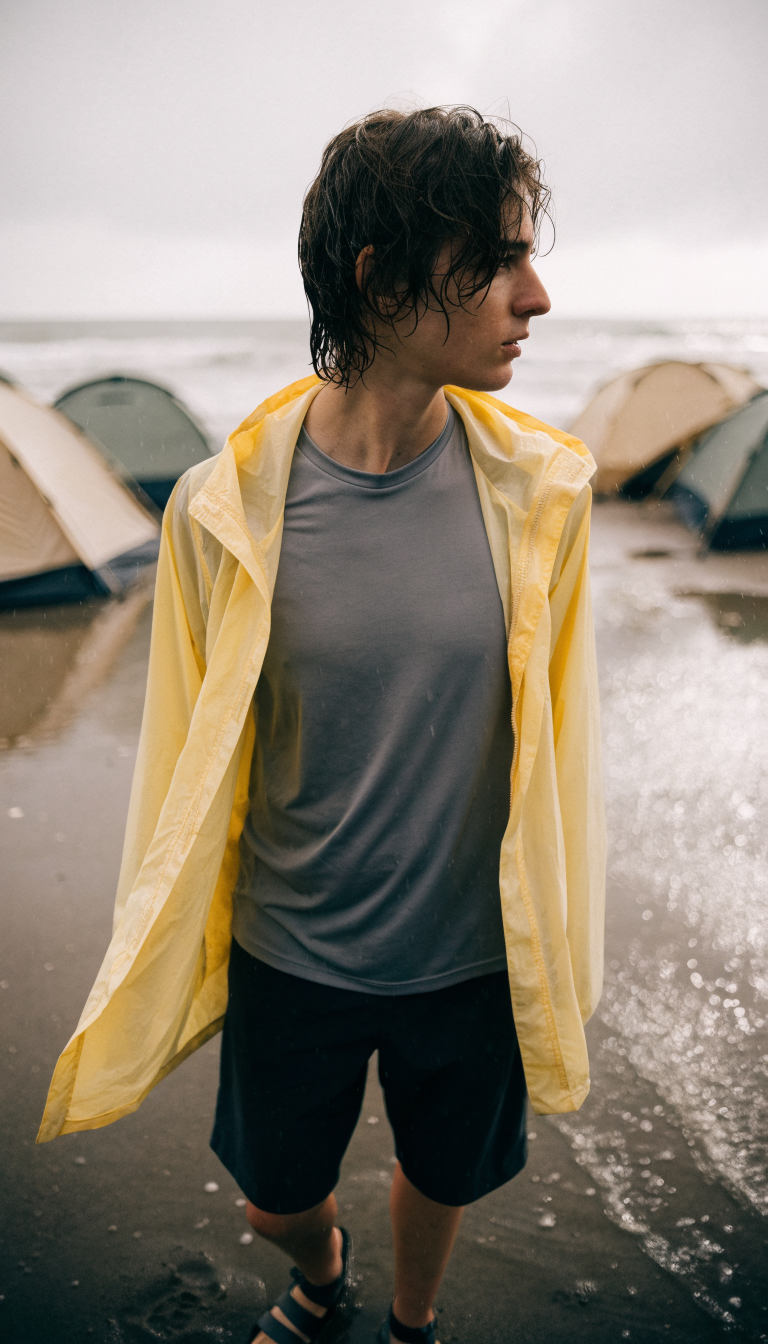
9. Light Rain Jacket, Quick-Dry Tee, Shorts, and Waterproof Sandals
Beach rain often arrives fast and ends fast, so a light rain jacket is more useful than a heavy coat. Wear it over a quick-dry tee, not cotton, so the layer under it is not soaked when the jacket comes off. Waterproof sandals let you keep moving through puddles and wet sand without ruined shoes.
10. Fleece Pullover, Long Pants, Warm Socks, and Slip-On Shoes
Nights near water can feel much cooler than the day, even after a hot afternoon. A fleece pullover over a long-sleeve base, plus long pants and socks, holds warmth without the bulk of a winter coat. Slip-on shoes are easy to take off before entering the tent, which keeps sand out of your sleeping area.
11. Neoprene Top, Board Shorts, and Water Shoes
A short neoprene top, sometimes called a wetsuit top, adds warmth for cooler water, early morning swims, or surfing. It fits close to the body and dries slower than a rash guard, so save it for water time and change into a dry shirt afterward. Water shoes help on rocky entries and slippery boat decks.
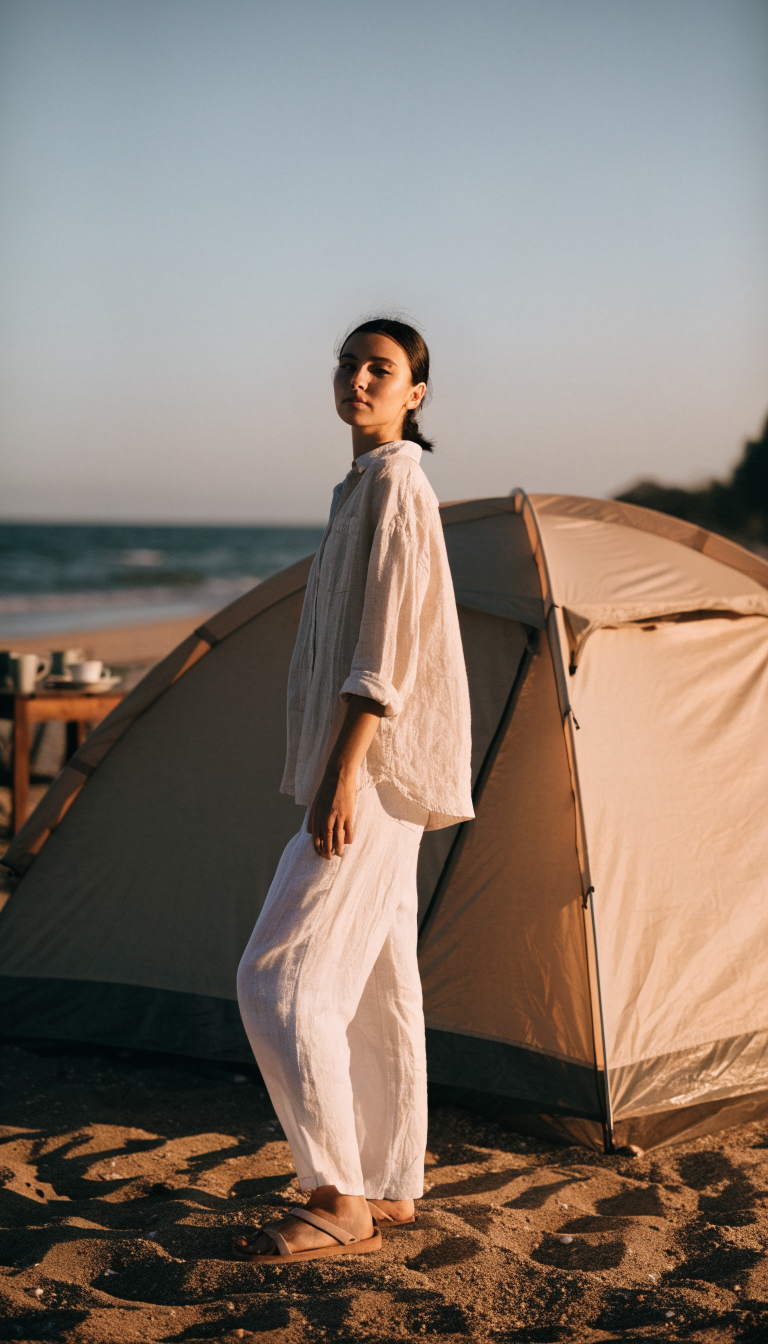
12. Linen-Blend Shirt, Wide-Leg Trousers, and Sandals
This is a dry camp-evening outfit, not a swim outfit. A loose linen-blend shirt and wide trousers breathe well and feel less sticky than tight clothes after a day in heat. Keep this set dry and clean in a separate bag, and change into it only after your last swim of the day.
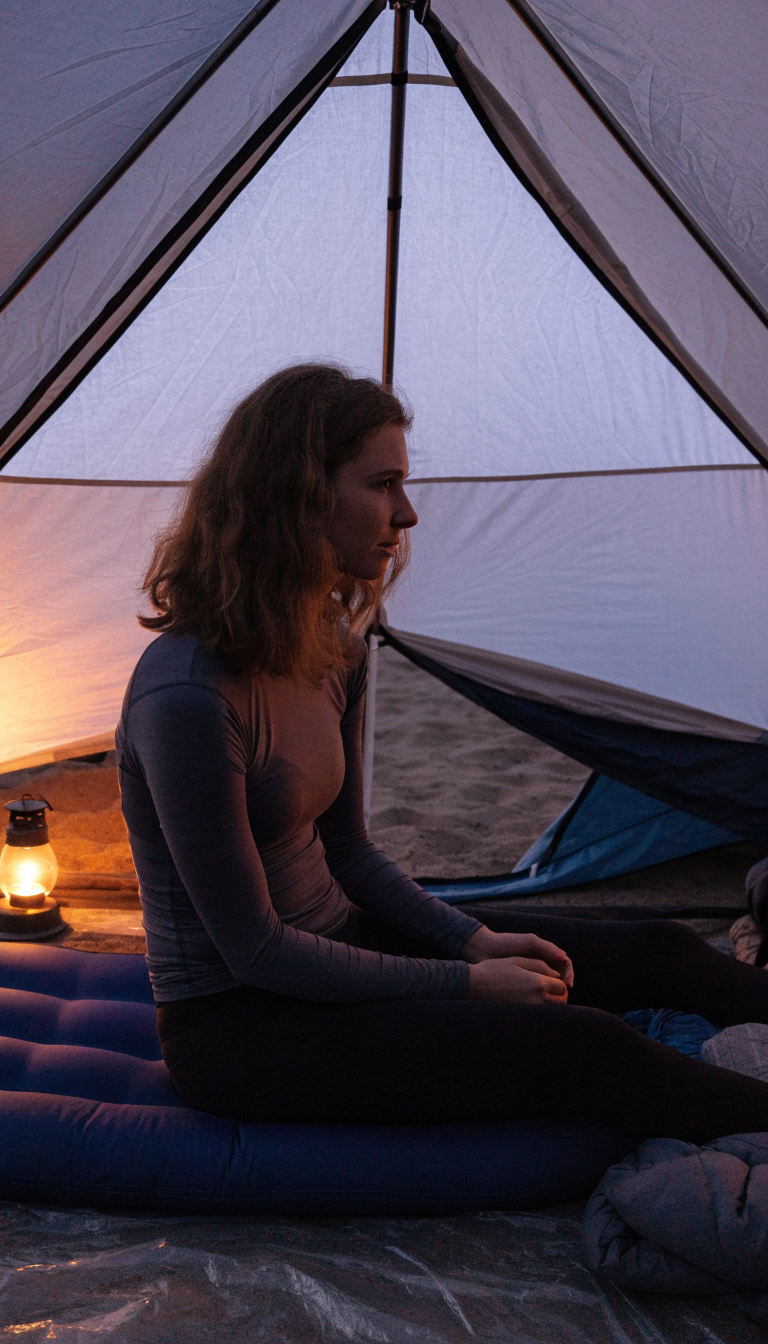
13. Long-Sleeve Base Layer, Leggings, and Camp Shoes
Sleep clothes at a beach camp should be dry, clean, and separate from swim clothes. A long-sleeve base layer and leggings keep you warm in a tent and protect skin from tent fabric and cool air. Camp shoes let you step outside at night without putting on wet daytime shoes.
14. Clean Dry Change: Tee, Shorts, and Fresh Socks
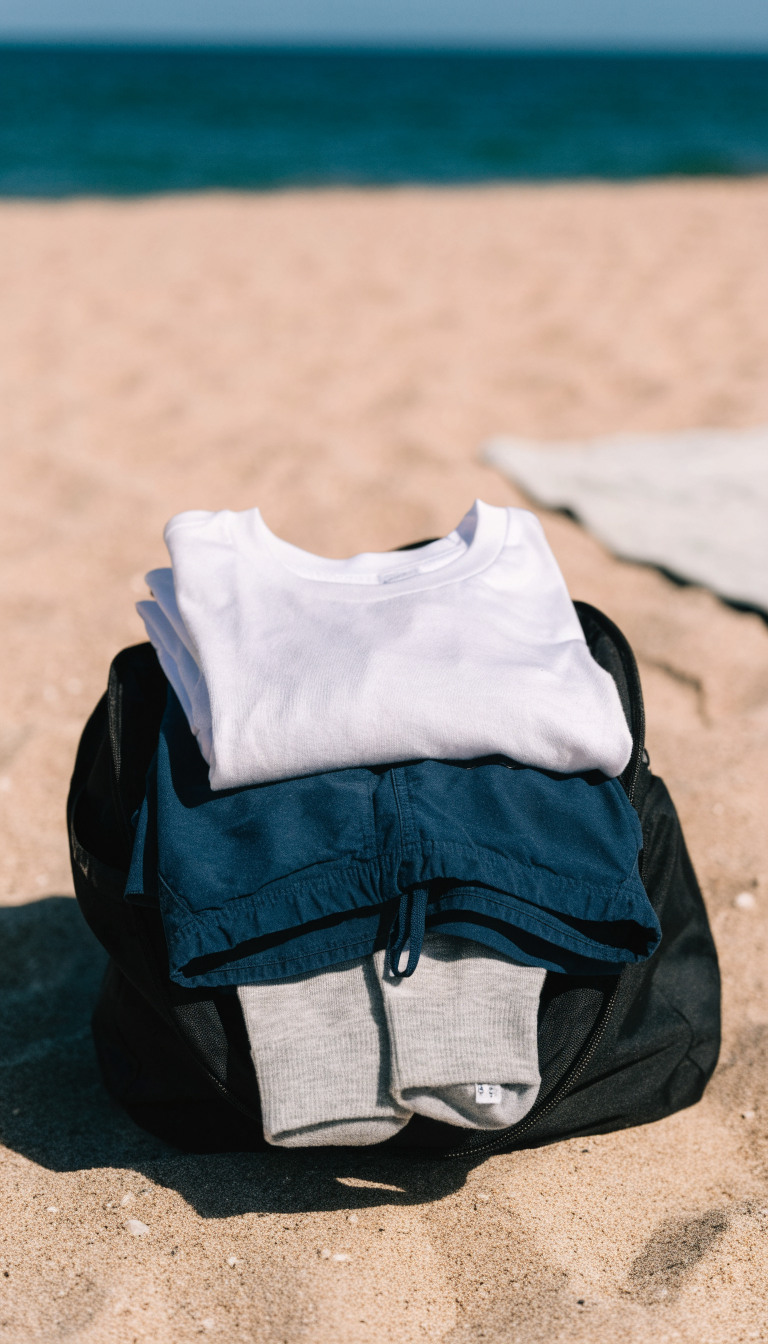
A dry change after swimming is an outfit in its own right, because it prevents chafing and evening chills. Pack a clean tee, dry shorts, and fresh socks in a sealed bag, and change as soon as you are done in the water for the day. This small set often matters more than a fourth swim outfit.
Pack Fewer Pieces That Cover More Conditions
You do not need 14 separate bags of clothes. Pack pieces that mix across the outfits above, and change one layer as conditions change.
- Choose long sleeves if you will be out at midday, in the water for a long time, or you burn easily.
- Choose shorts and sandals if you will wade often and can reapply sunscreen to exposed skin.
- Choose long pants and closed shoes if you will cook, set up camp, or walk on rough ground.
- Choose a warm layer and a rain layer even on a warm forecast, because beach wind and showers change fast.
A useful core for two nights is two swim bottoms, three tops with at least one long-sleeve UPF top, one warm layer, one rain layer, one dry evening set, one sleep set, and two pairs of shoes: one for water and one for camp. Rinse swim clothes in fresh water when you can, and hang them where air moves, since clothes left in a damp bag stay damp.
Mistakes That Make Beach Clothes Harder to Live In
- Wearing heavy denim or cotton for a full day. These fabrics hold water and sand, dry slowly, and feel heavy after a swim. Swap them for quick-dry shorts and a light camp set.
- Packing only one swimsuit. A wet suit from the morning is still damp at night. Bring a second bottom so one can dry while you wear the other.
- Skipping a dry change. Staying in a wet suit after swimming can lead to chafing and a cold evening. Change into dry clothes soon after your last swim.
- Wearing flat flip-flops for rocky or long walks. They slip on wet rock and offer little support. Use water shoes or trail sandals for those walks, and save simple sandals for camp.
- Leaving hats and sunglasses behind on cloudy days. Clouds do not remove all ultraviolet light, and sand and water can reflect it back onto skin. Keep a hat and sunglasses in your day bag even when the sky looks gray.
If sand gets into shoes, stop and shake it out rather than walking through it, since grit causes blisters faster on wet skin. If a shirt chafes, switch to a smoother, looser top and cover the sore area with dry fabric until it calms.
Sun, Heat, and Water Safety in What You Wear
Clothing is one part of sun protection, not a replacement for shade and sunscreen on exposed skin. According to the CDC sun exposure guidance, travelers should wear clothing that covers as much skin as possible, wear a wide-brim hat that shades the face, head, ears, and neck, and wear sunglasses that block both UVA and UVB rays. The CDC also recommends broad-spectrum sunscreen with SPF 15 or higher, reapplied at least every two hours and after getting out of water or sweating heavily.
The EPA UV Index descriptions note that beachgoers should know white sand and other bright surfaces reflect UV and can double UV exposure. That reflection is why a hat, long sleeves, and sunglasses matter even when you sit under an umbrella. For fabric ratings, MD Anderson's explanation of UPF, summarizing American Academy of Dermatology guidance, describes UPF 30 to 49 as good protection and UPF 50 or higher as excellent protection.
If you feel dizzy, confused, nauseated, or stop sweating on a hot day, move to shade, cool down with water, and get help promptly, because heat illness can worsen quickly and clothing alone does not prevent it. This guide is general information, not medical advice, and people with skin conditions, heart conditions, or medicines that increase sun sensitivity should check with a clinician before a long beach trip.
Beach Camping Outfit Questions, Answered Straight
Can I wear regular clothes to beach camp?
You can, but regular cotton clothes tend to stay wet, collect sand, and dry slowly after swimming or rain. Quick-dry tops, swim shorts, and a separate dry camp set will feel lighter and last longer across a beach weekend. Save regular clothes for dry evenings and the drive home.
How many outfits do I need for two nights?
For two nights, two swim bottoms and three tops are usually enough if one top is long-sleeve and UPF-rated. Add one warm layer, one rain layer, one sleep set, and one clean dry change for after swimming. This mix covers swimming, camp chores, and a cool night without a large bag.
Do I need UPF clothing, or is sunscreen enough?
Sunscreen helps on exposed skin, but it can wash off in water, rub off with a towel, and wear off over time. UPF clothing keeps its coverage while you swim and walk, as long as it stays on and covers the area. Use both: UPF clothing for covered skin, and sunscreen for the face, neck, hands, feet, and any skin left bare.
What shoes work best on sand and wet rocks?
Water shoes work best for wet rocks, shells, and slippery entries because they grip and drain. Trail sandals work well for long beach walks, while simple slip-on shoes are best for camp and tent entries. Avoid smooth-soled shoes on wet rock, and rinse shoes after salt water so straps and soles last longer.
What should I wear to sleep at a beach camp?
Wear a clean, dry long-sleeve base layer and leggings that you did not swim in, plus fresh socks if nights are cool. Dry sleep clothes help keep your sleeping bag clean and dry, and they make it easier to spot sand that would otherwise end up in your bed. Keep the sleep set in a sealed bag during the day.
How This Guide Was Put Together
This guide was put together from the CDC sun exposure guidance and EPA UV Index descriptions linked above, plus the UPF categories described by MD Anderson, and general layering ideas for wet, sandy, and windy beach conditions. It does not report product tests or personal trials.
Sources
- Centers for Disease Control and Prevention, Sun Exposure, linked above.
- U.S. Environmental Protection Agency, UV Index Descriptions, linked above.
- MD Anderson Cancer Center, UPF, Sun Protection and Clothing: 7 Things to Know, linked above.