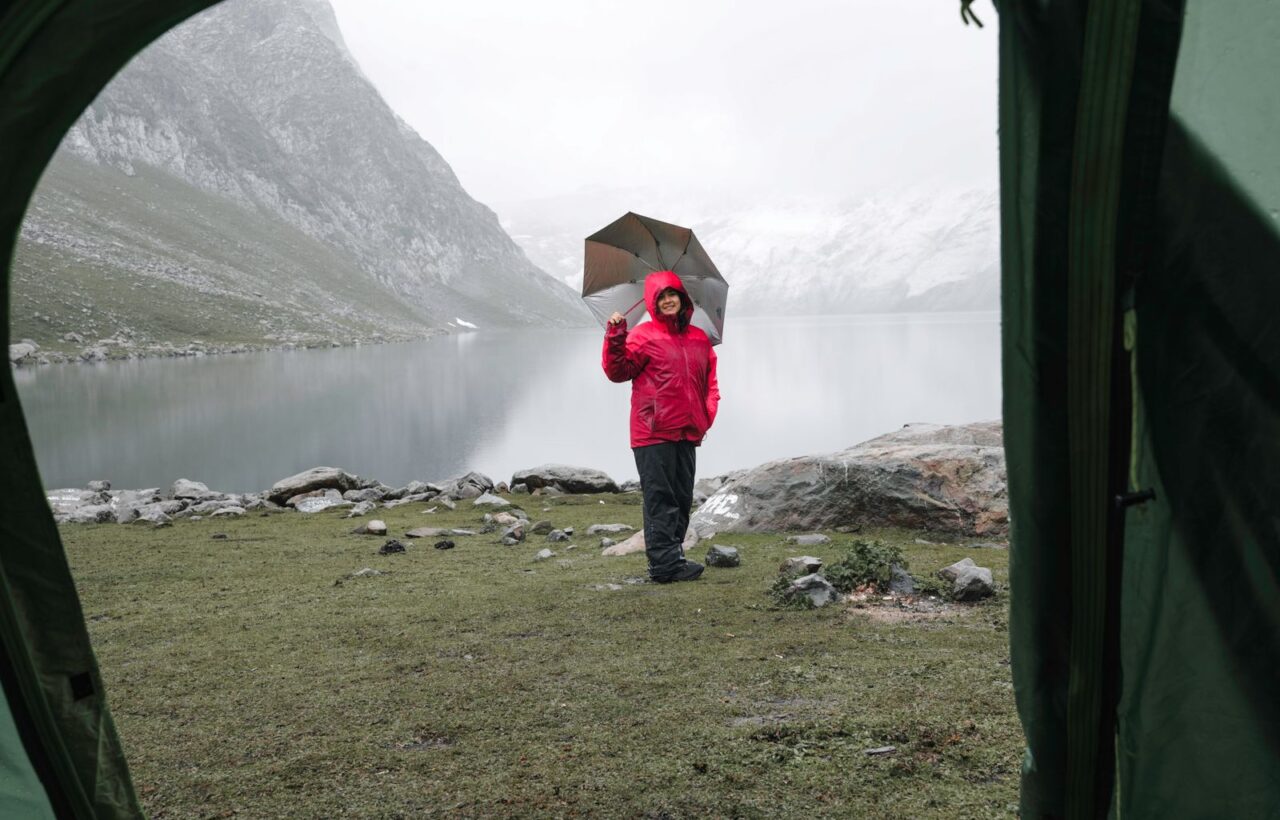

Rain does not have to end a tent trip. A dry night comes from three things working together: a site that sheds water, a rainfly that never touches the inner tent, and a routine that keeps wet clothes and ground moisture out of the sleeping area. Most soaked camps are not caused by a “bad tent.” They come from a low spot, a sagging fly, a groundsheet that sticks out past the floor, or condensation that looks exactly like a leak.
The work starts before the first drop hits the fabric. Pick the ground, pitch with the fly protecting the inside, and treat every wet item as something that stays in the vestibule until it is truly dry.
What actually makes a tent wet
Water gets inside in four different ways, and each one needs a different fix.
Rain enters from outside through an open door, a gap in the fly, a failed seam, or fabric that has lost its water-repellent finish. Ground water reaches the floor when the site pools or when a footprint acts like a gutter and feeds runoff underneath. Contact transfer happens when a wet rainfly sags onto the inner wall: moisture moves through the touch point even if both fabrics are otherwise sound. Condensation forms on the inside when warm, moist air from breath and damp gear hits a cooler fly or wall. It shows up as fine droplets spread across the ceiling, often after the rain has eased, and it is not a manufacturing defect.
A useful field check is the pattern. A drip that starts at one seam, zipper, or corner while rain is falling is an entry point. Even mist across the whole roof, especially on a cool night with the vents closed, is condensation. Water that appears along the floor edge after the ground outside turns muddy is site drainage, not a hole in the roof.
Choose ground that moves water away
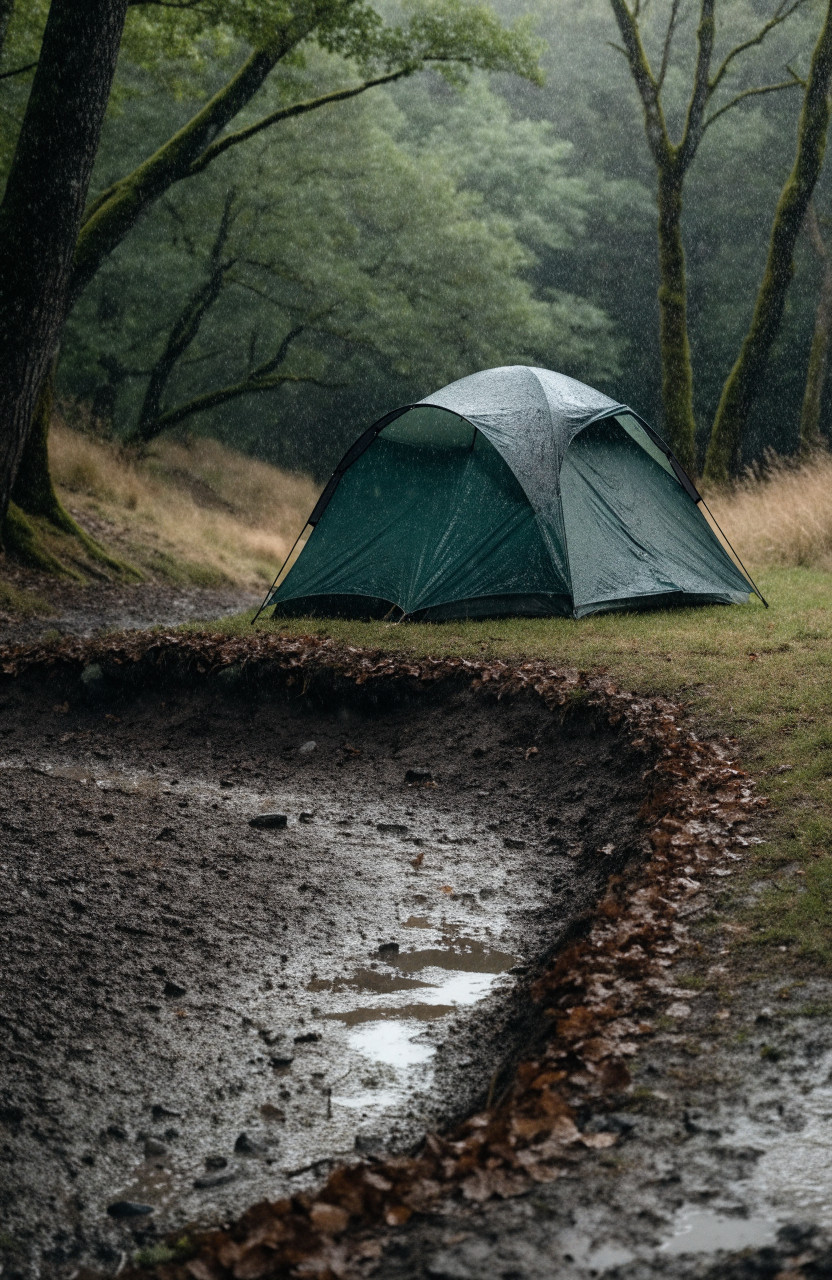
Site choice beats tent specs. The same shelter floods in a hollow and stays dry on a slight rise a few meters away.
Look for ground that is a little higher than what surrounds it, firm, and free of obvious channels. Leaves or twigs lined up in a path, a shallow trench from an old storm, and the low corner of a campsite pad are all signs that water already knows where to go. Avoid washes, dry creek beds, the base of a slope, lake edges, and anywhere the soil looks darker and softer than the ground around it. A spot that looks flat in dry weather can still collect a shallow pool once the surface saturates.
Wind direction matters as much as elevation. Face the door and the main vestibule away from the weather so rain is not blown straight into the entry every time someone climbs in. A low bush or boulder on the windward side can cut driving rain, but do not pitch under large dead limbs. Branches that are stable in calm weather become a real hazard once wind and saturated soil are involved, and trees keep dripping long after the sky clears.
Do not dig a trench around the tent on an established site. Many campgrounds forbid it, it scars the ground, and a poorly cut channel often sends water toward the floor instead of away from it. If the only available ground is clearly going to flood, move the tent. Drainage you can see is more reliable than a ditch you cut in the dark.
Pitch so the inside never sees the rain
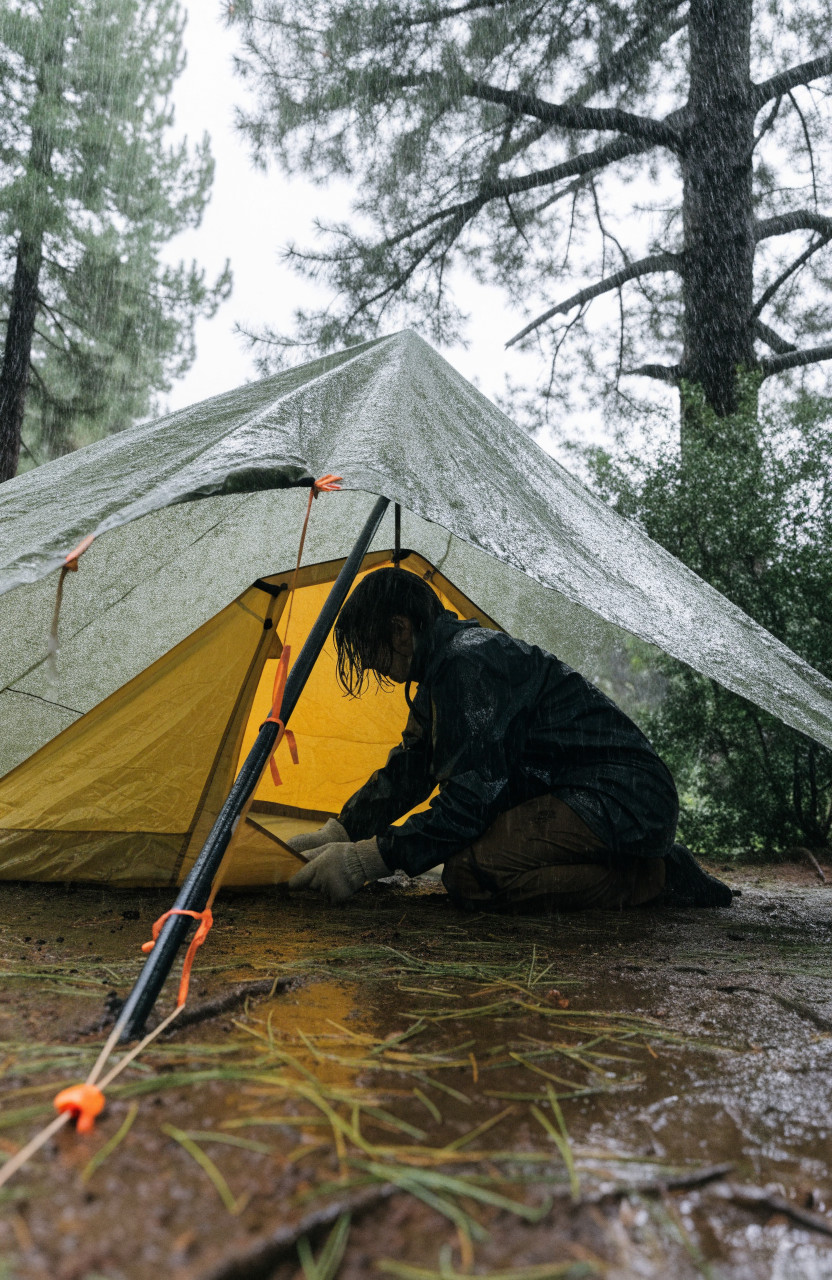
Practice the pitch at home until the pole order and clip points are automatic. In rain, speed and sequence matter more than perfection on the first try.
If trees are available and safe, rig a simple ridgeline tarp first and work underneath it. That single overhead cover keeps the inner tent, sleeping bags, and you out of direct rainfall while the shelter goes up. Stake the windward side early so a gust does not turn the fly into a sail.
For a typical double-wall tent, keep the rainfly ready before the inner tent is fully exposed. Spread the fly over the body as soon as the structure will hold it, then finish staking from underneath or from the vestibule. Some freestanding tents can be clipped together and raised quickly; some clip-in designs let you pitch the fly first and hang the inner underneath once you have cover. Use whichever sequence your tent actually allows, and learn it before the trip.
Stake every point the design provides, then tension the fly until it is smooth. A loose fly pools water, sags onto the inner wall, and transfers moisture by contact. You want a visible air gap between fly and inner tent all the way around. Guy lines are not optional in rain and wind: they hold that gap and stop the structure from collapsing onto the mesh.
A footprint or groundsheet only helps if it is smaller than the tent floor and fully tucked underneath. Any edge that sticks out catches runoff from the fly and funnels it under the sleeping area. That is one of the most common reasons a floor is wet in the morning even though the ceiling never dripped. If you do not have a correctly sized footprint, skip it rather than use a tarp that is too big.
What the tent needs to handle rain
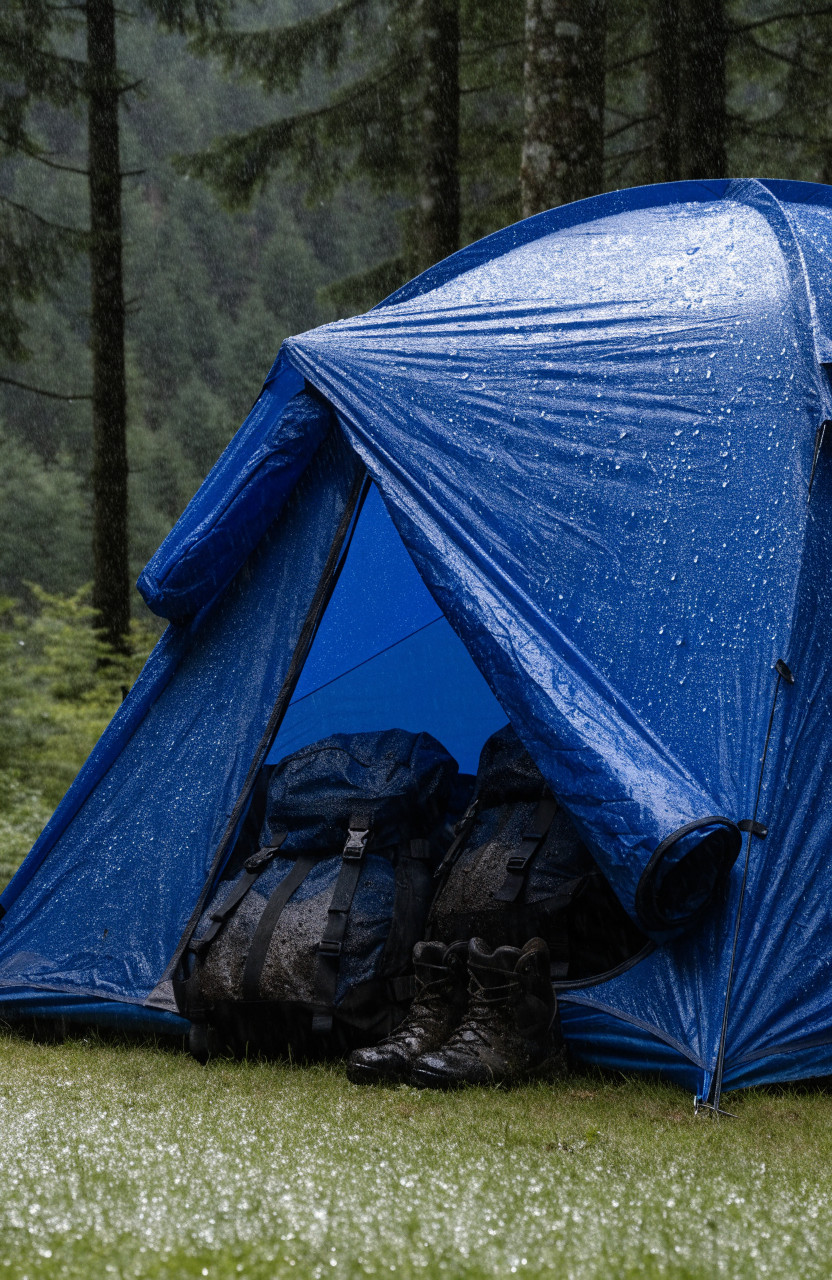
A full-coverage rainfly matters more than a marketing label. The fly should reach near the ground on all sides, with only a small gap for airflow, and it should create at least one vestibule large enough for wet packs and shoes. A partial fly that covers only the roof leaves mesh walls open to wind-driven rain.
Seams are the usual failure point, not the middle of a panel. Factory seam tape cracks with age and UV exposure. If water tracks along stitching during rain, seal those seams with a product made for the tent’s fabric before the next trip, and check pole sleeves and floor corners, where wear concentrates. Zippers should close fully; a vestibule zipper left a finger’s width open is an open window in sideways rain.
Hydrostatic head is the lab measure of how much water pressure a fabric holds before it leaks, reported in millimeters. It is a useful comparison, not a promise. Rain on a taut fly exerts less pressure than a knee on the floor, so floors are usually rated higher than flies. For ordinary three-season rain, a fly around 1,500 mm and a floor of 2,000 mm or more is a common working range on tents built for wet weather; heavier or more prolonged storms favor higher ratings and, more importantly, a taut pitch and intact seams. Ratings fall as coatings wear. A finish that no longer beads water and instead darkens as it soaks is due for a durable water repellent treatment appropriate to that fabric. The coating underneath may still be waterproof, but a soaked fly adds weight, sag, and condensation.
Bathtub floors, with the waterproof material turned up the wall, resist splash and shallow runoff better than a floor that ends at a flat seam on the ground. They do not fix a site that becomes a pond.
Stay dry after the tent is up
Set a hard boundary at the door. Wet jackets, rain pants, and muddy shoes stay in the vestibule or in a separate dry bag. Change into dry base layers and socks before getting into the sleeping bag. Cotton holds water and pulls heat away once it is damp; synthetic or wool layers dry faster and stay warmer when the air is cool.
Vent even while it is raining. Close the tent completely and the moisture you exhale overnight condenses on the fly and drips onto bags and faces. Leave a high vent or a small door gap open on the lee side, and keep the fly tensioned so that gap does not let rain in. Wipe the ceiling with a small cloth or bandana in the morning if droplets have formed, before you pack, so that water does not end up in the stuff sack.
Keep sleep gear off the walls. A bag or quilt pushed against wet mesh picks up condensation by contact. A sleeping pad also lifts you off any dampness that reaches the floor. Store the bag in a waterproof stuff sack until you are ready to spread it, and pack it again before you break the tent down.
A sponge or small towel lives in the tent for the floor. A few spills from a vestibule entry are normal; leaving them there is what soaks the foot of the pad by morning.
Food, clothes, and the hours between squalls
Cook outside, under a tarp or in a covered picnic shelter if the site has one. A stove inside a tent is a fire and carbon monoxide risk, and steam from a pot adds to the condensation load. Plan meals that do not depend on a campfire: rain ruins marginal wood, and many areas restrict fires when conditions are wet. A wide-brim hat and a rain jacket you can actually move in will do more for morale than another gadget.
Pack one full dry outfit, including socks, in a sealed bag and do not open it until camp. Extra socks are the item most people wish they had brought. Hang damp layers under the vestibule or a tarp rather than inside the sleeping area. If something must dry overnight, a lightly damp synthetic layer at the foot of the bag can work in mild weather; a soaked cotton shirt will not.
Use the rain rather than fighting every minute of it. Short walks between cells, reading, card games, and a hot drink in the vestibule are realistic. Long exposure in inadequate rain gear is how people get cold, not how they “tough out” a trip.
Pack up without soaking the dry gear
Wait for a break if one is coming. If it is not, pack inside the tent: sleeping bag and dry clothes go into waterproof sacks first, then the pack liner. Step out, cover the pack, and take the tent down in reverse order of the pitch so the fly shields the inner body as long as possible.
Keep the wet fly separate from the inner tent. Stuff the fly into an outside pocket or its own bag. A soaked fly packed against a dry inner tent wets everything you just protected. At home, pitch or hang both until they are fully dry before long-term storage. Storing a damp tent is how seam tape fails and mildew starts.
When to leave
Rain camping is reasonable when the site drains, the tent is intact, people have dry layers, and the temperature is well above freezing. It is a poor plan in lightning, in rising water near a river or dry wash, when the only ground is already under standing water, or when anyone is already cold and out of dry clothes. Wind strong enough to flatten a poorly guyed tent is a gear and safety problem, not a comfort problem. Established campgrounds sometimes close sites or roads in heavy rain; that limit is not optional.
Questions campers ask after the first wet night
Is a wet ceiling always a leak? No. Fine droplets across the fabric, especially with the vents closed, are condensation. A repeated drip from one seam or corner during rainfall is worth sealing or repairing.
Can I camp in the rain with a cheap tent? Light showers, yes, if the fly covers the body, the seams hold, and the site is high and well pitched. Sustained heavy rain exposes partial flies, untaped seams, and low waterproof ratings quickly. Site and pitch still decide the outcome more than the brand name.
Should I put a tarp under the tent? Only if it is smaller than the floor and tucked completely underneath. A larger tarp that extends past the walls channels water under you.
Do I need a footprint at all? It protects the floor from abrasion and adds a layer against damp ground. It is not a substitute for a drained site, and a wrong-sized one makes flooding more likely.
What if the rainfly touches the inner tent? Retension the fly and add guylines until there is an air gap. Contact is how outside water reaches a dry interior even when the fabrics themselves are sound.